
The Pennsylvania Day Trip That Delivers A Waterfall, A Diner, And A Scenic Drive
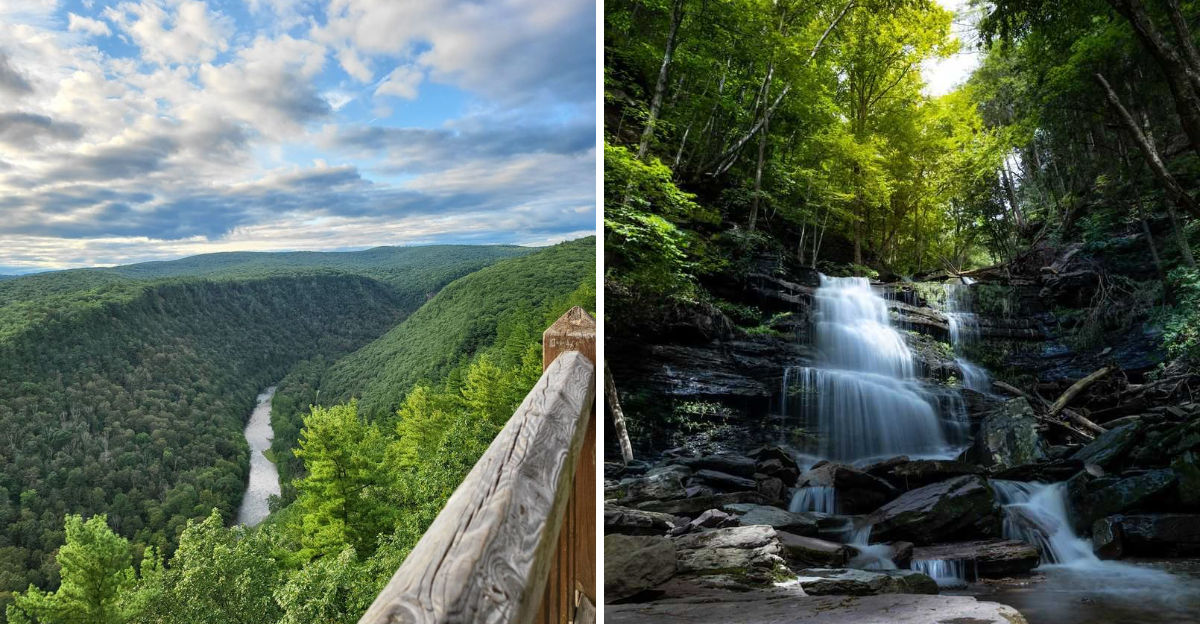
One tank of gas can buy you a canyon, a waterfall, and a diner older than your grandparents. Pennsylvania hides a whole adventure that most road trippers drive right past.
A gorge splits the earth so deep it earned its own nickname in this state. Wooden steps drop hikers toward rushing water and cool canyon air.
Waterfalls spill beside the trail while hawks circle lazily above the rim. A vintage diner car waits nearby with counter stools built for hungry hikers.
Order breakfast first, because the climb back up deserves real fuel. Pennsylvania rewards anyone who trades a lazy Saturday for boots and a curious spirit.
Start dreaming up this loop before the leaves steal every parking spot in town.
Gaslit Streets And Victorian Storefronts In Wellsboro
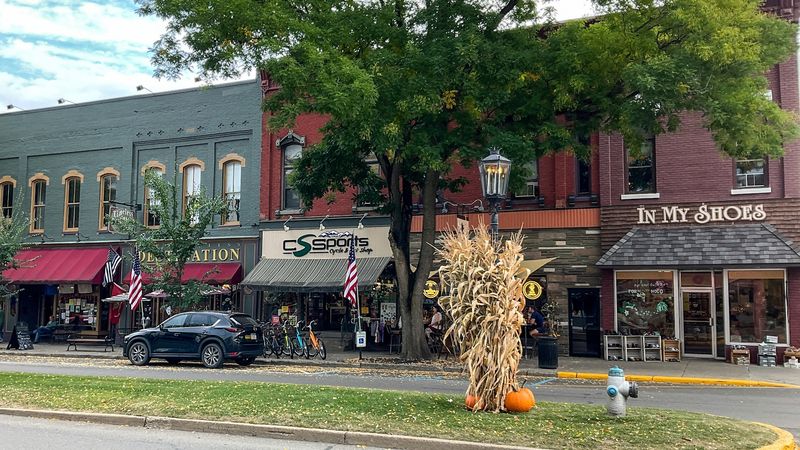
Gas lamps still glow along the main street here, and they are not decoration for tourists alone. Wellsboro keeps them lit as part of its everyday character.
Brick storefronts line the sidewalks, many wearing Victorian detailing that has been carefully looked after. Shops, bakeries, and a historic theater sit within easy walking distance of one another.
The town works well as the anchor for a canyon day because everything starts and ends here. Parking is straightforward, and the sidewalks invite a slow lap before the drive west.
Wellsboro, Pennsylvania 16901 sits in Tioga County, close enough to the gorge for a morning departure and an afternoon return. Reaching the rim takes only a short drive.
Seasonal events fill the calendar, including festivals, concerts, and community arts programs. Checking ahead helps, since schedules shift year to year.
Autumn brings the biggest crowds, when maples turn the streets gold and leaf watchers arrive in waves. Spring and early summer feel quieter and often easier for parking.
Fuel up, grab a coffee, then point the car toward the canyon rim.
A 1939 Diner Car That Never Moved An Inch

Chrome, curved roof, counter stools, booths by the window. The Wellsboro Diner looks exactly like the year it arrived.
Built as a 1939 Sterling diner car, it has served Main Street for more than eight decades. Reports describe it as the only surviving barrel-roof diner of its kind in the state, and it has never been relocated from its original spot.
Find it at 19 Main St, Wellsboro, PA 16901, a short stroll from the gaslights. The address matters, because the diner sits right in the middle of everything.
Inside, the tight layout keeps things social. Conversations drift across the counter, and the kitchen stays within earshot.
Timing helps here. Mornings and midday can fill quickly, especially on weekends during leaf season, so arriving early avoids a wait.
Classic American comfort food anchors the menu, though offerings can change. Ordering a proper breakfast before a canyon hike is a strategy, not an indulgence.
History rarely comes with a coffee refill, but this little steel car manages both.
Pine Creek Gorge And Its Grand Nickname
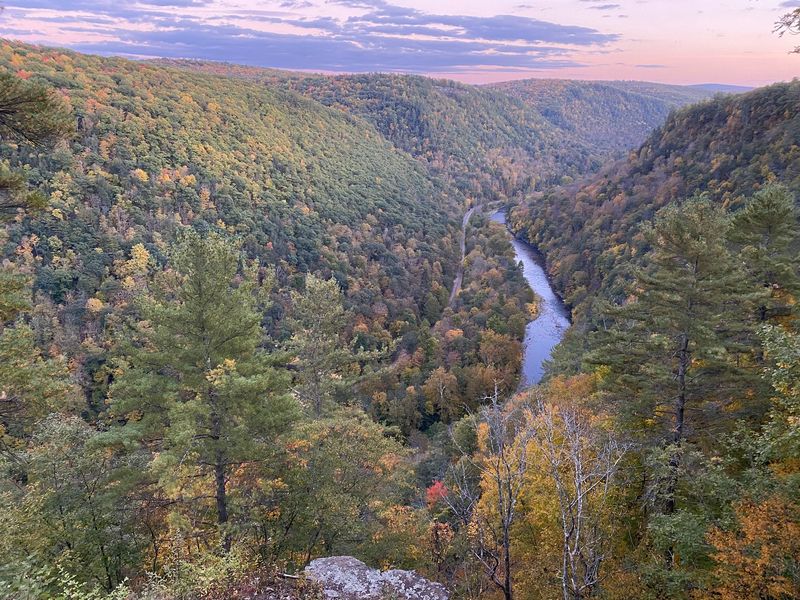
The nickname sounds like marketing. The view argues otherwise.
Pine Creek Gorge, widely called the Grand Canyon of Pennsylvania, runs roughly 45 to 50 miles through the northern part of the state. Depths reach beyond 800 feet at the main overlooks and considerably more in certain sections.
Most of the surrounding land falls within Tioga State Forest, which explains the unbroken green on both walls. Development stays out of the frame almost entirely.
Pine Creek threads the bottom, thin as ribbon from above. Watching it curve through the trees gives the depth real meaning.
Hawks and turkey vultures often ride the thermals along the rim. Patience at the railing usually rewards visitors with a slow, circling flyover.
Scale is the whole point here, and photographs struggle to carry it. Standing at the edge does the job instantly.
Rim Views At Leonard Harrison State Park
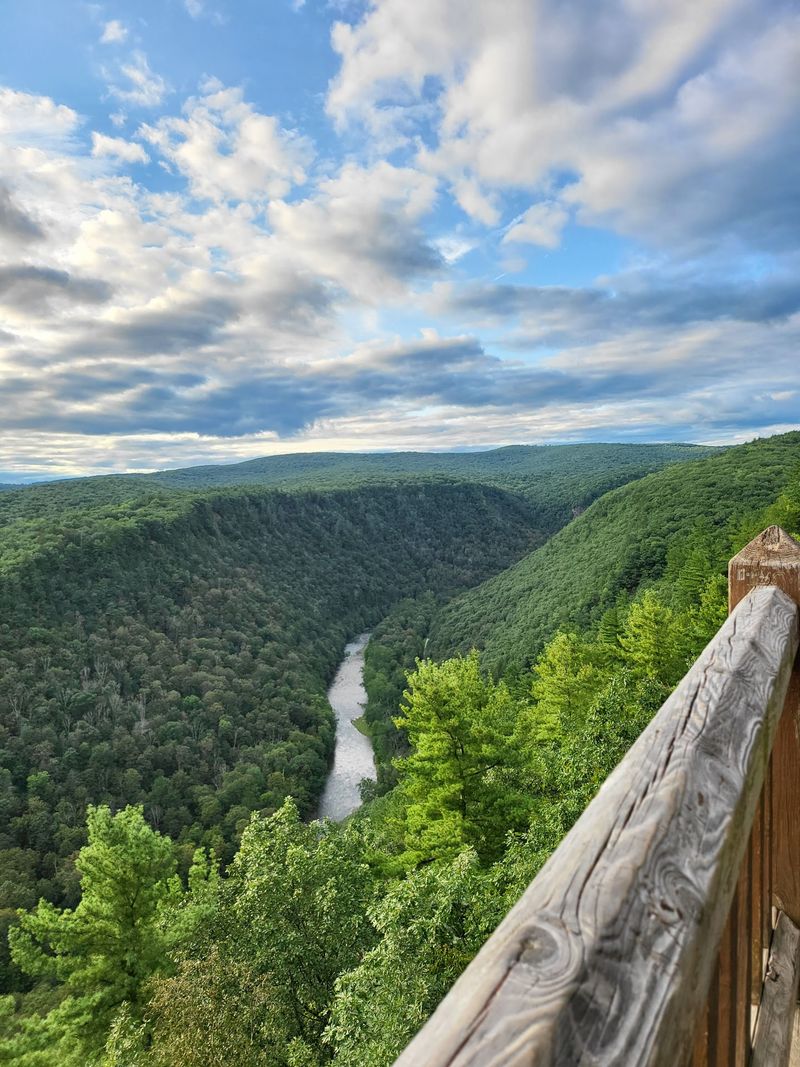
Park the car, walk about a minute, and the canyon opens up. Leonard Harrison State Park makes the payoff almost too easy.
Sitting on the east rim, the roughly 585-acre park delivers the most photographed views of Pine Creek Gorge. Paved paths near the visitor center reach the main overlook without any climbing.
Layered ridges stretch north and south, with forested slopes falling steeply toward the creek. The perspective shifts noticeably as light moves across the walls during the day.
Picnic tables, restrooms, and a visitor center sit close to the parking area. Interpretive programs sometimes cover the geology and wildlife of the gorge, though availability varies.
Address for the GPS: 4797 PA-660, Wellsboro, PA 16901. Cell service can be patchy out here, so downloading directions ahead of time is smart.
Weekends in October bring the heaviest traffic, and lots can fill by late morning. Early arrival solves most of that.
Even visitors skipping the hike leave with the canyon firmly stuck in memory.
Down The Turkey Path Into The Canyon
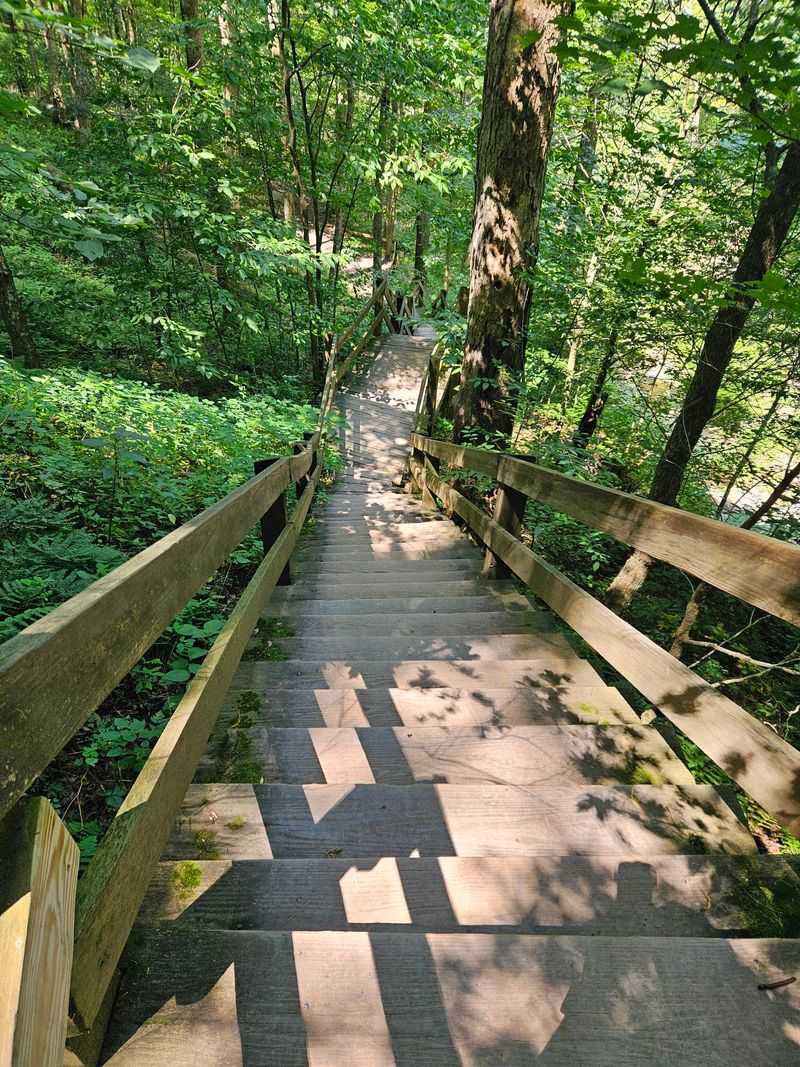
Legs willing? The Turkey Path drops straight into the gorge and asks for real effort.
The route runs roughly two miles out and back, descending somewhere near 750 to 800 feet from the rim to the Pine Creek Trail below. Steep switchbacks handle most of that drop.
Wooden steps, decking, and small bridges appear along the way, built to manage the grade and the wet spots. Even so, footing turns slick after rain.
Sturdy boots make a genuine difference. Sneakers with worn tread struggle on the damp planks and loose stone.
Going down feels quick, and the return climb is where hikers slow down. Budgeting extra time for the ascent keeps the day relaxed.
Sections of the trail may close seasonally for maintenance or ice, so checking current conditions before driving out is worth the minute.
Water, a snack, and a steady pace cover most needs. Cool air rises from the creek as elevation drops.
Few short trails in the state pack this much vertical drama into two miles.
Waterfalls Tumbling Beside Little Four-Mile Run
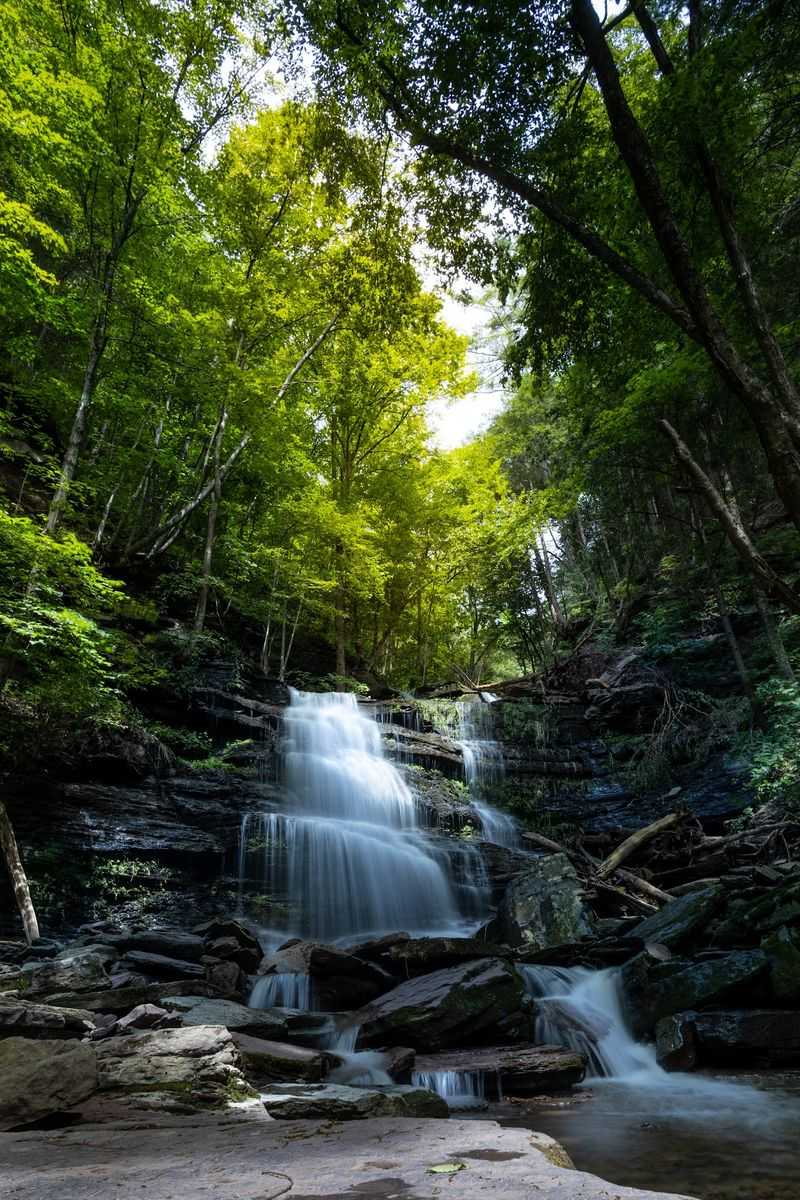
The sound arrives before the sight. Rushing water echoes off the canyon wall long before the falls appear.
Little Four-Mile Run parallels the Turkey Path, dropping through a series of cascades as it heads toward Pine Creek. Hikers pass several along the descent.
The first major falls shows up roughly four tenths of a mile down from the rim. More reveal themselves as the trail keeps switching back.
Some of these drops measure impressively tall, with reported heights in the range of 50 to 80 feet. Flow varies a lot with recent rainfall and season.
Spring runoff produces the strongest showing, while late summer can slow the water to a trickle. Photographers often prefer overcast days for softer light on the rock.
Viewpoints along the main trail cover every falls. Wandering onto informal side paths risks slippery edges and erosion, so staying on the built route makes sense.
Cool mist drifts across the steps on warm afternoons, an unexpected reward halfway through a demanding climb.
October Color Along The Canyon Walls
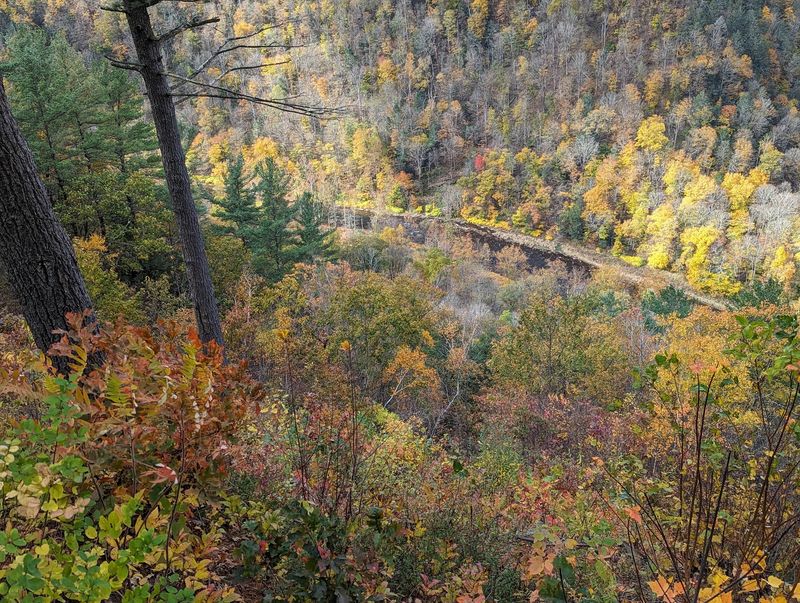
Late September through mid-October is when the gorge shows off. Hardwood forests light up across both walls.
Yellows, oranges, reds, and deep purples spread from rim to creek, broken up by patches of evergreen. The contrast makes the canyon look layered rather than flat.
Morning mist often hangs over Pine Creek and burns off slowly. Arriving early catches that effect at its best.
Peak timing shifts year to year based on weather, so foliage reports help more than a fixed calendar date. A week either direction changes everything.
Other seasons hold their own appeal. Winter strips the trees and exposes the rock structure, while spring brings loud water and fresh green.
Summer delivers dense shade on the Turkey Path, which hikers appreciate on hot afternoons. Bugs can be active near the creek.
Crowds peak alongside the color, so parking, diner seating, and trail traffic all tighten in October. Planning around midweek keeps the day calmer.
Northern Pennsylvania saves its loudest performance for autumn, and the gorge holds the best seat.
Forests That Came Back From Clear-Cutting
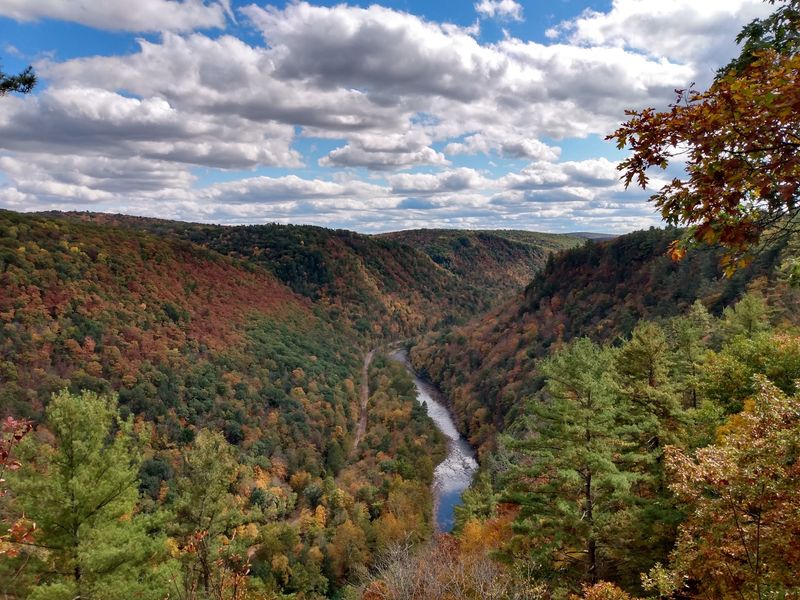
Little more than a century ago, these slopes looked bare. Heavy logging in the late 1800s stripped much of the timber across the region.
What visitors admire today is regrowth, not untouched wilderness. Decades of forest management and conservation work rebuilt the canopy that now covers the gorge.
That recovery story explains the National Natural Landmark designation as much as the geology does. A damaged landscape became a protected one.
Tioga State Forest surrounds much of the gorge and helps keep development off the ridgelines. Public land ownership plays a large role in the view staying intact.
Wildlife returned along with the trees. Black bears, deer, and a wide range of birds use the corridor, so keeping food secured and distance respected matters.
Trail crews maintain the steps and railings that make the Turkey Path passable. Staying on marked routes protects fragile slopes from erosion.
Knowing the backstory changes how the overlook feels. Green is not the default here; it was earned.
Smart Planning For A One-Day Loop
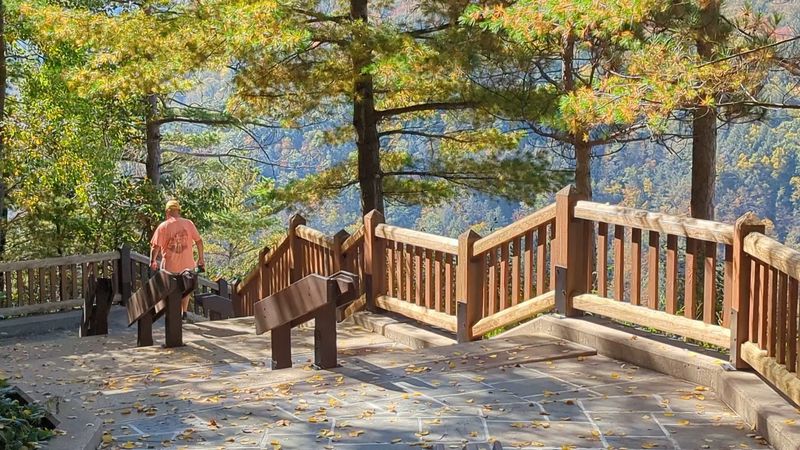
One day covers all three highlights comfortably. Order matters more than speed.
Breakfast in town first, then the drive west, then the rim and the trail. Saving the hike for midmorning avoids the worst of the parking crunch.
Boots with real grip are the single best piece of gear. The wooden steps stay damp in shaded sections year round.
Water, snacks, and a light layer round out the pack. Temperatures at the creek bottom often run cooler than the rim.
Cell coverage thins outside town, so screenshots of directions beat live navigation. Fuel up before leaving Wellsboro.
Families with small children can skip the descent entirely and still enjoy the overlooks. Paved paths near the visitor center handle strollers reasonably well.
Park hours, trail conditions, and seasonal closures change, so confirming current status before setting out prevents disappointment.
Leaving time for a second lap through downtown pays off. Bakeries, bookshops, and the theater marquee make a nice landing after a canyon climb.
A waterfall, a diner car, and a country road: hard to beat for one tank of gas.