
The Secluded California Beach Town Most Travelers Never Think To Visit
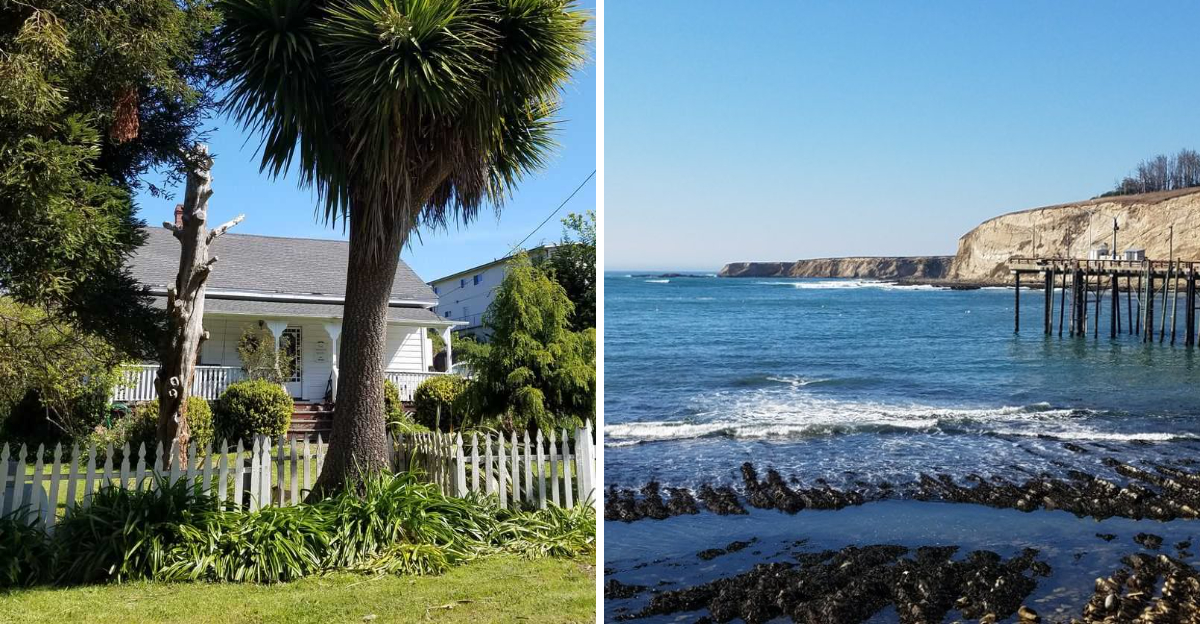
Most California beach towns announce themselves with pier lights, boardwalks, and rows of vacation rentals lining the sand.
Point Arena does none of that. Tucked along the rugged Mendocino County coast, this tiny city of fewer than 500 residents sits 32 miles west of Hopland, where Highway 1 bends sharply toward the sea.
Travelers racing between San Francisco and the redwoods rarely stop, and that absence of attention has kept Point Arena exactly what it has always been: a working coastal outpost shaped more by wind and waves than by tourism.
What remains is a place where the ocean feels vast, the bluffs stretch empty, and the rhythm of daily life moves at the pace of tide charts rather than traffic.
A Remote Beach Town On California’s North Coast
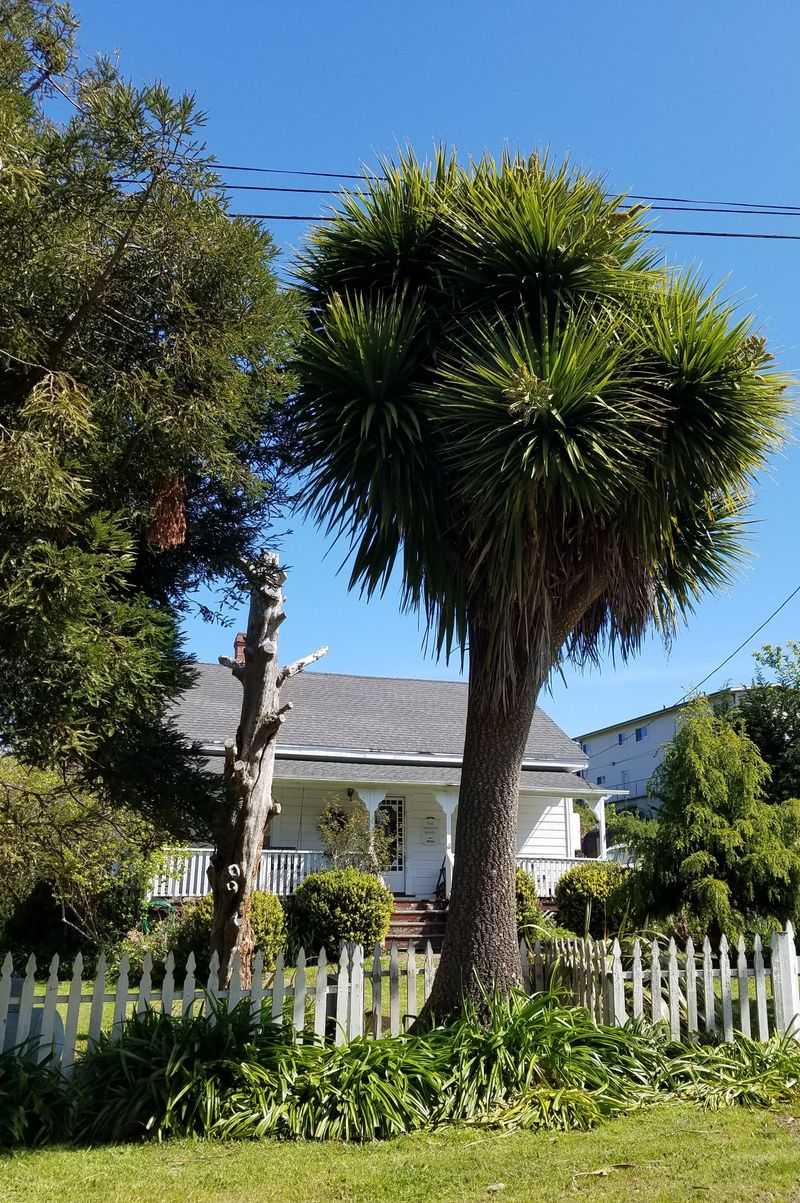
Point Arena occupies a windswept stretch of Mendocino County where the coastline turns jagged and the fog rolls in thick most mornings.
Located at 38.908798, -123.6930726, the town sits at an elevation of just 118 feet, close enough to the Pacific that salt air settles into everything.
Highway 1 cuts through the center, but few drivers slow down long enough to notice the handful of storefronts or the weathered homes tucked behind cypress hedges.
Population peaked somewhere in the past and has since dwindled to 460 as of the 2020 census, making it one of the smallest incorporated cities in California.
That modest number reflects a community built around fishing, ranching, and lighthouse keeping rather than resort development.
People who live here tend to stay because they prefer the isolation, not in spite of it.
The town lacks the polished charm of Carmel or the bohemian energy of Bolinas.
What it offers instead is space, silence, and a coastline that feels uninterrupted by human ambition.
Why Most Travelers Skip Point Arena
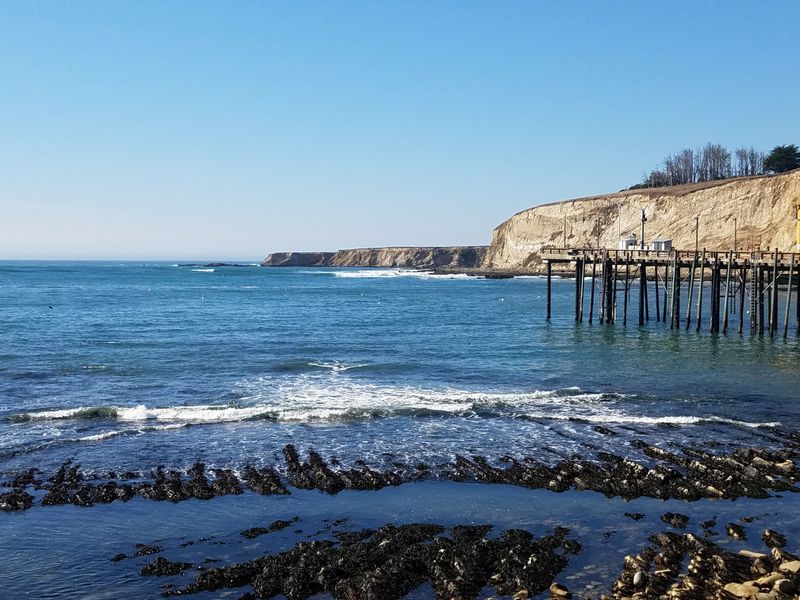
Getting to Point Arena requires intention.
The town sits three and a half hours north of San Francisco, but the drive feels longer once Highway 1 narrows and the curves tighten.
There are no freeway exits, no billboards advertising attractions, and no rest stops with visitor centers handing out glossy brochures.
Most travelers heading up the coast aim for Mendocino, a picturesque village with galleries, inns, and a reputation that draws crowds year-round.
Point Arena lies another 30 miles north, past the turnoff, and without a famous landmark or viral Instagram backdrop, it simply does not register on the average itinerary.
The town does not market itself, and that invisibility has become its defining feature.
Amenities remain sparse.
There are no chain hotels, no bustling waterfront restaurants, and no curated shopping districts.
What exists instead is a gas station, a small grocery, a post office, and a few cafes that close early.
For travelers accustomed to convenience and activity, Point Arena offers little reason to stop.
Wind, Waves, And Open Silence
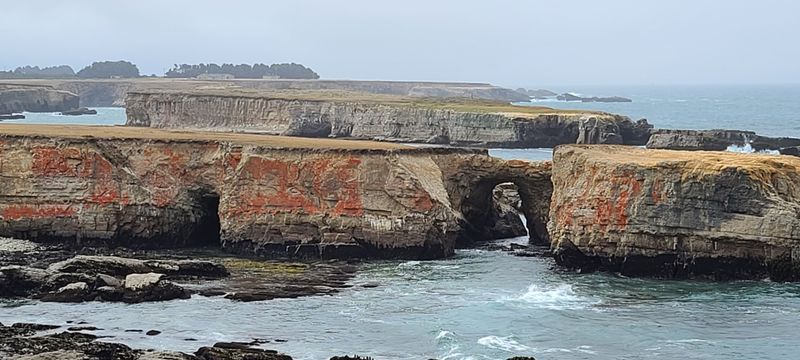
Stand anywhere along the bluffs near Point Arena and the first thing you notice is not the view but the sound.
Waves hammer the rocks below with a steady, relentless rhythm that drowns out conversation.
Wind pushes inland without pause, bending grasses flat and making it difficult to keep a hat on your head.
This is not the California coast of calm coves and gentle surf.
The Pacific here feels colder, rougher, and more indifferent to human presence.
Swimming is rare, and even wading requires caution.
Most visitors who come for the water spend their time watching it from a safe distance, mesmerized by the force and the noise.
Silence, when it comes, feels earned.
Step back from the edge, walk inland a few hundred feet, and the roar fades into a low hum.
The absence of traffic, crowds, and commercial noise creates a kind of quiet that feels unfamiliar to anyone used to city life or even suburban sprawl.
Point Arena does not fill that silence with entertainment.
Coastal Bluffs Instead Of Crowds
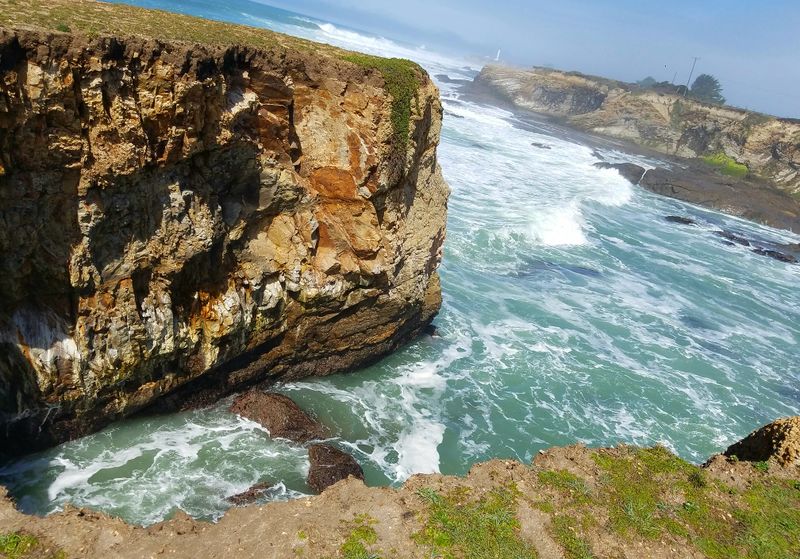
Walk the bluffs near Point Arena on a weekday afternoon and you might not see another person for an hour.
The trails here are informal, worn into the earth by locals and the occasional hiker who wandered off the main highway.
There are no railings, no interpretive signs, and no parking lots with donation boxes.
Wildflowers bloom in spring, covering the headlands in yellow and purple, but the display goes largely unnoticed by the outside world.
Photographers who do find their way here often have the entire coastline to themselves, free to set up tripods without worrying about strangers walking through the frame.
The experience feels private, almost accidental, as if you have stumbled onto something not meant for public consumption.
Compare this to the crowded overlooks at Big Sur or the packed beaches of Santa Cruz, and the difference becomes stark.
Point Arena has not been discovered, marketed, or optimized for visitor experience.
What remains is raw, unpolished, and entirely dependent on your willingness to seek it out.
How Isolation Preserved The Town
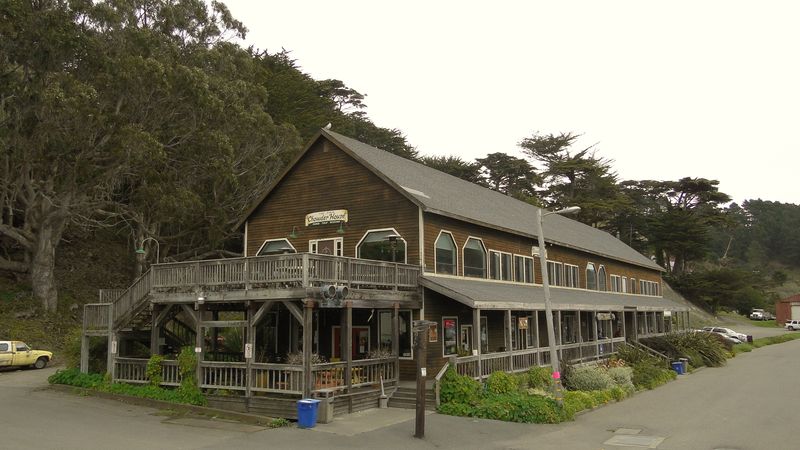
Point Arena never grew into a resort town because it never had the infrastructure to support one.
The harbor is small, the roads are narrow, and the distance from major cities kept developers from seeing much potential.
While other coastal communities along Highway 1 expanded with vacation homes and boutique hotels, Point Arena stayed small, practical, and largely unchanged.
That isolation became a form of protection.
Without easy access or a critical mass of tourists, there was no pressure to build, renovate, or rebrand.
The downtown remains a modest collection of storefronts, some occupied, some not, with architecture that reflects decades of quiet functionality rather than aesthetic ambition.
You will not find reclaimed wood signage or artisan coffee shops here.
Residents seem content with that arrangement.
The town operates on a scale that feels manageable, where everyone knows the postal clerk and the nearest hospital is an hour away.
Life here requires self-sufficiency, and that requirement has kept the population small and the character intact.
A Small Town Anchored By Wild Shoreline
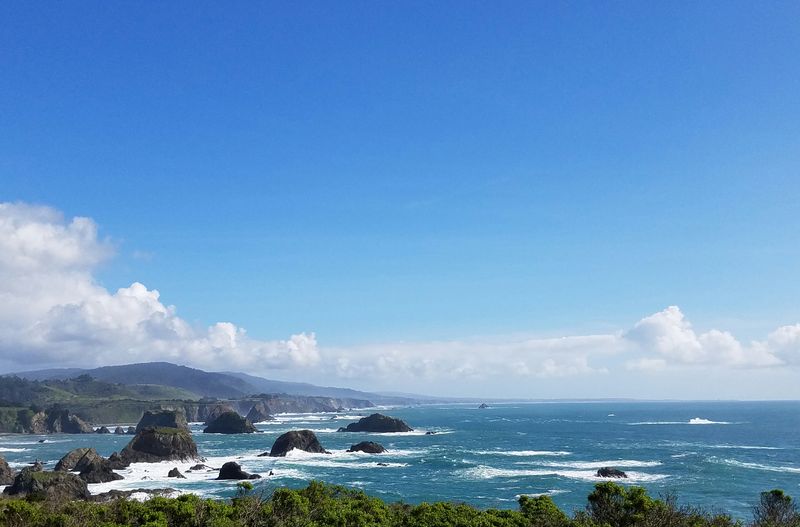
Point Arena does not sprawl.
The town occupies a compact footprint, with most homes and businesses clustered within a few blocks of Highway 1.
Beyond that narrow strip, the land opens up into pastures, forests, and eventually the bluffs that drop off into the Pacific.
The shoreline defines the town more than any civic planning ever could.
Residents orient their lives around the ocean, whether they fish commercially, maintain the lighthouse, or simply walk the bluffs each evening.
The coast provides both livelihood and identity, shaping routines and conversations in ways that feel foreign to inland communities.
There is no beach culture here in the traditional sense.
No lifeguard towers, no volleyball nets, no sunbathers stretched out on towels.
Instead, the relationship with the water feels more practical and respectful, rooted in awareness of its power rather than its recreational value.
People who live in Point Arena understand that the ocean is not a backdrop but a force that demands attention.
Point Arena–Stornetta’s Raw Coastal Views
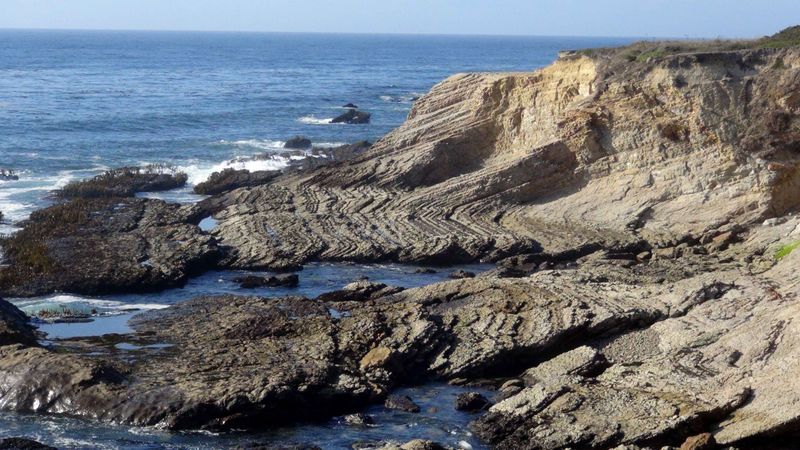
Just south of town lies the Point Arena-Stornetta Public Lands, a stretch of coastline managed by the Bureau of Land Management and designated as part of the California Coastal National Monument.
The area covers roughly 1,665 acres and offers some of the most dramatic and least visited coastal scenery in Northern California.
Trails wind through grasslands and along clifftops, providing views of sea stacks, blowholes, and tide pools that few tourists ever witness.
The landscape here feels ancient and unrefined.
Wind and water have carved the rocks into strange shapes, and the constant erosion means the coastline changes slightly with each storm.
Wildlife thrives in the absence of human interference, with harbor seals, seabirds, and occasional gray whales passing offshore during migration season.
Access remains simple and unregulated.
There are no entrance fees, no visitor centers, and no guided tours.
You park along the road, find a trailhead, and walk.
The experience depends entirely on your ability to navigate and observe without assistance.
No Resorts, No Boardwalks
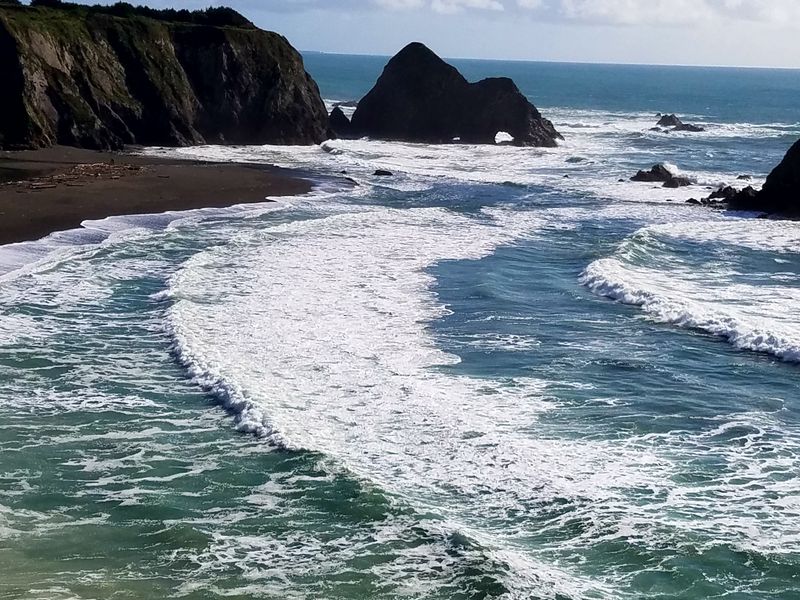
Point Arena has resisted the kind of development that transformed places like Pismo Beach or Monterey.
There are no oceanfront resorts, no souvenir shops selling saltwater taffy, and no boardwalks lit up at night.
The coastline remains undeveloped, with public access limited to rough trails and unmarked parking areas.
That absence of infrastructure frustrates some visitors and delights others.
If you arrive expecting amenities, you will leave disappointed.
But if you come prepared for self-guided exploration, the lack of commercial intrusion becomes the main attraction.
You can walk for miles without encountering a single vendor, sign, or branded experience.
The town itself reflects the same restraint.
Accommodations are limited to a few small inns and vacation rentals, none of them marketed aggressively.
Dining options consist of a couple of cafes and a pub, all of which close early.
Nightlife does not exist in any meaningful sense.
What Point Arena offers instead is the opportunity to spend an evening in near-total quiet, with nothing but the sound of the ocean and the occasional passing car.
More Coastal Outpost Than Beach Resort
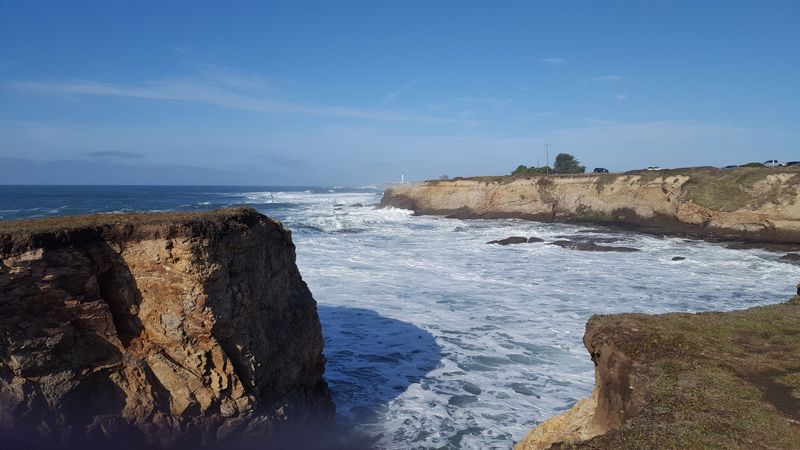
Point Arena functions more as a working outpost than a leisure destination.
The harbor supports a small fishing fleet, and the lighthouse, located a few miles north, remains operational.
Local businesses cater to residents first, visitors second, and that priority shows in the way the town operates.
There is no effort to charm or entertain.
The grocery store stocks basics, not gourmet items.
The gas station serves its purpose without offering much else.
The post office, located at California 95468, handles mail for a scattered rural population that relies on it for more than just package delivery.
This utilitarian character can feel jarring to travelers accustomed to the polished hospitality of more popular coastal towns.
Point Arena does not perform for outsiders.
It simply exists, maintaining routines that predate the tourism economy and will likely outlast it.
For those who appreciate authenticity over curation, that lack of performance becomes the most compelling reason to visit.
The town does not pretend to be anything other than what it is.
Nature Comes Before Nightlife
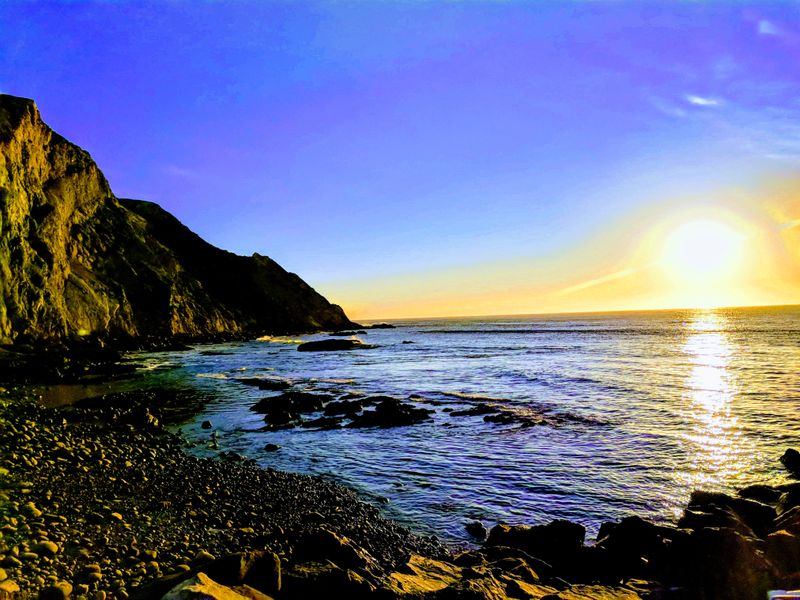
After dark, Point Arena shuts down.
There are no bars with live music, no late-night diners, and no evening entertainment of any kind.
The few restaurants that exist close by early evening, and the streets empty soon after sunset.
Streetlights are sparse, and the darkness feels complete once you step away from the highway.
That absence of nightlife shifts the focus entirely to the natural environment.
Without light pollution, the stars become visible in a way that surprises most visitors.
On clear nights, the Milky Way stretches across the sky, and the sound of waves crashing below the bluffs provides the only soundtrack.
The experience feels meditative, almost monastic, and requires no effort beyond stepping outside.
For travelers who measure a destination by the number of things to do, Point Arena will disappoint.
But for those who find value in stillness, the town offers something increasingly rare: a place where nature dominates the schedule and the landscape demands your full attention without competition from screens, speakers, or crowds.
A California Town That Feels Undiscovered
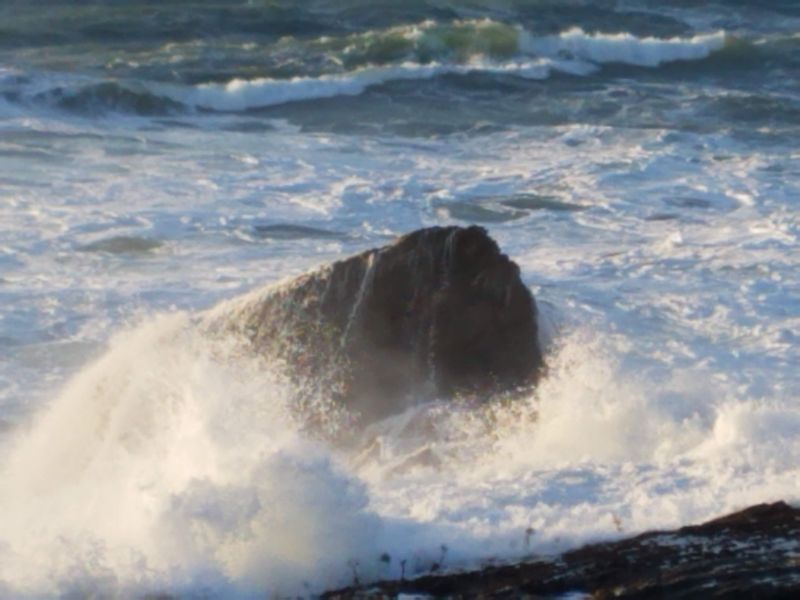
Point Arena carries the atmosphere of a place that has not yet been found.
There are no tour buses, no influencer photo spots, and no lines for anything.
The few visitors who do arrive tend to be locals from nearby towns or travelers who took a wrong turn and decided to explore.
The town does not appear in many guidebooks, and its online presence remains minimal.
That obscurity creates a strange sense of privilege.
Walking through Point Arena feels like discovering something private, a place that exists outside the usual circuits of travel content and recommendation algorithms.
You will not find it trending on social media, and that absence of digital attention has kept it remarkably free of the performative tourism that defines so many other California coastal towns.
Whether that status will last remains uncertain.
But for now, Point Arena remains a town you have to seek out intentionally, and that requirement filters the crowd down to those willing to drive a little farther and expect a little less in return.
Where The Coast Feels Vast And Untouched
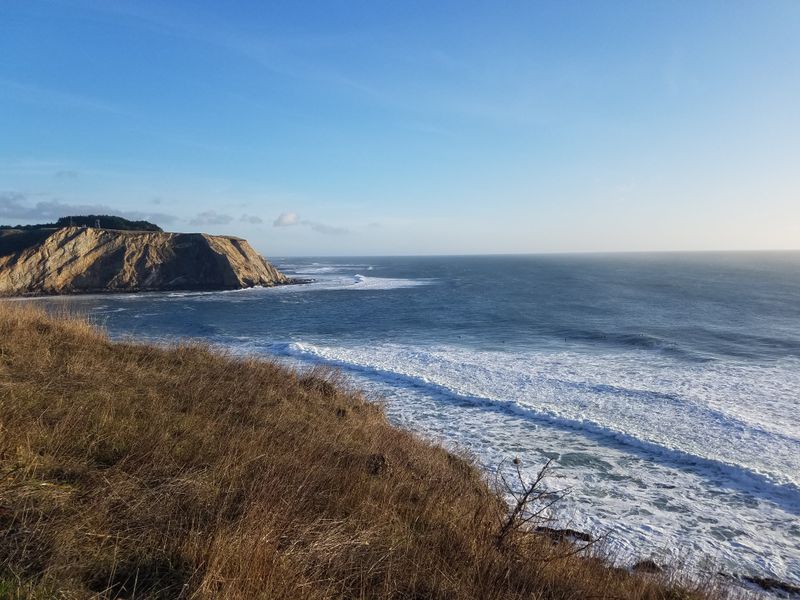
Stand at the edge of the bluffs near Point Arena and the coastline stretches in both directions without interruption.
No condos, no piers, no jetties breaking up the view.
Just cliffs, rocks, and water extending toward the horizon in a way that feels both humbling and strangely liberating.
This sense of vastness distinguishes Point Arena from nearly every other accessible beach town in California.
Most coastal destinations feel hemmed in by development, with every viewpoint framed by railings, parking lots, or gift shops.
Here, the land remains open, and the ocean feels limitless, offering a perspective that has become increasingly difficult to find along the state’s crowded shoreline.
The experience does not require special access or insider knowledge.
You simply drive to the edge of town, park, and walk.
What you find is a coastline that has not been packaged, interpreted, or optimized.
It exists as it always has, shaped by wind and water rather than human preference, and that rawness is precisely what makes it worth the drive.