
The Tiny Tennessee Village That Looks More Like Victorian England Than Appalachia
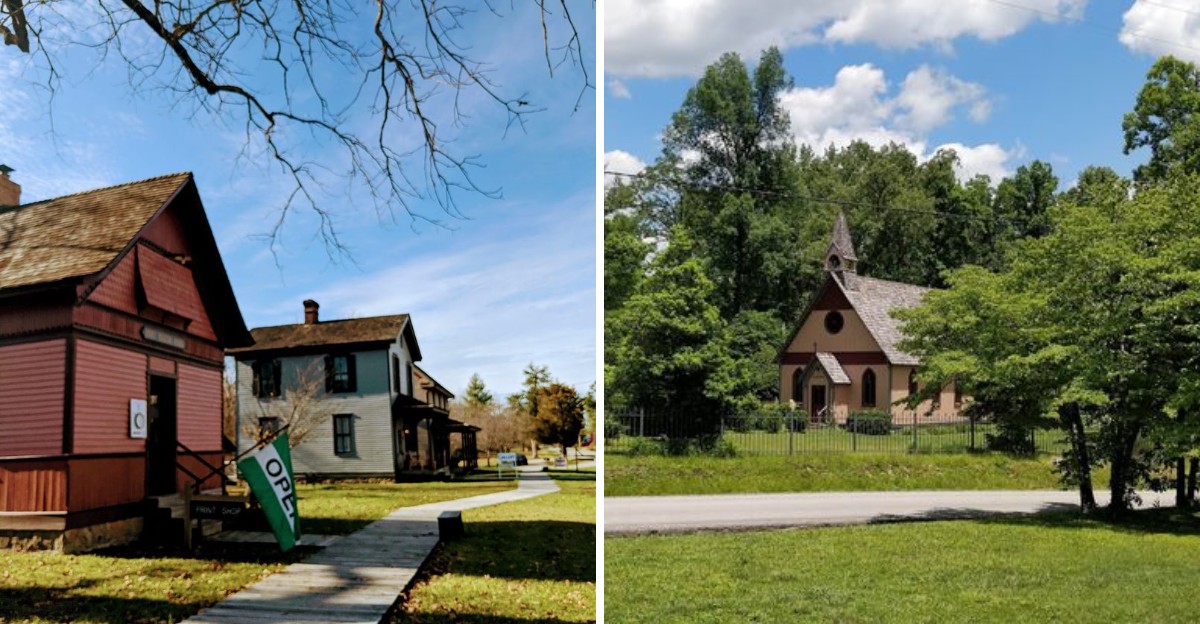
Most mountain towns do not make you wonder if you somehow crossed the Atlantic. This one might.
A tiny Tennessee village still carries the look and character of Victorian England, with historic buildings, old churches, narrow roads, and architecture that feels almost out of place in Appalachia. That contrast gives the community much of its charm.
Wooded hills surround streets lined with structures that seem better suited to an English countryside.
History is part of nearly every corner, yet the village never feels stiff or overly preserved. Old homes, churches, and public buildings still shape the atmosphere, creating a place that feels calm and slightly unexpected.
Tennessee is known for mountain getaways, but few communities look quite like this one. Anyone who enjoys unusual architecture, quiet streets, and places with a strong sense of the past may find plenty to love here.
An English Author’s Bold Idea Takes Root
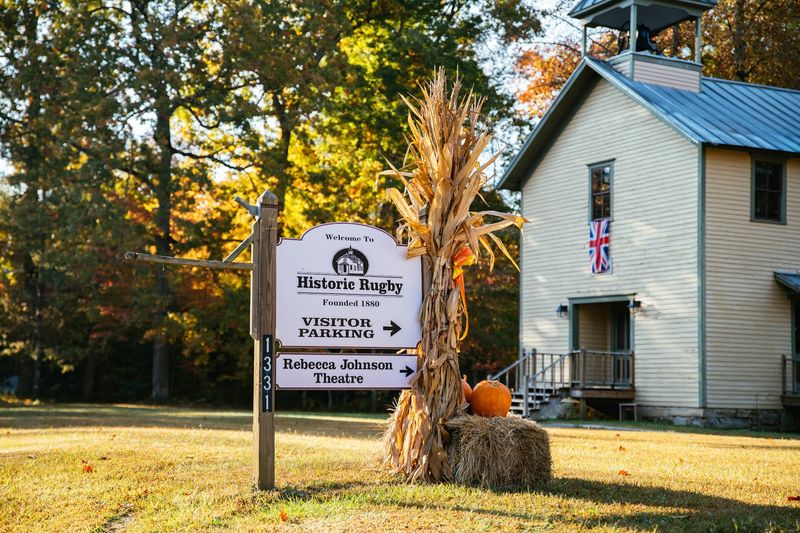
Every strange and wonderful place starts with someone stubborn enough to try. In this case, the someone was Thomas Hughes, the English author of the novel Tom Brown’s School Days.
Hughes wanted to build a cooperative colony where class rank meant nothing. He picked the Cumberland Plateau in Tennessee as the spot, and the colony opened in 1880.
The plan had a practical side too. In England, the eldest son inherited the family estate, which left younger sons with fine educations and empty pockets.
Hughes offered those young men land, work, and a chance to build something of their own. He named the settlement Rugby, after the school he attended as a boy.
News of the experiment spread across two continents. Hundreds of British and American settlers arrived, curious about a village where farmers and gentlemen would supposedly share the same social footing.
What makes the story stick is how sincere it all was. Hughes was not chasing profit; he genuinely believed a fairer community could be built from scratch in the Tennessee woods.
Standing on the village lanes today, that ambition still feels present. The buildings were not thrown up quickly for show, and they were designed for a society meant to last generations.
Gingerbread Trim In The Middle Of The Plateau
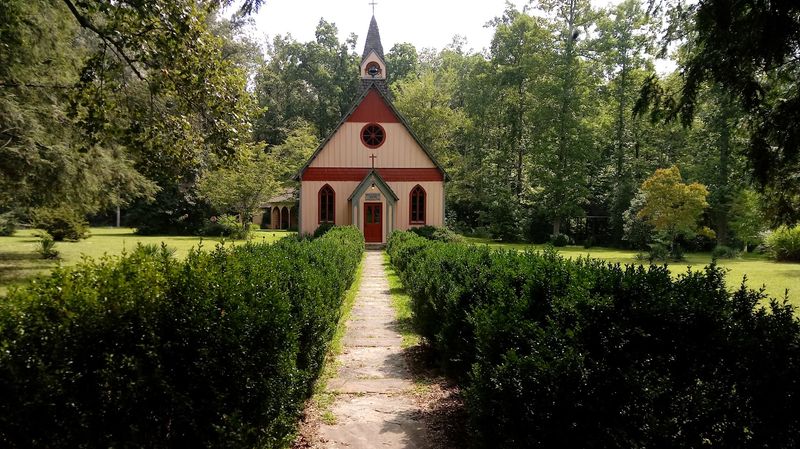
Appalachian architecture usually means log walls, tin roofs, and porches built for rocking chairs. Rugby went a different direction entirely.
The style here is Carpenter Gothic, a Victorian favorite that took stone cathedral shapes and translated them into wood. Steep roofs, pointed gables, and lacy trim show up building after building.
Colors matter too. Soft ochres, muted greens, and warm creams were common Victorian choices, and the restored buildings carry that palette rather than plain white.
The effect is startling in the best way. Forest presses in on all sides, yet the streetscape reads like an English village green transplanted whole.
Carpenters of the 1880s could show off thanks to new scroll saws and steam-powered mills. Decorative bargeboards and porch brackets became affordable, and Rugby’s builders used them generously.
Photographers love the place for exactly this reason. Morning light catches the trim shadows, and autumn leaves frame the gables in gold and rust.
Pay attention to the small details as you walk. Window shapes, chimney placement, and porch railings all differ slightly from house to house.
That variety keeps the village from feeling staged. Real families designed real homes here, and the personality of each one still shows.
A Library Where Time Simply Stopped
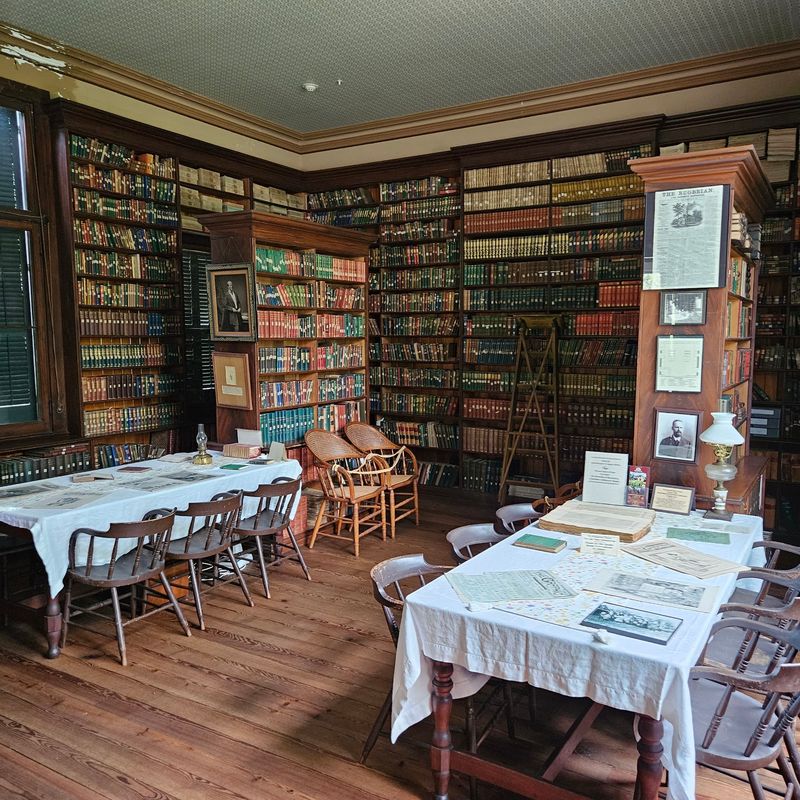
Seven thousand books. All original. Still sitting on the same shelves where they were placed in 1882.
The Thomas Hughes Public Library is the crown jewel of the village, and it is genuinely rare. Most libraries swap out their collections every few decades, so an intact Victorian collection is close to unheard of.
Publishers in England and America donated the volumes when the colony opened. Novels, histories, poetry, science texts, and periodicals filled the room.
Because the books were never scattered, the shelves show exactly what educated readers of the 1880s were reading. It is a snapshot of a whole era’s taste.
The building itself keeps the mood intact. Wooden shelving, tall windows, and warm light give the room a quiet, studious feel.
Guides at Historic Rugby explain the collection well, pointing out titles that once caused arguments and others that were pure entertainment.
Nothing about it feels like a stage set. Dust motes drift, floorboards creak, and the paper smells like exactly what it is.
For book lovers, this single room justifies the drive. Few places in the country let you stand inside a library that never changed its mind about what to keep.
Christ Church Episcopal And Its 1887 Craftsmanship
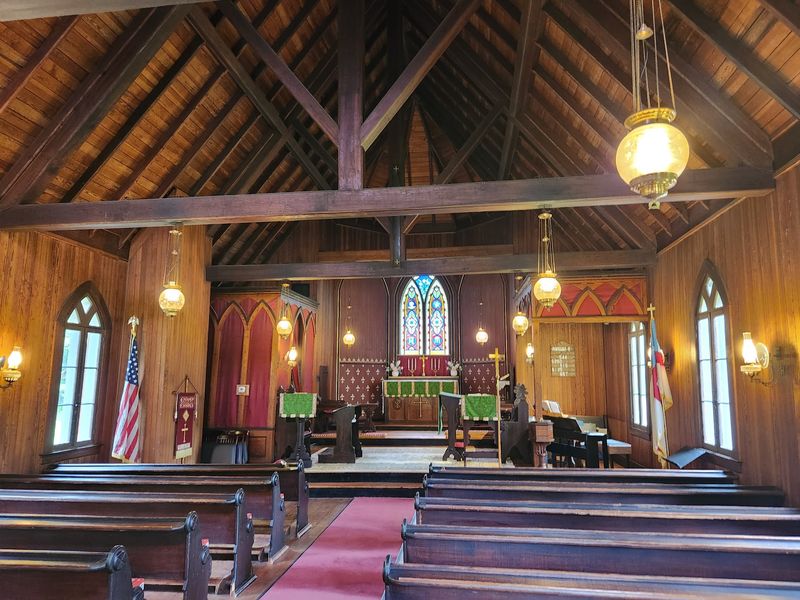
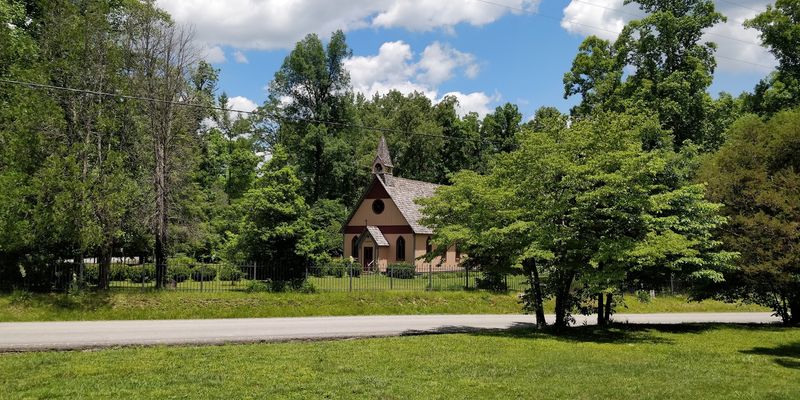
Sunlight through old glass has a particular quality, and Christ Church Episcopal proves it. Built in 1887, the little wooden church anchors the village both visually and spiritually.
Pointed arch windows and board-and-batten walls follow the same Gothic vocabulary as the homes nearby. The scale stays modest, which only adds to the charm.
Inside, the woodwork rewards a slow look. Hanging lamps, simple pews, and an organ create a room that feels intimate rather than grand.
The congregation has kept the building in use, which matters. A church that still hosts services is a living thing, not a museum piece behind rope.
Colonists came from a country where the parish church sat at the center of daily life. Recreating that here was a way of holding onto something familiar.
The setting helps enormously. Trees crowd the churchyard, and birdsong replaces traffic noise almost completely.
Tours through Historic Rugby usually include the church, and the guides share details about its construction and the families who filled the pews.
Take a moment on the steps before you move on. The view down the lane from that spot is one of the finest in the village, especially in October.
Kingstone Lisle, The Founder’s Own Cottage
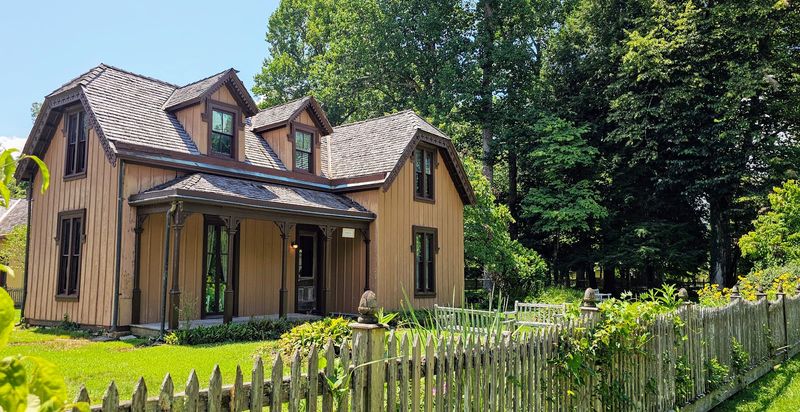
Kingstone Lisle sounds like it belongs in a novel, and honestly, it looks the part too. The 1884 cottage was built for Thomas Hughes himself.
It is small by the standards of English gentry, which tells you something about the man. He wanted to live inside his own experiment, not above it.
Carpenter Gothic details cover the exterior: a decorative gable, trim along the eaves, and a porch built for conversation.
Period furnishings fill the rooms inside. Guides explain which pieces are original to the colony and how families of that era arranged their daily lives.
Hughes actually spent limited time in Tennessee, dividing his attention between England and the colony. His mother, Margaret, lived in Rugby for years and became a beloved figure in the community.
Standing in the parlor, the scale of the whole dream shrinks to human size. This was somebody’s house, with a hearth and a window looking out at the woods.
The cottage is one of the highlights on the guided route through Historic Rugby. Knowledgeable guides fill in the gaps that a plaque never could. Bring a camera, but also just look. The proportions of the building are unusually pleasing.
When The Utopia Hit Rough Ground
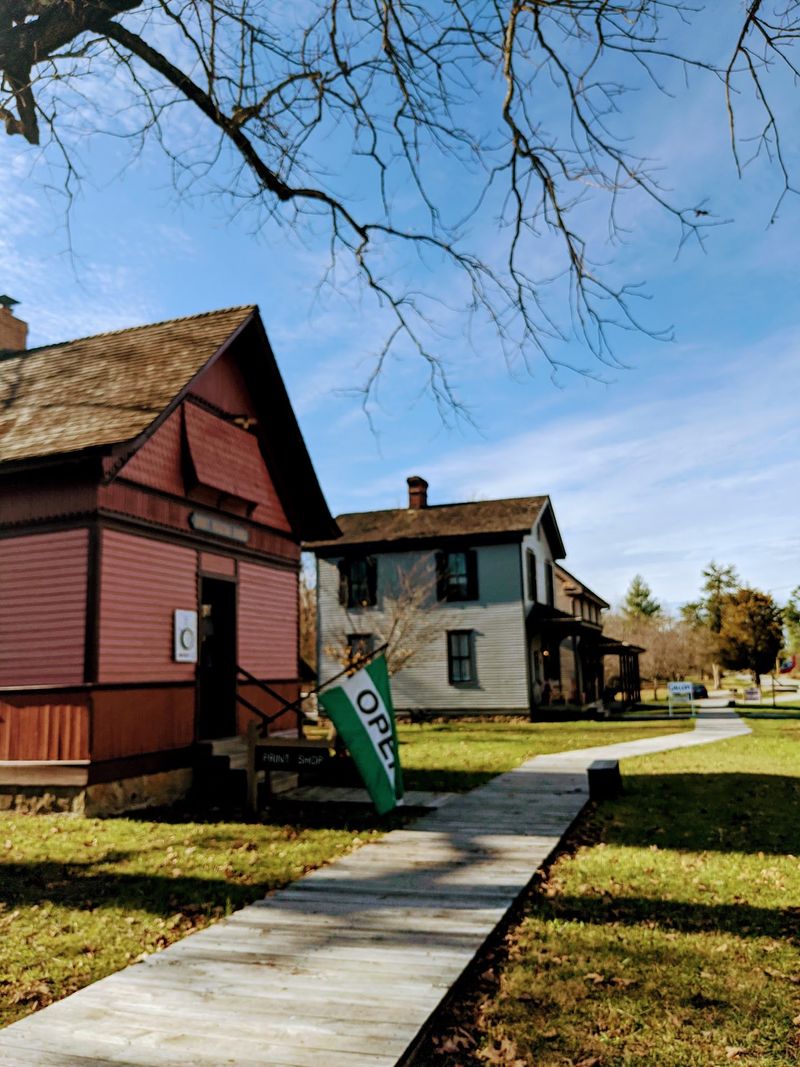
By 1884, the colony looked like a success on paper. Roughly 65 to 70 Victorian buildings stood in the village, and more than 300 residents called it home.
Then reality arrived. Illness swept through, fires destroyed several structures, and the plateau soil proved far tougher to farm than anyone expected.
Many colonists had book learning but little practical farming experience. Turning rocky highland ground into productive fields was brutal work.
Settlers began drifting away, some returning to England and others moving deeper into America. The population thinned year after year.
Here is the part people miss, though. Rugby never actually emptied out.
A small, determined community stayed put through the entire twentieth century. Families maintained the church, tended the cemetery, and kept the story alive when nobody else was paying attention.
That persistence is why so much survived. Buildings that stay occupied stay standing, while abandoned ones collapse within decades.
The colony failed as a grand social experiment, yes. But it succeeded as a place, and that distinction is worth thinking about.
What remains today in Rugby, Tennessee is not a ruin. It is the stubborn remainder of an idea that refused to disappear completely.
Restoration Work That Saved The Whole Village
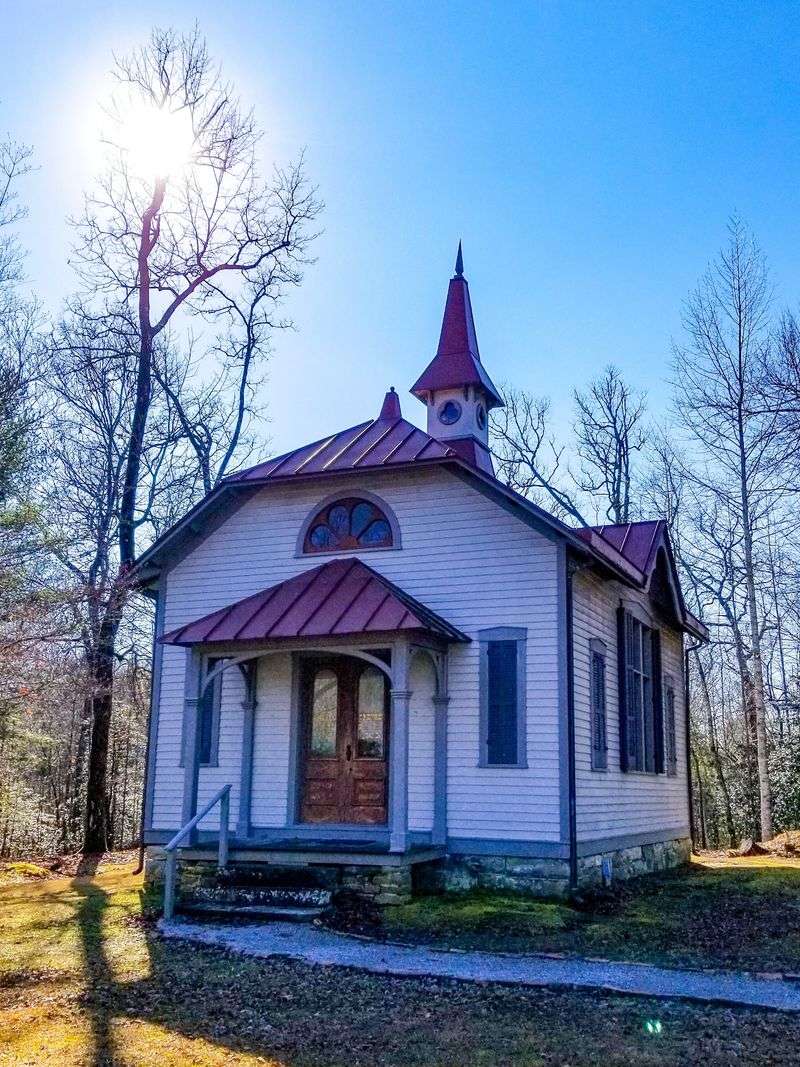
Saving a village takes more than good intentions. It takes decades.
In the 1960s, residents, descendants of colonists, and friends of the place organized a serious restoration effort. Historic Rugby, Inc. was founded in 1966 to lead the work.
Their mission covers both sides of the story: the British Isles heritage the colonists brought and the Appalachian culture that surrounded them.
Recognition followed. The village earned a listing on the National Register of Historic Places in 1972.
More than two dozen original Victorian buildings still stand today, making this one of the most authentically preserved historic villages in the country.
The visitor center serves as the starting point, with exhibits, a theater, and staff who genuinely know their subject. The address is 1331 Rugby Pkwy, Rugby, TN 37733, and the phone line is 423-628-2441.
Hours run Thursday through Saturday from 9 AM to 5 PM, with Sunday from noon to 5 PM. Monday through Wednesday the center closes, so plan accordingly.
Guided tours generally require a reservation, and they are worth arranging ahead. Self-guided wandering works too, though the guides unlock stories you would otherwise walk right past.
Trails, Gorges, And The Big South Fork Next Door
Victorian houses are only half the reason to make the drive. The other half is the landscape wrapped around them.
The village sits on the Cumberland Plateau, right beside the Big South Fork National River and Recreation Area. Sandstone cliffs, overhangs, and clear water define the terrain.
About ten miles of hiking trails connect to the village itself. Routes range from easy loops to steeper descents toward the river.
The Gentleman’s Swimming Hole trail is a favorite, following the river past cliffs and rock shelters. Sturdy shoes make a real difference on the rocky sections.
Other paths lead to a historic homestead site and an old spring house, with information boards explaining who lived there and how.
Pack insect repellent in warmer months, and bring water. Cell service on the plateau can be patchy, so download a map before you set out.
Autumn is spectacular, with hardwood color framing the gables and the gorges alike. Spring brings wildflowers and full, rushing water.
Combining a morning tour of Historic Rugby with an afternoon on the trails makes for an unusually well-balanced day. History, architecture, and Tennessee wilderness, all within walking distance of each other.