
These 6 Historic Mississippi Bridges Are Still Standing After More Than A Century
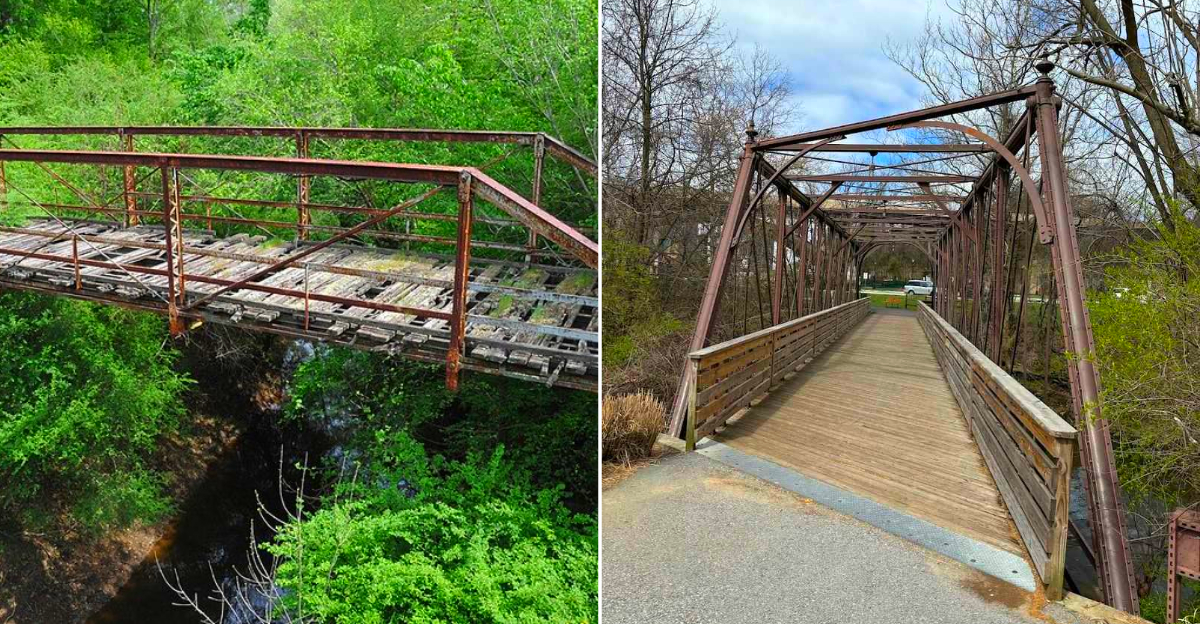
Old bridges have a way of making Mississippi feel like time never fully moved on. They stretch over rivers, creeks, bayous, and quiet backroads with a kind of grit modern shortcuts cannot copy.
More than a century of storms, floods, heavy traffic, changing towns, and changing lives has passed beneath and around them, yet these structures still stand with stories built into every beam and span. Some were engineering achievements for their day.
Others became everyday lifelines for communities that depended on them long before GPS made travel feel effortless. What makes them special is not just their age, but the fact that they still connect people to the past in plain sight.
Across Mississippi, these nine historic bridges prove that steel, stone, wood, and determination can leave a mark that lasts far longer than anyone expected.
1. Byram Bridge
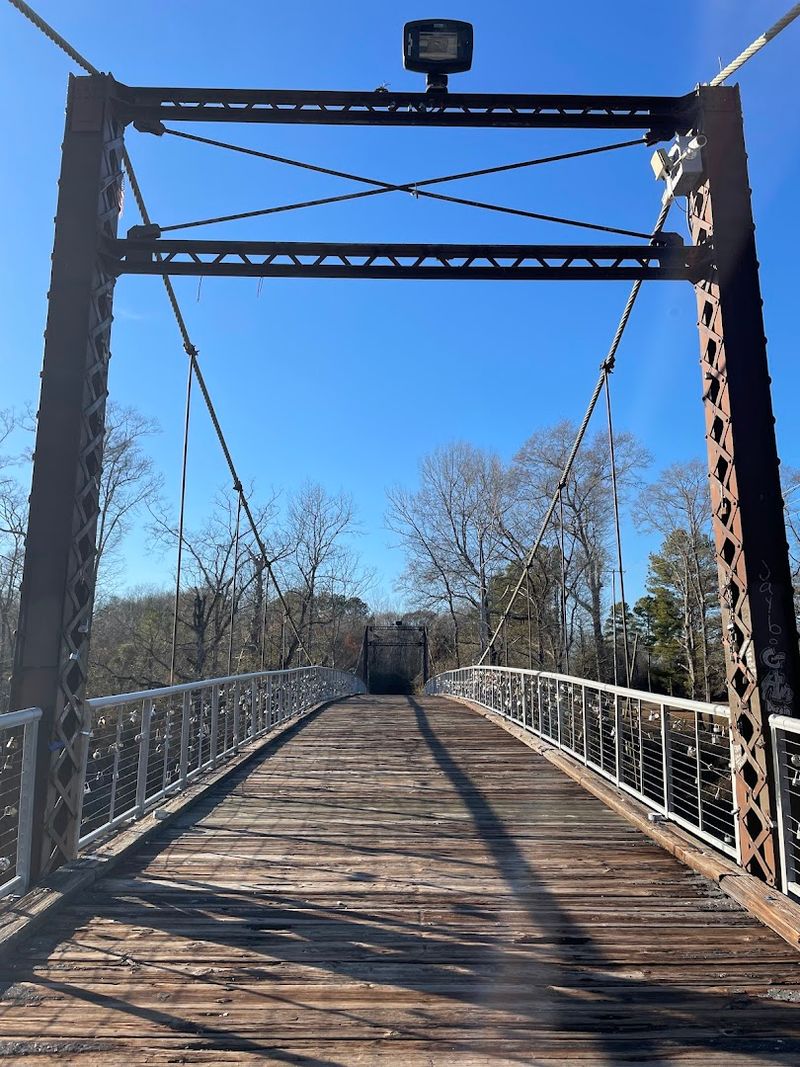
Back in 1905, a bridge went up over the Pearl River that people in Hinds and Rankin Counties still talk about today. The Byram Bridge is a twin-tower swinging suspension bridge, and that makes it one of the rarest bridge types still standing anywhere in the South.
Engineers Schuster and Jacob of Fayette, Mississippi designed it using a patented method, and local blacksmith De Witt Mason reportedly forged some of its iron rods by hand.
The bridge stretches about 360 feet in total, with a central span of roughly 200 feet. That is a serious amount of engineering muscle for 1905.
The town of Byram leans into its fame so hard that it actually calls itself “The Home of the Swinging Bridge.” You have to respect that kind of civic pride.
Vehicles used it for decades until 1987, when safety concerns finally took it off the road. A 2015 restoration converted it into a pedestrian footbridge, so you can still walk across it today.
Find it on Old Byram and Florence Road near Frenchs Store, Mississippi. It is a living, breathing piece of history right under your feet.
The 2015 pedestrian conversion gave the Byram Bridge a second life that preservation advocates had fought for over several decades of uncertainty about its future.
Walking across it today puts you directly in contact with ironwork that a local blacksmith shaped by hand more than a century ago, which is a tactile connection to craftsmanship that museum displays simply cannot replicate.
The Pearl River flowing beneath adds a natural backdrop that makes the crossing feel genuinely ceremonial rather than just a walk across a footbridge.
Byram itself has grown considerably as a Jackson suburb, but the bridge remains its most distinctive and historically significant landmark by a wide margin.
2. Yellow Creek Bridge
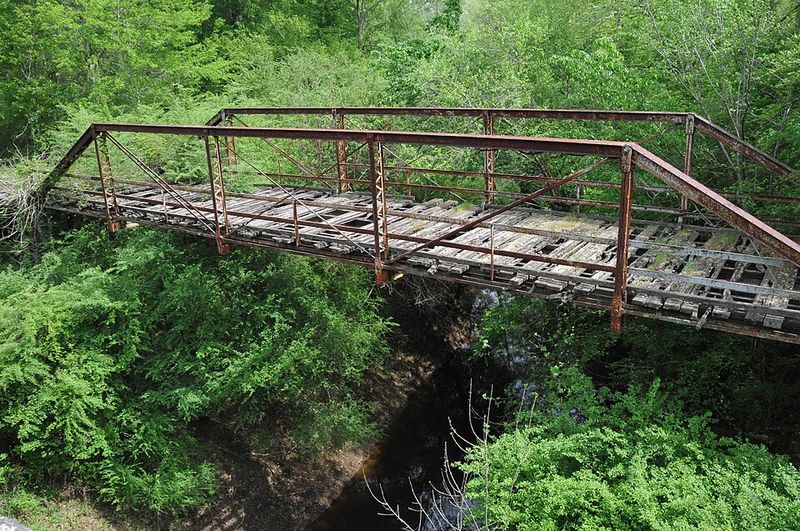
Not every old bridge needs to be massive to earn its place in history. The Yellow Creek Bridge near Waynesboro, Mississippi, is proof that even a modest Pratt pony truss can carry a century of significance.
Built in 1910, it was part of the everyday fabric of Wayne County life long before paved roads were common out here.
A Pratt pony truss uses diagonal steel members to carry the load, and it was a popular choice for rural bridges in the early 1900s because it was cost-effective and sturdy. Engineers knew what they were doing back then, even without computers to run the calculations.
The Yellow Creek Bridge held up under wagons, early automobiles, and everything in between.
On November 16, 1988, it was officially added to the National Register of Historic Places, which is basically the Hall of Fame for buildings and structures in America.
It no longer carries active traffic, but it remains standing northeast of Waynesboro, MS 39367, as a quiet testament to early 20th-century craftsmanship.
Bridges like this one remind us that good engineering does not have an expiration date.
Wayne County sits in the eastern hill country of Mississippi, a region that developed its infrastructure more slowly than the Delta and Gulf Coast, which makes surviving examples of early rural engineering like this one especially significant.
The Pratt pony truss design, with its characteristic diagonal members running from the center outward toward the ends, became the workhorse of American rural bridge construction in the late 19th and early 20th centuries.
Why? Because it was economical to build and straightforward to maintain.
Finding one intact and listed on the National Register of Historic Places in a quiet corner of eastern Mississippi is the kind of discovery that rewards travelers who deliberately leave the interstate destinations.
3. Woodburn Bridge
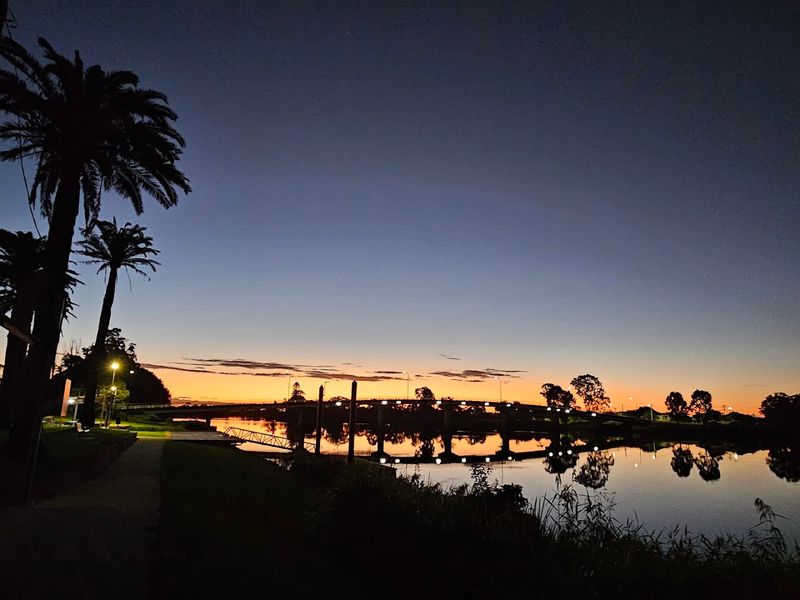
Few things feel more Mississippi Delta than a swing bridge sitting quietly over the Sunflower River with cotton fields stretching out behind it. The Woodburn Bridge, built around 1916 southeast of Indianola, MS 38751, is exactly that kind of scene.
It is a Pratt truss swing bridge, meaning it was designed to rotate horizontally so river boats could pass through.
Swing bridges are a fascinating engineering solution because they solve two problems at once. They carry road traffic across a river while also respecting the boats that need to use that same river.
In the early 20th century, river commerce was still a big deal in the Delta, so this design made a lot of practical sense.
The bridge served its community for decades before traffic was rerouted around 1985. Even so, it earned a well-deserved spot on the National Register of Historic Places, recognized for both its engineering value and its historical role in Sunflower County.
It keeps standing out there today, a little weathered but absolutely unbowed. If old bridges could talk, this one would have some seriously good Delta stories to share.
The Sunflower River running beneath the Woodburn Bridge was once a genuine commercial artery through the Mississippi Delta, carrying cotton, supplies, and passengers between communities that roads had not yet reliably connected.
The swing bridge design was not a novelty but a practical necessity for a waterway that active commerce depended on.
The pivot mechanism at the center pier represents an engineering solution that balanced the competing demands of road traffic and river navigation with genuine ingenuity.
Indianola sits in the heart of Sunflower County, a region with deep blues music history that includes B.B. King’s birthplace, and combining a visit to the Woodburn Bridge with the B.B.
King Museum in Indianola turns an already interesting stop into a full and deeply layered Delta afternoon.
4. Big Black River Railroad Bridge
Some bridges make you stop the car and just stare. The Big Black River Railroad Bridge, completed between 1917 and 1919, is absolutely one of those.
Stretching 465 feet across the Big Black River along the boundary of Hinds and Warren Counties, it carries an Illinois Central railroad line and turns heads doing it.
The design is a concrete open-spandrel arch, which means the spaces between the arch and the roadway are open rather than filled in solid. It gives the bridge a light, almost elegant appearance that you would not expect from something built to carry heavy freight trains.
The Blodgett Construction Company built it, replacing earlier wartime bridges at a crossing that has been strategically important since the Civil War era.
Only two known concrete open-spandrel arch bridges exist in Mississippi, making this one genuinely rare. It was listed on the National Register of Historic Places in 1988, cementing its status as an engineering landmark.
You can find it east of Bovina, near Edwards, MS 39066. Standing near it, you get the full effect of that dramatic arch sweeping over the river, and it is quite the sight to behold.
The Big Black River crossing has carried strategic military and commercial importance since long before the concrete arch bridge was built, with Civil War armies fighting for control of the river crossing during the Vicksburg Campaign of 1863.
The current bridge replaced structures at a site where the stakes of controlling a river crossing were measured in battles rather than traffic counts.
The concrete open-spandrel arch design chosen by the Blodgett Construction Company represented a significant shift from iron truss bridges that had dominated railroad construction.
The decision to use concrete reflected both the material’s growing credibility and the railroad’s long-term confidence in the crossing’s importance.
Finding one of only two known examples of this bridge type in Mississippi along a working railroad line adds a living industrial dimension that static historic structures cannot offer.
5. Phoenix Columns Bridge
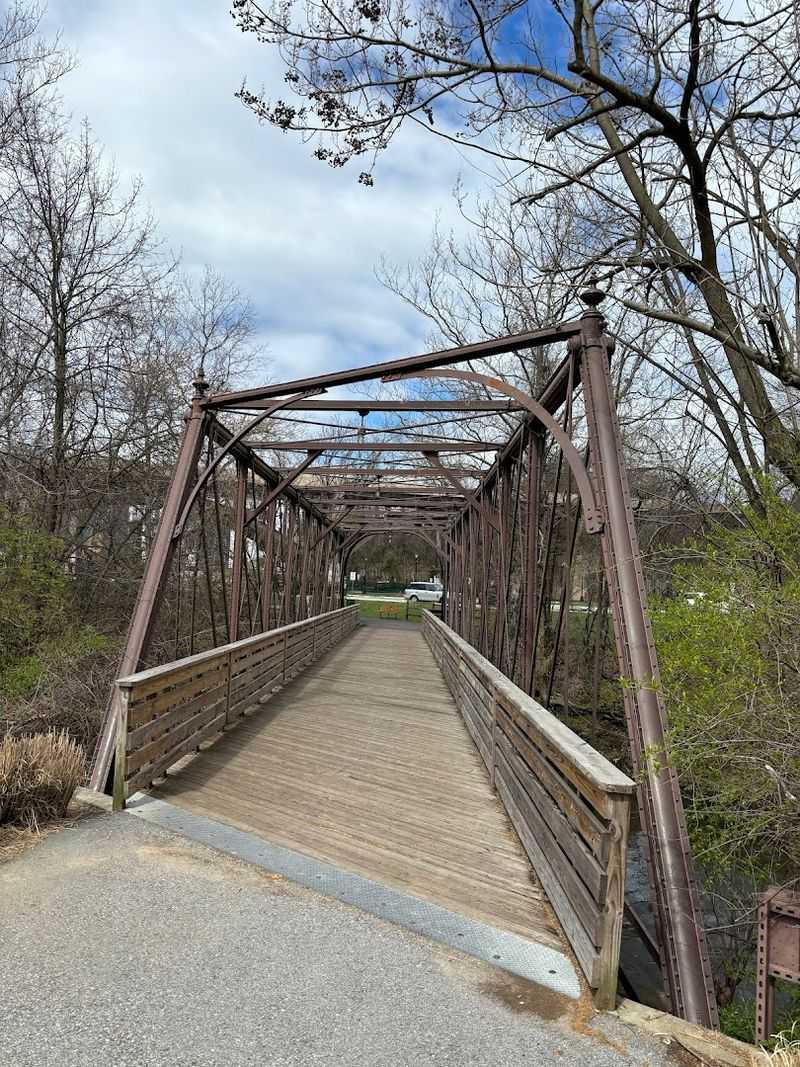
Every state has a bridge that carries the title of oldest surviving vehicular bridge, and Mississippi’s belongs to the Phoenix Columns Bridge in Vicksburg, MS 39180.
At 175.5 feet in length, it is not the biggest bridge on this list, but it punches well above its weight in terms of historical significance.
The name comes from its Phoenix columns, a structural innovation developed by the Phoenix Bridge Company that made bridges stronger and lighter at the same time.
Phoenix columns are hollow, cast-iron cylinders assembled from curved segments bolted together. The design was a breakthrough in the 19th century, allowing engineers to build taller and more efficient structures.
Finding one of these bridges still standing anywhere in the country is rare, and Mississippi having the only surviving example in the state makes this one genuinely special.
The bridge represents a pivotal moment in American infrastructure history, right when iron and steel were replacing wood as the go-to building material. Vicksburg, sitting at the edge of the Mississippi River, was a natural place for this kind of forward-thinking construction.
It remains one of the most technically fascinating bridges on this entire list, a true engineering artifact hiding in plain sight.
The Phoenix Bridge Company, founded in Pennsylvania in 1865, became one of the most important bridge manufacturers in post-Civil War America.
It was supplying iron components to railroad and highway bridge projects across the country during the explosive infrastructure expansion of the late 19th century.
Their hollow column system was patented and licensed, making Phoenix column bridges identifiable by engineers even today from their distinctive cylindrical members.
Mississippi holding the only surviving Phoenix column vehicular bridge in the state places Vicksburg in an unexpectedly significant position within American industrial heritage.
The city already carries enormous weight as a Civil War landmark and Mississippi River crossing point, and the Phoenix Columns Bridge adds an engineering history layer that most visitors driving past it never stop to consider or appreciate.
6. Grand Boulevard Swing Bridge
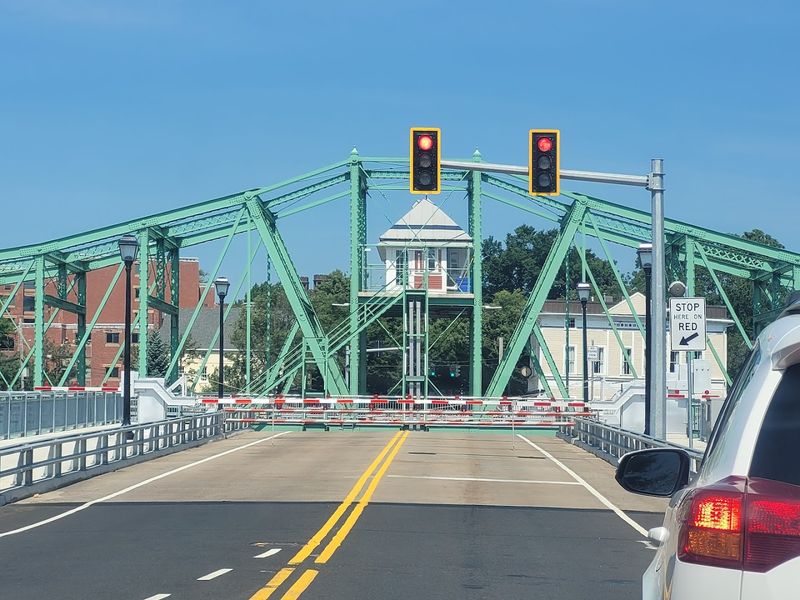
Greenwood, MS 38930, has a bridge that functions as both a piece of infrastructure and a piece of jewelry for the city skyline. The Grand Boulevard Swing Bridge, officially named the Keesler Bridge after General S.R.
Keesler, was built in 1925 over the Yazoo River. It is a metal rivet-connected Pratt through truss swing bridge, and it was designed to rotate horizontally so river traffic could pass beneath it.
Riveted steel construction was the gold standard in the 1920s, and this bridge shows why. Every joint, every panel, every diagonal member was assembled with precision and built to last.
The swing mechanism allowed the entire center span to pivot on a center pier, which is an engineering trick that never gets old to watch in action.
The bridge was recognized as a Mississippi Landmark in 1987 and then listed on the National Register of Historic Places. It faced serious demolition threats in the late 1990s, but the Greenwood community fought hard to save it.
A full restoration between 2000 and 2003 brought it back to form. Today it serves as a stunning gateway to downtown Greenwood, proving that with enough community love, great old bridges can absolutely survive.
The near-demolition of the Grand Boulevard Swing Bridge in the late 1990s and the community campaign that prevented it represent one of the more significant preservation victories in Mississippi’s recent architectural history.
The restoration completed between 2000 and 2003 used period-appropriate techniques and materials wherever possible, returning the riveted steel structure to a condition that reflects its original construction quality.
Greenwood’s investment in the bridge paid dividends in civic identity that no new infrastructure project could have produced at any comparable cost.