
These 9 New York Hikes Lead To The Ruins Of Forgotten 1800s Mills And Mansions
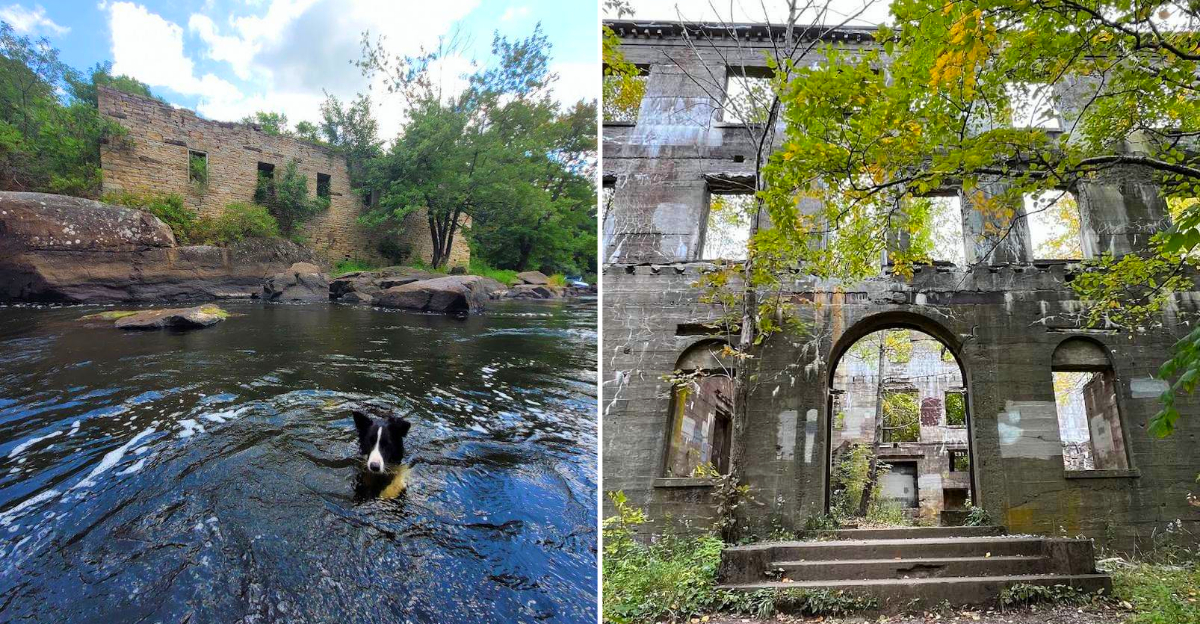
The 1800s left a lot behind in New York. Mills that ran full tilt for decades and then stopped. Mansions that housed serious ambition and then slowly gave that ambition back to the forest.
The hikes that lead to these ruins are doing something that a history book cannot. They put you inside the story instead of across from it.
A crumbling stone wall that was once someone’s kitchen. The foundation of a mill that processed grain for a town that no longer exists. Staircases leading to floors that are not there anymore, framed by trees that grew in after everything else left.
New York has a present that gets most of the attention and a past that rewards the people willing to lace up their boots and go looking for it. These hikes go looking.
What they find on the other end is the kind of history that stays with you long after the mud dries on your shoes.
1. Empire Mill In Rock City Falls NY
George West had a nickname that sounds like a superhero origin story. People called him the Paper Bag King, and he absolutely earned it.
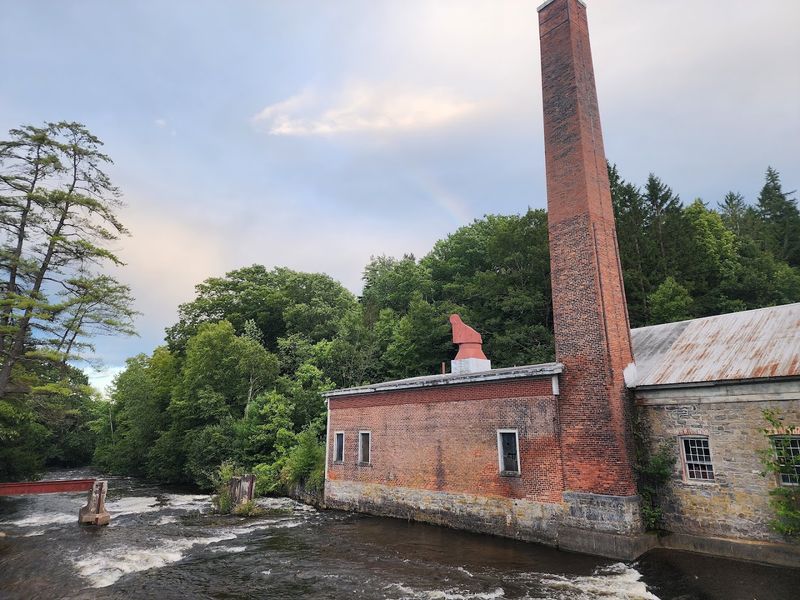
In 1862, West founded the Empire Mill at 726 NY-29, Rock City Falls, NY 12863, and turned this small Saratoga County spot into a paper bag powerhouse.
Not satisfied with one mill, he built the Excelsior Mill right next door in 1866. Then, because why not, he constructed a grand mansion across the street.
The man had vision, and he had the ambition to match it. Rock City Falls was basically his personal industrial campus.
Long before West arrived, though, saw and grist mills were already running in this area before 1800. The land has been working hard since before the country was fully figured out.
West just added the paper bag chapter to an already impressive story.
The George West House earned a spot on the National Register of Historic Places in 2005, which is a well-deserved honor. The former Empire and Excelsior Mills now form part of a public park, so you can wander through what remains at your own pace.
The old trolley railroad bed nearby is being converted into a walking trail called Boice Park.
Visiting feels like flipping through a history book, except the pages are made of brick and stone. The park setting makes it a pleasant outing for families and solo hikers alike.
Rock City Falls is the kind of place that rewards people who slow down and actually look at what surrounds them. George West would probably approve.
2. Old Mills Along Wallkill River Near New Paltz NY
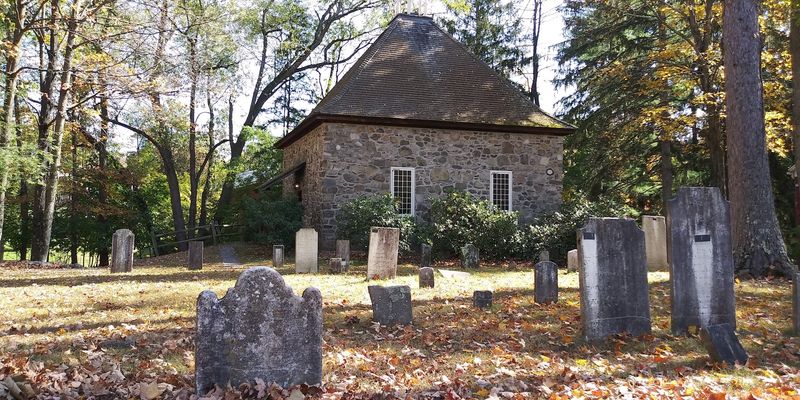
Few places in New York carry as much historical weight per square foot as the stretch near 11 Huguenot St, New Paltz, NY 12561. French Huguenots, the first European settlers in the area, chose this spot along the Wallkill River because the land was fertile and the water was useful.
That was a very smart call.
Historic Huguenot Street is a National Historic Landmark District, and it earns that title without breaking a sweat. Seven historic stone house museums line the street, with some structures dating back to the early 1700s.
Walking through here feels like the calendar got confused and sent you back three centuries.
The industrial past runs just as deep as the residential history. Canal operations and cement production once defined this corridor, shaping the local economy for generations.
The Wallkill Valley Railroad completed its line to New Paltz by 1870, connecting the community to the wider world of commerce.
Today, sections of the old Wallkill Valley Railroad bridge have been cleverly repurposed into a scenic rail trail. Walkers and cyclists now glide over the same structure that once carried freight cars loaded with goods.
It is the kind of reuse that makes you appreciate both the past and the present at the same time.
The whole area rewards a slow, exploratory visit. You can pair a walk along the river with a tour of the stone houses and still have time to grab something to eat in town.
New Paltz has a lively, welcoming energy that makes the history feel alive rather than locked behind glass. Bring comfortable shoes and a genuine sense of curiosity.
3. Rossie Mill Ruins In Hammond NY
Back in 1813, a man named David Parish had a big idea. He built the region’s very first iron blast furnace right here in Hammond, NY 13646, kicking off what would become decades of serious industrial hustle.
The whole operation ran on iron and lead ore, and for a while, Rossie was one busy little hamlet.
Lead ore was discovered in the 1830s, and that find supercharged the area’s output. Processing facilities popped up, workers flooded in, and Rossie became a legitimate industrial hotspot in upstate New York.
All good things eventually slow down, though, and by 1865, the ore was gone and so was the boom.
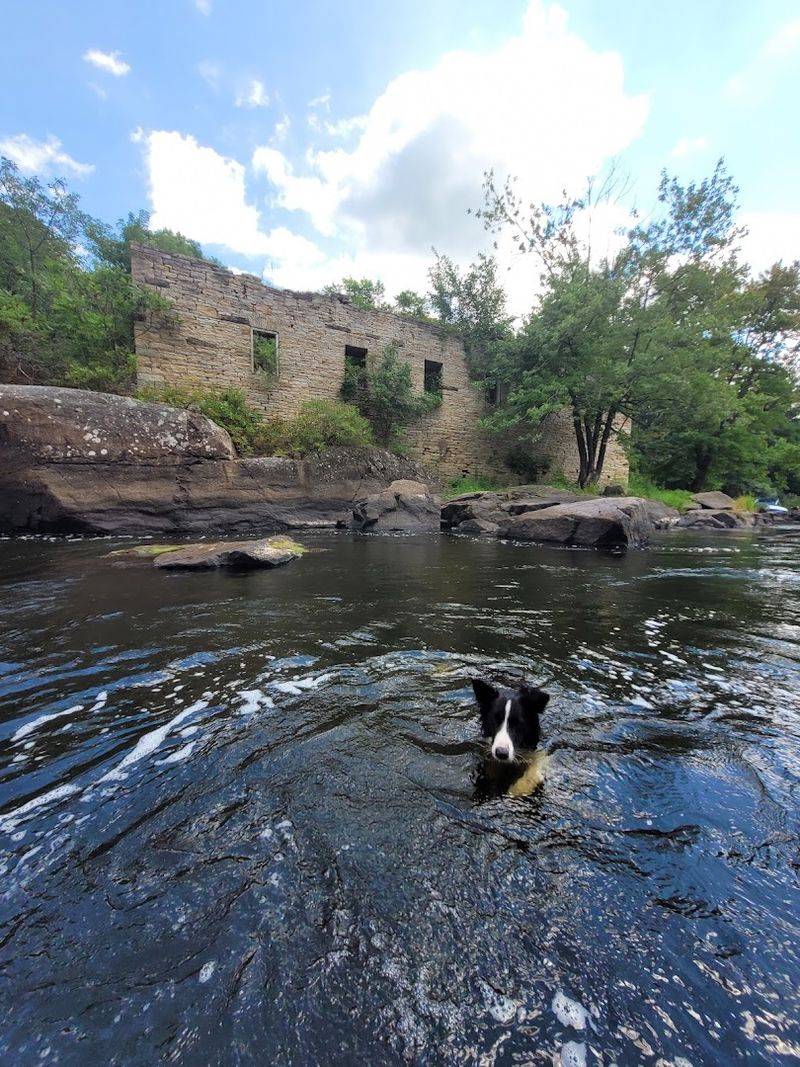
What hikers find today is genuinely remarkable. The grist mill, built in 1825, still stands in partial form.
An iron foundry and a machine shop from the 1840s are scattered nearby, along with the original iron furnace site. Exploring all of it takes about a mile of walking through the hamlet itself.
Pack sturdy shoes because the terrain is uneven and the ground plays tricks on you. The ruins are not behind a velvet rope or on a guided tour schedule.
You just show up, walk around, and let the stones tell the story. It feels like stepping onto a movie set, except everything here is completely real.
Rossie does not get the same tourist traffic as flashier destinations, and honestly, that is part of the charm. You might have the whole place to yourself.
For history lovers who enjoy a relaxed, self-guided adventure, this quiet corner of St. Lawrence County delivers something genuinely special.
4. Overlook Mountain House Ruins In Woodstock NY
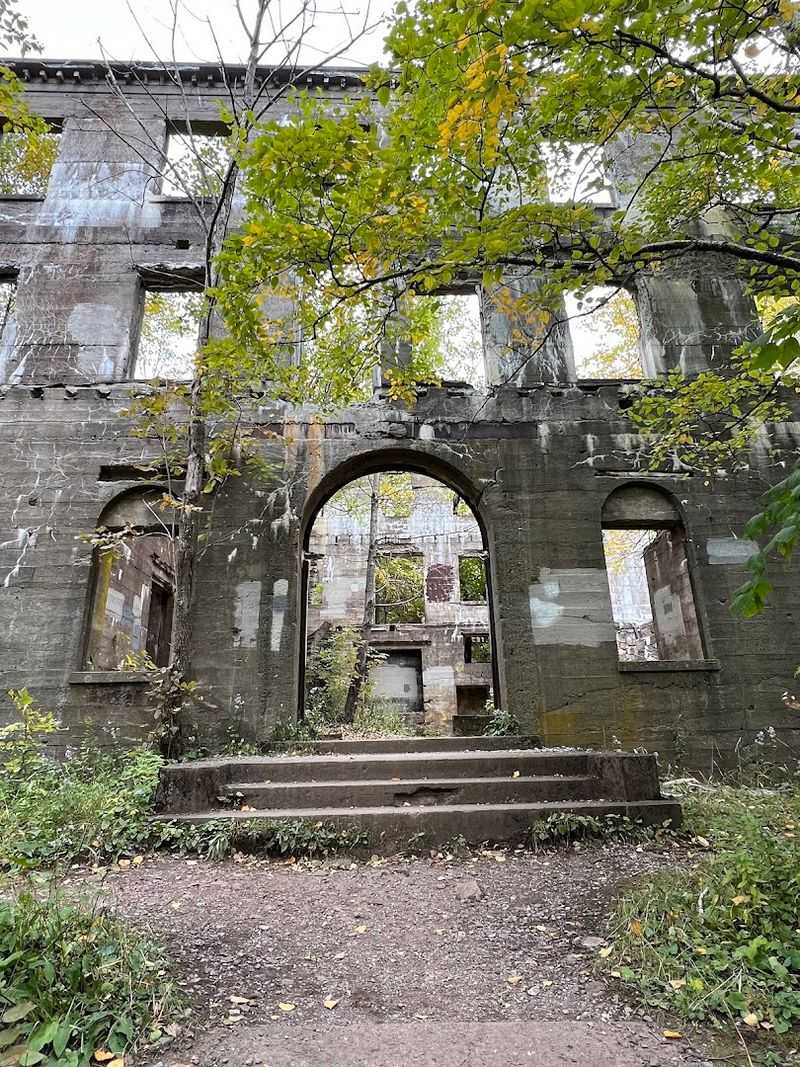
Ambition built Overlook Mountain House, and bad luck kept knocking it down. The first lodge on this site went up in 1833, struggled to pull in enough guests, and quietly closed.
Then a bold 300-room hotel rose in 1871, only to burn in 1875. Rebuilt in 1878, it burned again around 1921 or 1923.
At some point, you have to admire the stubbornness.
The concrete ruins visible today come from a rebuild that started in the 1920s. Construction stalled because of serious money problems made worse by the Great Depression.
Nature has been steadily reclaiming the framework ever since, draping vines over walls and pushing roots through floors.
The hike to reach these ruins follows an old carriage road on Overlook Mountain Trail, Woodstock, NY 12498. The round trip covers about five miles and typically takes around two hours and forty-seven minutes.
It is a satisfying workout with a genuinely dramatic reward at the top.
Once you arrive, the views are extraordinary. The Hudson River Valley spreads out below you, and the central Catskills roll across the horizon in every direction.
Standing among the ruins with that backdrop feels almost theatrical, like the mountain itself is putting on a show.
Woodstock has a reputation for creativity and artistic energy, and somehow the mountain above it matches that vibe perfectly. The ruins are moody, photogenic, and full of quiet drama.
Hikers of moderate fitness will handle the trail comfortably. Go on a clear day for the best views, and arrive early if you want the place mostly to yourself before the weekend crowds show up.
5. Catskill Mountain House Site In Palenville NY
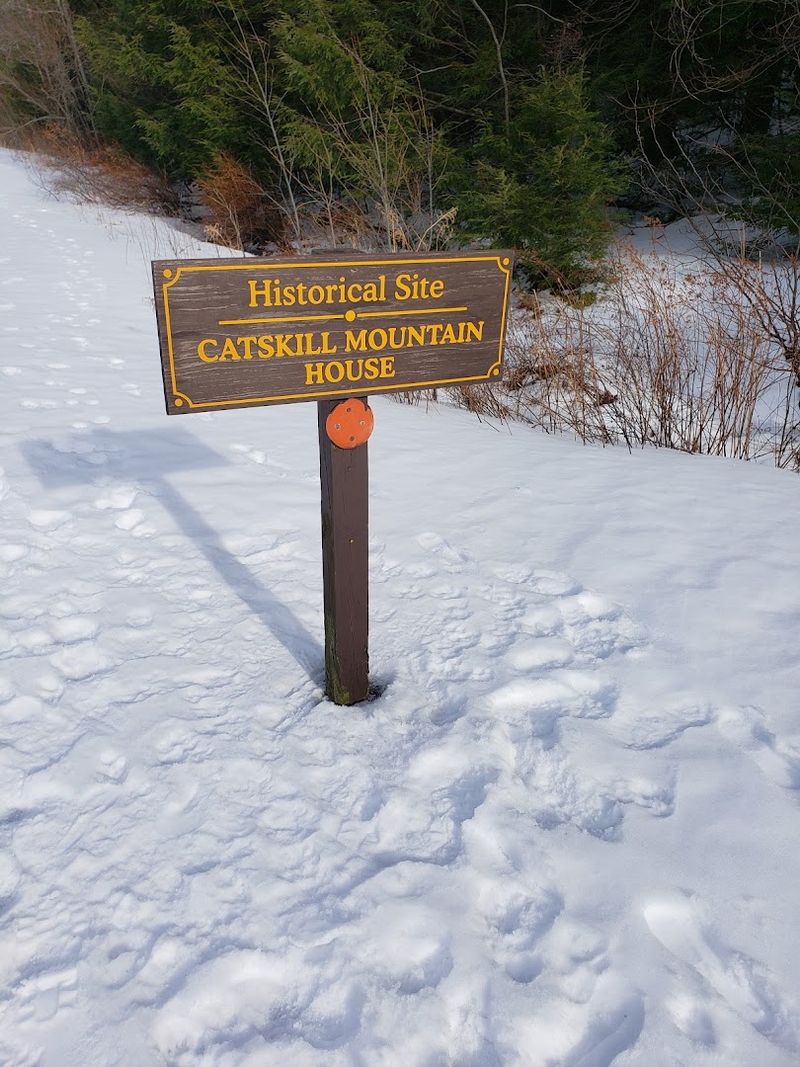
Three United States presidents once checked into this hotel, which tells you everything you need to know about how exclusive the Catskill Mountain House was.
Built in 1824, the property in Palenville, NY 12463 became the go-to retreat for America’s social elite from the 1850s right into the early 1900s.
It was the kind of place where people came to be seen.
The views from the site are genuinely staggering, offering a sweeping panorama of the Hudson River Valley that made the hotel famous long before Instagram existed. Guests arrived by carriage and later by rail, all of them chasing that same spectacular outlook.
The mountain did not disappoint then, and it still does not disappoint now.
The hotel’s final chapter was not glamorous. Operations ended in 1941, and after New York State acquired the land, the structure was intentionally burned down in 1963.
Only the stone gateposts remain today, standing like quiet sentinels at the edge of an extraordinary view.
Getting there is surprisingly easy. A short 0.5-mile out-and-back hike from the North-South Lake campground along the Escarpment Trail brings you directly to the site.
It is one of the most accessible historic ruins in all of New York, which makes it perfect for families or anyone who wants history without a brutal climb.
A ten-dollar vehicle entry fee covers day use and parking at the campground. That is a genuinely reasonable price for a front-row seat to one of the most storied views in the entire state.
Pack a snack, find a spot near those old gateposts, and take a long, unhurried look at the valley below.
6. Bannerman Castle On Pollepel Island Near Beacon NY
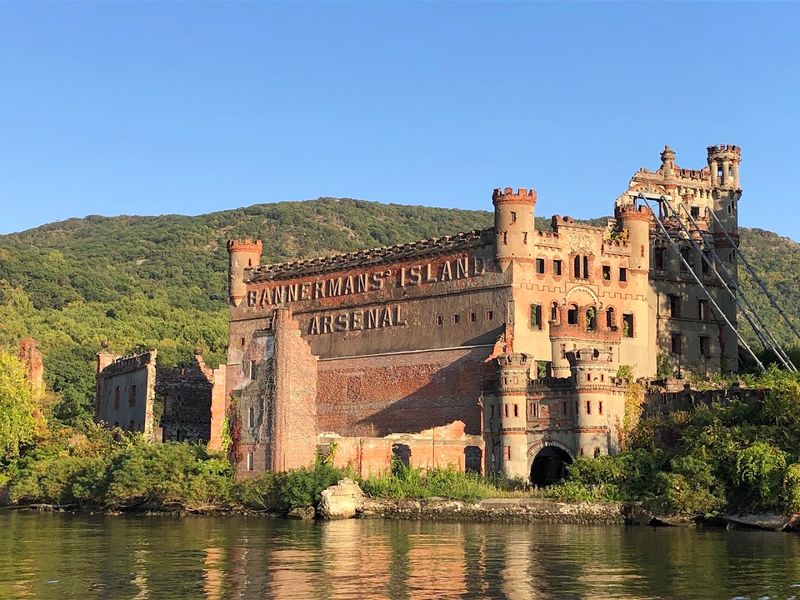
Nobody builds a Scottish-style castle on a Hudson River island to store military surplus and then acts surprised when people want to visit forever after.
That is exactly what Francis Bannerman VI did, starting in 1901, and Bannerman Castle near Beacon, NY 12508 has been turning heads ever since.
The man had a flair for the dramatic.
Bannerman was not royalty. He was a savvy businessman who bought surplus military equipment after the Spanish-American War and needed somewhere to keep it all.
Pollepel Island seemed like the perfect spot, so he built a warehouse that looked like a medieval fortress. He also constructed a smaller, more ornate residence on the island for his family.
Visiting the castle today requires a guided tour through the Bannerman Castle Trust. The experience starts with a thirty-minute boat ride across the Hudson River, which is already worth the trip on its own.
Once on Pollepel Island, a forty-five-minute guided walking tour takes you through the ruins and the surrounding gardens.
Be ready for a physical adventure. The tour involves climbing seventy-two steps from the dock and navigating uneven terrain across the island.
It is not extreme hiking, but it is also not a stroll through a shopping mall. Comfortable shoes with good grip are strongly recommended.
The views from the island are spectacular in every direction, with the Hudson Valley stretching out around you like a painting. The ruins themselves are striking and strange and completely unforgettable.
Bannerman Castle is the kind of place that makes you text your friends immediately after visiting just to say you cannot believe it exists.
7. Cornish Estate Trail In Cold Spring NY
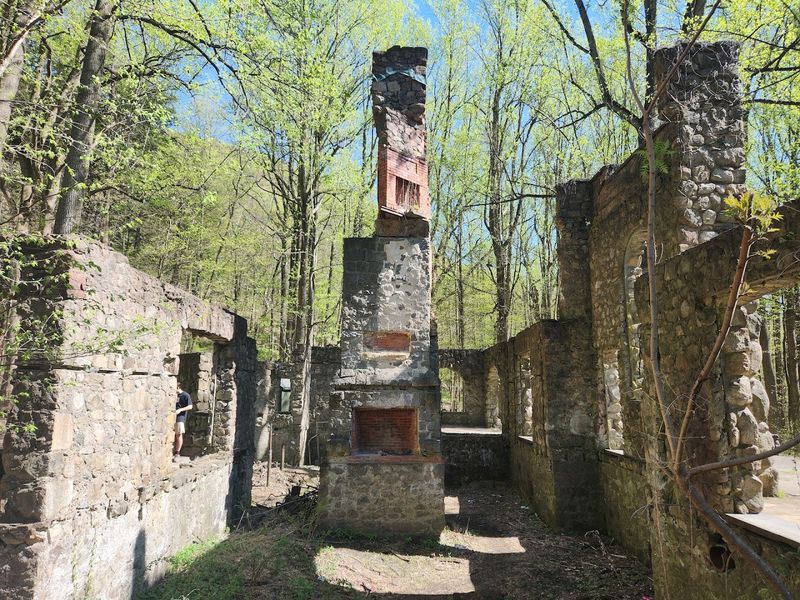
The Gilded Age had a gift for building things that seemed built to last forever, and the Cornish Estate on the Cornish Trail in Cold Spring, NY 10516 is proof that forever is a complicated concept.
The mansion, also known as Northgate, was constructed in 1912 for Sigmund Stern, a prominent diamond merchant with very expensive taste.
Edward and Selina Cornish purchased the property in 1917. Edward served as president of the National Lead Company, so the couple had the resources to maintain a truly spectacular estate.
The grounds included a grand mansion, a swimming pool, carefully designed gardens, and multiple outbuildings. It was the full package of early twentieth-century luxury.
Tragedy arrived in May 1938 when both Edward and Selina passed away within two weeks of each other. The estate fell into disrepair after that, and in 1958 a fire consumed much of the mansion.
What the flames left behind are the haunting, ivy-draped ruins that hikers find today, sitting dramatically above the Hudson River.
Hikers have two trail options to reach the ruins. A moderate 3.75-mile route offers a fuller experience of the surrounding forest.
A shorter, partially paved 1.4-mile hike works well for those who want a quicker visit. Either way, the payoff is the same, which is a stunning set of ruins with river views that would have made even Sigmund Stern jealous.
Cold Spring itself is a charming riverside town worth exploring before or after the hike. The combination of historic ruins, Hudson River scenery, and a walkable village makes this one of the most well-rounded day trips in all of New York.
8. Sterling Forest State Park Iron Works In Tuxedo NY
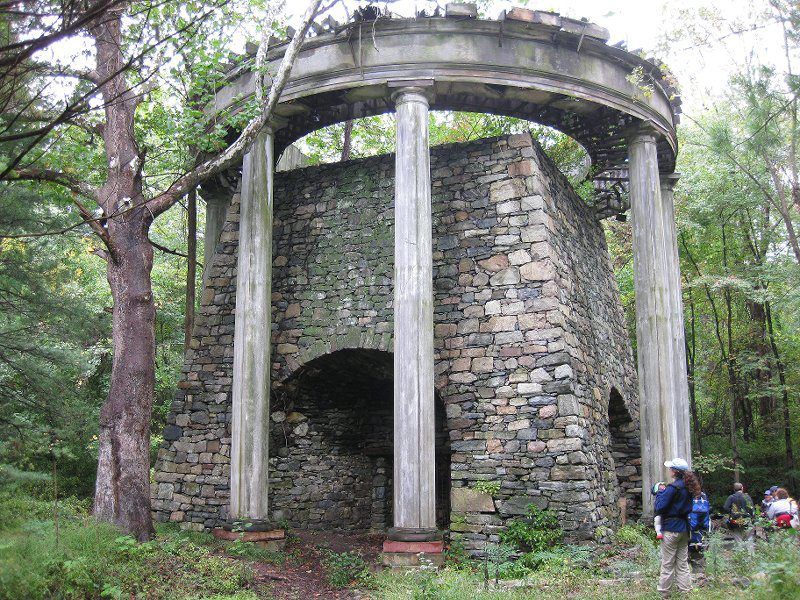
Sterling Forest State Park holds a story that goes all the way back to 1761, and it is one of the most genuinely important industrial sites in American history.
The Sterling Iron Works at 115 Old Forge Rd, Tuxedo, NY 10987 holds the distinction of being the first company in Colonial America to manufacture both steel and iron.
That is not a small footnote. That is a headline.
During the Revolutionary War, the ironworkers here forged the famous Hudson River Chain. Each link weighed one hundred and forty pounds, and the full chain was stretched across the Hudson River at West Point to block the British Navy.
Some of those original links are still on display at West Point today, which is the kind of historical continuity that gives you chills.
Mining operations ran here from 1761 all the way to the 1920s, which is an extraordinary run by any measure. The Lakeville Ironworks Trail winds through the remnants of the iron workers’ community and features a reconstructed furnace from the 1700s.
The trail caters to different fitness levels, so most hikers will find a route that suits them.
Sterling Forest State Park itself was established in 1998, protecting this historically rich land and its natural habitat. The Frank R.
Lautenberg Visitor Center adds context with exhibits and views of Sterling Lake that are worth lingering over. The Sterling Lake Loop and the Ironworks Trail are both popular options for exploring the area.
New York has many parks, but few carry this combination of ecological beauty and revolutionary-era significance. Sterling Forest is the rare place where you can hike through nature and walk through American history at the exact same time.
9. Doodletown Ghost Town In Harriman State Park NY
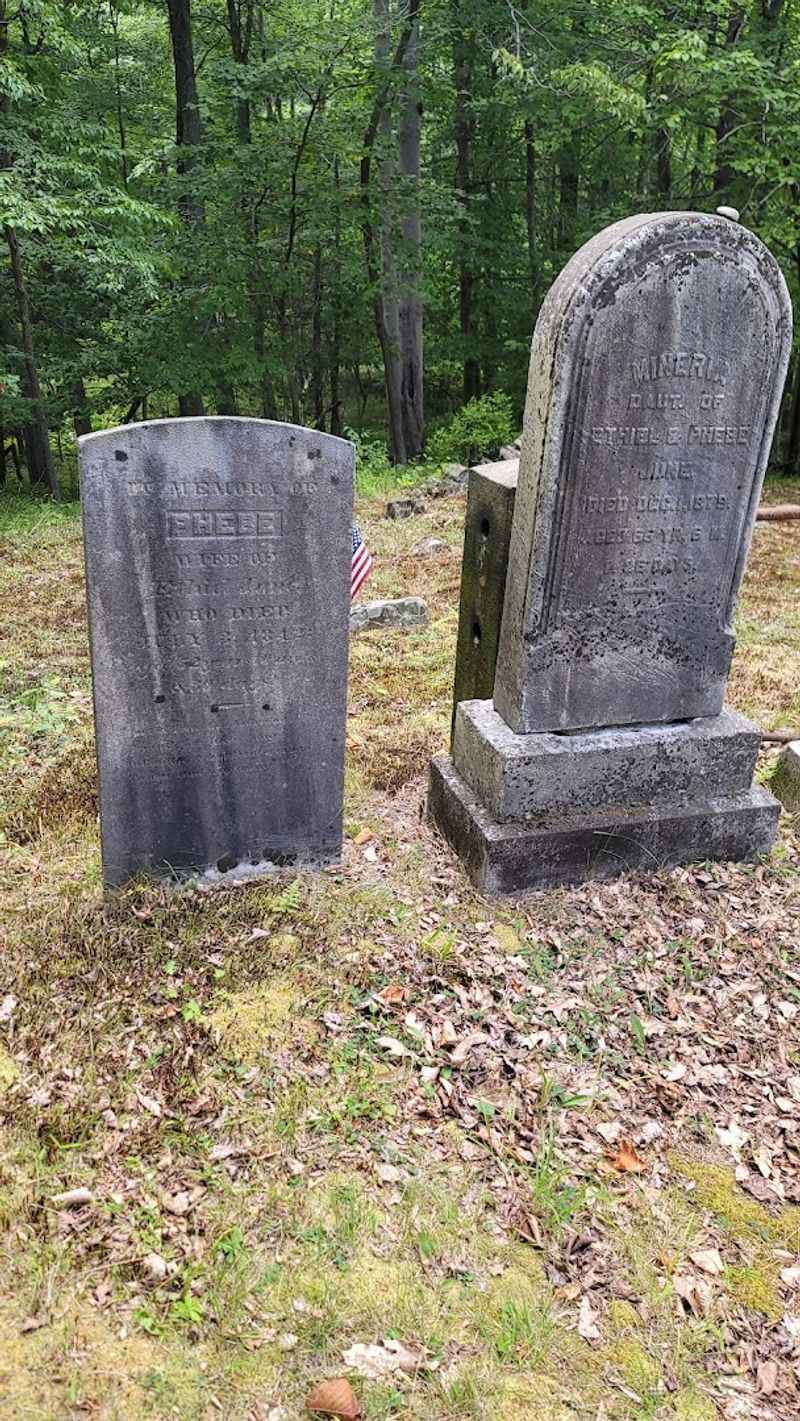
Doodletown sounds like a place where cartoon characters live, but the real story is far more layered and fascinating. Hidden inside Harriman State Park near Bear Mountain, NY 10911, this ghost town traces its roots back to before the Revolutionary War.
French Huguenots were the first to settle here, and Redcoat soldiers marched through its roads during the conflict that shaped the country.
The name itself carries some historical intrigue. Many researchers believe it comes from the Dutch word Dooddel, which may translate loosely to dead valley.
Whether that refers to the terrain or the town’s eventual fate is open to interpretation. Either way, the name fits the eerie, atmospheric quality of the place.
Early residents made their living as loggers and miners, building a small but functional community in this isolated valley. New York State started acquiring land in Doodletown in the early twentieth century as part of expanding its state parks.
By 1965, the final residents were compelled to leave through eminent domain, and most structures were demolished or relocated.
Hikers today find stone foundations, walls, and staircases scattered throughout the forest, with informative plaques explaining what once stood in each spot.
The town’s cemeteries remain intact and undisturbed, and descendants of former residents can still choose to be buried there. That detail alone makes Doodletown unlike anywhere else in the state.
Loop trails through the area typically run between 3.3 and 3.8 miles. Access has been restricted since summer 2023 due to storm damage in the park, so check current trail conditions before heading out.
When the trails reopen fully, Doodletown will absolutely be worth the wait.