
This 1,300-Foot Hill In Wisconsin Offers Breathtaking Autumn Views
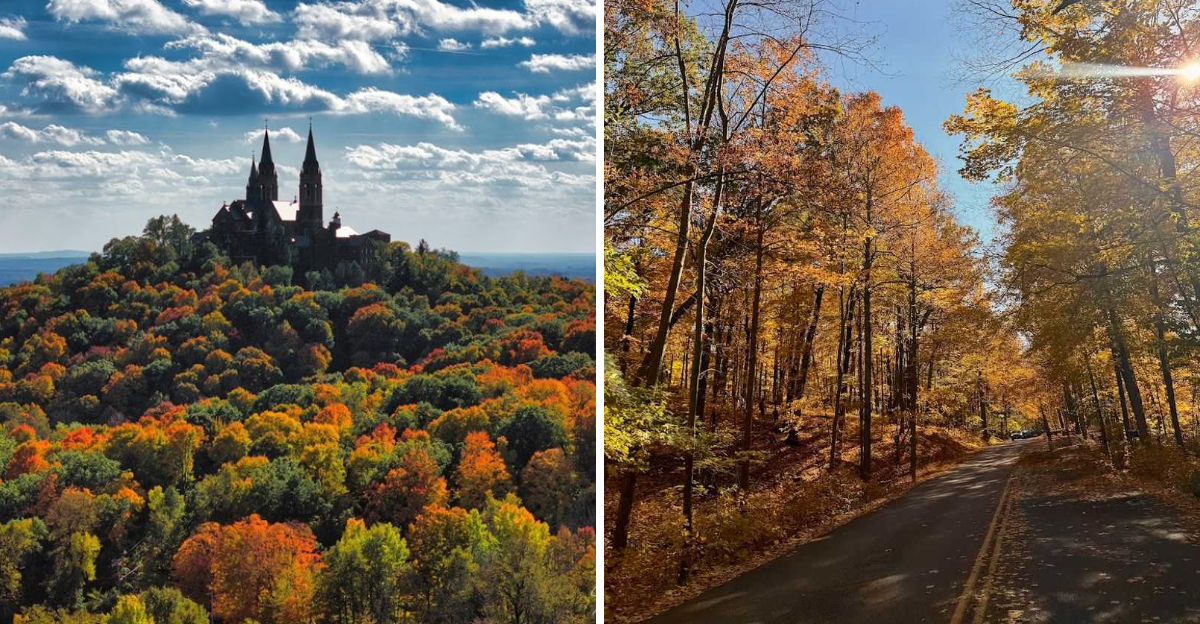
The climb alone sets the mood, with winding roads and rising views that build anticipation with every turn. I remember noticing how the scenery kept opening up the higher I went.
The basilica perched at its summit draws visitors from across the region who come seeking spiritual reflection, architectural beauty, and some of the finest panoramic views the state has to offer. When autumn arrives, the surrounding hills shift into rich shades of gold, crimson, and amber, and it’s hard not to stop and take it all in a little longer.
A Hill Rising Over 1,300 Feet Above Sea Level
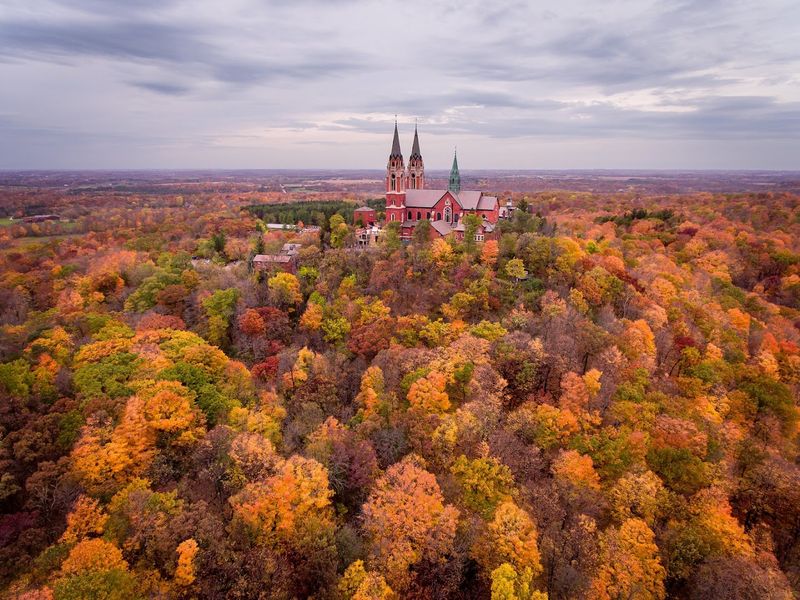
Geography played a generous hand when it shaped the land around Hubertus. Holy Hill reaches an elevation that makes it one of the highest points in southeastern Wisconsin, offering visitors a vertical advantage over the surrounding countryside.
The hill itself formed thousands of years ago during glacial periods, leaving behind the distinctive terrain that defines the Kettle Moraine region today.
Standing at the base and looking upward, the basilica appears almost European in its commanding presence. The elevation change becomes apparent during the drive up Carmel Road, where the landscape shifts from flat farmland to rolling forest.
This natural prominence made the site significant long before the first church was built, with indigenous peoples recognizing its spiritual importance centuries earlier.
The altitude provides more than just views. Weather patterns shift noticeably at the summit, where winds pick up and temperatures drop a few degrees compared to the valley below.
Visitors often arrive prepared for one climate and discover another entirely once they reach the top, particularly during transitional seasons when conditions can change within minutes.
A Historic Basilica At The Summit
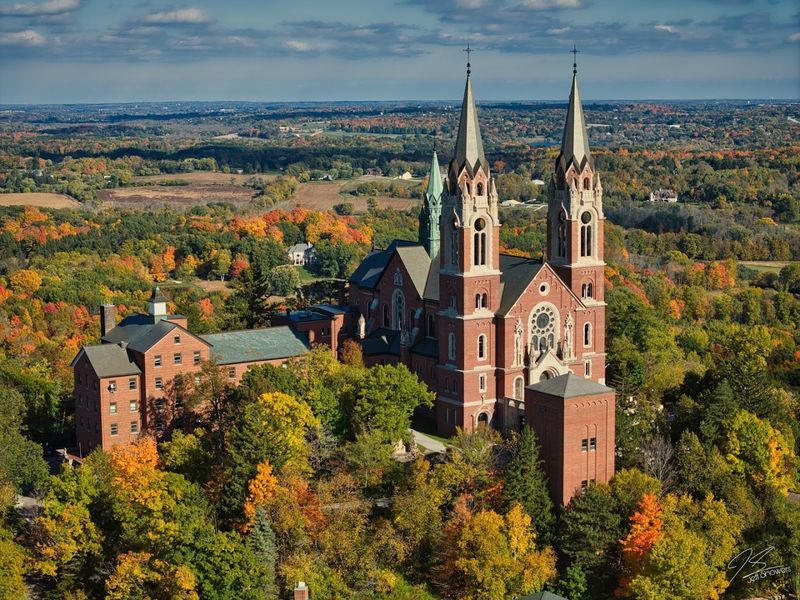
Construction began in 1926 on what would become one of Wisconsin’s most photographed religious structures. The basilica follows neo-Romanesque design principles, with twin towers that pierce the skyline and stone walls that suggest permanence and devotion.
Architects drew inspiration from medieval European churches, creating a building that feels transported from another century and continent entirely.
The Basilica and National Shrine of Mary Help of Christians serves as both an active place of worship and a destination for architectural enthusiasts. Inside, stained glass windows filter daylight into pools of colored light across wooden pews and marble floors.
An organ fills the space during services, its sound amplified by the acoustics that stone walls and high ceilings provide naturally.
The building earned basilica status through its historical significance and continued role in Catholic pilgrimage traditions. Located at 1525 Carmel Rd in Hubertus, the structure opens daily from six in the morning until four in the afternoon.
Multiple masses occur throughout the week, and visitors can explore the interior even outside service times, provided they respect the sacred nature of the space and any ongoing religious activities.
An Observation Tower With Panoramic Views
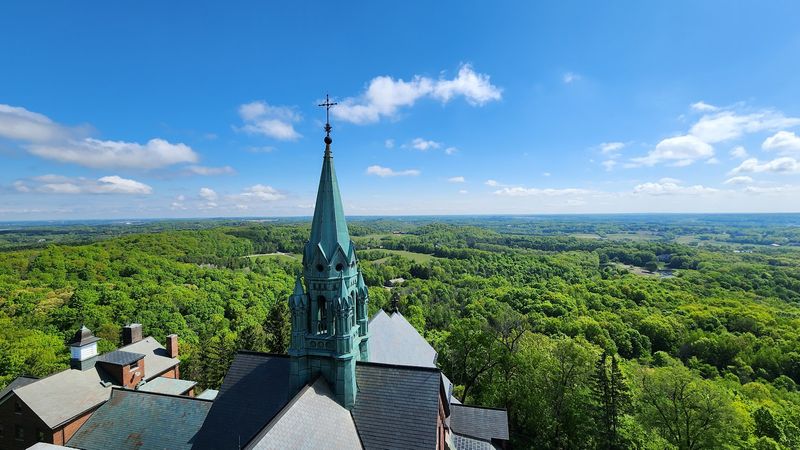
Climbing one hundred seventy-eight steps sounds manageable until the stairwell narrows and the spiral tightens. The observation tower attached to the basilica challenges visitors with steep, confined passages that allow only single-file traffic.
Halfway up, small landings offer brief respites where climbers can catch their breath and contemplate whether the view justifies the effort.
The answer becomes clear at the summit. From the tower’s open-air platform, the landscape spreads outward in every direction, revealing farmland, forest, and distant communities.
On particularly clear days, the Milwaukee skyline appears on the horizon, a reminder that urban Wisconsin sits closer than the pastoral surroundings suggest. Wind whips across the platform with nothing to slow it down, making the experience visceral and immediate.
The tower operates seasonally, typically closing during winter months when ice and cold make the climb hazardous. During peak autumn weekends, wait times can stretch beyond thirty minutes as visitors queue at the base.
The narrow stairs create natural bottlenecks, and patience becomes necessary as ascending and descending climbers negotiate the tight passages with varying degrees of grace and urgency.
A Prime Spot For Autumn Colours
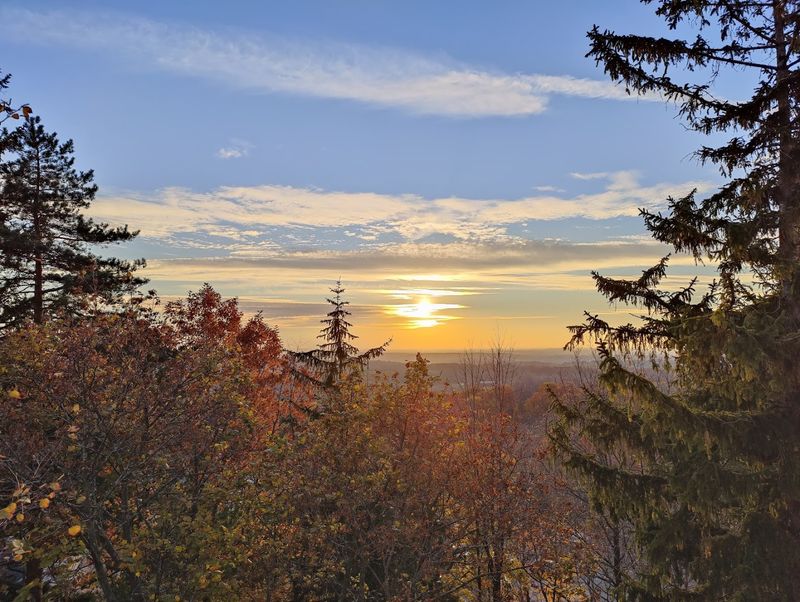
October transforms the Kettle Moraine into something worth canceling plans for. The hardwood forests surrounding Holy Hill shift through their annual color cycle, with maples leading the charge into reds and oranges while oaks follow with deeper burgundy tones.
The elevation provides a viewing platform that turns the surrounding landscape into a living color wheel spread across miles of rolling terrain.
Photographers arrive early during peak weeks, hoping to capture the basilica framed by autumn foliage before crowds fill the grounds. The contrast between stone architecture and natural color creates compositions that appear almost arranged, though nature deserves full credit for the palette.
Morning light adds another dimension, casting long shadows and illuminating individual trees in ways that afternoon sun cannot replicate.
Timing a visit requires some guesswork, as peak color shifts by a week or two depending on weather patterns. Local reports and foliage tracking websites offer guidance, but the most reliable approach involves flexible scheduling and willingness to make the drive on short notice when conditions align.
The reward for this spontaneity comes in experiencing the landscape at its most visually generous moment of the year.
Located Within The Kettle Moraine Landscape
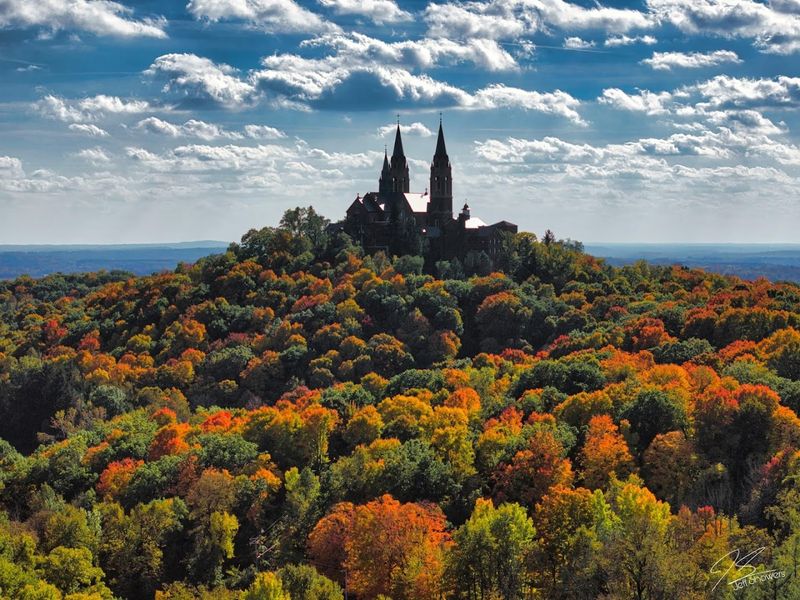
Glaciers shaped this region thousands of years ago, leaving behind the distinctive topography that gives the Kettle Moraine its character. The landscape consists of steep hills, deep depressions, and irregular terrain formed by retreating ice sheets that deposited massive amounts of earth and stone.
Holy Hill rises from this glacial legacy, its prominence a direct result of geological processes that ended long before human settlement began.
The surrounding state forest preserves this terrain in its relatively natural state, with trails winding through woods and over ridges that challenge hikers with constant elevation changes. Wildlife thrives in the varied habitat, from white-tailed deer browsing in clearings to raptors riding thermal currents above the canopy.
The forest provides context for Holy Hill, showing what the region looked like before agriculture and development claimed the flatter lands to the east and west.
Understanding the geological history adds depth to a visit. The same forces that created the hill made it visible for miles, which explains why it became a landmark and gathering place long before the basilica existed.
The landscape continues to shape visitor experiences today, as the approach roads curve through forest and over ridges that reveal and conceal the towers in a rhythm that builds anticipation.
A Destination That Draws Visitors Year-Round
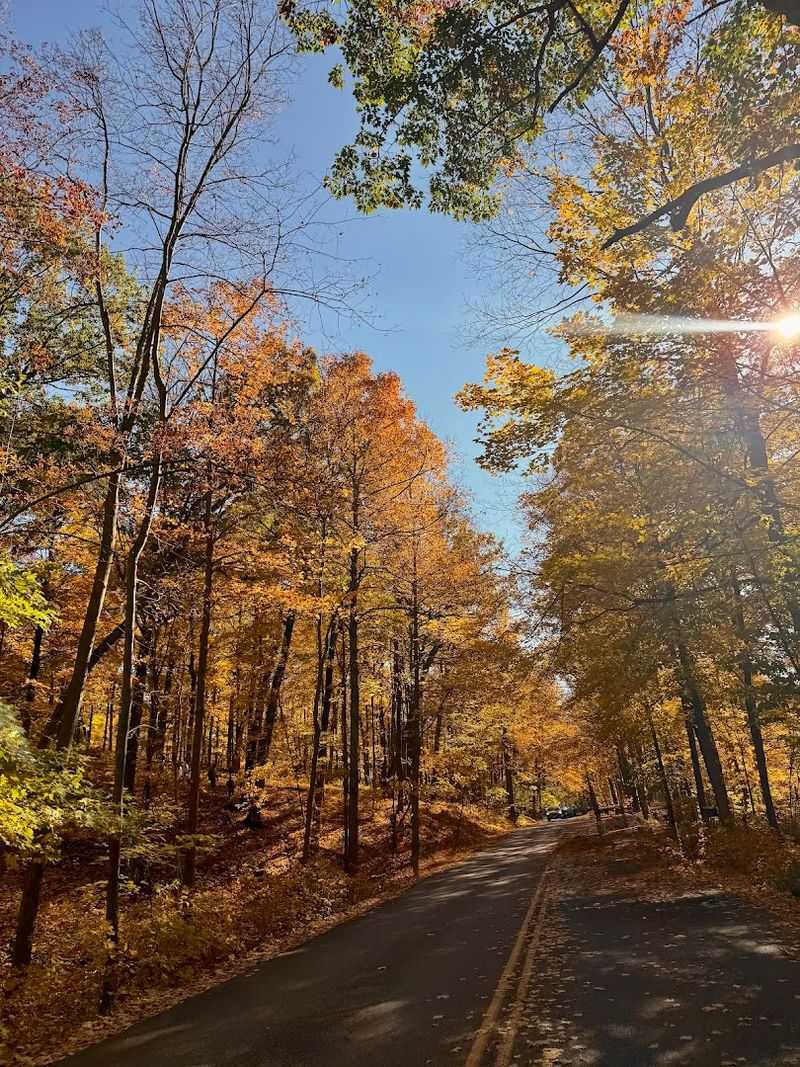
Seasonal shifts change the experience but not the appeal. Winter brings silence and snow that transforms the grounds into something spare and contemplative, with fewer visitors and a stillness that amplifies the spiritual atmosphere.
Spring arrives with returning birds and emerging wildflowers along the trails. Summer sees families making day trips, combining religious pilgrimage with outdoor recreation in the surrounding forest.
The basilica estimates roughly five hundred thousand visitors annually, a figure that reflects its dual role as both religious shrine and tourist destination. Some come specifically for mass or prayer, others for architecture and views, and many for reasons that blend both motivations.
The grounds accommodate this diversity without conflict, providing spaces for quiet reflection alongside areas where conversation and photography occur naturally.
Planning around peak times requires consideration. Weekends during autumn see the heaviest traffic, with parking lots filling by mid-morning and tower wait times extending considerably.
Weekday visits offer more solitude and easier access to both the basilica and observation tower. The site opens at six each morning, and early arrivals often find the grounds nearly empty, allowing for experiences that feel almost private despite the location’s popularity throughout the rest of the day.
A Scenic Drive Leading Up To The Hill
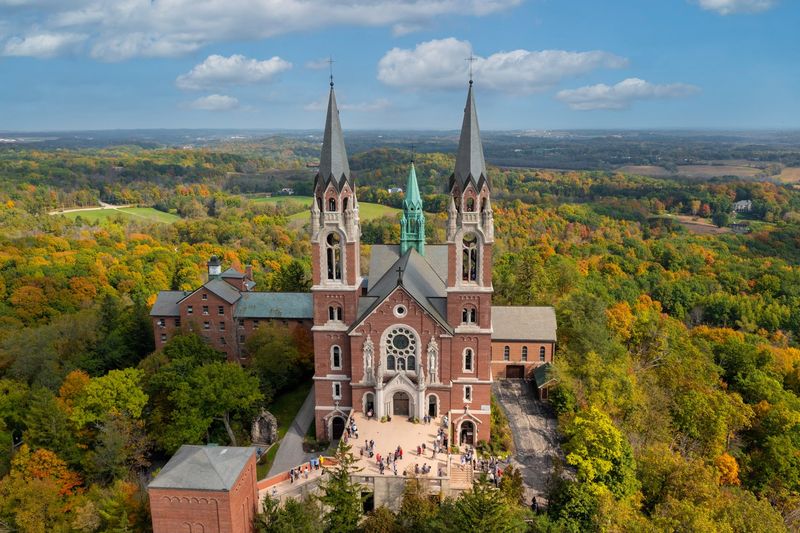
Carmel Road winds upward through forest that closes in on both sides, creating a tunnel effect that makes the eventual arrival at the summit feel earned. The route curves and climbs steadily, with occasional clearings offering preview glimpses of the towers above.
Driving this approach during autumn means navigating through color that seems almost excessive in its intensity, particularly when afternoon sun illuminates leaves from behind.
The road itself dates back to when access required more effort and less pavement. Modern improvements have made the journey comfortable in any vehicle, though the grades and curves still demand attention from drivers.
Small parking areas appear along the route where visitors can stop to photograph the basilica from below, framing the towers against sky and surrounding forest.
Alternative routes exist for those approaching from different directions, but Carmel Road provides the most dramatic arrival sequence. The journey becomes part of the experience rather than merely transportation to a destination.
Some visitors report that the drive up creates a mental transition that prepares them for what they will encounter at the summit, turning travel time into a gradual shift from everyday concerns toward something more contemplative and present.
Trails And Paths Around The Grounds
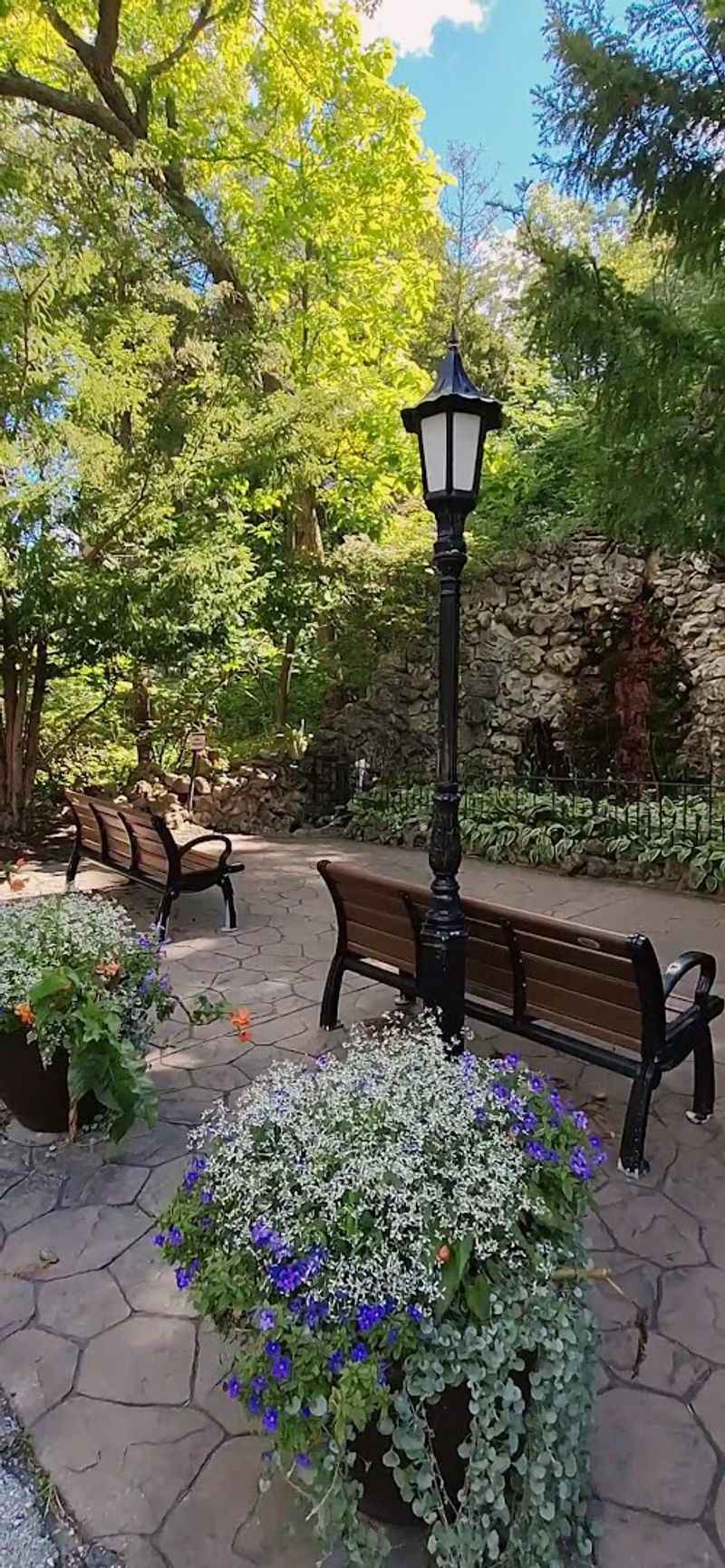
Paved pathways circle the basilica and extend into the surrounding woods, offering walking options for various ability levels and time commitments. The Stations of the Cross follow a trail that winds through trees, with each station marked by sculptural installations that invite reflection and pause.
These paths remain accessible year-round, though winter conditions sometimes require caution on slopes and shaded sections where ice persists.
The trails serve multiple purposes simultaneously. Religious pilgrims walk them as part of devotional practice, while others simply enjoy the opportunity to stretch their legs and experience the forest at ground level.
The paths connect different areas of the complex, including the cafe, gift shop, and various overlooks that provide alternative perspectives on the basilica and surrounding landscape. Benches appear at regular intervals, positioned to take advantage of views or offer rest in shaded spots.
Walking the complete circuit takes roughly thirty to forty minutes at a leisurely pace, longer if you stop to examine the stations or simply sit and observe the woods. The trails attract visitors who might not climb the tower but still want to engage with the site beyond viewing the basilica itself.
Well-maintained and clearly marked, these paths make the grounds accessible to a broader range of visitors than the tower alone would accommodate.
A Recognisable Landmark In Southeastern Wisconsin
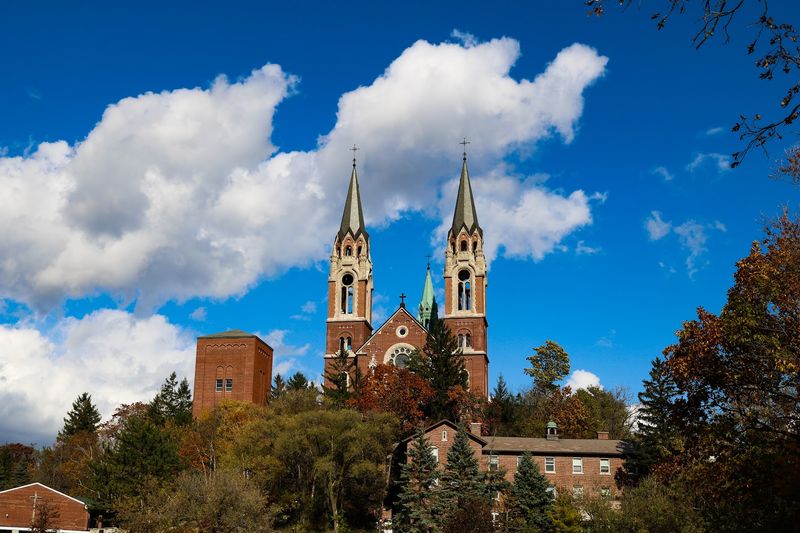
From miles away, the twin towers announce themselves against the skyline. Local residents use Holy Hill as a reference point when giving directions, and the silhouette appears in countless photographs taken from surrounding communities.
The visibility works both ways, as observers from the tower can identify landmarks across a wide swath of southeastern Wisconsin, creating a web of sightlines that connect the basilica to the broader region.
This recognizability extends beyond mere geography into cultural significance. The site appears in regional literature, historical accounts, and contemporary media as a symbol of the area’s religious heritage and natural beauty.
Its image decorates postcards, calendars, and promotional materials for Washington and Waukesha counties. For many residents, Holy Hill represents a constant presence on the landscape, visible during daily commutes or from windows of homes positioned with the right orientation.
The landmark status comes with responsibility that the site’s caretakers seem to understand. Maintenance keeps the grounds and buildings in excellent condition, preserving the visual impact that makes Holy Hill recognizable in the first place.
The basilica’s appearance has remained largely unchanged since its completion, creating continuity across generations of visitors who return to find the towers still rising above the forest exactly as memory suggests they should.