
This California Fabric Warehouse Is Packed With Rare Prints And Endless Rolls Of Beautiful Fabric
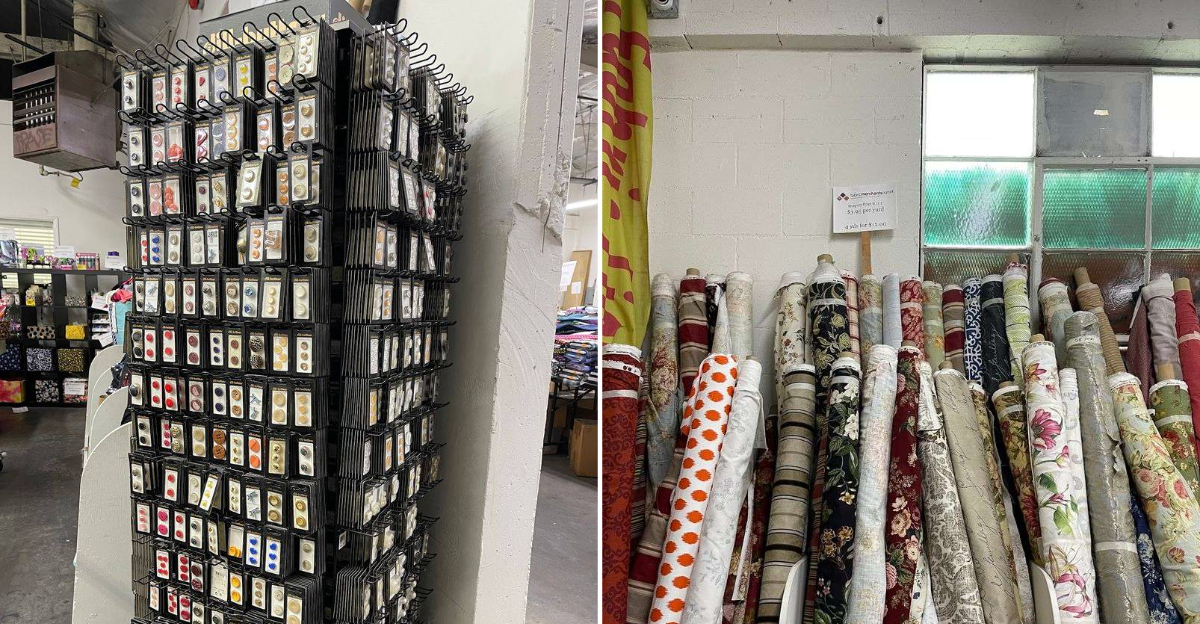
Some places work incredibly hard to quickly capture a community’s attention, and this California fabric warehouse pulled that off through sheer selection. Rolls stretch across the space in numbers most local shops could never dream of matching.
Rare prints show up mixed in with common patterns, unsorted and waiting for someone patient enough to look. Quilters and crafters travel from well beyond the immediate area, drawn by variety rarely found under one roof.
Fabric lines rotate regularly, keeping repeat visits worthwhile instead of repetitive. Staff know the layout well enough to guide customers toward specific colors, patterns, or fabric types quickly.
Regulars plan entire projects around what they find here rather than settling for limited alternatives elsewhere. This warehouse proved that sometimes the best fabric shopping requires a store built on true scale.
Discovering Unique Textile Prints
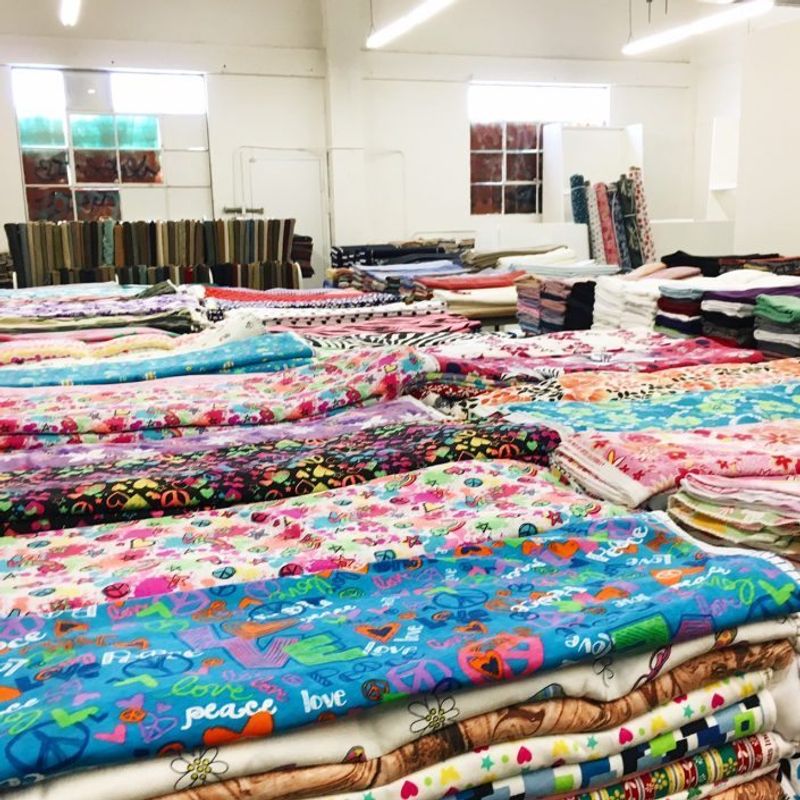
Pattern lovers, brace yourselves. The print selection at Fabric Merchants Outlet in California leans heavily into the unexpected, with baby and kids’ designs sitting a few feet away from moody abstracts and hand-drawn florals.
Animal prints show up. So do specialty patterns and quilting solids in colors bright enough to make you squint.
What keeps regulars coming back monthly is the rotation. Inventory shifts constantly, which means the bolt spotted last month may be long gone, replaced by an Italian viscose print with a strange and wonderful color story.
Italian cotton prints turn up too, the kind that would be hard to track down anywhere else in the country.
The quilting cottons are a particular favorite, drawing attention for their range and quality. Others go for the prints purely because they are unusual, not because they had a plan.
Here is the truth about print hunting here. You arrive with a list and leave with something completely different, and that is half the fun.
Bring a tote bag bigger than you think you need. You can find it all at 1420 S Grande Vista Ave, Los Angeles, CA 90023.
Types Of Fabrics Available
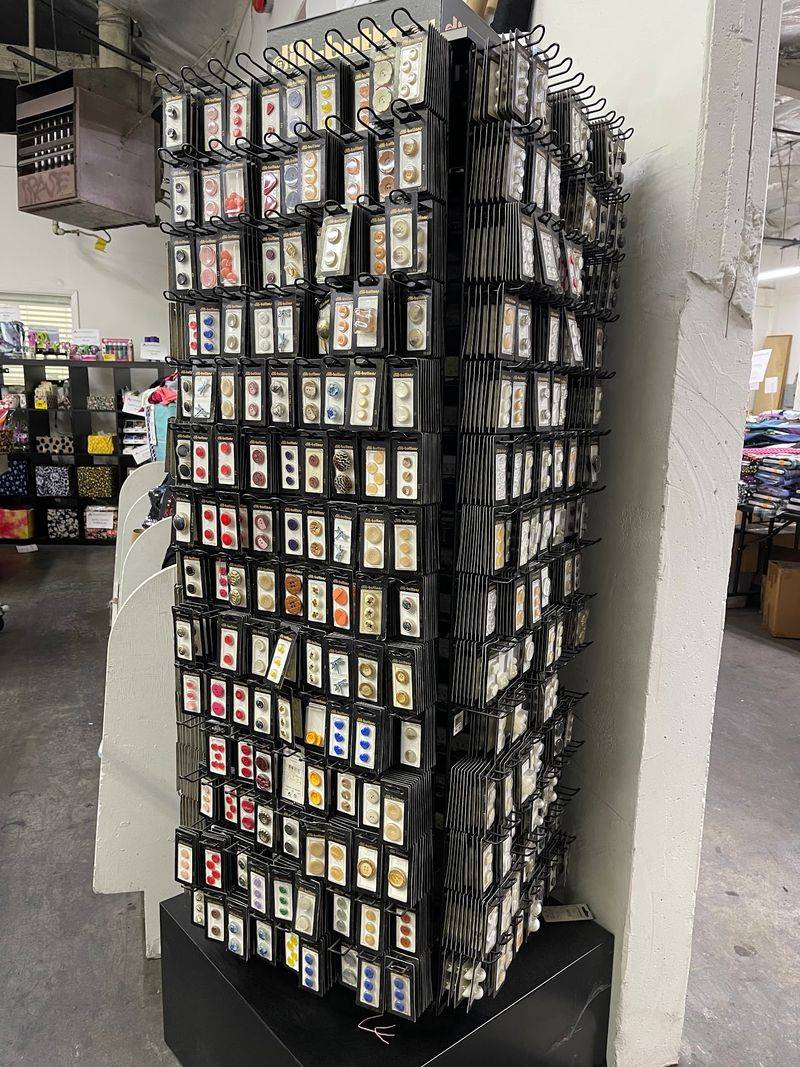
Thousands of yards. That is the scale here, and it explains why the selection feels endless.
Excess cuts arrive from the wholesale division, which means apparel fabrics, wovens, knits, and rare deadstock all end up under one roof.
The variety reads like a costume department wish list. Silks, double brushed poly, nylon, linen, lace, sequins, wool, terry, cotton, flannel, and fleece.
Then there are the heavy hitters for people building furniture or props: faux fur, upholstery fabric, vinyl, felt, and canvas.
Italian linen and linen blend jerseys show up, along with Italian designer denim, poly jacquards, poly cotton solids, and swimwear prints from Italy.
Layout matters too. A retail section handles remnants, smaller cuts, yards, and bolts for anyone working on a single project.
Past that sits the warehouse area stocked with wholesale rolls, where a five-yard minimum applies. Bins of assorted fabrics sold by weight round out the space, turning shopping into something closer to a scavenger hunt.
The selection draws people from well outside the immediate area, since comparable textile options are hard to find nearby. It also rewards regular visits, since new stock keeps the bins and shelves changing.
Plan for limited parking, roughly three spots total.
Tips For Selecting Quality Material
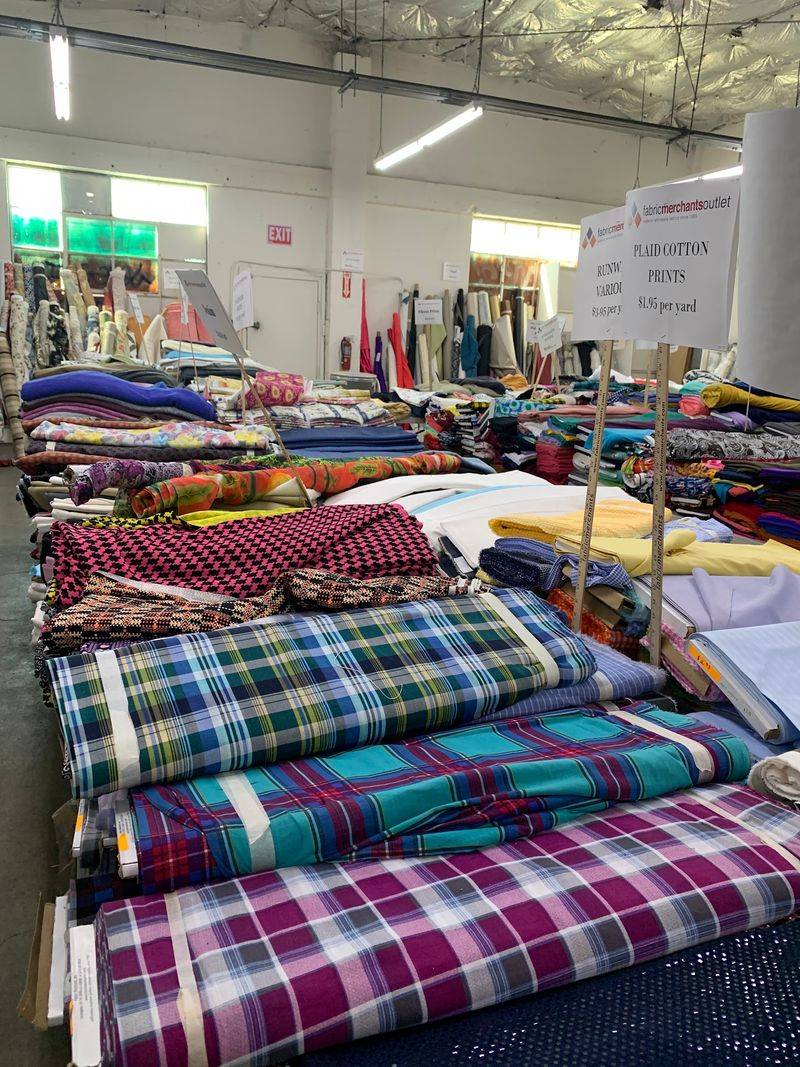
Not every pretty bolt earns a spot in your project bag, and knowing how to judge fabric saves both money and heartbreak. Hold a piece up to the light and study the weave or knit structure.
Even spacing is what you want. Thick lumps, thin patches, or uneven thread thickness usually signal a lower-grade material.
Run your hand across the surface. It should feel smooth and clean, without pilling or fuzz already forming before you have sewn a single stitch.
Color should stay consistent from edge to edge, and the fabric should hang without warping or curling at the selvage. Natural fibers like cotton, wool, silk, and linen are often reliable signs of quality.
Try the crumple test. Squeeze a handful, let go, and watch how fast it springs back, since quick recovery hints at resilience and fewer wrinkles later.
Higher thread counts generally point toward sturdier goods, though that is one clue among several rather than the whole story.
Staff is typically on hand to help track down specific fabrics that are not out on the retail floor, and questions are welcome throughout the process.
A clean, well-organized layout also makes inspecting fabric much easier, since bolts and bins stay easy to sort through.
Creative Uses For Different Fabrics
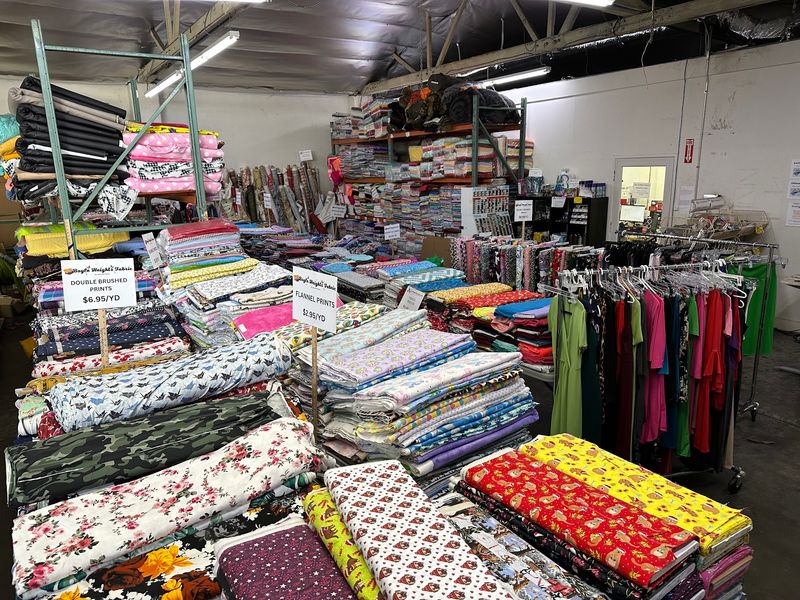
Fabric has a way of reconnecting people with projects and hobbies they had set aside, whether that is a simple sewing project or something more ambitious.
Quilters gravitate toward the cottons, flannels, and fleece, especially the kids’ prints, florals, abstracts, and animal designs.
Apparel makers have plenty to work with. Silks, linen, wool, and lace can become flowing tops, dresses, cardigans, resort wear, activewear, or swimsuits without much fuss.
Home decor folks tend to raid the faux fur, upholstery fabrics, vinyl, felt, and canvas for projects that need muscle. A large-scale print stretched over a wooden frame turns into instant wall art.
Smaller remnants can be framed gallery-style, which looks intentional and costs very little effort. Fabric panels glued to bookcase backs give tired furniture a personality transplant.
Headboards covered in textured chenille or velvet are another favorite trick. Novelty prints with silly animals or loud florals work beautifully on pillowcases and seasonal decorations.
Outdoor fabrics like Sunbrella round out the selection, proving the range stretches well past clothing.
The honest risk is scope creep. You come for a tote bag and leave planning a quilt, three pillows, and a jacket.
Understanding Textures And Weights
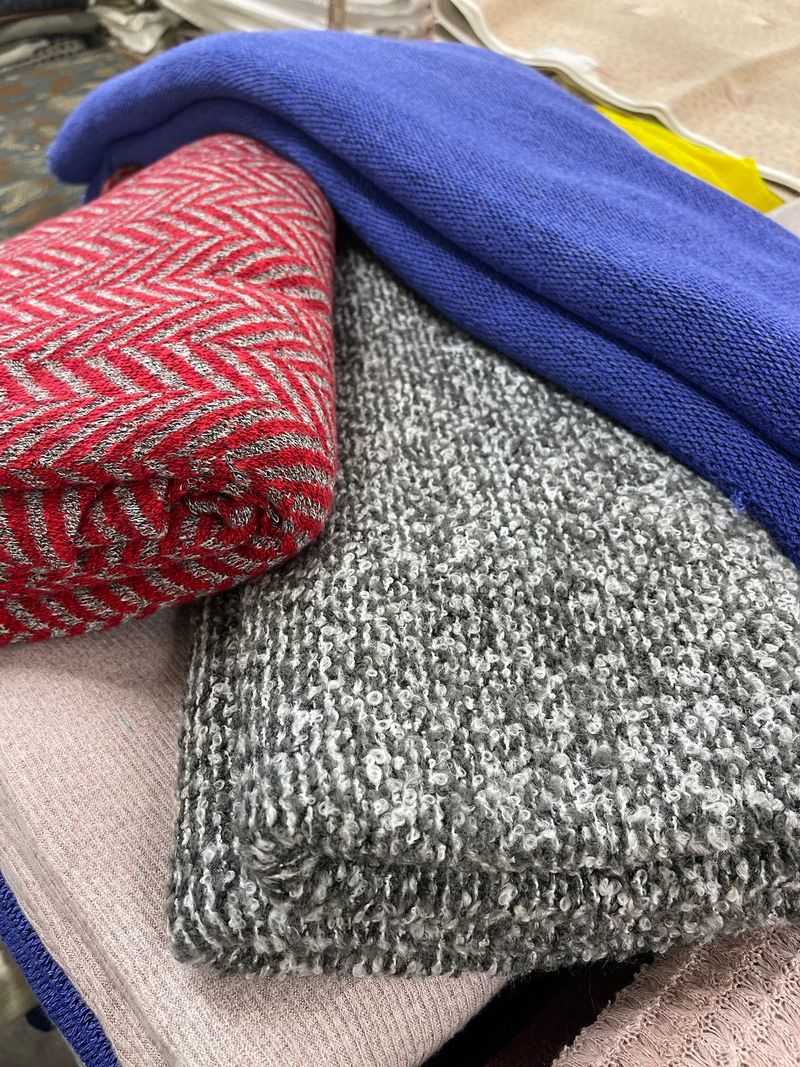
Weight is the quiet detail that decides whether your dress floats or flops. Fabric weight gets measured in grams per square meter, shortened to GSM, and a bigger number usually means a denser material.
Lightweight fabrics fall roughly between 30 and 150 GSM. Chiffon, voile, and lace live here, ideal for airy garments that catch a breeze.
Medium weight covers about 150 to 350 GSM, which includes sateen, velvet, and linen. That range handles the widest variety of clothing projects without much drama.
Anything 350 GSM and above counts as heavyweight, meaning upholstery fabric, canvas, and denim. Structure and durability are the whole point with those.
Then there is the hand of a fabric, which is simply how it feels between your fingers. Hand tells you about drape and texture in ways a number never will.
Thickness and weight do not always match up either. Some thick fabrics feel surprisingly airy, thanks to loose weaves or lofty fibers.
Weave type and fiber blend both push the final result around, which is why two linens can behave completely differently.
Since this warehouse stocks everything from delicate lace to sturdy canvas, comparing textures side by side becomes easy and genuinely educational.
How To Store Large Rolls
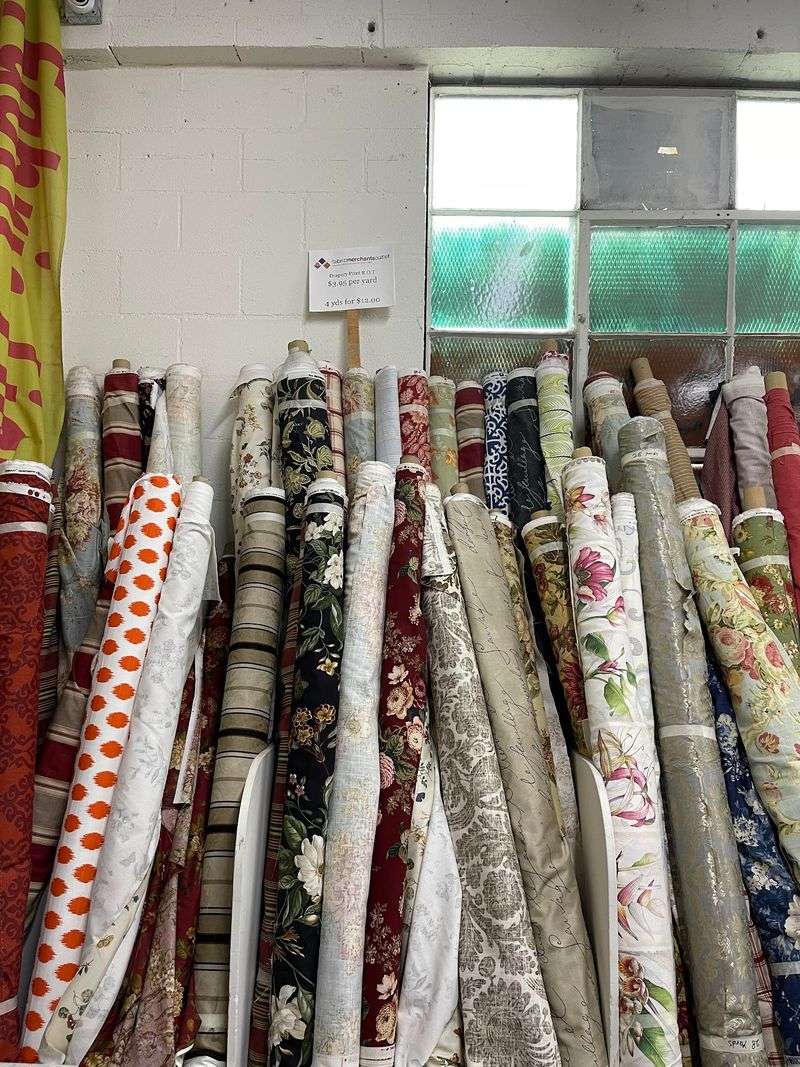
Buying by the roll feels great until you get home and realize your closet has opinions. Big bolts, especially upholstery fabric, do best wrapped around long cardboard tubes.
Stand those tubes upright in a large basket or even a clean metal trash can. Ugly? Slightly. Effective? Very.
If you would rather hide the evidence, tall bolts slide neatly into a pantry-style cabinet. Out of sight, still uncreased.
Smaller cuts have a smarter solution. Wrap them around comic book boards or mini cardboard bolts to create tidy little rectangles.
Those mini bolts stack on shelves like books, and suddenly you can sort by color, print, or fiber content. Finding that half yard of navy flannel stops being an archaeology project.
Plastic bins handle folded fabric well too, especially clear ones that let you scan a whole stash without opening lids.
Keep everything away from direct sunlight, since fading is a slow thief. Avoid damp corners as well.
It is easy to leave with more fabric than planned, so having a storage system ready before you go is honestly a good strategy.
Storage sounds boring until it saves your favorite print from a permanent crease.
Sourcing Sustainable Textile Options
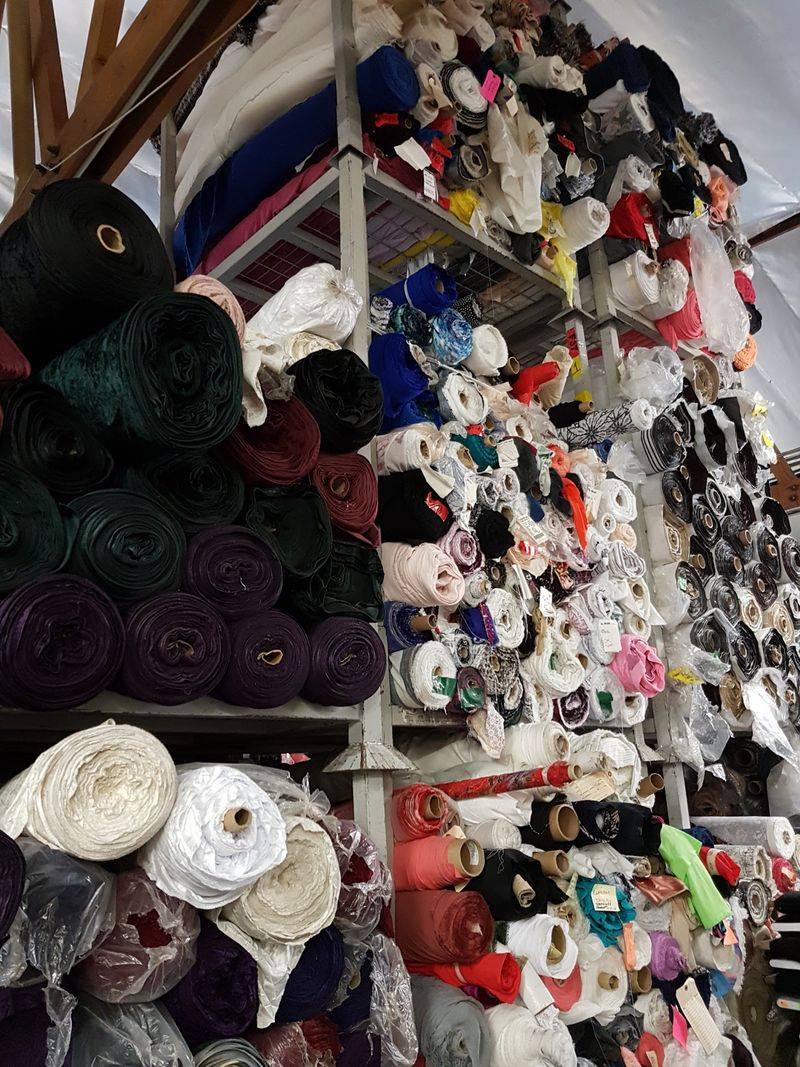
Deadstock is one of those industry words that sounds grim but actually means something hopeful. Rare deadstock shows up on this warehouse floor, and it represents leftover material from larger production runs.
All that fabric has to go somewhere, and warehouses like this one give it a second chance instead of a landfill. Reusing existing material cuts waste and lowers demand for brand new textile production.
Less energy and water are used compared to making fresh yardage from scratch. That math adds up quickly when you consider how much fabric the apparel world churns through.
Worth knowing, though, the original production of deadstock was not necessarily sustainable itself. Transparency about where a specific roll came from can be limited.
Even so, keeping usable fabric in circulation beats letting it rot in a warehouse forever.
The scarcity angle is what excites designers most. Deadstock arrives in limited quantities, so once a roll sells out, it is genuinely gone.
That pressure pushes makers toward small-batch, exclusive pieces rather than mass production. The good stuff tends to disappear fast, which tracks perfectly with how deadstock works.
Sustainable shopping rarely feels this much like treasure hunting.
Incorporating Rare Prints Into Designs
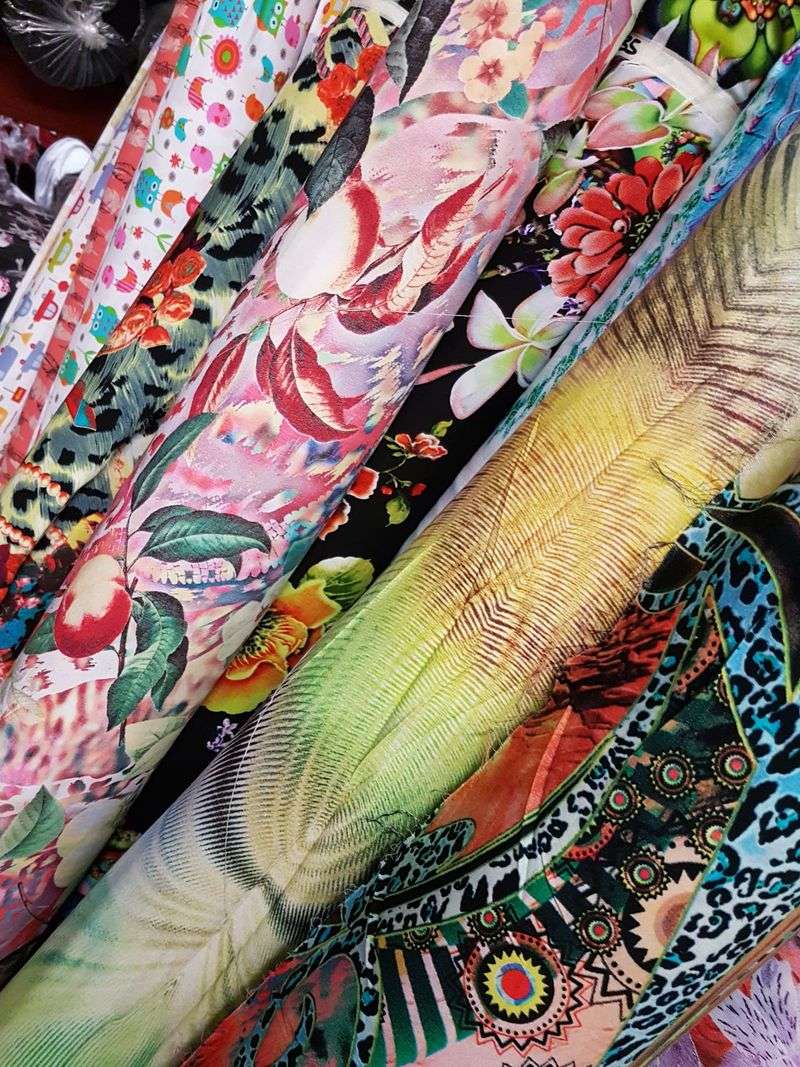
Owning fabric nobody else has is a quiet flex, and rare prints deliver exactly that. With inventory rotating constantly and deadstock in the mix, this outlet becomes a solid launchpad for one-of-a-kind work.
Large-scale prints stretched over a wooden frame become wall art that anchors a whole room. Cheap art, big impact.
Quilters have a technique called fussy cutting, where a single motif gets carefully isolated and centered. Done right, it turns one flower or one tiny fox into the star of a block.
Loud prints also need breathing room. Pairing them with complementary solids or subtle blenders lets the pattern actually be seen instead of fighting itself.
Custom apparel is the obvious path, but decorative pillows, lampshades, and accessories all benefit from an unusual print. A rare fabric on a small project still reads as special.
Since quantities are limited, plan your cuts before you slice. Nothing stings like realizing you needed six more inches of something discontinued.
One longtime shopper said this place ruined her for chain stores entirely, and prints are usually why people say that.
Originality is the real product here, and it happens to come by the yard.