
This Charming Small Town In California Is One Of The State’s Best-Kept Secrets
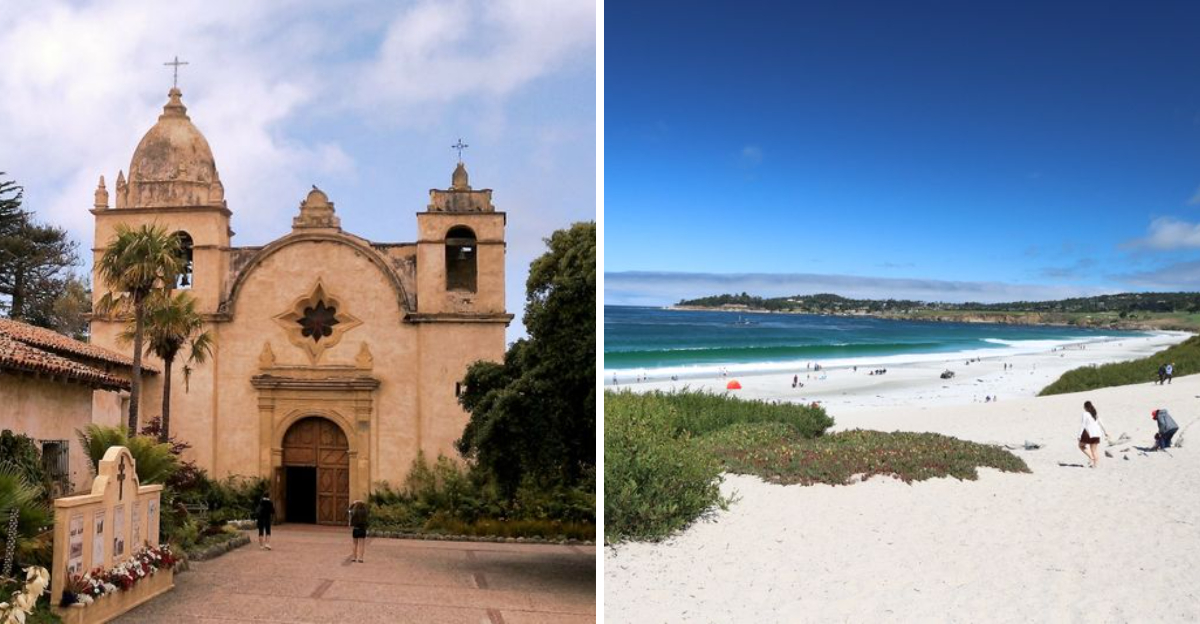
Carmel-by-the-Sea remains one of California’s most enchanting coastal villages, a place where ordinary rules seem suspended and charm takes precedence over convenience. This square-mile village on the Monterey Peninsula has preserved an atmosphere that feels lifted from another era, complete with whimsical architecture and a fiercely protected character.
While nearby attractions draw millions of visitors annually, Carmel maintains a quieter reputation, known mainly to those who seek authenticity over spectacle. The town rewards curiosity with discoveries around every corner, from its unusual civic traditions to its pristine shoreline and thriving arts community.
Carmel-By-The-Sea Is Famous For Its Storybook Cottages
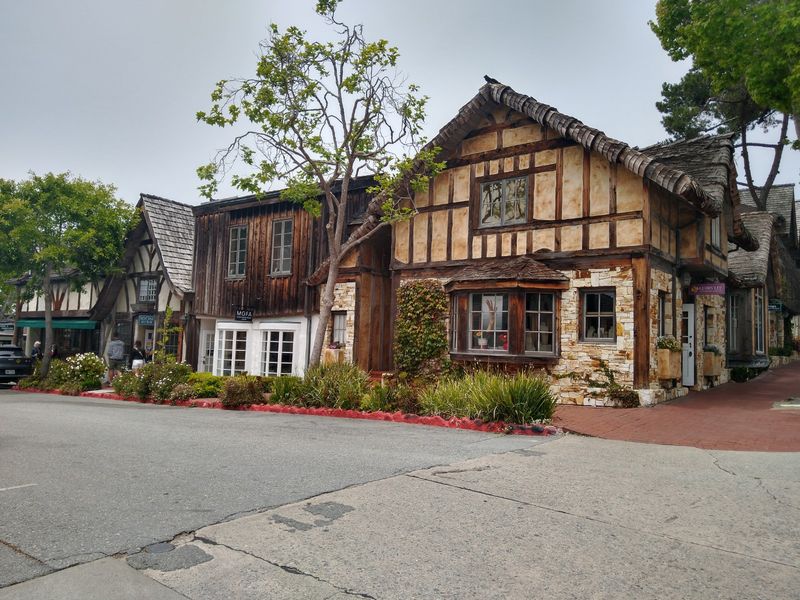
Walking through Carmel’s residential streets feels like stepping into an illustrated children’s book. The cottages here defy conventional architecture with rolled eaves, uneven rooflines, and windows that seem placed by whimsy rather than blueprint.
Many were built during the 1920s and 1930s by Hugh Comstock, whose designs for his wife’s doll business evolved into a defining style for the entire village.
These structures feature stone chimneys that lean slightly, doors shaped like keyholes, and roofs that appear to grow organically from the landscape. The materials themselves contribute to the effect, with river rock foundations, hand-split shakes, and rough-hewn timbers that suggest age beyond their actual years.
Gardens spill over fences in deliberate disorder, completing the fairy-tale impression.
The cottages remain private residences, which adds to their mystique. You cannot tour them, but the village layout encourages meandering, and most homeowners understand their houses form part of Carmel’s collective identity.
Respect for this architectural heritage runs deep, with strict preservation ordinances ensuring new construction honors established patterns.
There Are No House Numbers Or Standard Mailboxes In Town
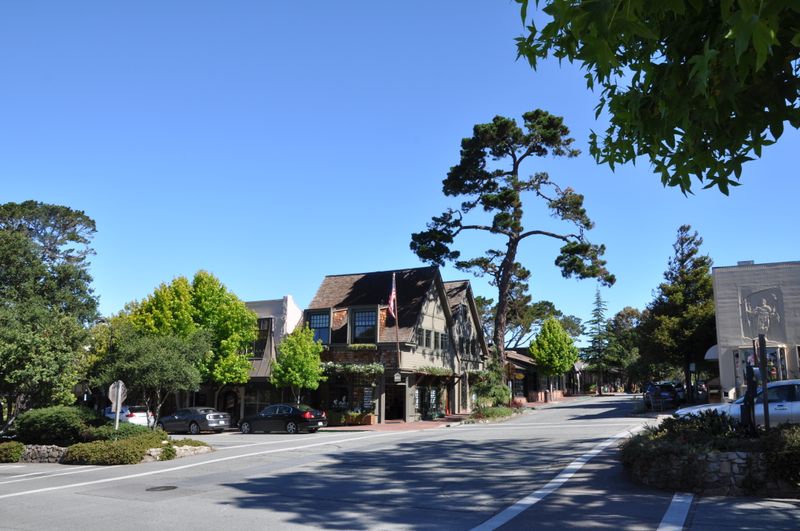
Carmel operates under an addressing system that baffles delivery drivers and delights residents. The village has never assigned street numbers to homes, a tradition dating to the town’s founding when residents preferred the personal touch of collecting mail at the central post office.
This practice continues today, with PO boxes serving as the primary method of correspondence.
The absence of numbers creates practical challenges that locals have learned to navigate. Giving directions requires landmarks rather than addresses, and visitors often find themselves describing properties by color, architectural style, or proximity to corner intersections.
Emergency services maintain detailed maps with location codes invisible to the general public.
Standard curbside mailboxes are similarly absent, another quirk that reinforces community interaction at the post office on Fifth Avenue. This gathering spot functions as an informal social hub where residents exchange news while sorting their mail.
The system may seem impractical to outsiders, but it represents Carmel’s determination to resist standardization and maintain traditions that set the village apart from conventional suburban development patterns across California.
Carmel Beach Is One Of California’s Most Scenic White-Sand Shores
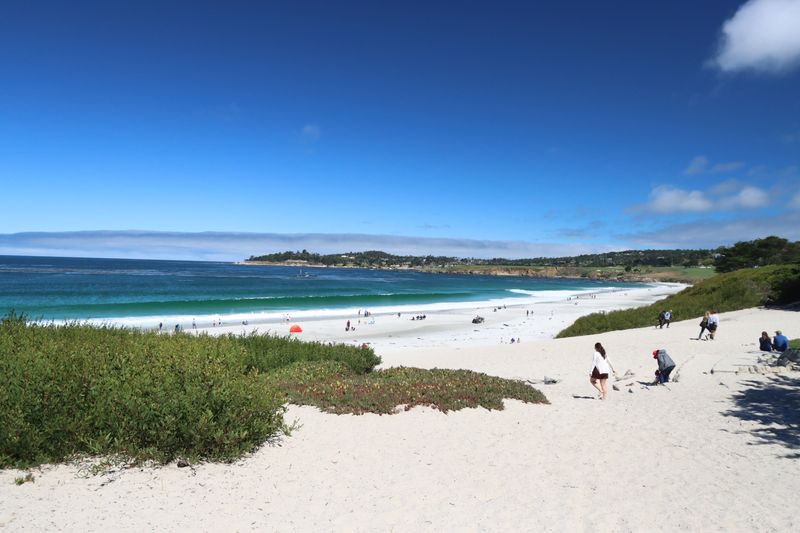
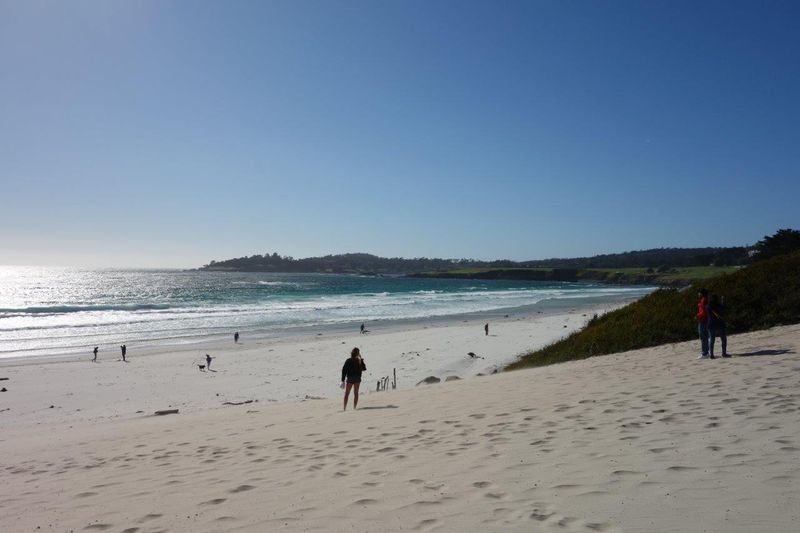
At the base of Ocean Avenue lies a crescent of white sand that contradicts expectations of Northern California beaches. Carmel Beach stretches nearly a mile, framed by windswept cypress trees and backed by low bluffs that provide natural seating for sunset watchers.
The sand here possesses an unusual fineness, almost powdery compared to the coarser grains found at neighboring beaches.
Water temperatures remain cold year-round, typical of this coast, but surfers brave the waves regardless. The beach attracts a democratic mix of visitors, from families building sandcastles to solitary walkers tracing the tide line.
Dogs romp freely here, one of the few California beaches permitting off-leash activity, which creates a festive atmosphere most afternoons.
The Scenic Bluff Path runs along the beach’s eastern edge, offering elevated views across Carmel Bay toward Point Lobos. Sunsets here draw crowds who gather in respectful silence as light transforms the sky.
The beach lacks commercial development, with no rental stands or snack bars interrupting the natural setting, a reflection of Carmel’s protective stance toward its coastal resources.
The Downtown Area Is Completely Walkable
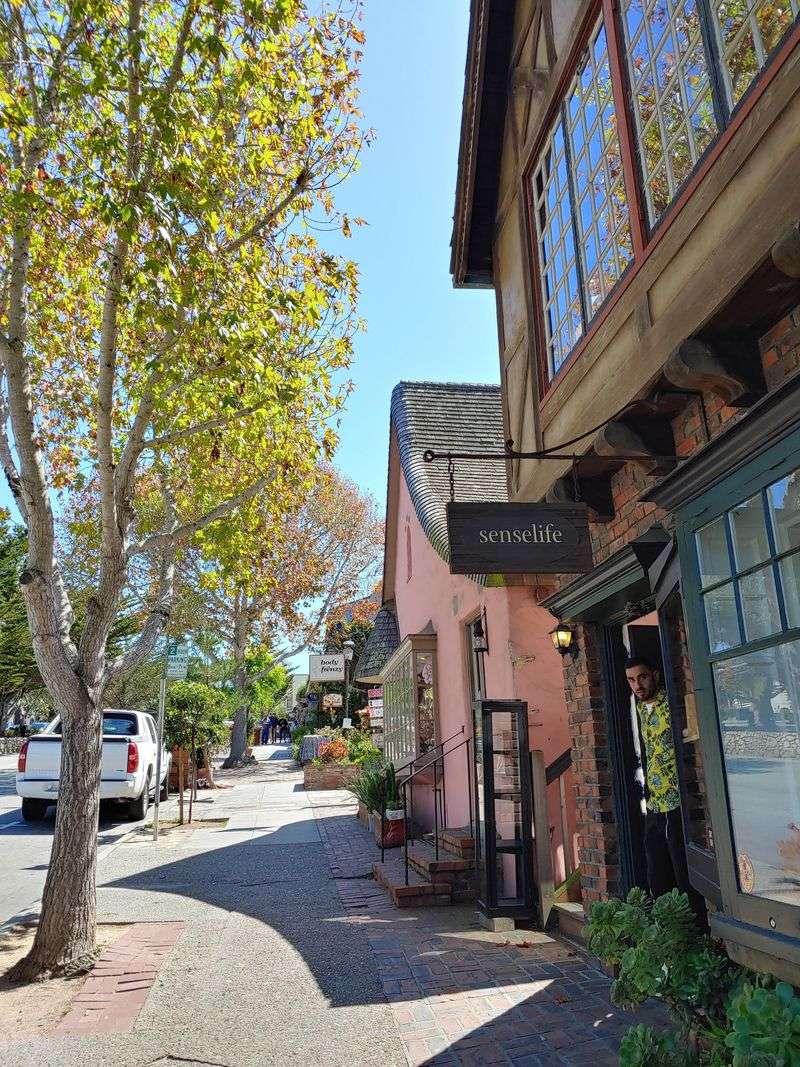
Carmel’s commercial district occupies a compact grid that measures roughly eight blocks by eight blocks, small enough to explore thoroughly on foot in an afternoon. The village deliberately rejected parking meters and neon signs decades ago, decisions that preserved a pedestrian scale rare in car-dependent California.
Sidewalks here remain wide and uncluttered, with mature trees providing shade along most routes.
Ocean Avenue functions as the main thoroughfare, sloping gently from Highway 1 down to the beach. Cross streets bear names rather than numbers, another small rebellion against bureaucratic convention.
The absence of traffic lights at most intersections forces drivers to proceed cautiously, yielding to pedestrians who cross with casual confidence.
Most businesses cluster within this walkable core, making car use unnecessary once you arrive. Parking lots hide behind buildings rather than dominating street frontage, and many visitors leave their vehicles for the duration of their stay.
The village layout encourages spontaneous exploration, with courtyards and passages connecting parallel streets. This intimacy of scale allows for genuine discovery rather than programmed tourism, rewarding those who wander without fixed itineraries through the downtown area.
Art Galleries Have Defined The Town For Over A Century
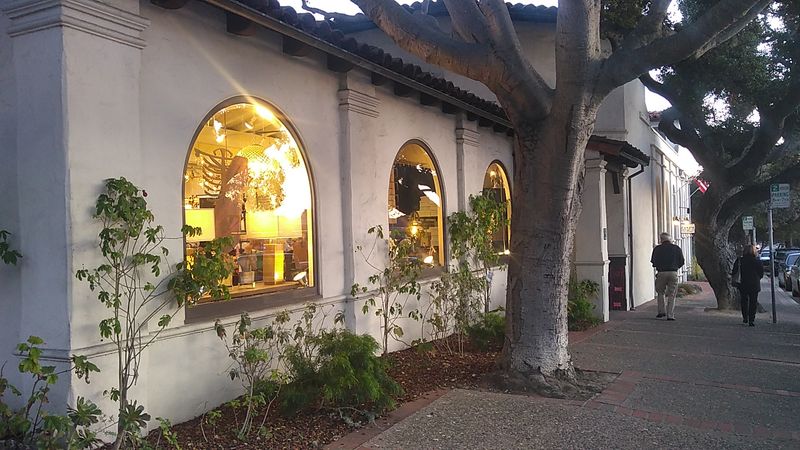
Carmel established itself as an artists’ colony in the early 1900s, attracting painters, writers, and photographers seeking affordable space and inspiring scenery. That creative legacy persists, with more than 80 galleries currently operating within the village boundaries.
The concentration rivals much larger cities, offering everything from traditional California landscape painting to contemporary sculpture and photography.
Many galleries occupy converted cottages, their domestic scale creating intimate viewing experiences. Friday evenings bring gallery receptions where wine flows freely and artists often appear to discuss their work.
The atmosphere remains approachable rather than intimidating, with gallery owners encouraging conversation and questions from visitors regardless of purchasing intent.
The Carmel Art Association, founded in 1927, maintains a prominent space on Dolores Street showcasing member artists. This cooperative model has influenced gallery culture throughout the village, emphasizing community over competition.
Serious collectors know Carmel as a destination for acquiring work by established California artists, while casual visitors appreciate the opportunity to view quality art without museum admission fees or restrictive viewing hours throughout the downtown gallery district.
Historic Mission San Carlos Borromeo Adds Cultural Depth
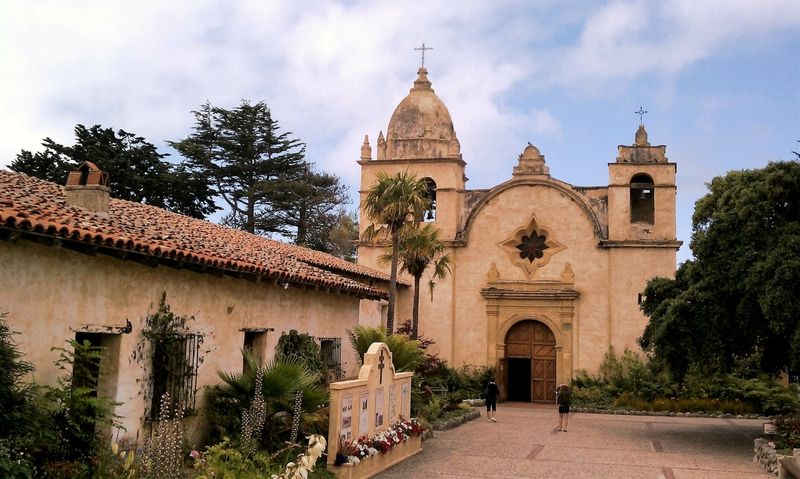
Just south of the village proper stands one of California’s most significant historical landmarks. Mission San Carlos Borromeo del Rio Carmelo, founded in 1770, served as headquarters for the California mission chain and final resting place of Father Junipero Serra.
The current stone church dates to 1797, its Moorish-inspired tower creating a distinctive silhouette visible from surrounding areas.
The mission grounds encompass courtyards planted with native species, a small museum displaying religious artifacts and historical documents, and a cemetery containing graves of early California settlers. Unlike some restored missions that feel sanitized, this site retains authentic character through its weathered stonework and quiet atmosphere.
The church remains an active parish, with Mass celebrated daily in a space that has served that purpose for over two centuries.
Visiting requires a short drive from downtown Carmel, but the mission’s historical importance justifies the detour. The complex sits on Rio Road, surrounded by residential neighborhoods that developed much later.
Entry fees support ongoing preservation work, and self-guided tours allow exploration at individual pace through rooms that witnessed California’s transformation from mission outpost to modern state.
Fairy-Tale Architecture Shapes The Village Atmosphere
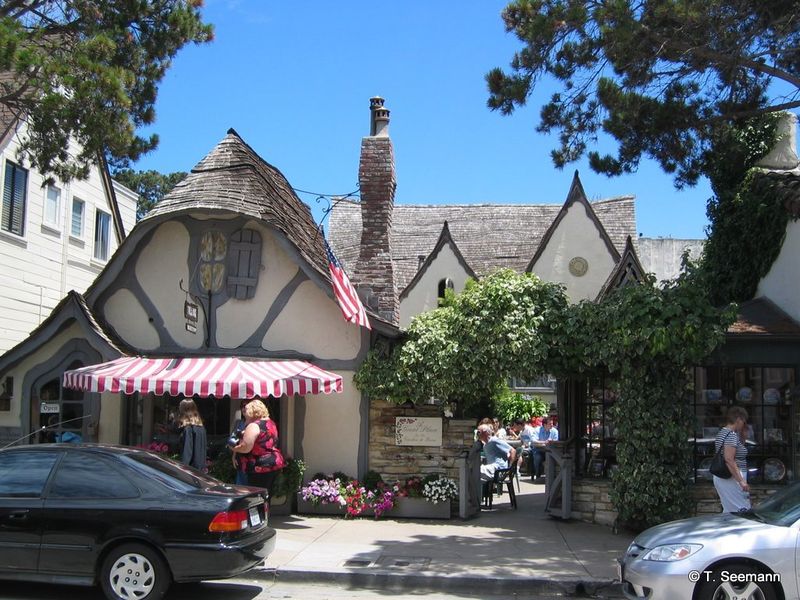
Beyond the famous cottages, Carmel’s commercial buildings embrace the same playful aesthetic that defines residential architecture. Shops and restaurants occupy structures with deliberate irregularity, featuring sloped floors, low doorways that require tall visitors to duck, and windows placed at unexpected heights.
This architectural approach emerged from practical necessity during the village’s early development, when artists built their own spaces using salvaged materials and improvised techniques.
The Tuck Box tearoom exemplifies this style with its thatched roof and diminutive scale, looking transported from an English countryside. Nearby, the Pine Inn maintains Victorian character dating to 1889, while modern additions mimic historical forms convincingly.
Even the most recent construction adheres to design guidelines that prohibit generic commercial architecture.
Stone and wood predominate as building materials, with stucco appearing less frequently than in other California coastal towns. Colors tend toward earth tones, allowing structures to blend with natural surroundings rather than demanding attention.
The cumulative effect creates visual coherence without monotony, as each building expresses individuality within shared aesthetic principles that have guided Carmel’s development for generations.
Ocean Avenue Is Lined With Independent Boutiques And Cafés
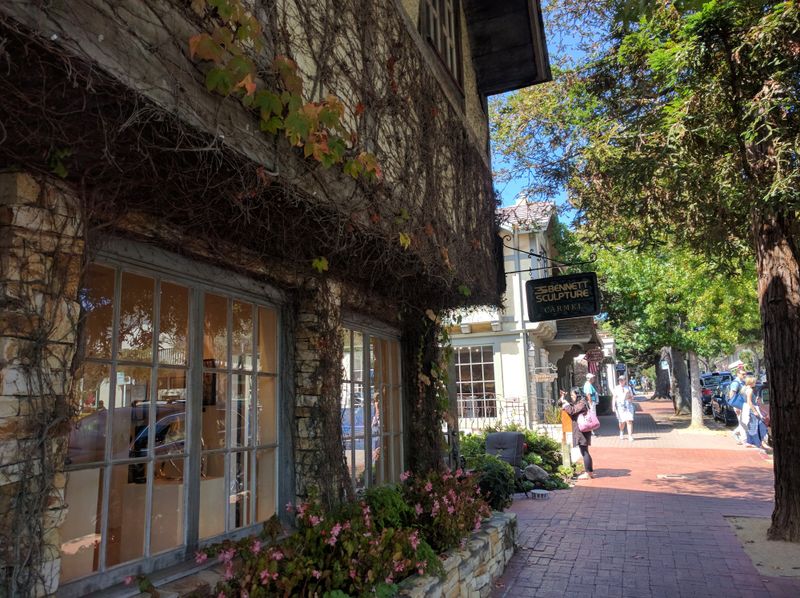
The main commercial corridor descending toward the beach hosts a retail mix that favors quality over quantity. Chain stores remain notably absent, kept out by community preference and zoning regulations that protect local business character.
Instead, visitors find independently owned shops selling everything from cashmere sweaters to handmade jewelry, with an emphasis on craftsmanship rather than mass production.
Cafés and restaurants occupy corner locations and mid-block storefronts, many featuring outdoor seating that captures afternoon sun. The village supports a surprising number of dining options given its small population, ranging from casual bakeries to white-tablecloth establishments.
European influences appear frequently on menus, reflecting the tastes of early settlers and current residents who traveled widely before choosing Carmel as home.
Window shopping here provides entertainment even without purchasing intent. Displays change seasonally, and many stores feature local artists or limited-edition items unavailable elsewhere.
The street’s gentle slope creates natural pauses for rest, with benches positioned at intervals and small plazas offering respite from retail activity. This thoughtful urban design makes Ocean Avenue pleasant for extended browsing rather than rushed transactions typical of conventional shopping districts.
Dogs Are Welcome Almost Everywhere In Town
Few California towns embrace canine visitors as enthusiastically as Carmel. Dogs accompany their owners into shops, restaurants with outdoor seating, and even some hotels that provide special amenities for four-legged guests.
This pet-friendly policy dates to the village’s founding, when bohemian residents rejected conventional rules in favor of more relaxed social norms.
The beach allows off-leash activity, creating a canine social scene where dogs race across sand and plunge into surf under owner supervision. Water bowls appear outside most businesses, and several shops stock treats specifically for visiting dogs.
The village even elected a dog as honorary mayor during the 1980s, a publicity stunt that nonetheless reflected genuine community sentiment toward pets.
Responsible ownership is expected, with owners required to clean up after their animals and maintain control in public spaces. Most dogs encountered here display good manners, suggesting owners understand the privilege of access depends on continued good behavior.
For visitors traveling with dogs, Carmel offers rare freedom to include pets in vacation activities rather than leaving them confined to hotel rooms or vehicles during sightseeing excursions throughout the village.
Seventeen-Mile Drive Begins Just Minutes Away
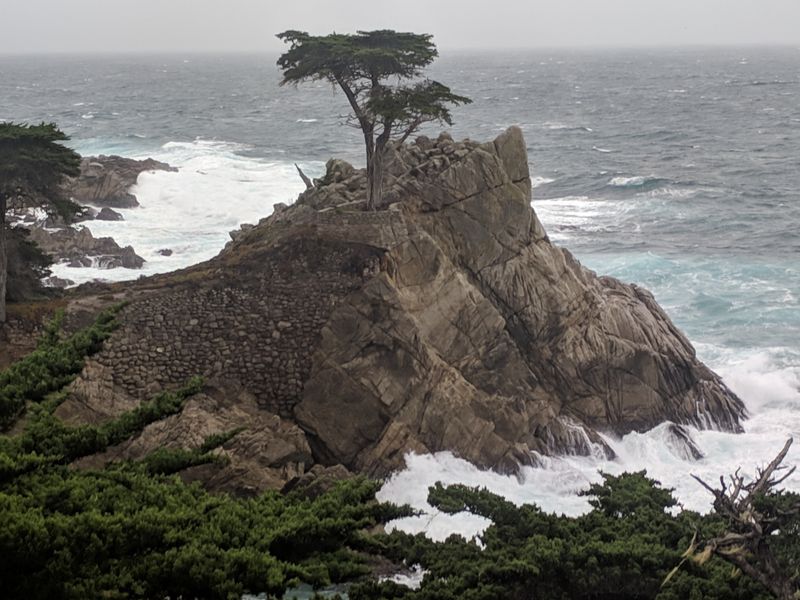
The northern edge of Carmel borders one of California’s most celebrated scenic routes. Seventeen-Mile Drive winds through Pebble Beach, connecting Carmel to Pacific Grove while showcasing spectacular coastal views, famous golf courses, and palatial estates.
The private toll road charges a modest fee that discourages casual traffic while funding road maintenance and landscape preservation.
Highlights along the route include the Lone Cypress, a wind-sculpted tree clinging to rocky outcrop that has become an iconic image of the Central Coast. Multiple turnouts allow stops for photography and contemplation of views across Carmel Bay and toward Point Lobos.
The drive passes several world-renowned golf courses, including Pebble Beach Golf Links, where glimpses of fairways and ocean holes reveal why players consider these among the finest courses anywhere.
The complete loop requires roughly two hours with stops, making it an ideal half-day excursion from Carmel. Wildlife sightings are common, with sea lions, harbor seals, and various seabirds visible from overlooks.
The drive provides context for Carmel’s appeal, demonstrating how this stretch of coastline combines natural beauty with careful development that respects rather than overwhelms the landscape.