
This Fascinating Kansas Rock Garden Is The Result Of 25 Years Of Artistic Patience
Two and a half decades of placing rocks with purpose left behind something that defies every category it gets pushed into. The result refuses to be summarized and rewards every minute spent trying.
The scale only becomes clear after moving through it for a while. What appeared manageable from the entrance reveals itself as something considerably more ambitious the further in a visitor travels.
Every element placed here carries an intention that develops slowly over decades rather than arriving complete in a single vision. That quality shows in ways that explanation alone cannot fully convey.
Kansas contains surprises that most travelers never slow down long enough to encounter. This rock garden is among the most profound of them, a monument to patience that asks only for the same quality from anyone who comes to stand inside it.
Historical Development Of The Over Nine Decades
This place started building her rock garden in 1935, and she never really stopped. She was a schoolteacher in Lucas, Kansas, who had a deep love for rocks and faraway places.
Her garden became her life’s work over nearly 64 years.
She called her creations “Postal Card Scenes.” Each piece was a miniature version of a real place she had visited or read about. She wanted to bring the mountains home to flat Kansas.
Deeble was inspired by the nearby Garden of Eden, created by S.P. Dinsmoor just a block away.
That local spark pushed her to build something equally personal and bold. She was not trying to compete.
She was just telling her own story in stone.
Florence lived from 1900 to 1999, which means she saw an entire century of American history. She kept building well into her later years, which is genuinely impressive.
Most people slow down. Florence just kept stacking rocks.
In 2017, the garden earned a spot on the National Register of Historic Places. That recognition confirmed what locals already knew.
This garden was never just a hobby. It was a living archive of one woman’s extraordinary artistic vision.
You can find it at 126 S Fairview Ave, Lucas, KS 67648.
Techniques Used In Crafting Intricate Stone Structures
Florence Deeble did not have fancy tools or formal training in sculpture. She worked with concrete, rocks, and stones she collected on her travels.
Her method was patient, hands-on, and deeply personal.
She would layer concrete carefully to build up shapes that looked like real mountain peaks. The rocks she embedded gave each piece natural texture and color.
No two structures ended up looking the same.
Deeble gathered her materials wherever she went. Road trips, vacations, and local walks all became rock-collecting missions.
Every stone had a story before it even became part of the garden.
Her technique was closer to folk art than formal masonry. She was not following a blueprint or a guidebook.
She was following her imagination, and that made all the difference in how the finished pieces felt.
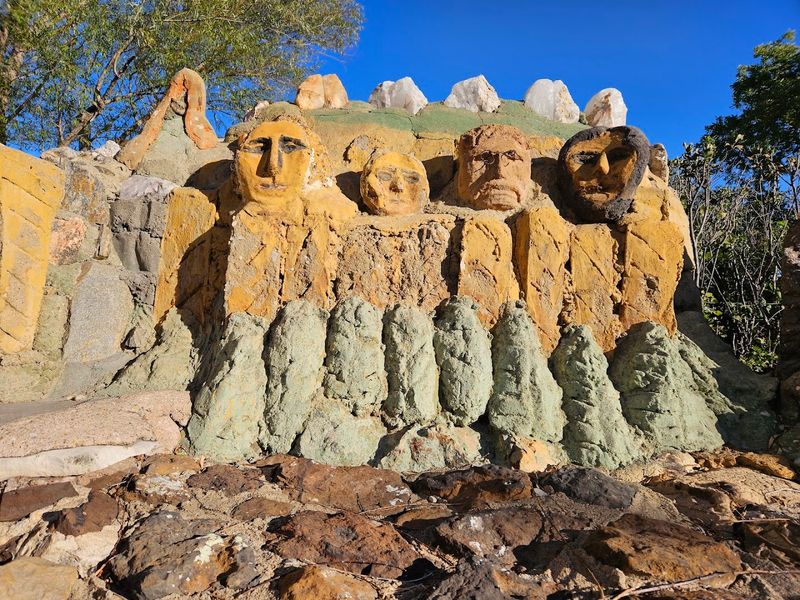
The miniature scale of her work is one of the most striking things about her method. She recreated massive landmarks like Mount Rushmore and the Grand Tetons in small, detailed forms.
Getting the proportions right at that scale took real skill and patience. Visitors often lean in close to appreciate how much detail she packed into each tiny scene.
The craftsmanship is surprisingly refined for someone working alone in a Kansas backyard with basic materials and a whole lot of vision.
Artistic Influences Behind The Creations

Florence Deeble drew inspiration from two powerful sources: her love of travel and her admiration for S.P. Dinsmoor.
Dinsmoor built the Garden of Eden right nearby, and that environment lit a creative fire in Deeble. Seeing bold art in her own neighborhood made her believe she could do the same.
Her “Postal Card Scenes” concept was rooted in the postcards and travel photographs that were popular in her era. She wanted to recreate the places she loved most.
Concrete and stone were her camera and film.
Deeble replicated American landmarks with obvious pride. Mount Rushmore, Estes Park, the Grand Tetons, and the Pinnacle Mountains in Arizona all appear in her garden.
She was essentially building a personal atlas of places that moved her.
She also honored the people around her. The garden includes tributes to the Lucas City Band, local founding fathers, her father, and her brother.
Art and community memory blended naturally in her work.
Her influences were not high-brow or academic. They were rooted in everyday American life, patriotism, and local pride.
That grounded quality is exactly what makes her work feel so honest and real. There was no pretension in what Florence built.
It was pure expression, shaped by the places she loved and the people she wanted to remember forever in stone and concrete.
Maintenance Practices That Preserve Beauty
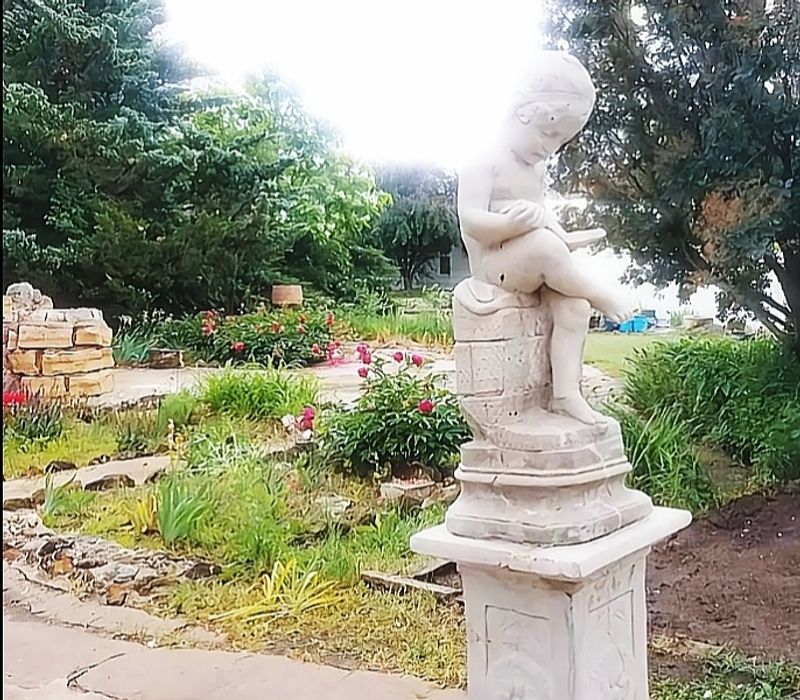
Keeping an outdoor concrete garden alive for nearly a century takes serious effort. The Florence Deeble Rock Garden has been restored and carefully maintained since Florence passed away in 1999.
That work did not happen by accident.
The Kansas Grassroots Art Association took on the responsibility of preserving the garden. Their involvement made sure the structures did not crumble or get lost to weather and time.
Grassroots art needs grassroots guardians.
Concrete exposed to Kansas weather faces real challenges. Freezing winters, hot summers, and heavy rains can all crack and erode surfaces over time.
Regular inspection and careful repair work keep the structures stable and recognizable.
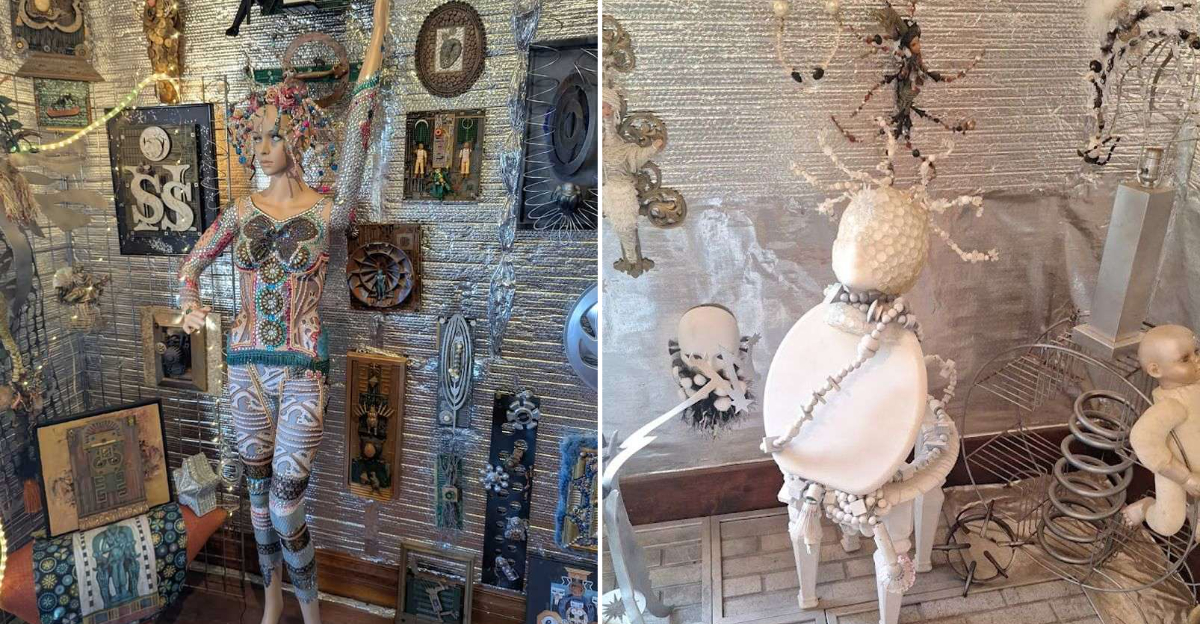
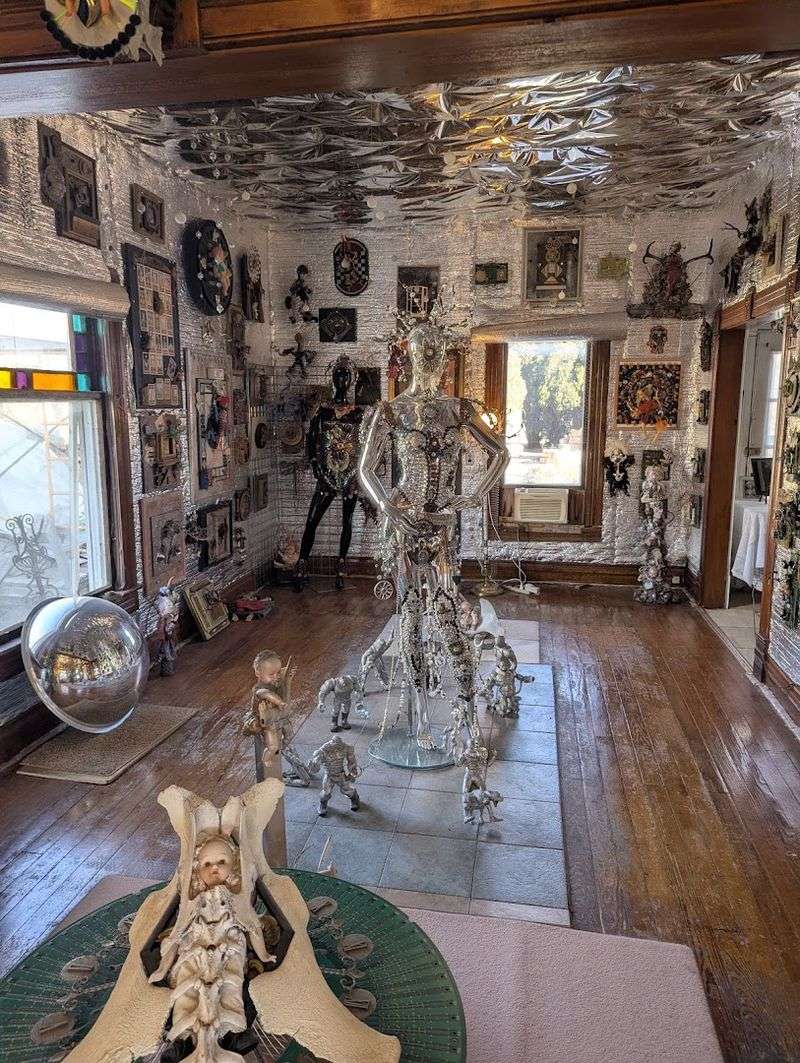
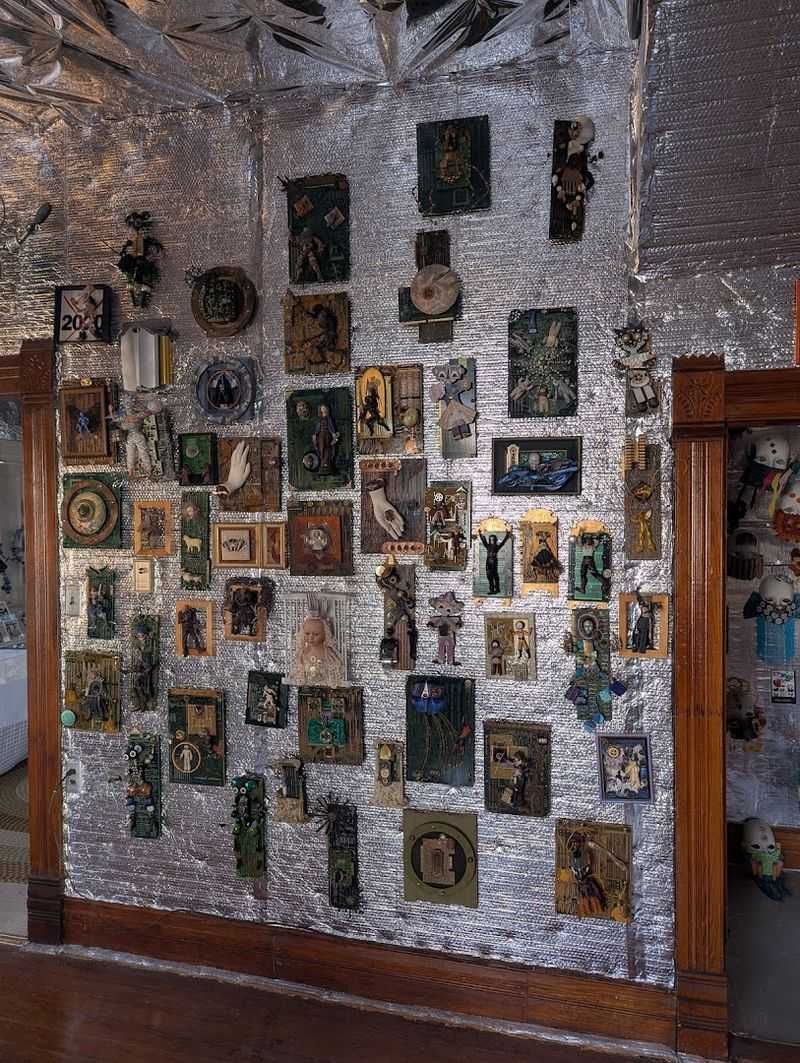
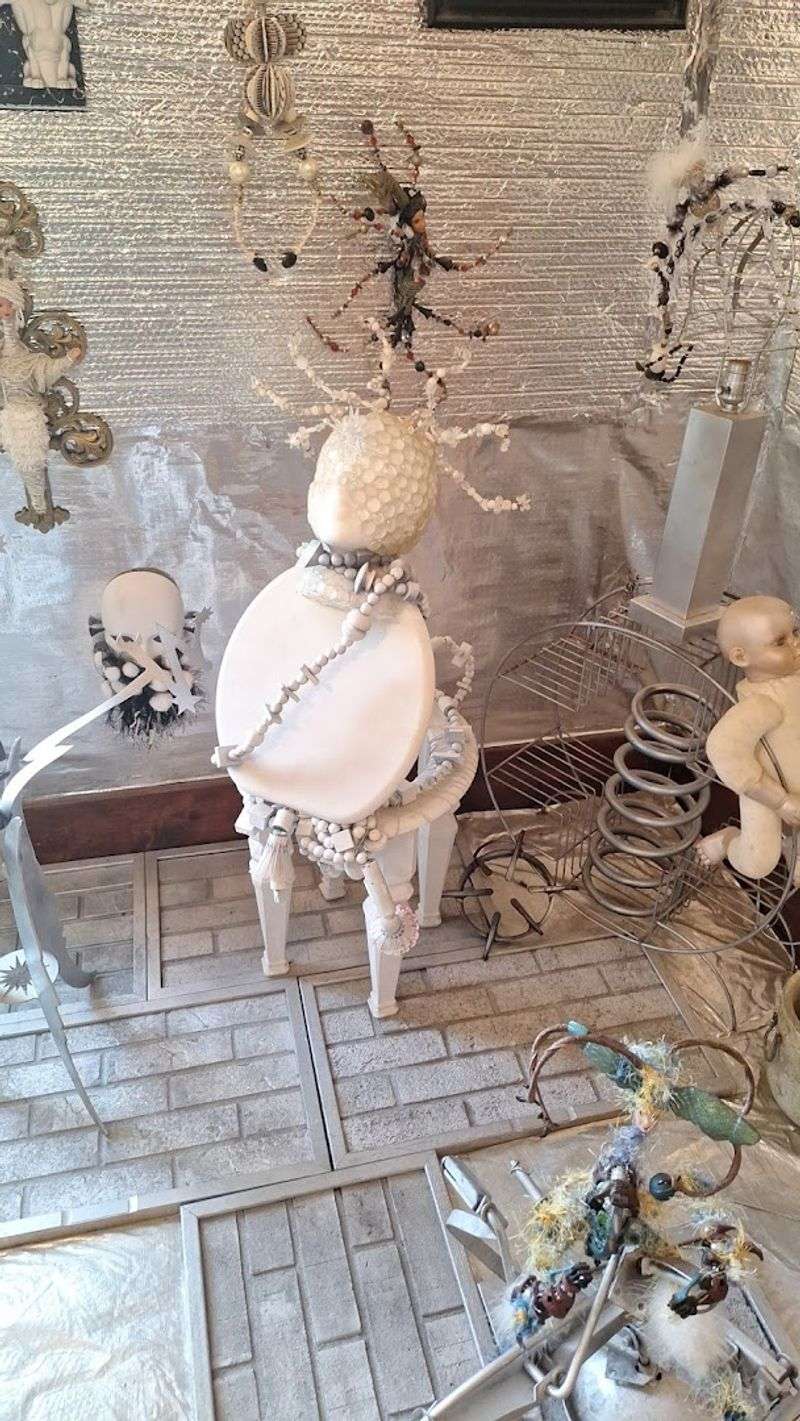
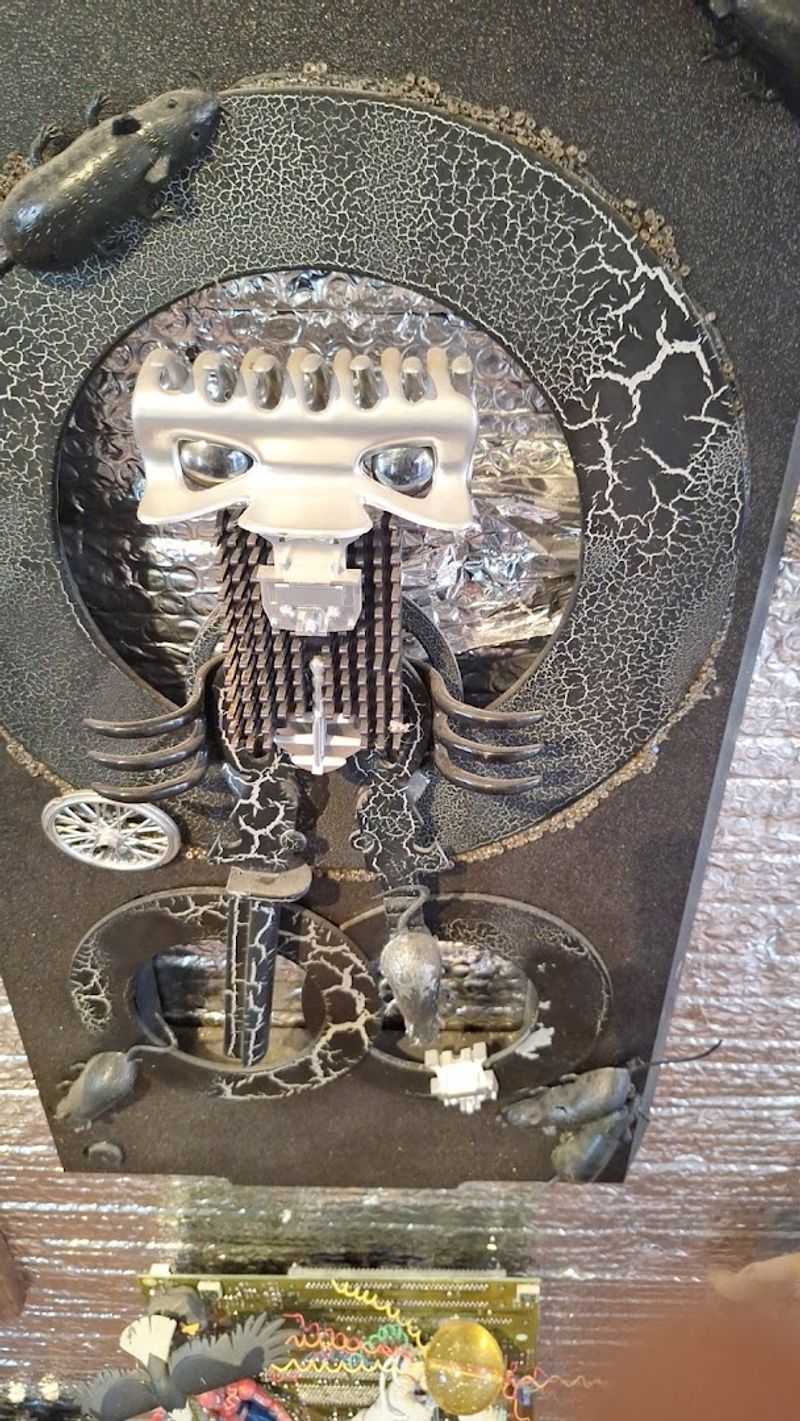
The house itself has also been put to good use. Since 2002, the first floor became the “Garden of Isis,” an interior art installation by artist Mri-Pilar.
The Kansas Grassroots Art Center now uses the house for artists-in-residence programs.
Preservation is not just about fixing cracks. It also means educating visitors about the garden’s history and meaning.
Tours led from the Grassroots Art Center help people understand what they are actually looking at. Without that context, you might just see rocks.
With it, you see decades of one woman’s devotion to beauty, memory, and creative expression. The maintenance work honors Florence’s legacy in the most direct way possible.
Diversity Of Types And Their Symbolic Meanings
The Florence Deeble Rock Garden is not just one type of art. It is a collection of many different scenes, each carrying its own meaning.
Some pieces honor famous American landscapes. Others are deeply personal tributes to real people Florence loved.
Her mountain replicas, like the Grand Tetons and Longs Peak, represent her longing to experience grand natural beauty. She could not always travel far.
So she brought the scenery to her backyard instead.
The tributes to local figures tell a different story. Honoring the Lucas City Band and local founding fathers shows how much she valued community history.
Her garden was partly a public memorial built in private space.
The sections dedicated to her father and brother add an emotional layer that many visitors find moving. These were not famous people.
They were her people, and she made sure they had a stone place.
Each scene type serves a symbolic purpose. Mountains represent freedom and wonder.
Local tributes represent identity and belonging. Personal memorials represent love and loss.
Together, they create a garden that functions like a visual autobiography. Florence never wrote a book about her life.
She built one instead, using rocks and concrete as her words and sentences. Walking through the garden feels like reading a quiet, deeply personal story one miniature scene at a time.
Impact Of On Local Cultural Heritage

Lucas, Kansas, carries a remarkable title: the Grassroots Art Capital of Kansas. That designation did not come out of nowhere.
Places like the Florence Deeble Rock Garden helped build that reputation one handmade scene at a time.
The garden sits just a block from S.P. Dinsmoor’s Garden of Eden, making that stretch of Lucas a genuine folk art corridor.
Two extraordinary self-taught artists, one small town, and decades of creative output all converge in that neighborhood.
Florence’s work influenced how Lucas thinks about itself. Local identity got shaped around the idea that ordinary people can create extraordinary things.
That is a powerful message for any community to carry.
Tourism to Lucas grew as its grassroots art scene gained national attention. The National Register of Historic Places listing in 2017 gave the garden official cultural standing.
That kind of recognition brings visitors, funding, and long-term preservation interest.
The garden also strengthened pride among longtime residents. Knowing that a local schoolteacher built something worthy of national recognition makes the town feel special.
Art does not always come from big cities or famous institutions. Sometimes it comes from a determined woman in Lucas, Kansas, who spent decades creating something the whole country came to admire.
Visitor Experiences And Interpretations Of The Art
People who visit the Florence Deeble Rock Garden tend to leave with a lot of feelings they did not expect. The garden has a quiet, personal energy that catches visitors off guard.
You come for the rocks and stay for the story.
Access to the full garden experience starts at the Grassroots Art Center nearby. Staff there provide context and guided tours that make the visit much richer.
Without that background, some pieces can feel puzzling at first glance.
Visitors often comment on how the scale of the miniatures draws them physically closer. You find yourself leaning in, crouching down, and squinting to catch every detail.
That physical engagement makes the experience feel interactive and intimate.
Different people interpret the garden differently. Some see it as a tribute to American landscapes.
Others focus on the personal memorials to Florence’s family and community. Both readings are completely valid and both are correct.
The interior installation on the first floor of the house, the Garden of Isis, adds another layer to the visit. It is a separate art environment but shares the same address and spirit of creative transformation.
Combining both stops in one visit gives you a full picture of how this small house became a landmark. Visitors consistently leave with a deep respect for Florence and for the quiet, stubborn power of long-term creative commitment.
Environmental Factors Shaping Evolution
Building an outdoor art environment in Kansas means dealing with some serious weather. The Great Plains bring intense heat, bitter cold, strong winds, and unpredictable storms.
Florence built anyway, and the garden evolved right alongside those conditions.
The flat Kansas landscape actually works in the garden’s favor visually. With no competing hills or dramatic terrain nearby, the miniature mountain scenes stand out sharply against the open sky.
The environment unexpectedly frames the art.
Over the decades, the concrete structures absorbed the effects of Kansas seasons. Some pieces developed natural weathering that actually added character and texture.
What looked rough became part of the garden’s authentic visual identity.
The rocks Deeble collected came from many different environments across the country. Mountain stones, desert rocks, and plains pebbles all ended up in the same Kansas garden.
That geographic diversity is literally embedded in the garden’s physical structure.
Climate also influenced the pace of Florence’s building process. She likely worked more during mild seasons and slowed down during brutal Kansas winters.
That natural rhythm gave the garden its gradual, layered quality. Each year added something new without erasing what came before.
The environment did not fight her vision. It shaped it, slowed it, and ultimately helped create a garden that feels like it grew organically from the Kansas soil itself over many patient decades.