
This Hand-Carved Wisconsin Landmark Is One Of The State’s Most Impressive Roadside Sights
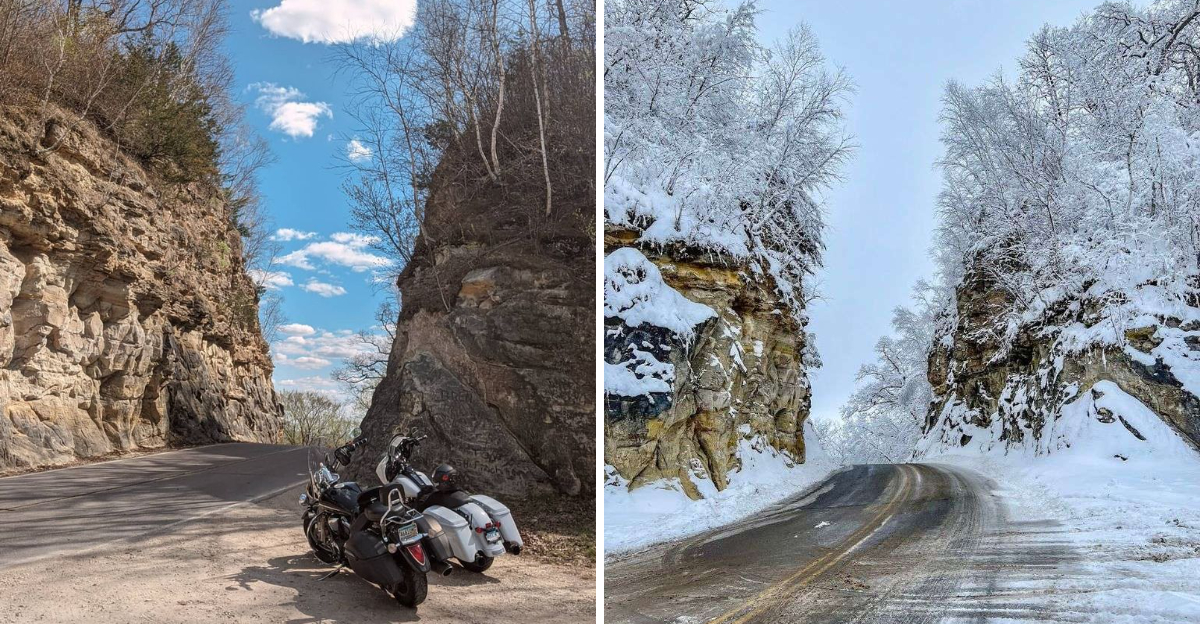
In western Wisconsin, a drive through the hills can suddenly turn into a lesson in grit, patience, and old-fashioned determination. This massive passage through Phillips Ridge was carved in the early 1900s with hand tools, horse power, and exhausting physical effort.
Built to connect the small community of Mindoro with West Salem, it turned a difficult ridge crossing into a usable route that still carries travellers today. Along County Road C, the towering rock walls make the work feel almost impossible to imagine.
It is more than a roadway. It is a rugged reminder of the people who shaped the landscape one swing, one load, and one stubborn day at a time.
A Roadside Landmark Carved Straight Through Phillips Ridge
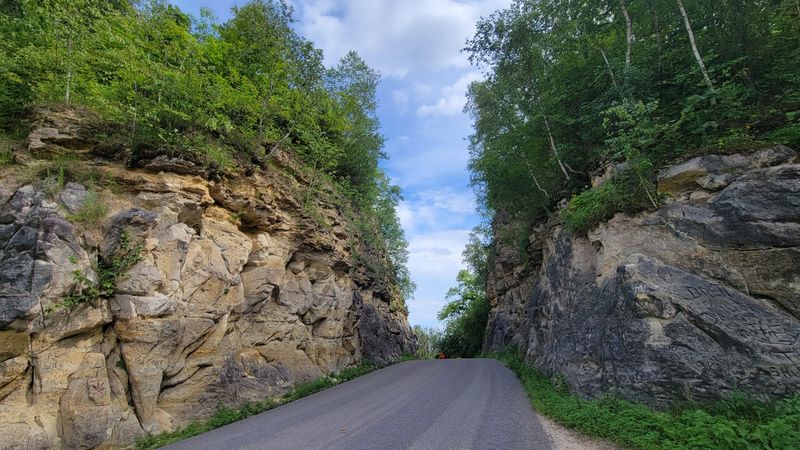
Phillips Ridge once stood as an imposing barrier in La Crosse County, forcing travelers to take lengthy detours around its bulk. The decision to carve directly through the ridge rather than over or around it represented both ambition and practicality.
What emerged from that decision became the Mindoro Cut, a passage that slices cleanly through solid rock. The walls rise vertically on either side of the roadway, exposing layers of stone that have remained untouched for millennia until workers arrived with their tools.
Driving through the cut today feels like passing through a portal carved by sheer human will. The rock faces frame the sky above, and the narrow passage creates a sense of compression before releasing travelers back into open countryside.
This landmark sits at coordinates 43.973852699999995, -91.0951376 in Farmington, Wisconsin, where it continues to serve its original purpose while drawing curious visitors from across the region.
The Cut Was Built Between 1907 And 1908
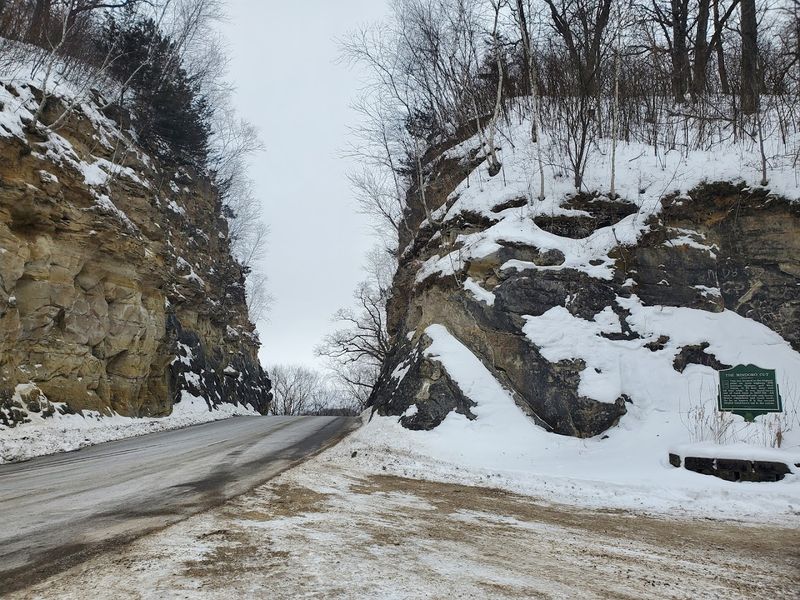
Construction began in 1907 during an era when roadbuilding relied primarily on manual labor and animal power. The project timeline stretched across two years, a period that tested the endurance of everyone involved.
Workers faced the ridge with determination, knowing that each day would bring slow but steady progress. The techniques available at the time required patience and physical strength in equal measure.
No heavy machinery arrived to speed the process along.
Completing such an undertaking within this timeframe speaks to the coordination and commitment of the crews who showed up day after day. The year 1908 marked the end of active construction, though the cut itself would require ongoing maintenance.
Modern travelers benefit from decisions made more than a century ago, when local officials chose to invest in infrastructure that would serve generations. The finished passage opened new possibilities for commerce and connection across this corner of Wisconsin.
Workers Carved It Mostly With Hand Tools
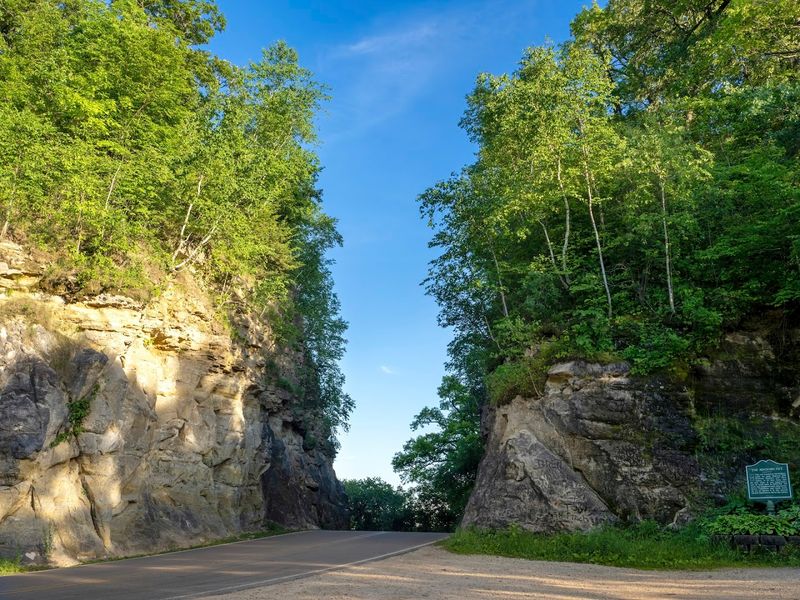
Pickaxes, sledgehammers, chisels, and drilling equipment formed the primary arsenal for the men who attacked Phillips Ridge. Each strike against the rock produced small chips and dust rather than dramatic results.
The absence of modern machinery meant that progress came through repetition and muscle. Workers would drill holes into the rock face, insert charges, and carefully blast away sections before clearing the rubble by hand and wagon.
The process repeated itself countless times as the cut slowly deepened and extended through the ridge.
Hand tools left their marks on the stone walls, creating textures that power equipment would have erased. These surfaces tell stories of individual effort, of blisters and sore backs, of determination measured in inches rather than feet.
The physical demands of this work are difficult to imagine from the comfort of a modern vehicle. Standing at the base of the cut and looking upward provides some perspective on the scale of what hand labor accomplished here.
It Measures About 74 Feet Deep And 25 Feet Wide
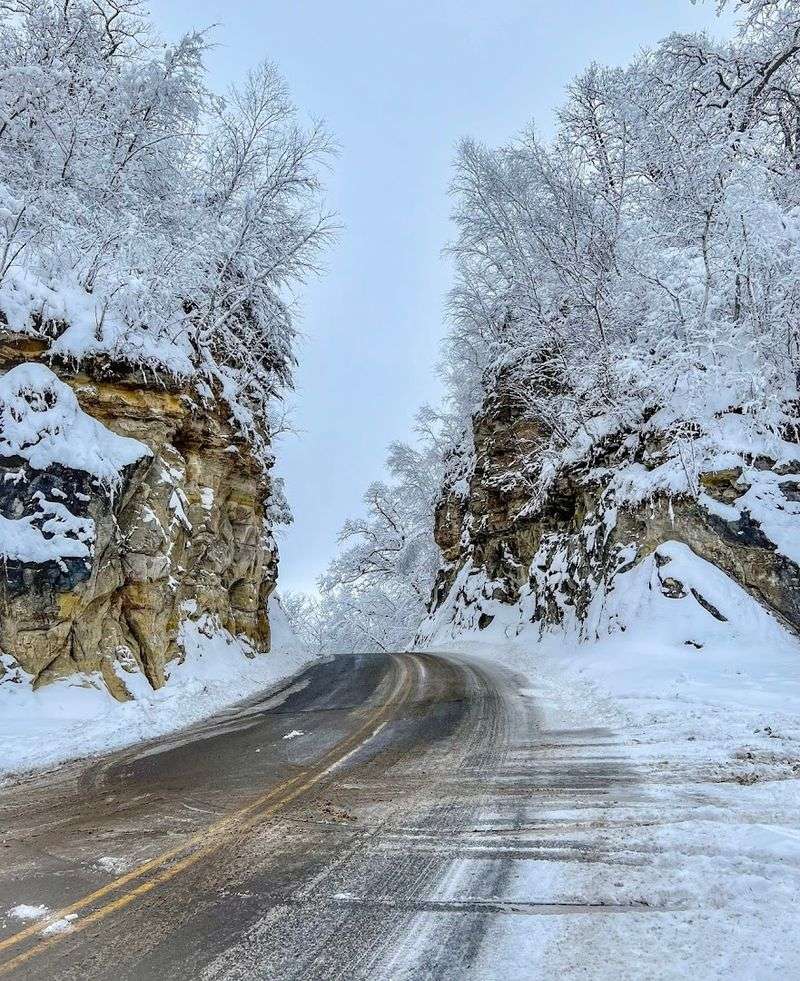
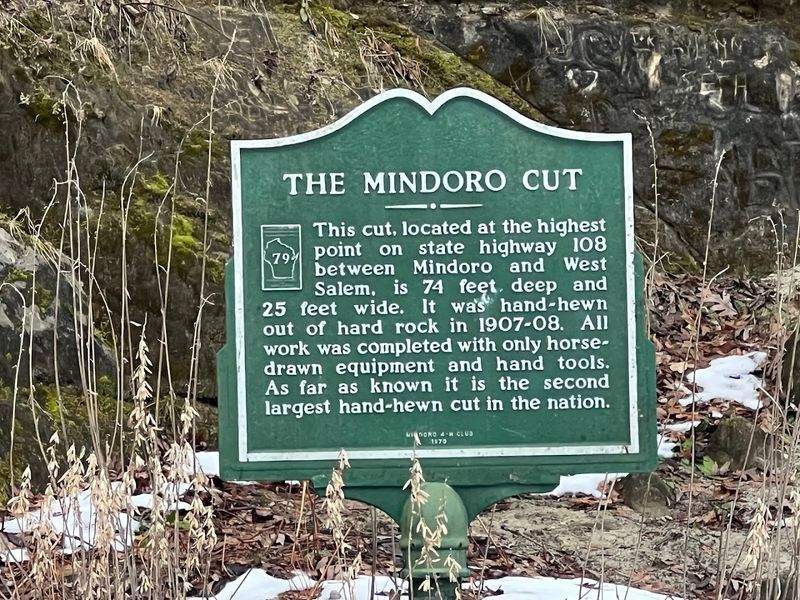
The dimensions of the Mindoro Cut create an immediate visual impact. Seventy-four feet of vertical rock rises on either side of the passage, while the width holds steady at approximately twenty-five feet from wall to wall.
These measurements place the cut among the most significant hand-hewn passages in North America. The depth alone represents thousands of hours of drilling, blasting, and hauling away broken stone.
The relatively narrow width kept the project manageable while still allowing wagons and early automobiles to pass through safely.
Standing inside the cut provides a visceral sense of these proportions. The walls lean slightly inward in places, creating shadows even during midday.
The confined space amplifies sound, making the passage feel even more dramatic. At eighty-six feet in length, the cut is brief but memorable, a concentrated dose of human engineering that punches through an obstacle that once seemed insurmountable.
The proportions remain unchanged from the day work concluded in 1908.
It Is Often Described As One Of The Largest Hand-Hewn Cuts In The Country
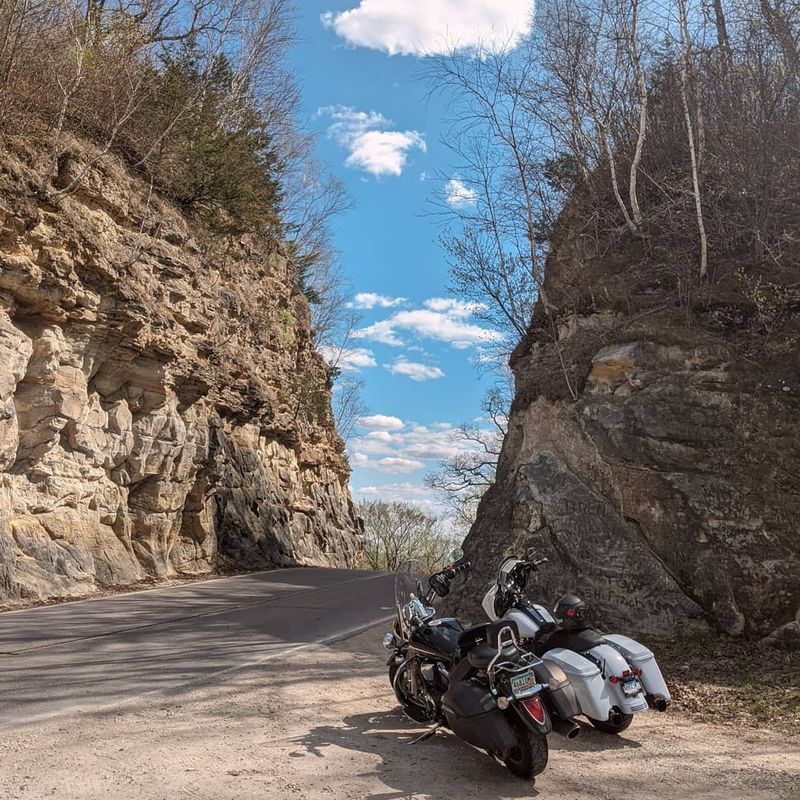
Rankings and superlatives attach themselves to the Mindoro Cut with good reason. Among hand-carved rock passages in the Western Hemisphere, this one claims the distinction of being the second deepest while remaining the oldest that has never required significant modernization.
Other cuts may have been widened, reinforced, or altered to accommodate changing traffic patterns. This passage continues to function much as it did when first completed.
The combination of depth, age, and original condition sets it apart from similar projects across the continent.
Such recognition matters less than the simple fact of the cut’s existence. The workers who created it had no interest in records or rankings.
They needed a road, and they built one through the most direct route available. The passage earned its place on the National Register of Historic Places in 2007, nearly a century after completion.
This formal acknowledgment confirms what travelers discover when they first drive through and realize they are experiencing something genuinely rare and remarkable.
The Road Helped Connect Mindoro With West Salem
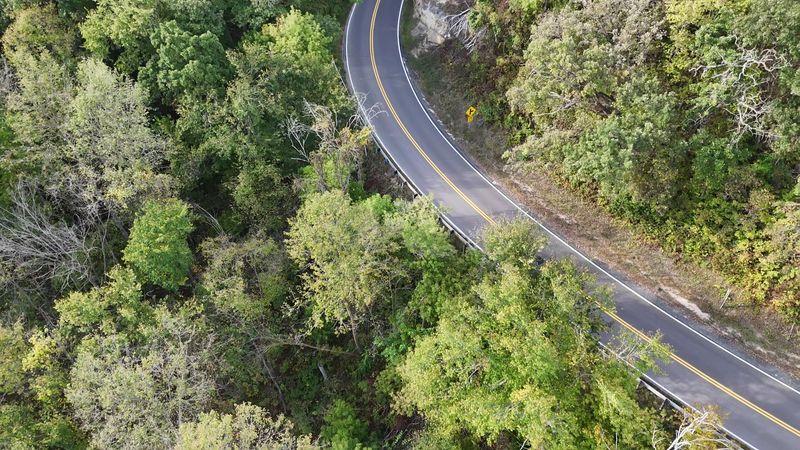
Before the cut existed, travel between these two communities required lengthy detours around Phillips Ridge. The barrier disrupted commerce, delayed mail delivery, and isolated residents on either side of the geographic obstacle.
Completing the passage shortened travel times significantly and made regular interaction between the towns practical. Farmers could reach markets more easily.
Families could visit without dedicating an entire day to the journey. The psychological impact of removing such a barrier mattered as much as the practical benefits.
West Salem lies to the northeast of the cut, while Mindoro sits to the southwest. County Road C threads through both communities, with the cut serving as the critical link.
Modern travelers use this route for recreation as much as necessity, enjoying the winding approaches and dramatic passage through the ridge. The road still fulfills its original purpose, though the economic landscape of rural Wisconsin has changed considerably.
The connection remains, solid and functional, a testament to infrastructure decisions made with long-term community needs in mind.
It Was Created Because Phillips Ridge Made Travel Difficult
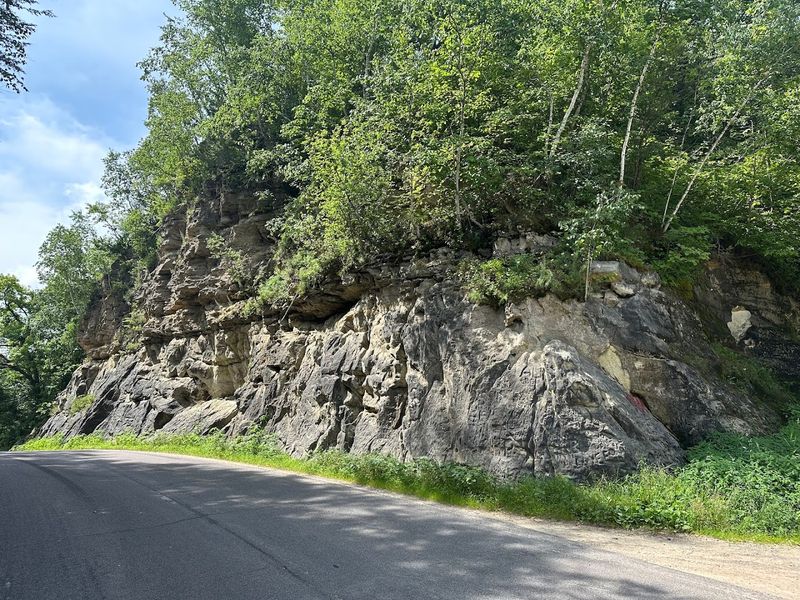
Phillips Ridge presented an unavoidable challenge to anyone attempting to travel through this section of La Crosse County. The ridge runs perpendicular to the most logical travel routes, forcing detours that added miles and hours to simple journeys.
Early settlers and local officials recognized that economic development depended on reliable transportation. The ridge stood in the way of progress, and conventional solutions like going around or over the obstacle proved unsatisfactory.
The decision to go through it represented a bold commitment to solving the problem permanently.
Topography shaped human decisions throughout history, and the Mindoro Cut stands as a clear example of humans reshaping topography in response. The ridge had dictated travel patterns for generations until technology and determination reached the point where direct action became possible.
What remains today is evidence of that moment when a community decided that the ridge would no longer control their movements. The cut reversed the power dynamic between landscape and inhabitants, a reversal that continues to benefit travelers more than a century later.
The Rock Was Harder To Remove Than Workers Expected
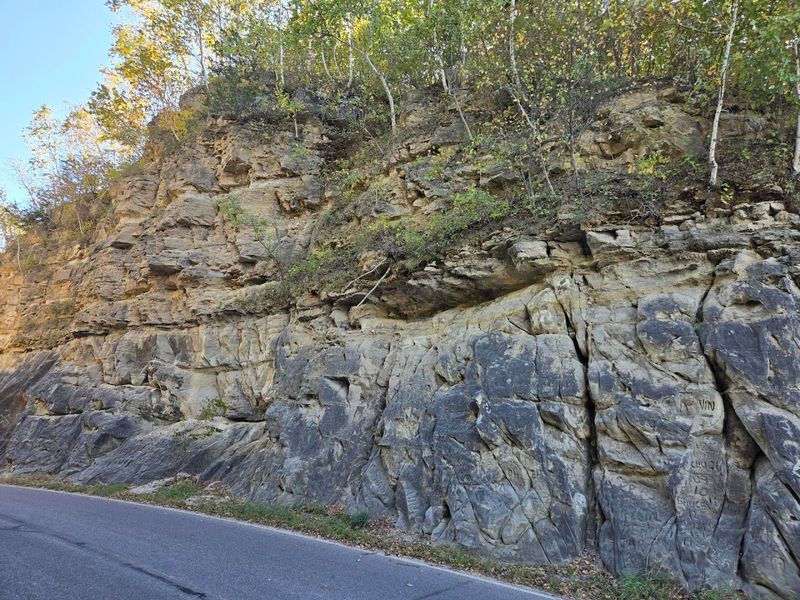
Initial estimates for the project proved optimistic once workers began attacking the ridge in earnest. The rock composition turned out to be denser and more resistant than anticipated, slowing progress and testing the resolve of everyone involved.
Each blast removed less material than hoped. Drilling took longer than planned.
The stone refused to break cleanly, creating additional work as crews cleared irregular chunks and fragments. What looked straightforward on paper became a grinding test of endurance in practice.
This unexpected difficulty explains why the project stretched across two years rather than completing in a single construction season. Workers adapted their techniques, adjusted their expectations, and kept working.
The final result shows no evidence of the frustration that must have accompanied each slow day of progress. The rock walls stand smooth and solid, bearing the scars of their creation but revealing nothing of the human struggle required to produce them.
Modern visitors see only the finished passage, clean and functional, without witnessing the stubborn resistance the ridge offered to those who dared to carve through it.
The Landmark Still Carries Traffic Today
County Road C continues to route vehicles through the Mindoro Cut just as it has for more than a century. The passage handles modern traffic without complaint, proving that good engineering transcends its era.
Road surfaces have been maintained and updated over the decades, but the cut itself remains fundamentally unchanged. The same rock walls that guided horse-drawn wagons now frame SUVs and motorcycles.
The passage accommodates contemporary vehicles without requiring widening or significant alteration.
This continued functionality distinguishes the cut from many historical landmarks that serve purely commemorative purposes. Drivers experience the landmark by using it, by passing through the same narrow corridor that served their great-grandparents.
The cut remains part of the living infrastructure of western Wisconsin rather than a preserved relic isolated from daily life. Traffic volumes remain modest enough that the passage never feels congested, allowing each vehicle to experience the brief compression and release that defines the journey through Phillips Ridge.
The landmark works because it still works, a simple statement that captures its enduring value.
It Makes A Memorable Stop On A Scenic Western Wisconsin Drive
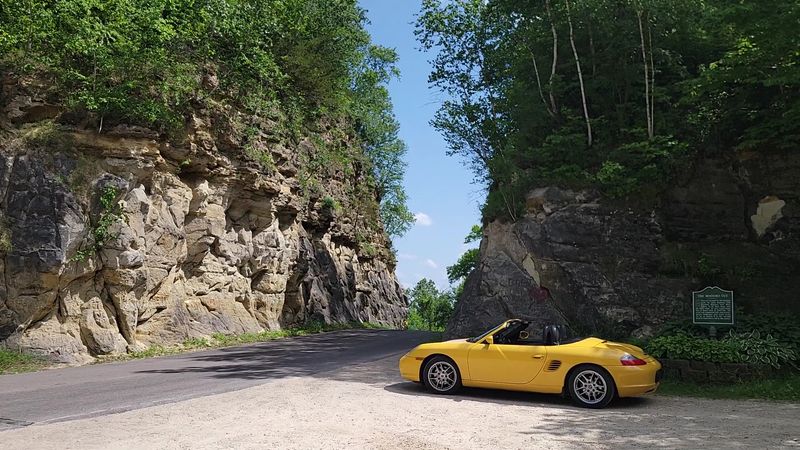
The approaches to the Mindoro Cut offer their own rewards, with County Road C winding through rolling terrain and tight curves that demand attention from drivers. The roads climb and descend through wooded sections before reaching the cut itself.
Motorcyclists particularly appreciate these twisting routes, finding the combination of technical riding and historical destination ideal for day trips. The gravel parking area near the cut provides space to stop and examine the landmark up close.
A historical marker explains the construction and significance, adding context to the visual impact.
The entire experience occupies perhaps fifteen minutes for those who stop to read and photograph, making it an easy addition to longer explorations of the region. The surrounding countryside rewards unhurried travel, with small communities and agricultural landscapes creating a sense of stepping back from contemporary pace.
The cut serves as both destination and waypoint, significant enough to justify the journey while fitting naturally into broader scenic routes. Western Wisconsin holds numerous attractions, but few combine historical significance, engineering achievement, and dramatic visual impact as effectively as this hand-carved passage through Phillips Ridge.