
This Harley-Davidson Dealership In Wisconsin Has A Hidden Muscle Car Museum Inside
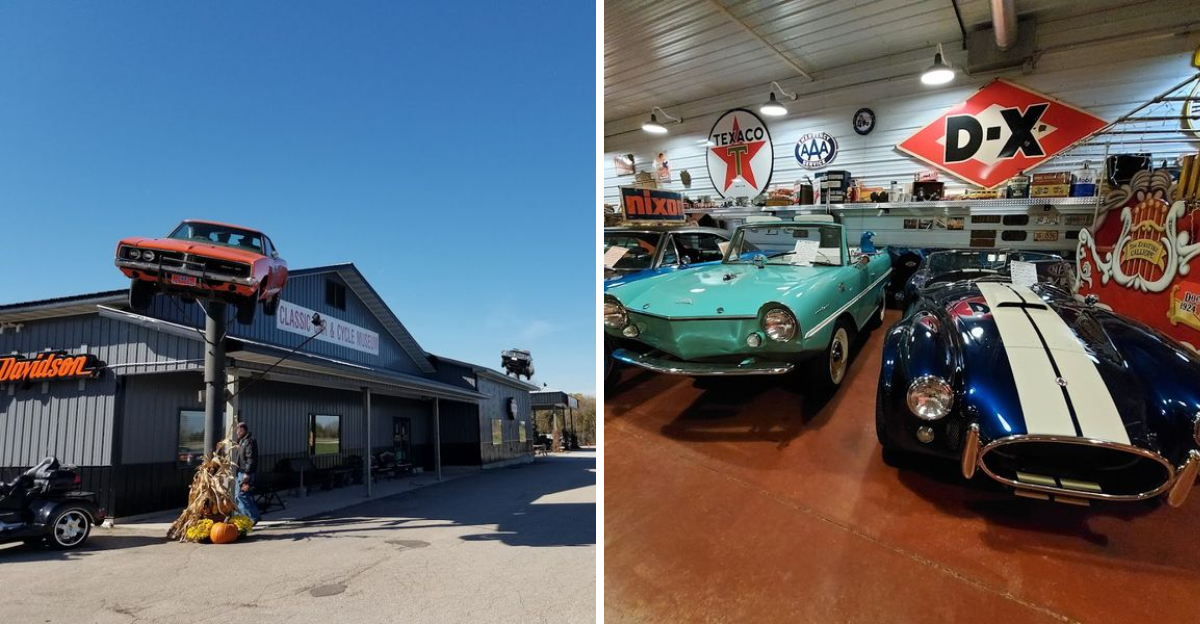
Most people pass through Bonduel, Wisconsin without a second thought, yet those who pull over at a local dealership along WI-29 tend to stay far longer than planned. What appears from the road to be a standard motorcycle dealership turns out to be something far more layered and genuinely surprising.
Inside and across the property, visitors find a muscle car museum, a working zoo, a restaurant, antique collections, and sculptures that seem to multiply the longer you look. This place has quietly become one of the most distinctive roadside destinations in Wisconsin.
A Harley-Davidson Dealership With A Surprising Twist
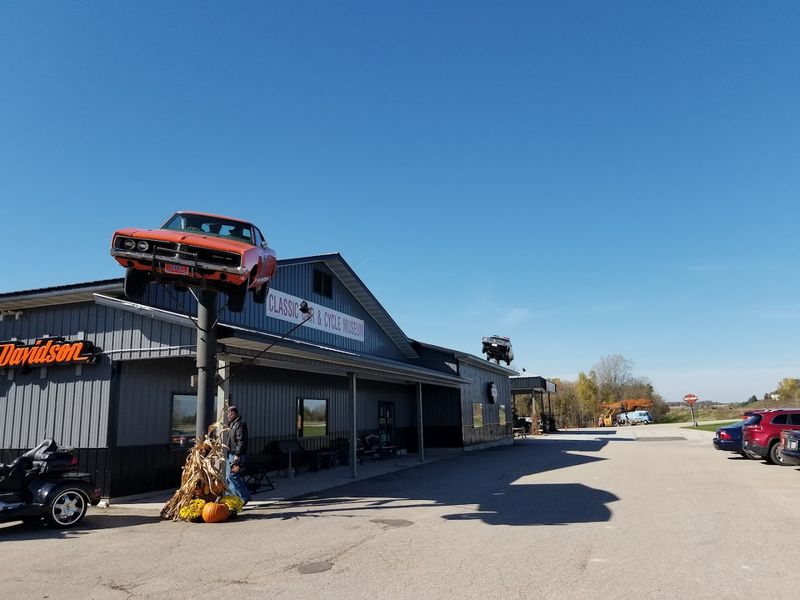
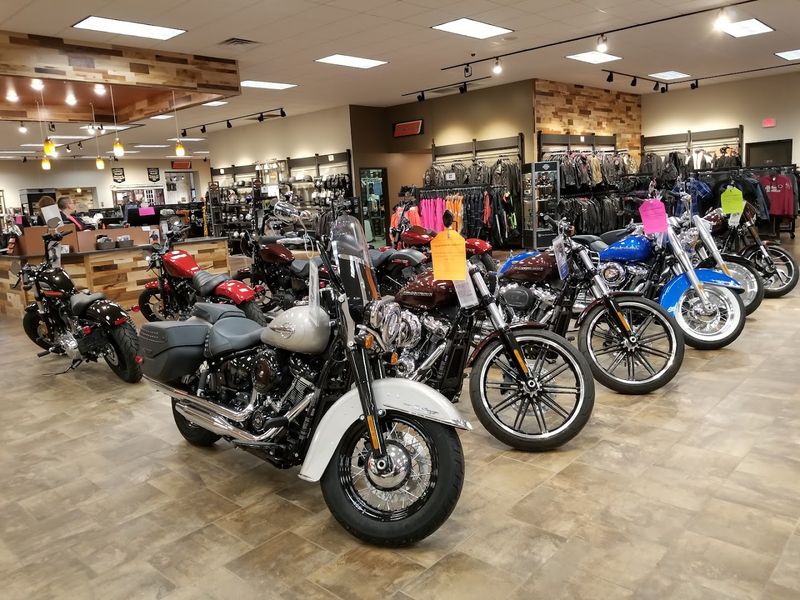
Pulling into Doc’s Harley-Davidson at W2709 WI-29 in Bonduel, Wisconsin, the first impression is familiar enough: a well-stocked dealership with gleaming motorcycles lined up in a bright showroom. Staff members are knowledgeable and approachable, ready to walk buyers through current models and gear without any pressure.
But the longer you linger, the more the place reveals itself. Corridors branch off toward collections that have nothing to do with retail and everything to do with passion.
The dealership functions as a fully operational Harley store, yet it carries the spirit of a personal museum built by someone who simply never stopped collecting.
Doc’s operates Monday through Saturday with Sunday hours as well, making it accessible for weekend riders and weekday road-trippers alike. Call ahead at 715-758-9080 or visit docshd.com to plan your stop before arriving.
Private Muscle Car Collection On Display
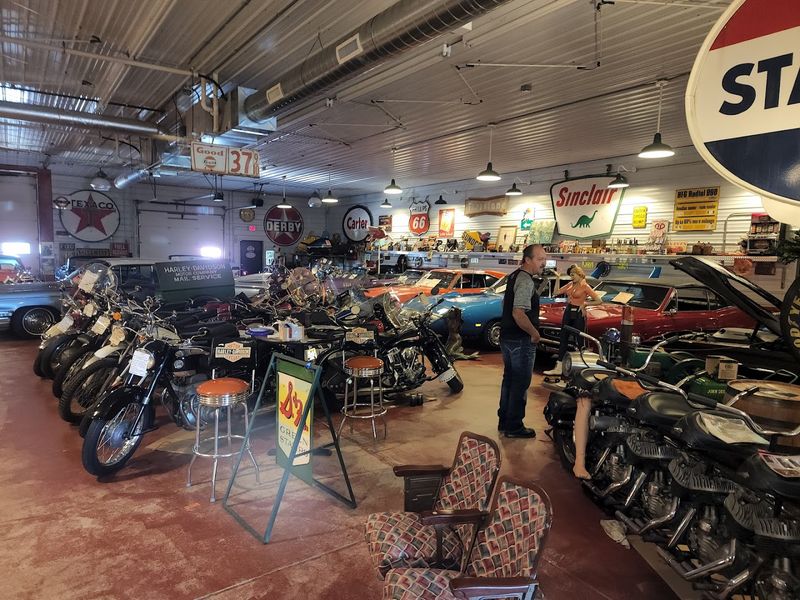
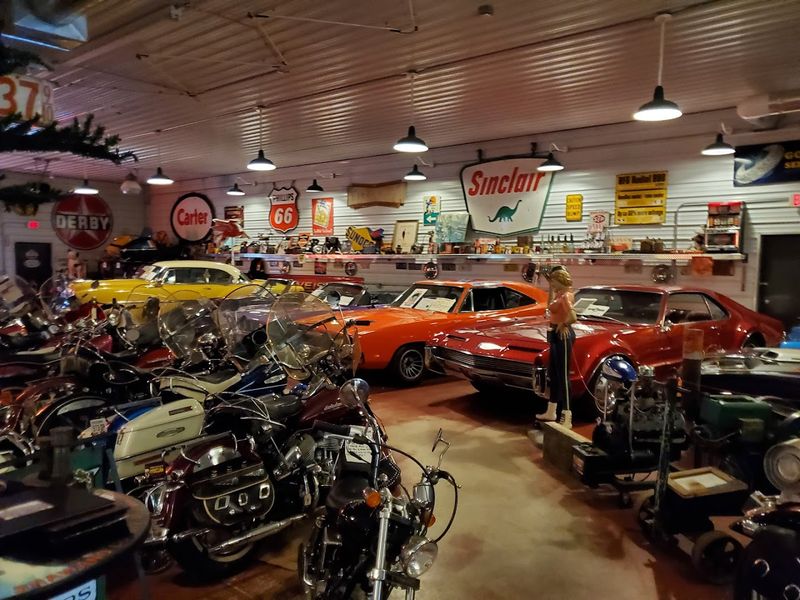
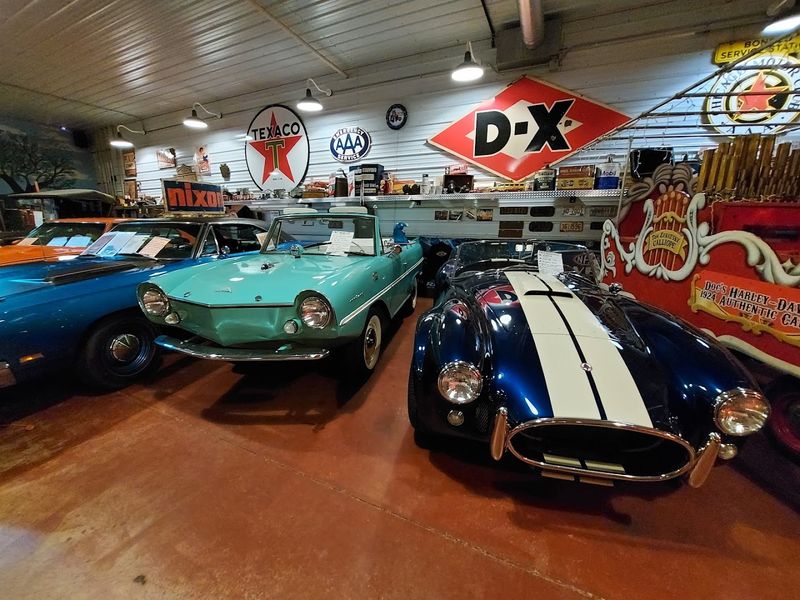
Somewhere past the Harley merchandise and the rows of new bikes, a door opens into an entirely different chapter of American automotive history. The muscle car collection at Doc’s is a private assemblage built over years of deliberate hunting, not a curated exhibit assembled by committee.
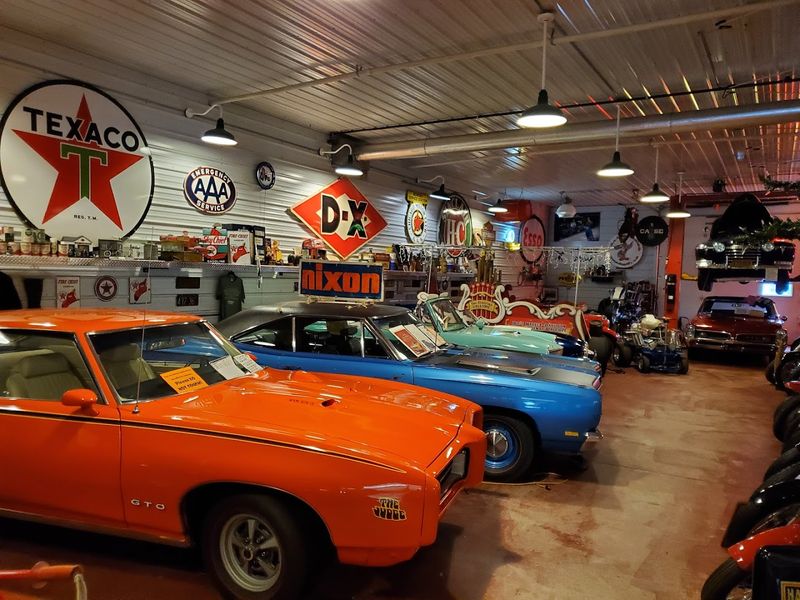
Visitors encounter vehicles that defined an era when horsepower was a cultural statement and Detroit was producing some of the most iconic sheet metal ever pressed. Each car carries its own story, and the hand-written descriptions placed alongside them add a personal, often humorous voice that feels entirely authentic to the space.
Admission to walk through the museum area is free, which makes the experience feel even more generous. The collection sits inside a working dealership, which means you can admire a restored muscle car and then walk ten feet to look at a brand-new Road Glide.
The contrast alone is worth the stop.
Classic American Performance Cars From The Golden Era
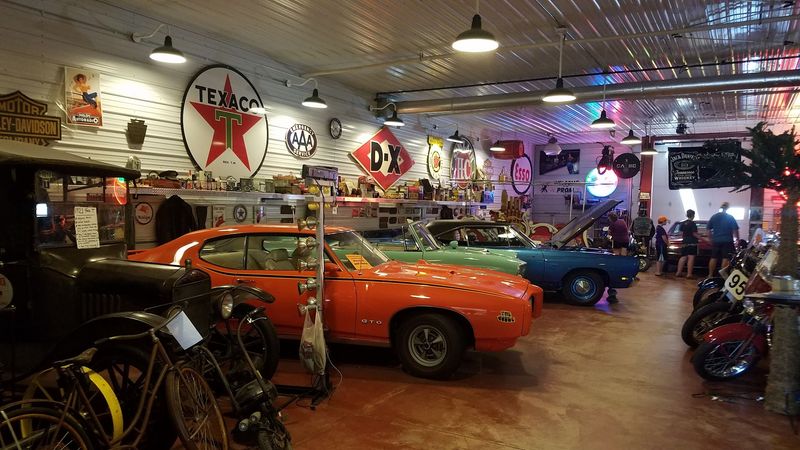
The golden era of American muscle production ran roughly from the early 1960s through the mid-1970s, and Doc’s collection captures that window with admirable depth. These are the cars that teenagers once plastered on bedroom walls and that grown adults still argue about at gas stations.
A Pontiac GTO carries a different energy than a Dodge Charger, and both feel distinct from a Plymouth Barracuda. Seeing them together in one space allows for comparisons that no photograph fully communicates.
The proportions, the chrome, the colors chosen by original buyers decades ago, all of it reads differently in person.
Doc himself is often found on the property working on restoration projects, and visitors who catch him in his workshop are treated to firsthand accounts of how each vehicle was sourced and brought back to condition. That kind of direct access to the collector is genuinely rare and adds considerable weight to the visit.
Passion Project Created By The Owner
Everything at Doc’s traces back to one person and one relentless appetite for collecting, restoring, and sharing. Doc is a fixture on the property, often spotted in his workshop mid-project, hands occupied but conversation fully available to anyone who wanders in with a question.
The scope of what he has built over the years goes well beyond what most people expect when they hear the word dealership. Animals, vehicles, antiques, sculptures, ships, and a full restaurant all occupy the same address, and each addition reflects a personal decision rather than a corporate directive.
The property feels lived-in and evolving because it genuinely is.
Visitors who take the time to seek Doc out often describe the conversation as one of the highlights of their stop. He recounts the origins of specific pieces with the ease of someone who has told the story a hundred times but still finds it worth telling.
That enthusiasm is contagious.
Rare Combination Of Motorcycles And Muscle Cars
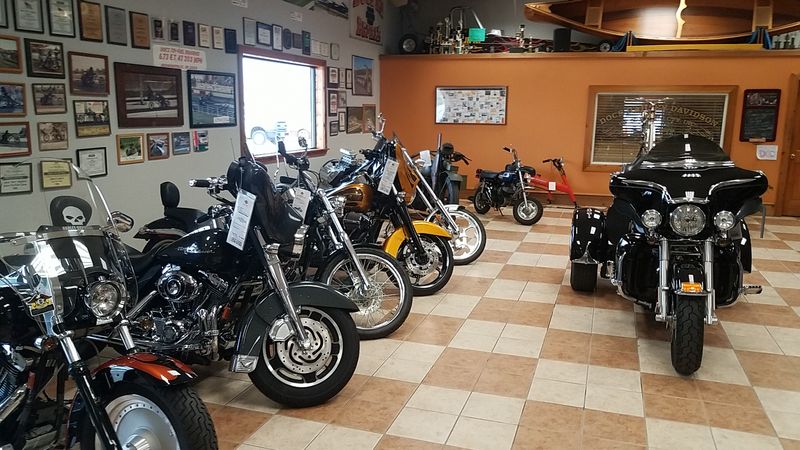
There are plenty of Harley dealerships across the country and a respectable number of private muscle car collections, but the combination of both under one roof is genuinely uncommon. Doc’s occupies a category that does not have a clean label, and that ambiguity is part of its appeal.
Motorcycle enthusiasts arrive expecting to browse bikes and leave having spent an hour studying a 1969 Chevelle. Car collectors stop in on a whim and end up deep in conversation about vintage Harley models they had never considered before.
The cross-pollination of audiences gives the place an energy that more specialized venues rarely achieve.
Historical motorcycles share floor space with automobiles that represent a parallel chapter of American mechanical culture. Snow motorcycles, five-seat custom builds, and period-correct accessories fill gaps between the cars, creating a timeline of American transportation that feels organic rather than arranged.
The collection rewards slow, unhurried observation.
Restored Classics That Still Turn Heads
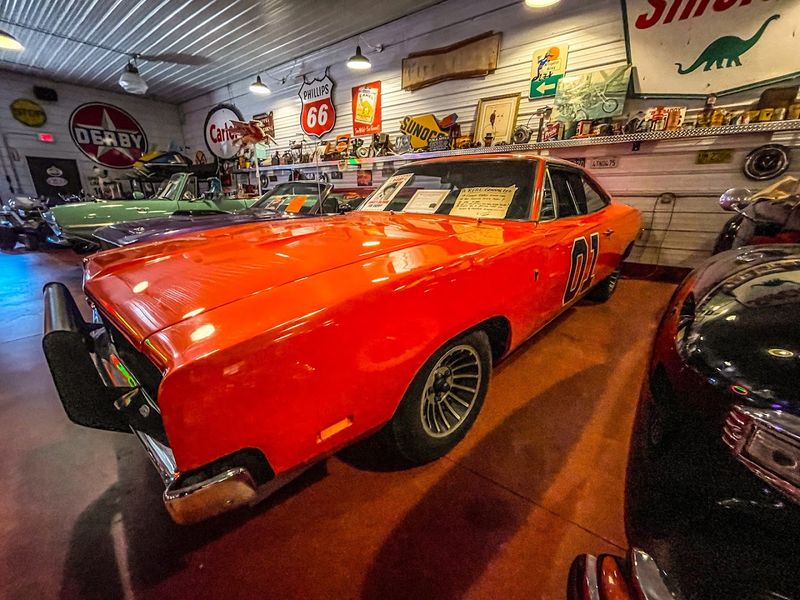
Restoration work is only as convincing as the commitment behind it, and the vehicles at Doc’s reflect a standard that goes beyond cosmetic polish. Paint finishes, chrome work, and interior details on the classic cars show the kind of attention that separates a proper restoration from a quick flip.
Some of the motorcycles on display carry equal weight in terms of historical significance. Vintage Harley-Davidson models from earlier decades sit alongside more recent machines, giving context to how the brand evolved in design and engineering across generations.
Seeing that arc in physical form is more instructive than any catalog.
The hand-written placards throughout the collection deserve specific mention. They carry Doc’s voice directly, blending factual detail with dry humor in a way that keeps the experience personal and grounded.
Reading them while standing next to the actual vehicle they describe creates a connection that polished museum copy rarely manages to replicate.
Stop That Attracts Car Lovers And Motorcycle Fans
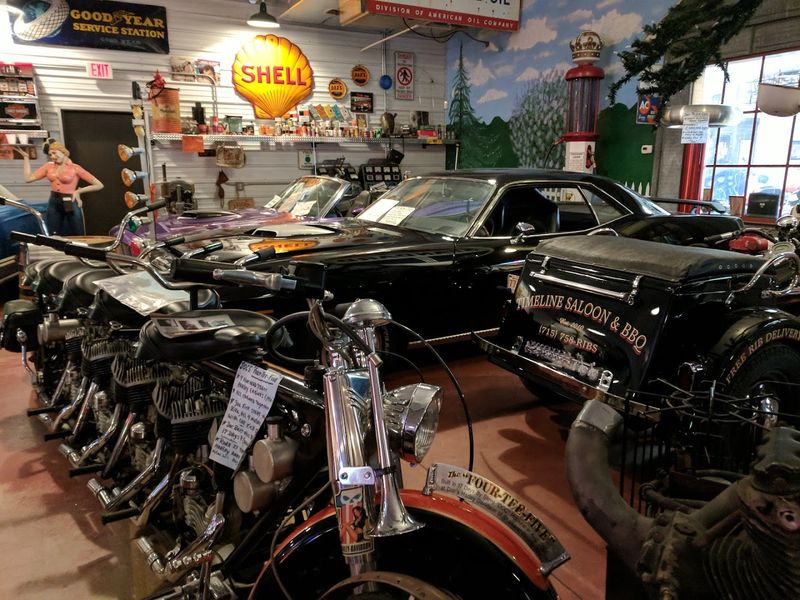
Road trips through Wisconsin often follow predictable routes, and Doc’s has earned its place as a destination that riders and drivers actively reroute to reach. People report driving past their original destination just to make the stop, and more than a few have returned specifically to spend more time than their first visit allowed.
The audience on any given day spans a wide range. Families with children, solo riders, couples on road trips, and serious collectors all move through the same space without any sense of mismatch.
The property accommodates each group without feeling designed for any single one of them.
Motorcycle riders find the dealership side genuinely useful, with parts, apparel, and new and used bikes available through a staff that knows the product well. Car enthusiasts find the museum side absorbing enough to occupy a full afternoon.
The restaurant on the property means no one has to leave hungry, which extends visit length considerably.
Hidden Attraction In A Small Wisconsin Town
Bonduel sits in Shawano County, a small Wisconsin community that most travelers encounter only as a dot on the map between larger destinations. The presence of Doc’s along WI-29 gives the town an anchor point that draws visitors from several states and, on some days, from considerably farther away.
The property itself is larger than the highway view suggests. Outdoor paths wind past sculptures, animal enclosures, a pirate ship, a Viking ship, and structures that accumulate detail the slower you walk.
A camel, alpacas, kangaroos, alligators, and parrots are among the animals residents of the small on-site zoo, and feeding schedules give visitors a reason to time their arrival with some intention.
For a town without a major tourist infrastructure, Doc’s functions as a self-contained destination. The restaurant, the museum, the dealership, and the zoo collectively justify a deliberate stop rather than a passing glance, which is a rare quality for any single address in rural Wisconsin.
Museum-Like Display Inside A Working Dealership
Operating a functioning dealership and maintaining a museum-quality collection simultaneously requires a particular kind of organizational discipline. At Doc’s, the two coexist without obvious friction, which speaks to how thoroughly the collecting instinct has been integrated into the business itself rather than treated as a side project.
Display areas feature artifacts that extend well beyond automotive history. A woolly mammoth tusk, petrified wood, a T-rex footprint cast, and a 150-year-old baby carriage appear among the vehicles, creating a collecting philosophy that resists narrow categorization.
The effect is eccentric in the best possible sense, the kind of accumulation that reveals genuine curiosity rather than calculated curation.
Visitors who arrive expecting a straightforward dealership experience find themselves navigating a space that rewards extended attention. The free access to the museum portion means there is no commitment required beyond time, and most people discover that time passes considerably faster inside than they anticipated when they first pulled into the parking lot.
Unexpected Collection That Keeps Visitors Talking
The conversations that follow a visit to Doc’s tend to sound like lists, because the place genuinely defies summary. A motorcycle Ferris wheel, a boat-car hybrid from the 1950s, Wild West photo opportunities, and a bar round out a property that seems to generate new details with every pass through.
What sustains the talking long after the visit is not any single object but the cumulative impression of one person’s unfiltered collecting life made fully public. Doc’s does not filter itself for mass appeal or smooth out its eccentricities for broader comfort.
That refusal to self-edit is precisely what makes it memorable.
Families who stop for twenty minutes regularly find themselves still on the property an hour later, and solo travelers who expected a quick parts run end up eating lunch, walking the zoo path, and leaving with a story they will tell for years. Doc’s earns that kind of word-of-mouth honestly, through sheer accumulated strangeness and warmth.