
This Historic California Railway Takes You Through Some Of The Most Beautiful Scenery In America
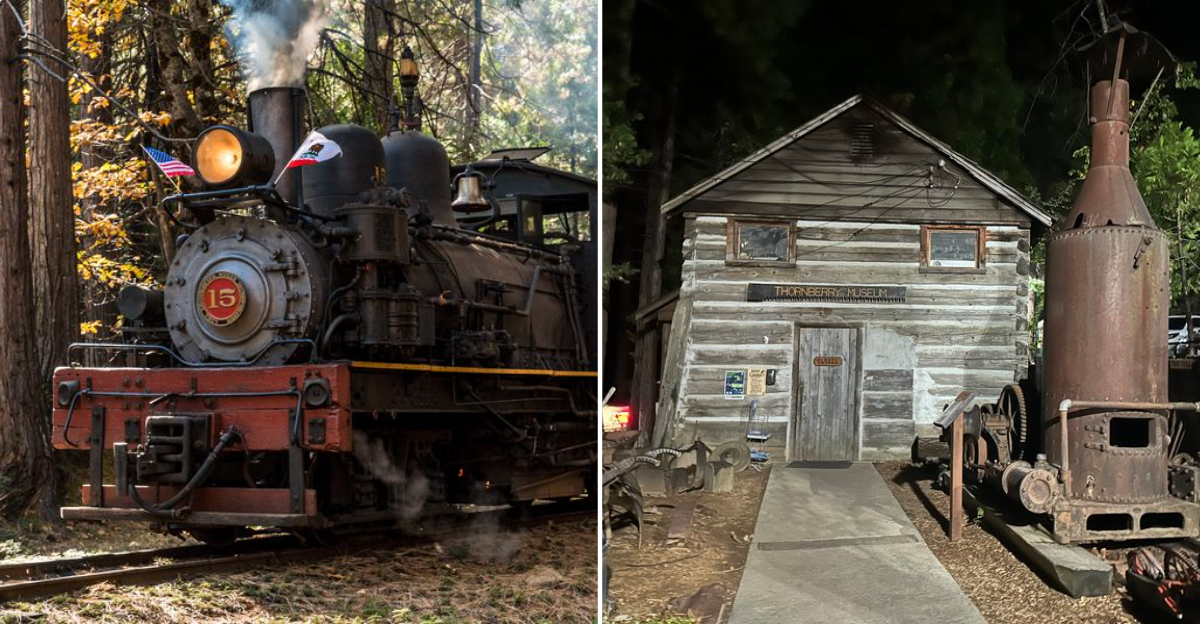
A train ride slows everyone down in a way driving never quite manages, and this historic California railway proves that point beautifully. Scenery rolls past windows without anyone needing to focus on the road or fight traffic along the way.
Mountains, valleys, and coastline all pass by at a pace that actually allows time to notice them. Seating stays comfortable enough for a full day trip without anyone feeling cramped by the end.
Regulars know exactly which routes offer the most dramatic views depending on the season. Stops give passengers a chance to stretch and explore before continuing further along the line.
Nothing about the ride feels rushed, letting the scenery take center stage the entire way. This railway proved that sometimes the destination matters less than everything you see getting there.
History Of California Rail Transportation
Long before anyone thought of riding a train for fun, these mountains were all business. The Madera Sugar Pine Lumber Company set up shop in 1899 and bought fifty thousand acres of forest.
Its operation was enormous for the time. Seven locomotives, more than 100 log cars, roughly 140 miles of track threading through the hills, plus a 54-mile flume that floated finished lumber down toward the valley.
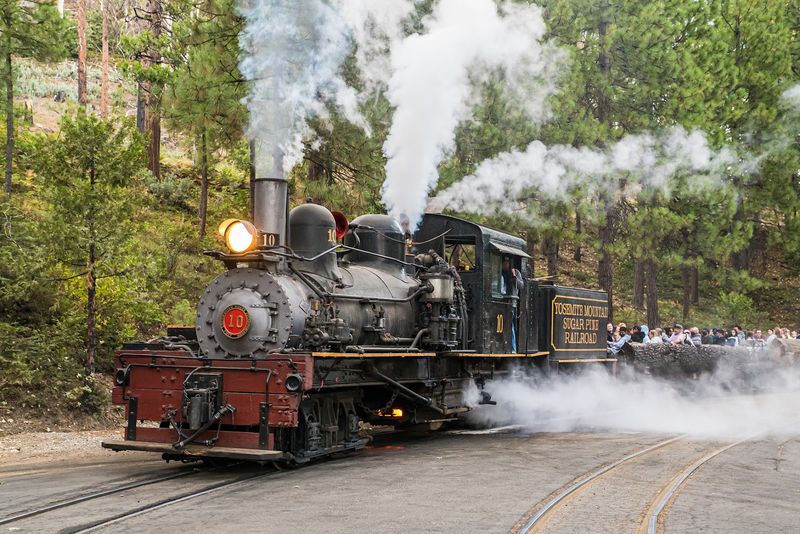
When the lumber company finally wound down, the right-of-way sat quiet. Then Rudy Stauffer came along in 1961 and started rebuilding a section of it, beginning with the purchase of Shay locomotive No. 10 that same year.
Progress took patience. The first public run did not happen until 1967, which means the whole thing was a six-year labor of stubborn love before a single paying passenger climbed aboard.
That backstory is what separates this ride from a theme park attraction. The rails follow an actual logging route, and the narration connects the scenery to the crews who worked it.
California rail history usually gets told through big transcontinental stories. Here the focus is smaller and grittier, all about timber, steep grades, and machines built to survive rough track.
Anyone curious about how the state’s mountain economy once worked will find the answers rolling past the windows. The address is 56001 CA-41, Fish Camp, CA 93623.
Unique Features Of Heritage Railway Cars
Forget cushioned seats and tinted glass. The open-air cars here are built from huge rough-hewn split logs bolted onto flatcars, which is exactly as rustic as it sounds.
Sit in one, and the forest gets personal. Pine branches occasionally brush the side of the car, and there is nothing between passengers and the view except mountain air.
For anyone who prefers a roof, enclosed cars with wooden sides are also part of the lineup, built on flatcars too. Shade, shelter, and less soot in your hair.
A tip worth remembering: seats toward the middle of the train keep you farther from locomotive smoke, and they line up nicely for photos as the train swings through curves.
Then there are the Jenny Railcars, which deserve their own fan club. They started life as Ford Model A automobiles before the West Side Lumber Co. fitted them with flanged wheels so they could run on rails.
Loggers actually used these odd little machines for work. Today they carry about eight to ten passengers on a narrated tour lasting roughly 30 minutes.
Restored steam locomotives round out the collection, engines that genuinely worked in early California logging. Nothing here is a replica built to look old, which is the whole point.
Top Natural Landmarks Visible From Train
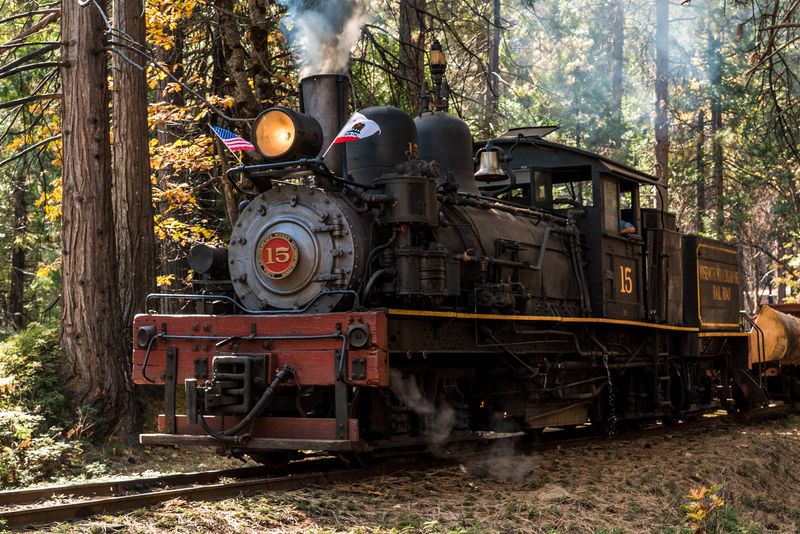
Sierra National Forest does most of the heavy lifting on this trip. The train winds beneath sugar pines so tall they make the locomotive look like a toy, and sunlight arrives in scattered patches through the branches.
The route itself is a landmark. These are the same grades where lumberjacks once dropped enormous trees, and the forest that grew back tells its own recovery story.
Midway through the ride comes the best part. The train pauses in Lewis Creek Canyon, where passengers can climb down, wander a bit, and get close to the locomotive while it hisses and cools.
Water moving over rocks, cool shade, and the smell of damp earth make the stop feel like a completely different place than the depot. Fifteen minutes goes fast down there.
Photographers tend to love this section because the canyon frames the train perfectly. Get low, catch the wheels, and the shot practically takes itself.
Burn scars from fires in recent years are still visible along parts of the route. Firefighters saved the railroad, and the darkened trunks are a quiet reminder of how close it came.
Mountain backdrops fill the gaps between stands of timber. No single postcard peak dominates, and honestly, the layered forest views are more memorable than any one landmark.
Safety Measures And Passenger Guidelines
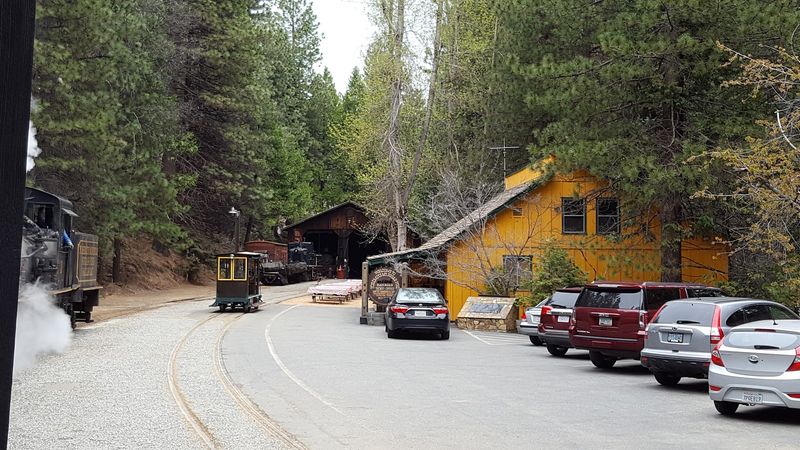
Arriving early saves a lot of stress. Thirty minutes ahead of departure gives enough breathing room to park, find the depot, and get seated without sprinting.
Mountain weather changes its mind constantly. Layers are the smart call, since a chilly morning can turn warm by noon and then cool right back down in the canyon shade.
Comfortable shoes matter more than people expect, especially with the mid-route stop where passengers walk around on uneven ground. Sun protection and water belong in the bag too.
Dogs are welcome, which surprises a lot of visitors. Friendly, well-behaved pups on a leash ride free, so the family beagle does not have to sit this one out.
Accessibility has been thought through. A lift can load a passenger in a wheelchair weighing up to 600 pounds, and the picnic areas near the depot are easy to reach.
Reservations are strongly recommended. Trains genuinely sell out, particularly during busy weekends and special events, and showing up hopeful is a gamble.
One practical note about getting there: GPS occasionally sends drivers to the wrong spot along the highway. Watching for the depot signs along CA-41 prevents an unplanned detour.
Staff handle boarding calmly and clearly, so following their direction keeps everything moving on schedule.
Seasonal Changes And Scenic Transformations
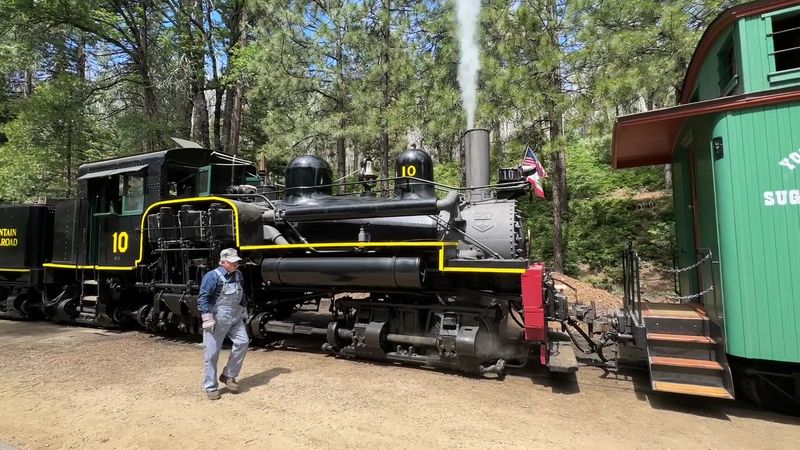
Spring through fall is the main season, with operations sometimes stretching into December for holiday runs. Each stretch of the calendar puts a different filter on the same forest.
Spring brings runoff. Lewis Creek runs fuller, the air stays crisp, and everything green looks freshly rinsed.
Summer is peak steam-train weather, warm and bright, which is exactly when a shaded enclosed car earns its keep. Mornings tend to be the most comfortable rides.
Fall deserves special mention. The weather turns pleasant, the colors put on a genuine show, and the light through the pines gets that low golden angle photographers chase.
Winter visits, when available, come with a wilder mood. Cold wind and snow do not cancel the fun, and a steam locomotive working through a dusting of snow is a memorable sight.
Evening rides change the experience completely. The Moonlight Special runs seasonally and pairs the train with storytelling and entertainment under a sky full of stars.
Riding back toward the depot in near darkness, with the pine smell settling in, tends to be the moment people remember longest.
Seasonal events like Halloween and Christmas-themed runs give repeat visitors a reason to return. Same track, entirely different atmosphere.
Wildlife Sightings Along The Rail Route
Squirrels are the unofficial mascots. They dart along logs and up trunks as the train passes, apparently unimpressed by decades of steam whistles.
Birds are the other constant. Steller’s Jays show up regularly with their sharp blue feathers and even sharper attitude, and they are not shy about being noticed.
Mule deer sometimes appear in the clearings, standing still long enough for a photo if the camera is already out. They usually spot passengers before passengers spot them.
Black bears live in the broader region too, though sightings from the train are far from guaranteed. The greater Yosemite area supports more than 400 species of amphibians, reptiles, birds, and mammals.
Conductors often work wildlife facts into the narration, which turns a pretty ride into an accidental nature lesson. Kids ask questions, and the answers keep coming.
The slow pace helps enormously. A train crawling through the forest at logging-railroad speed gives everyone time to actually scan the trees instead of watching a blur.
Quiet passengers see more. Fewer voices means animals stay put a little longer near the tracks.
Bringing binoculars is a small move with a big payoff, especially during the stop at the canyon where birds are active near the water.
Engineering Challenges Of Mountain Rail Lines
Here is a number that impresses railroad people immediately: 4.5 percent grade. Most modern freight and commuter lines top out around 2 percent, so this track is roughly twice as steep as what today’s trains handle.
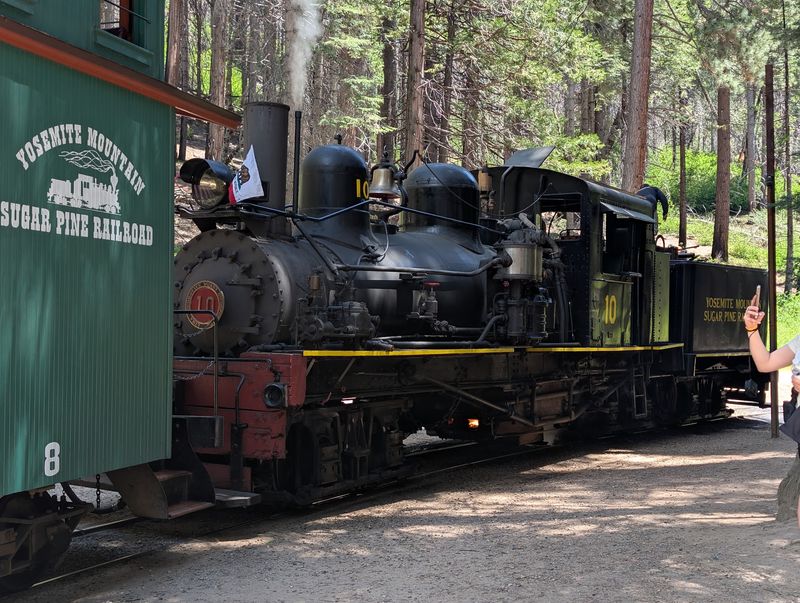
Ordinary locomotives would slip and struggle. That is why the railroad relies on Shays, geared steam engines built specifically for hauling brutal loads over steep hills and rough, uneven track.
The Shay design uses vertical cylinders driving a shaft along the side, which sounds strange and works beautifully. Power over speed, every time.
Locomotive No. 10 is the headliner. Built in 1928, it weighs 81.6 tons and ranks among the largest narrow-gauge Shays ever constructed.
Another clever detail: Shays run at the same speed forward and backward. That flexibility matters because the station has no turntable, so the line uses a loop to turn the train around.
Narrow gauge track was the logging industry’s answer to mountain terrain. Tighter curves, cheaper construction, and the ability to follow hillsides that standard gauge simply could not.
Watching the engine work the grade is half the entertainment. The exhaust beats slow down, the whole machine leans into the climb, and you can hear the effort.
Visitor Amenities And Onboard Services
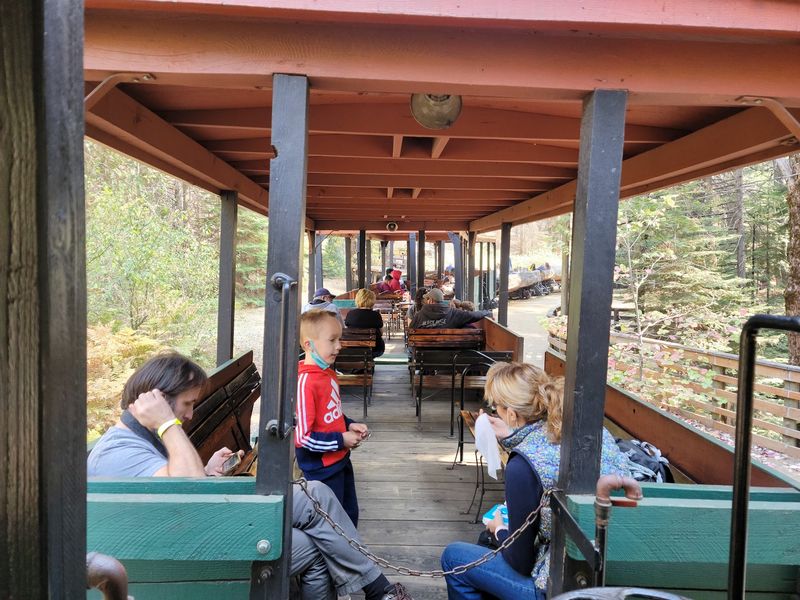
The Logger Steam Train runs for about an hour with narration that actually holds attention. History, logging stories, and local details get woven in between the scenery.
Halfway along, everyone gets off at Lewis Creek Canyon. Stretch, take photos, inspect the locomotive up close, then climb back aboard for the return climb.
Back at the depot, gold panning is the surprise hit. Kids dig into the trough, keep whatever flecks they find, and leave convinced they are prospectors.
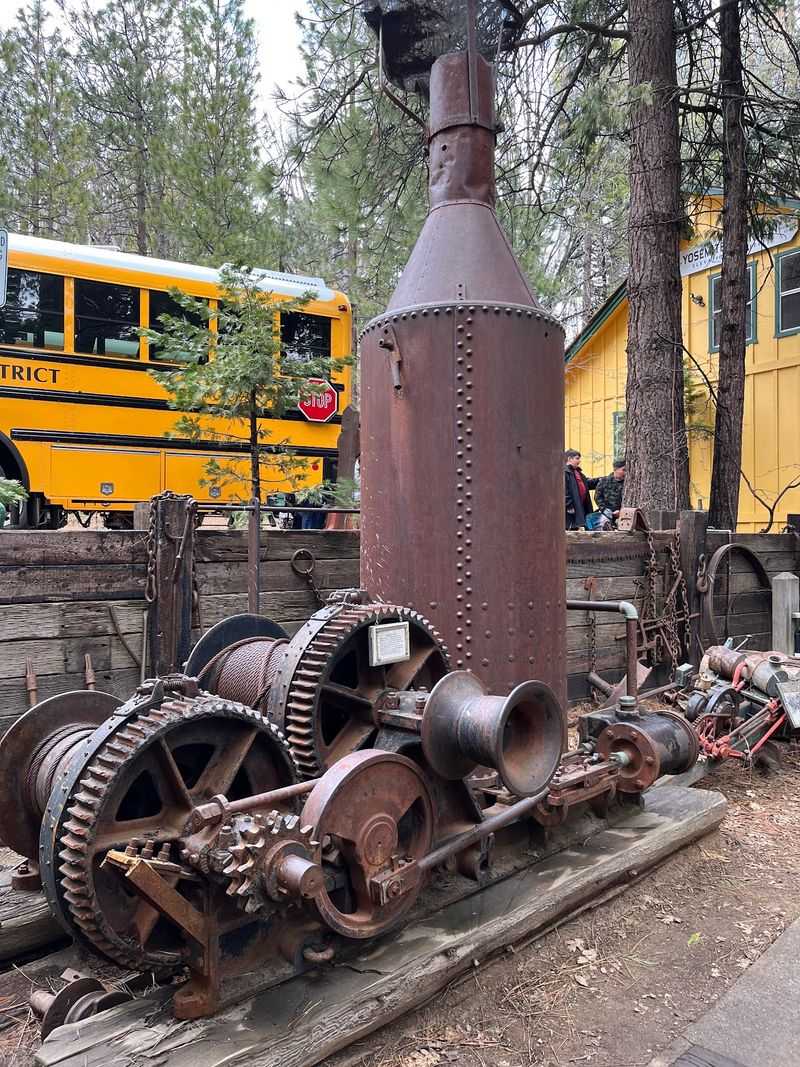
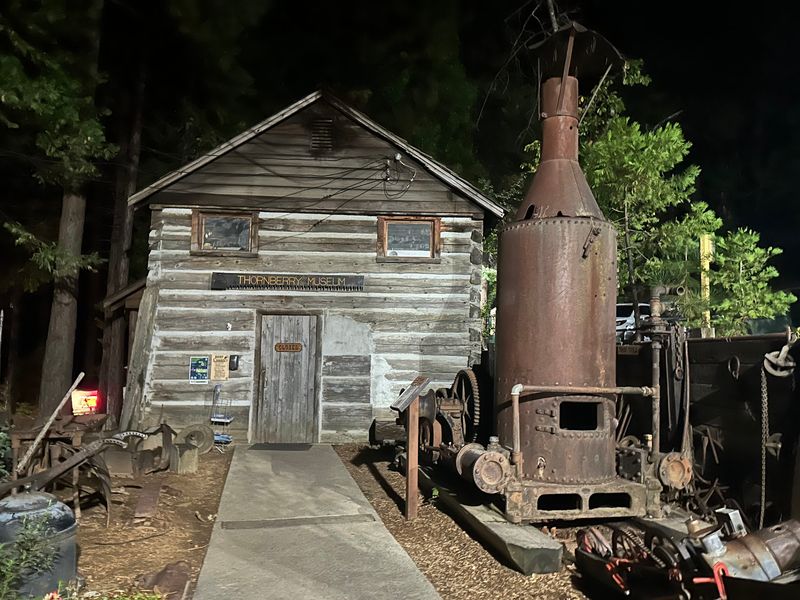
The Thornberry Museum sits inside a 19th-century log cabin and covers what daily life looked like in a logging camp. Small, free, with donations accepted, and genuinely interesting.
Shopping options include the Sugar Pine Trading Company gift shop and bookstore, plus the Kids’ Depot Toy Store for anyone under four feet tall with strong opinions about trains.
A snack bar handles cold drinks, sandwiches, hot dogs, and snacks. Packing your own food and non-alcoholic beverages works too, and there are picnic tables in the shade.
Food can be eaten on the train or at the picnic area, so timing is flexible.
The Moonlight Special goes bigger with a BBQ dinner, a campfire stop, and music from the Sugar Pine Singers. Reserve that one early.