
This Jaw-Dropping Wisconsin State Park Might Be The Most Beautiful Place In The State
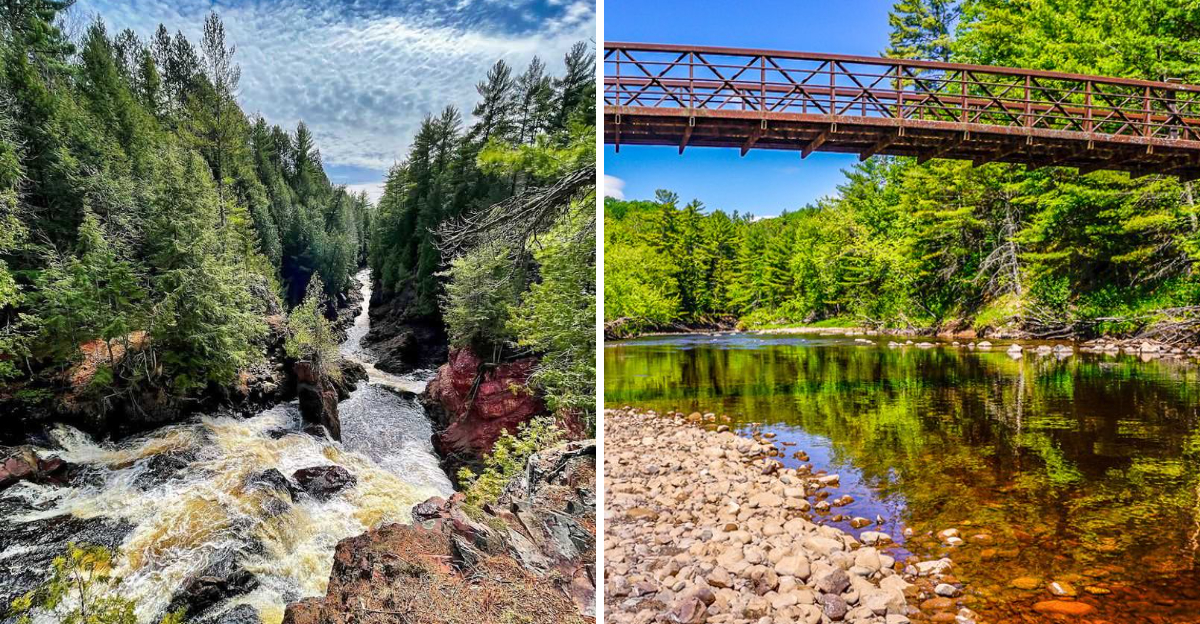
Wisconsin has no shortage of beautiful parks, yet a few places manage to stand out in a way that feels almost unbelievable. This particular state park is one of them.
Towering trees, dramatic landscapes, and powerful waterfalls come together in a setting that regularly leaves visitors stopping in their tracks. It’s the kind of place that makes you pause, look around, and quietly think that this might actually be the most beautiful spot in the entire state.
One visit here quickly explains why it keeps earning that reputation year after year.
Home To The Spectacular Copper Falls
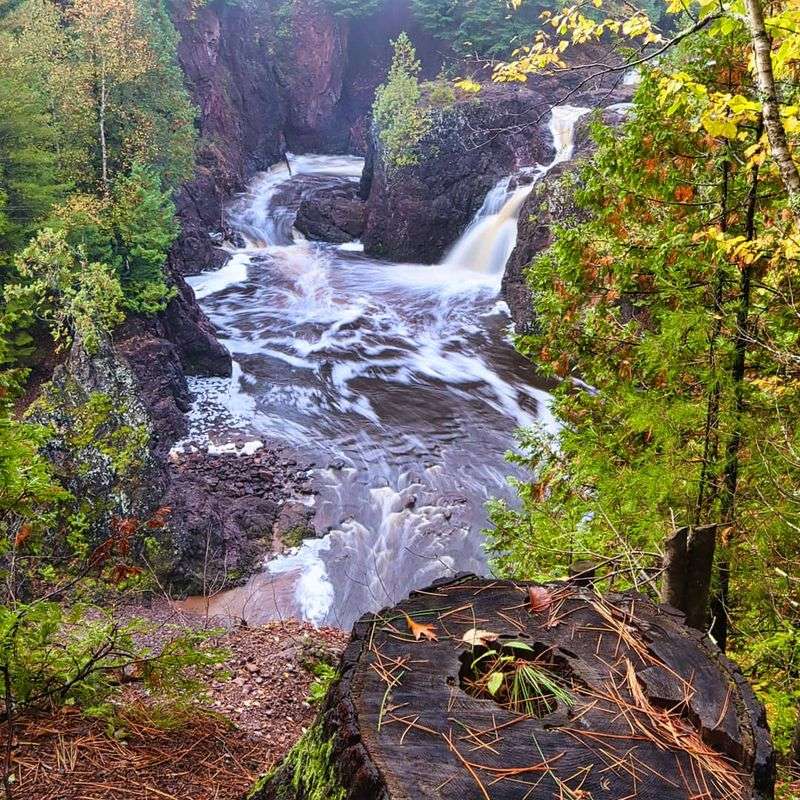
Few waterfalls in Wisconsin carry the kind of presence that Copper Falls delivers up close. The dark, amber-tinted water rushes over ancient volcanic rock before dropping into a narrow gorge with a force that you feel as much as hear.
The color of the water comes from tannins released by decaying vegetation upstream, giving the falls a rich, tea-like hue that looks almost unreal in photographs.
The falls sit along the Bad River and remain one of the most visually striking features in the entire state park system. Viewing platforms and safety railings bring visitors close enough to feel the mist without placing anyone in danger.
The surrounding forest frames the scene with towering hardwoods and evergreens that deepen the sense of remoteness.
Copper Falls has experienced some natural changes over the decades due to past mining activity in the region, but its character and power remain fully intact. Arriving in the morning, before the crowds build, gives you the best chance to absorb the full atmosphere of the place.
Brownstone Falls Is Just As Impressive
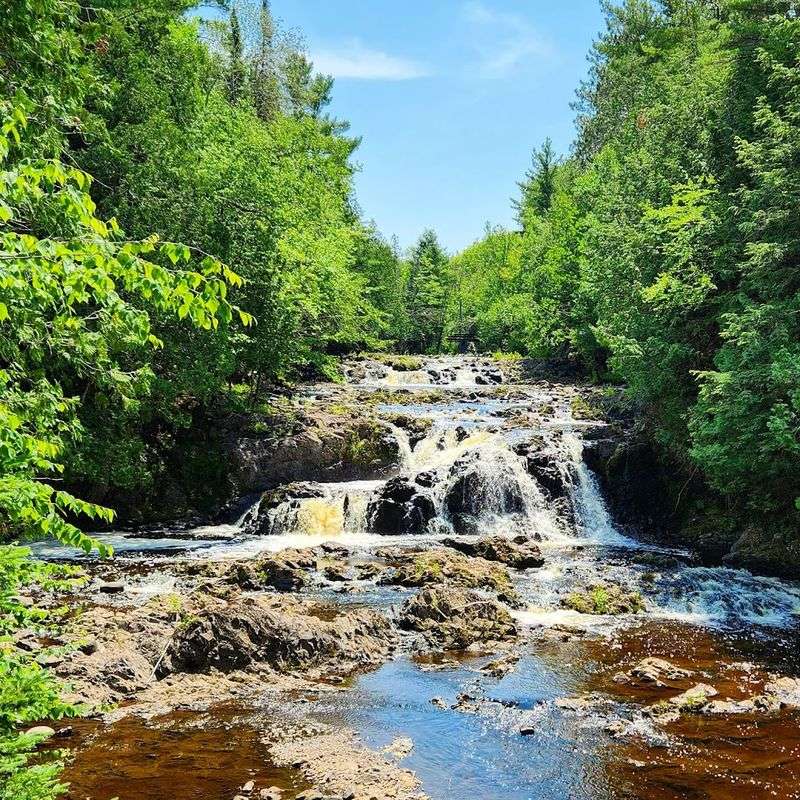
Brownstone Falls tends to stop people mid-stride. Standing at the viewing area, you realize quickly that this waterfall operates on a different visual scale than what most people expect from a state park in the upper Midwest.
The water spreads across a broad ledge of brownstone rock before plunging into the river below, creating a wide, sweeping curtain that fills the gorge with sound.
Many visitors consider Brownstone the more photogenic of the two main falls in the park, and it is easy to understand why. The horizontal spread of the drop gives photographers a wide composition to work with, and the surrounding rock walls add texture and depth to every frame.
Early autumn brings particularly dramatic light into the gorge during the late afternoon hours.
The trail leading to Brownstone is well-maintained and clearly marked, making the walk accessible even for those who are not experienced hikers. Arriving with a fully charged camera battery is a practical recommendation that no one will regret following.
Ancient Lava Flows And Deep River Gorges
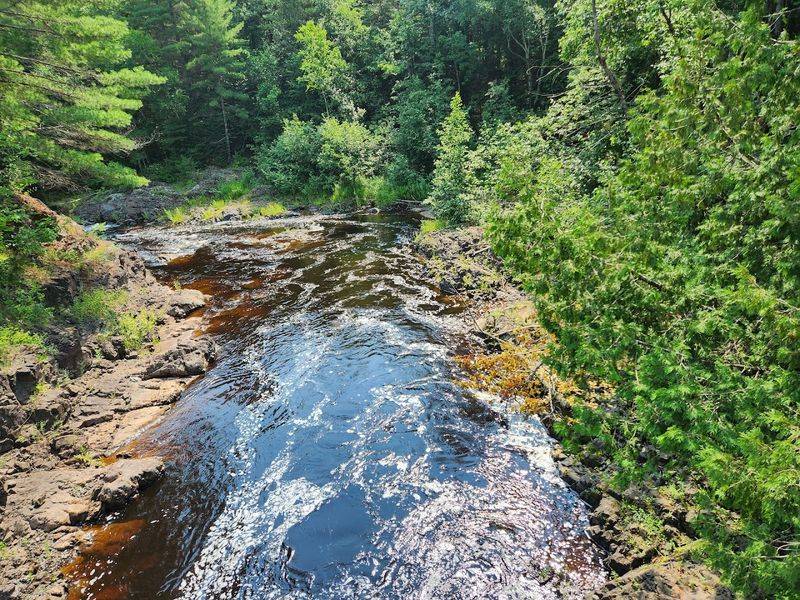
The geology of Copper Falls State Park reads like a chapter from a very old book. The rock formations visible throughout the gorge are the result of lava flows that occurred over a billion years ago, making the canyon walls some of the most ancient exposed rock in the entire state of Wisconsin.
Standing at the edge of the gorge and looking down at those dark, layered walls puts the scale of geologic time into an immediate and humbling perspective.
The volcanic rock is visibly different from the sandstone and limestone found elsewhere in Wisconsin, with a dense, dark quality that gives the gorge a dramatic and almost severe appearance. Educational plaques placed along the trail explain the geological history in straightforward language that both adults and younger visitors can follow with genuine interest.
Erosion from the Bad River and its tributaries has carved these formations into the striking landscape visible today. The combination of geology and hydrology at work here makes the park as intellectually engaging as it is visually rewarding.
The Bad River Carves Through Dramatic Cliffs
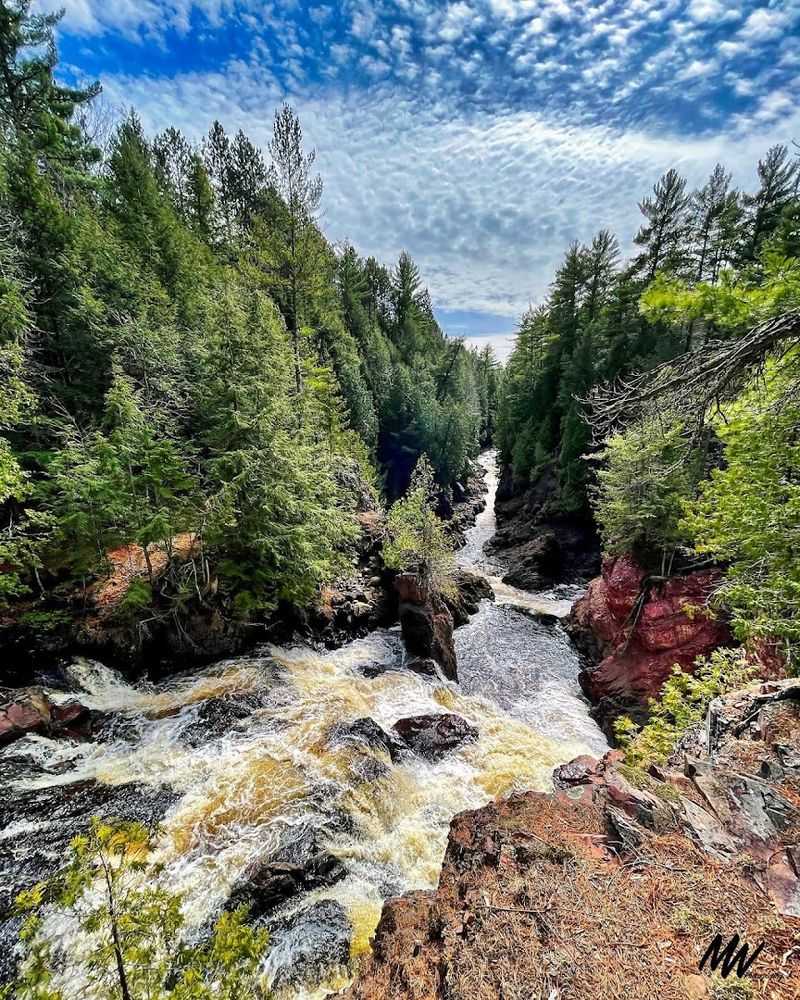
The Bad River does not move gently through this landscape. It cuts through the gorge with a deliberate energy, shaping the canyon walls over thousands of years into the steep, dramatic formations that define the character of the park.
The name of the river traces back to a translation of its Ojibwe name, and the waterway holds deep cultural significance for the Ojibwe people who have lived in this region for generations.
Walking along the rim of the gorge, you can look down and watch the river move through narrow passages where the rock walls close in on both sides. The depth of the canyon at certain points is striking, and the contrast between the dark water far below and the bright forest above creates a visual tension that holds your attention throughout the hike.
During periods of high water following spring snowmelt or heavy summer rain, the river rises noticeably and the sound within the gorge becomes considerably more powerful. Planning a visit after a substantial rainfall transforms the entire canyon experience into something markedly more intense.
A Scenic Loop Trail Linking The Park’s Best Views
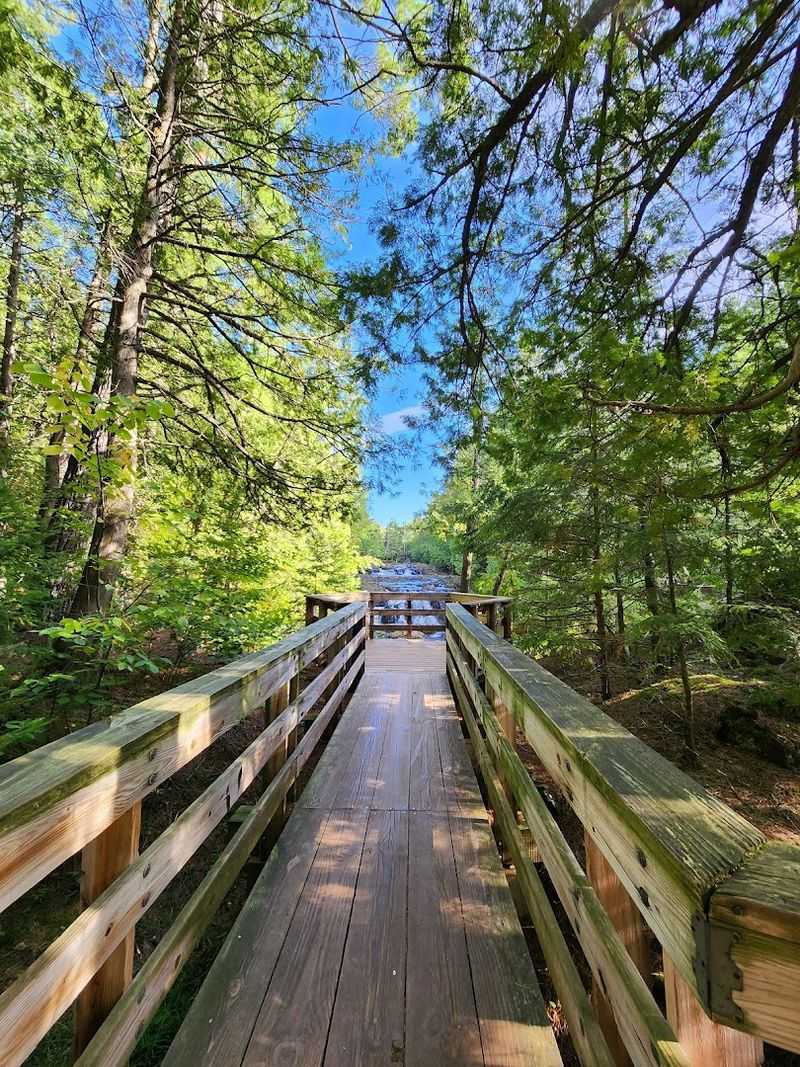
The Doughboys Nature Trail is the backbone of the Copper Falls experience, and most visitors who complete it leave with a strong sense of having seen the park properly. The loop covers approximately 2.4 miles and connects the major waterfalls, gorge viewpoints, and forest sections in a logical sequence that builds momentum as you move through it.
The trail is well-maintained with clearly placed markers that keep navigation straightforward throughout.
Elevation changes along the route are genuine and worth preparing for. Multiple staircases descend into the gorge and climb back out again, meaning that comfortable footwear and a reasonable level of physical fitness will serve you well.
Benches are positioned at intervals along the path, offering natural rest points with pleasant views into the surrounding forest.
Dogs are not permitted on the Doughboys Trail, so visitors traveling with pets should plan accordingly and explore the park’s other walking paths instead. The loop typically takes between one and two hours to complete at a relaxed pace, making it an ideal half-morning or late-afternoon outing.
Boardwalks And Bridges That Lead To The Waterfalls
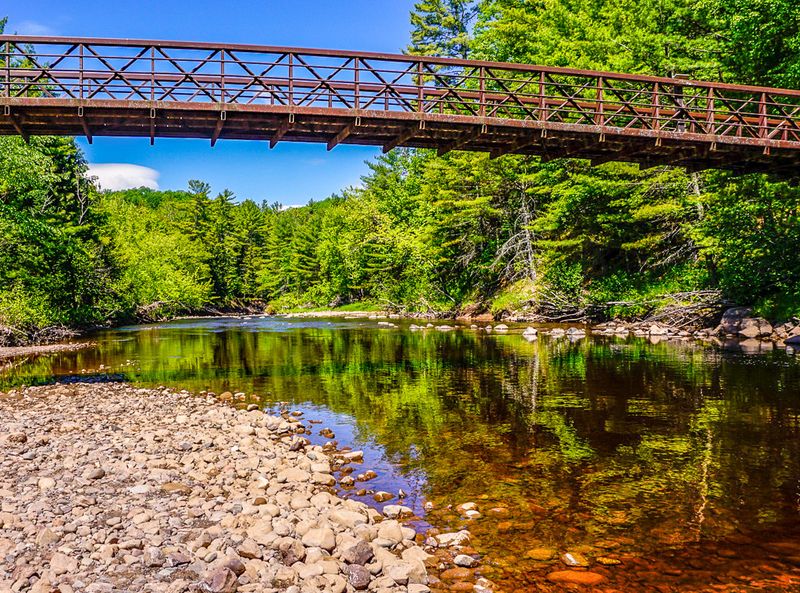
The infrastructure at Copper Falls State Park reflects a genuine commitment to making the landscape accessible without diminishing its natural integrity. Wooden boardwalks extend along sections of the gorge where the terrain would otherwise be difficult or unsafe to navigate, and the construction blends into the environment with a quiet practicality that does not feel intrusive.
Footbridges cross the river at strategic points, allowing hikers to move between trail sections while staying close to the water.
These structures place you directly within the experience rather than keeping you at a comfortable distance from it. Standing on a bridge over the Bad River with the gorge walls rising on either side and the sound of a nearby waterfall filling the air is one of those moments that tends to stay with a person long after the visit ends.
The park maintains these boardwalks and bridges in good condition throughout the season, and safety railings are installed at the most exposed viewpoints. The attention to trail maintenance here is evident at every stage of the walk, which speaks well of the park’s overall management.
One Of Northern Wisconsin’s Most Photographed Parks
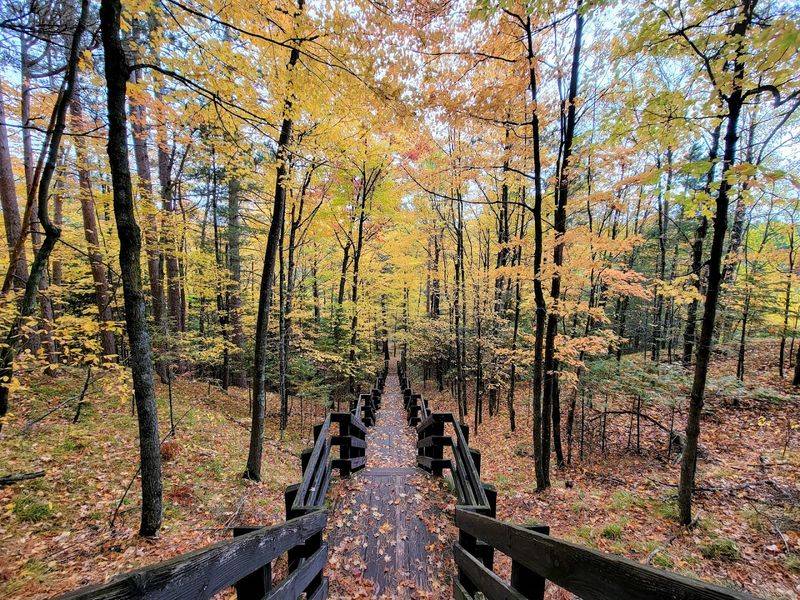
Copper Falls State Park earns its reputation as one of the most visually compelling parks in the northern part of the state through sheer consistency of scenery. From the dark gorge walls to the amber-tinted waterfalls and the dense canopy of mixed forest above, the park offers a concentration of photogenic subjects that few locations in Wisconsin can match within such a compact area.
Photographers of every skill level find material here that rewards both quick snapshots and careful, deliberate compositions.
The observation tower provides an elevated perspective over the forest canopy, and while the treetops currently limit the long-distance view, the structure itself offers an interesting vantage point during autumn when the surrounding foliage turns. The gorge viewpoints along the Doughboys Trail are consistently the most productive spots for capturing the park’s signature imagery.
Arriving in the early morning delivers the best light for gorge photography, with soft, directional illumination reaching down into the canyon before the midday sun flattens the contrast. A wide-angle lens and a polarizing filter are two pieces of gear that experienced photographers consistently recommend for this location.
Brilliant Autumn Colours Across The Gorge
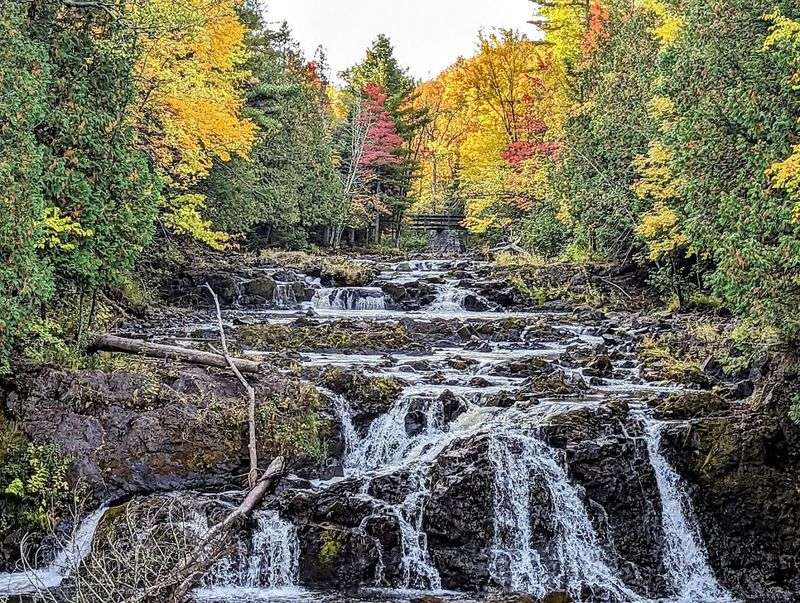
Autumn at Copper Falls State Park operates at a different level of intensity than most fall foliage destinations in Wisconsin. The combination of hardwood species lining the gorge rim and the dark rock walls below creates a color contrast in October that photographers and casual visitors alike find genuinely difficult to anticipate until they are standing in the middle of it.
Sugar maples, birches, and aspens contribute bursts of orange, gold, and red that reflect off the river surface in the gorge below.
Peak color typically arrives in early to mid-October in the Mellen area, though the exact timing shifts slightly from year to year depending on temperature patterns through late summer and early fall. The observation tower, despite its limited long-distance view, becomes particularly worthwhile during this period when the surrounding canopy is fully turned.
Weekends in peak foliage season draw larger crowds, so arriving on a weekday morning gives you the best combination of light and relative solitude. The park is open daily from 6 AM to 11 PM, providing ample time to experience the gorge at its most atmospheric hours.
Quiet Forest Trails Surrounded By Old Trees
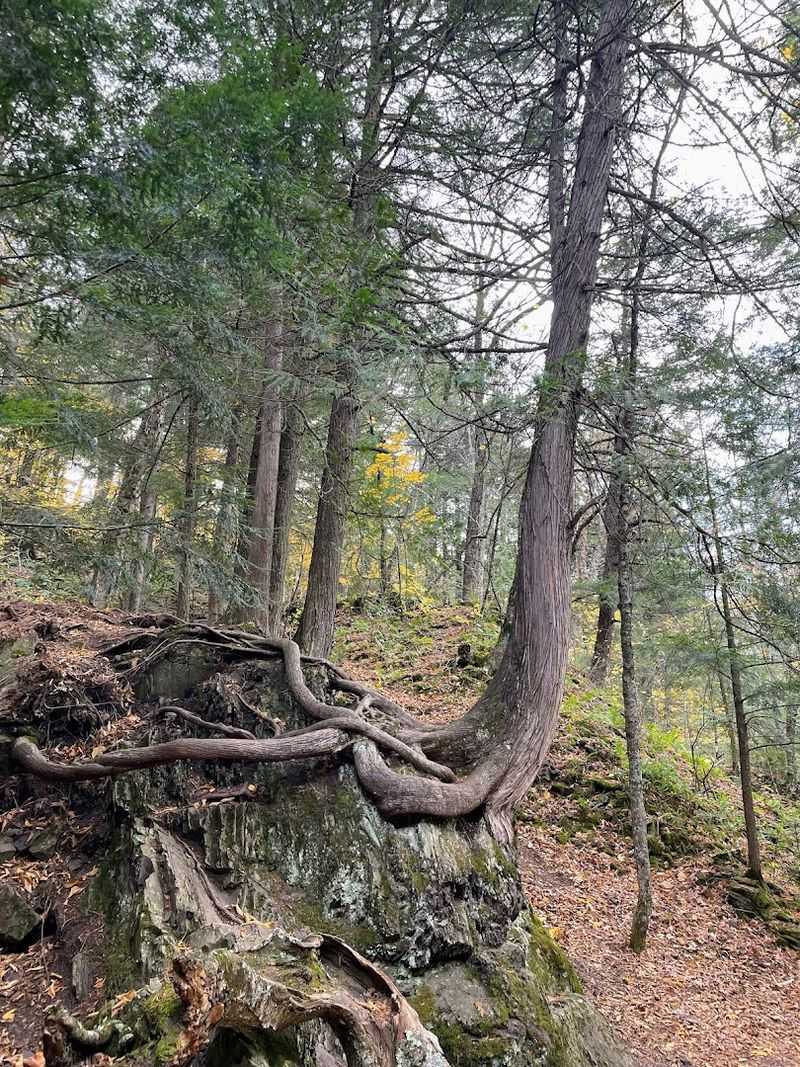
Beyond the waterfalls and the gorge, Copper Falls State Park holds miles of forest trail that move through stands of old hardwoods and conifers at a pace that encourages genuine attention to the surroundings. The forest interior has a settled, mature quality that comes from trees that have had decades to establish themselves without significant disturbance.
Moss covers the ground between the roots in places, and the canopy closes overhead in a way that muffles outside sound and creates a genuine sense of seclusion.
These quieter trails attract a different kind of visitor than the waterfall loop, drawing people who come specifically for birdwatching, wildlife observation, or simply the restorative experience of moving through old forest without a particular destination in mind. White-tailed deer are commonly spotted along the park’s interior paths, particularly in the early morning and late afternoon hours.
The North Country National Scenic Trail passes through the park, connecting Copper Falls to a much larger network of hiking routes across the northern United States. For backpackers and long-distance hikers, this connection adds a meaningful dimension to the park’s appeal.
A State Park That Feels Wild And Untouched
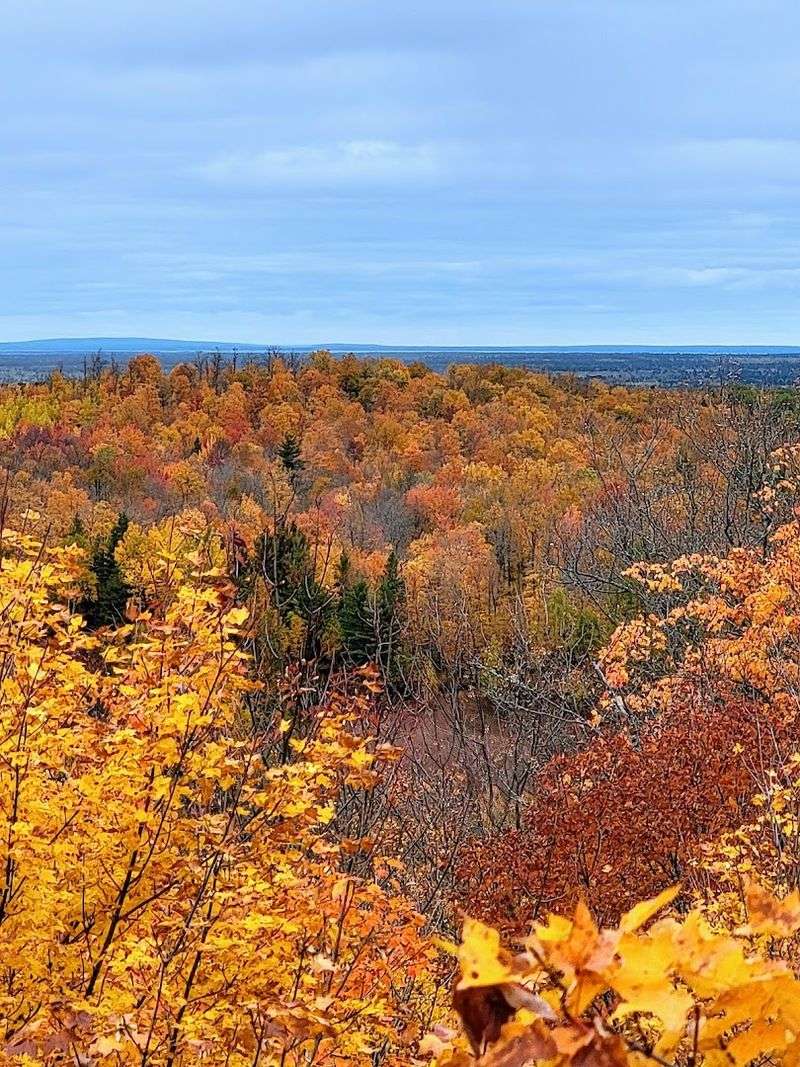
There is a particular quality to Copper Falls State Park that separates it from many other parks in the Wisconsin system. Despite having well-maintained trails, clean facilities, a gift shop, and a staffed entrance, the park manages to retain an atmosphere of genuine wildness that begins at the gorge edge and extends outward through the forest in every direction.
The remoteness of the Mellen area contributes to this feeling, as the drive through the Northwoods to reach the park sets the tone long before you arrive at the entrance.
The park operates year-round, and winter visits reveal a completely different character, with ice formations along the gorge walls and snow-covered trails that see far fewer footprints than summer weekends. Entrance fees apply as with all Wisconsin state parks, with daily vehicle admission rates varying by residency status.
Wildlife activity in and around the park is consistent and varied. Bears, eagles, loons, and numerous smaller forest species inhabit the area, and patient, observant visitors encounter them regularly along the less-trafficked sections of the trail network.
Waterfalls That Thunder After Heavy Rain
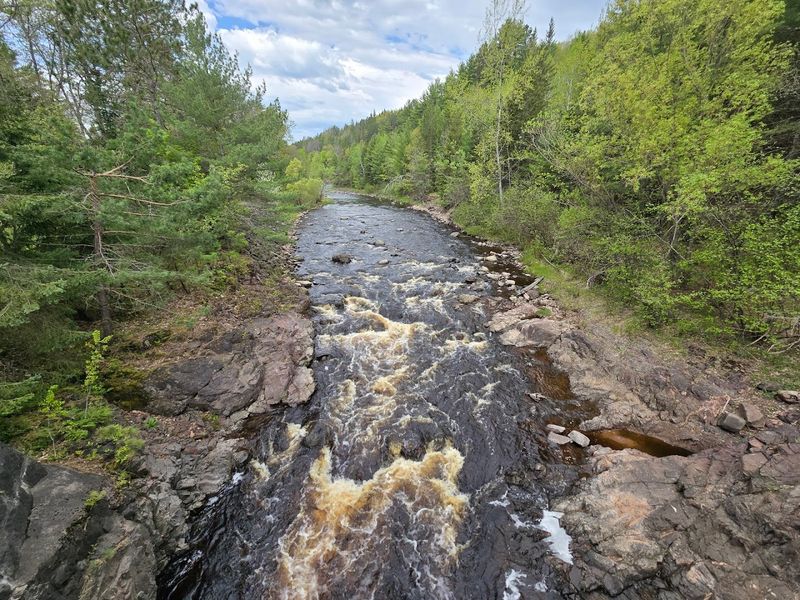
Timing a visit to Copper Falls State Park in the hours or days following significant rainfall is one of the more rewarding strategies available to anyone who wants to experience the park at its most dramatic. The waterfalls respond quickly to increased water volume, and the transformation from their standard flow to their post-rain state is considerable.
Copper Falls and Brownstone Falls both gain substantially in width and force, and the sound within the gorge shifts from a steady roar to something considerably more commanding.
The Bad River rises visibly during these periods, filling the gorge with a level of energy that changes the entire character of the canyon walk. Safety railings along the trail become more important to observe during high-water conditions, and the park’s management maintains them in good repair throughout the season for exactly this reason.
Spring snowmelt produces a similar effect, making late April and early May another excellent window for experiencing the falls at elevated capacity. Checking local weather patterns before a visit is a straightforward way to increase the chances of arriving at peak flow conditions.