
This Magical Wisconsin Trail Feels Like A Hidden World Waiting To Be Explored
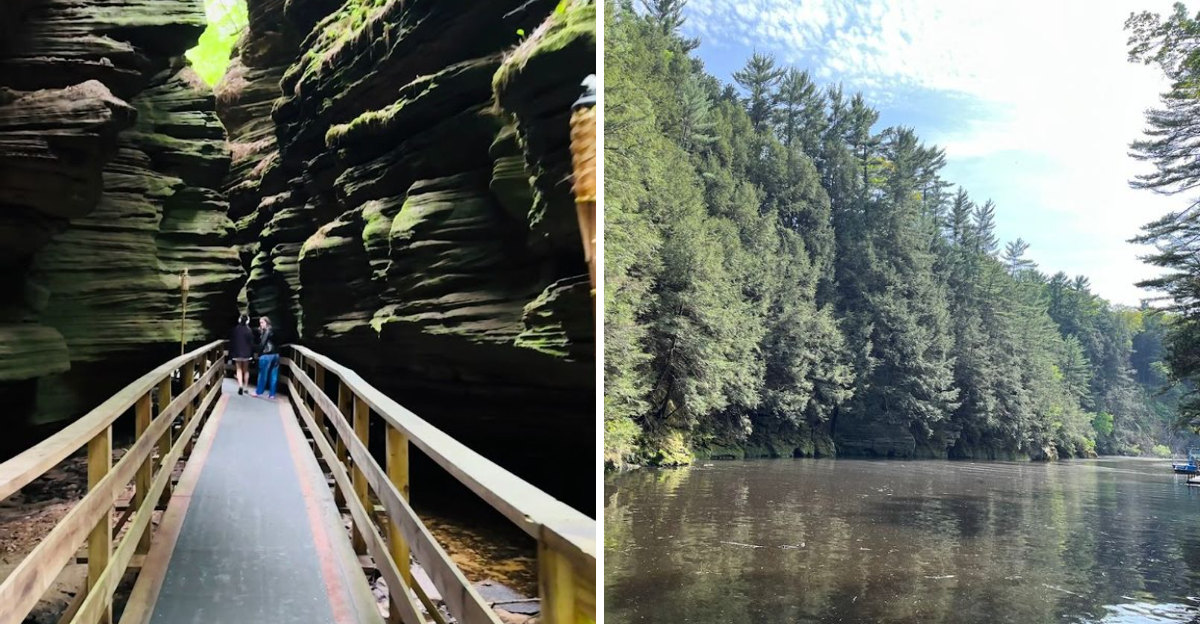
Along the Wisconsin River, where water has spent centuries carving its way through ancient sandstone, a narrow canyon stands as one of the state’s most quietly remarkable places. The gorge sits within the Wisconsin Dells region, accessible only by boat, which gives it an air of genuine remoteness that most trails simply cannot offer.
Ferns cling to damp rock walls, wooden walkways guide visitors through cool shadows, and the whole experience feels far removed from the ordinary. For anyone willing to make the journey, this place delivers something that is difficult to put into words and even harder to forget.
A Narrow Sandstone Canyon Carved By Water
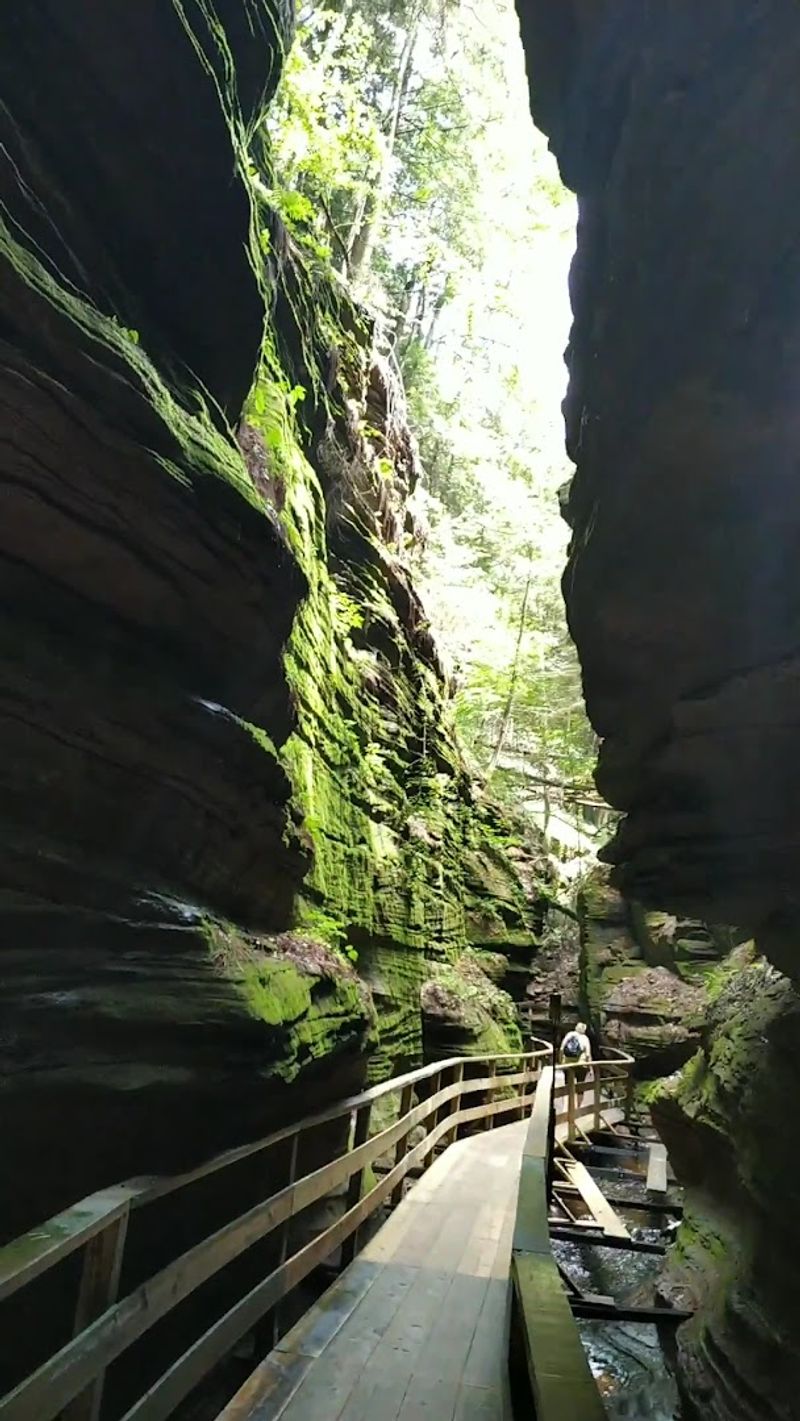
Water is a patient sculptor, and Witches Gulch is its most compelling work in Wisconsin. Over thousands of years, the Wisconsin River and its tributaries slowly wore through layers of soft Cambrian sandstone, producing a canyon so narrow in places that visitors can nearly touch both walls at once.
The result is a corridor of stone that feels ancient, intimate, and completely unlike anything found on a standard hiking trail.
The sandstone here carries warm tones of amber, rust, and cream, colors that shift subtly depending on moisture and the angle of available light. Smooth curves and layered striations in the rock tell a geological story that spans millions of years.
Visitors who take a moment to examine the walls closely will notice small pockets, ripple marks, and surface textures that speak to the canyon’s long and gradual formation.
Located in Dell Prairie, WI 53965, the gulch remains one of the region’s most visually striking natural features.
Wooden Walkways Guide Visitors Through The Gorge
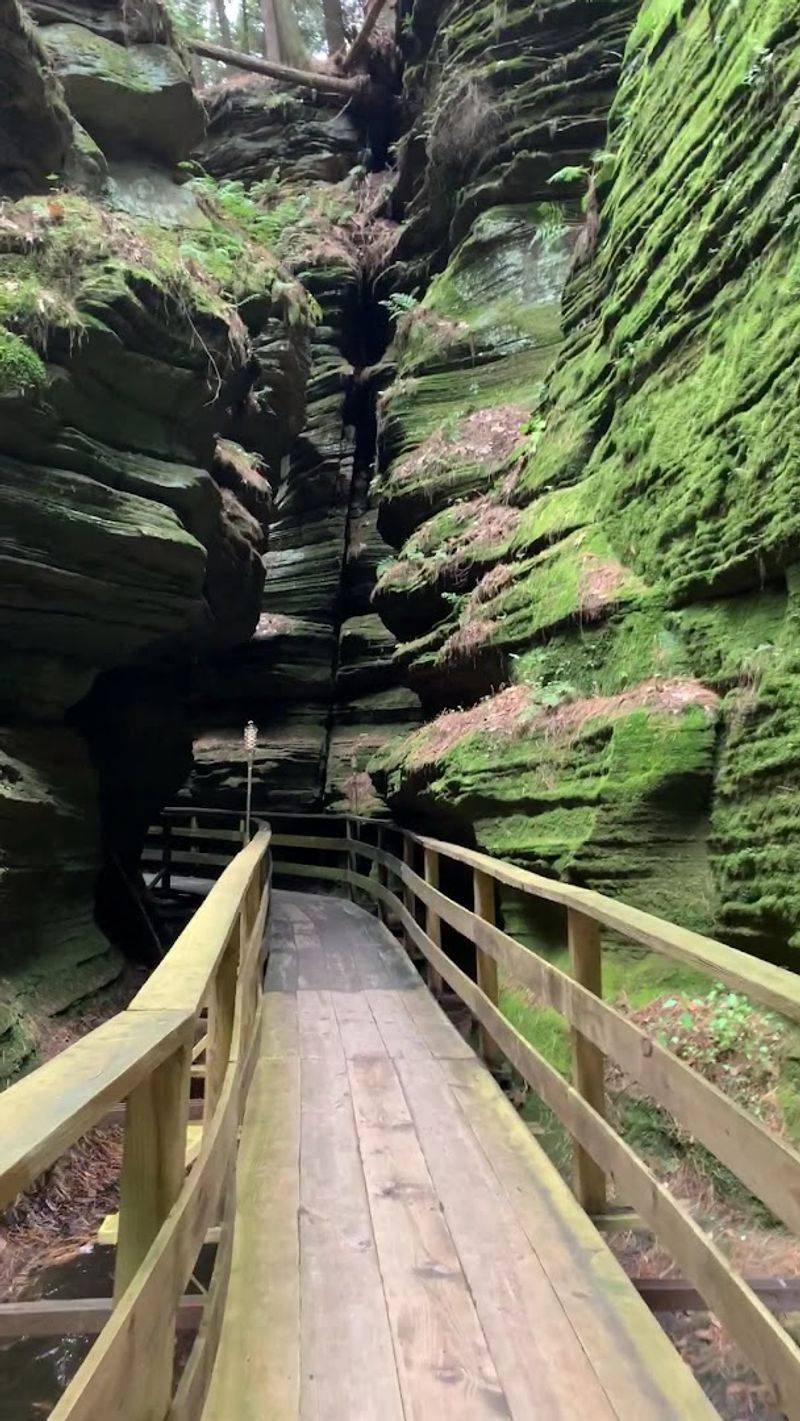
A well-built wooden walkway runs the length of Witches Gulch, keeping visitors on a clear, manageable path through the canyon’s more challenging terrain. The boardwalk is a practical addition that also happens to enhance the atmosphere, its planks worn smooth by seasons of foot traffic and humidity, giving the whole passage a sense of lived-in character.
The path is largely flat and straightforward, making it accessible to a broad range of visitors, including those with limited mobility. There are no steep climbs or scrambling sections along the main trail, which means the focus stays entirely on the surroundings rather than on managing difficult footing.
Families with young children find the walkway especially convenient.
At the far end of the trail, a small refreshment area and gift shop mark the conclusion of the walk. The transition from canyon to open air at the trail’s end feels almost theatrical, a quiet release after the intimacy of the gorge.
Towering Rock Walls Rise High Above The Path
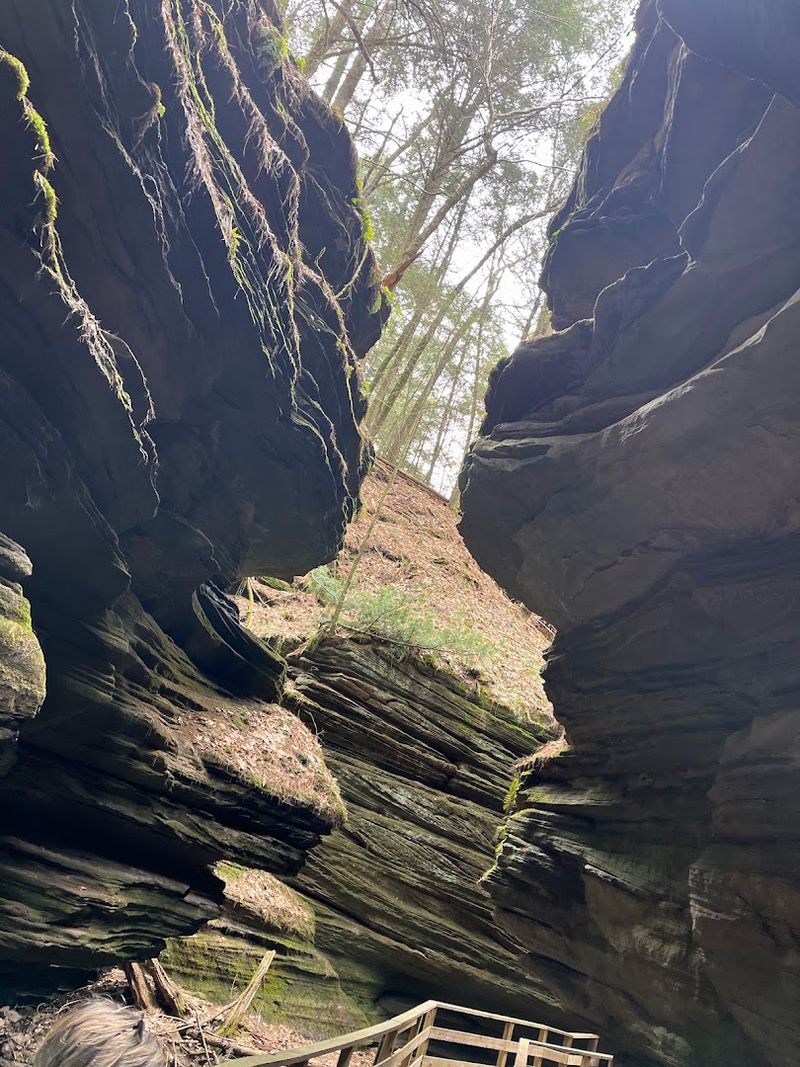
Standing inside Witches Gulch and looking upward is one of those experiences that recalibrates your sense of scale almost immediately. The canyon walls climb well above head height, creating a vertical landscape that feels both sheltering and slightly humbling at the same time.
The sheer mass of sandstone on either side gives the gorge a quality of permanence that is genuinely grounding.
Cracks and ledges in the upper rock faces support small clusters of ferns and mosses, adding flashes of green against the warm stone. The walls are close enough together that direct sunlight rarely reaches the canyon floor, which keeps the interior cool and shadowed even on bright summer afternoons.
This interplay between height, shadow, and enclosure gives the trail a visual drama that photographs struggle to fully capture.
Geologically, the walls represent some of the oldest exposed rock in the region, a fact that adds quiet weight to what might otherwise seem like a simple walk through a pretty gorge.
The Trail Is Only Accessible By Boat Or Kayak
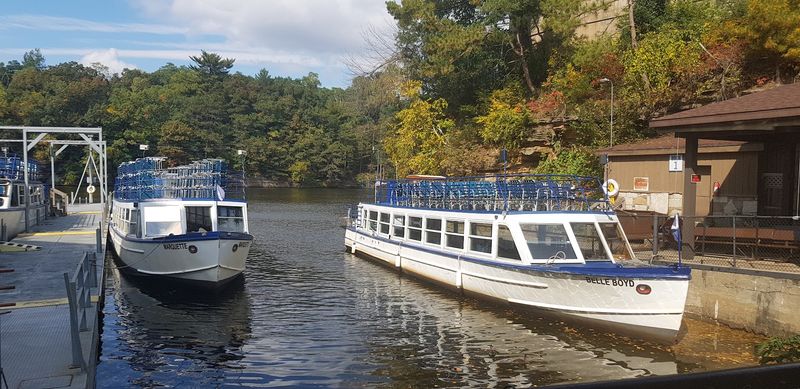
Getting to Witches Gulch requires a boat, and that single logistical detail shapes the entire experience in ways that are worth considering before you go. The Upper Dells Boat Tour is the primary means of access, departing from the Wisconsin Dells area and covering a stretch of the river before stopping at the gulch for a short guided walk.
Combo tickets that bundle multiple attractions are available and tend to offer better overall value.
The boat ride itself is not merely a means of transportation. The Wisconsin River through this stretch is genuinely scenic, with sandstone formations rising from the water and forested banks providing a sense of wilderness that the town of Wisconsin Dells, for all its charm, cannot replicate.
Passengers on the upper deck get the broadest views of the canyon walls as the boat approaches the landing.
Kayakers and canoeists occasionally access the area independently, though the privately owned land surrounding the gulch means that entry to the trail itself still requires a tour ticket.
A Cool Microclimate Inside The Canyon
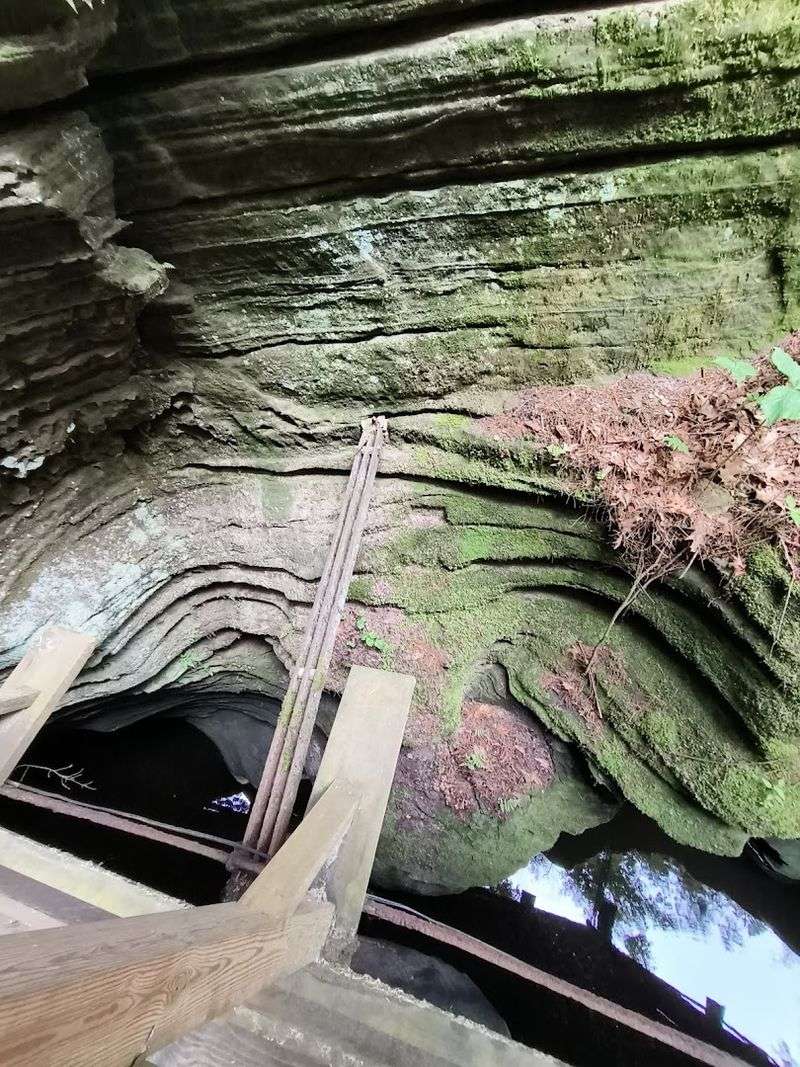
Step into Witches Gulch on a warm July afternoon and the temperature drop is immediate and noticeable. The canyon’s narrow width and high walls prevent sunlight from heating the interior, creating a cool, shaded environment that persists through most of the summer season.
On humid days, the air inside carries a faint mineral coolness that is entirely its own.
This microclimate is not simply a comfort feature. It is the reason the gulch supports plant life that would struggle in the open Wisconsin landscape.
Moisture-loving ferns, mosses, and small shade-tolerant plants find the canyon conditions close to ideal, and their presence gives the interior a lush, almost enclosed-garden quality that feels at odds with the dry warmth just outside.
Visitors who arrive expecting a typical summer trail are often caught off guard by how genuinely refreshing the canyon air feels. Bringing a light layer is not a bad idea, even in midsummer, because the chill inside the gulch can linger longer than expected.
Ferns And Moss Thrive In The Moist Canyon Air
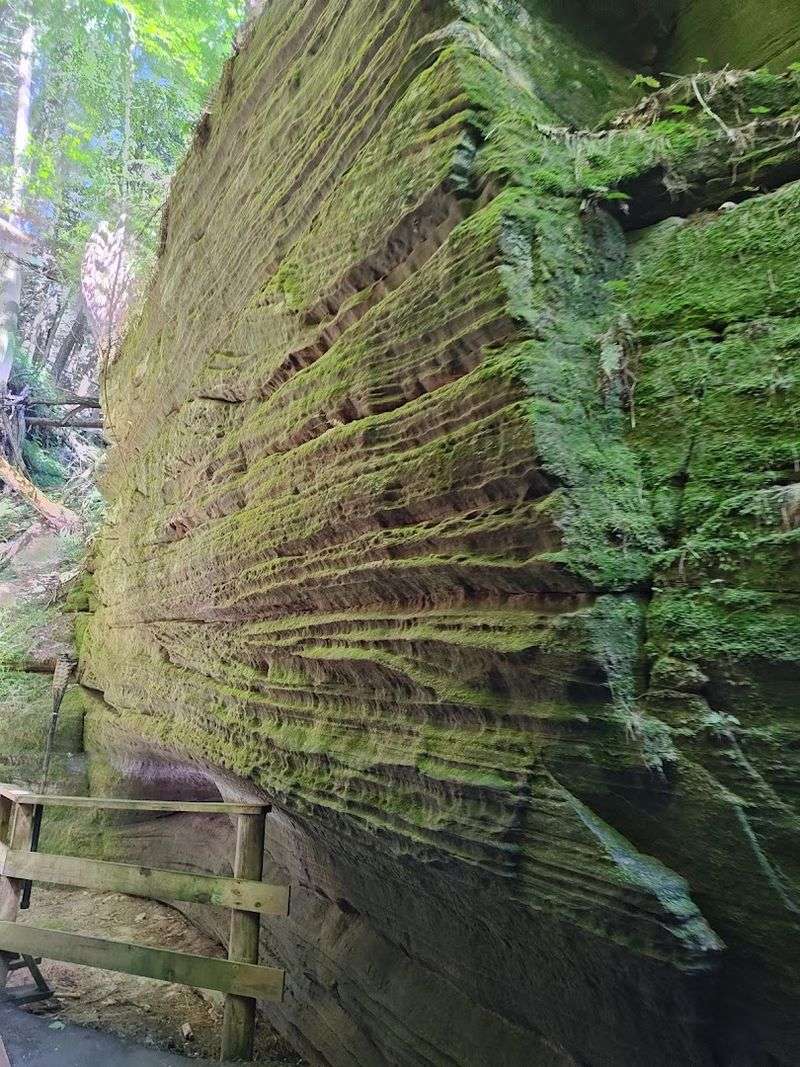
Few things signal a healthy, undisturbed environment quite like a thick carpet of moss, and Witches Gulch has it in abundance. The canyon walls support dense colonies of bryophytes and fern species that benefit directly from the constant moisture, low light, and relatively stable temperatures the gorge provides year-round.
The overall effect is a corridor of living green set against warm sandstone, which makes for some of the most photogenic scenery in the Wisconsin Dells region.
Ferns emerge from cracks and ledges at various heights along the walls, their fronds curling outward into whatever dim light filters down from above. The moss coats lower surfaces in velvety patches, softening the harder edges of the rock and giving the canyon floor a quiet, almost meditative quality.
Walking through the gulch, you become aware of how much life has taken hold in a space that seems, at first glance, almost too narrow to support it.
This botanical richness is one of the details that separates Witches Gulch from a purely geological attraction.
Light And Shadow Create A Dreamlike Atmosphere
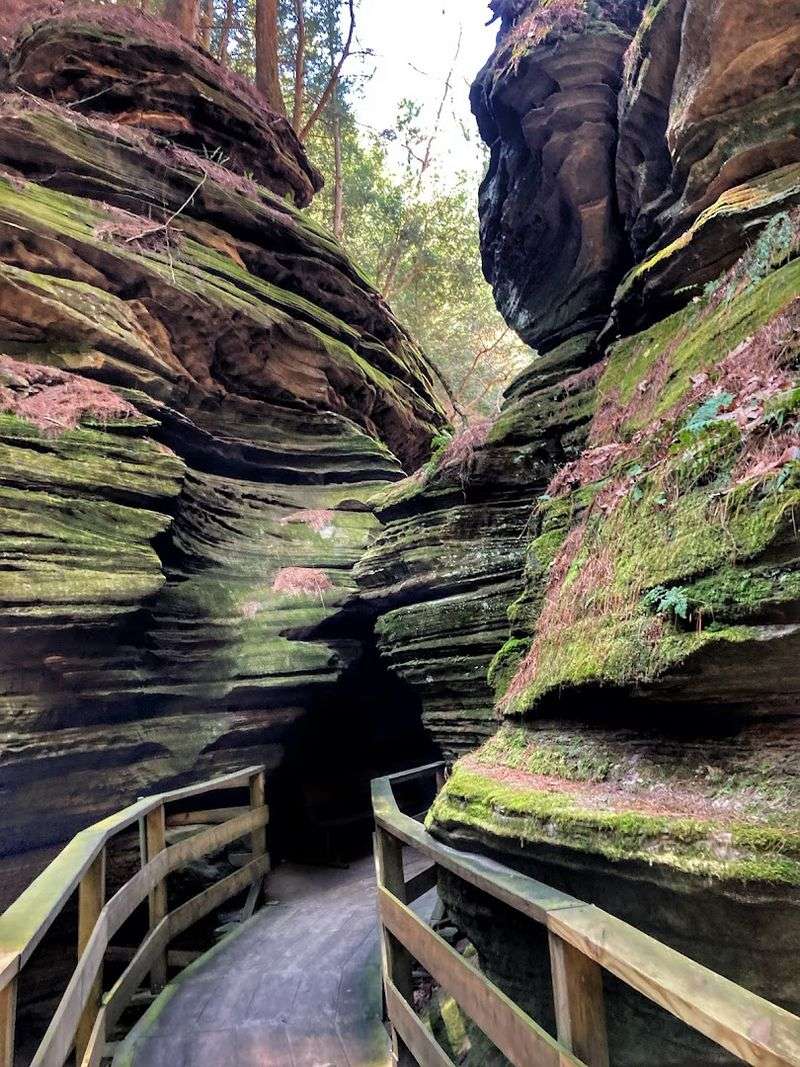
Photographers who visit Witches Gulch for the first time tend to slow down considerably once they step inside. The canyon’s geometry produces a constantly shifting interplay of light and shadow that changes with the time of day and the season, making every visit subtly different from the last.
In the morning, pale light falls in narrow columns from above, catching moisture in the air and giving the interior an almost atmospheric quality.
By midday, the contrast between lit and unlit surfaces sharpens, and the warm sandstone tones glow against the deeper shadows of the recessed walls. Late afternoon visits introduce longer shadows and softer gradients, which many photographers find the most rewarding conditions for capturing the canyon’s character.
Sunrise visits, for those willing to arrange early boat access, reportedly offer particularly striking visual conditions along the river approach.
The light behavior inside the gulch is not accidental. It is a direct product of the canyon’s narrow proportions and orientation, a natural design that rewards patience and a willingness to simply observe before reaching for a camera.
A Short Trail That Leaves A Big Impression
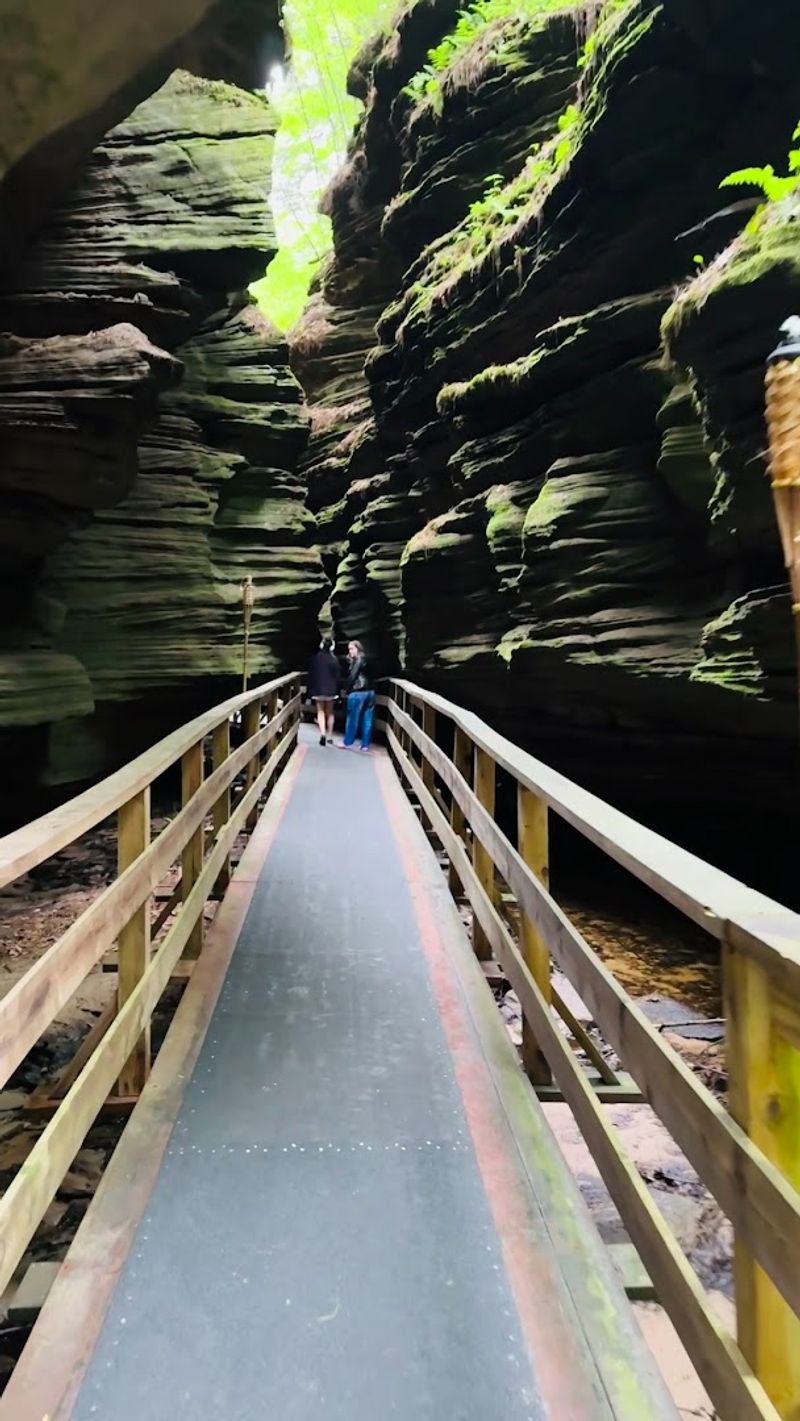
The trail through Witches Gulch is short by most hiking standards, and that brevity is actually one of its more interesting qualities. The walk covers a modest distance from the boat landing to the refreshment area at the far end, taking most visitors between ten and twenty minutes to complete at a relaxed pace.
What the trail lacks in length, it compensates for in density of impression.
Every few steps along the walkway presents a new angle on the rock walls, a different arrangement of ferns, or a shift in the quality of light overhead. The canyon is compact enough that nothing feels rushed or distant, and the path is direct enough that even visitors with limited time can complete it comfortably.
Groups visiting as part of the boat tour typically have around twenty minutes at the gulch, which is enough for a full walk and a few photographs.
Short trails often struggle to justify the effort of reaching them, but Witches Gulch makes a convincing case that duration and depth of experience are not the same thing.
Part Of The Famous Wisconsin River Dells Landscape
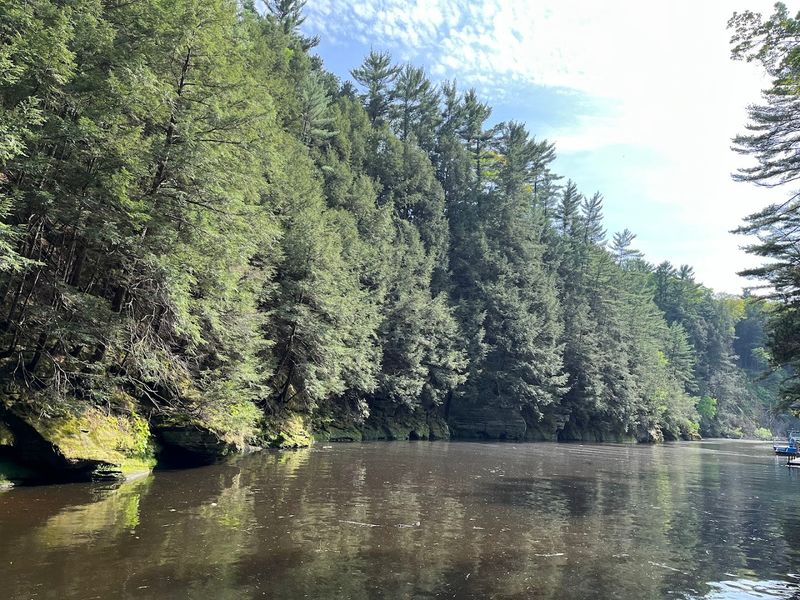
Witches Gulch does not exist in isolation. It is one feature within a broader sandstone landscape that stretches along the Wisconsin River through the Dells region, a geological zone defined by dramatic rock formations, river channels, and canyon walls that have been attracting visitors since the mid-nineteenth century.
The gulch is among the more intimate examples of what the Dells landscape can produce when water and stone interact over a very long period of time.
The Wisconsin Dells area earned its reputation as a tourist destination partly through the work of early photographers, most notably H.H. Bennett, whose images of the river formations in the 1860s and 1870s helped put the region on the national map.
The sandstone canyon at Witches Gulch belongs to the same geological story those early photographs documented, even if the surrounding area has changed considerably since then.
Understanding the gulch as part of this larger landscape adds context to the visit and makes the boat ride to reach it feel less like a logistical inconvenience and more like an appropriate introduction to the terrain.
A Place That Inspired Legends And Its Mysterious Name
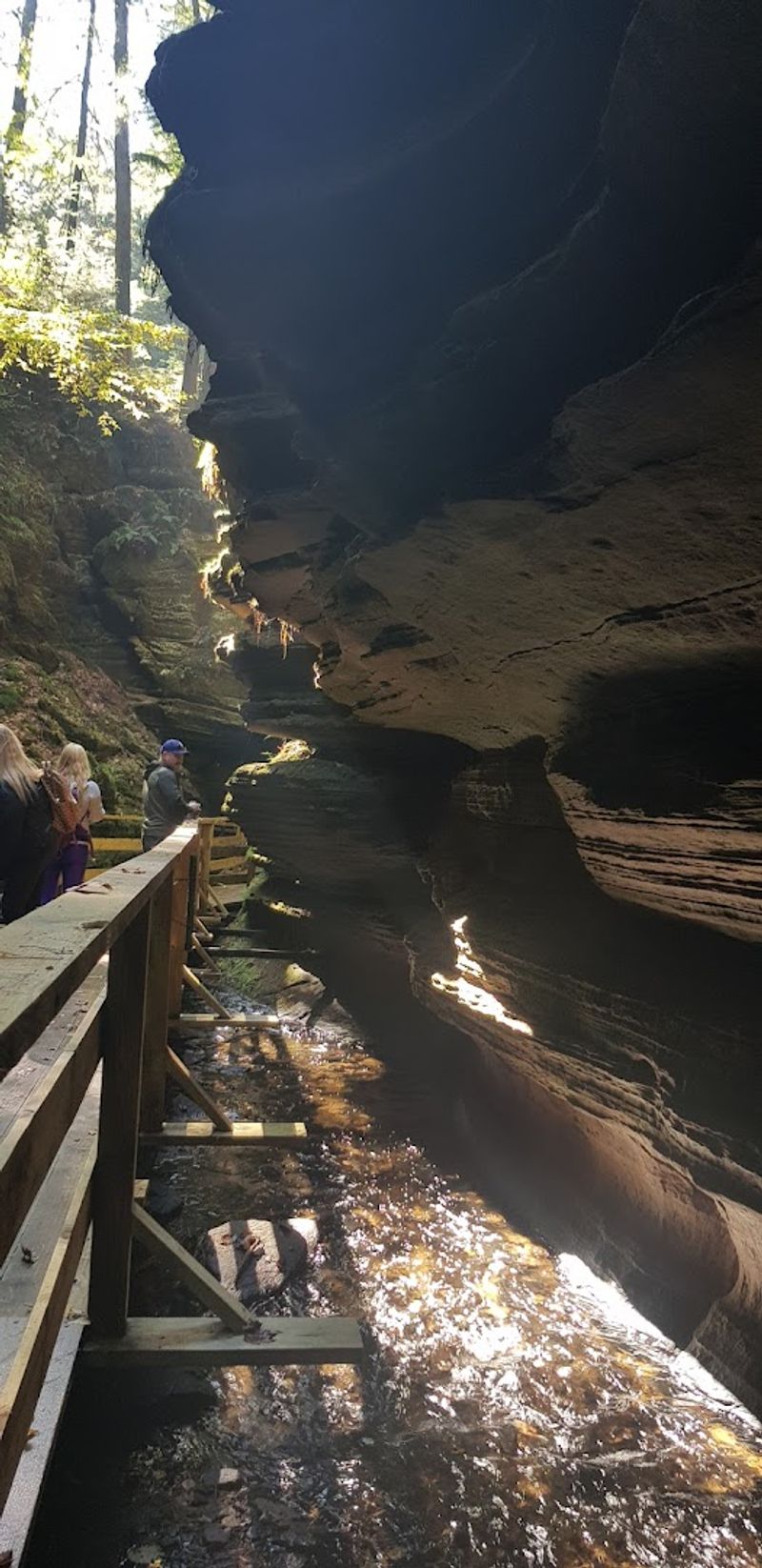
Names carry weight, and Witches Gulch carries one of the more evocative names in Wisconsin geography. The origin of the name is not precisely documented, but the canyon’s shadowed interior, unusual acoustics, and general air of enclosure made it easy for early visitors to project a sense of mystery onto the place.
A gulch that stays cool and dark even on bright days tends to invite imaginative interpretation.
Local lore has long connected the site to stories of unusual sounds and unsettling atmosphere, the kind of folk legends that attach themselves naturally to places that feel genuinely apart from ordinary surroundings. A plaque inside the canyon references the Crandall family, who once held much of the surrounding land and declared that no one could own the Dells, a sentiment that adds a layer of history to the already layered stone.
Whatever the precise origins of its name, Witches Gulch earns the mystery it carries. The place has a character that goes beyond its geology, something in the air and the silence that makes the name feel entirely appropriate.