
This Massachusetts School Keeps Handmade Arts And Creative Workshops Alive
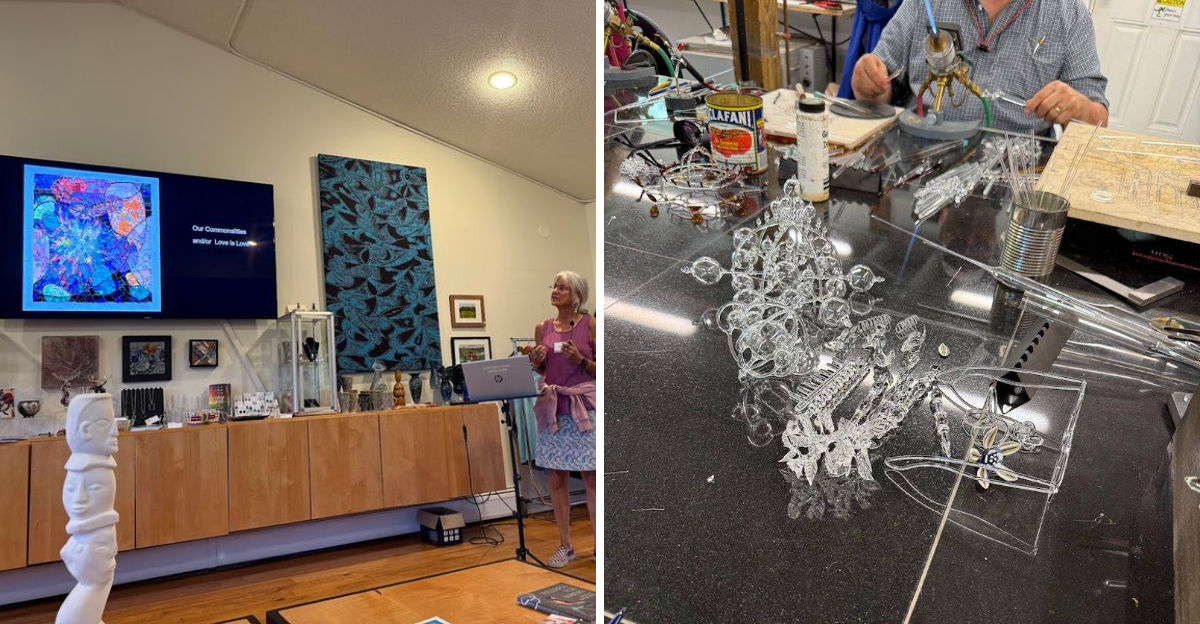
When did you last make something with your hands? Not type it, not order it, not scroll past it. Actually make it.
Massachusetts has a place that takes that question seriously, and it’s been doing so for decades.
Glassblowing, blacksmithing, weaving, ceramics, printmaking. The list of crafts taught here reads like a catalog of everything the modern world forgot to keep.
Classes run through the warmer months, drawing in beginners who’ve never held a tool and experienced makers looking to push further.
The setting is a working farm in the hills of western Massachusetts, which somehow makes all of it feel even more grounded.
Something about being surrounded by open land makes the work feel more intentional. If you’ve ever wanted to try a craft but didn’t know where to start, this place makes that easy.
A School Born From A Simple But Powerful Idea
Back in 1982, a woman named Jane Sinauer started a summer program for teenagers with a belief that craft education deserved a real home.
That program was originally called Horizons: The New England Craft Program, and it quietly planted roots in western Massachusetts that would grow into something far more substantial over the following decades.
By 1985, the program had acquired a property in Williamsburg that had previously belonged to the Snow family, a 50-acre working dairy farm with buildings dating back to the 1700s.
The land had history, and the new purpose it was given gave it even more.
The name changed to Snow Farm: The New England Craft Program in 2000, and the organization officially became a nonprofit in 2002.
Snow Farm holds the distinction of being the only residential, multidisciplinary craft school in Massachusetts.
That is not a small achievement. It sits among only a handful of institutions like it across the entire country, making it a genuinely rare place where the handmade arts are treated as a serious pursuit.
The Range Of Studios Will Surprise You
Most art schools focus on one or two disciplines. Snow Farm takes a broader view, operating across eight to nine studios that cover an impressive range of creative traditions.
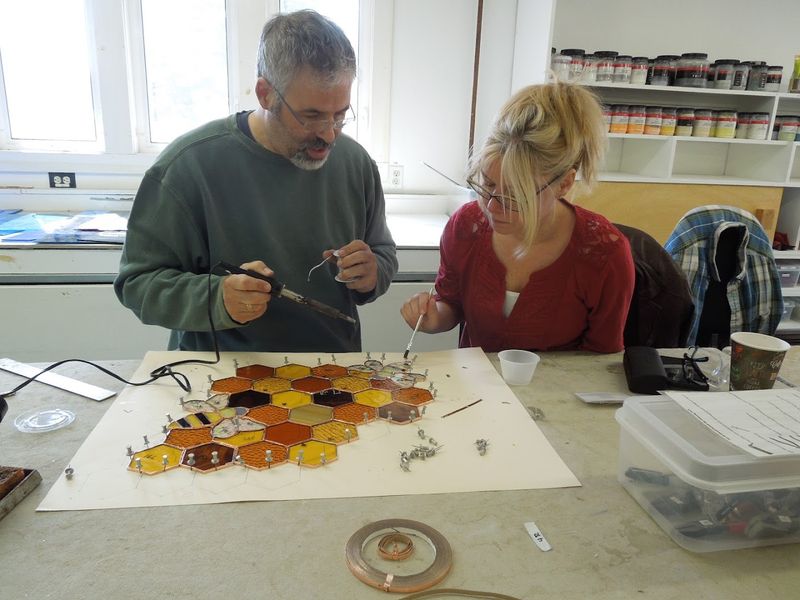
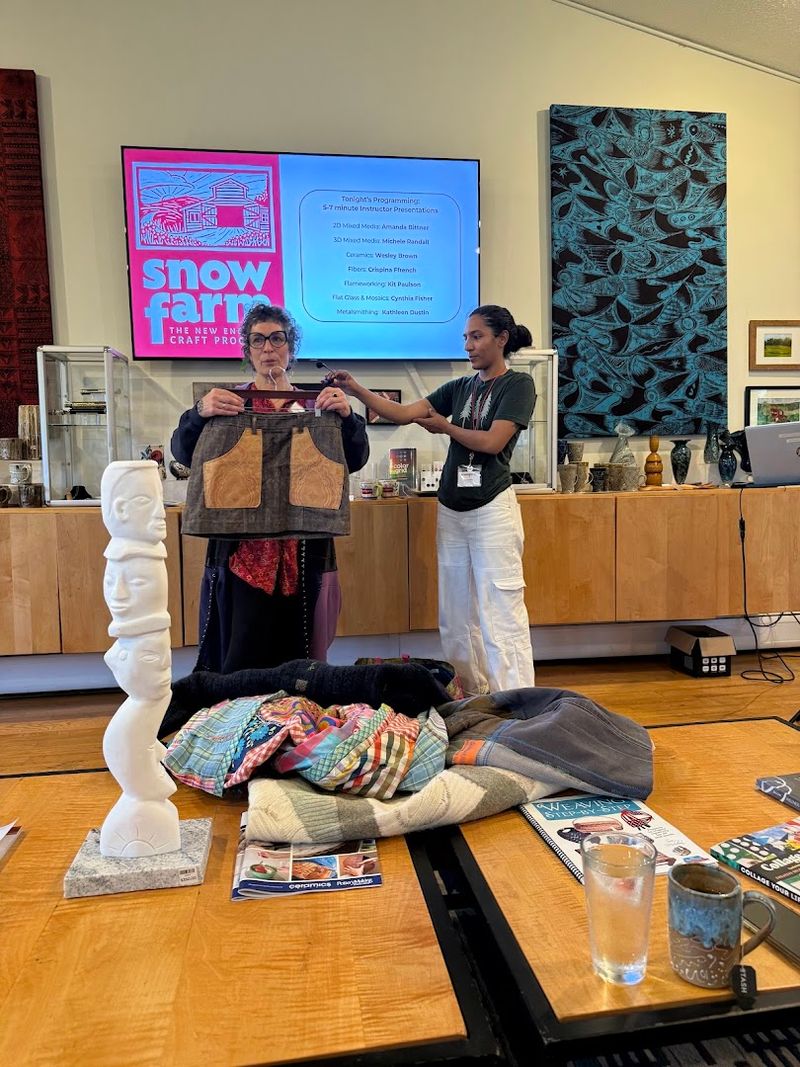
The lineup includes ceramics, metalsmithing and jewelry, woodworking, fiber and baskets, flameworking, flat glass and mosaics, and 2D and 3D mixed media that spans painting, drawing, printmaking, and paper arts.
Glassblowing is also offered, giving students access to one of the more technically demanding and visually dramatic craft forms available anywhere.
Each studio is run by working professional artists who bring practical knowledge and genuine enthusiasm to their instruction.
These are not academics reciting theory but makers who spend their own time doing exactly what they are teaching.
What makes this variety meaningful is the way it encourages cross-pollination between disciplines.
A woodworker might walk past the ceramics studio and feel curious. A jewelry maker might wander into a fiber workshop and find a new direction entirely.
Snow Farm seems to understand that creativity rarely stays in one lane, and the physical layout of the campus reflects that understanding in a very deliberate way.
Workshops Designed For Real People, Not Just Professionals
One of the most refreshing things about Snow Farm is that it does not require you to arrive with years of experience.
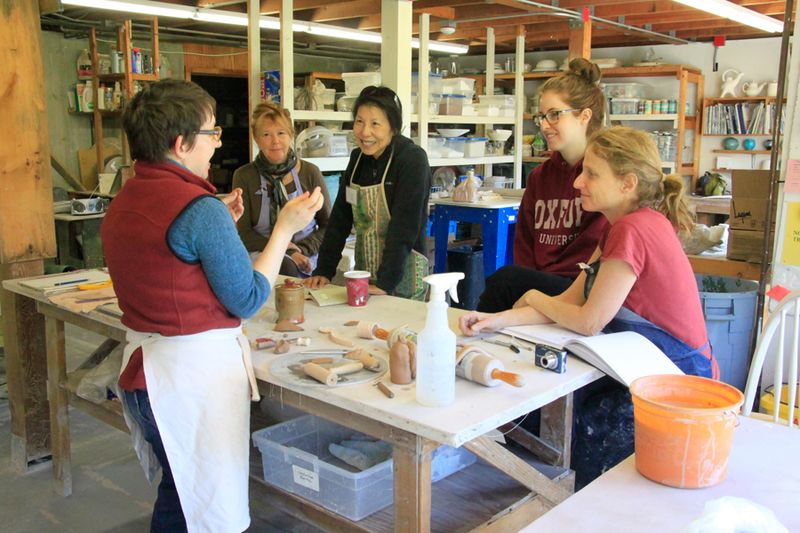
Workshops are structured to accommodate a wide range of skill levels, from complete beginners who have never touched a piece of clay or glass to participants who already have some foundation and want to push further.
The three to six-day format, offered from May through October, gives students enough time to actually absorb what they are learning. A single-day class can leave you with surface impressions.
A multi-day immersive workshop gives you time to make mistakes, ask questions, sleep on what you learned, and return the next morning with fresh eyes and better instincts.
That rhythm matters. Craft is not something you absorb in an afternoon. It builds through repetition and patience, and the workshop structure at Snow Farm respects that reality.
One recent participant who took a five-day woodworking class described leaving with hours of practice, several finished wooden pieces, a new hobby, and new friendships.
That is the kind of outcome that reflects a program built around genuine learning rather than just scheduled activity.
The Teen Summer Program Offers Something Genuinely Rare
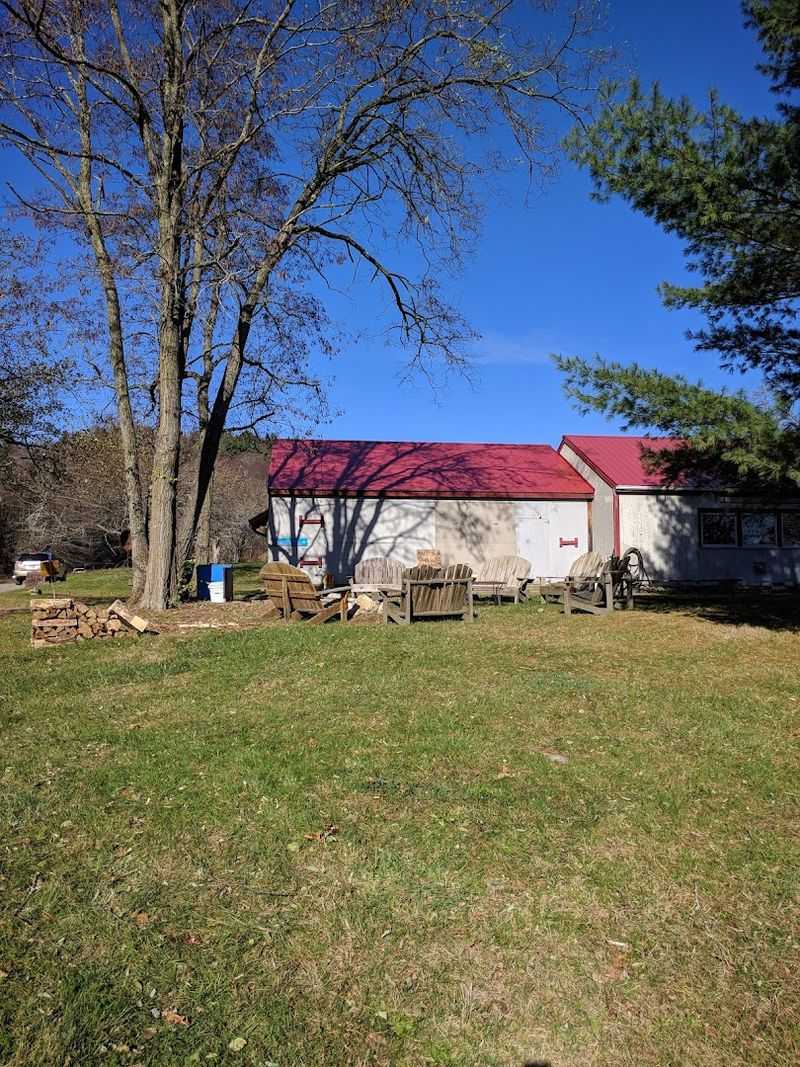
Every July, Snow Farm opens its campus to high school students between the ages of 14 and 18 for a two-week residential program.
It is one of the few opportunities in the country where teenagers can live and work alongside professional artists in a fully immersive craft environment, far removed from the distractions of everyday life.
The Teen Summer Program is not a casual summer activity. It asks participants to commit fully, to show up each day with focus, and to engage seriously with their chosen craft.
For many students, it becomes a formative experience that shapes how they think about making things and what they want to do with their creative energy going forward.
There is something quietly powerful about giving a teenager two uninterrupted weeks to explore a skill they genuinely care about.
No homework deadlines, no social pressures from the usual crowd, just the work itself and the guidance of instructors who take them seriously.
For artistically inclined young people who feel out of place in conventional school settings, Snow Farm in July can feel like the first time someone handed them the right tools and simply said, go ahead.
Artist Residencies Give Serious Makers Room To Work
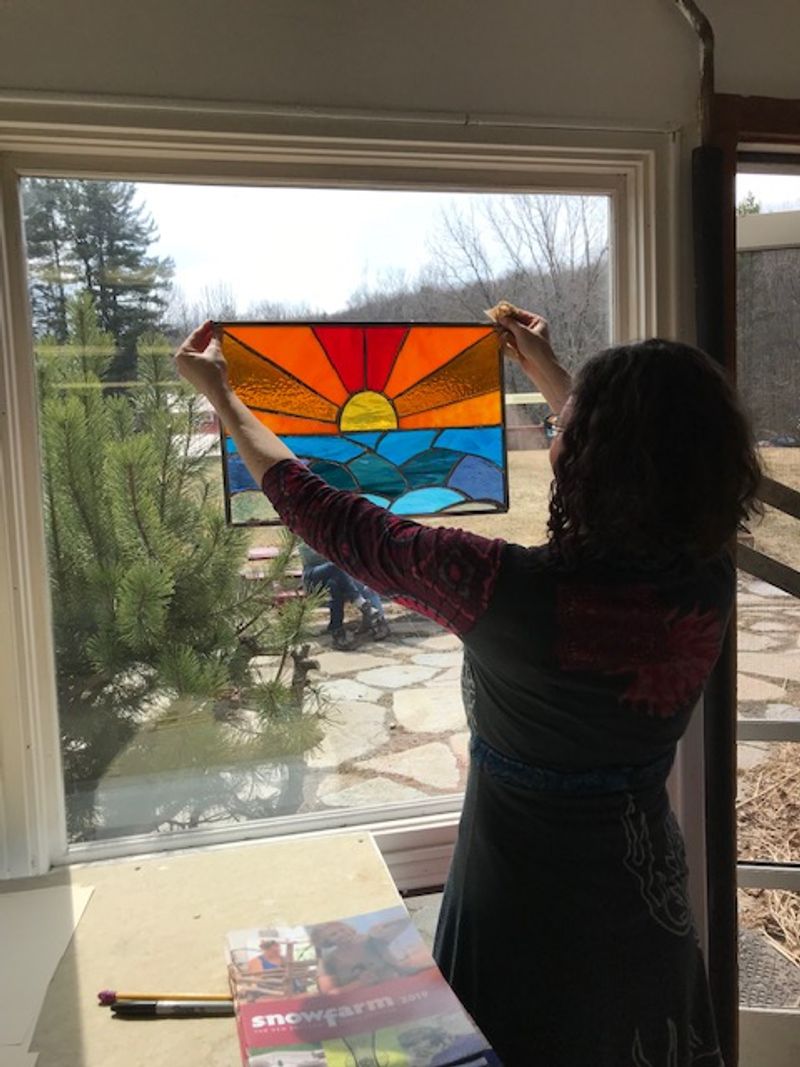
Beyond the structured workshops, Snow Farm offers week-long residencies for artists who want time and space to pursue independent creative work.
These residencies are available throughout the year and attract makers who are not looking for instruction but for the conditions that allow serious, uninterrupted studio practice.
The value of a residency lies in what it removes as much as what it provides.
When you step away from your regular environment, your daily obligations, and the noise of ordinary life, something shifts.
The work becomes the priority. Snow Farm’s campus, with its rural quiet and functional studio spaces, creates those conditions naturally.
Professional artists across disciplines have used the residency program to complete projects, develop new bodies of work, and reconnect with the physical process of making after periods dominated by administrative demands.
The presence of other artists on campus, each absorbed in their own practice, creates an atmosphere of shared purpose without requiring constant interaction.
It is the kind of productive solitude that most working artists spend years trying to arrange, available here in a single, well-considered program at a campus that has quietly supported creative work for over four decades.
Campus Life Adds A Layer That Online Learning Never Could
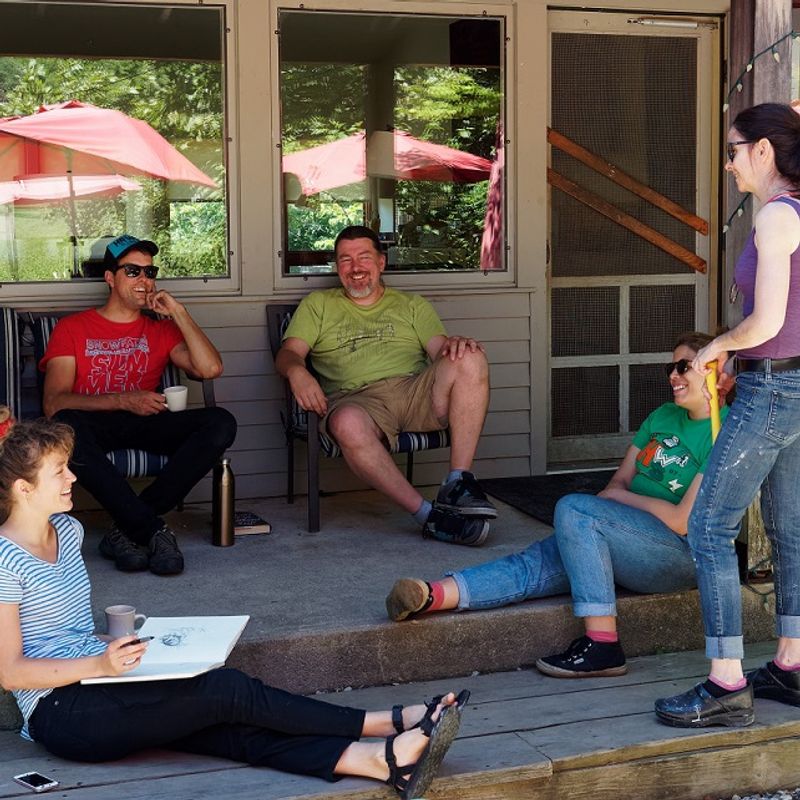
Snow Farm is a residential school, and that detail changes everything about the experience. Students do not drive in for a class and head home afterward.
They stay on campus, share meals, walk the same gravel paths, and exist together in a space designed around the act of making things.
The 50-acre property includes dormitory-style accommodations ranging from shared rooms to more private options for those who prefer them.
The dining hall serves fresh, kitchen-prepared meals daily, with meat and vegetarian options available at each sitting.
More than one participant has mentioned that the food far exceeded what they expected from a craft school cafeteria, which is a small but meaningful detail about the care the staff put into every aspect of the experience.
Some of the campus buildings date back to the 1700s, giving the property a physical history that feels appropriate for an institution dedicated to traditional skills.
Walking between studios, past old stone walls and farm structures that have stood for centuries, does something to your sense of time.
It slows things down in a way that makes focused creative work feel not just possible but entirely natural.
Instructors Who Teach From Their Own Practice
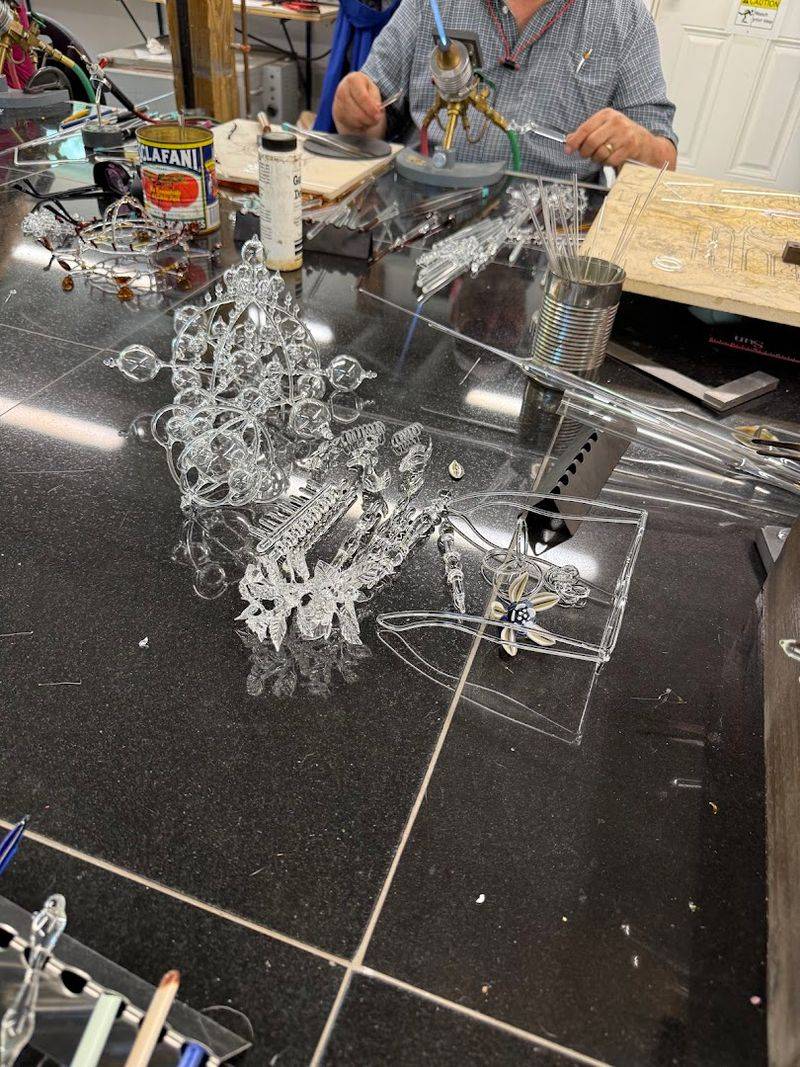
The quality of any craft school comes down to its instructors, and Snow Farm has built its reputation on hiring working professional artists rather than full-time academics.
Every person who leads a workshop here maintains an active creative practice, which means their teaching is grounded in current, lived experience rather than historical knowledge alone.
That distinction matters more than it might initially seem. A working artist knows what problems come up in the studio today, what materials are behaving differently, what techniques are being reconsidered within their field.
They bring that currency into the classroom and share it naturally, not as a formal lesson but as part of the ongoing conversation between someone who makes things and someone who wants to learn how.
Students who attended a welcome dinner at the start of a recent session described watching instructors present their work and feeling immediately drawn to sign up for classes they had not originally considered.
That kind of enthusiasm is not manufactured. It comes from people who genuinely love what they do and find real satisfaction in passing it along to others.
That atmosphere, repeated across every studio on campus, is what gives Snow Farm its particular character.
The Berkshire Foothills Provide More Than Just Scenery
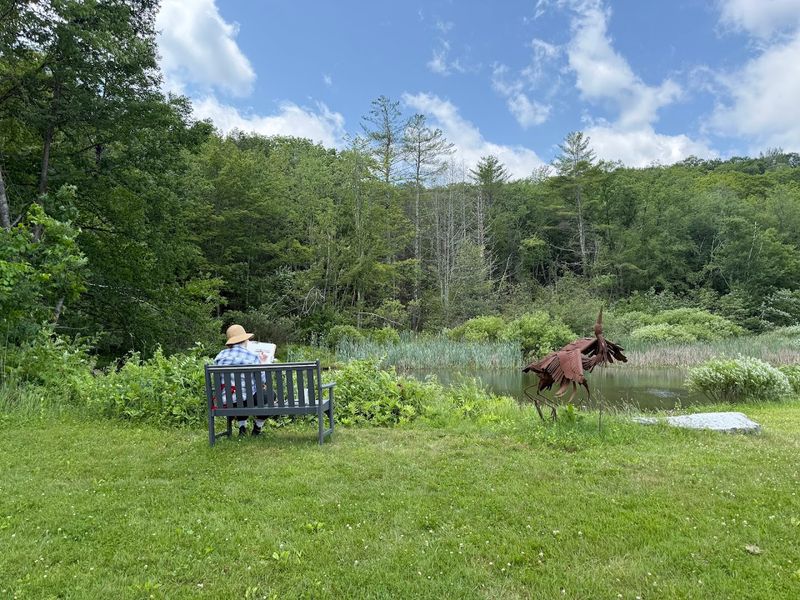
The physical setting of Snow Farm is not incidental to the experience.
The campus sits in the foothills of the Berkshire Mountains in western Massachusetts, surrounded by dense green hillsides, walking trails, and a small pond that gives the property a quality of unhurried calm.
Nature has a way of loosening the creative mind.
When you spend your mornings in the studio working with your hands and your evenings walking through a landscape that asks nothing of you, something resets.
The mental clutter that accumulates during ordinary life has less room to persist.
Students consistently mention the surroundings as part of what made their stay feel restorative rather than merely educational.
The campus includes on-site hiking trails that most participants do not fully explore during a single visit, which seems to be a common source of mild regret and a strong motivator for returning.
The area around Williamsburg is genuinely beautiful in all seasons.
The school’s May-through-October schedule means students experience the landscape across its most expressive range, from spring green to the deep amber and red of a Massachusetts fall.
Why Snow Farm Continues To Draw People Back Year After Year
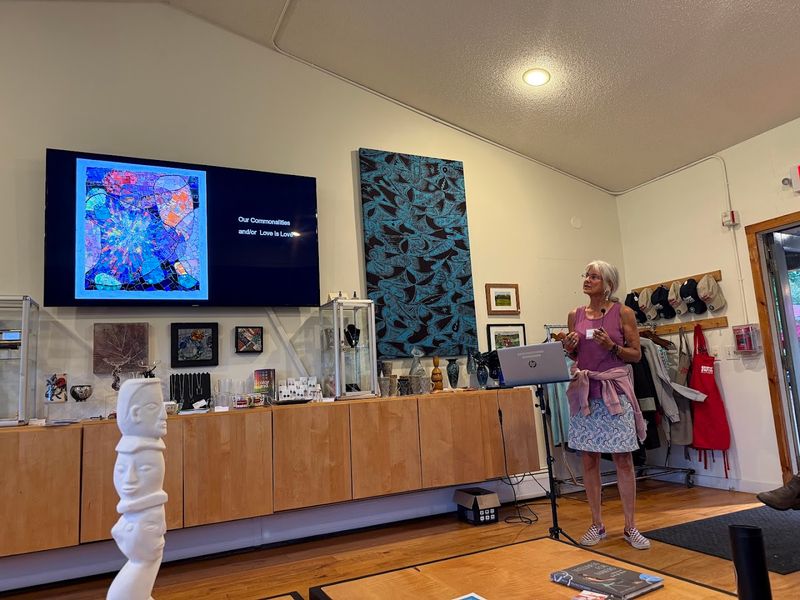
Repeat attendance is one of the clearest signals that a program is doing something right. Snow Farm sees it consistently.
People who come for a glass fusion class return for ceramics. Those who attend a single weekend workshop come back for a full week.
The school reported a record-breaking start to registration revenue in 2024, suggesting that its appeal is not diminishing but growing.
Part of what keeps people returning is the community that forms on campus.
Meeting other people who share a drive to make things by hand, regardless of age, background, or experience level, creates connections that are difficult to replicate elsewhere.
The shared meals, the late conversations after a long studio day, the quiet satisfaction of finishing a piece you did not know you were capable of making, all of it adds up to something that participants find genuinely hard to describe without sounding sentimental.
Snow Farm can be reached at 5 Clary Road in Williamsburg, MA 01096, by phone at 413-268-3101, or through the school’s website at snowfarm.org. Office hours run Monday through Friday, 9 AM to 5 PM.
For anyone who has been considering a creative reset, this is a place that consistently delivers on what it promises.