
This Massachusetts State Park Has North America’s Only Natural White Marble Arch
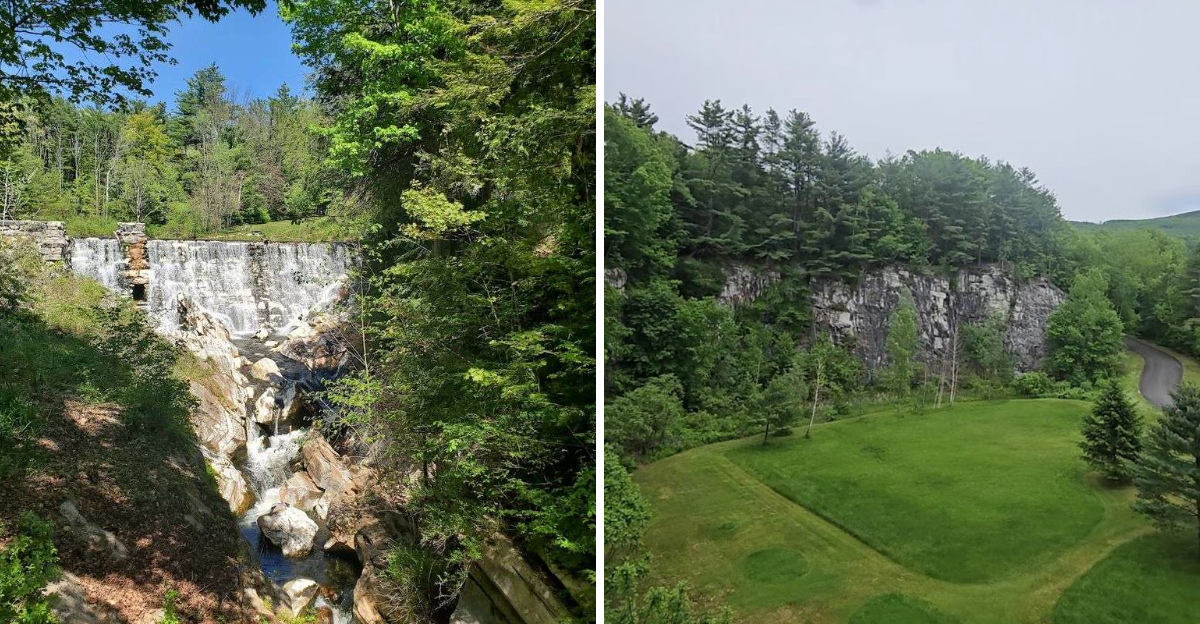
What if one of the rarest natural landmarks in North America was waiting inside a quiet Massachusetts park?
Here, white marble has been shaped by water and time into a natural arch unlike anything else on the continent.
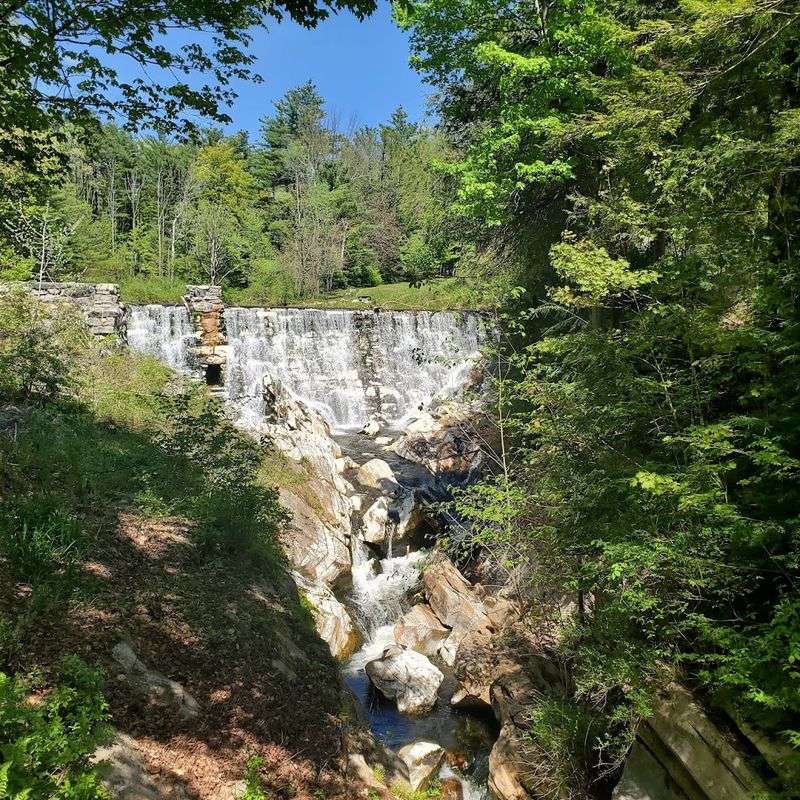
The setting feels almost unreal. A rocky gorge cuts through the landscape, water moves below the marble walls, and old quarry remains reveal another chapter of the area’s past.
Short trails make it easy to see the main features without turning the visit into an exhausting hike.
Massachusetts travelers who enjoy unusual geology will find plenty to admire here. The marble arch is the star, but the surrounding gorge, stone dam, and abandoned quarry add even more interest.
It is the sort of place that makes you stop, look closer, and wonder how nature managed to create something so precise. This park proves that a memorable day trip does not need a long drive or a crowded attraction.
A Geological Wonder Carved By Time
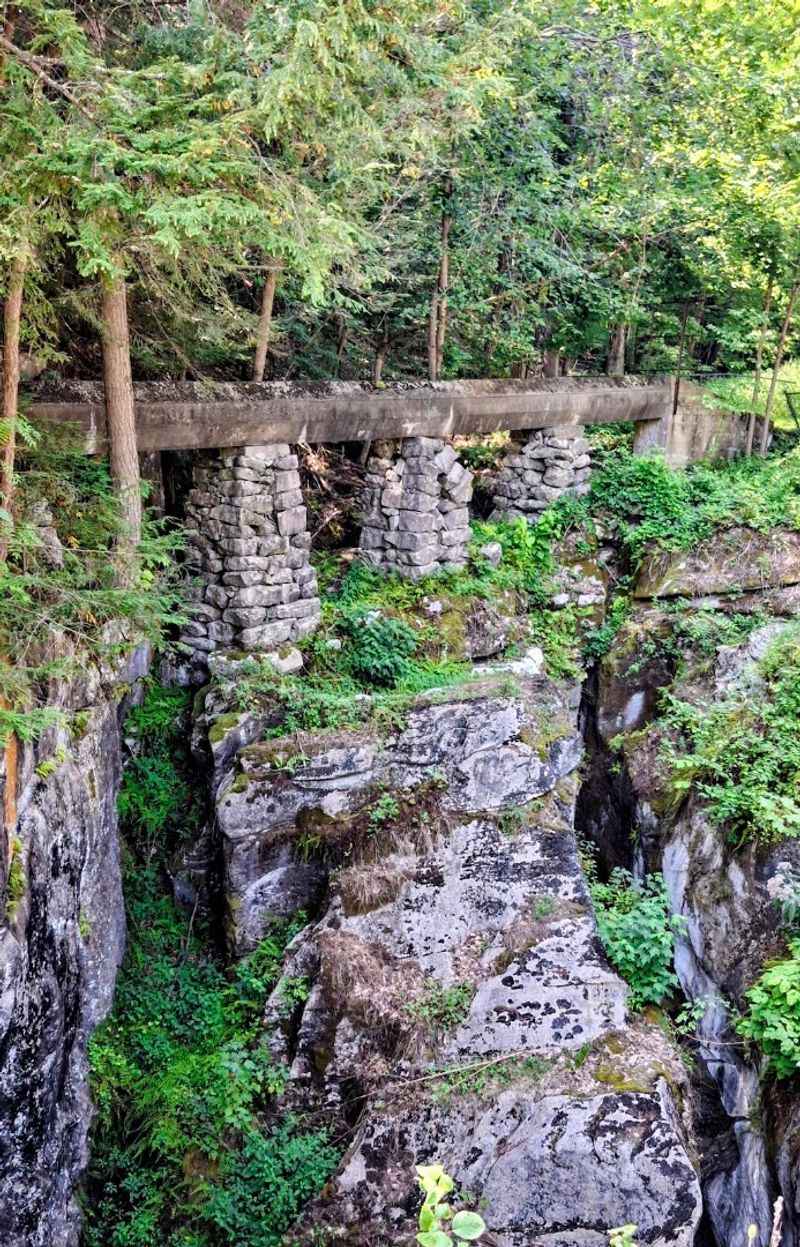
Half a billion years is a number that resists easy comprehension. The marble bedrock at Natural Bridge State Park is estimated to be around 550 million years old, making it one of the most ancient exposed formations in all of New England.
That age alone sets the tone for everything else at this remarkable site in North Adams, Massachusetts.
The natural white marble arch was shaped by glacial meltwater approximately 13,000 years ago, as the last ice age drew to a close.
Torrents of water surged across the landscape with enormous force, cutting through marble bedrock with relentless persistence.
Over thousands of years, that process hollowed out a gorge roughly 60 feet deep and left behind an arch that stands as the only formation of its kind in North America.
Hudson Brook still flows through that gorge today, continuing the same slow sculptural work that began long before humans arrived. The park functions as a living cross-section of geological time, where each layer of stone tells a chapter of Earth’s longer story.
Standing above the gorge, the scale of those ancient forces becomes surprisingly personal and immediate.
White Marble’s North American Exclusivity
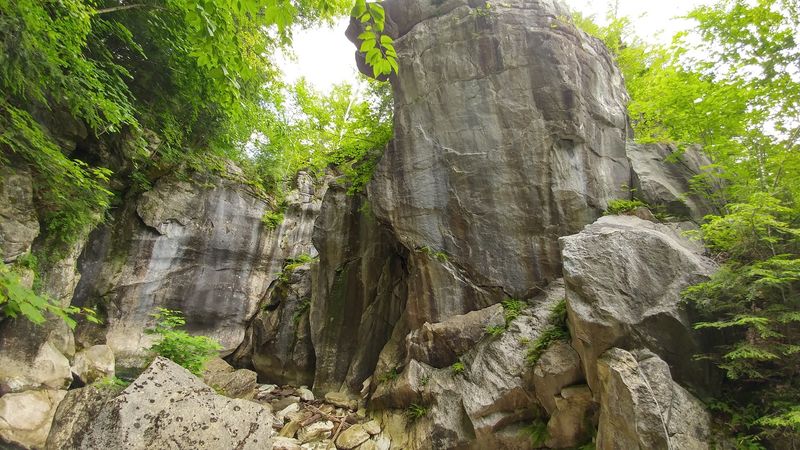
There is only one natural white marble arch on the entire continent. Not the largest, not the most famous, not one of several, but the only one.
That distinction belongs to Natural Bridge State Park, and it is not a casual claim. Geologists have confirmed the formation’s singular status, and no comparable structure has been identified anywhere else in North America.
The marble itself has a brightness to it that catches the eye on clear days. Its surface carries natural veining and texture, the result of metamorphic processes working on limestone over enormous spans of time.
Up close, the stone looks almost deliberate, as though something with patience and purpose shaped it carefully rather than accidentally.
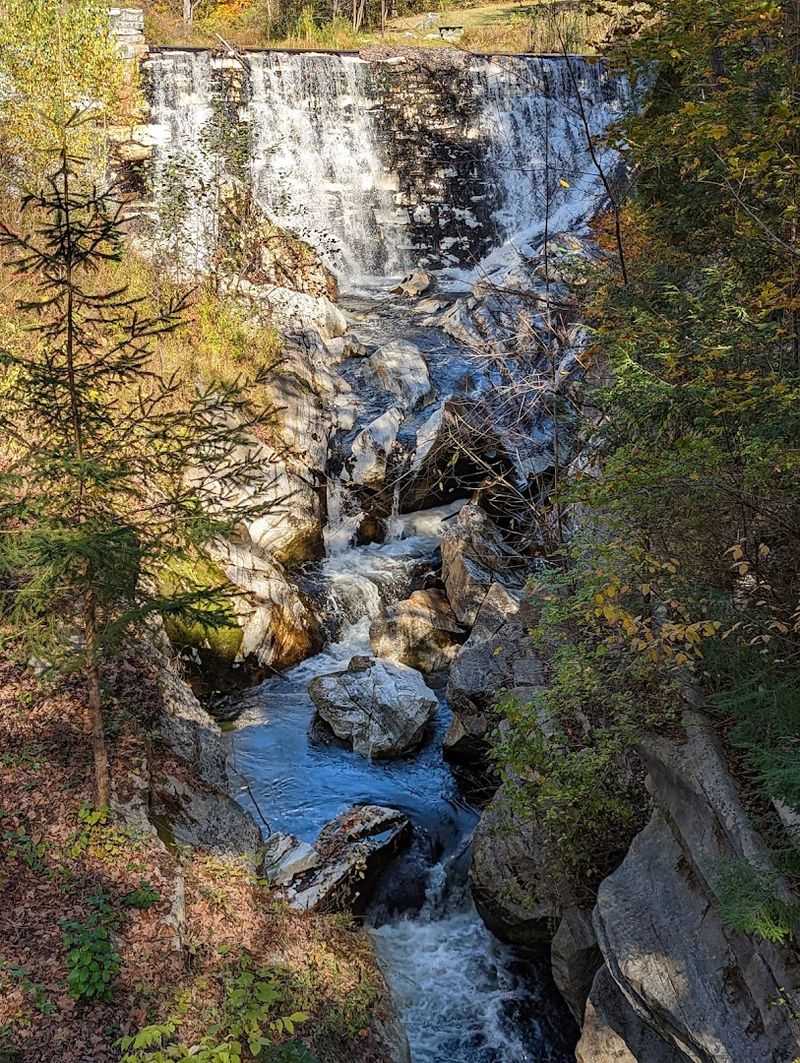
Alongside the natural arch, the park also features a man-made white marble dam, which holds its own distinction as the only structure of its kind and material on the continent.
The combination of a natural marble arch and a human-built marble dam in one compact location creates a layered experience that rewards close attention.
Both formations share the same luminous quality, a cool, clean whiteness that makes the surrounding forest look even greener by contrast.
Echoes Of Industry And Artistry
Before Massachusetts designated this land as a state park in 1985, it operated as a commercial marble quarry for well over a century.
The Hoosac Marble Quarry ran from 1810 until 1947, drawing workers, investment, and considerable regional attention to this part of the Berkshires.
The stone extracted here built structures and contributed to North Adams’s economic life during a formative period of American industry.
Nathaniel Hawthorne made the journey here in 1838, well before the quarry reached its peak activity.
He recorded impressions of the site with characteristic attention to atmosphere, noting the depth of the cave, its irregularity, and what he described as a stern, gloomy quality.
That a novelist of his sensibility found the place compelling says something about the emotional weight it carries.
Faint etchings left by quarry workers remain visible in the marble walls, small personal marks made by people who spent their working lives in this stone landscape.
These traces give the site a human dimension that purely natural formations rarely offer.
The quarry’s dramatic cliffside, still imposing after decades of abandonment, frames the park’s upper area with an architectural grandeur that no planner could have designed from scratch.
Hudson Brook’s Powerful Sculpture
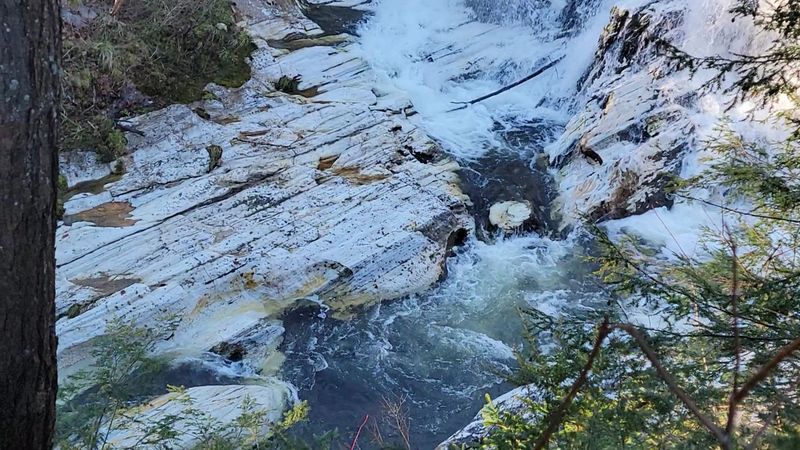
Water is patient in a way that nothing else in nature quite matches. Hudson Brook has been working on this landscape for thousands of years, and the evidence of that labor is on full display at Natural Bridge State Park.
The brook tumbles through a gorge roughly 60 feet deep, its surface catching light in shifting patterns as it moves between marble walls that rise steeply on both sides.
The sound of the water is constant throughout the park, a low, steady rush that changes pitch depending on where you stand.
Near the natural bridge, the brook passes directly beneath the arch, continuing its geological work with the same indifference to human timelines that shaped the formation in the first place.
The gorge walls carry the smooth, worn look of stone that has been in contact with moving water for a very long time.
Before reaching the gorge, the brook also descends through what many describe as a marble maze, a series of channels and surfaces shaped by centuries of flow.
This section adds texture to the walk, offering a close view of how water finds and widens every available path through resistant stone.
The brook is not incidental to the park’s story. It is the author of the entire landscape.
Pathways Along An Ancient Landscape
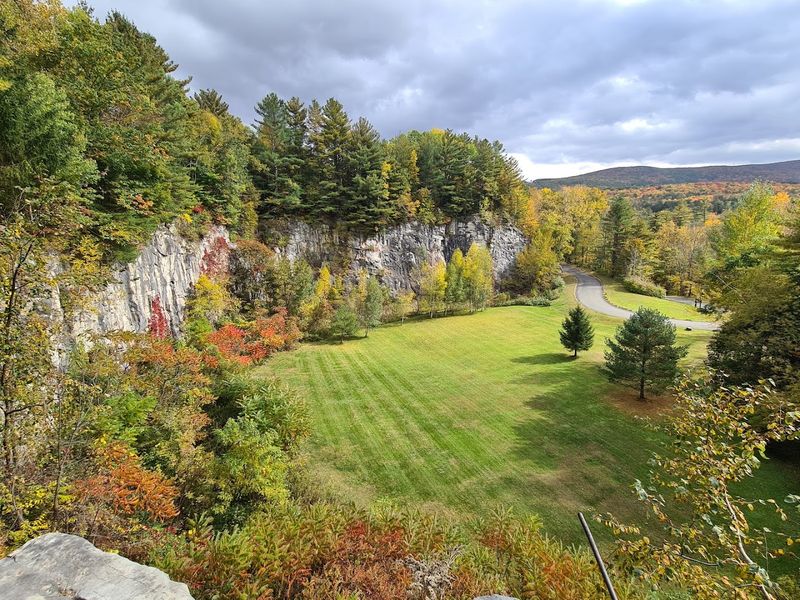
The trails at Natural Bridge State Park do not demand athletic ambition, but they reward attentiveness.
A wide, well-maintained path follows the ridgeline of the former quarry, offering elevated views of the marble cliffside below and the broader Berkshire landscape stretching toward the horizon.
The combination of geological drama and mountain scenery makes the walk feel more substantial than its modest length suggests.
Informational signs appear at regular intervals along the routes, explaining the geological and historical context of what surrounds you.
These markers cover everything from the mechanics of glacial erosion to the quarry’s operational history, providing enough detail to satisfy curious minds without overwhelming casual walkers.
The park manages to function as an outdoor classroom without losing any of its natural atmosphere.
Some sections closer to the gorge have been periodically closed for safety maintenance, which is worth checking before planning a specific route.
The paths that remain open still provide access to the marble waterfall, the quarry overlook, and several points where the brook is visible far below.
Picnic tables are available near the visitor center, making the park a reasonable destination for a relaxed afternoon. The terrain involves some stairs and uneven surfaces, so comfortable footwear makes a genuine difference.
Glacial Forces And Modern Discovery
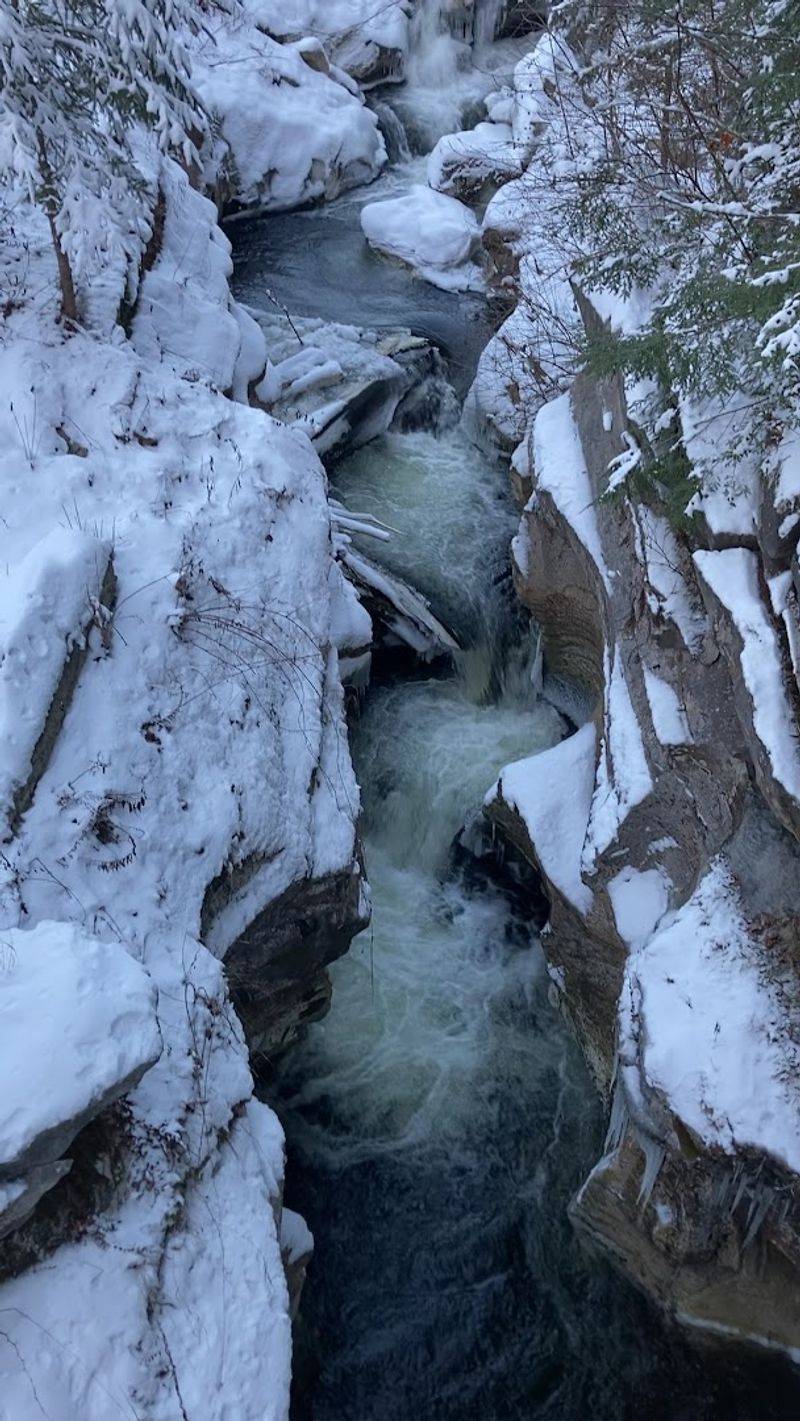
Around 13,000 years ago, the climate shifted and the glaciers that had covered much of North America began their long retreat. The meltwater they released did not flow gently.
It moved with enormous volume and velocity, carrying rock fragments that acted like natural sandpaper against the bedrock below.
At the site now known as Natural Bridge State Park, this process cut directly through ancient marble, exploiting every fracture and weak point in the stone.
The arch formed as water carved a tunnel through a section of marble that had a natural hollow running through it. Over time, the surrounding material eroded away while the arch itself proved structurally resilient enough to survive.
The result is a freestanding span of white marble, shaped entirely by ice-age hydrology, that has endured for more than thirteen millennia.
What makes this formation particularly valuable to geologists and educators is the clarity of the process it demonstrates. The gorge walls, the arch, and the continuing flow of Hudson Brook all tell the same story in sequential detail.
Few places in New England offer such an uninterrupted record of glacial action in a single, compact location. The park essentially preserves a chapter of Earth’s recent geological history in three dimensions.
The Art Of The Quarry At Twilight
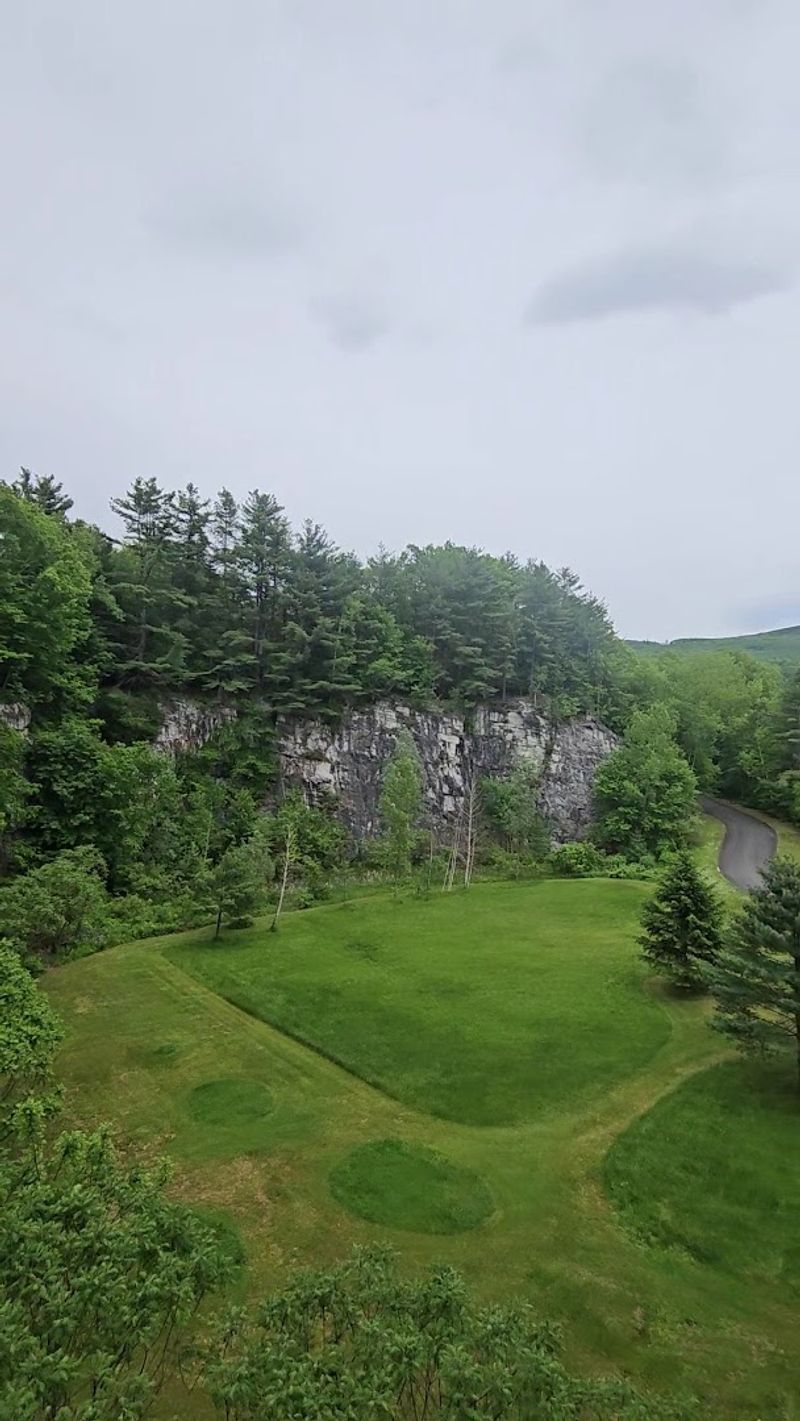
As the light fades each evening, Natural Bridge State Park offers something that most geological sites cannot: music.
The former Hoosac Marble Quarry serves as the setting for an ongoing sound installation called Music for a Quarry, created by composer Walter Fahndrich.
Ten speakers are positioned around the quarry’s perimeter, each emitting clear, sustained tones that interact with the marble surfaces and open air in ways that a conventional concert hall could never replicate.
The installation activates for fifteen minutes each evening at astronomical sunset, a moment calculated precisely by computer based on the quarry’s exact latitude and longitude.
The timing shifts slightly each day, following the natural calendar rather than a fixed schedule.
This attention to the site’s specific coordinates gives the experience an unusual intimacy, as though the music belongs to this particular piece of ground and nowhere else.
The quarry’s natural bowl shape creates acoustic properties that amplify and distribute sound in unexpected ways.
Tones that seem distant from one position become immediate from another, and the marble walls reflect frequencies with a clarity that open landscapes rarely produce.
For those who arrive in the late afternoon and stay through sunset, the park offers a complete sensory transition from the visual grandeur of daylight to something quieter, more contemplative, and genuinely rare.
Where Nature’s Grandeur Unfolds
Natural Bridge State Park is typically open from mid-May through mid-October, with daily hours running from 9 AM to 4:30 PM.
The park is located at McAuley Road, North Adams, MA 01247, and can be reached by phone at 413-663-6392.
The access road is narrow and single-lane in sections, so approaching with care and reasonable speed makes the arrival more comfortable for everyone.
The visitor center houses restrooms and a well-regarded diorama depicting quarry operations as they appeared around the 1940s.
This model provides useful context for the landscape outside, helping connect the current stillness of the abandoned site with the industrial activity that once defined it.
Dogs are welcome on leash, and the park accepts donations rather than charging a fixed entrance fee for most visitors.
What the park ultimately offers is a specific kind of experience: one where the natural and the historical are genuinely inseparable. The marble arch is not a backdrop for recreation, it is the reason the place exists at all.
The quarry walls, the brook, the trails, and even the evening music installation all orbit that central geological fact.
For anyone with a genuine interest in how the Earth works and what human industry has done with it, this park in the Berkshires delivers something worth the drive.