
Visit The Minnesota Heritage Farm Where An Authentic Old Fashioned Threshing Bee Still Thrives
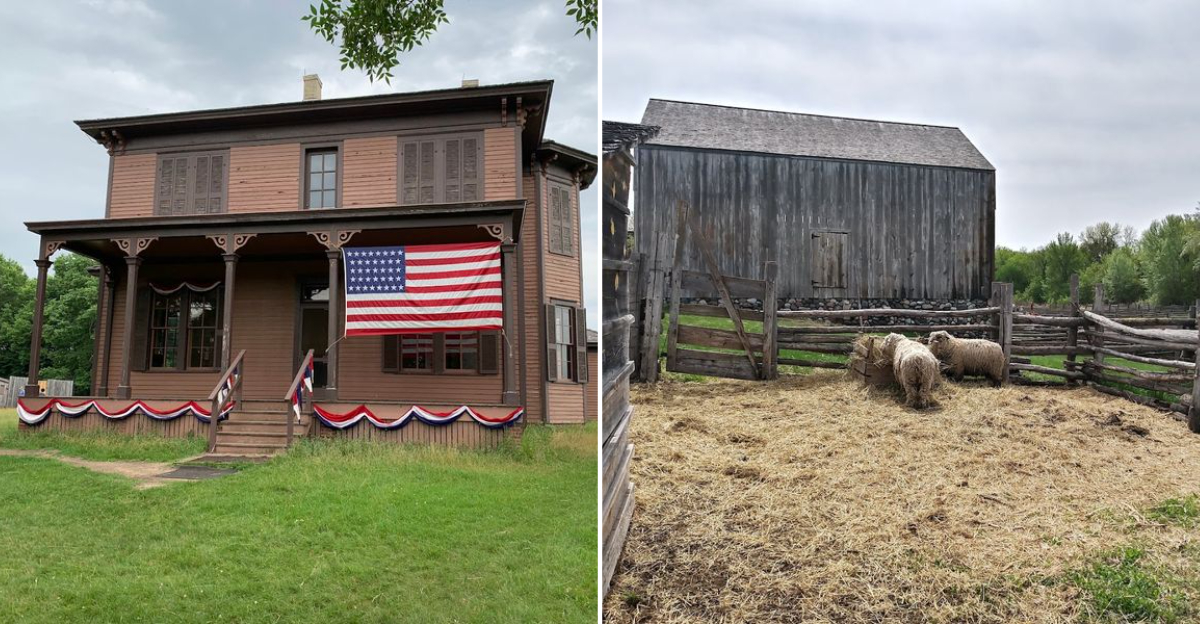
The sharp, metallic whistle of a vintage steam engine cuts through the morning air to signal the start of a grueling workday. Most modern agricultural events rely on static tractor displays and shiny museum plaques to explain the past.
This heritage farm rejects that passive approach by putting massive, century-old machinery right back into the dirt. Towering belts spin at high speeds to power the wooden threshing machines that separate grain from straw.
The entire field vibrates with mechanical power as thick smoke rises into the sky. Minnesota hosts this seasonal gathering where the brutal reality of early farming becomes a living spectacle.
Visitors watch crews toss heavy bundles of wheat into the grinding iron teeth of the processors. The air grows thick with the sweet smell of toasted coal and golden chaff.
This heavy labor turns a simple history lesson into a loud, sweat-soaked tribute to rural survival.
Historic Farming Methods Preserved
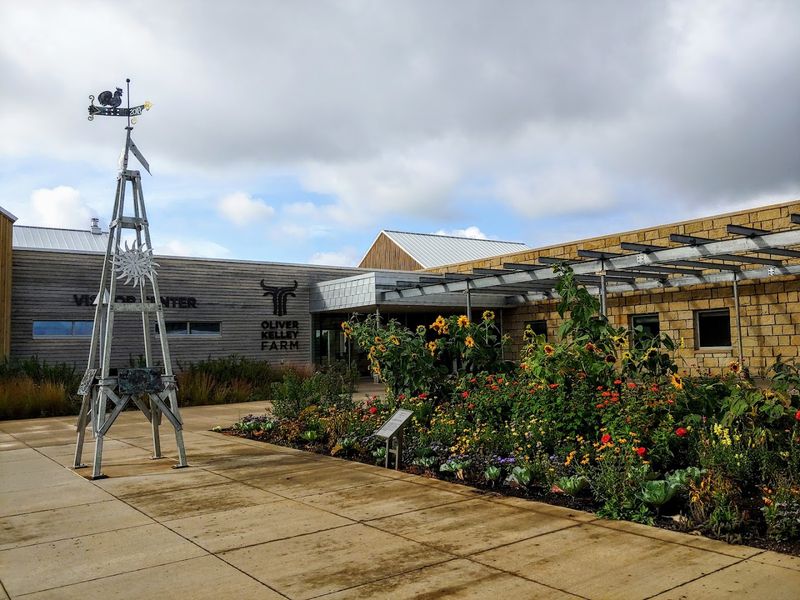
Entering the Oliver Kelley Farm feels like the calendar skipped backward about 160 years. Every farming method practiced here comes straight from the 1860s.
Nothing is faked or modernized for convenience.
Human and animal power do all the heavy lifting. You will see oxen pulling plows through real soil.
Horses haul loads across the farmstead just as they did back in Oliver Kelley’s day.
Crop rotation was a big deal in the 1860s, and the farm still follows those same cycles. Heirloom plant varieties fill the gardens, the kind you simply cannot find at a grocery store.
Costumed interpreters tend these gardens while explaining exactly why each plant was chosen.
Food preservation is another living lesson here. Interpreters demonstrate pickling, drying, and root cellaring using only period-appropriate tools.
Watching someone pack a root cellar for winter is oddly fascinating.
Self-sufficiency was survival back then, not a lifestyle trend. The farm shows what it actually took to feed a family through a Minnesota winter.
Every chore has a purpose, and every task connects to the next.
You can find this living piece of American agricultural history at 15788 Kelley Farm Rd, Elk River, MN 55330. Call ahead at +1 763-441-6896 to check current hours before you visit.
Traditional Threshing Bee Demonstrations
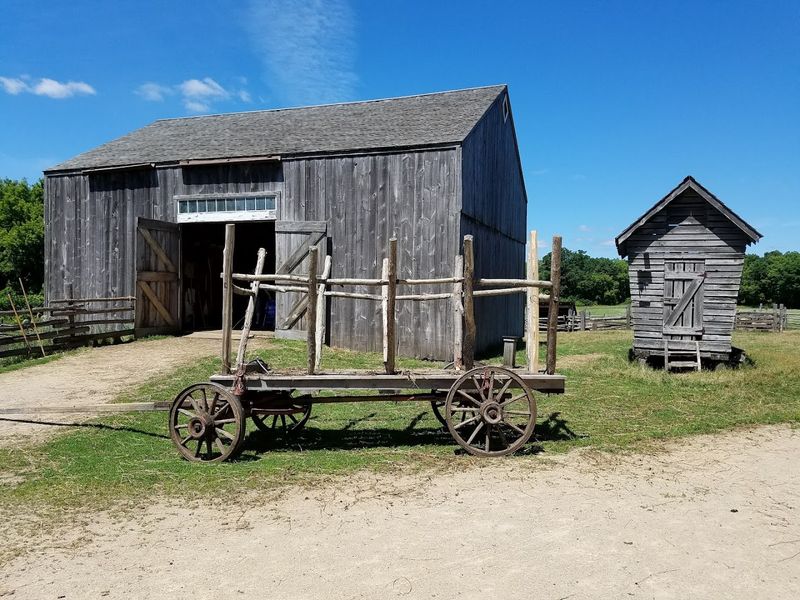
Threshing Days at Oliver Kelley Farm is the kind of event that makes you realize how much work went into a single loaf of bread. Threshing means separating grain from the plant stalk, and it was the single most important farm event of the entire year.
Neighbors helped neighbors during threshing season. It was a community effort, loud and exhausting and celebrated all at once.
That cooperative spirit is exactly what a threshing bee captures.
Visitors do not just watch here. You can actually carry grain bundles from the field to the threshing area.
Getting your hands on the process makes it click in a way that no textbook ever could.
The grain then gets fed into period equipment, and the whole machine rattles and hums. Straw flies, dust rises, and suddenly you understand why this event was a massive deal on the 19th-century farming calendar.
Oliver Kelley himself was deeply passionate about improving farm life across Minnesota. His work eventually helped lead to the founding of the National Grange, a powerful agricultural organization.
That legacy lives on every time the threshing equipment fires up.
Threshing Days draws families, school groups, and history enthusiasts every year. Mark your calendar early because this event fills up fast.
It is one of those rare experiences that feels genuinely irreplaceable.
Agricultural Tools And Equipment Evolution
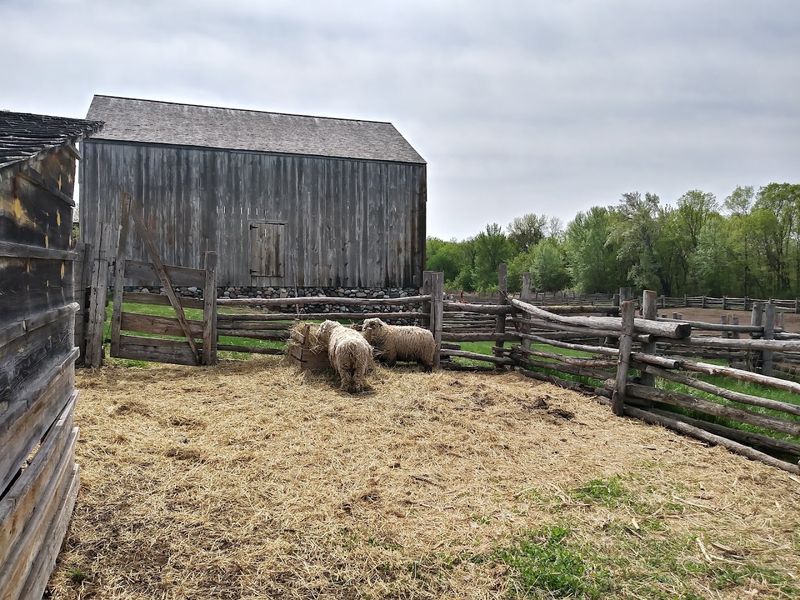
Oliver Kelley was not just a farmer; he was a genuine agricultural innovator. He was among the first in Minnesota to use a mechanical reaper, which was a revolutionary piece of equipment at the time.
That forward-thinking spirit shaped everything about this farm.
The machine shed at Oliver Kelley Farm holds a remarkable collection of antique tools. Some are immediately recognizable, and others will genuinely stump you.
Trying to guess what each tool was used for is honestly a fun little game.
Scythes, cultivators, seed drills, and hand-forged implements line the walls and floors. Each one tells a story about how labor-intensive farming used to be.
You start to appreciate modern equipment after about five minutes in there.
Kelley also installed one of the more advanced irrigation systems of his era. Water management was a serious concern for 1860s farmers, and clever solutions made the difference between a good harvest and a failed one.
The Farm Lab is where past meets present in a really compelling way. Modern agricultural technology is compared side by side with antique methods.
Students and visitors can see exactly how much farming has changed over 150 years.
Seeing these tools in person, rather than in a textbook illustration, gives them a completely different weight. History becomes real when you are standing next to a plow that actually broke Minnesota soil long ago.
Seasonal Farming Practices Explained
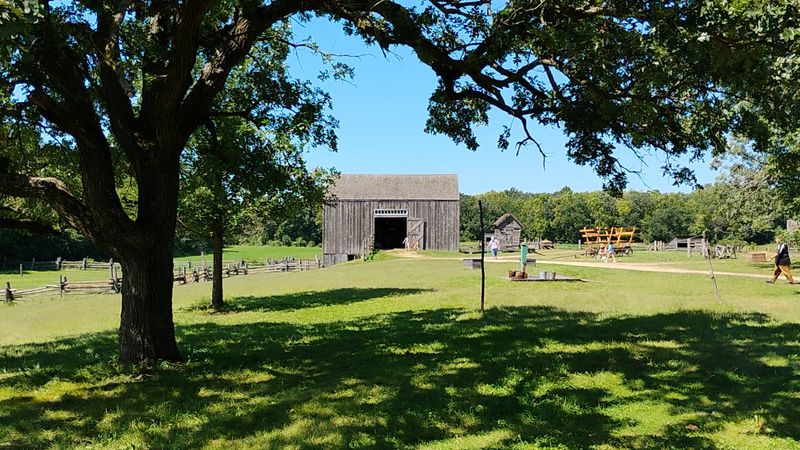
Farming in the 1860s was completely ruled by the seasons. There was no overriding the calendar with modern technology or climate-controlled storage solutions.
The farm at Oliver Kelley captures that seasonal rhythm beautifully throughout the year.
Spring means planting, and you can watch interpreters prepare soil and sow heirloom seeds using hand tools. The pace is slower than modern farming, but it is also surprisingly meditative to observe.
Every step is intentional and connected to the one before it.
Summer brings fieldwork that visitors can actually join. Late summer is especially active because oats, wheat, and hay all need harvesting before the Minnesota weather turns.
Helping bring in a crop, even symbolically, gives you real respect for farm labor.
The root cellar becomes the star of autumn. Produce gets stored carefully to last through the winter months.
Visitors can help fill the cellar and learn which vegetables survived storage best in the 1860s.
Winter on a heritage farm is quieter but still busy. Animal care, equipment repair, and food processing keep everyone occupied even when snow covers the fields.
The farm interprets winter life honestly, not romantically.
Students who visit through school programs participate in seasonal fieldwork appropriate to whatever time of year they come. The experience changes completely depending on the season.
That is actually a great reason to visit more than once throughout the year.
Animal Care And Husbandry Techniques
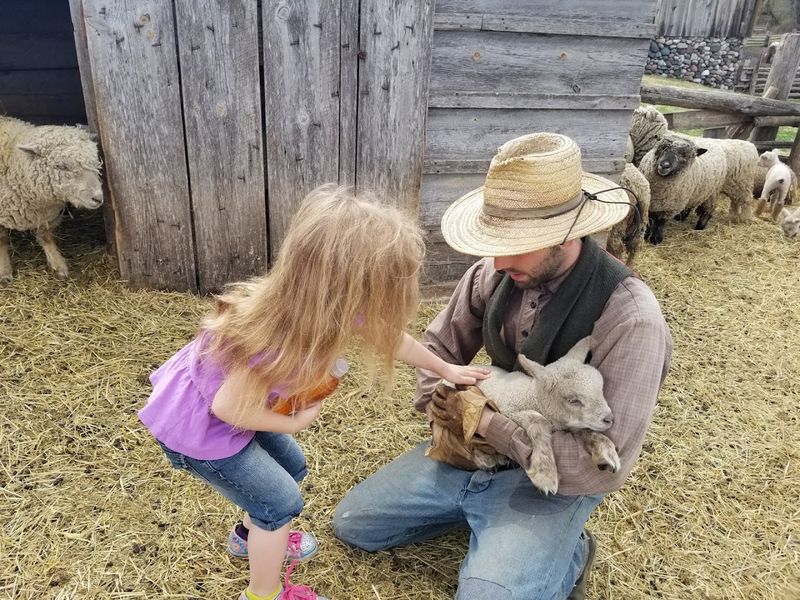
The animals at Oliver Kelley Farm are not random barn residents. Every species was carefully chosen to reflect what a working Minnesota farm would have kept in the 1860s.
That historical accuracy makes meeting them feel like a genuine encounter with the past.
Duroc hogs and Berkshire hogs roam the property, the same breeds that Minnesota farmers relied on for food and income. Berkshire pigs were especially popular in the 19th century because of their hardiness.
Oliver Kelley himself penned his pigs rather than letting them roam freely, which was actually a more controlled farming approach for the era.
Southdown sheep provide wool, which was a critical resource before synthetic fabrics existed. Watching a sheep get sheared by hand is a skill demonstration that most people have never seen live.
It is far more precise and careful than you might expect.
Shorthorn cattle and oxen are among the most impressive residents. Blaze, a massive ox on the property, weighs around 3,000 pounds and tends to become everyone’s favorite immediately.
Oxen were the workhorses of 1860s farming, pulling plows and hauling heavy loads daily.
Horses and chickens round out the farmstead population. Chickens cluck around the yard while horses stand ready for fieldwork demonstrations.
Animal care techniques demonstrated here show just how much knowledge and attention livestock management actually requires.
Community Events And Rural Festivals
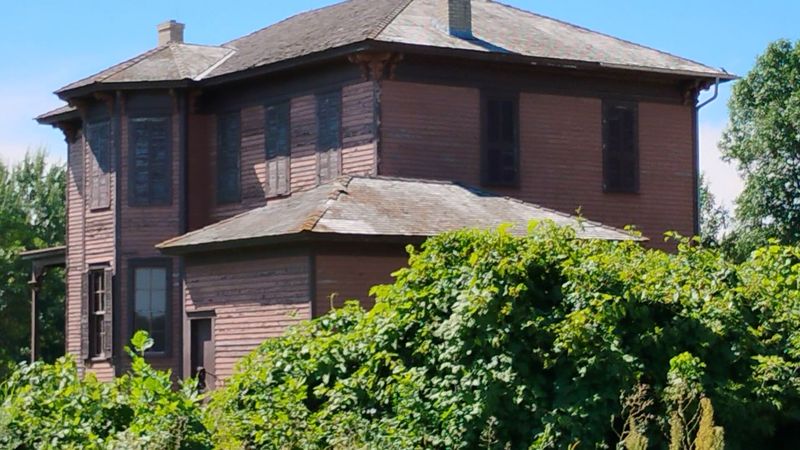
Oliver Kelley Farm is not a quiet museum that you walk through in silence. The event calendar here is genuinely lively and changes with the seasons.
There is almost always something specific to come back for.
Threshing Days is the crown jewel of the annual event lineup. It recreates the community spirit of a 19th-century threshing bee with hands-on participation for visitors of all ages.
Watching and joining the grain harvest process is the kind of experience that sticks with you.
Summer brings foraging events focused on wild edibles native to the Minnesota landscape. Learning which plants were gathered by 1860s farm families adds a whole new layer to the history.
It is practical knowledge wrapped inside a fascinating historical story.
Harvest Days in autumn is perfect for families looking for seasonal activities with real substance. Visitors help with fieldwork, fill the root cellar, and learn crafts like making corn husk dolls.
These are not tourist gimmicks but actual skills that farm families depended on.
The seasonal nature of the events means the farm feels different every single time you visit. Spring planting looks nothing like autumn harvesting, and summer foraging is its own entirely separate world.
Repeat visitors consistently say the experience keeps evolving in ways that feel fresh.
Checking the Minnesota Historical Society website before your visit is smart planning. Event schedules update regularly, and some programs require advance registration.
The website is mnhs.org/kelleyfarm.
Farmstead Architecture And Layout
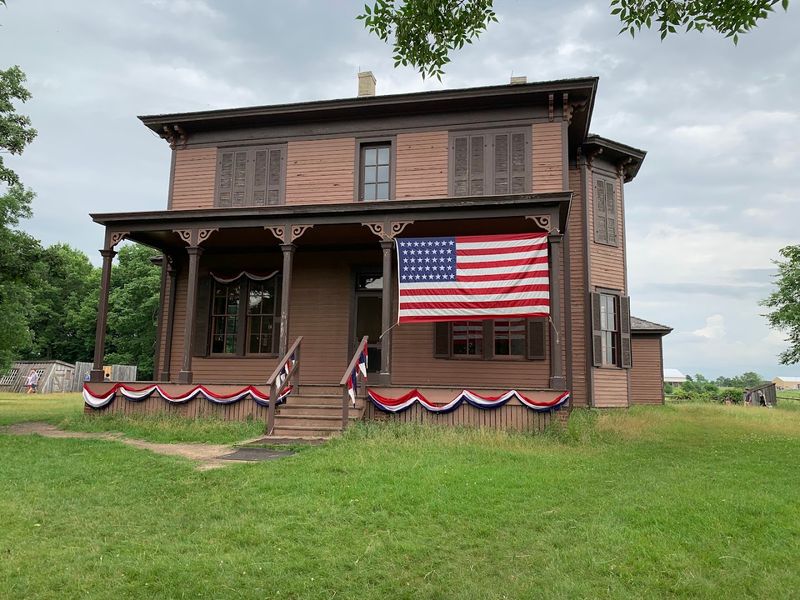
The buildings at Oliver Kelley Farm are not reconstructions built to look old. These are carefully restored original structures that have stood through Minnesota winters for well over a century.
That authenticity changes how you experience walking among them.
Kelley’s frame barn is one of the most historically significant structures on the property. It was among the first barns of its kind built north of St. Anthony, which was a major settlement in early Minnesota.
Standing inside it, you can feel the scale of ambition that went into building it.
The farmhouse is an Italianate-style building, which was a fashionable architectural choice for prosperous 1860s families. The style features decorative details and a more formal layout than a simple frontier cabin.
Kelley clearly wanted his home to reflect his status as a progressive farmer.
The root cellar is the oldest structure on the entire property. Its rock walls date back to approximately 1850, making them older than Minnesota statehood itself.
Running your hand along those walls is a quietly powerful moment.
Trails connect the various structures and wind through prairie, woodland, and riverbank areas. The Mississippi River runs along the property edge, adding a scenic backdrop that feels almost cinematic.
Rocking chairs near the farmstead overlook the fields and are a perfect spot to absorb the whole landscape.
The layout of the farmstead was intentional, designed for efficient workflow between barn, fields, cellar, and house. Every building placement made daily farm life more manageable.
Educational Programs For All Ages
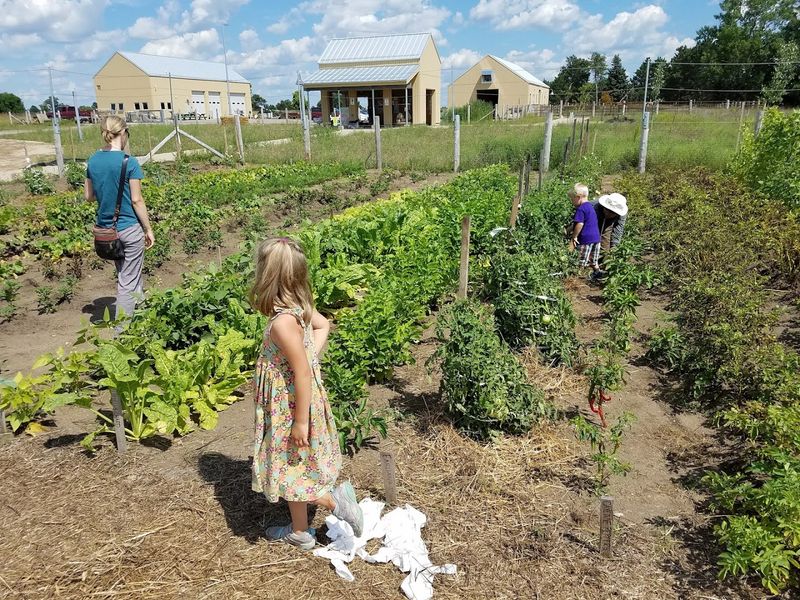
Education at Oliver Kelley Farm goes far beyond handing out pamphlets. The programs here put participants directly inside the experience of 1860s farm life.
That immersive approach is what makes the learning actually stick.
Field trips called Farming Through the Seasons are designed for school groups and follow the agricultural calendar. Students do not just observe; they participate in actual farm chores appropriate to the season.
Meeting the animals and tending the gardens are regular parts of the curriculum.
The Farm Lab is a modern educational facility that sits alongside the historic farmstead. It connects 19th-century farming practices to current agricultural science in a way that makes both more understandable.
Seeing old and new side by side sparks genuinely interesting conversations.
Adult visitors are equally well served by the programming here. Historical teatime events, foraging workshops, and architecture tours are all part of the seasonal offering.
The farm does not assume that education is only for kids.
Costumed interpreters are a core part of every educational experience on the property. They answer questions, demonstrate techniques, and stay in character in ways that make history feel alive rather than archived.
Their depth of knowledge about 1860s farm life is consistently impressive.
Groups can also reserve space for special events and conferences. The facilities blend historical atmosphere with modern amenities in a way that works for both learning and gathering.
Booking ahead through mnhs.org/kelleyfarm is the best way to secure your spot.