
This Massive Flower Field In California Is So Surreal, You’ll Think You’re In A Dream
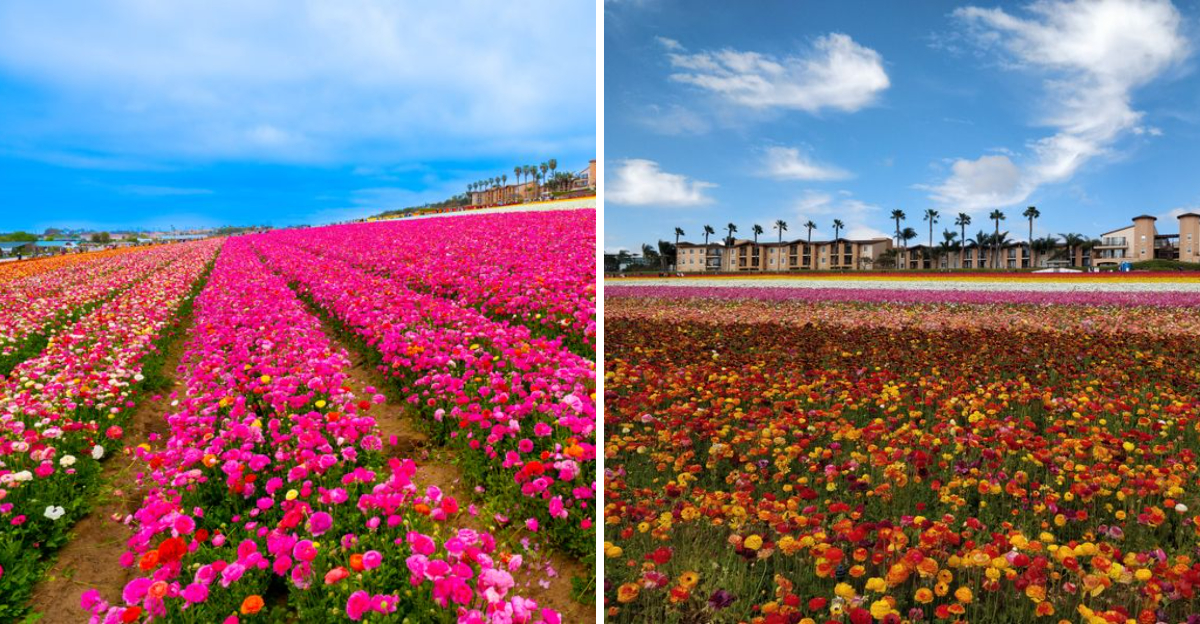
Colour arrives before words do at The Flower Fields At Carlsbad Ranch. Each spring, fifty acres along Paseo Del Norte erupt into bold stripes of ranunculus that feel more imagined than real.
What begins as a simple visit quickly turns into slow wandering through waves of colour that shift with the light. Even seasoned travellers tend to pause here, caught off guard by just how surreal the landscape feels in person.
I found myself lingering longer than expected, reluctant to leave a scene that felt more like a memory in the making than a stop on an itinerary.
Fifty Acres Of Colour That Stretch As Far As The Eye Can See
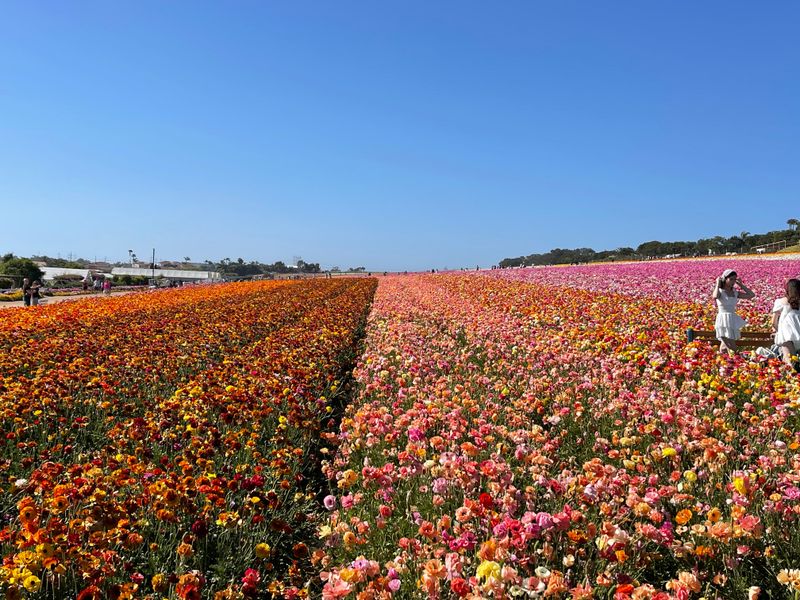
The sheer scale of The Flower Fields catches most visitors off guard. Fifty acres may sound manageable on paper, but standing at the entrance and watching those striped rows disappear toward the horizon creates a moment of genuine disbelief.
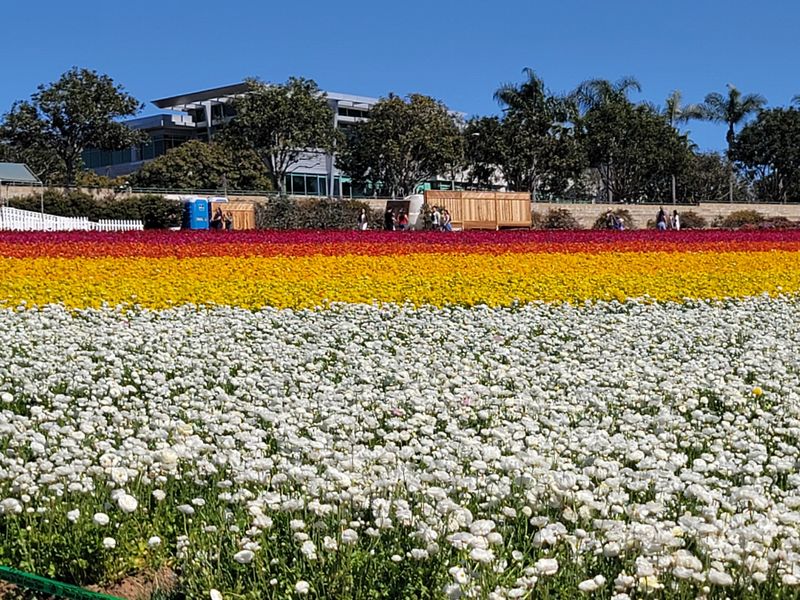
The property unfolds in waves of pink, orange, yellow, red, and white, each color occupying its own designated strip.
Walking the full perimeter takes roughly two miles, and the landscape shifts with every angle. Some visitors compare it to standing inside a rainbow that has been stretched flat across the earth.
Others mention feeling small in the best possible way, surrounded by something both carefully planned and wildly abundant.
The fields have operated as a working farm for over a century, and that agricultural heritage remains visible in the organized layout. Rows run parallel with military precision, yet the overall effect feels anything but rigid.
Breeze moves through the petals in rippling patterns, and the ocean air keeps temperatures comfortable even on sunny afternoons.
Ranunculus Blooms That Create The Field’s Signature Striped Look
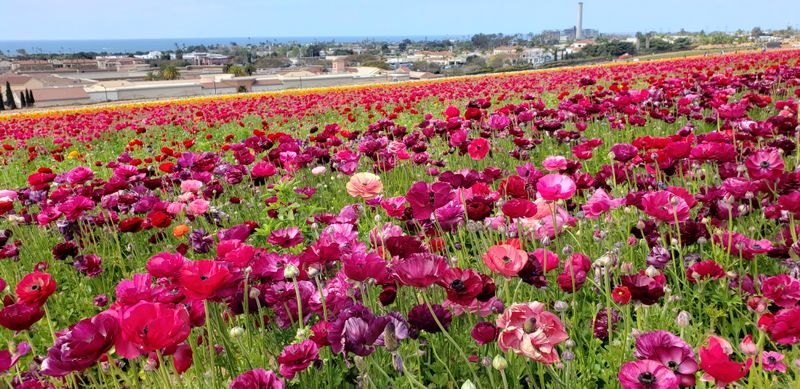
Ranunculus flowers form the backbone of the entire display, and the variety grown here goes by the name Giant Tecolote. These blooms produce dense, layered petals that resemble tissue paper stacked in concentric circles.
Each flower head can reach the size of a softball when fully opened, and the color saturation runs deeper than most garden varieties.
The striped appearance comes from planting single colors in long, unbroken rows. Farmers rotate the palette each year based on bulb availability and growing conditions, so no two seasons look identical.
Some years favor warm tones, while others lean heavily into purples and whites.
Ranunculus originated in Asia and made its way to California through European seed companies in the early twentieth century. The climate along the Carlsbad coast proved ideal for commercial cultivation.
Cool nights and mild days encourage strong root development, and the flowers thrive in well-drained soil that the ranch has spent generations perfecting.
A Carefully Cultivated Landscape That Feels Almost Unreal
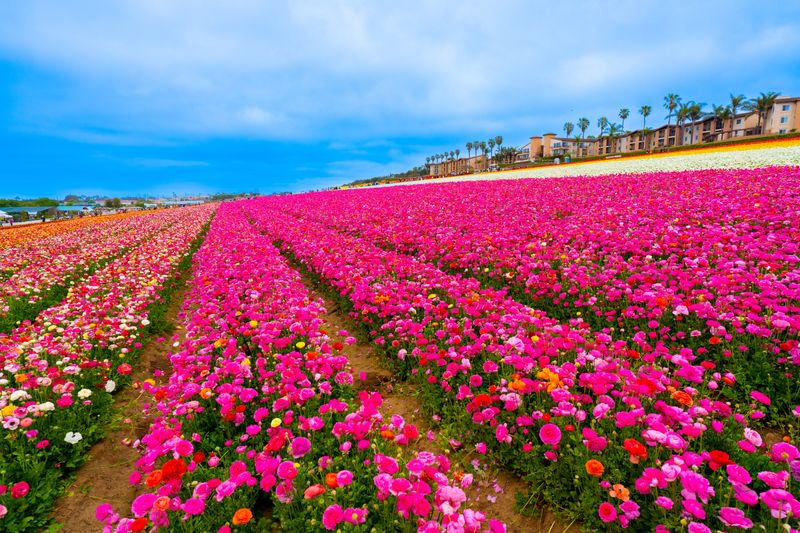
Nothing about The Flower Fields happens by accident. Bulbs get planted in late fall after soil preparation that involves testing, amending, and careful irrigation planning.
Workers space each bulb by hand to ensure consistent growth patterns, and the entire operation follows a timeline refined over multiple generations. The result looks effortless, but thousands of hours go into creating that illusion.
Paths wind through the property in deliberate curves that guide visitors without forcing a single route. Viewing platforms appear at strategic points where the color combinations create the strongest visual impact.
Benches sit in shaded spots, and the overall design encourages slow movement rather than rushed photography sessions.
The fields operate only during peak bloom season, typically from March through early May. This limited window adds to the sense of urgency and occasion.
Visitors know they cannot return next weekend if schedules conflict, so attendance feels more intentional and the atmosphere carries a celebratory edge.
Spring Timing That Turns A Short Season Into A Major Event
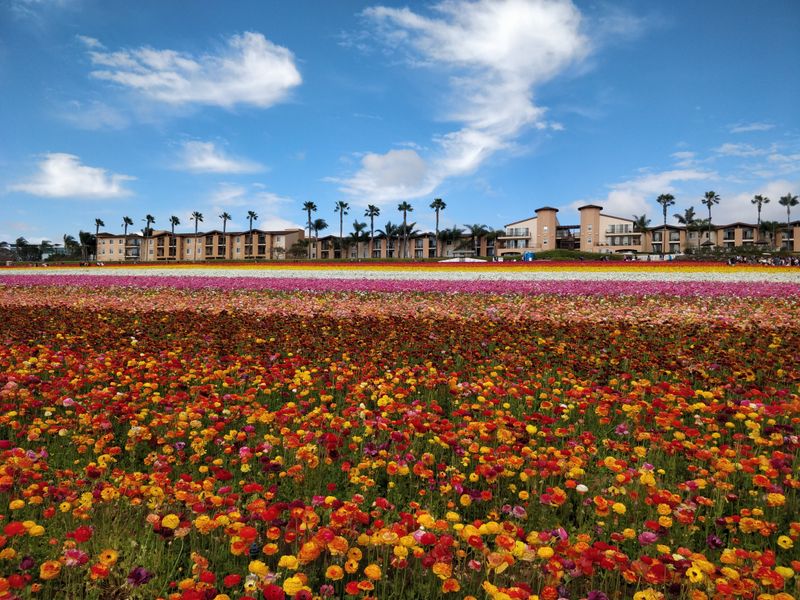
Spring bloom season transforms The Flower Fields into one of Southern California’s most anticipated annual events. The attraction opens only when flowers reach peak color, which usually falls between early March and the first week of May.
Weather patterns dictate exact dates, and the ranch monitors conditions closely before announcing opening day each year.
This compressed timeline creates a sense of urgency that drives ticket sales and visitor enthusiasm. Families plan trips around bloom forecasts, and local residents check social media updates to catch the fields at their most vibrant.
The temporary nature of the display makes each visit feel more significant than a permanent garden ever could.
Weekday mornings offer the calmest experience, with smaller crowds and softer light for photography. Weekend afternoons see the highest attendance, particularly around Mother’s Day when the fields become a popular destination for multi-generational outings.
Online ticket purchases are required, and popular dates sell out weeks in advance.
Ocean Breezes And Coastal Light That Enhance The Dreamlike Effect
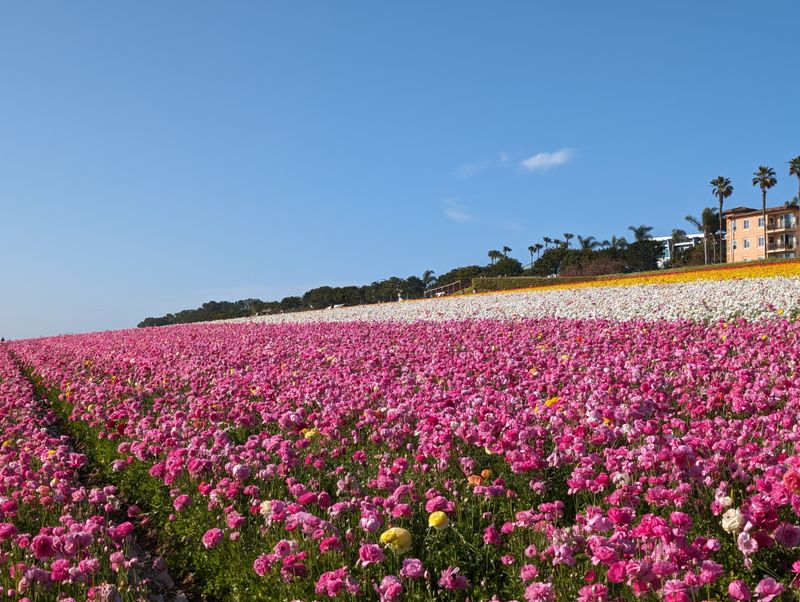
Location matters more than most visitors realize before arriving. The Flower Fields sit less than two miles from the Pacific Ocean, and that proximity shapes the entire sensory experience.
Coastal breezes move constantly across the property, carrying salt air and keeping temperatures moderate even during warmer spring days. The wind creates motion in the flowers, turning static rows into something fluid and alive.
Marine layer fog often rolls inland during morning hours, softening light and creating atmospheric conditions that photographers particularly appreciate. Colors appear more saturated under diffused sunlight, and the mist adds depth to distance shots.
By midday the fog usually burns off, revealing sharp blue skies that provide dramatic contrast against the blooms.
This coastal microclimate also extends the bloom period compared to inland locations. Cooler nights slow petal deterioration, and consistent moisture levels from ocean air help flowers maintain their peak appearance for several weeks.
The ranch takes full advantage of these natural conditions.
Paths And Viewing Areas Designed For Slow Wandering
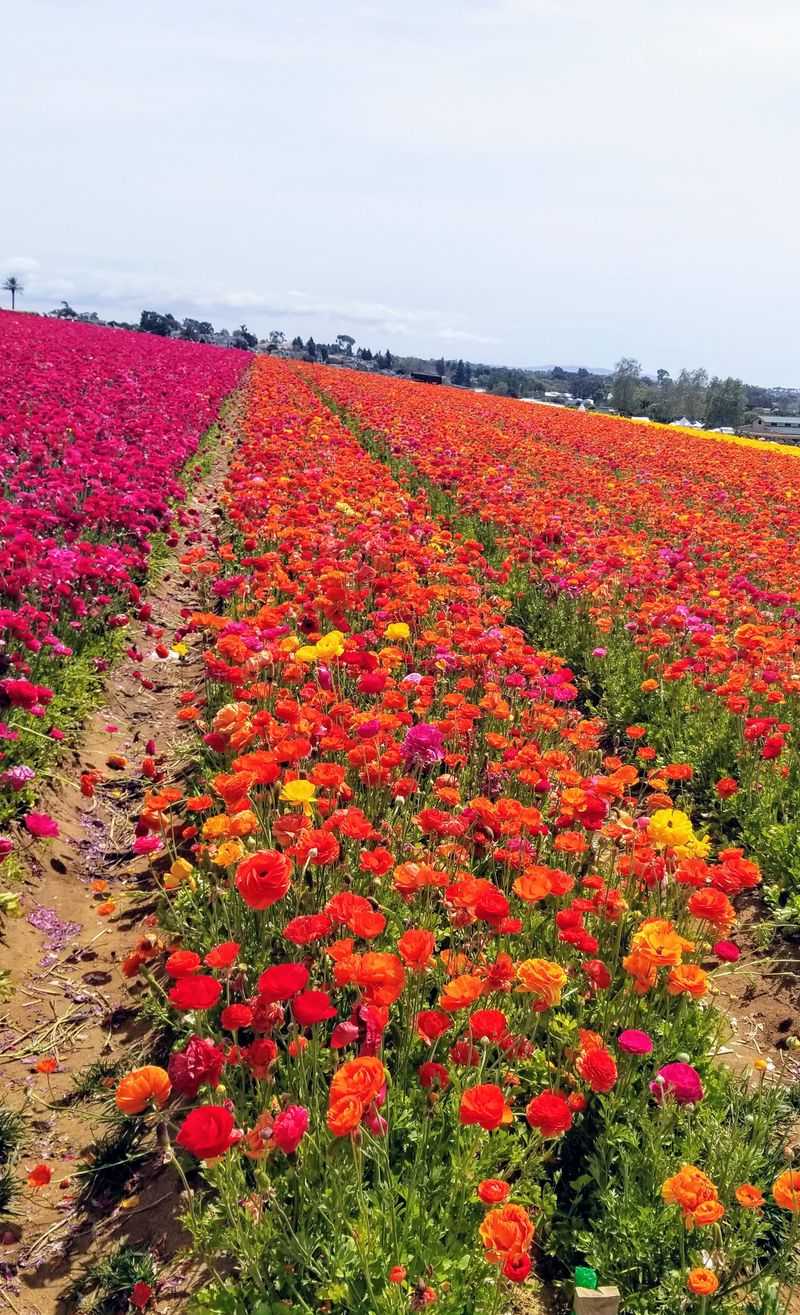
The layout at The Flower Fields encourages exploration rather than efficiency. Gravel paths curve through the property in loops that allow visitors to choose their own pace and direction.
Some routes cut straight through the center for quick overviews, while others meander along the perimeter where additional plantings and specialty gardens add variety to the ranunculus displays.
Viewing platforms rise at intervals throughout the fields, offering elevated perspectives that reveal the full scale of the striped patterns. These platforms also serve as gathering spots where families regroup and visitors rest between walking sections.
Benches appear regularly along main paths, positioned to take advantage of shade or particularly striking color combinations.
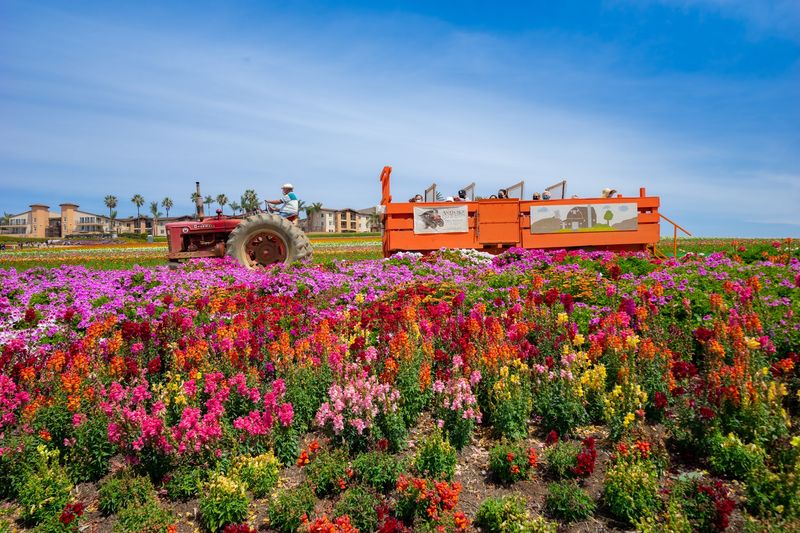
A tractor-drawn wagon ride provides an alternative for visitors who prefer not to walk the full distance. The ride covers the entire property while an audio guide shares farming history and cultivation details.
The cost runs around eight dollars per person beyond general admission, and the experience appeals particularly to families with young children or guests with mobility concerns.
Why The Flower Fields Look Different Every Single Year
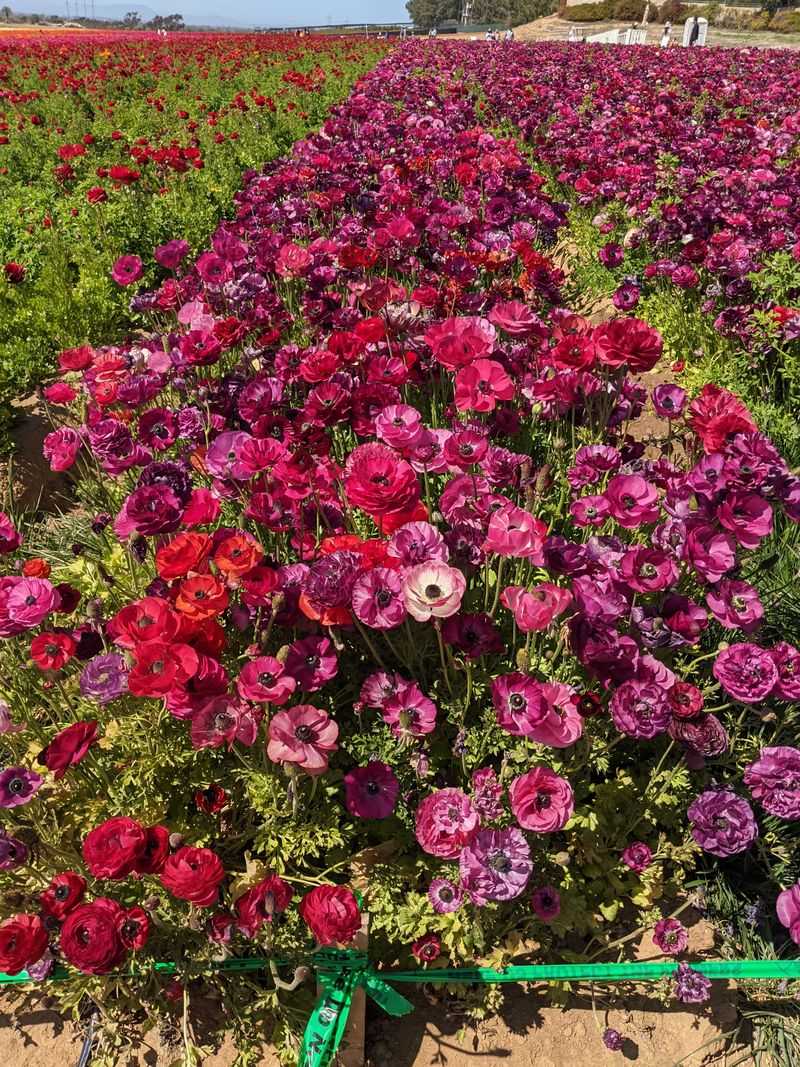
Repeat visitors often comment on how dramatically the fields change between seasons. Color distribution shifts based on bulb availability, market demand for cut flowers, and experimental plantings that test new varieties.
The ranch operates as a commercial flower farm first and tourist attraction second, so practical growing considerations always influence the final layout.
Some years favor warm palettes with heavy emphasis on coral, peach, and yellow tones. Other seasons lean into jewel colors with deep reds, purples, and magenta taking prominence.
White and cream varieties appear consistently but in varying quantities. This rotating palette keeps the experience fresh even for annual visitors.
Growing conditions also play a role in how the season unfolds. Rainfall patterns, temperature fluctuations, and soil health all affect bloom timing and flower quality.
The ranch maintains detailed records going back decades, but nature still introduces variables that make each spring unique. This unpredictability adds to the appeal rather than detracting from it.
The Role Of Generations Of Farming In Shaping The Display
The Ecke family has farmed this land for over a century, and their agricultural expertise shows in every aspect of the operation. What began as a poinsettia growing business eventually expanded to include ranunculus cultivation, and the family developed specialized techniques for maximizing bloom quality in coastal conditions.
This accumulated knowledge cannot be replicated quickly or easily.
Soil management represents one area where generational experience proves invaluable. The ranch maintains detailed records of crop rotation, amendment applications, and drainage improvements dating back decades.
Workers know which sections tend toward clay and which drain too quickly, adjusting planting strategies accordingly. This attention to soil health directly impacts flower size and color intensity.
The family’s commitment to maintaining the fields as a public attraction alongside commercial operations reflects a broader philosophy about land stewardship and community connection. They could easily maximize profits by focusing solely on wholesale flower production, but the decision to share the spring display with visitors has become part of the ranch’s identity.
A Rare Blend Of Agriculture And Artistry
The Flower Fields occupy an unusual position between functional farm and designed landscape. The ranunculus grown here serve commercial purposes, supplying florists and wholesale buyers throughout the region.
Yet the planting arrangement clearly considers visual impact alongside practical growing needs. This dual purpose creates an experience that feels both authentic and curated.
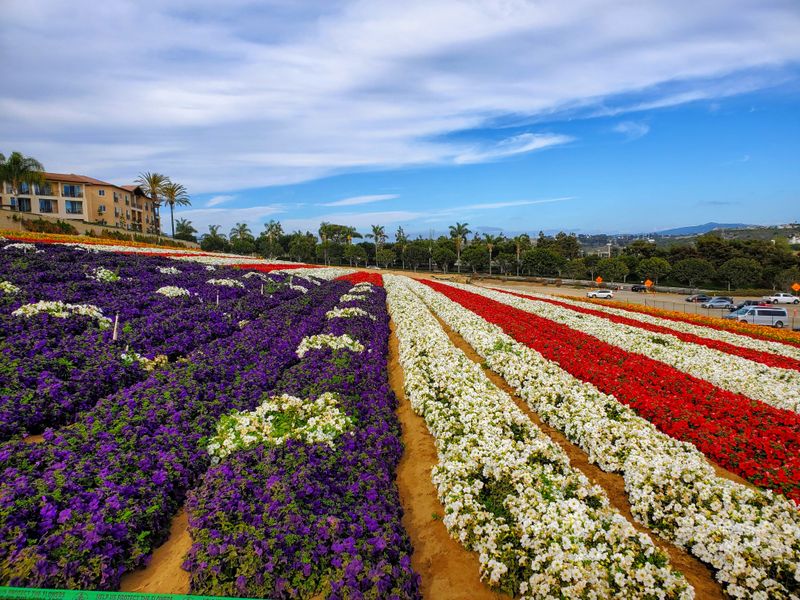
Color blocking happens with intention, but the patterns also allow for efficient harvesting and field maintenance. Paths provide visitor access while serving as necessary routes for farm equipment and workers.
Even the timing of public access aligns with the commercial harvest schedule, opening after enough flowers have matured but before the fields need clearing for next season’s crop.
This balance between agriculture and aesthetics extends to additional features scattered throughout the property. A sweet pea maze offers fragrant exploration, while demonstration gardens showcase companion plants and experimental varieties.
Aviaries housing butterflies and exotic birds add movement and interest beyond the flowers themselves. Each element serves multiple purposes without feeling forced or artificial.
Why Photos Never Quite Capture The Scale In Person
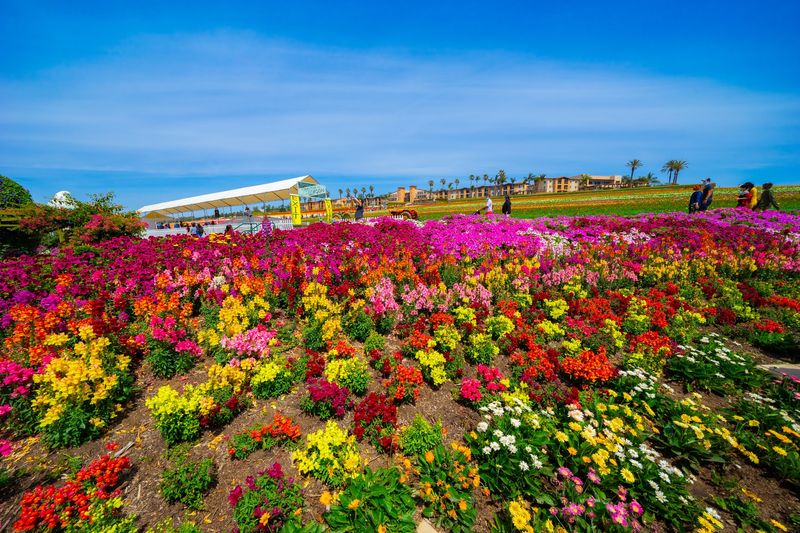
Social media feeds fill with Flower Fields images each spring, yet nearly every visitor mentions how photographs fail to convey the actual experience. The scale simply does not translate through a camera lens.
Standing inside fifty acres of blooms creates a three-hundred-sixty-degree immersion that flattens into two dimensions and loses its impact.
Color also reproduces differently than the eye perceives it. Cameras struggle with the intensity of certain ranunculus hues, particularly the deep reds and vibrant oranges that appear almost fluorescent in person.
Screens cannot replicate how sunlight interacts with layered petals, creating depth and luminosity that static images miss entirely.
The sensory elements beyond sight also contribute to why photos feel incomplete. Ocean breeze carrying floral scent, the sound of wind moving through thousands of stems, the texture of gravel paths underfoot, the temperature contrast between sun and shade—these components form essential parts of the experience that no photograph can preserve.
Visitors consistently report that the reality exceeds their expectations despite seeing hundreds of images beforehand.
How The Surrounding Hills Make The Colours Feel Endless
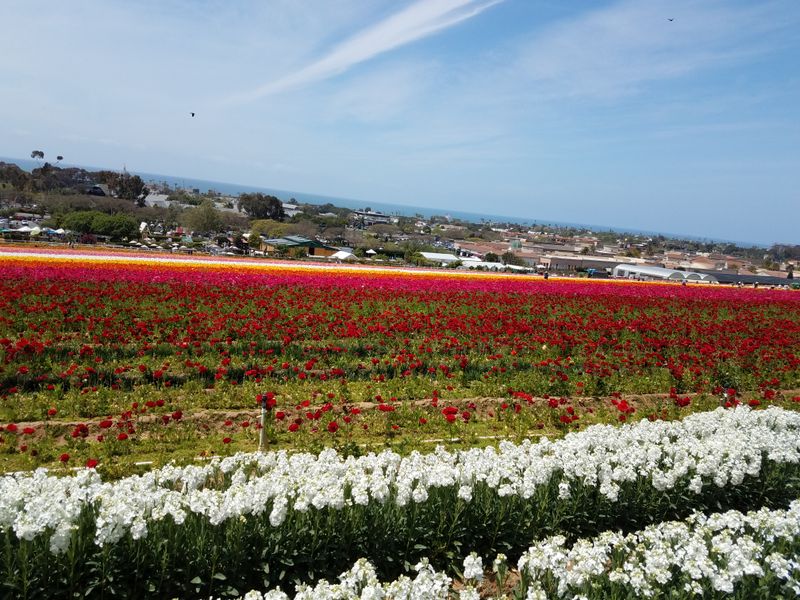
Geography plays a supporting role in the overall visual drama at The Flower Fields. The property sits in a gentle valley with coastal hills rising on multiple sides, creating a natural amphitheater effect that frames the blooms.
This topography makes the fields feel both contained and expansive simultaneously, with flower rows appearing to flow toward the hillsides like colorful rivers.
The hills also provide depth perception that enhances the sense of scale. Visitors can gauge distances by referencing the ridgelines, making the fifty-acre spread feel more comprehensible while still impressive.
The contrast between green hillsides and vibrant flower colors creates visual tension that holds attention longer than a flat landscape might.
Elevation changes within the fields themselves add another layer of interest. Some sections slope gently upward or downward, creating sight lines that reveal different color combinations depending on where visitors stand.
This subtle variation in grade prevents the experience from feeling monotonous despite the repetitive nature of row planting.
A California Tradition That Still Feels Surprising
Despite operating for decades and attracting hundreds of thousands of visitors, The Flower Fields maintain an element of surprise that keeps the experience feeling fresh. Part of this comes from the annual closure and reopening cycle, which prevents the attraction from becoming background scenery that locals ignore.
The limited season forces people to prioritize visits and approach each spring as a special occasion.
The fields also benefit from their position slightly off the main tourist circuit. While Carlsbad draws plenty of visitors to its beaches and Legoland, The Flower Fields operate on a smaller scale without the commercial infrastructure of major theme parks.
This relative simplicity works in their favor, creating an experience that feels more personal and less manufactured.
Many California families have made annual pilgrimages to the fields for multiple generations, yet each visit brings something new. Children who visited as toddlers return with their own kids, and the cyclical nature of the blooms mirrors the cycles of family life.
This tradition has staying power precisely because it changes just enough each year to reward repeat visits.