
This Mississippi Museum Hides A Swamp Full Of Alligators And A Wall Of Prehistoric Whale Bones Inside A Jackson State Park
We only pulled off the interstate because the kids needed to stretch their legs, and nobody expected much from a low building tucked into the trees. Inside, though, a wall of prehistoric whale bones stared back at us, and a greenhouse full of alligators waited just around the corner.
Mississippi has a way of hiding its best surprises in plain sight, and this one packs millions of years of state history under one roof. For families hunting an affordable, air-conditioned day that works for toddlers and grandparents alike, it deserves a spot on the Saturday list.
A Natural Science Museum Inside A State Park
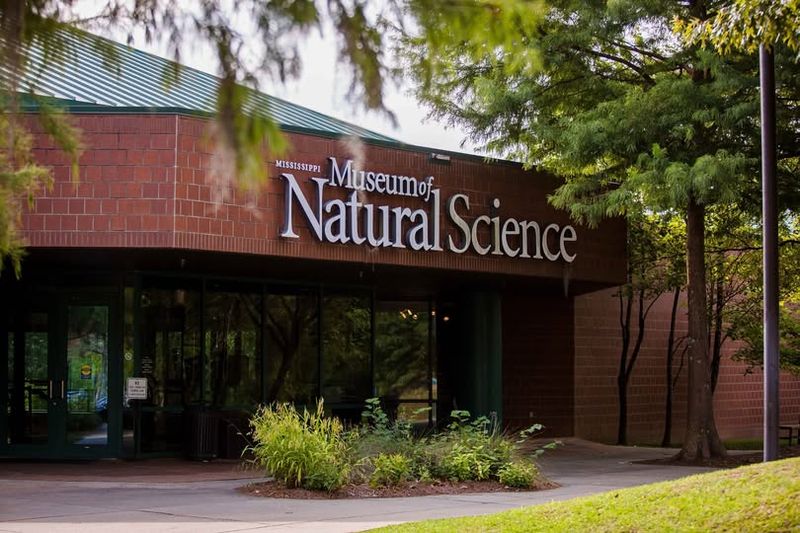
Right where I-55 meets Lakeland Drive in Jackson, the city traffic suddenly gives way to forest, wetlands, and river bottoms. Tucked into that greenery is the Mississippi Museum of Natural Science, sitting at 2148 Riverside Drive inside LeFleur’s Bluff State Park.
What exactly is it? Think of it as an indoor and outdoor museum rolled together, with an aquarium network, a living greenhouse, fossil exhibits, and trails that start just outside the doors.
The building covers roughly 73,000 square feet, which feels big enough to fill a morning without wearing out small legs.
Families from Hattiesburg, Meridian, or the Delta often find it an easy drive, since it sits in the heart of the state and right off a major interstate. Grandparents appreciate the calm setting, while kids tend to spot the dinosaurs on the grounds before the car is even parked.
Because it lives inside a state park, the museum never feels like a stuffy city attraction. You can learn about cypress swamps indoors and then walk one a few minutes later, which makes the whole place feel connected to the land it describes.
That link between the exhibits and the outdoors shapes nearly every part of a visit.
Wild Mississippi Right Outside The Doors
Cypress knees poke up from dark water, and a wooden boardwalk creaks gently underfoot. That scene sits only steps from the museum lobby, which surprises plenty of first-time visitors expecting a typical city science center.
LeFleur’s Bluff State Park wraps the museum in wooded bluffs, wetlands, and river habitat along the Pearl River. The setting matters because the museum’s whole mission centers on connecting people with Mississippi’s natural heritage.
Instead of only reading about swamps and forests, kids can compare what they saw behind glass with the real thing.
Contrast that with a museum hemmed in by parking decks and busy streets. Here, birds call from the treetops and the air smells like pine and damp earth, even though the capital city hums just beyond the trees.
The park also holds a public playground and sits near a separate children’s museum, so families can stretch one outing into a full day of exploring. For multi-generational groups, that flexibility can make planning simpler.
Grandparents can rest on a bench while the kids burn energy, and everyone regroups for the next indoor exhibit when the heat starts to build.
Mississippi’s Official State Fossils
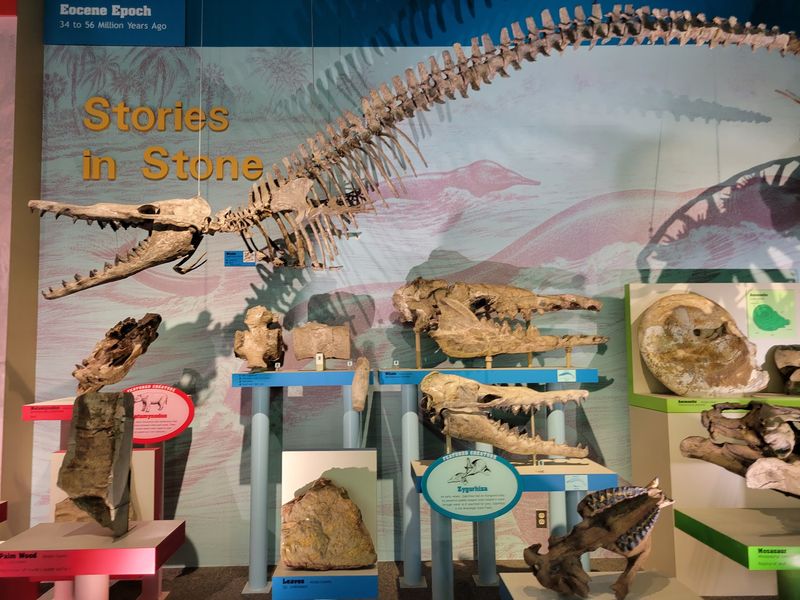
Did you know Mississippi has not one but two official state fossils, and both are whales? Zygorhiza kochii and Basilosaurus cetoides were prehistoric toothed whales that swam here roughly 34 million years ago, during the Late Eocene era.
Picture the ground beneath central Mississippi covered by warm ocean water. That long-ago sea is the reason these ancient whales turn up in the state’s rock layers, and the museum gives them a proud place in its fossil displays.
Kids often stop in their tracks when they realize a whale once cruised over land where their own town now sits.
Those bones belong to a much larger story. The museum’s paleontology program keeps a collection of about 64,000 cataloged specimens, so the exhibit floor shows only a slice of what scientists study behind the scenes.
For curious grade-schoolers, the whale fossils can spark great car-ride questions about oceans, time, and how the land changes. Grandparents who remember learning state symbols in school may enjoy discovering a new one.
Snap a mental note of the names, because a kid who can pronounce Basilosaurus at dinner tends to feel pretty proud of themselves.
Giant Sloths, Sea Monsters, And A Fossil Wall
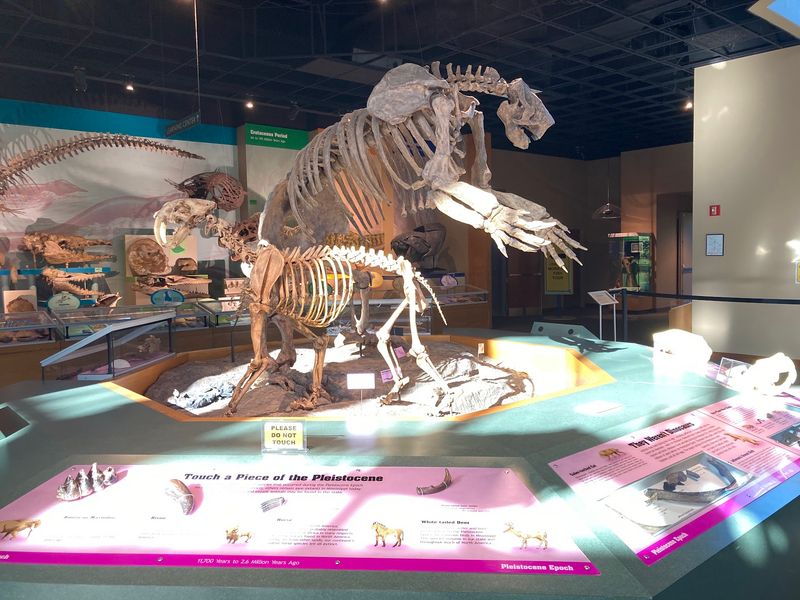
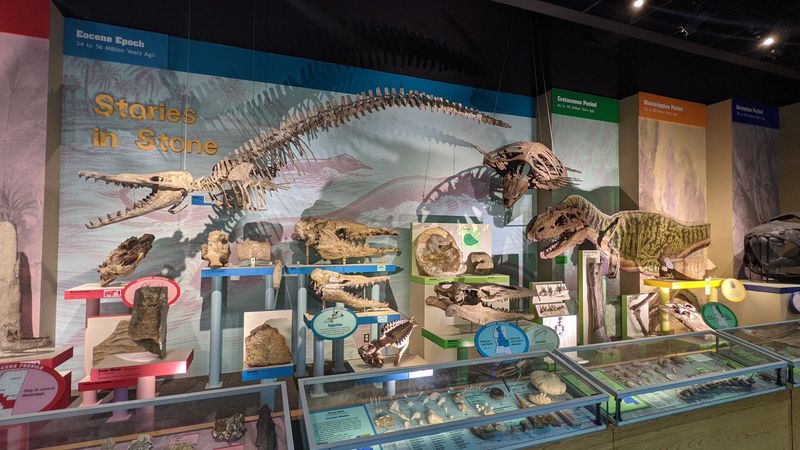
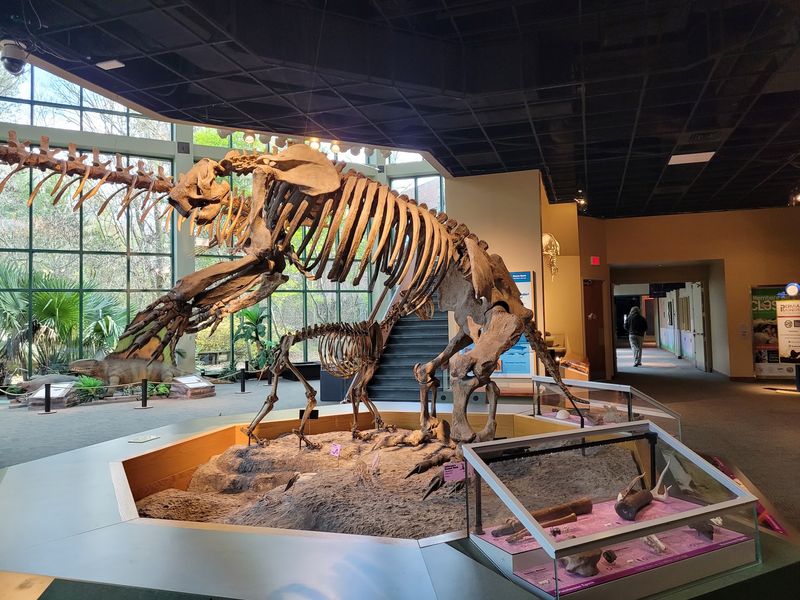
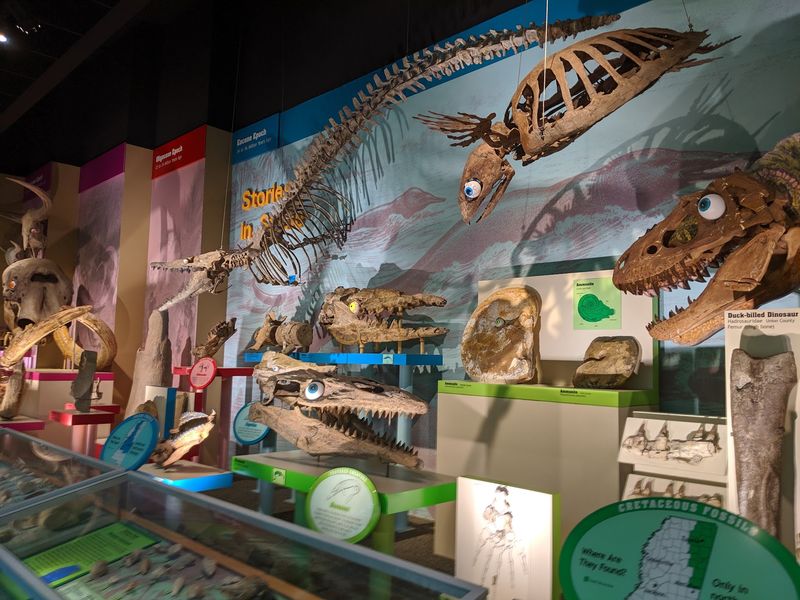
Long jaws lined with teeth, a body built for ocean hunting, and a tail that stretches along the wall: the Mosasaurus skeleton makes an unforgettable first impression. Visitors often call the fossil wall one of the most striking spots in the building.
Beside that marine giant, a giant sloth shows how strange Mississippi’s ancient animals could be. Kids who expect a cuddly tree-dweller get a big surprise when they see how massive the prehistoric version grew.
Why does it work so well for families? The displays focus on creatures found in this region, so every bone feels tied to home rather than to some distant continent.
Nearby, an exhibit on endangered and extinct Mississippi species adds another layer, helping kids understand why protecting wildlife matters today.
Plan on slowing down here. Younger children may like simply comparing sizes, while older kids and adults can read about geology and the long timeline of the state.
Many families mention that the fossils and dinosaur information were a highlight for both little ones and grown-ups. Bring a question or two to ask staff members, who are often happy to share extra details about the specimens on display.
The Swamp Greenhouse
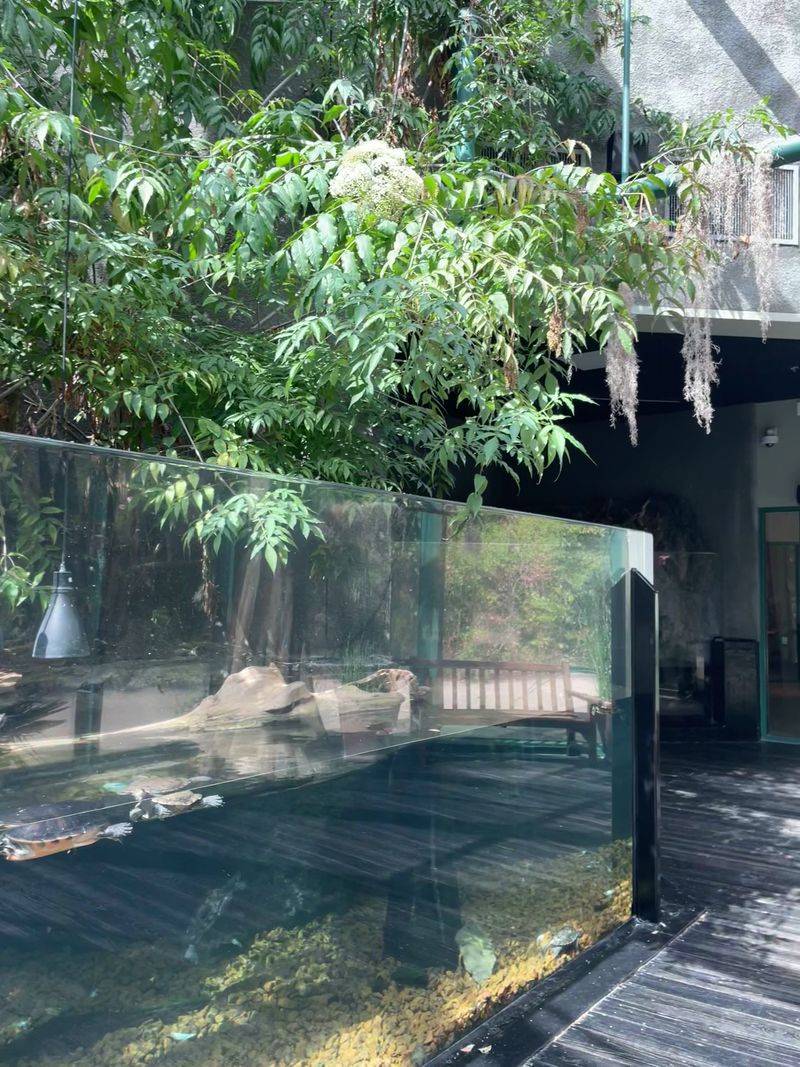
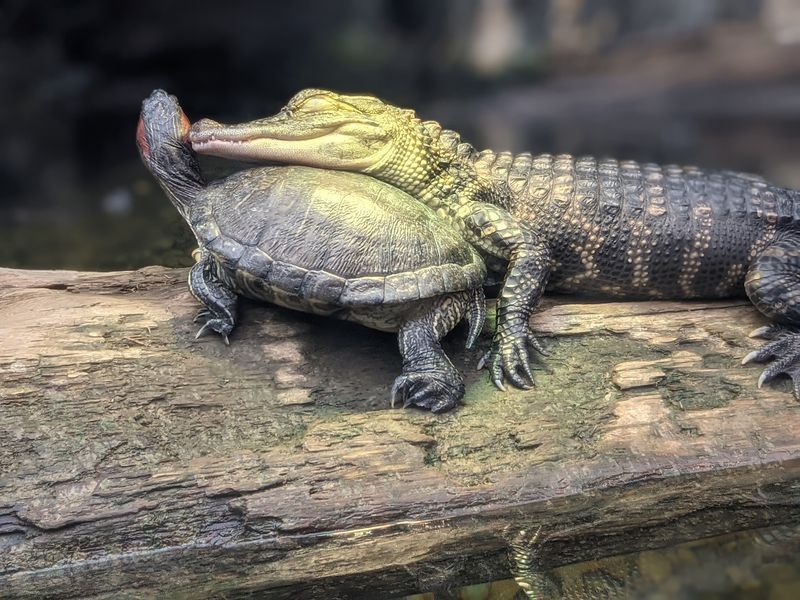
Step through the doors and the air changes, warm and green and alive. The Swamp is a 1,700-square-foot greenhouse filled with lush plants, still water, and live animals including alligators, turtles, and several kinds of fish.
Natural light pours in from above, and the alligators often lounge in it as if they own the place, which in a way they do. Small children tend to press close to the viewing areas, counting turtles stacked on logs and searching the water for the next gator snout.
Here’s a fun scene families mention: watching young alligators get fed. Grandkids and grandparents alike seem to enjoy seeing the little reptiles grab a fish and scoot away with it.
Feeding schedules are not guaranteed, so ask at the front desk what might be happening that day.
The exhibit offers something rare in Mississippi summers, too. You get the feel of a real wetland without the full-strength outdoor humidity, mosquitoes, or long hike.
For toddlers in strollers and grandparents who prefer smooth floors, it can be the easiest way to experience a swamp up close. Many families circle back to it more than once before leaving.
A 100,000-Gallon Window Into Mississippi Waters
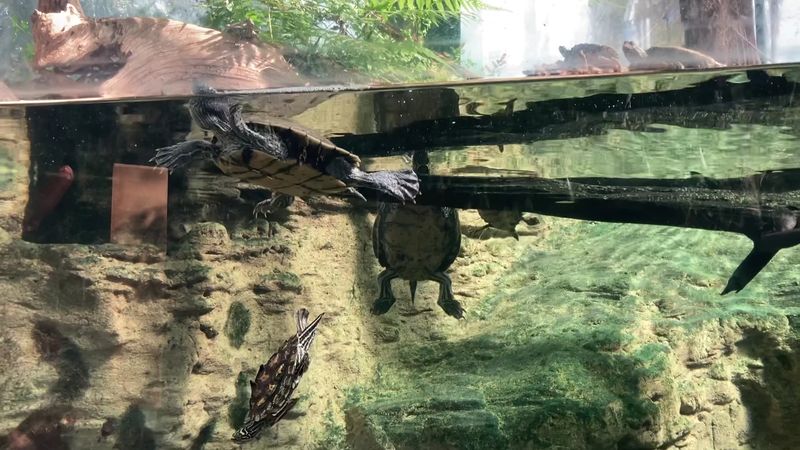
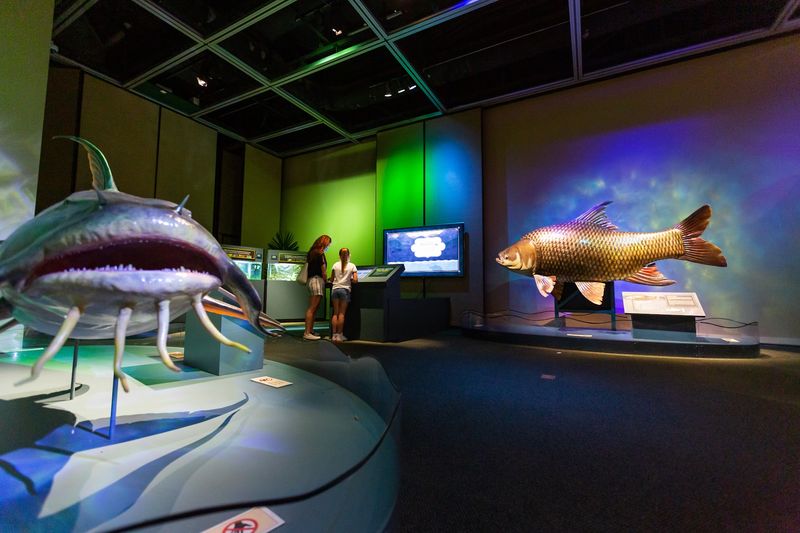
One hundred thousand gallons of water, more than 200 native species, and tanks that stretch from floor to ceiling. The aquarium network ranks among the most talked-about parts of the museum, and it’s easy to see why.
Rather than tropical fish from faraway reefs, these tanks show the creatures living in Mississippi right now. Habitats range from the Pearl River to the Mississippi Sound, so a single walk can take you from muddy freshwater bottoms to salty coastal waters.
Massive catfish drift past, and snapping turtles look almost prehistoric as they rest near the glass.
Some tanks sit indoors, while others can be found outside, which gives kids another reason to explore beyond the main halls. Reptiles and amphibians round out the collection, adding snakes and salamanders to the fish-watching fun.
For families who fish local lakes and rivers, this part can feel especially personal. A grandfather might point out the kind of bass he used to catch, while a child spots a gar for the first time.
The dim, cool setting also makes the aquarium area a calm reset spot when little ones start getting restless during a long day.
Meeting Little Bit, King Koopa, And Friends
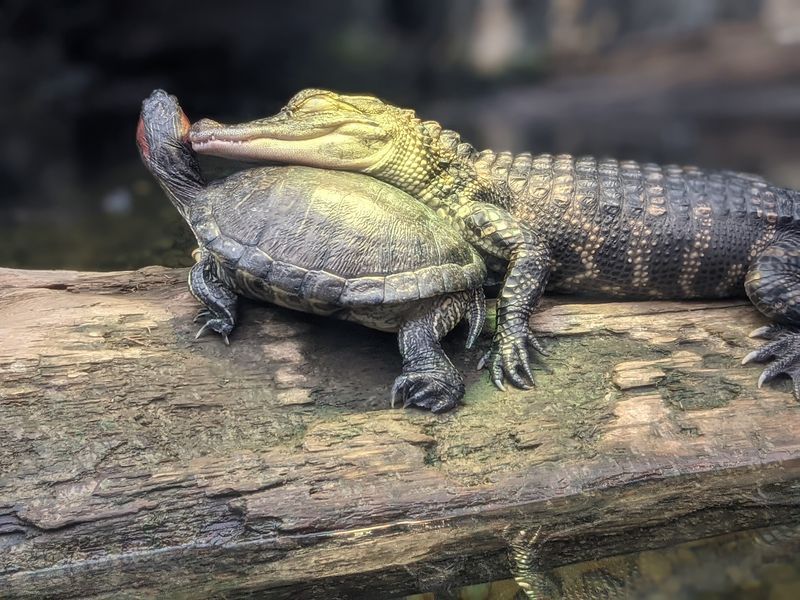
Names make animals memorable, and the museum’s resident critters have some great ones. Families have mentioned meeting a tortoise named Little Bit and a young alligator called King Koopa during their visits.
Encounters like these can happen when staff bring animals out for programs. One family described an educator spending time in a classroom showing their three-year-old a series of snakes, turtles, and salamanders.
Moments like that tend to stick with kids far longer than any sign on a wall.
Friendly staff come up again and again when visitors talk about the museum. Educators often share practical tips, too, such as how kids should behave safely and kindly around wild animals, which fits nicely with teaching respect for creatures.
A quick heads-up for anyone nervous around snakes: some live snakes may be handled outside their enclosures in certain areas during programs. If a family member feels uneasy, asking staff where animal presentations are taking place can help you plan your route.
Animal encounters are not scheduled on a guaranteed basis, so timing plays a role. Still, even a short meeting with a turtle or baby gator can become the story your kids retell all week.
Dioramas That Travel Across The State
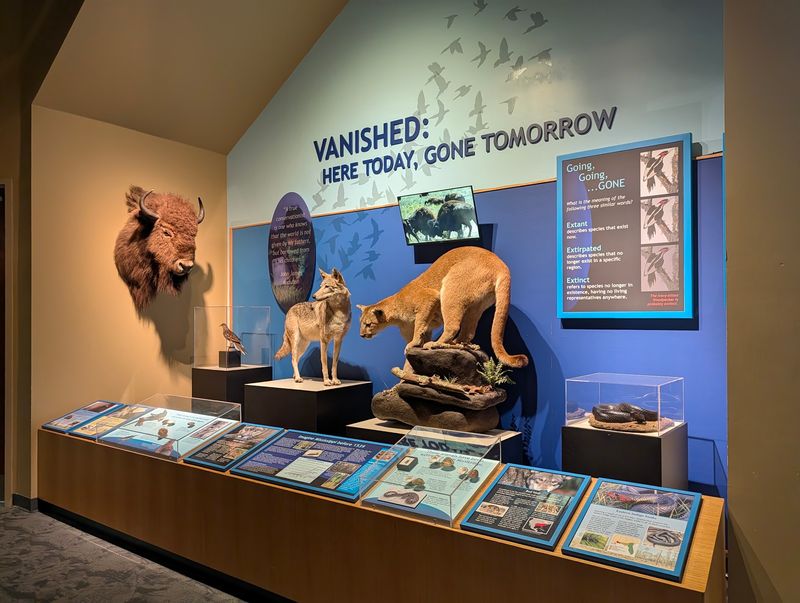
Walk through a few galleries and you’ll notice the exhibits follow a map of sorts. Plants and animals are grouped by region of Mississippi, so the hills, prairies, forests, and coast each get their own spotlight.
Taxidermy dioramas show wildlife posed in natural habitats, from birds perched in treetops to mammals moving through woodland scenes. Visitors often praise how thoughtfully everything comes together, with regional history and state history woven alongside the animals.
Contrast that with a museum that simply lines creatures up in rows. Here, kids can see how a heron fits its marsh or how a forest animal blends into fallen leaves, which helps the science click.
Geology and anthropology exhibits add even more context about how people and land shaped each other over time.
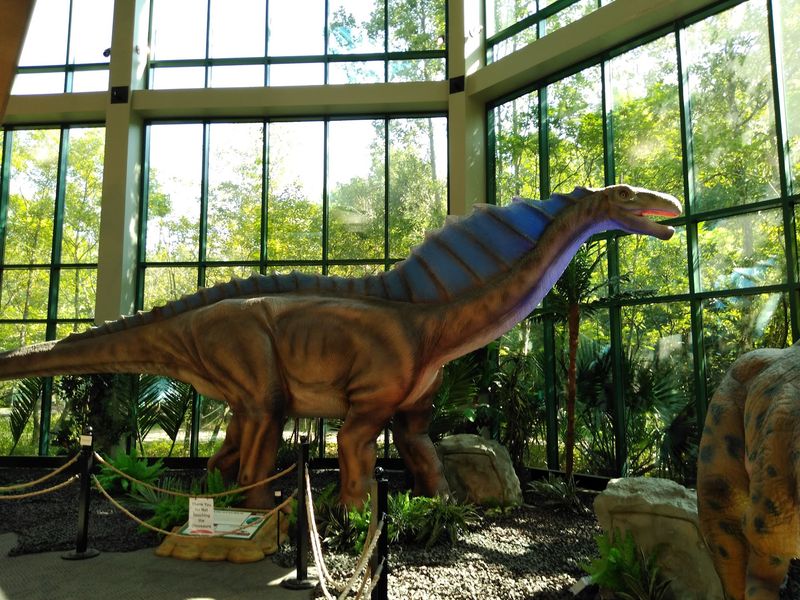
Animatronic animals and dinosaurs bring motion into the mix. One small caution: a few moving dinosaurs may feel startling to very young children, so holding a hand or previewing from a distance can help.
An interactive topographic map play station also earns attention from families. Kids can shape the landscape and watch it respond, turning a lesson about hills and rivers into something they can touch and play with.
Treehouse Fun In The Preschool Discovery Room
Toddlers and preschoolers have their own corner of wonder here. The Preschool Discovery Room centers on a large treehouse with a slide, giving the youngest visitors a place to climb, explore, and wiggle.
Why does that matter so much? Long museum days can be tough on small children who aren’t ready to read signs or stand still at displays.
A dedicated play space lets them reset, and it gives parents or grandparents a chance to sit for a moment.
Beyond the treehouse, hands-on activities appear throughout the building. Even visitors without kids have admitted they ended up enjoying the kid games, which says a lot about how inviting they feel.
Picture a four-year-old sliding down the treehouse, then racing to tell grandma about the turtles she saw earlier. That kind of back-and-forth between play and learning is exactly what makes the room useful for mixed-age groups.
For families traveling with a baby and an older sibling, the setup can be a lifesaver. One adult can linger near the fossils with the older child while another lets the little one play.
Everyone meets back up happy, which isn’t always easy on a busy Saturday outing.
Trails, Boardwalks, And Life-Size Dinosaurs
Trails come up more than any other topic when visitors talk about this museum. About 2.5 miles of paths wind through wooded bluffs and cypress swamps, some leading down toward the Pearl River.
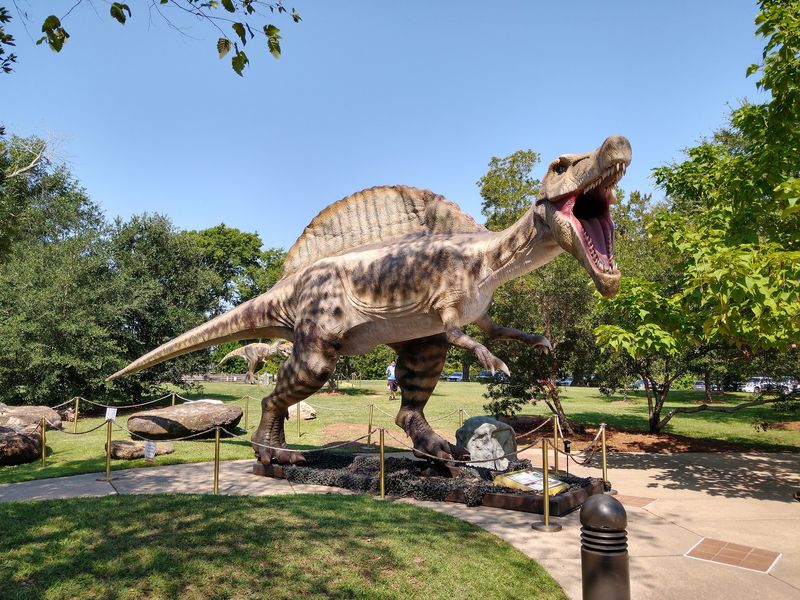
Along the Dinosaur Trail, eight large-scale, three-dimensional dinosaur models wait among the trees. Kids love spotting them ahead on the path, and the surprise of a giant reptile in the woods can keep tired legs moving a little longer.
Some loops are short and easy, while at least one is marked difficult, and grandparents have noted that the label fits. Trail signage and maps may feel a bit confusing at times, so grabbing a map and choosing loops before setting out can help.
Birders will find plenty to watch, too.
Timing matters here. The longest trail runs about a mile, and visitors mention needing to return by around 4:45 p.m., so leave room in your schedule.
Summer brings heat and bugs, so pack bug spray and water, and try walking earlier in the day. In fall and spring, the gardens and paths often look their best, making a return trip easy to justify for families who loved the indoor exhibits.
Gem Panning And An Inclusive Playground
Water trickles down a wooden trough, and small hands swirl it around hunting for sparkles. The LeFleur’s Mining Company Gem Sluice lets families pan for gems and fossils, turning a little patience into a pocketful of treasure.
Nearby, the LeFleur’s Bluff Playground offers an inclusive play area for children from six months to twelve years old. Families have gone so far as to call it one of the coolest outdoor play parks they’ve seen, with kids reluctant to leave.
Some visitors note that the playground can be accessed as part of the museum outing.
Consider how these spots fit a multi-generational day. Grandparents can relax in the shade while grandkids climb, and panning gives quieter kids something focused to do after all that running around.
Seasonal events can add extra fun. Past visitors have enjoyed an Easter egg hunt on the grounds, and the museum hosts temporary exhibits, so there is often something new to find with each trip.
Birthday parties are another option, with families describing themed celebrations and knowledgeable party hosts. Checking ahead for current events can help you plan a visit around something special for your crew.
Hours, Admission, And Parking Details
Budget-friendly pricing makes planning easy. Admission runs $9 for adults, $8 for seniors 60 and over, and $7 for youth ages 3 to 18, while children under three get in free.
Hours: Monday through Friday from 8 a.m. to 5 p.m., Saturday from 9 a.m. to 5 p.m., and Sunday from 1 to 5 p.m. The museum closes on major holidays, including July 4th, Labor Day, Thanksgiving Day, the Friday after Thanksgiving, Christmas Eve, Christmas Day, and New Year’s Day.
Parking is free. Lots sit along Riverside Drive, and a garage behind the nearby Two Mississippi Museums also offers spaces, including ADA accessible spots.
Accessibility gets real attention. Wheelchairs and strollers can reach all exhibits, elevators connect the levels, and loaner wheelchairs are available first-come, first-served.
KultureCity sensory kits and maps support visitors with sensory sensitivities.
Here’s a money tip: the museum participates in the ASTC reciprocal network, and some members of partner science centers have gotten in free. Check your own membership rules before visiting.
A gift shop with fair prices can round out the trip without breaking the bank, and summer visitors will appreciate the air-conditioned galleries.
A Saturday That Stretches Across Millions Of Years
Few outings let kids travel from a 34-million-year-old whale to a living alligator before lunch. That wide leap through time, all for a modest ticket price, sums up why families keep coming back.
Consider what a single day can hold: fossils, a greenhouse swamp, giant aquariums, animal encounters, a treehouse slide, gem panning, a playground, and trails with dinosaurs hiding in the woods. For households watching every dollar, that kind of variety can stretch the value further than many pricier attractions.
Mixed-age groups may find it particularly rewarding. Strollers roll easily, wheelchairs are welcome, and indoor exhibits offer cool relief during steamy Mississippi summers.
Grandparents get benches and shade, and kids get plenty of hands-on moments.
Pack water, bug spray, and a little flexibility. Arriving early can mean calmer galleries, and saving the trails for morning or late afternoon may help beat the heat.
When the car finally pulls out of the park, expect questions from the back seat about sea monsters, swamp turtles, and when you can go again. That lingering curiosity might be the best souvenir of all, and it costs nothing extra to bring home.