
This New York Alley Is A Secret Graffiti Museum You Can Visit For Free
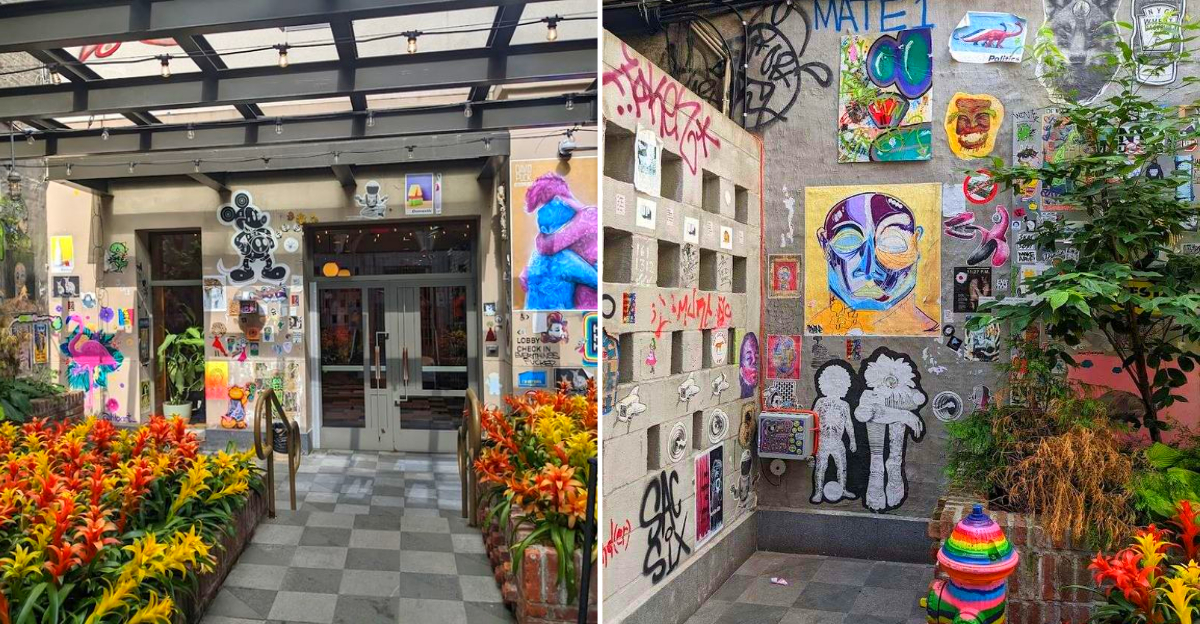
Most museums in New York require a ticket, a timed entry, and a Tuesday morning with nothing else going on. This one requires none of that.
A hidden alley packed floor to ceiling with graffiti so extraordinary it has become one of the city’s most compelling and least discussed cultural destinations. If you’re curious about the benefits, they’re quite simple.
It’s free to visit, impossible to forget, and sitting right there for anyone curious enough to find it. New York has street art in every direction but this alley operates on a different level entirely.
The work here is deliberate, layered, and worth the kind of slow and careful attention that great art always deserves regardless of the institution around it. The best things in New York have always been free.
This one makes that case better than most.
A Wall That Never Runs Out Of Surprises
This one is for the open-minded. Most galleries ask you to be quiet, walk slowly, and keep your hands to yourself.
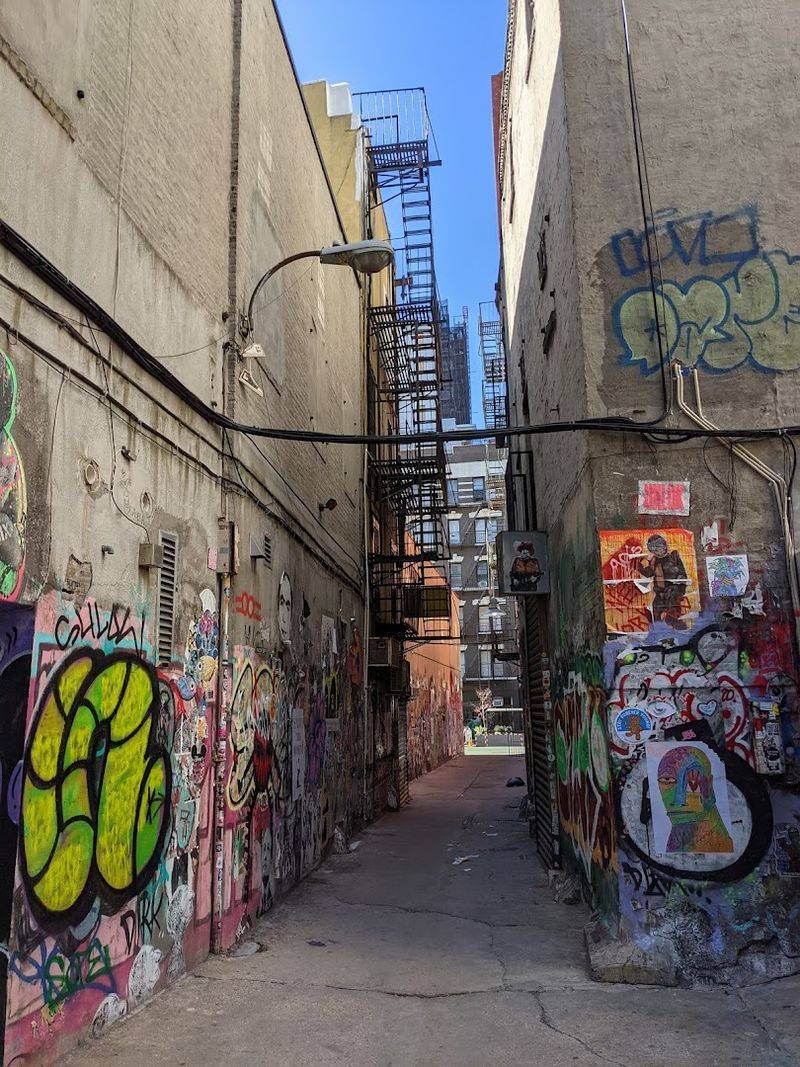
Freeman Alley has none of those rules. The art here changes constantly, with new pieces appearing over old ones in a rolling cycle that never quite stops.
Every visit feels like a first visit because the walls are never the same twice.
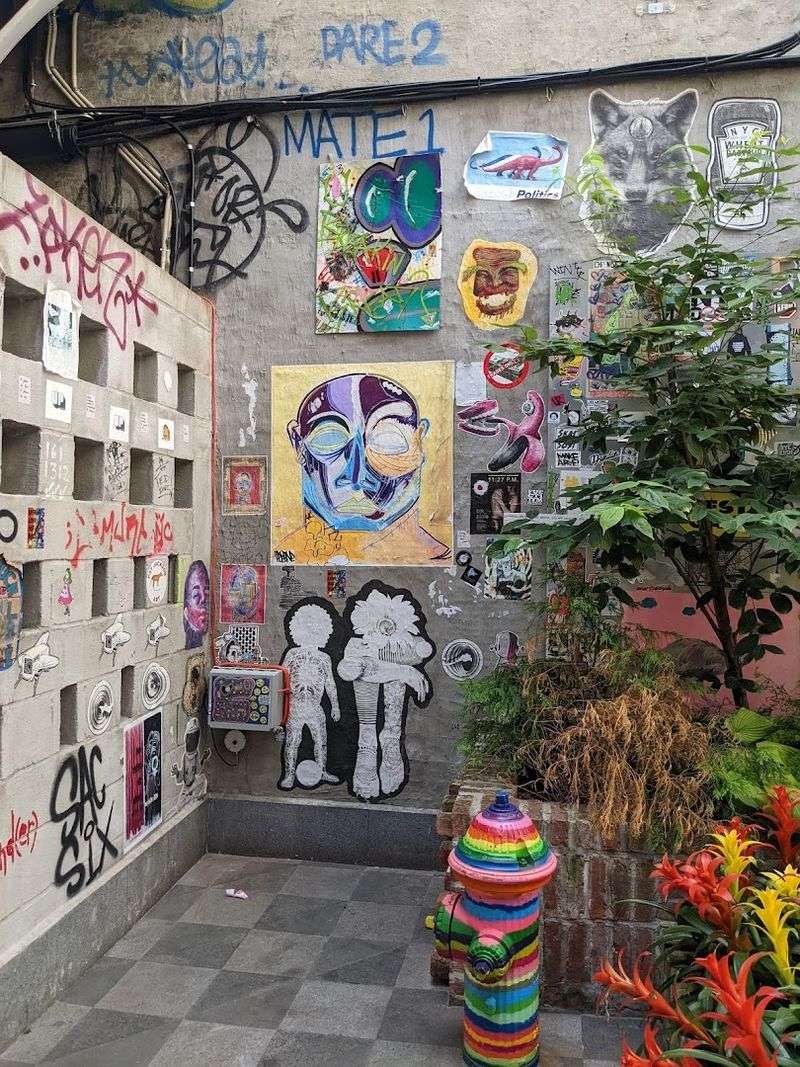
Artists from across New York City and beyond contribute to the space without any formal application process or approval board. Graffiti, stencils, wheatpaste art, stickers, and small painted murals all share the same surface.
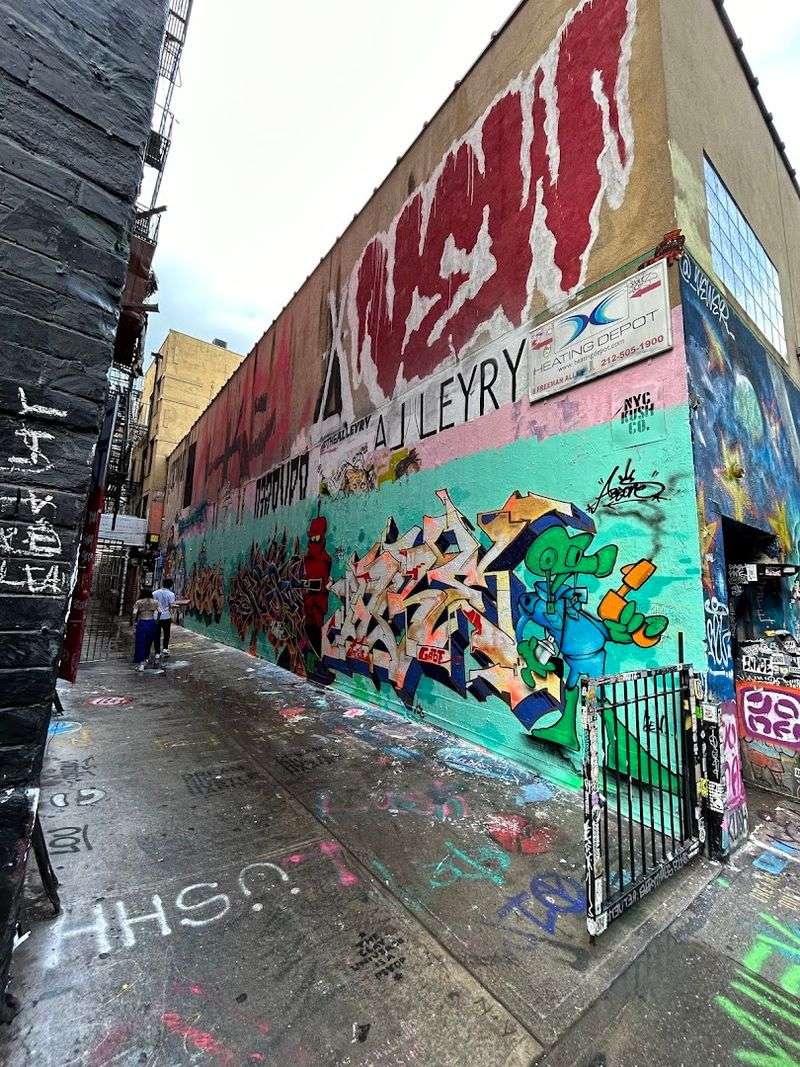
The pavement itself has been painted at various points, turning the ground into part of the canvas.
What makes the alley so magnetic is the layering. You can see fragments of older work peeking through newer pieces, creating an accidental collage that no single artist planned.
The alley sits in New York City’s Lower East Side, a neighborhood long known for creative energy and cultural edge. Coming here feels less like visiting a gallery and more like reading a city’s diary, one page painted right on top of another.
Freeman Alley: The Address You Need To Save Right Now
Off Rivington Street on the Lower East Side of Manhattan, a narrow gap between two buildings leads into one of the city’s most quietly celebrated spaces.
Freeman Alley runs about 150 feet long and sits between Chrystie Street and the Bowery at the address New York, NY 10002.
It is a dead-end private street, which means traffic stays out and the atmosphere stays calm.
The alley was officially de-mapped by the city council around 1914, meaning it technically fell off the city grid. That quiet legal status has helped it remain low-key for over a century.
Artist Jimmy Wright, who has lived nearby since 1980 at the time of writing, is often recognized as the alley’s unofficial historian and has watched it transform across decades.
Finding it feels like cracking a small code. There is no bold signage announcing its presence.
You turn off the main street, walk between the buildings, and suddenly the walls open up into something unexpected. Freemans Restaurant sits at the far end of the alley, making the space feel like a genuine destination rather than just a shortcut.
The combination of art and architecture gives the whole block a character that is hard to replicate anywhere else in New York.
Free Entry, Full Experience
There is something genuinely refreshing about a world-class art experience that costs absolutely nothing. Freeman Alley is open to the public every day and requires no reservation, no membership, and no donation box.
You simply walk in and let the walls do the talking. It’s not uncommon to meet people who planned entire day-trips around this spot.
That’s what happened with us.
For travelers on a budget or locals looking for a meaningful afternoon without spending money, the alley delivers a rich cultural experience. The artwork on display rivals what you might find in a formal gallery, but the setting feels far more personal.
There are no velvet ropes, no audio guides, and no closing time announcements over a speaker system.
The open-access nature of the space also means the energy shifts depending on when you arrive. Early mornings feel quiet and contemplative.
Afternoons bring photographers, artists scouting the walls, and curious visitors wandering through. The alley accommodates all of them without feeling crowded or commercialized.
For anyone visiting New York who wants to experience the city’s creative culture without a price tag attached, Freeman Alley stands out as one of the most honest and accessible stops on the map. Art should not always come with a cost, and here it genuinely does not.
The Artists Behind The Paint
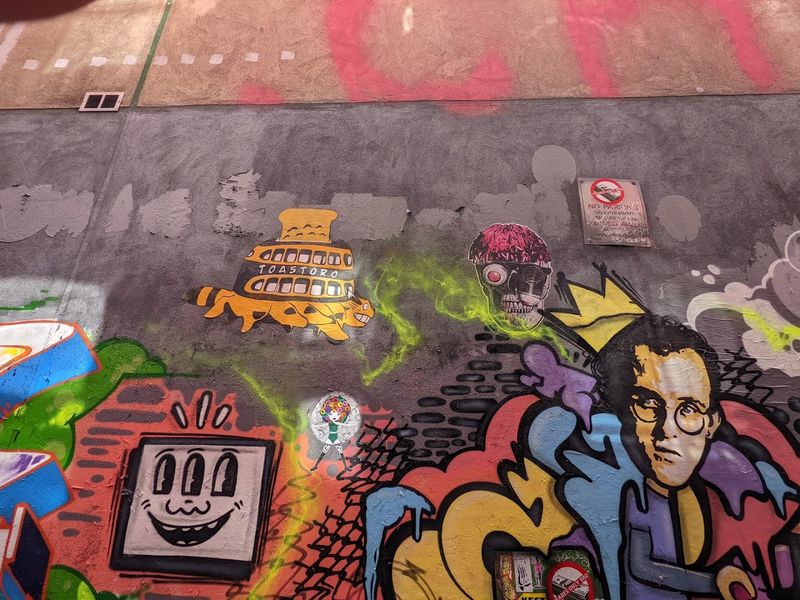
No single organization runs Freeman Alley, and that is precisely what keeps it interesting. The space operates through an informal network of artists, stewards, and regulars who care deeply about maintaining its creative integrity.
Among them is a figure known as Zui, along with THEALLEYRY, also called Vewer, who curates the east wall under the name the Alleyry.
Both established artists and emerging talents contribute to the walls. Some pieces are large and technically complex.
Others are small, quick, and almost conversational in their placement. The variety of styles means the alley never develops a single visual identity, which keeps it feeling genuinely democratic rather than curated by a single taste.
The Black Lives Matter movement in 2020 brought a notable wave of new artists and viewers to the alley, deepening its role as a community gathering point.
Art that responded to that cultural moment appeared on the walls and drew attention to the space in a new way.
The alley became not just a place to display art but a place to process collective experience. That history gives the current artwork an added layer of meaning for anyone who knows to look for it.
History Painted Over But Never Forgotten
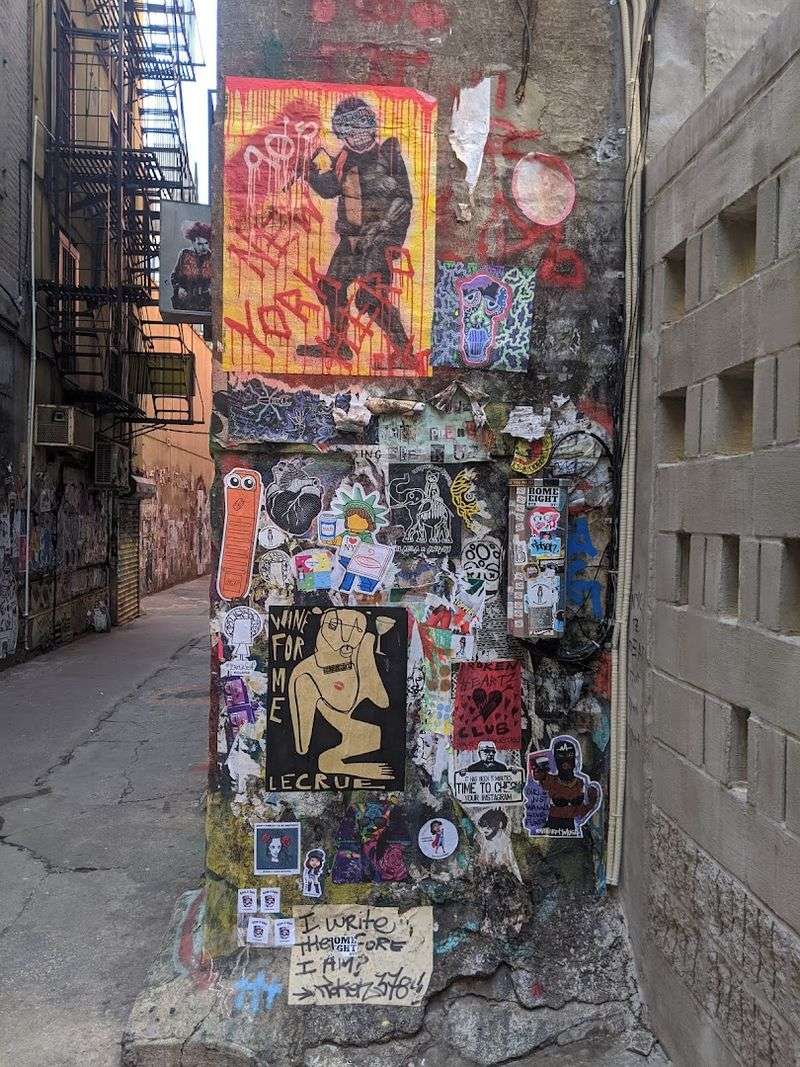
Freeman Alley has been around since the 1800s, which means the walls have seen more than a century of New York life. Originally used as a service entrance for surrounding buildings, the alley had a quiet and largely functional existence for most of its early history.
It was de-mapped by the city council around 1914, effectively removing it from official city records.
For decades the alley carried a rough reputation, reflecting the broader struggles of the Lower East Side during periods of economic hardship. As the neighborhood shifted and gentrification changed the block, the alley evolved along with it.
Artists began using the walls, and the space gradually took on the identity it holds today.
Jimmy Wright, an artist and resident since 1980, has watched every phase of that transformation. His presence in the community gives the alley a living connection to its own past.
The layers of paint on the walls are not just artistic choices but a kind of geological record. Older pieces get covered but rarely fully erased.
Something always bleeds through, a color, a line, a fragment of lettering, reminding you that the story of this alley stretches much further back than whatever was painted there last week.
What Surrounds The Alley Makes It Even Better
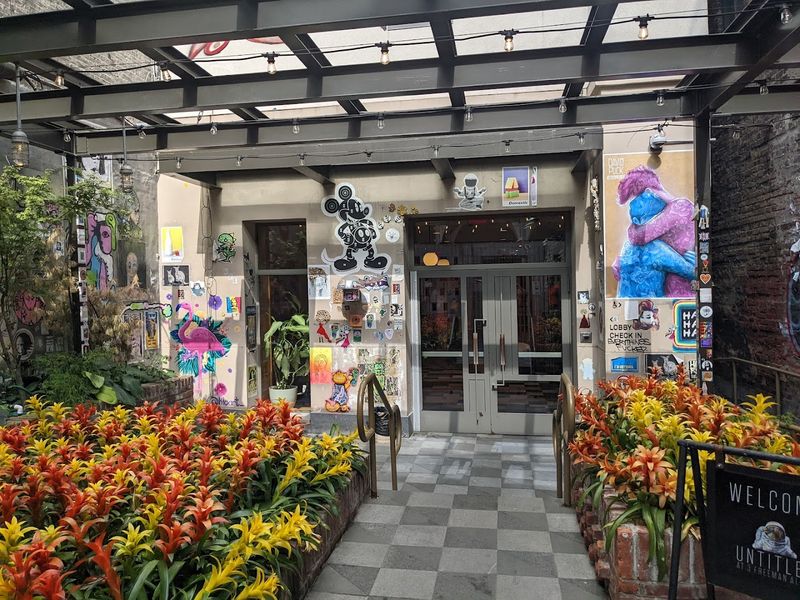
A great destination rarely exists in isolation, and Freeman Alley benefits enormously from what sits around it. At the far end of the alley is Freemans Restaurant, a well-regarded spot that draws its own loyal crowd.
The restaurant’s presence gives the alley a sense of destination and purpose beyond just the art on the walls.
The New Museum, one of New York’s most forward-thinking contemporary art institutions, is located nearby. Plans are underway for the museum to expand with a restaurant entrance that opens directly onto Freeman Alley.
If that happens, the alley will gain even more visibility and potentially bridge the gap between grassroots street art and the institutional art world in a genuinely interesting way.
The surrounding Lower East Side neighborhood adds further texture to any visit. The area is packed with independent shops, food spots, and cultural venues that reflect the community’s long history of creativity and resilience.
Spending a few hours in the alley and then exploring the neighborhood around it turns a quick detour into a full afternoon worth remembering. The alley is a strong anchor point for a broader exploration of one of New York’s most layered and rewarding neighborhoods.
Why This Alley Deserves A Spot On Your List
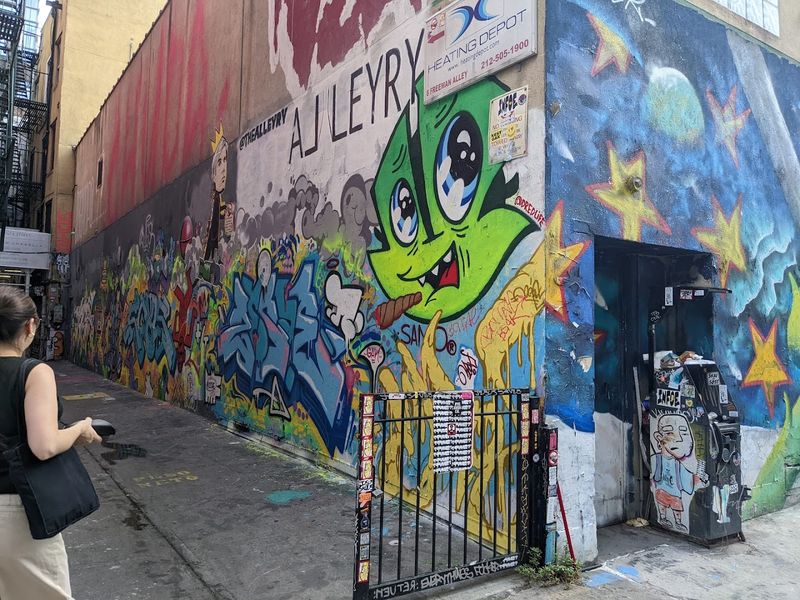
Some places earn their reputation through marketing. Freeman Alley earned its reputation through authenticity.
The space has remained genuinely community-driven despite growing attention from tourists, photographers, and even major brands. That balance is surprisingly hard to maintain, and the fact that the alley still feels raw and real is a credit to the people who look after it.
Concerns about commercialization have surfaced over the years, particularly when corporate events have used the space. Those tensions are real and worth acknowledging.
But the alley continues to function primarily as a creative outlet for artists who have no other agenda than putting something meaningful on a wall. That spirit is still very much present.
For anyone visiting New York with even a passing interest in art, culture, or the city’s layered identity, Freeman Alley is a stop that rewards curiosity. It asks nothing of you except your attention.
You do not need to be an art expert to appreciate what the walls are doing. You just need to show up, look carefully, and let the place speak.
Few free experiences in New York deliver this much texture, history, and creative energy in such a compact and unpretentious space. Go see it for yourself.