
This Postcard-Worthy Wisconsin Riverwalk Is Made For A Slow Scenic Stroll
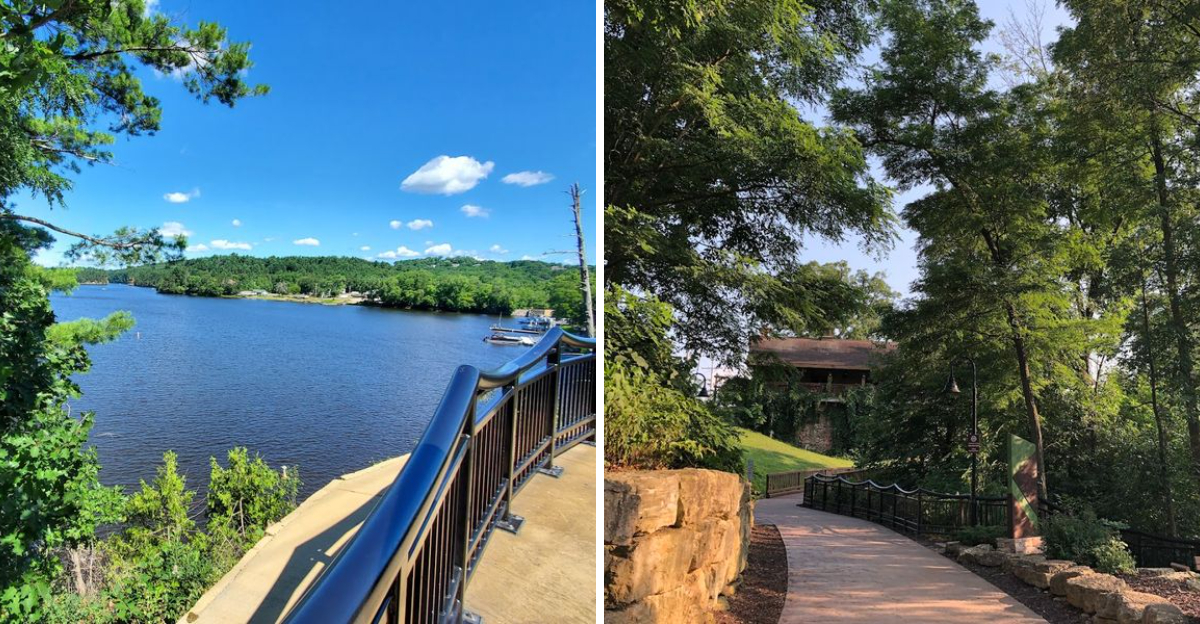
Some Wisconsin views do not need a ticket, a long hike, or a full day of planning. In the heart of Wisconsin Dells, one paved riverside path offers a quieter way to enjoy the scenery that made this area famous.
The route follows the Wisconsin River, with postcard-worthy views of sandstone formations, calm water, and natural beauty just steps away from downtown. It is short, simple, and easy to add to almost any visit, especially for travellers who want a peaceful break between bigger attractions.
Open year-round and free to enjoy, this walk proves that some of the best Dells moments can happen at a slower pace, without leaving town or spending a cent.
The Walk Follows The Wisconsin River Through Classic Dells Scenery
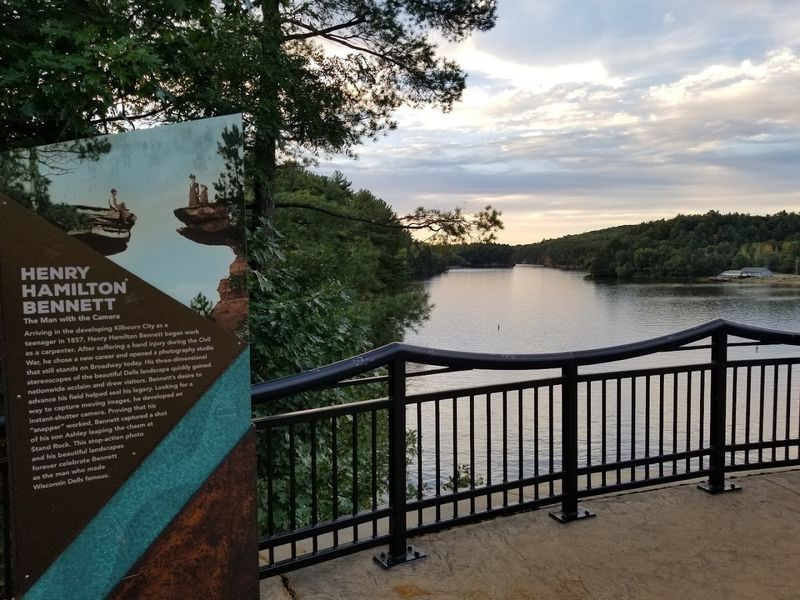
Walking beside the Wisconsin River reveals exactly why this region earned its reputation as one of the Midwest’s most striking natural areas. The pathway hugs the riverbank closely enough that you can watch the current move past while staying comfortably above the waterline.
Boat tours glide by at regular intervals, their passengers waving from the decks as they head toward the famous rock formations upstream.
The river itself changes character depending on the season and time of day. Morning light catches the surface in silver sheets, while afternoon sun deepens the blue-green tones of the water.
You can spot fish breaking the surface occasionally, and ducks paddle near the shore without much concern for the pedestrians above.
The views shift as you progress along the route at 105 Broadway. Each bend in the path brings a slightly different angle on the bluffs and water, making the walk feel longer and more varied than its actual quarter-mile length might suggest.
Sandstone Bluffs Give The Riverwalk Its Postcard-Worthy Look
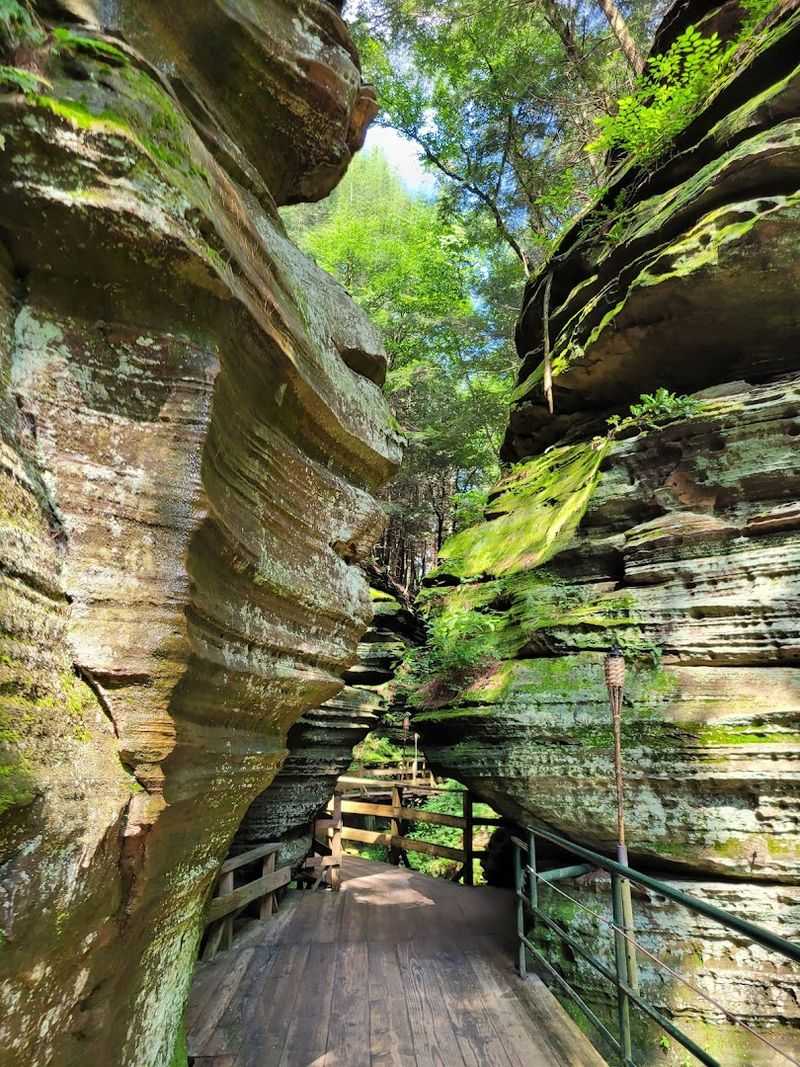
The sandstone cliffs that frame the riverwalk stand as ancient sentinels shaped by thousands of years of water and weather. These formations display bands of color ranging from pale cream to rust orange, with textures that show every layer of sediment deposited over geological time.
Cracks and crevices pattern the rock faces in ways that make each outcropping distinct from its neighbors.
Photographers find these bluffs irresistible subjects at any time of year. Snow clings to the ledges in winter, creating stark contrasts against the darker stone.
Spring brings fresh greenery sprouting from impossible perches high on the cliff faces, while autumn colors the trees that cling to the upper edges in brilliant oranges and reds.
The scale of these formations becomes more impressive the longer you observe them. What appears modest from a distance reveals considerable height and depth as you walk parallel to the base, understanding why early visitors found this landscape so remarkable.
The Paved Path Makes The Stroll Easy And Relaxed
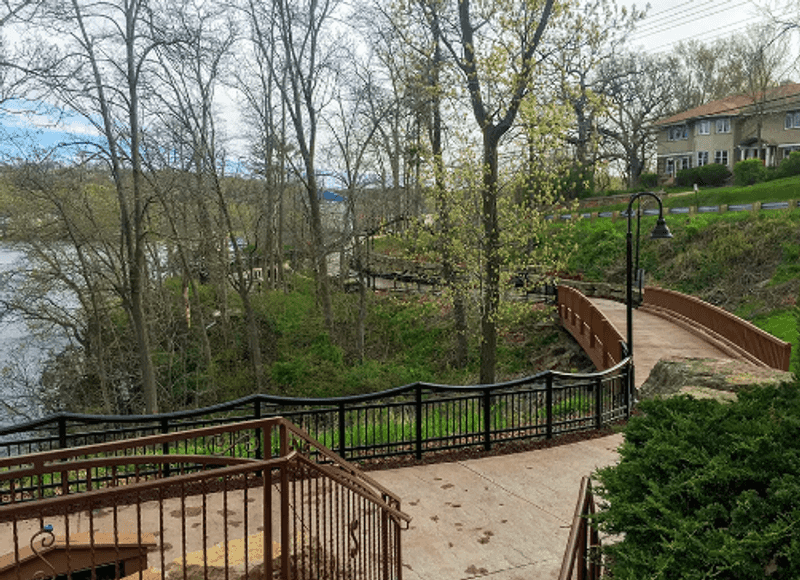
The pathway surface consists of paved concrete textured to resemble natural stone, creating visual interest while maintaining a smooth walking surface. This design choice helps the modern walkway blend with its natural surroundings rather than appearing as an intrusive addition.
The width accommodates multiple people walking side by side without crowding, making it suitable for families or groups moving at different paces.
Strollers roll easily across the even surface, and wheelchairs navigate the route without difficulty despite the decorative texturing. The grade remains essentially flat throughout the entire length, eliminating concerns about steep climbs or challenging descents.
This accessibility opens the experience to visitors of varying mobility levels who might struggle with more rugged trails.
The pathway stays clear of debris and puddles most of the time due to regular maintenance. During rainy periods, water drains efficiently rather than pooling in low spots.
This attention to upkeep means you can usually walk here without worrying about muddy shoes or obstacles blocking your progress.
It Is Free To Visit And Open To The Public Year-Round
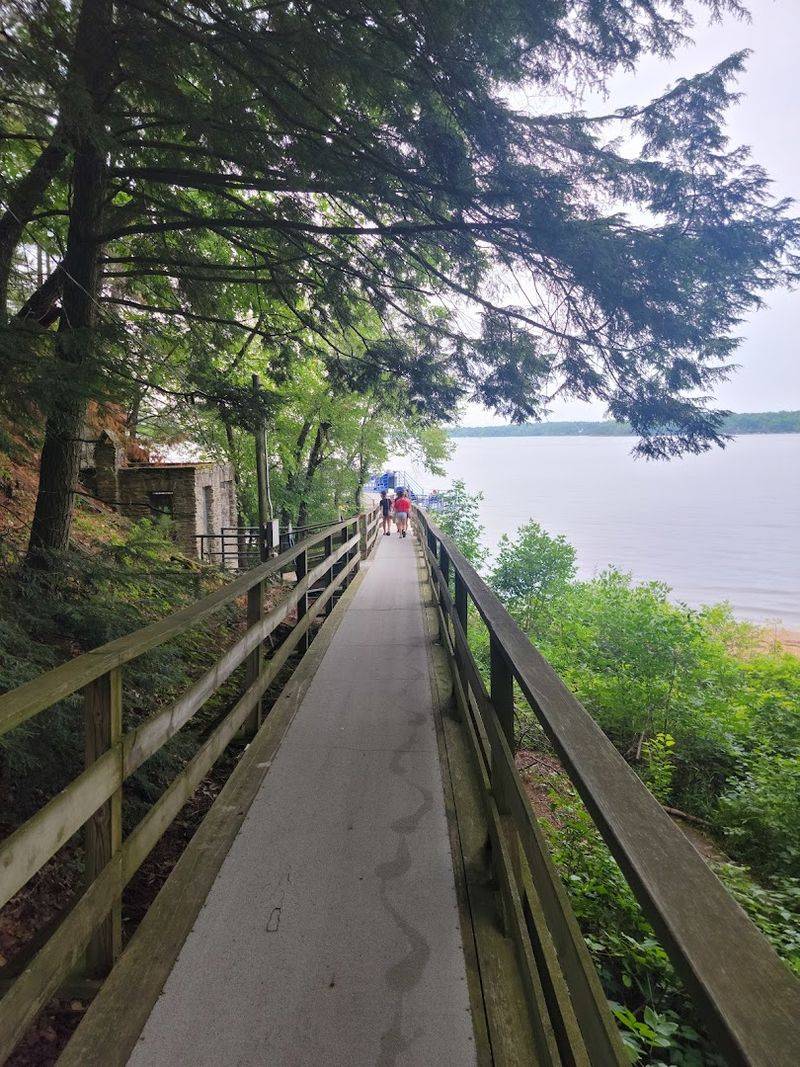
No admission booth guards the entrance to this riverwalk, and no tickets need purchasing before you step onto the path. This free access stands in notable contrast to many Wisconsin Dells attractions that charge substantial fees for entry.
The economic relief proves welcome for families trying to budget vacation expenses or locals seeking regular outdoor activity without recurring costs.
The year-round availability means you can visit during the peak summer tourist season or return in January when snow blankets the landscape. Each season offers different rewards for those willing to dress appropriately and venture out regardless of temperature.
Winter visitors often find they have the path largely to themselves, creating opportunities for solitary contemplation that summer crowds make impossible.
Operating hours extend around the clock, so early risers can catch sunrise over the river while night owls might stroll under stars. This flexibility accommodates different schedules and preferences without restriction, treating the riverwalk as genuine public space rather than managed attraction.
Benches Along The Route Make It Easy To Slow Down
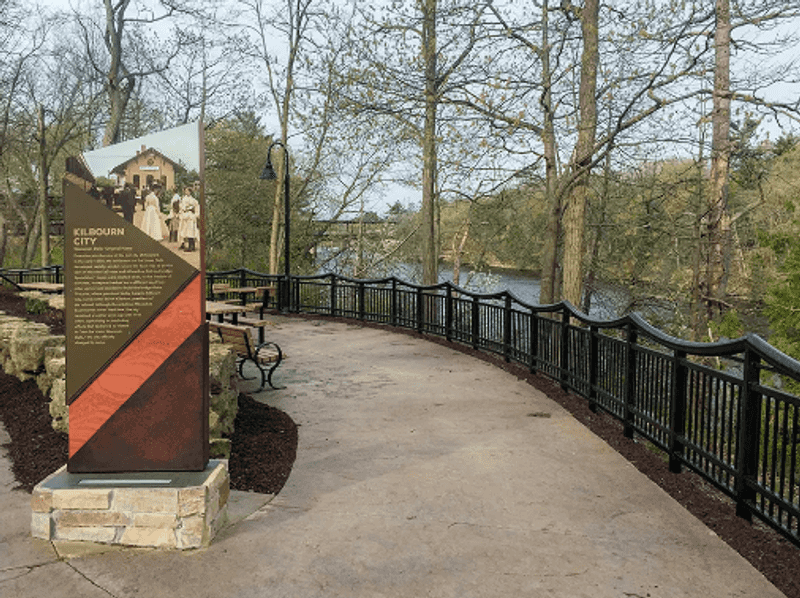
Benches appear at regular intervals along the riverwalk, positioned to take advantage of particularly attractive views. These seats face the water and bluffs rather than the path, allowing resting visitors to continue enjoying the scenery instead of watching other pedestrians pass.
The spacing works well for those who need frequent breaks without requiring long walks between resting opportunities.
Some benches sit in full sun, perfect for cool days when warmth feels welcome. Others rest in shade provided by trees or architectural elements, offering relief during hot summer afternoons.
This variety means you can usually find seating that matches your comfort preferences regardless of weather conditions or time of day.
The benches serve multiple purposes beyond simple rest stops. Couples pause for quiet conversation away from hotel rooms and restaurants.
Solo travelers pull out phones to check messages or simply sit and think. Parents supervise children who run ahead on the path, keeping them in sight while taking a brief respite from walking.
Game Tables Add A Fun Little Surprise To The Walk
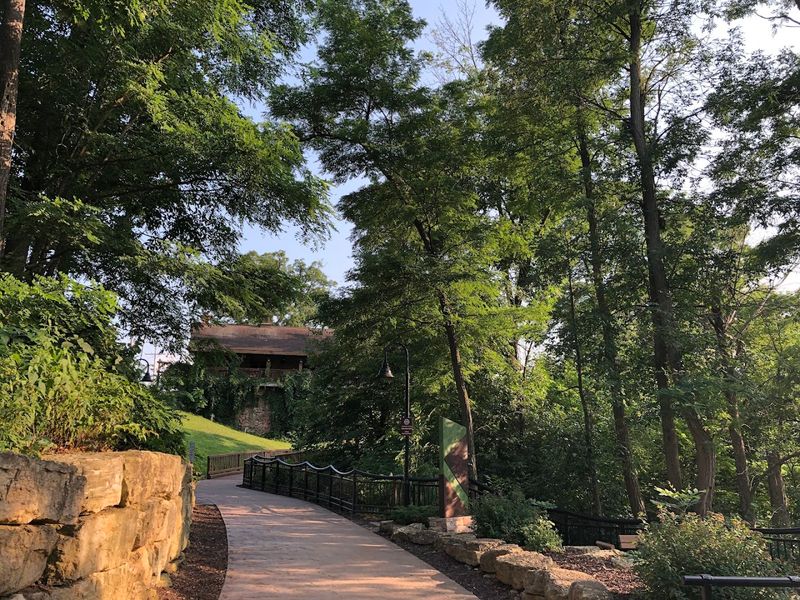
Chess boards built into permanent tables create unexpected recreational opportunities along what could have been just another walking path. These game stations invite visitors to pause for something beyond simple observation, transforming a stroll into a more interactive experience.
The boards remain available at all hours without requiring any equipment rental or staff supervision.
Strangers sometimes engage in impromptu matches, bringing their own pieces or using stones and bottle caps as improvised game tokens. Families introduce children to chess basics in this outdoor classroom where mistakes carry no consequences beyond restarting the game.
The tables also attract checkers players and those inventing their own rule systems for the grid patterns.
The placement of these tables shows thoughtful planning rather than random distribution. They occupy spots where people naturally want to linger anyway, near particularly good views or at natural stopping points along the route.
This integration makes the games feel like organic parts of the riverwalk rather than forced additions.
The River Views Feel Peaceful Even Near Downtown Wisconsin Dells
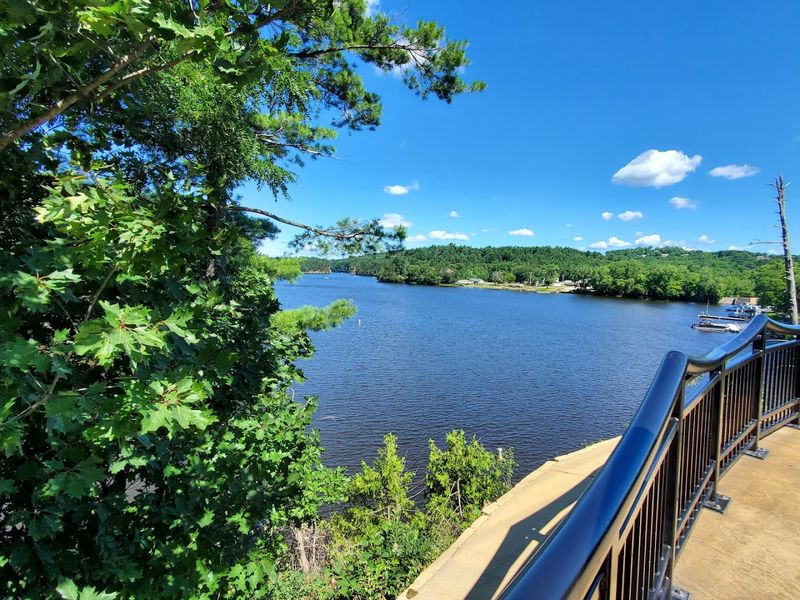
The riverwalk occupies an interesting position between wilderness and commerce, managing to feel removed from tourist bustle despite sitting steps from shops and restaurants. Sound carries differently over water, somehow softening the noise from nearby streets and parking lots.
The visual focus on river and bluffs draws attention away from commercial structures, creating psychological distance from the developed areas behind you.
This proximity to downtown actually enhances the riverwalk’s utility rather than diminishing its appeal. You can leave a restaurant after lunch and walk off your meal within minutes, or take a morning stroll before shops open their doors.
The convenience eliminates the need for driving to separate natural areas while still providing genuine contact with the landscape that defines this region.
The peaceful quality persists even during busy summer weekends when Wisconsin Dells swells with visitors. Something about the river’s presence and the pathway’s design maintains a sense of calm that resists complete disruption by crowds.
The experience never quite matches deep wilderness solitude, but it offers more tranquility than you might expect.
The Path Is Short Enough For A Quick Scenic Break
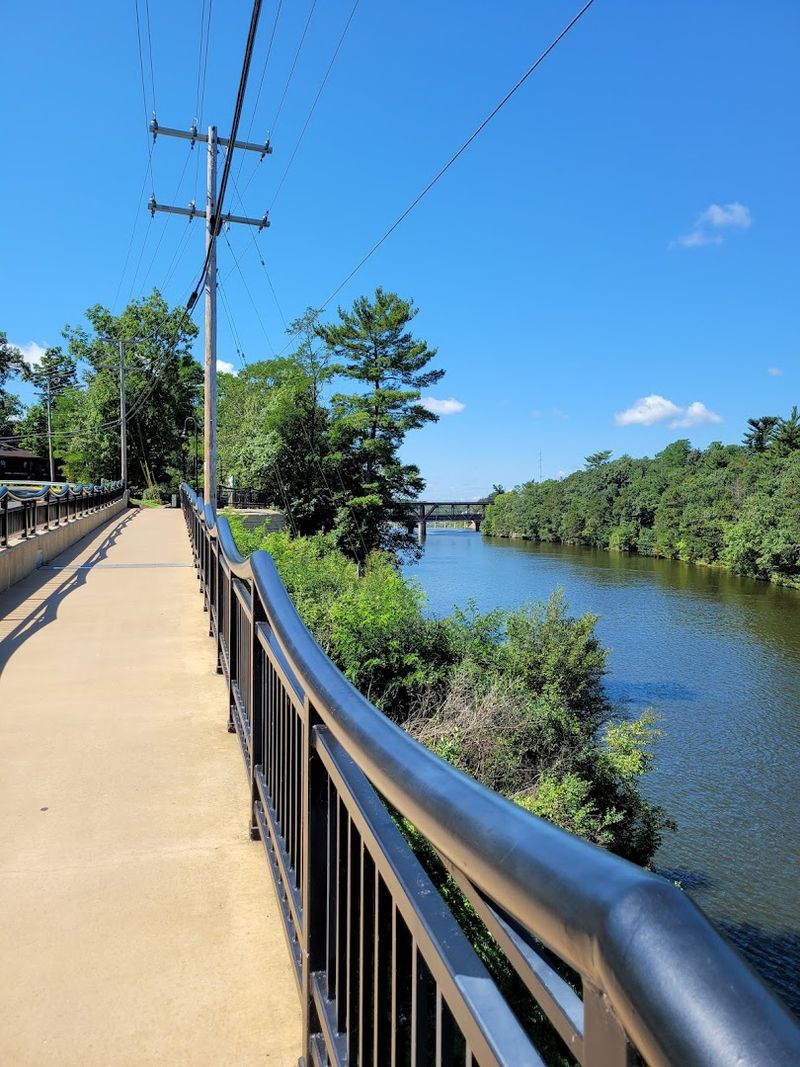
Measuring roughly a quarter mile in each direction, the riverwalk fits easily into schedules that cannot accommodate lengthy hikes or extended outdoor activities. You can walk the entire length and return to your starting point in fifteen to twenty minutes at a casual pace, or stretch the experience to half an hour with stops for photos and observation.
This brevity makes the path useful for quick breaks between other activities rather than requiring a dedicated time block.
Families with restless children find this length particularly manageable. Kids can walk or run the distance without complaints about tired legs, and the promised turnaround point remains visible enough to forestall questions about how much farther.
The short distance also reduces concerns about children wandering too far ahead or falling too far behind.
The compact nature of the riverwalk means you can visit multiple times during a single Wisconsin Dells stay without feeling repetitive. Morning, afternoon, and evening walks each offer different lighting and atmosphere while covering the same geographic ground, creating variety through temporal rather than spatial change.
The Soul Of The River Art Gallery Adds Local History To The Walk
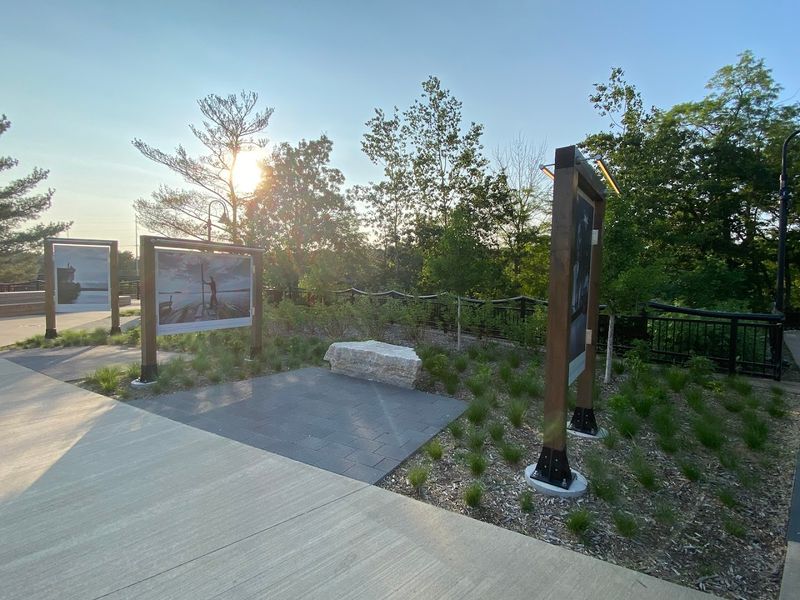
Historical photographs and interpretive displays line portions of the riverwalk under the designation Soul of the River, transforming the pathway into an informal outdoor museum. These installations provide context for the landscape around you, explaining how the Wisconsin River shaped both the physical geography and human history of this area.
The information appears accessible rather than academic, written for general audiences rather than specialists.
The gallery format allows you to engage as deeply or superficially as your interest dictates. Some visitors pause to read every panel and study each photograph carefully, while others glance briefly before continuing their walk.
This flexibility respects different learning styles and attention spans without penalizing either approach.
The outdoor setting for this historical presentation makes sense given the subject matter. Reading about the river while standing beside it creates immediate connection between past and present, text and landscape.
The displays help visitors understand that the scenery they admire has been attracting attention and inspiring responses for generations before their arrival.
Photographs By Joseph Leute Highlight The River’s Connection To Wisconsin Dells
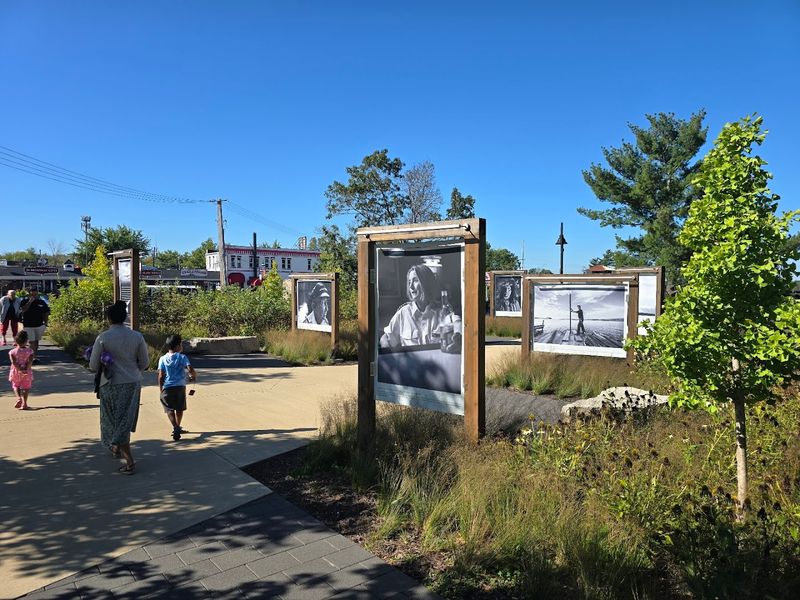
Joseph Leute’s photographic work documents the Wisconsin River with an eye toward capturing both its beauty and its significance to regional identity. His images appear throughout the riverwalk displays, offering visual evidence of how the river and its surrounding formations have looked across different eras.
The photographs range from dramatic landscape compositions to more intimate details of rock textures and water patterns.
Comparing Leute’s photographs with the actual views before you creates an engaging exercise in observation. Some scenes have changed little over the years, while others show the marks of development and natural evolution.
This visual dialogue between documented past and experienced present adds depth to what might otherwise be simple sightseeing.
The inclusion of artist-specific work rather than generic historical images gives the displays more coherence and intentionality. Leute’s consistent vision across multiple photographs creates a unified perspective on the river rather than a scattered collection of unrelated pictures.
This curatorial choice elevates the riverwalk beyond basic signage into something approaching genuine public art installation.
The Riverwalk Works For Walking, Biking, Or A Gentle Run
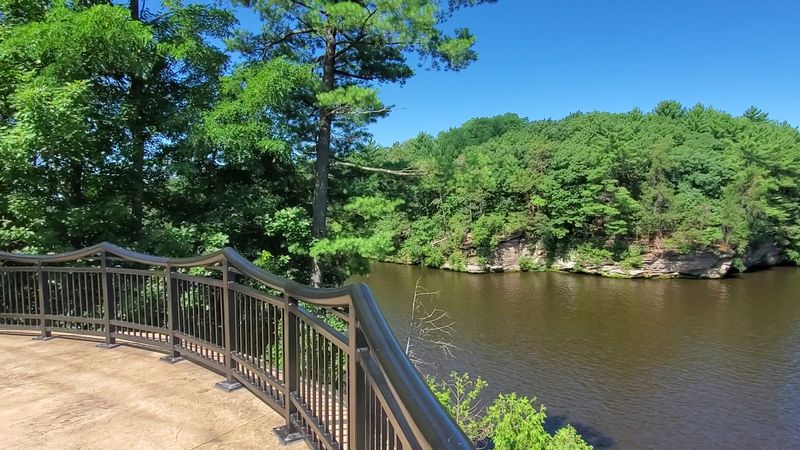
The pathway accommodates multiple forms of human-powered transportation without requiring separate lanes or complicated right-of-way rules. Walkers, joggers, and cyclists share the space with generally good results, most users showing reasonable awareness of others around them.
The width prevents most conflicts, allowing faster travelers to pass slower ones without requiring anyone to step off the pavement.
Cyclists find the smooth surface and gentle grade ideal for casual riding, though the short length limits serious training potential. The route works better for recreational biking than athletic cycling, serving families and tourists rather than dedicated riders logging miles.
Still, the connection to downtown makes it useful for those staying nearby who want a quick ride without dealing with street traffic.
Runners use the riverwalk for warm-ups, cool-downs, or easy recovery runs rather than intense workouts. The scenic surroundings provide pleasant distraction during these lower-intensity efforts, and the out-and-back format allows simple distance measurement.
The flat terrain protects joints from the pounding of downhill running while avoiding the cardiovascular demands of climbing.