
This Quiet Wisconsin Park Is Hiding One Of The State’s Coolest Outdoor Art Surprises
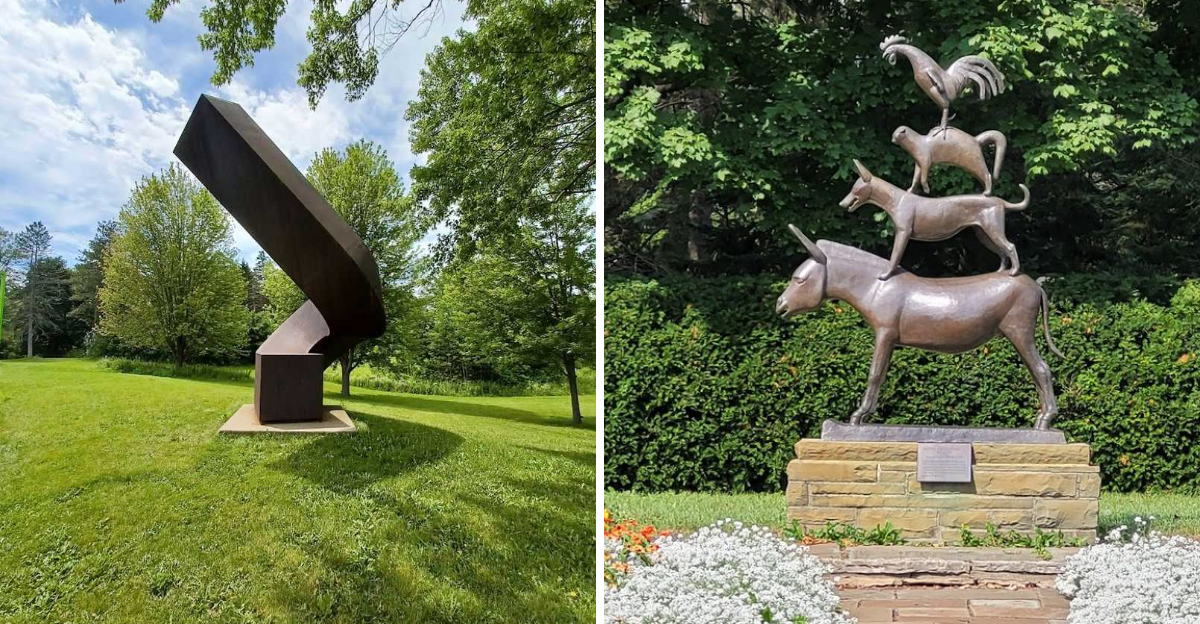
Blink while driving through River Hills and you might miss one of Wisconsin’s most surprising outdoor art escapes. Past an unassuming entrance, open lawns, ponds, and tall trees turn into a gallery without walls.
Large sculptures appear where you least expect them, standing in meadows, watching over the water, or catching the light between branches. Nothing feels stiff or overly polished.
That is the fun of it. You can wander without a strict route, pause when something odd catches your eye, and let the setting do half the talking.
Art feels less intimidating here, more like part of the landscape. It is peaceful, playful, and far more memorable than a quick glance at the road would suggest.
The Garden Spreads Across 40 Acres
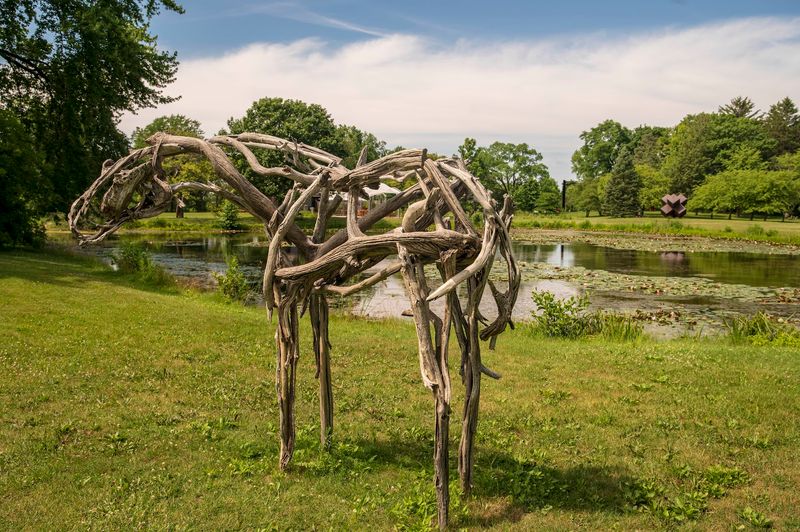
Walking into Lynden Sculpture Garden feels like stepping onto a private estate that decided to share its secrets. The property unfolds across 40 acres of rolling terrain that includes open meadows, mature woodlands, and carefully maintained gardens.
This generous scale gives each sculpture room to breathe and allows visitors to experience art without the crowded feeling common in urban galleries.
The size also means you can spend as little as an hour or as much as half a day exploring. Families spread out across the grounds, photographers find new angles in different light, and solo visitors discover quiet corners where a single sculpture commands complete attention.
The lack of paved pathways adds to the natural feeling, though it also means mud becomes part of the experience after rain.
More Than 50 Sculptures Fill The Grounds
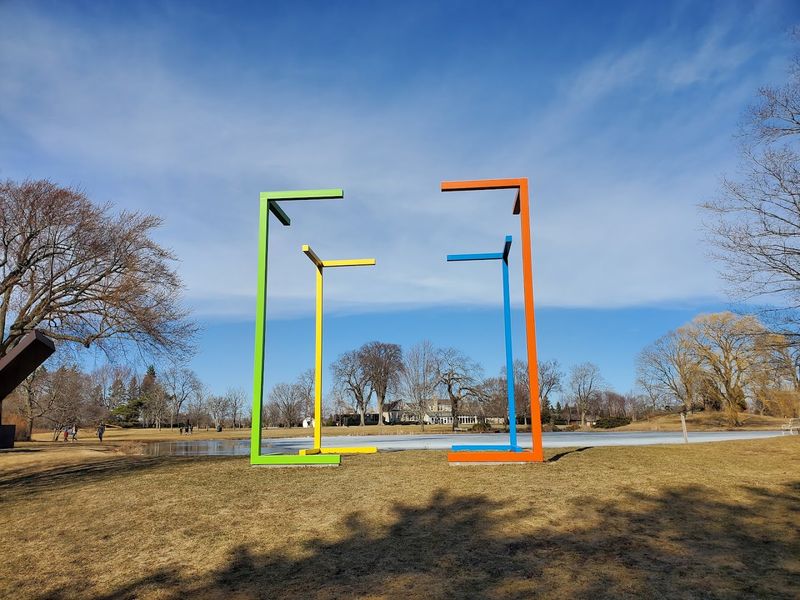
The collection at Lynden includes more than 50 sculptures, ranging from human-scale pieces to towering works that reach several stories high. Materials vary widely, with bronze, steel, stone, and concrete all represented.
Some sculptures feel industrial and bold, their metallic surfaces catching sunlight and reflecting the changing sky.
Others blend more quietly into their surroundings, inviting visitors to stumble upon them during a walk. The variety means that personal taste finds something to admire here.
Abstract forms dominate the collection, but figural works also appear, and the contrast between different artistic approaches creates visual conversation across the landscape.
Children often race from one sculpture to the next, while adults linger over individual pieces, circling them to understand how the artist used space and material.
Art And Nature Share The Same Space
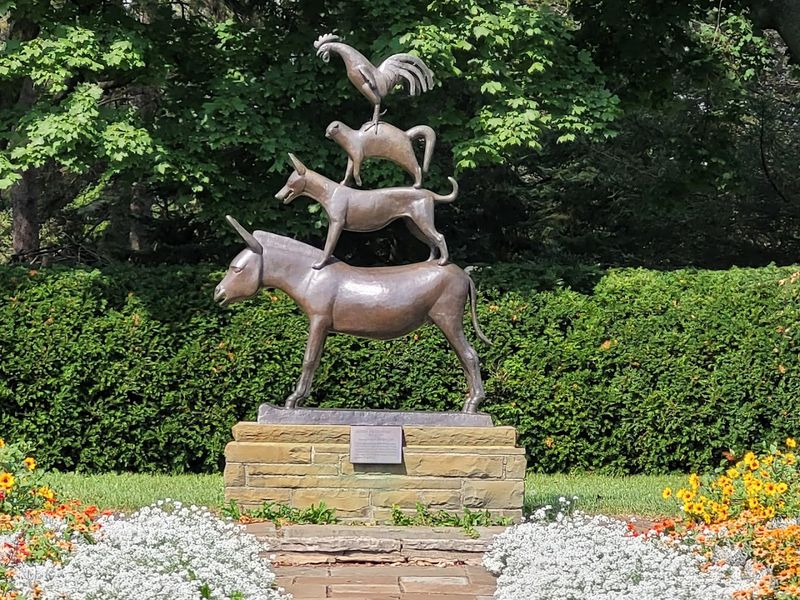
At Lynden, sculptures do not sit on pedestals in sterile white rooms. They stand in tall grass, emerge from wildflower meadows, and cast shadows across pond surfaces.
This integration of art and environment changes how visitors experience both elements.
A sculpture that might feel cold or imposing indoors gains warmth when framed by oak trees or reflected in water. The natural setting also shifts with seasons, so a piece viewed in spring when surrounded by blooming flowers carries a different mood than the same work in autumn when leaves turn and fall.
Birds perch on sculptures, insects buzz past them, and weather slowly alters their surfaces. This ongoing dialogue between human creation and natural process gives the garden a living quality that static indoor collections cannot match.
The Setting Includes Parkland, Lake, And Woodland
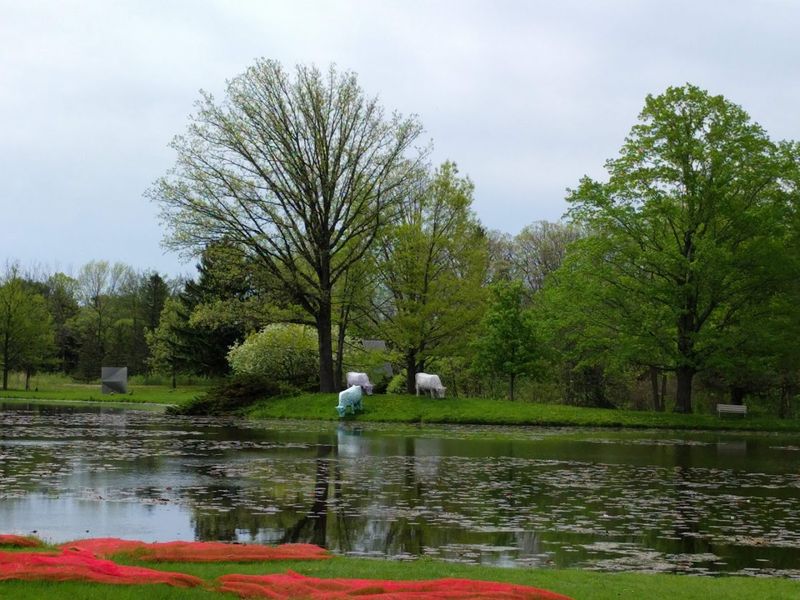
Lynden Sculpture Garden occupies varied terrain that includes open parkland, a peaceful lake, and sections of mature woodland. Each environment offers a different backdrop for sculpture and creates distinct moods as visitors move through the property.
The lake attracts waterfowl, turtles, and frogs, adding sound and movement to what could otherwise feel like a static art experience.
Woodland areas provide shade on hot days and create intimate spaces where smaller sculptures feel at home among tree trunks and dappled light. The open parkland, by contrast, allows larger works to command attention from a distance, their silhouettes visible across the grounds.
This diversity of landscape also supports a range of plant life, from native grasses to cultivated gardens, giving nature enthusiasts plenty to observe beyond the sculpture collection itself.
The Collection Began With Harry And Peg Bradley
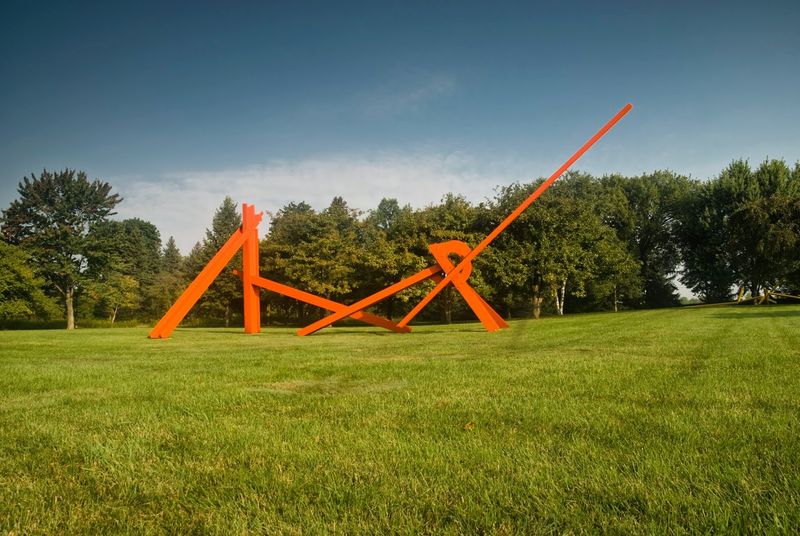
The story behind Lynden Sculpture Garden begins with Harry and Peg Bradley, collectors who started acquiring contemporary sculpture in the mid-20th century. Their vision centered on experiencing art outdoors rather than confining it to interior spaces.
Over decades, they assembled a collection that reflected their personal taste while also documenting important movements in modern sculpture.
The Bradleys chose their River Hills property specifically for its potential as an outdoor gallery. They placed sculptures thoughtfully, considering how each piece would interact with the landscape and with other works nearby.
Their approach was curatorial but also deeply personal, creating an environment that felt more like a curated home than a public institution.
This personal touch remains evident today, giving Lynden a warmth and coherence that purely institutional collections sometimes lack.
Many Sculptures Date To The 1960s And 1970s
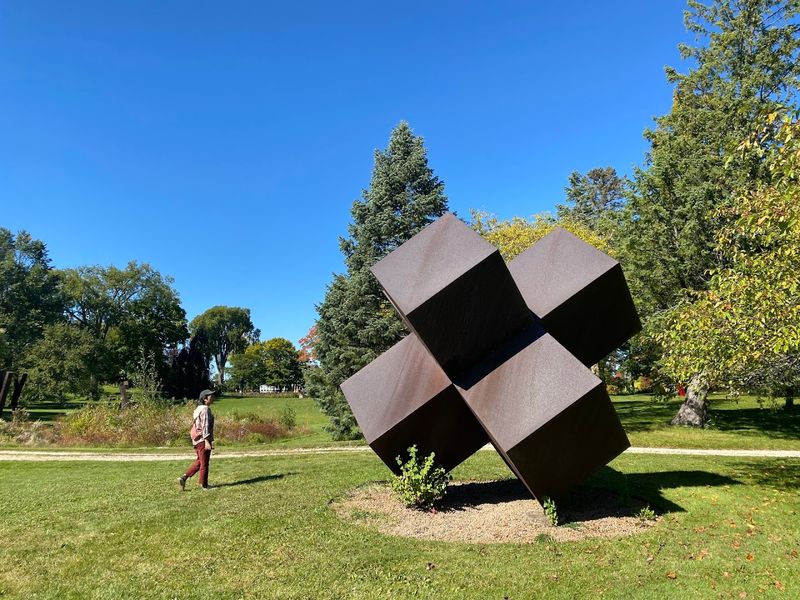
A significant portion of the collection dates to the 1960s and 1970s, placing Lynden within an important period of American sculpture. These decades saw artists experimenting with new materials, industrial processes, and abstract forms.
Works from this era often feature bold geometries, raw materials like weathering steel, and an interest in how sculpture relates to landscape.
Walking through Lynden offers a chance to see these artistic concerns play out across multiple works and styles. Some pieces embrace minimalism, while others explore organic forms or industrial aesthetics.
The concentration of work from this period also provides historical context, showing how different sculptors approached similar questions about form, material, and space.
For visitors interested in art history, the garden functions as an outdoor classroom where ideas can be compared and contrasted in real time.
The Garden Opened To The Public In 2010
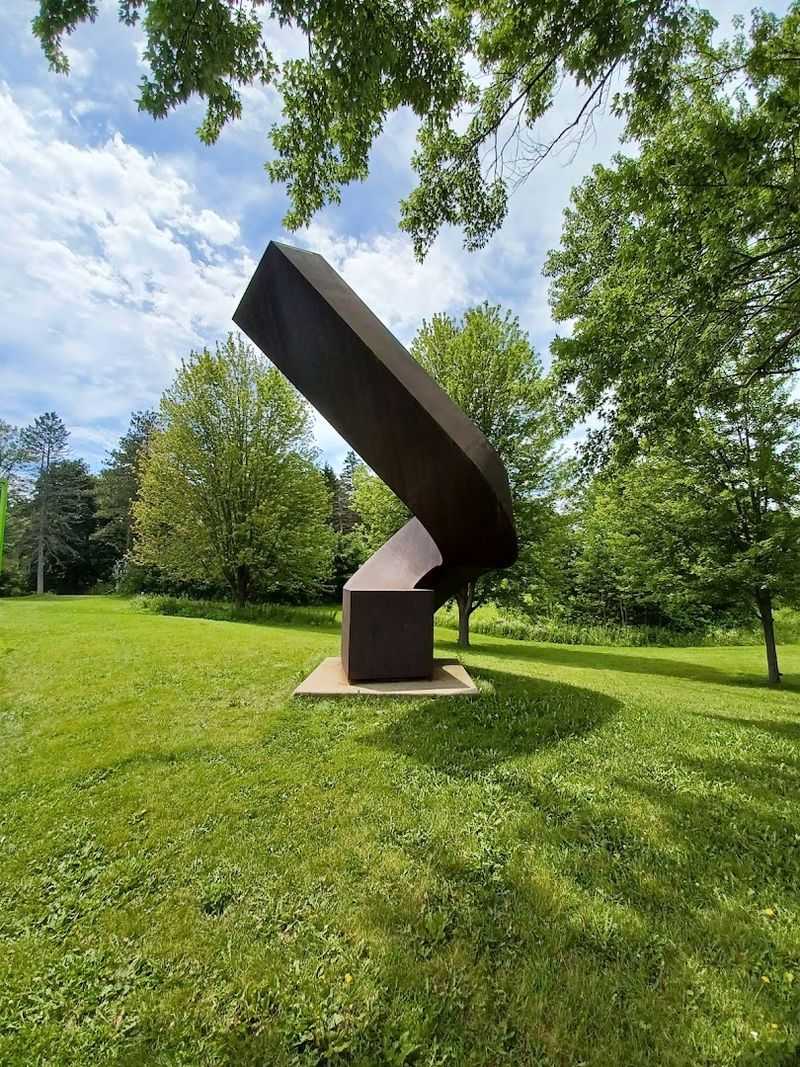
For many years, Lynden remained a private collection accessible only to invited guests. That changed in 2010 when the garden opened to the public, transforming a personal vision into a shared resource.
This transition required careful planning to balance preservation of the site with public access and education.
Today, visitors can explore the grounds free of charge during open hours, which run from 10 AM to 5 PM Tuesday through Sunday. The garden closes on Thursdays for maintenance.
Staff members are available to answer questions, and special programs occasionally offer guided tours or artist talks.
The decision to open publicly has introduced thousands of people to contemporary sculpture who might never have encountered it otherwise, expanding the Bradleys’ original vision while honoring their commitment to experiencing art in natural settings.
Visitors Can Explore At Their Own Pace
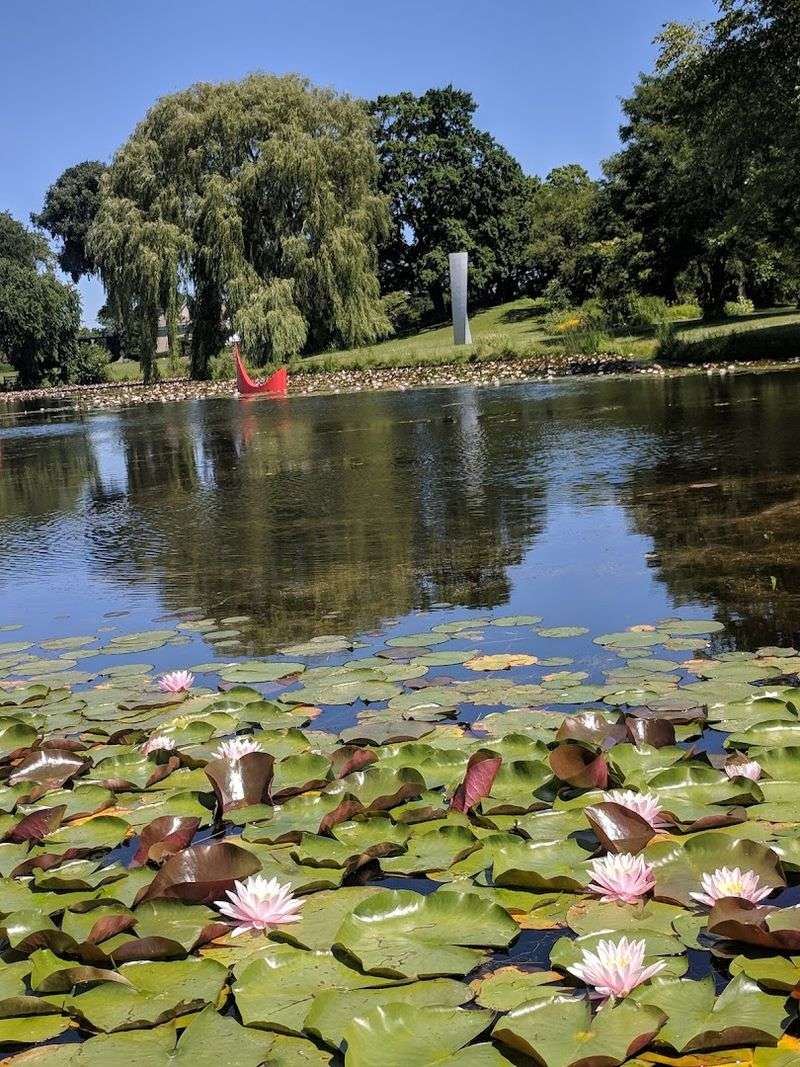
Lynden operates on a self-guided model that allows visitors to create their own experience. No prescribed route dictates how you should move through the space, and no time limit rushes your visit.
This freedom means families can let children run ahead to discover the next sculpture, while others might spend 20 minutes circling a single work.
The garden provides maps that identify sculptures and offer basic information, but interpretation remains open. Some visitors bring sketchbooks or cameras, others simply walk and observe.
The informal atmosphere encourages interaction with the space in whatever way feels most comfortable.
This approach also means repeat visits reveal new details as you notice things missed before or return in different seasons when light and vegetation alter the entire experience. The garden rewards both quick stops and extended contemplation.
The Outdoor Setting Makes Every Sculpture Feel Different
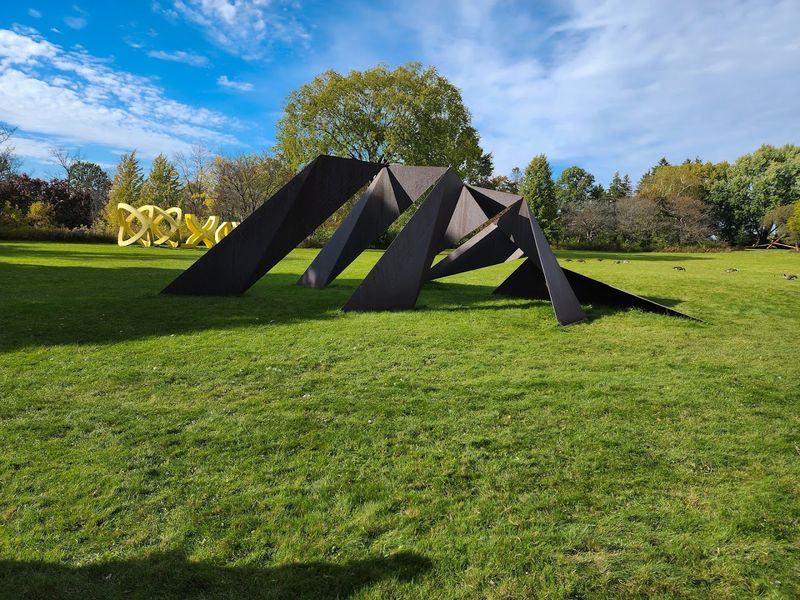
Indoor galleries control light, temperature, and context to present art in consistent conditions. Lynden rejects this control entirely, allowing weather, seasons, and time of day to constantly reshape how sculptures appear.
Morning fog might soften hard edges, afternoon sun creates dramatic shadows, and autumn leaves pile around bases.
Rain makes metal surfaces gleam differently than they do when dry, and snow transforms the entire landscape into something new. These changes mean a sculpture you saw in July carries a completely different presence in December.
The outdoor setting also introduces scale relationships that indoor spaces cannot match.
A large work that might dominate a gallery room finds itself competing with trees, sky, and horizon, creating humility through context. This dynamic relationship between art and environment ensures that Lynden never feels static or fully knowable.
The River Hills Location Feels Quiet And Unexpected
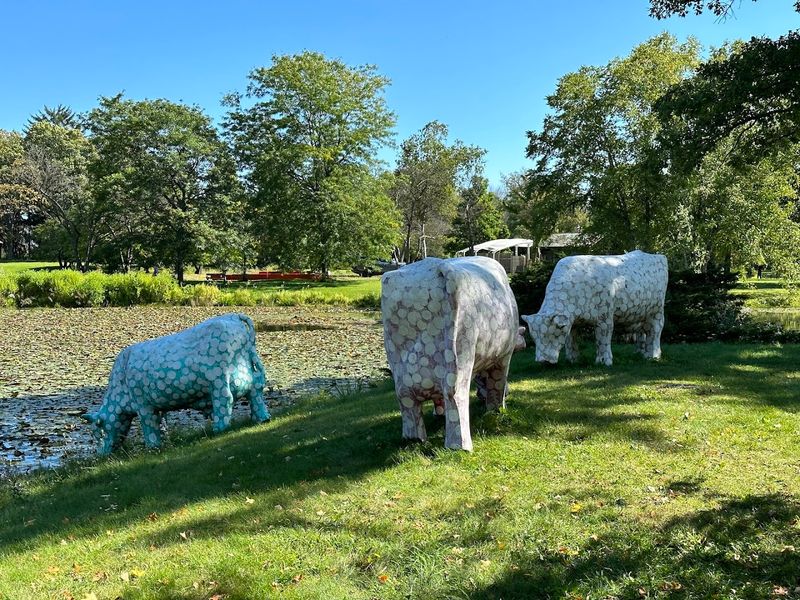
River Hills occupies a quiet corner of suburban Milwaukee, making Lynden feel like a discovery rather than a destination. The residential neighborhood gives no indication that a major sculpture collection sits just off Brown Deer Road.
This unexpectedness adds to the experience, as visitors often express surprise that something of this quality exists in such an unassuming location.
The quietness also enhances the contemplative atmosphere inside the garden itself. Traffic noise fades quickly once you enter the grounds, replaced by birdsong, rustling leaves, and occasional conversation.
This separation from urban bustle creates space for genuine attention to art and nature.
For locals, Lynden represents a hidden resource that rewards those who take time to explore their own region. For visitors from elsewhere, it offers a reason to venture beyond downtown Milwaukee into surrounding communities.