
This Short New York Trail Takes You Through Centuries Of Native American History
New York has a trail so rich in Native American history it turns a short walk into something that feels genuinely significant before you have covered the first mile.
Ancient sites, layered stories, and a landscape that carries the kind of meaning that takes centuries to accumulate and deserves far more than a passing glance.
The trail is short. The history it moves through is anything but.
Every step here covers ground that meant something to the people who knew it long before anyone else arrived. New York has natural and cultural spaces worth exploring in every direction but very few that deliver this specific combination of accessibility and genuine historical depth.
Go with curiosity, go with respect, and take the kind of unhurried pace that a trail this significant actually deserves. The history here has been waiting a very long time for the right kind of attention.
A Place Where History Breathes Through Every Step
Not every historic site feels alive, but some places carry a weight that you notice the moment your feet hit the ground. The land at this New York site has been home to Seneca people for centuries, and that presence is felt in every corner of the property.
The Seneca are part of the Haudenosaunee, also known as the Iroquois Confederacy, one of the most sophisticated governing bodies in the history of North America.
Their influence shaped ideas about democracy, women’s rights, and environmental stewardship long before those concepts became mainstream conversations.
Walking the trails here is not just a nature stroll. Interpretive signs line the paths, sharing oral traditions, plant knowledge, and historical context that most school textbooks skip entirely.
The stories feel immediate and real.
About 7.6 miles of interconnected trails wind through the property, open year-round and completely free to hike. You can spend a full day exploring or focus on a single loop that takes under an hour.
Either way, you leave knowing something you did not know before, and that is a rare and worthwhile thing.
Ganondagan State Historic Site In Victor, New York

Ganondagan State Historic Site sits at 7000 Co Rd 41, Victor, NY 14564, and carries a title that few sites in the country can claim. It is the only New York State Historic Site focused entirely on a Native American theme, and the only Seneca town developed and interpreted anywhere in the United States.
The name Ganondagan, pronounced ga-NON-da-gan, translates to “Town of Peace” in the Seneca language. That name is not just poetic.
It reflects the real historical role this land played as a center of diplomacy, culture, and community for the Haudenosaunee Confederacy.
Recognized as a National Historic Landmark since 1964 and established as a state historic park in 1987, the site spans roughly 569 acres of preserved land. The property protects the original location of a large 17th-century Seneca town that stood here peacefully for generations.
The site is open Wednesday through Saturday from 9 AM to 4 PM. Admission to the trails is free, and the Seneca Art and Culture Center welcomes visitors looking for a deeper experience.
Calling ahead at 585-924-5848 is always a smart move before your visit.
The Trail Of Peace And What It Actually Teaches
At just 0.8 miles, the Trail of Peace is the most popular route on the property, and its short length is part of what makes it so accessible. Families with young children, older adults, and casual hikers all find it manageable without sacrificing substance.
Along the loop, interpretive signs explain the oral traditions of the Peacemaker, a central figure in Haudenosaunee history who united the five original nations into the Confederacy.
The story of how five distinct peoples came together under a shared set of laws is genuinely fascinating, and the trail tells it with care and clarity.
Jikonsaseh, known as the Haudenosaunee Mother of Nations and Queen of Peace, also features prominently in the trail’s narrative. Her role in establishing the Confederacy gave women a foundational voice in governance centuries before most societies considered the idea.
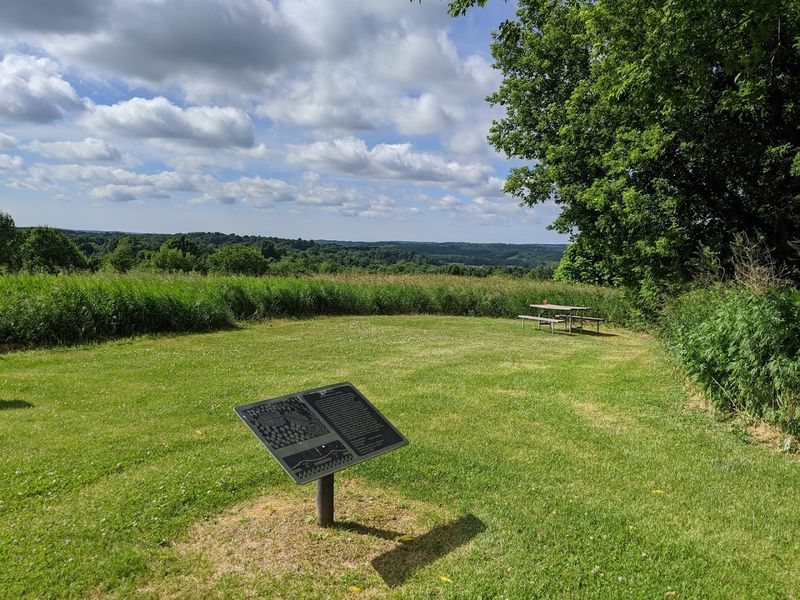
The mowed path winds through open land where the original Seneca town once spread across the hillside. Standing there on a clear day, looking out over the same view those communities once shared, gives you a perspective that no museum exhibit can fully replicate.
It is grounding in the most literal sense.
The Seneca Bark Longhouse Up Close
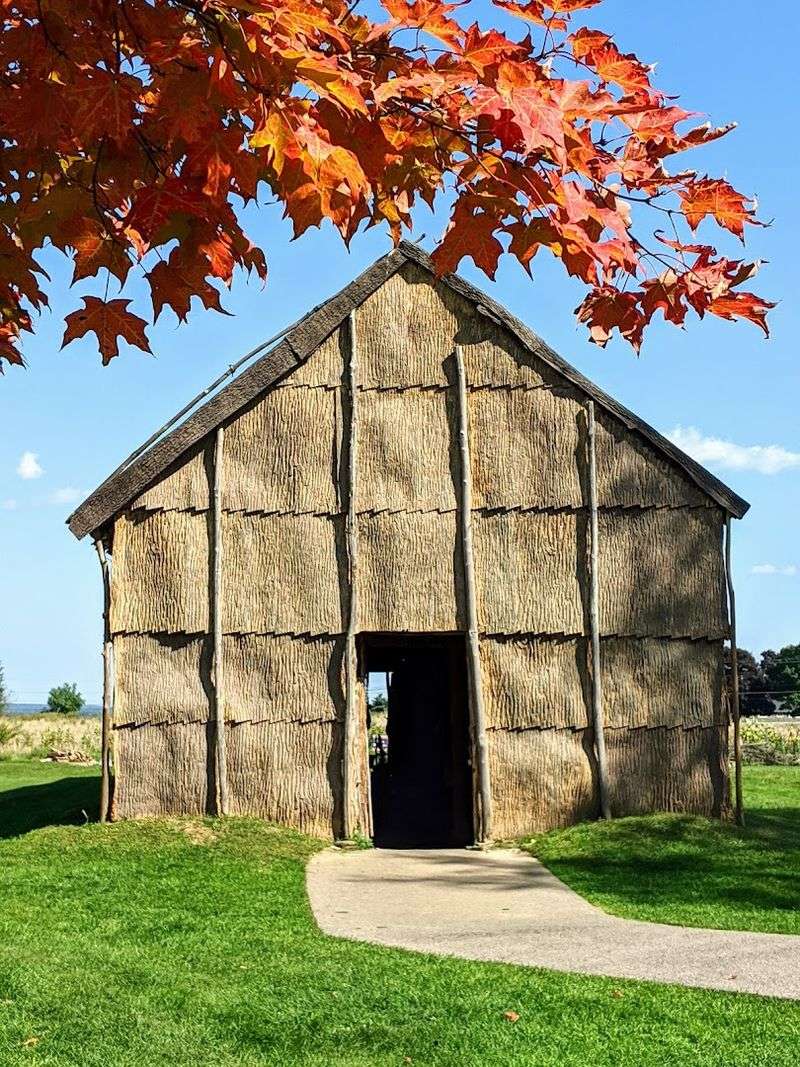
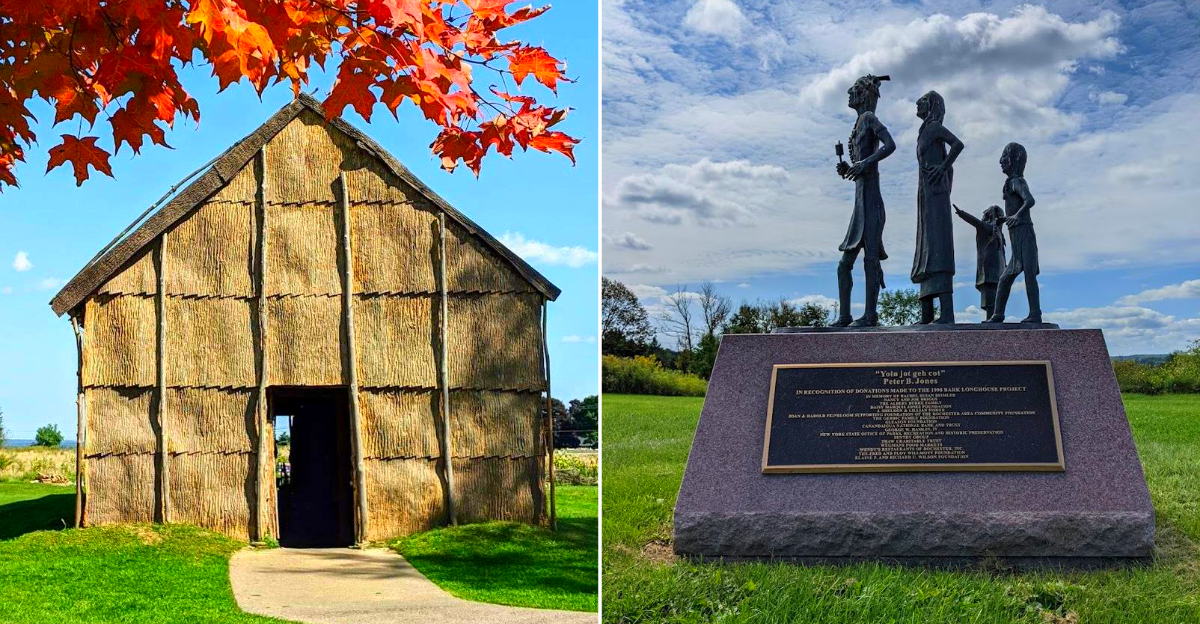
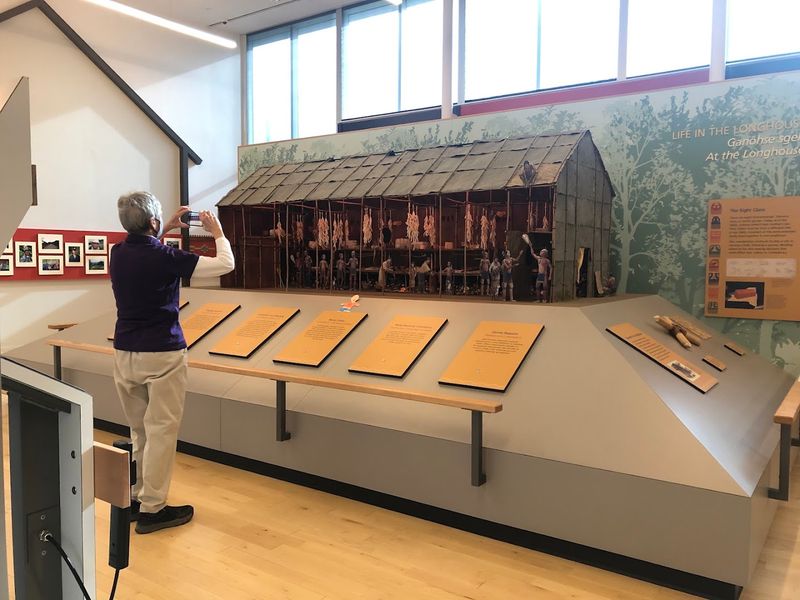
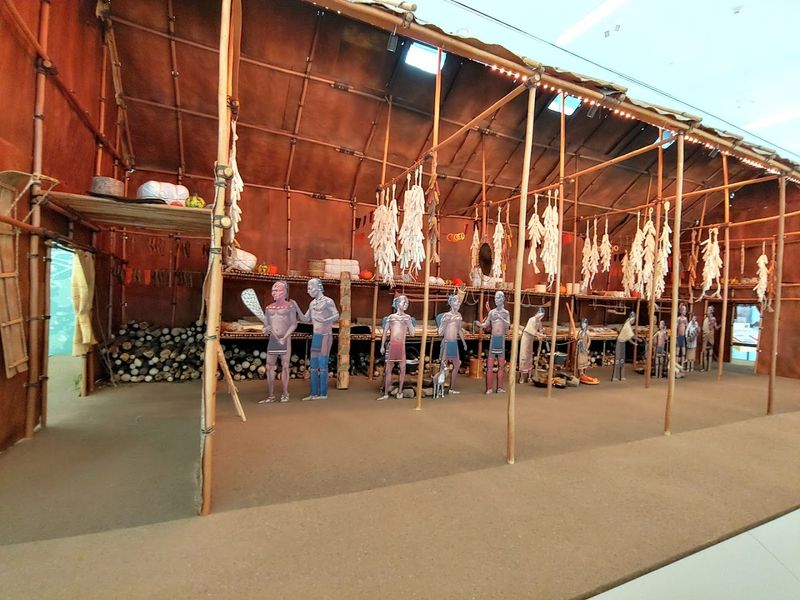
Built in 1998, the full-size Seneca Bark Longhouse at Ganondagan is one of the most striking structures you will encounter at any historic site in New York. It stands as a faithful, full-scale reconstruction of the kind of communal dwelling that Seneca families shared during the late 1600s.
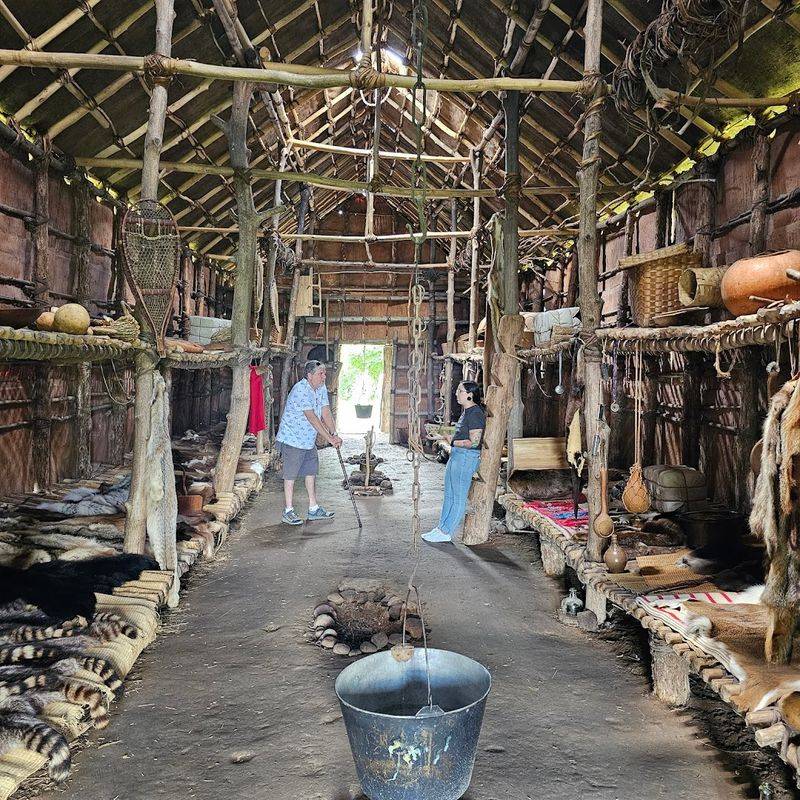
The interior is fully furnished with reproductions of 17th-century Seneca objects alongside colonial-era trade goods. This offers a layered picture of daily life during a period of enormous cultural and political change. Every detail inside reflects careful research and deep respect for the source material.
Guides at the longhouse are knowledgeable and engaging, walking visitors through how food was stored and prepared, and how community decisions were made within its walls.
The longhouse opens to the public beginning in May, so timing your visit during warmer months gives you full access to this centerpiece experience.
Even during the winter months when the interior is closed, the structure itself remains visible and worth seeing from the outside. Its sheer scale alone tells a story about the sophistication and community-centered design of Seneca architecture that words alone cannot quite capture.
Earth Is Our Mother Trail And The Science Of Seneca Plant Knowledge
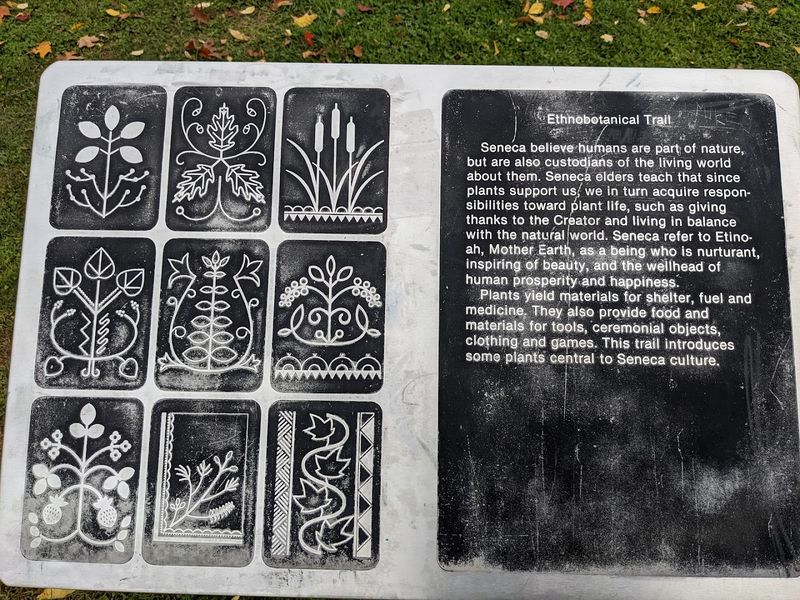
Few trails in New York manage to be both a nature walk and a science lesson at the same time, but the Earth is Our Mother Trail pulls it off with ease.
Running approximately 1.7 miles round trip, the path focuses on the deep relationship the Seneca people maintained with the plant world around them.
Interpretive signs along the route explain specific plants and their uses for food, medicine, and ceremonial purposes. The knowledge encoded in those signs represents generations of careful observation and accumulated wisdom that modern science has only recently begun to take seriously.
The Seneca understanding of ecology was not casual or incidental. It was systematic, intentional, and deeply tied to their spiritual and cultural identity.
Walking the trail with that context in mind transforms a pleasant stroll into something genuinely educational.
Spring and early summer are particularly rewarding times to walk this trail, when many of the referenced plants are actively growing and easier to identify. Bring a notebook if you are the type to jot things down.
You will likely find yourself pausing at nearly every sign, not because you have to, but because the information is legitimately interesting and hard to rush past.
Fort Hill And The Granary That Fed A Nation
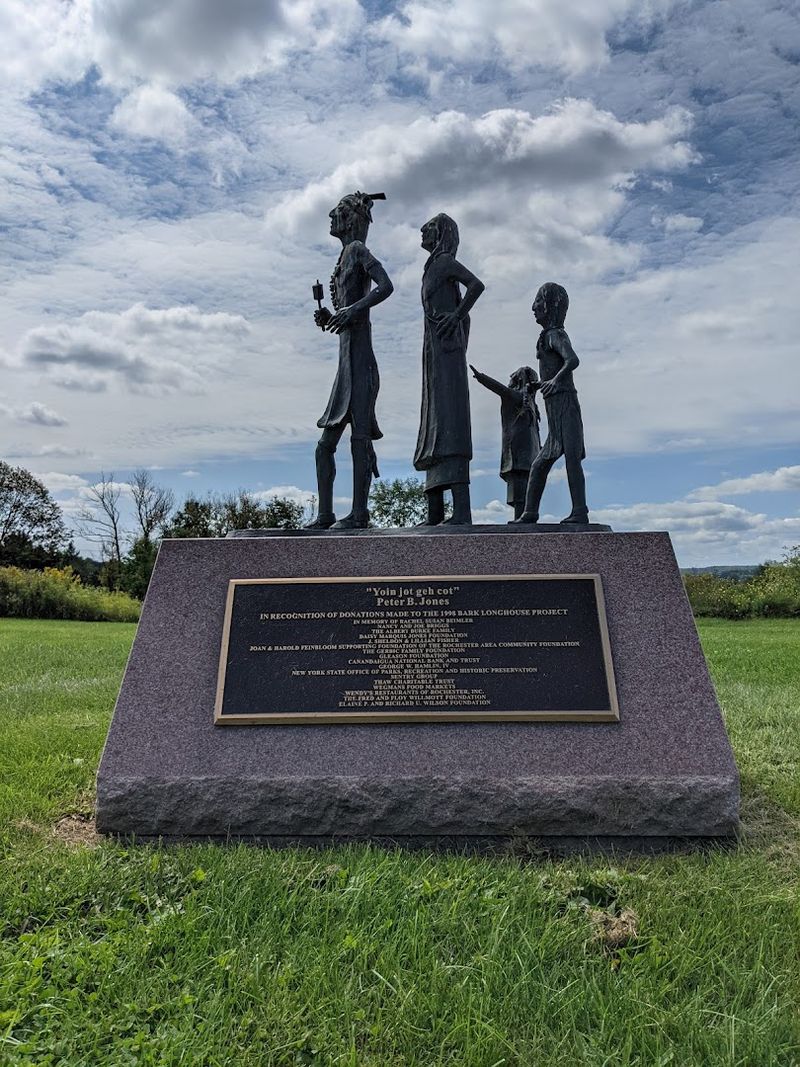
About a mile from the main visitor center sits Fort Hill, a 33-acre section of the property with its own distinct story to tell. The area once held a fortified granary that served as the primary food storage facility for the broader Haudenosaunee Confederacy.
Corn was the backbone of Haudenosaunee agriculture and diplomacy. Controlling the supply of corn meant controlling a significant portion of regional power, and Ganondagan’s granary made it one of the most strategically important locations in the entire confederacy.
It earned the title of breadbasket for good reason.
The Granary Trail at Fort Hill runs between 0.6 and 0.7 miles and features interpretive content drawn from journal entries recorded during the 1687 Denonville campaign.
French forces under the Marquis de Denonville targeted the granary specifically, understanding that destroying the food supply was the most effective way to weaken the Seneca’s position during the Beaver Wars.
Walking the trail with that backstory in mind adds a layer of weight to the landscape. The hill looks peaceful today, covered in grass and framed by open sky, but the ground beneath it holds centuries of significance that the interpretive markers bring to the surface with clarity and honesty.
The Seneca Art And Culture Center Inside The Site
Opened in 2015, the Seneca Art and Culture Center is a 17,300-square-foot facility that anchors the visitor experience at Ganondagan. It is modern, well-designed, and genuinely impressive in scope without feeling sterile or disconnected from the land it sits on.
Inside, interactive exhibits cover Haudenosaunee art, cultural practices, and contributions to society in ways that feel current rather than archival. The exhibits do not treat Seneca culture as something frozen in the past.
They present it as a living, evolving tradition with roots that run centuries deep.
The Orientation Theater inside the center screens a film about the Iroquois Creation Story, and it is well worth the ten minutes it takes to watch.
Visitors who see the film first tend to get significantly more out of everything else on the property. Because it provides a cultural framework that makes the trails and longhouse much richer experiences.
A gift shop on site carries authentic items that support the site’s mission, making it a thoughtful place to pick up something meaningful. The staff throughout the center are consistently praised for their depth of knowledge and their genuine enthusiasm for sharing it.
Plan to spend at least an hour inside before heading out to the trails.
The Haudenosaunee Confederacy And Why It Still Matters
The Haudenosaunee Confederacy, also known as the Iroquois Confederacy or the League of Six Nations, is one of the oldest continuously operating democratic governing systems in the world. Ganondagan sits at the heart of the territory where that system took root and flourished.
The Confederacy united five original nations, including the Seneca, Cayuga, Onondaga, Oneida, and Mohawk, under a shared constitution called the Great Law of Peace.
Historians and political scholars have long noted its structural similarities to the United States Constitution, and some argue the influence was direct rather than coincidental.
At Ganondagan, the story of the Confederacy’s founding is told through the Trail of Peace and the museum exhibits. With particular attention to the Peacemaker’s journey and the role of key figures like Jikonsaseh.
Her story challenges a lot of assumptions about who held power and how decisions were made in early North American governance.
Understanding the Confederacy also reframes how visitors think about the 1687 French attack on Ganondagan. It was not simply a raid on a village.
It was a calculated strike against one of the most powerful political entities in the northeastern part of the continent. That context transforms the entire site.
Planning Your Visit To Ganondagan For Maximum Reward
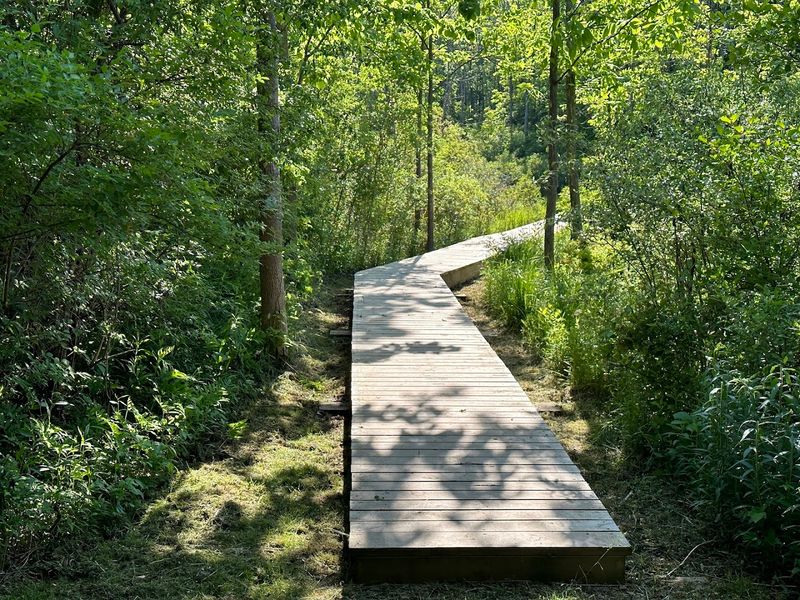
Getting the most out of Ganondagan takes a little planning, and the effort pays off immediately. The site is open Wednesday through Saturday from 9 AM to 4 PM, so a midweek or weekend morning visit gives you the most time to explore without feeling rushed.
The trails are free and open year-round, which means even if you visit outside operating hours for the center, the land itself is accessible. That said, visiting when the Seneca Art and Culture Center is open adds enormous depth to the experience and is strongly recommended for first-time visitors.
Comfortable walking shoes are a practical necessity, especially if you plan to cover multiple trails. The terrain is generally gentle, but some sections at Fort Hill have more elevation than the main loop.
Bringing water and a light snack is a smart call since there is no food service on the property.
Summer brings special programming including demonstrations, music festivals, and cultural events that draw visitors from across New York and beyond. Checking the calendar at ganondagan.org before your trip can turn a good visit into a genuinely memorable one.
The site rewards curiosity, and the more you bring with you, the more you take home.