
This Small New Hampshire Town Has Serious Movie Set Charm
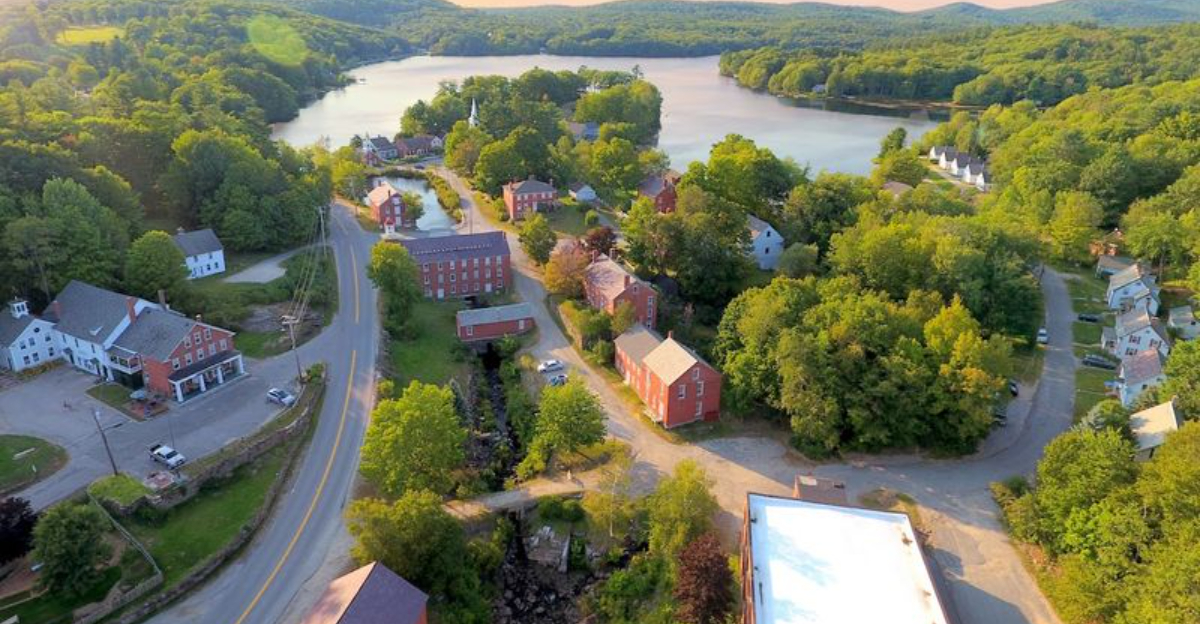
Some places feel staged. Too curated. Like someone went overboard trying to make history look pretty. And then there are places that just are, no effort, no performance, just brick and water and two hundred years of quiet stubbornness staring you in the face.
This is one of them. In New Hampshire, this tiny town has mill buildings that have refused to crumble and ponds so still they look painted. Paths that crunch under your feet the same way they did for workers who never owned a car, a phone, or a single convenience of modern life.
It’s the kind of place that makes you slow down, not because a sign told you to, but because something in your chest actually makes you.
So if you’ve been hunting for somewhere that hands you history without the velvet ropes and the gift shop, you just found it. Here’s why people who visit once almost always start planning a return trip before they’ve even left.
A Mill Village Frozen In Time
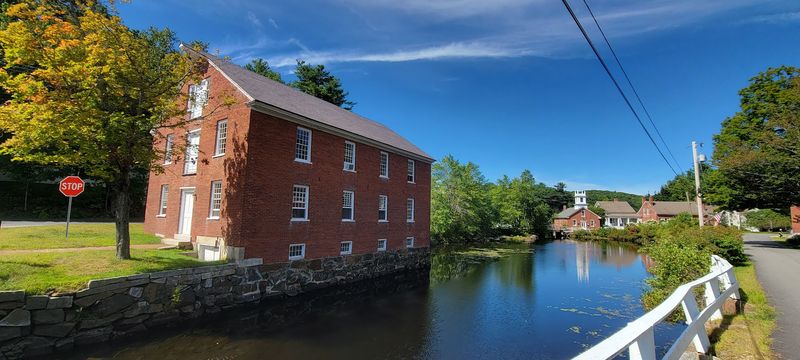
Very few places in the United States have managed to preserve an entire 19th-century mill complex the way Harrisville has. The original brick buildings, stone walls, and millponds are all still standing, and they have not been converted into something unrecognizable.
What you see today is essentially what workers saw over 150 years ago. The mill village was built primarily between the 1820s and 1850s, and it operated as a working wool textile center for decades. When the industry declined, the town did not bulldoze its past.
Instead, local residents and preservation groups worked to preserve those structures. That effort helped Harrisville earn recognition on the National Register of Historic Places as a historic district.
You will notice that the architecture feels unusually cohesive here. The red brick buildings, granite foundations, and wooden worker housing all share a visual language that makes the entire village look like a single, carefully designed set.
Harrisville Designs, a weaving studio still operating in the original mill, keeps that textile tradition alive in a real and tangible way. Walking through this village, you get a strong sense of continuity, where the past and present exist comfortably side by side.
Filmmakers And Photographers Are Drawn Here
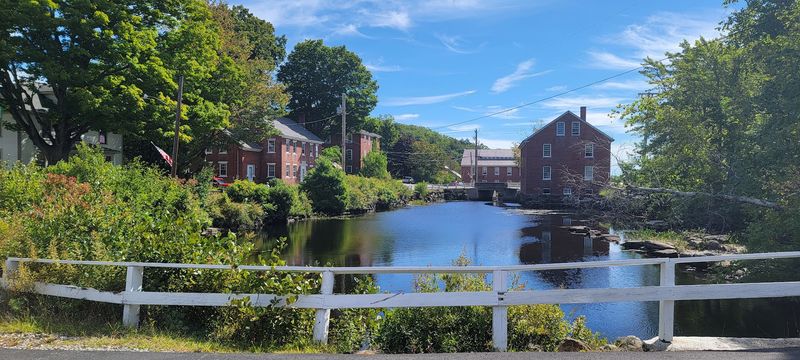
There is a reason Harrisville keeps showing up on photography blogs and travel features. The mix of brick architecture, still water reflections, and soft New England light creates a naturally cinematic atmosphere that is hard to replicate elsewhere.
You do not need filters or heavy editing here because the scenery does the work for you.
The millpond reflections are especially striking. On calm mornings, the brick buildings mirror perfectly in the water, creating the kind of symmetrical composition that photographers travel hours to find.
The surrounding hills add depth to every shot, and the changing seasons mean the palette shifts dramatically throughout the year.
For filmmakers, the appeal goes beyond visuals. The village has the structural integrity of a real historical site, not a replica. That authenticity is nearly impossible to recreate on a soundstage.
Productions looking for a convincing 19th-century New England setting have a ready-made location here that requires minimal dressing or modification.
Even if you are not a professional photographer, bringing a camera to Harrisville is genuinely worthwhile. Every corner of the village offers a composition that feels polished and intentional.
The early morning and late afternoon light casts warm tones across the brick and stone, making every image feel thoughtfully framed.
The Monadnock Region Sets The Scene
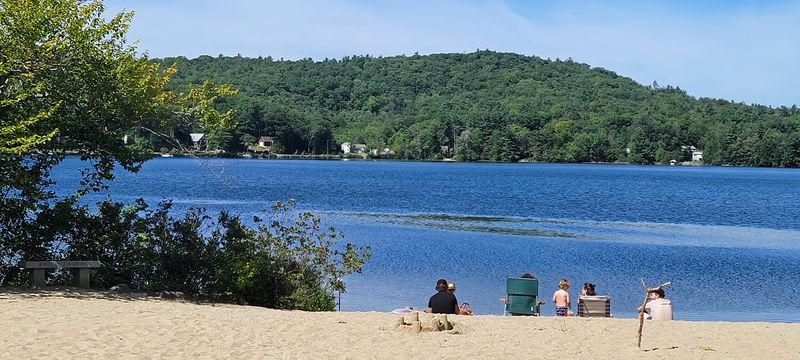
Harrisville is in the Monadnock region of southern New Hampshire, and the landscape surrounding the village is a big part of its overall charm. Rolling hills, dense forests, and quiet lakes frame the town in a way that feels genuinely untouched.
The region is named after Mount Monadnock, one of the most climbed mountains in the world, which sits just a short drive away.
The natural setting amplifies the historic character of the village. When you look out from the millpond, there are no highways, no big box stores, and no commercial sprawl interrupting the view.
That visual quiet is increasingly rare, and it is a major reason why the town feels so removed from the noise of everyday life.
Outdoor enthusiasts will find plenty to do in the surrounding area. Harrisville Pond and Chesham Pond offer swimming, kayaking, and fishing during warmer months. The trails nearby range from easy walks to more challenging hikes, giving visitors of all fitness levels something to enjoy.
The Monadnock region is known for its strong arts community and its commitment to preserving natural land. That helps the area around Harrisville stay remarkably unspoiled.
New Hampshire does a genuinely good job of protecting what makes this corner of the state so appealing.
Harrisville’s Living Textile Legacy
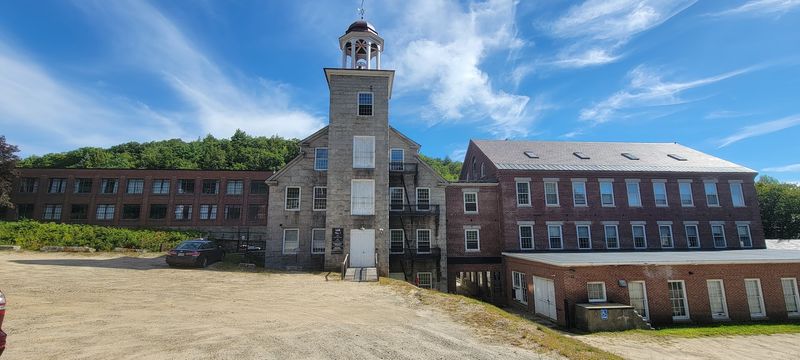
One of the most interesting things about Harrisville is that its textile heritage never actually stopped. Harrisville Designs at 41 Main Street has been making high-quality weaving yarns and looms since 1971.
It is a working studio and retail space that keeps the spirit of the original mill alive in a very direct way.
You can visit the shop and browse a wide selection of wool yarns, weaving kits, and handcrafted looms. The products are made with a clear focus on craft and quality, and the space itself is worth seeing.
Being inside the original mill building while handling yarn that continues a tradition stretching back nearly two centuries is a genuinely layered experience.
Harrisville Designs also offers weaving classes and workshops, which attract participants from across New England and beyond. If you are interested in fiber arts or want to explore the mill’s history in a hands-on way, a class here is a memorable way to spend a few hours.
Even if weaving is not your thing, stopping in to browse and look around is free and absolutely worth the few minutes it takes. The shop is a living piece of New Hampshire history that you can actually interact with, not just observe from a distance.
Architecture That Stops You In Your Tracks
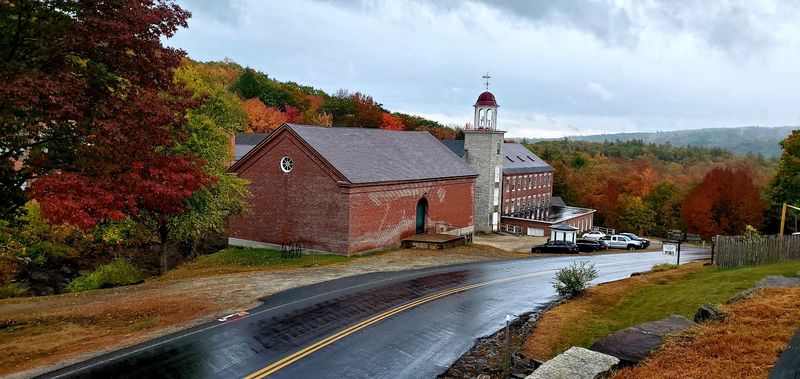
Architecture enthusiasts tend to react to Harrisville with a level of excitement that surprises even them. The village is a rare, intact example of early American industrial architecture, and that consistency is what sets it apart.
Most historic districts have a mix of eras and styles. Harrisville does not. Almost everything here was built within a relatively short window of time, using the same materials and the same aesthetic sensibility.
The red brick is the dominant material, quarried locally and laid with a precision that has held up remarkably well. The granite lintels and foundations add a weightiness to the structures that feels permanent and grounded.
Worker housing, the mill, a church, and a general store all share that same look, creating a streetscape that is hard to find elsewhere in the country.
What makes this especially striking is the human scale of the village. Nothing here is overwhelming or monumental. The buildings are sturdy and dignified, but they were built for real people doing real work, and that practicality comes through clearly.
You can spend an hour walking through the village, taking in the brickwork, window details, and the way the buildings meet the water. Every angle offers something worth looking at, and the visual reward is consistent throughout.
Seasonal Changes That Transform The Whole Town
One of the best things about Harrisville is that it looks stunning in every season, and each one offers a genuinely different experience. Fall is probably the most dramatic.
Foliage in this part of New Hampshire usually peaks in early to mid-October. When orange, red, and yellow leaves surround the brick buildings and reflect in the millpond, the whole scene feels almost surreal. It is the kind of scene that ends up on postcards and calendars.
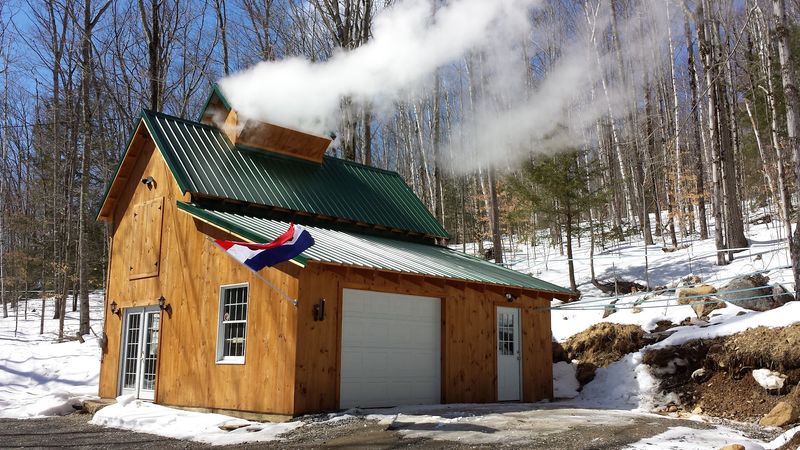
Winter brings a quieter kind of beauty. Snow settles on the granite walls and brick rooftops, and the millpond sometimes freezes over, creating a serene, almost monochromatic landscape.
The village is less visited in winter, which means you can often have the place almost entirely to yourself. That solitude has its own appeal.
Spring brings snowmelt and a soft green that slowly fills in around the buildings, while summer turns the nearby ponds into gathering spots for locals and visitors. Each season reveals a slightly different version of the same place.
If you can manage to visit more than once throughout the year, you will notice just how much the atmosphere shifts. Harrisville in October feels completely different from Harrisville in January, yet both versions are equally worth the trip across New Hampshire.
A Community That Genuinely Cares About Its History
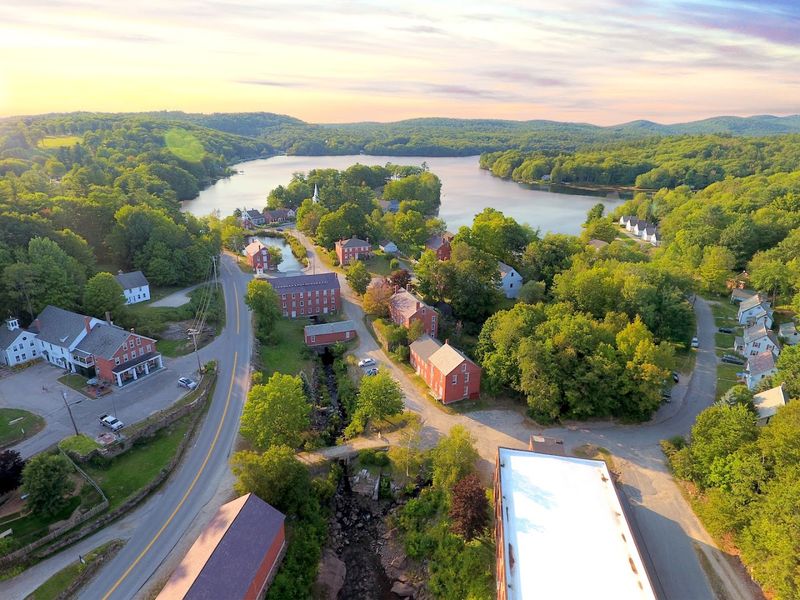
Preservation does not happen by accident. In Harrisville, the commitment to maintaining the village’s historic character comes directly from the people who live there.
With a population of fewer than 1,000 residents as of the 2020 census, this is a genuinely small community, and that smallness actually works in the town’s favor. Decisions about the built environment are personal and local, not corporate or bureaucratic.
Harrisville Preservation Inc. is an organization that has played a central role in protecting and restoring the historic mill complex over the decades.
Their work has ensured that the buildings remain structurally sound and visually intact, which is no small feat given the age and number of structures involved. Their efforts are a big reason why Harrisville looks the way it does today.
The community’s investment in its own history creates an atmosphere that feels genuine rather than performed. This is not a tourist trap dressed up to look historic. It is a real town where real people have made deliberate choices to honor what came before them.
That authenticity is something you can sense almost immediately when you arrive. Visitors often comment that the village feels lived-in and cared for, which is exactly the right description.
New Hampshire has many beautiful towns, but few have the same sense of purposeful continuity that Harrisville has maintained over generations.
What To Expect Before You Arrive
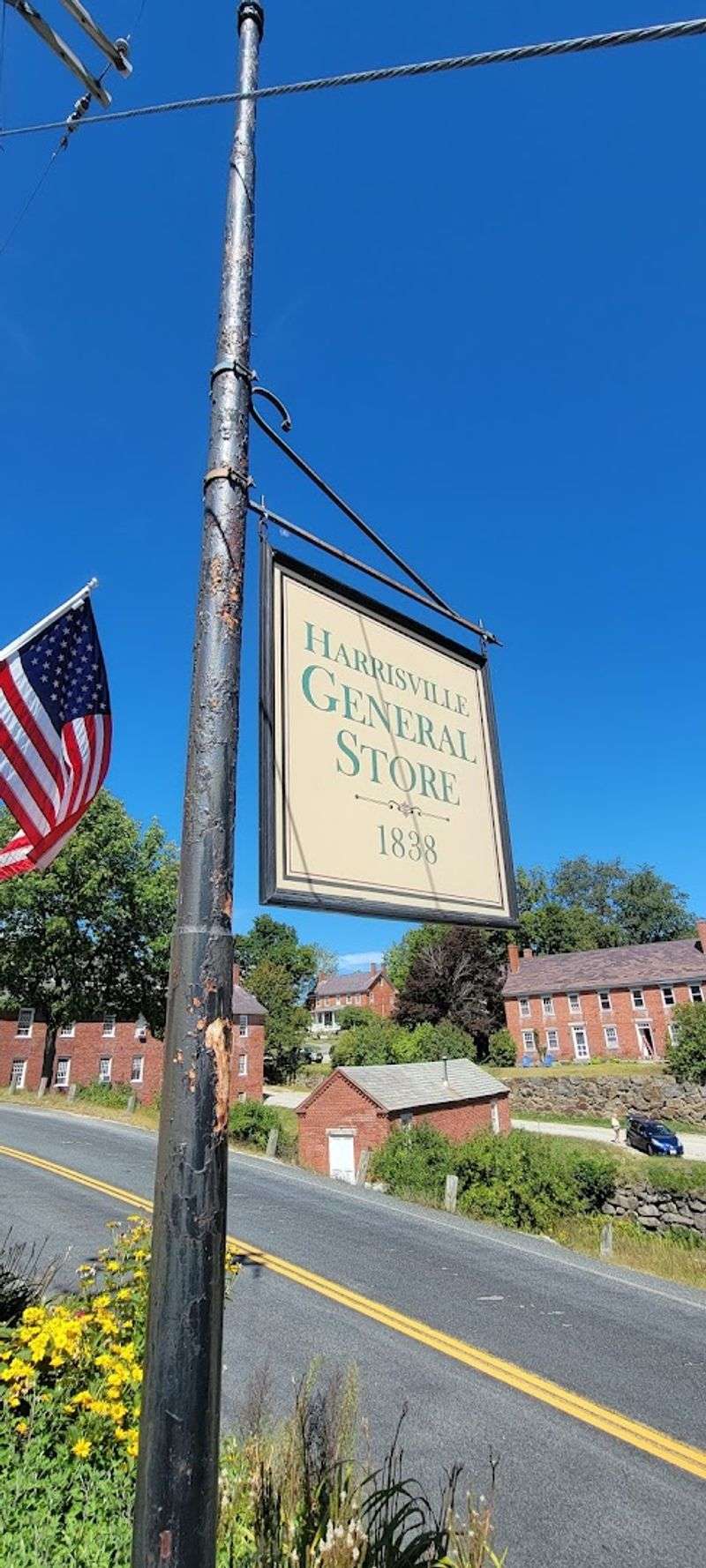
Harrisville is easy to reach by car and sits roughly 90 miles northwest of Boston, making it a very manageable day trip from a wide range of locations. The village itself is compact, and most of what you want to see is within easy walking distance once you park.
There are no admission fees to walk through the historic district, which makes it an accessible destination for all kinds of travelers.
The best time to visit depends on what you are looking for. Fall foliage season draws more visitors, so if you prefer a quieter experience, late spring or early summer offers beautiful scenery without the crowds.
Harrisville Designs is open during regular business hours and welcomes visitors, so checking their current schedule before you go is a smart move.
Bring comfortable walking shoes because the village paths include uneven stone and brick surfaces that can be tricky in anything less practical. A camera is essentially required, and if you have a tripod, the millpond reflections in the early morning are worth setting the alarm for.
The surrounding Monadnock region offers more stops if you want to make a full day of it, including hiking, local farms, and nearby town centers. Harrisville works beautifully as a standalone destination or as part of a broader New Hampshire road trip.