
This Small Pennsylvania Town Keeps An 18th-Century Grist Mill Running Once A Month
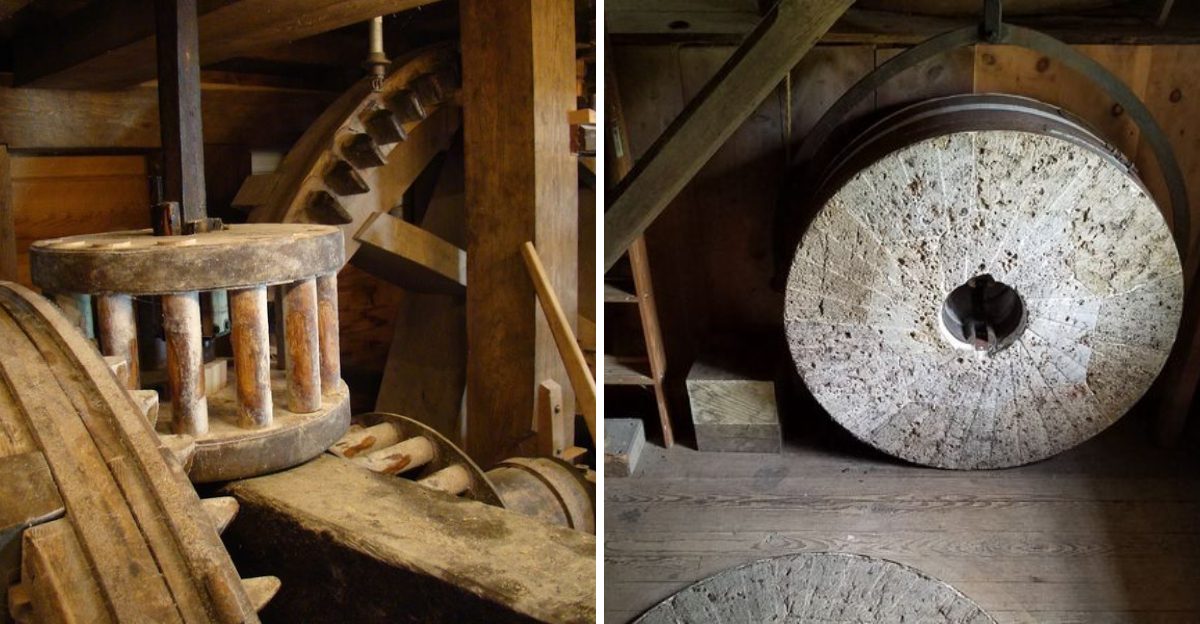
A grist mill built in 1747 still turns real flour today, powered only by rushing creek water. Nothing here runs on electricity.
Rural Pennsylvania holds onto sounds that most of the country forgot. Water rushes, gears creak, and stone grinds grain exactly like it did centuries ago.
Locals gather here once a month to watch the whole mechanical chain wake up at once. What does two hundred and seventy years of machinery sound like when it finally moves?
Beyond the mill, quiet trails and unexpected details reward visitors who wander a little further. One old tree alone has stood longer than the whole country.
Pennsylvania keeps this kind of history alive in ways most states let disappear, and a visit here is worth planning around.
The Mill That Time Forgot To Stop
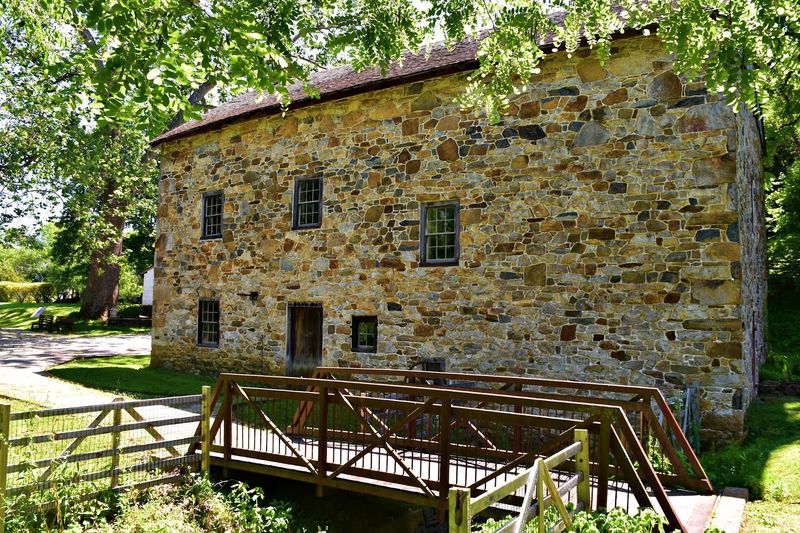
Most buildings from 1747 are either ruins or museum pieces sealed behind glass. The Mill at Anselma is neither.
It grinds. It hums.
It produces actual flour on the second Saturday of every month, just as it did nearly three centuries ago.
This Chester Springs landmark holds a designation as a National Historic Landmark, awarded in April 2005 by the National Park Service. It earned that honor specifically because nothing essential has been replaced or faked.
The original power transmission system, the wooden gears, the millstones, and the structural bones of the building all remain intact.
Experts call it the only pre-Revolutionary custom grist mill in the entire United States still running with original equipment. That is not a small claim.
Hundreds of colonial mills once dotted Pennsylvania’s landscape, and this is the last of its kind still fully operational. Standing in front of it for the first time, the weight of that fact settles in slowly but unmistakably.
Pickering Creek Does All The Heavy Lifting
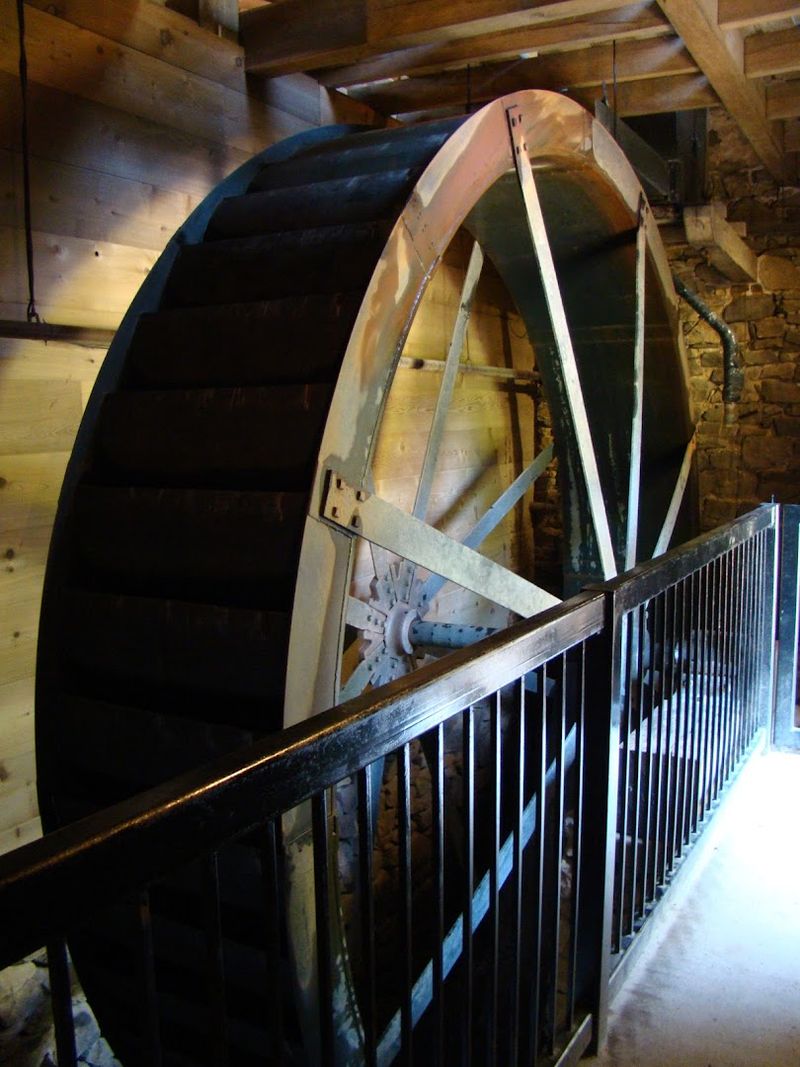
Water is the engine here, and it has been since the beginning. Pickering Creek flows alongside the property, feeding an overshot water wheel that drives the entire milling operation.
The wheel uses the weight of falling water, not just its flow, to generate rotational force.
That force travels through a system of wooden gears, some of them original to the 1747 construction, and ultimately reaches the heavy millstones. The whole sequence is mechanical poetry.
Every gear tooth, every shaft, every wooden peg plays a specific role in converting creek water into ground flour.
Watching it run on a demonstration day is genuinely mesmerizing. The sound builds gradually, a low rhythmic thrum that fills the building and vibrates through the floor.
Colonial-era farmers heard this exact sound when they brought their grain to be ground. The technology has not changed because it has never needed to.
Pickering Creek keeps flowing, and the mill keeps turning, a partnership that has outlasted empires.
The address is 1730 Conestoga Rd, Chester Springs, PA 19425, and the property sits along what was historically the Conestoga Turnpike, now Route 401.
Chester County’s Breadbasket Legacy
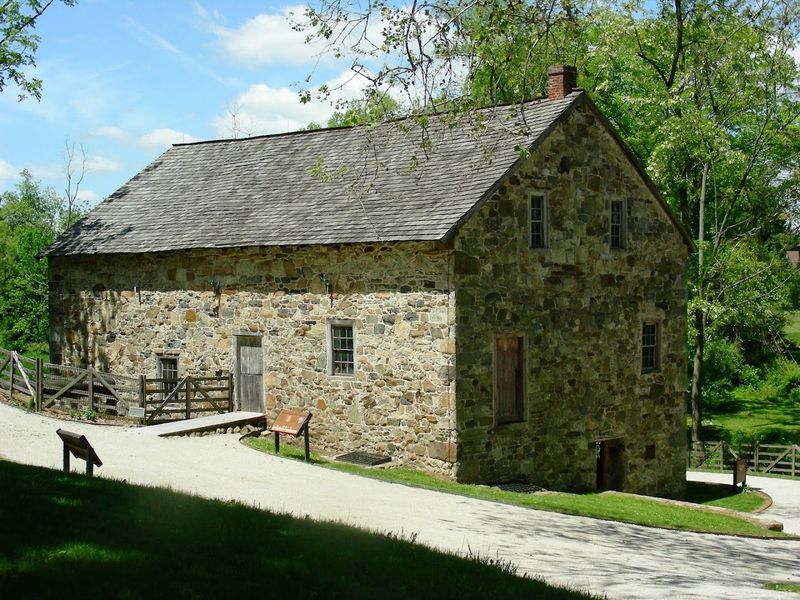
Chester County earned a remarkable nickname during the colonial period. Historians called it the breadbasket of colonial America, and that title was not handed out lightly.
The region’s fertile soil and productive farms supplied grain that fed Philadelphia and beyond during the formative years of the nation.
The Mill at Anselma sat right at the heart of that agricultural economy. Farmers from Pikeland Township and surrounding areas brought their grain here to be custom-ground, meaning the miller processed each farmer’s individual grain and returned it to them rather than buying it outright.
This system kept the mill deeply connected to the local community.
Pennsylvania’s role in feeding early America is a story that rarely gets enough attention. This mill makes that story tangible.
Visitors who walk through the doors are not just looking at old equipment; they are standing inside one of the key nodes of a food system that helped sustain an entire civilization during its most vulnerable and formative years.
From Samuel Lightfoot To The Present Day
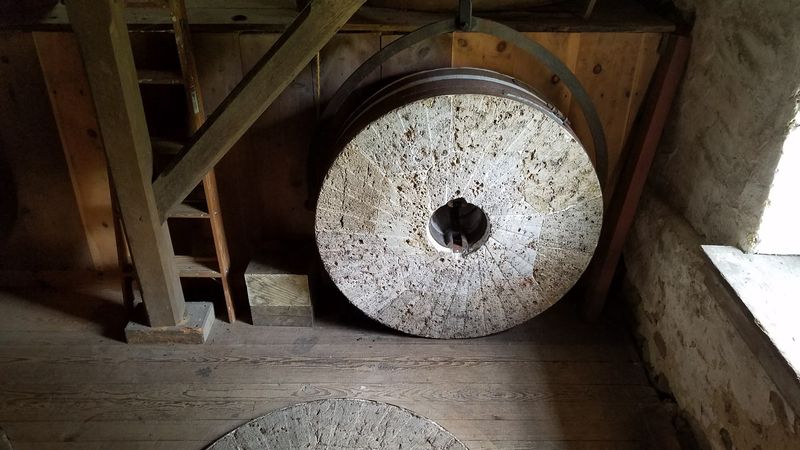
The mill’s origin story begins with a surveyor named Samuel Lightfoot, who recognized a practical need in Pikeland Township around 1747. The community needed a place to grind grain, and Lightfoot had both the land and the vision to make it happen.
His mill on Pickering Creek quickly became essential to local life.
Over the following centuries, the property changed hands multiple times. Each owner left a mark without dismantling what came before.
The Sheneman family added an innovative grain elevator system in the 1820s, inspired by the mechanical designs of Oliver Evans. This upgrade allowed for more continuous production and reduced the physical labor required.
By the early 20th century, the last working miller diversified operations considerably. The water wheel powered a sawmill, a cider press, and even a small metalworking shop on the same property.
That adaptability kept the site alive through changing economic times. The Mill at Anselma Preservation and Educational Trust took over stewardship in 1999, ensuring the mill’s future is as durable as its past.
The Art And Science Of Stone Grinding
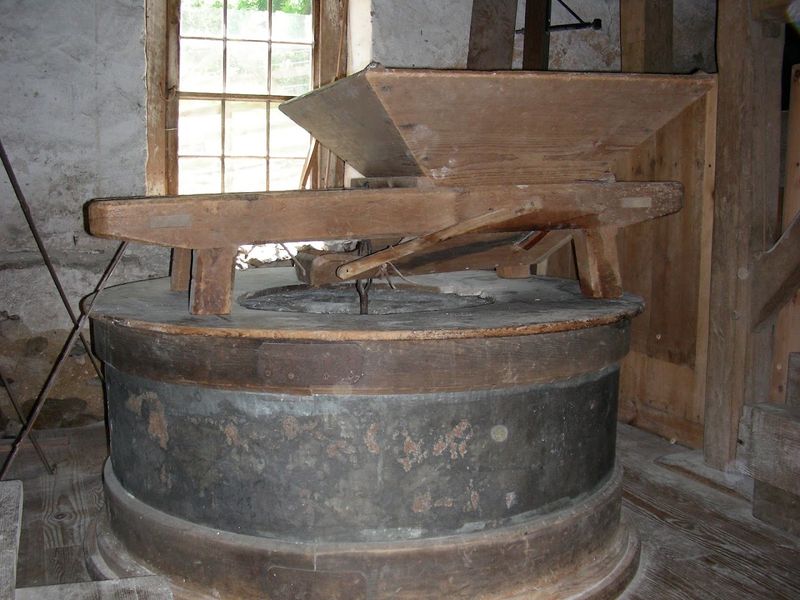
Stone grinding is older than written history, but that does not make it simple. At the Mill at Anselma, two heavy millstones work in tandem, with one stationary and one rotating rapidly above it.
Grain feeds in through the center and works its way outward, emerging as flour around the edges.
The result is noticeably different from commercially processed flour. Stone-ground flour retains the bran, the endosperm, and the germ of the wheat kernel.
Modern roller mills strip much of that away. The flour produced here is unbleached and additive-free, naturally whitening over a period of several weeks after milling.
For years, the mill focused primarily on corn. Then a significant restoration project brought the wheat side of the operation back to life after it had been dormant since the 1880s.
Now both corn and wheat are ground on historic stones. Visitors who pick up a bag of this flour are taking home something that connects directly to the taste and nutrition of colonial Pennsylvania kitchens.
Monthly Demonstrations That Actually Deliver
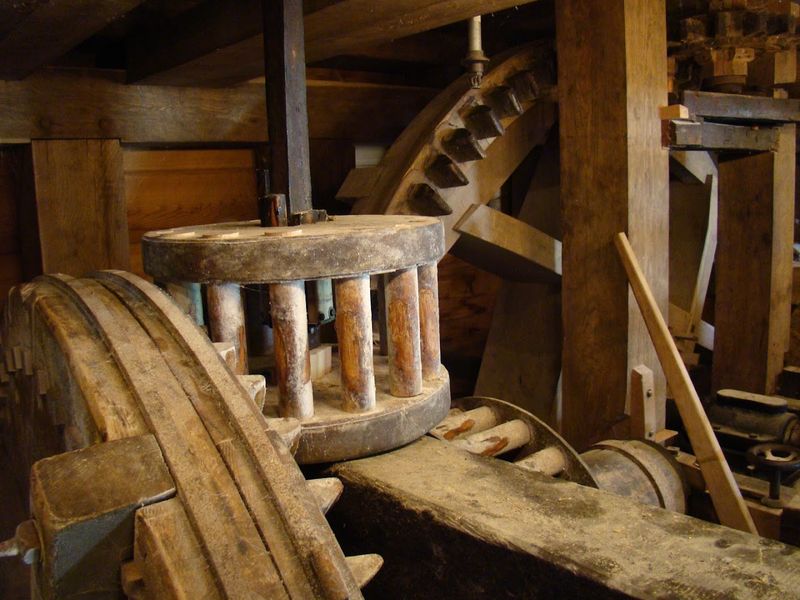
Once a month, on the second Saturday, the Mill at Anselma shifts from a quiet historic site into something electric. The water is channeled, the wheel begins to turn, and the entire mechanical system wakes up.
Visitors can watch every stage of the process from multiple vantage points inside the building.
Knowledgeable volunteers guide tours through the mill’s history and technology. They explain the function of each gear, describe the differences between corn and wheat milling, and connect the operation to the broader story of colonial Pennsylvania.
The explanations are accessible and engaging for visitors of all ages.
Children can participate in hands-on activities, including sifting freshly ground flour. That tactile connection makes the history stick in a way that no textbook can replicate.
For families looking for something genuinely educational that does not feel like a classroom, this monthly event hits a rare sweet spot. Planning a visit around the second Saturday is strongly recommended for the full experience.
22 Acres Worth Exploring On Foot
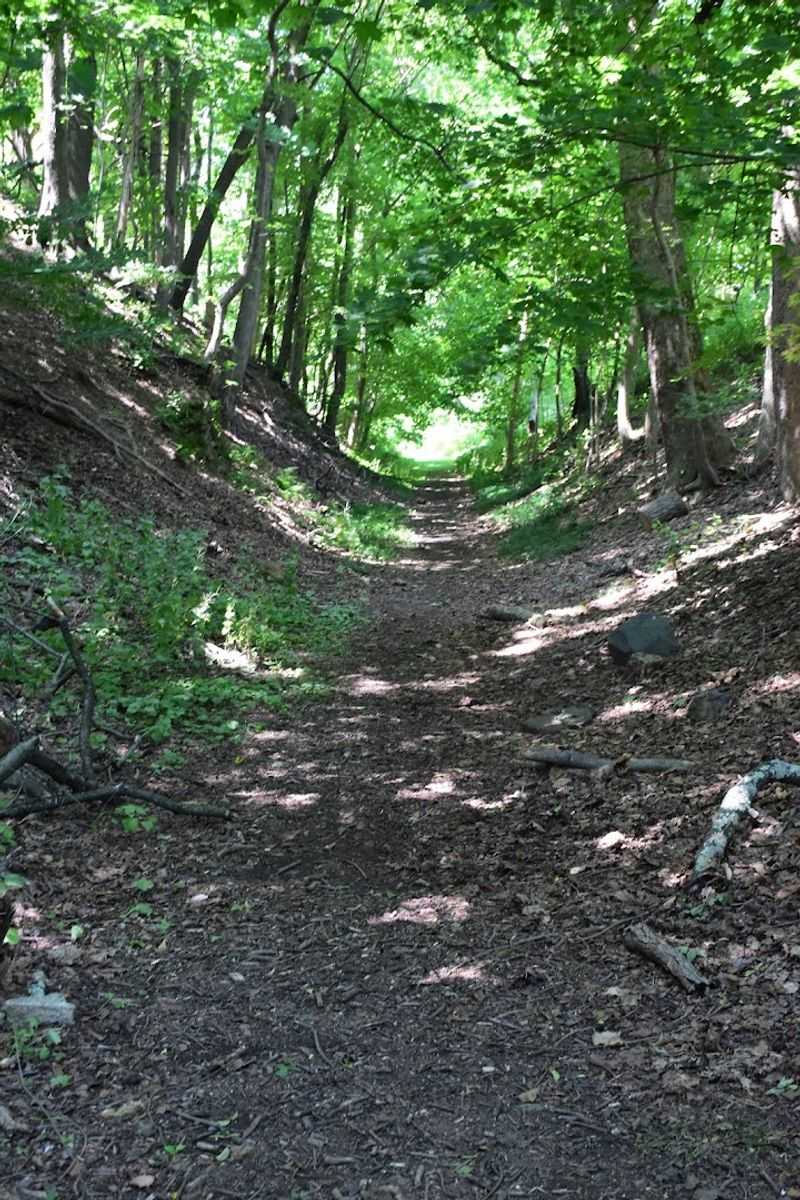
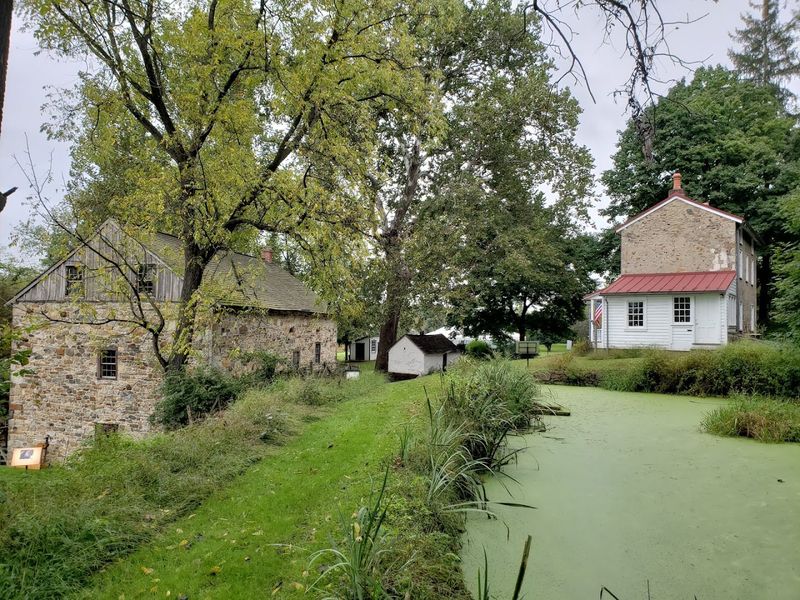
The mill building itself is the centerpiece, but the surrounding 22 acres deserve serious attention. Roughly one mile of public trails winds through the property, following a historical railroad bed, passing a tranquil mill pond, and running alongside Pickering Creek.
The combination of water, woodland, and open meadow makes for a genuinely restorative walk.
Wildlife sightings are common. Birds, turtles, and various small animals have made the property their home.
The Turtle Trail, which follows the pond’s edge, is particularly popular with visitors who want a slower, more contemplative pace. Even on days when the mill building is closed, the grounds remain accessible and worth the trip.
One detail that stops many visitors in their tracks is a massive sycamore tree near the Spring House. That tree has been growing on the property for close to three centuries.
The Spring House itself, once used to keep dairy products cool before refrigeration, adds another layer of historical texture to a walk that already offers plenty to think about.
A National Historic Landmark With A Story To Match Its Status
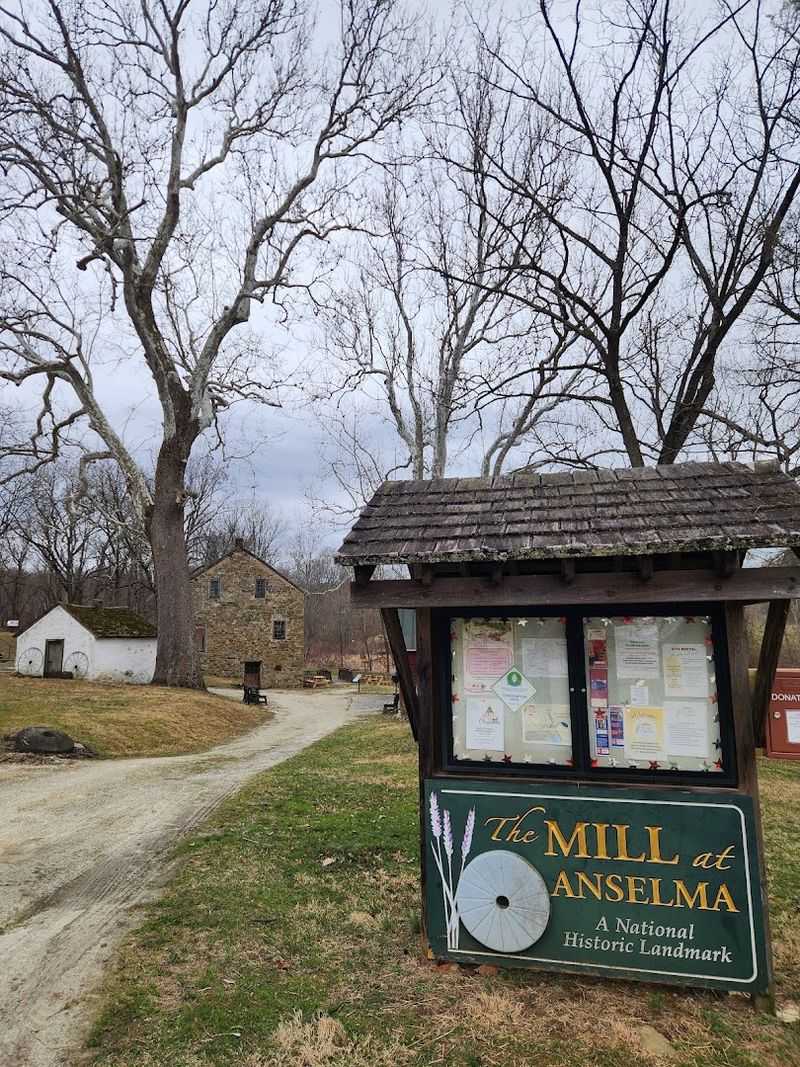
Not every old building earns the National Historic Landmark designation. The bar is extraordinarily high, requiring exceptional integrity and national significance.
The Mill at Anselma cleared that bar in April 2005, becoming the only custom grist mill in the country to receive this recognition from the National Park Service.
What sets it apart is completeness. Many mills survive in partial form, with modern replacements scattered throughout the structure.
This mill’s power transmission system, from the water wheel through the wooden gearing to the millstones, remains original. That unbroken mechanical chain from 1747 is what makes the designation meaningful rather than honorary.
The Mill at Anselma Preservation and Educational Trust manages the property with that standard in mind. Their work goes beyond maintaining buildings.
They preserve documents, artifacts, and oral histories that together tell the full story of this site’s role in Pennsylvania’s development. The trust’s commitment ensures that this landmark will continue earning its designation for generations of future visitors.
The Mill As A Community Anchor, Then And Now
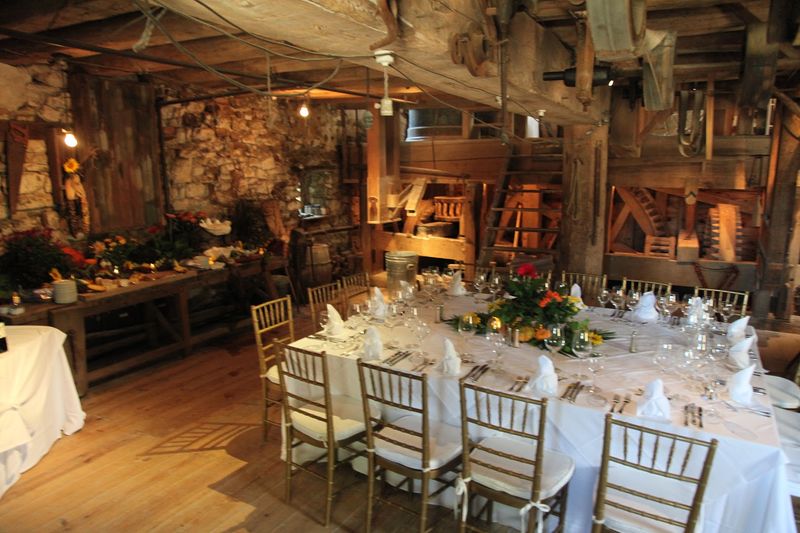
Colonial mills were not just industrial sites. They were gathering places where neighbors exchanged news, settled debts, and built the social fabric of rural communities.
The Mill at Anselma filled that role for Pikeland Township for generations, serving as a practical and social hub simultaneously.
That community function never fully disappeared. Today the property hosts special events, seasonal celebrations, and educational programs that draw visitors from across the region.
A Holiday Wonderland event transforms the mill into an 18th-century Christmas scene each winter. These gatherings carry forward the tradition of the mill as a place where people come together.
The site has also served as an event venue, with the historic setting providing an atmosphere that modern venues simply cannot manufacture. Chester County’s broader community has rallied around the preservation effort, supporting the trust through fundraising events and volunteer hours.
The mill’s role as a connector of people, across centuries and across generations, remains one of its most quietly powerful qualities.
Taking A Taste Of History Home
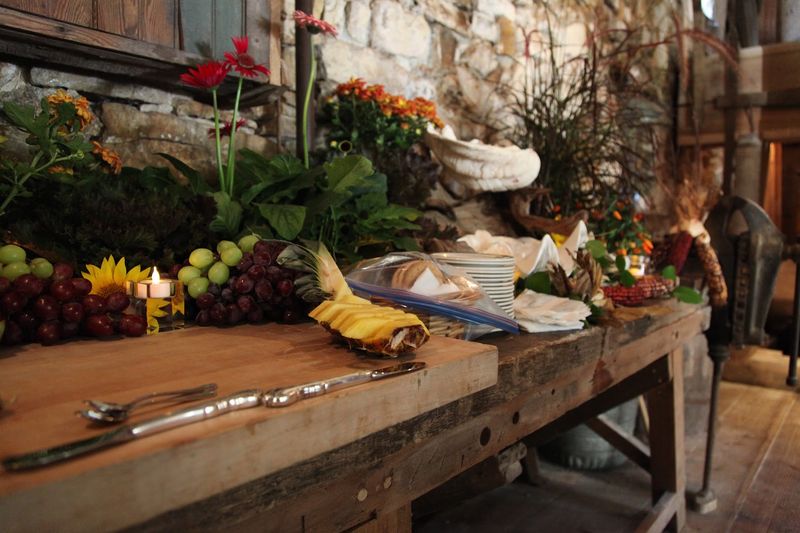
Few historic sites offer a souvenir this useful. The Mill at Anselma sells its stone-ground flour and cornmeal through the on-site gift shop, and purchasing a bag does double duty.
It supports the preservation trust’s ongoing work, and it puts genuinely interesting ingredients into the hands of home cooks who want to experiment.
The flour is unprocessed and retains the full grain kernel. That means bran, endosperm, and germ all make it into the bag.
The flavor profile differs noticeably from supermarket flour, with a nuttier, more complex character that reflects the whole grain process. The cornmeal carries a similarly robust quality.
The mill holds a state license from the Pennsylvania Department of Agriculture to sell its products, so the operation meets modern food safety standards even while using 18th-century methods. Baking with this flour at home extends the visit in a tangible way.
Every loaf or batch of cornbread becomes a small, edible connection to the colonial Pennsylvania landscape that produced the original grain.
Seasons Shape Every Visit Differently
Spring arrivals find the 22-acre grounds waking up with fresh greenery and birdsong along Pickering Creek. The trails are soft underfoot, and the mill pond reflects new growth.
Opening month for the season is April, and the energy of a fresh start matches the landscape beautifully.
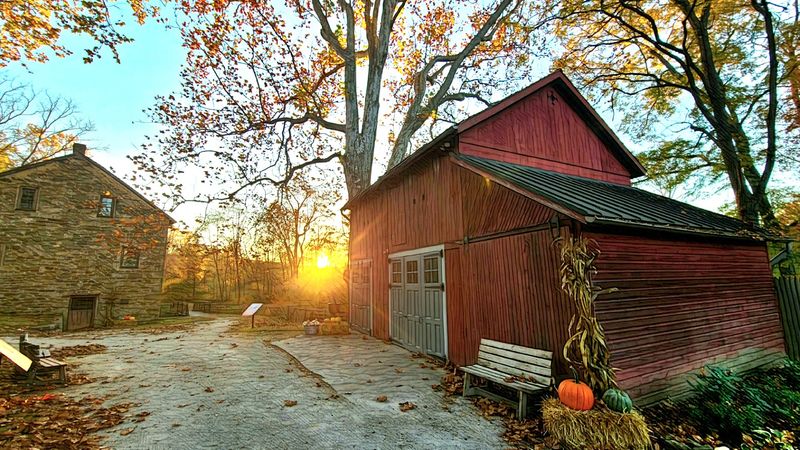
Summer deepens the green canopy over the trails and brings longer days for exploring. Autumn is arguably the most photogenic season, when Chester County’s trees turn and the stone mill building glows against orange and red foliage.
The contrast between the ancient structure and the seasonal color is striking.
Winter brings its own character, particularly during the Holiday Wonderland event that transforms the property into a colonial Christmas scene. Each season reveals a different dimension of the same place, which is one reason regular visitors keep returning throughout the year.
Planning around the second Saturday of any month from April through December guarantees a chance to see the mill in full operation, regardless of which season calls to you.
Practical Tips For Making The Most Of Your Visit
Timing matters at this site more than at most. The mill operates on the second Saturday of each month from April through December.
Arriving on that specific day means seeing the water wheel turn, the gears engage, and the millstones produce flour. Any other visit still offers tours and trail access, but the full mechanical demonstration is the main event.
Parking is available on site. The trails are dog-friendly on a leash, which makes the visit work well for families with pets.
Comfortable walking shoes are a practical choice, especially for anyone planning to spend time on the creek-side trails. The mill building itself involves multiple floor levels and some narrow staircases, so mobility considerations are worth noting in advance.
Visiting early in the day on demonstration Saturdays tends to mean shorter crowds and more time with the knowledgeable volunteer guides who bring the history to life.