
This Spring-Fed Idaho Lake Has Water So Clear You Can See The Bottom And Locals Want To Protect It
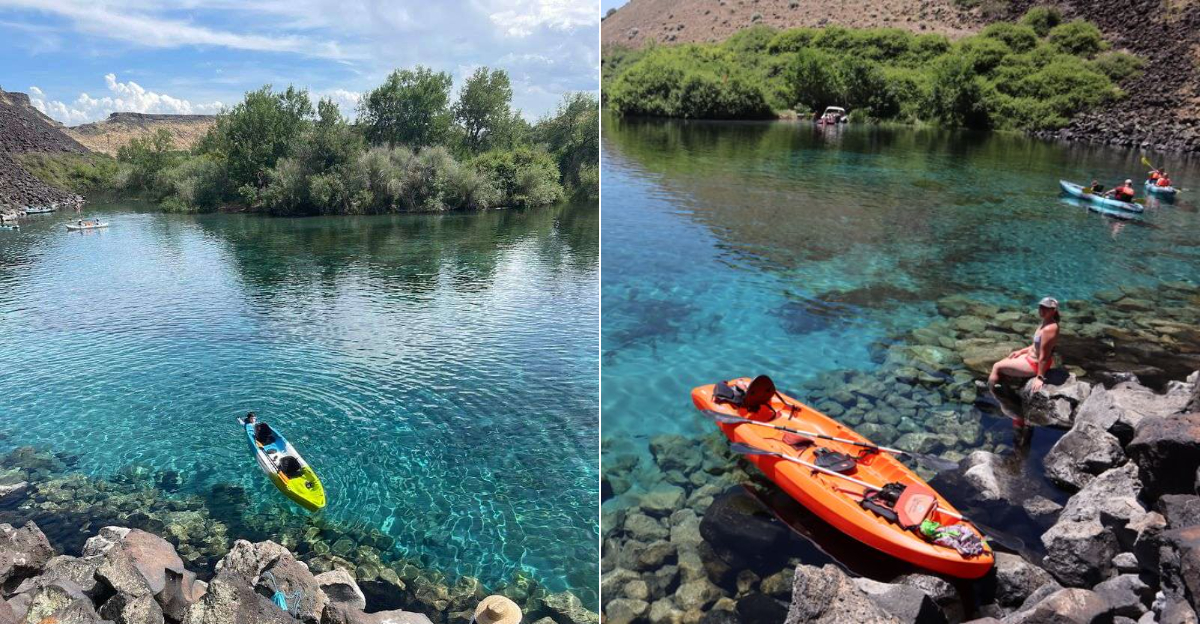
Blue water feels different when you have to paddle to reach it. In Idaho, this spring turns a quiet ride into a canyon adventure with clear water, basalt walls, and a color that looks almost unreal.
The journey is part of the reward from the first stroke. Who could resist floating past cliffs, watching birds overhead, and arriving at a spring so clear it makes people stop talking?
This is not a rushed stop or a quick roadside view. Take your time, look down into the water, and enjoy the strange beauty that only shows itself from a kayak or paddleboard.
Choose a calm morning and give the route room to breathe. Idaho makes this hidden spring feel like a peaceful outdoor treat worth earning.
Water So Clear It Feels Unreal
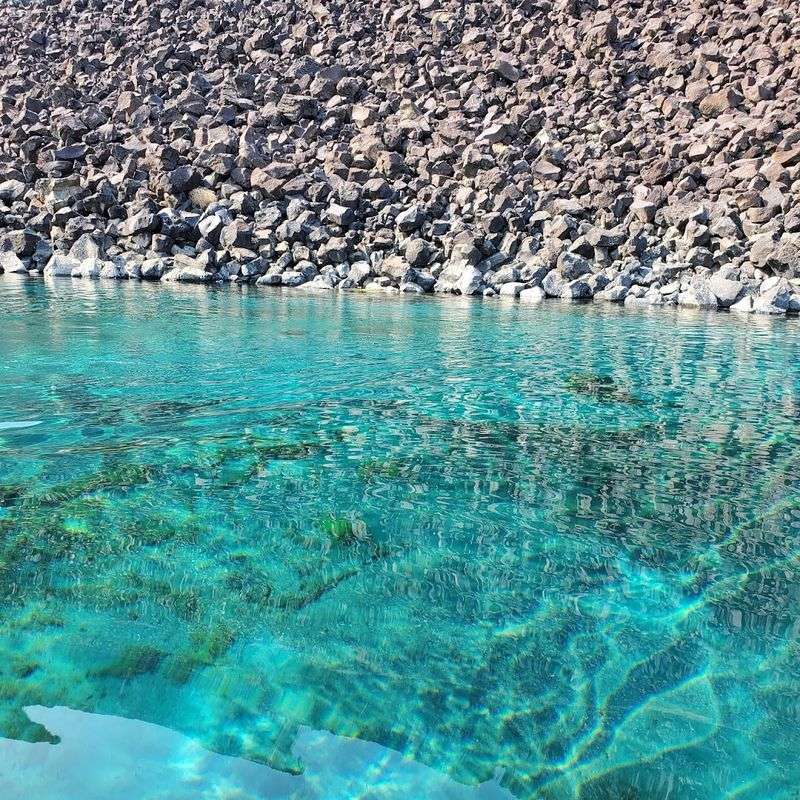
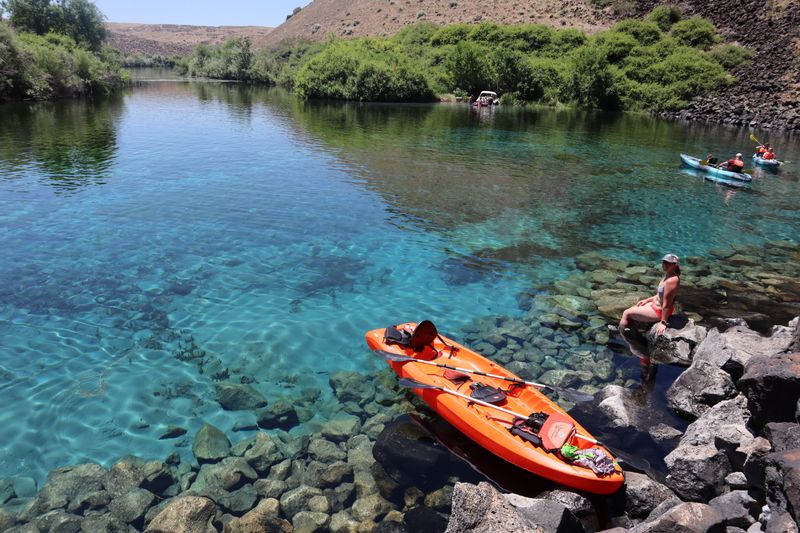
Picture floating on a kayak and looking straight through the water to a white sandy bottom below. That is exactly what happens at Blue Heart Springs in Idaho’s Hagerman Valley.
The water gets its striking blue color from pure spring water bubbling up from the Eastern Snake River Plain Aquifer. The clarity is almost surreal, and first-time visitors often stop paddling just to stare.
The spring maintains a steady temperature of around 58 degrees Fahrenheit year-round. That means even on a blazing summer day, the water is refreshingly cold and shockingly clear.
The color shifts from murky river water to brilliant turquoise right at the entrance of the cove. Visitors often describe the moment as a sudden reveal, like flipping on a light in a dark room.
Can you imagine watching your own feet through the water and seeing every pebble beneath them? That is the kind of clarity Blue Heart Springs offers, and it never gets old no matter how many times you visit.
Ancient Origins Of The Cove
About 15,000 years ago, a massive flood changed the landscape of southern Idaho forever. The Bonneville Flood sent enormous walls of water rushing across the land, carving deep into the earth and creating dramatic canyon formations.
Blue Heart Springs is believed to have formed when a powerful whirlpool during that flood drilled down through the basalt rock all the way to the aquifer below. That ancient drilling act is the reason visitors today get to enjoy one of the most visually stunning spring coves in North America.
The spring is recognized as the 13th largest freshwater spring on the entire continent. That is a pretty impressive title for something that most people outside of Idaho have never even heard of.
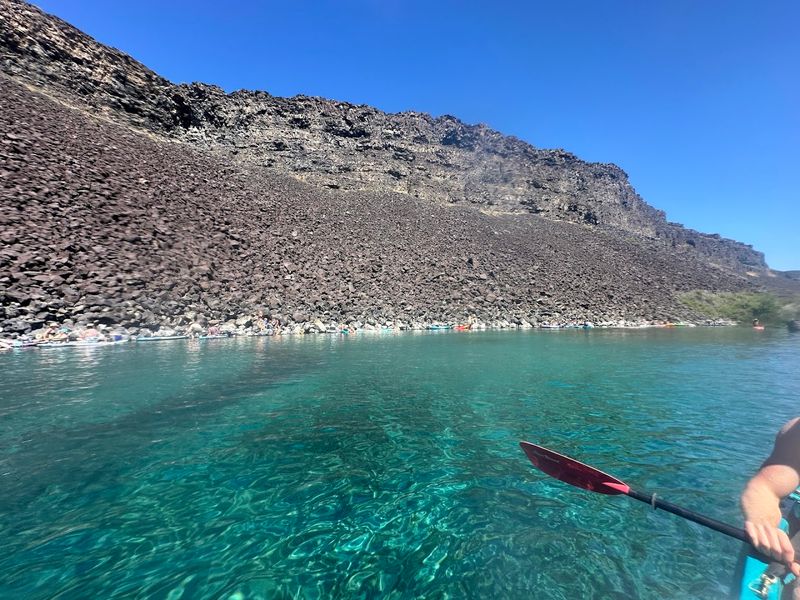
Beneath the surface, cold water bubbles up constantly through the sandy bottom. The contrast between the dark basalt walls of the canyon and the glowing blue water below is nothing short of spectacular.
History carved this place with raw, unstoppable force. How wild is it that a prehistoric flood created something so peaceful and beautiful that people travel hours just to float quietly above it?
Getting There Is Half The Fun
There is no road that leads to Blue Heart Springs. No trail, no footpath, no shortcut through a field.
The only way in is by water, and that is what makes the journey so memorable.
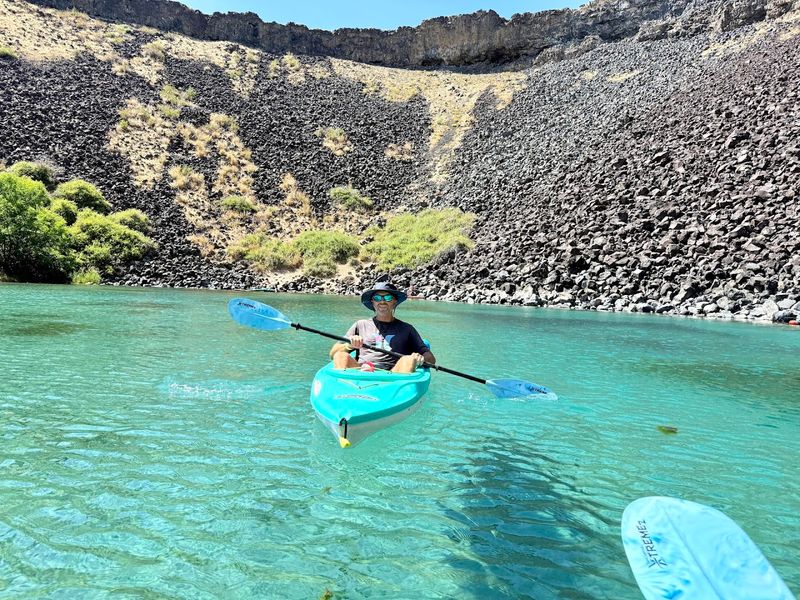
Most visitors launch from Banbury Hot Springs, located about 1.5 miles upriver. The paddle is gentle and scenic, winding along the Snake River canyon with basalt walls rising on both sides.
Kayak and paddleboard rentals are available nearby for those who do not own their own gear. The rental process is straightforward, and staff can point visitors in the right direction before they set off.
Plan on roughly two to four hours total for the round trip, depending on how long you linger at the spring. The current on the return paddle can feel stronger, so saving some energy for the trip back is a smart move.
Weekdays are noticeably less crowded than weekends, especially during summer months. If a quieter experience sounds more appealing, aiming for a Tuesday or Wednesday morning could make the whole adventure feel like a private discovery.
Ready to earn that view with your own arms? The paddle to Blue Heart Springs is the kind of workout that does not feel like a workout at all.
A Spring Worth Protecting
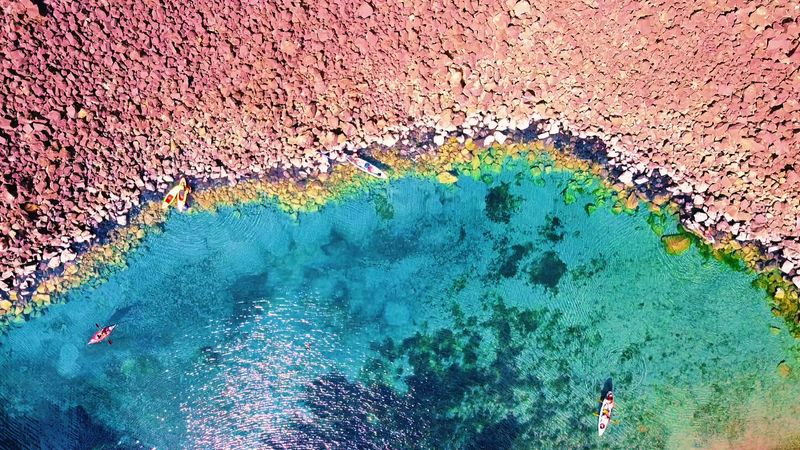
Something this beautiful does not protect itself. Local residents and environmental organizations have been working hard to keep Blue Heart Springs in its pristine condition for future visitors to enjoy.
The Idaho Conservation League uses the spring as a powerful example when advocating for better water quality across the Snake River. Issues like agricultural runoff, phosphorus, and nitrate pollution threaten the broader river system that feeds into this incredible place.
Every visitor plays a role in preservation. Following Leave No Trace principles, packing out all trash, and respecting the natural surroundings helps ensure the spring stays as stunning as it is today.
The Idaho State Department of Agriculture has confirmed the presence of Eurasian watermilfoil in the spring. This plant can reduce water flow, lower oxygen levels, and potentially turn the iconic blue water green over time.
Eradication plans are currently being developed, including mechanical removal of the plant. Visitors are asked not to disturb the vegetation to avoid accidentally spreading it further into the water.
Think of every visit as a chance to be a steward of something rare. Would you not want the next generation to see this same electric blue water and feel the same breathless wonder?
Cold Water, Big Rewards
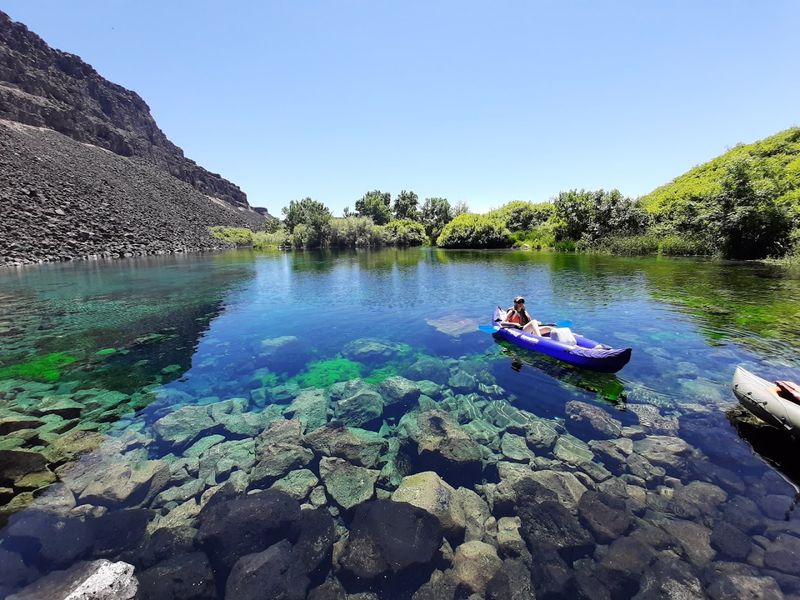
At 58 degrees Fahrenheit year-round, the water at Blue Heart Springs is not exactly a warm bath. But that cold snap is part of the experience, and most visitors say jumping in is absolutely worth it.
On a hot Idaho summer day with temperatures pushing close to 100 degrees, that icy spring water feels like the best thing on earth. The contrast between the blazing sun above and the cold, clear water below is genuinely refreshing in the most dramatic way.
Swimmers and floaters often mention that the cold catches them off guard at first. Feet go numb quickly, so most people opt for short dips rather than long swims, but every second in that water feels earned.
Bringing goggles is a tip that many visitors wish they had followed. The underwater view of white sand, bubbling spring vents, and rocky walls is just as impressive as the view from above.
Life jackets are required on the water, and having the right gear before heading out is important. Checking local requirements before the trip ensures a smooth and safe experience from launch to return.
Cold water has a funny way of making people feel completely alive. When was the last time something icy and unexpected made a whole day feel like a highlight of the year?
Crowds, Timing, And Smart Planning
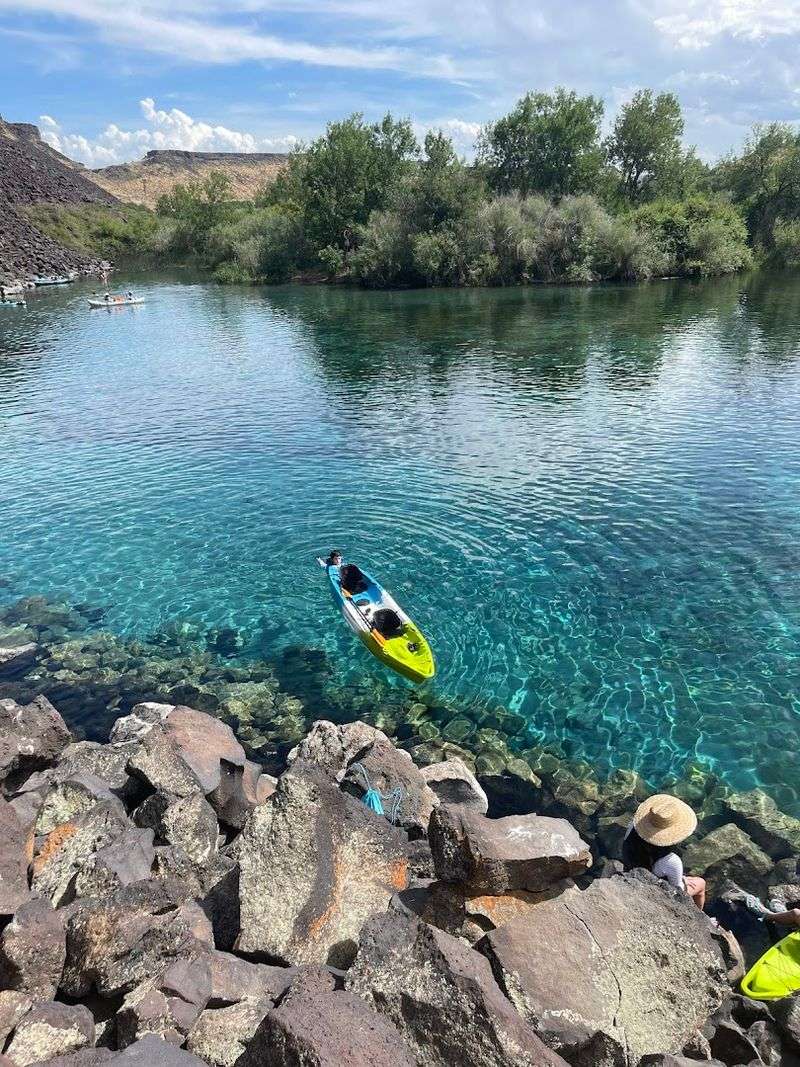
Blue Heart Springs is no longer a secret, and weekend visits during summer can get quite lively. Multiple groups, larger boats, and the general buzz of a popular outdoor spot can make the cove feel smaller than expected.
Visiting on a weekday, particularly in the morning, offers a noticeably different experience. Fewer people in the cove means more space to float, more quiet to appreciate, and more room to actually see the spring without dodging other watercraft.
Early July mornings on a Tuesday have been described by visitors as nearly magical, with just a handful of kayaks sharing the crystal-clear water. That kind of calm is worth rearranging a schedule for.
Larger motorized boats occasionally enter the cove, which can feel intrusive in such a small, intimate space. Timing a visit to avoid peak afternoon hours on weekends can reduce the chances of sharing the spring with pontoon boats and loud engines.
Parking fees and launch fees are typically a few dollars per person depending on the launch point used. Checking current fees and availability before arriving helps avoid surprises on the day of the trip.
Smart planning turns a good trip into a great one. Why settle for a crowded version of paradise when a little timing adjustment could hand over the whole cove almost entirely to you?
The Snake River Scenic Bonus
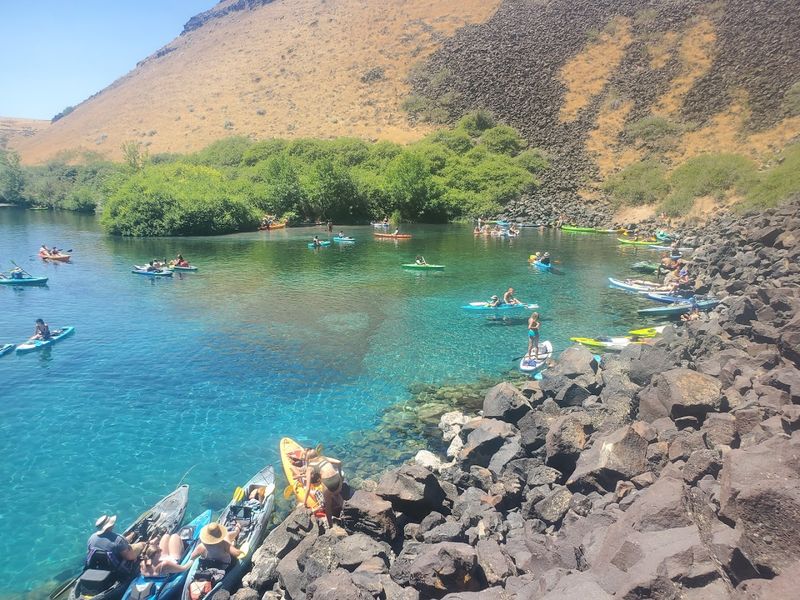
The journey to Blue Heart Springs is not just about the destination. The Snake River canyon stretching between the launch point and the spring is a full-on scenic experience all on its own.
Towering basalt walls line both sides of the river, formed from ancient lava flows that shaped this entire valley. Paddling through the canyon feels like moving through a natural museum of geological history.
Wildlife sightings along the river are common. Herons, eagles, and various waterfowl frequently appear along the canyon walls and shoreline, making the paddle feel like a nature documentary unfolding in real time.
For those wanting a longer adventure, launching from Ritter Island instead of Banbury Hot Springs adds extra miles and even more canyon scenery to the trip. The total round trip from that point stretches to about six miles of paddling.
Box Canyon also lets out into the Snake River nearby, offering another stunning geological feature for curious explorers to notice on the way to the spring. The whole corridor is packed with natural wonders.
The river has a way of making time slow down in the best possible way. What if the paddle to the spring turned out to be just as memorable as the spring itself?
A Place That Stays With You
Some places are beautiful in photos and underwhelming in person. Blue Heart Springs is the opposite.
Standing at the edge of the cove and seeing that vivid blue water for the first time is a moment that sticks with people long after they paddle back.
Visitors consistently describe the spring as surreal, captivating, and unlike anything else they have experienced in Idaho. The combination of history, color, clarity, and effort required to reach it creates a memory that feels genuinely earned.
Families with kids report that children are especially mesmerized by the clear water. Watching young ones peer over the edge of a kayak and gasp at the sandy bottom visible far below is the kind of travel memory that gets retold for years.
Even visitors who found the cove crowded on a busy weekend still said the trip was worth it. The spring has a way of cutting through the noise and delivering something quietly extraordinary.
Blue Heart Springs is located in Idaho’s Hagerman Valley along the Snake River, with the nearest launch point at Banbury Hot Springs. The address associated with the spring area is Idaho 83316, placing it in the heart of southern Idaho’s most dramatic natural landscape.
Some places just deserve to be seen in person. Is there a better reason to plan a road trip than a spring so blue and clear that it barely looks real?