
This Stone And Shell Covered Grotto In Wisconsin Took One Man Decades To Build
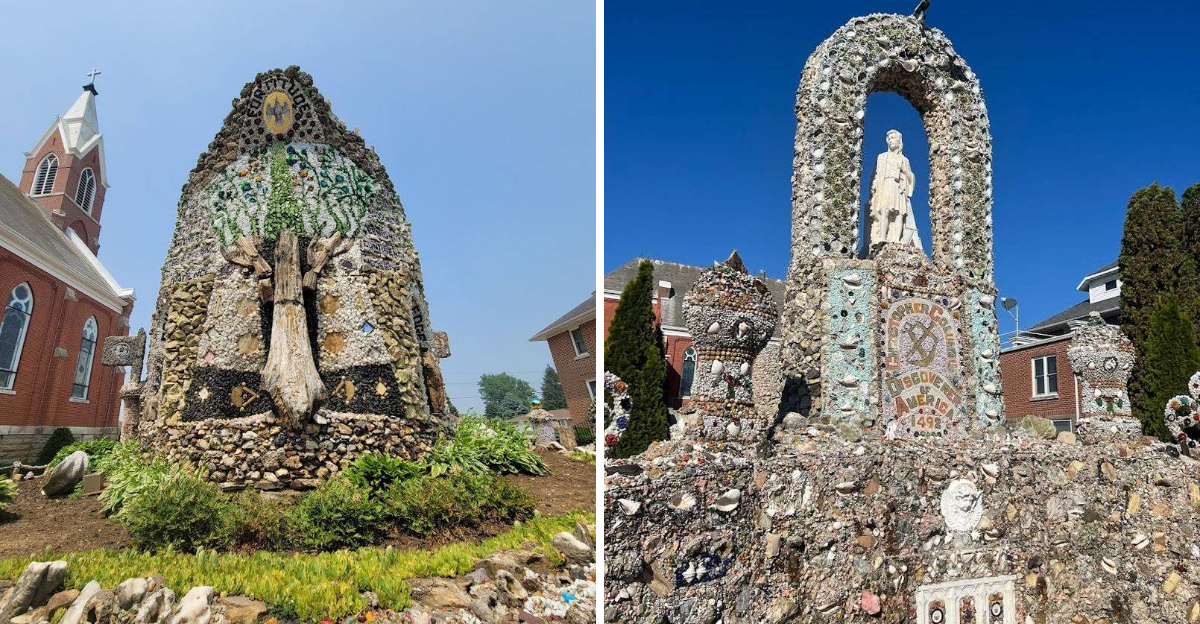
One Wisconsin priest looked at shells, stones, glass, and broken bits most people would pass by and saw a masterpiece waiting to happen. What followed was not a quick weekend project, or anything close to it.
Piece by piece, he shaped a small-town landmark that mixes faith, patriotism, patience, and serious imagination. Ordinary materials turned into arches, shrines, patterns, colors, and tiny details that make visitors slow down fast.
You do not have to be religious to appreciate the work here. You just need a little curiosity and enough time to notice how much care went into every surface.
This is the kind of place that makes a simple stop feel strangely unforgettable.
Father Mathias Wernerus Built This Wisconsin Wonder By Hand
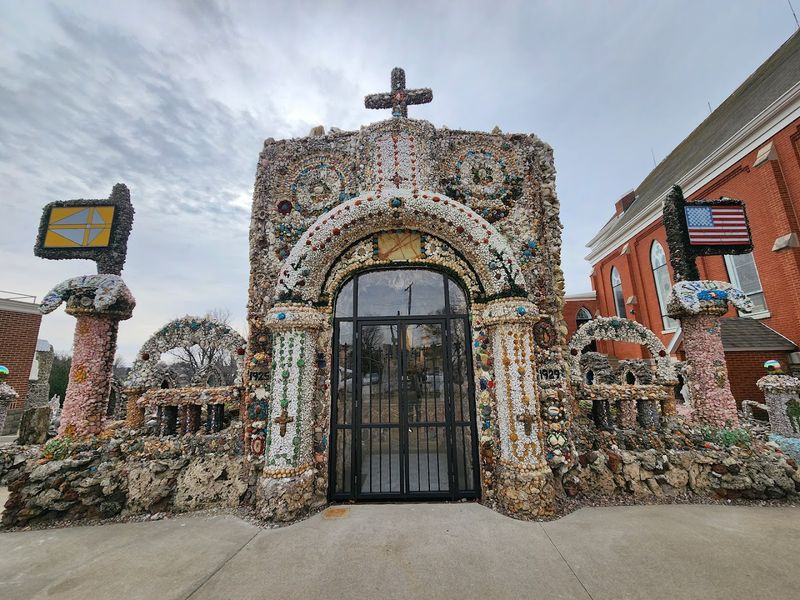
Father Mathias Wernerus arrived in Dickeyville in 1918 as pastor of Holy Ghost Parish. He began his ambitious project six years later, working tirelessly between his pastoral duties.
His vision extended far beyond simple garden decoration.
The priest spent his free hours arranging stones, shells, and glass into intricate patterns. He worked through changing seasons and advancing age.
His hands placed each piece with deliberate care, creating religious scenes and patriotic tributes that would outlast his lifetime.
Construction continued from 1924 until his death in 1931. The physical labor alone would have exhausted most people.
Yet Father Wernerus persisted, driven by faith and artistic passion that transformed humble materials into something magnificent at 305 W Main Street.
The Grotto Was Created Without Formal Blueprints
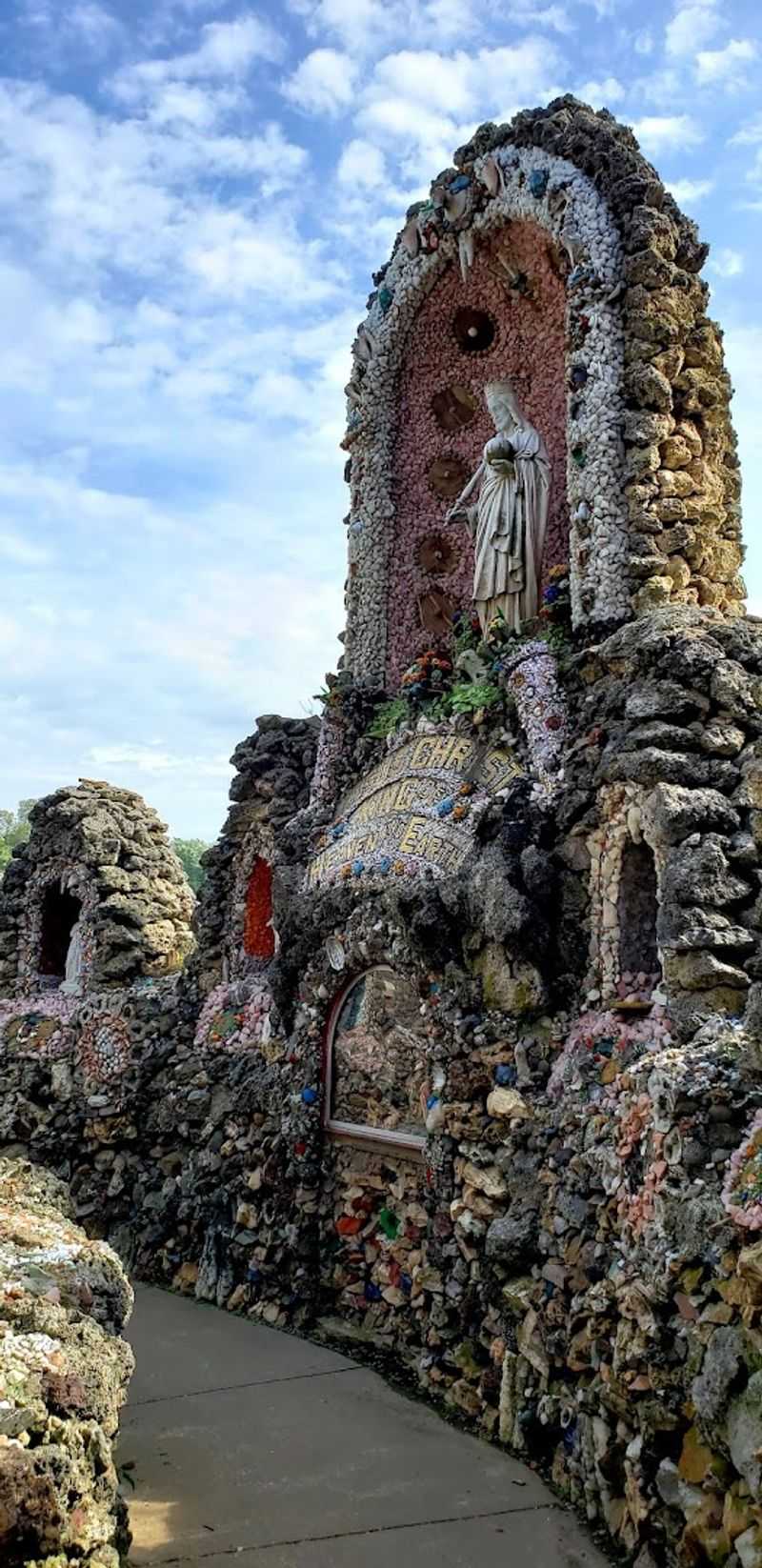
Father Wernerus never drew architectural plans or consulted engineering manuals. He carried his design entirely in his imagination.
Each day brought new decisions about placement, color, and meaning as the structures grew organically.
This improvisational approach gave the grotto its distinctive character. No two sections look identical because no template guided their creation.
The work evolved as materials arrived and inspiration struck, resulting in a sprawling folk art environment that defies conventional architectural logic.
Modern preservationists find this spontaneous construction both remarkable and challenging. Documentation exists only in the finished product itself.
The absence of blueprints makes the achievement even more impressive, demonstrating how artistic vision can manifest without formal planning or professional training in design.
Shells Stones Glass And China Cover Nearly Every Surface
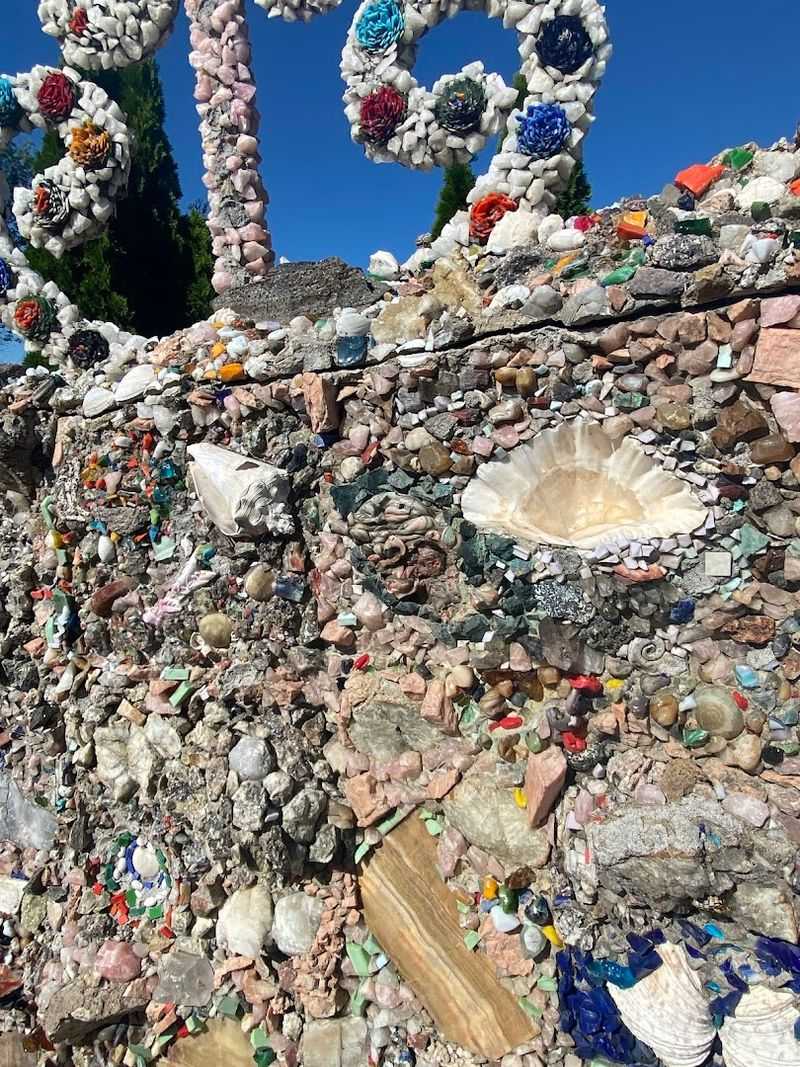
Walking through the grotto feels like entering a jewel box turned inside out. Surfaces shimmer with materials that catch and reflect sunlight.
The density of decoration overwhelms the eye at first, then draws visitors closer to examine individual components.
Seashells form borders and create texture. Smooth river stones provide structure and contrast.
Broken china adds unexpected splashes of pattern, while glass pieces sparkle like captured rainbows.
The combination creates visual complexity that rewards prolonged viewing. Stand in one spot for five minutes and you will notice details that escaped your initial scan.
The layered effect transforms simple construction materials into something that approaches precious metalwork in its intricacy and careful execution throughout the grounds.
The Materials Came From All Over The World
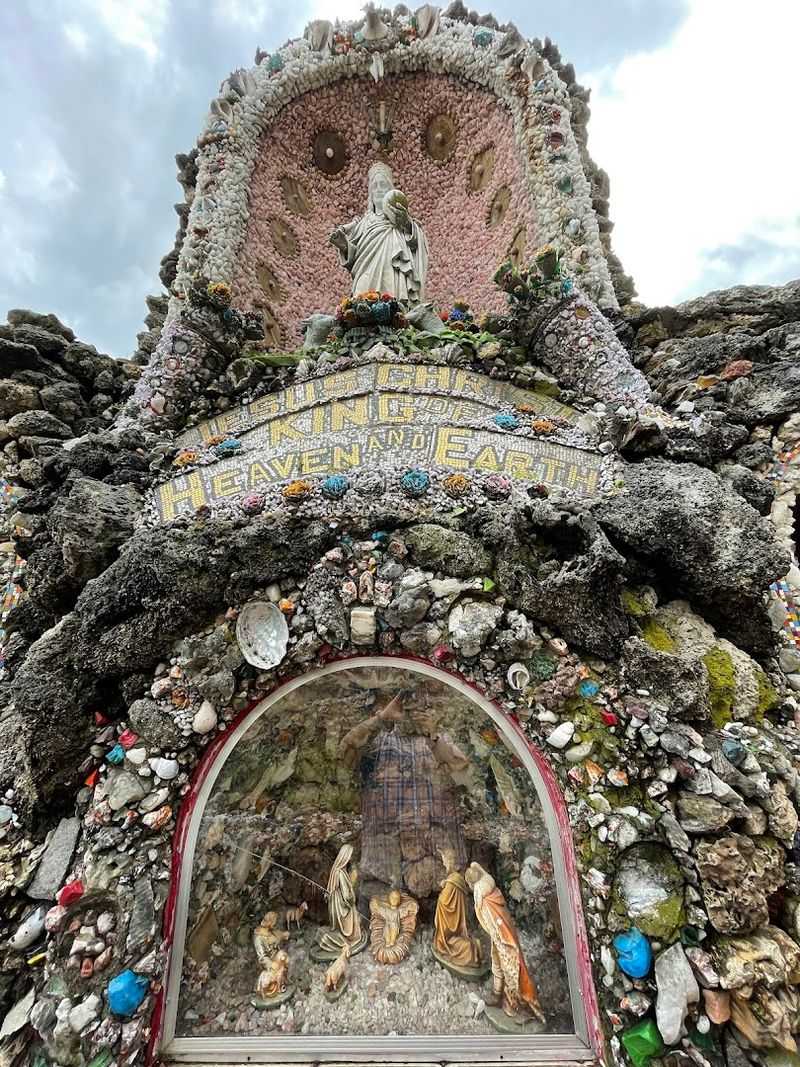
Father Wernerus solicited donations from parishioners, travelers, and missionaries stationed abroad. Packages arrived containing shells from Pacific beaches and stones from European quarries.
The international collection gave the project scope beyond its rural Wisconsin setting.
Some materials came from pilgrimage sites in the Holy Land. Others originated in Asia, South America, and Africa.
Each piece carried geographical significance that connected Dickeyville to distant places most local residents would never visit.
This global sourcing transformed the grotto into a physical representation of Catholic universality. The materials themselves became relics of sorts, carrying associations with far-flung locations.
Visitors today still marvel at how one small-town priest assembled such a diverse collection during an era when international shipping was far more complicated.
Parishioners Helped Turn Found Objects Into Sacred Art
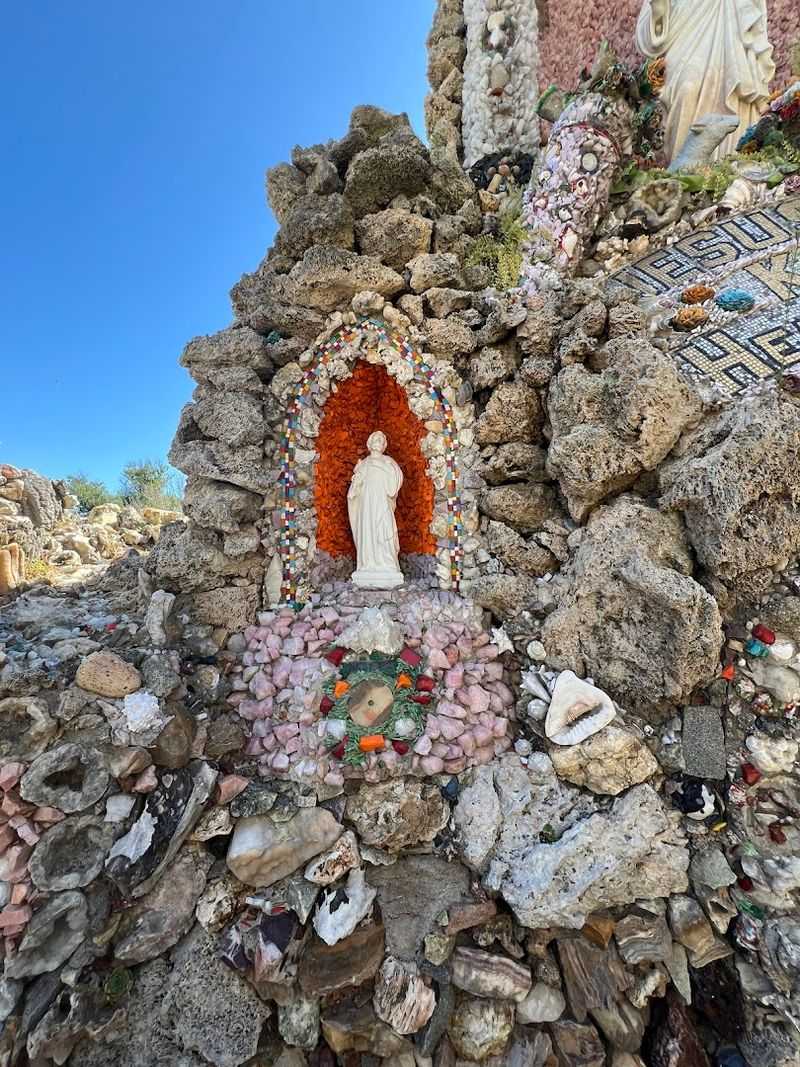
Father Wernerus did not work entirely alone. Members of Holy Ghost Parish contributed labor, materials, and moral support throughout the construction years.
Children collected local stones from fields and creek beds. Adults donated family heirlooms and travel souvenirs.
The community investment gave the project shared ownership. Families knew their contributions were embedded permanently in the structures.
This participation strengthened parish bonds and created lasting connections between people and place.
Some parishioners helped mix concrete or carry heavy materials. Others cleaned and sorted donated items.
The collaborative effort made the grotto a true community achievement rather than a solitary obsession. That collective spirit still resonates when descendants visit and point out contributions their grandparents made nearly a century ago.
The Site Blends Catholic Devotion With American Patriotism
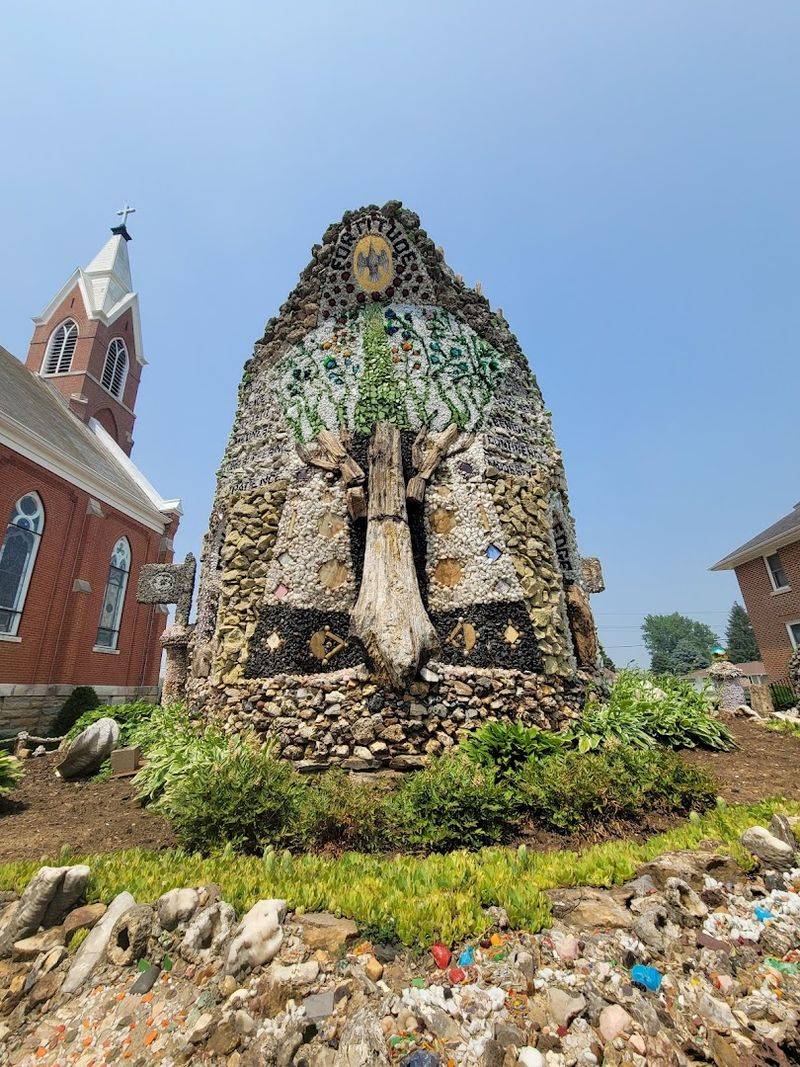
Father Wernerus designed separate sections honoring religious and civic ideals. Sacred figures share the grounds with tributes to American founding principles.
This combination strikes modern visitors as unusual, though it reflected common attitudes in 1920s immigrant communities.
The patriotic shrine features Columbus, Washington, and Lincoln alongside eagles and flags. These symbols celebrated the adopted homeland of many parishioners.
The juxtaposition of faith and citizenship expressed gratitude for religious freedom in America.
Some contemporary observers find the nationalist elements jarring or historically problematic. Others appreciate the sincere attempt to reconcile spiritual belief with civic identity.
The dual focus provides insight into how Catholic immigrants navigated their complex relationship with American culture during a period of significant social tension and change.
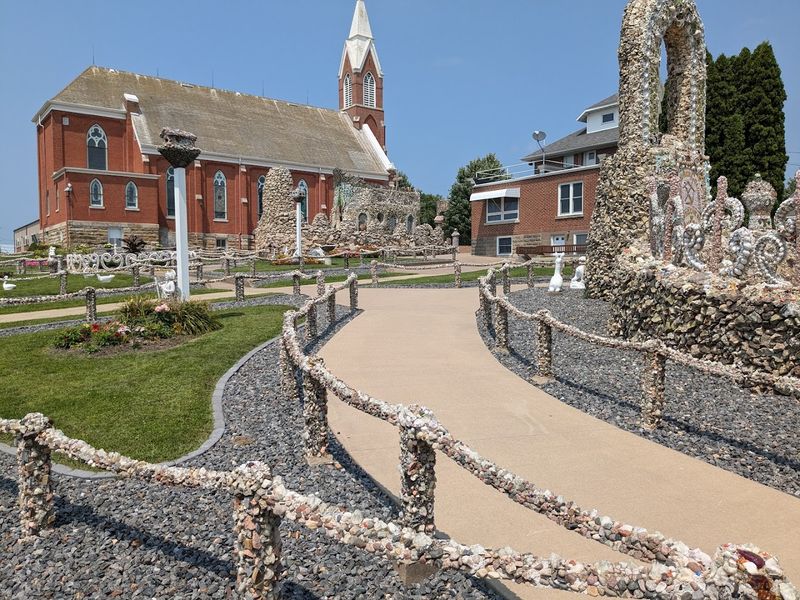
The Grotto Stands Beside Holy Ghost Church In Dickeyville
Holy Ghost Church provides the backdrop for the grotto complex. The traditional brick church building contrasts sharply with the fantastical decorative structures surrounding it.
Visitors often photograph both together, capturing the visual tension between conventional architecture and folk art exuberance.
The location at 305 W Main Street places the grotto prominently in town. It occupies church property but welcomes all visitors regardless of religious affiliation.
The open access policy has made the site a genuine community resource and tourist attraction.
Dickeyville itself remains quite small, making the grotto an outsized presence in local identity. The church maintains the grounds while accepting donations rather than charging admission.
This generosity allows the site to function as public art, enriching the town’s character and drawing thousands of curious visitors annually.
Every Wall Feels Like A Giant Handmade Mosaic
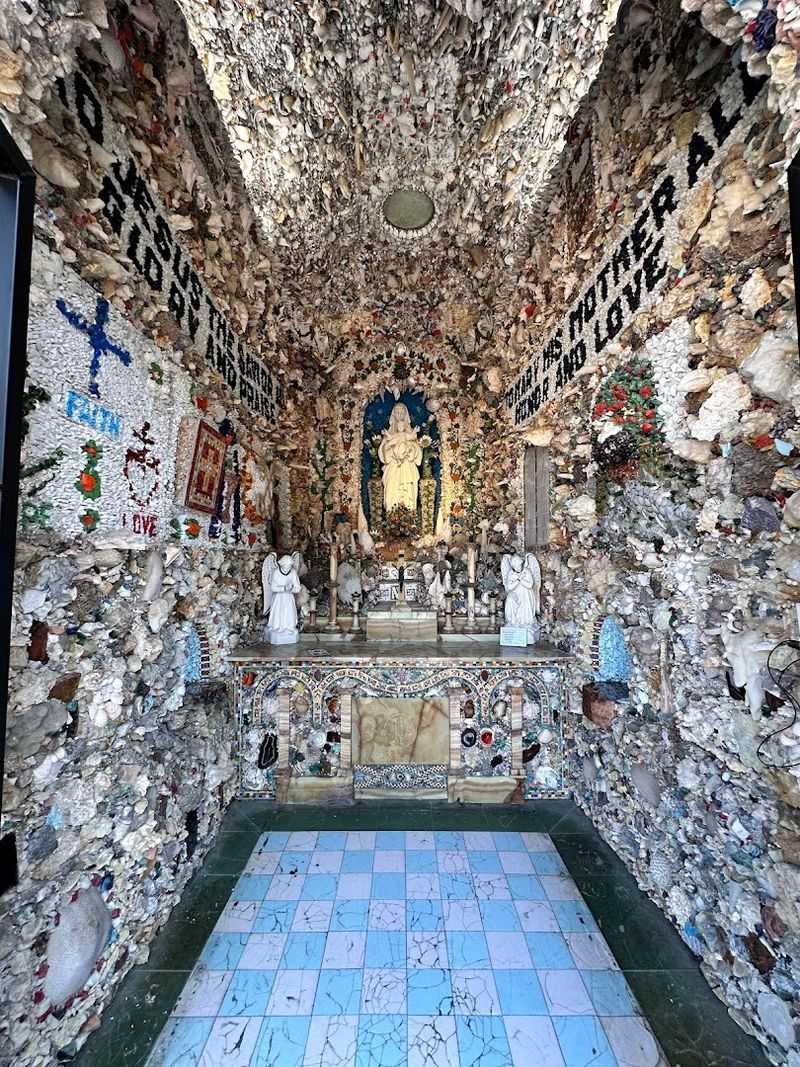
Byzantine mosaicists would recognize the technique even as they marveled at the unconventional materials. Father Wernerus applied ancient artistic principles using found objects instead of precious tesserae.
The result bridges high art traditions and folk creativity in unexpected ways.
Each vertical surface displays different patterns and textures. Some areas feature geometric arrangements while others follow organic curves.
The variety prevents visual monotony despite the repetitive technique applied across multiple structures.
Sunlight transforms the walls throughout the day as changing angles illuminate different materials. Morning light might emphasize shells while afternoon sun brings out glass sparkle.
This dynamic quality means the grotto never looks quite the same twice, rewarding repeat visits and encouraging visitors to linger longer than they initially planned at this remarkable Wisconsin site.
The Shrines Honor Religious Figures And Patriotic Symbols
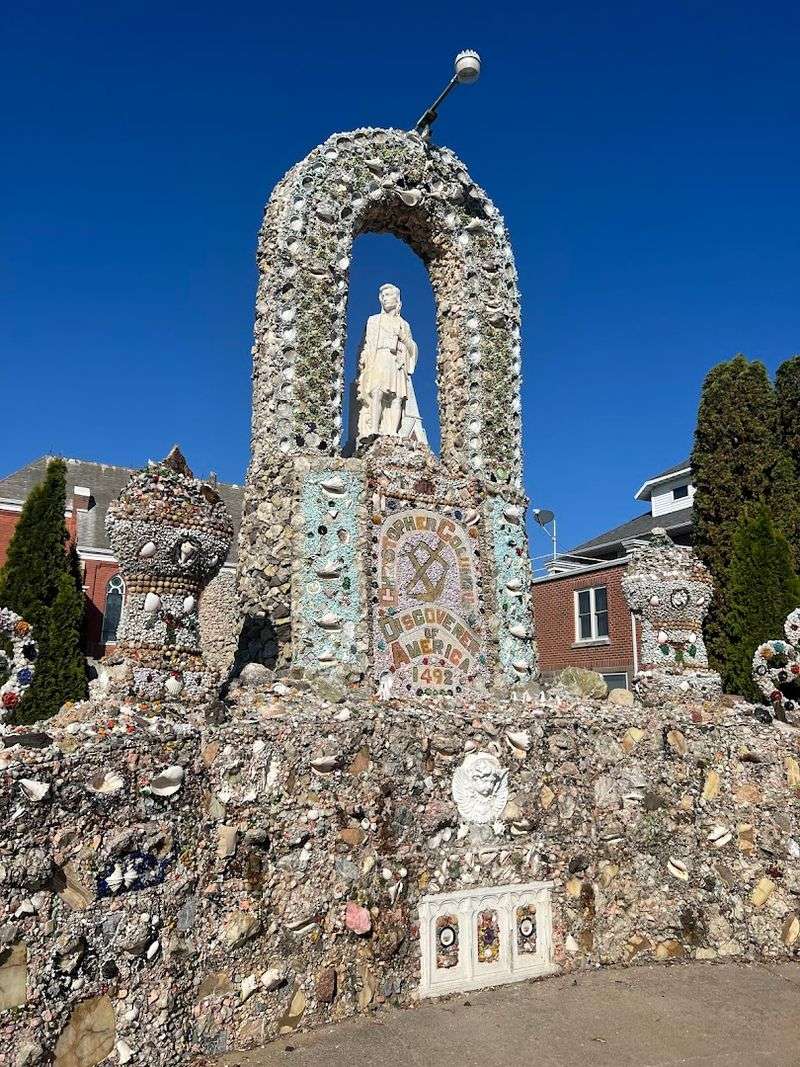
Separate grottoes contain statues of Mary, Jesus, and various saints. Each shrine receives its own architectural treatment with distinctive decorative schemes.
The religious sections emphasize contemplation and prayer, with benches positioned for quiet reflection.
The patriotic area takes a more celebratory tone. Monuments honor American ideals through symbolic representations.
Eagles spread wings above inscriptions praising liberty and democracy. The exuberant decoration matches the triumphant themes.
This division allows visitors to engage with different aspects of the site according to personal interest. Some spend more time with religious imagery while others focus on historical tributes.
The dual nature makes the grotto accessible to diverse audiences, though the intermingling of sacred and secular continues to spark interesting conversations about appropriate boundaries.
Tiny Details Make Visitors Slow Down And Look Twice
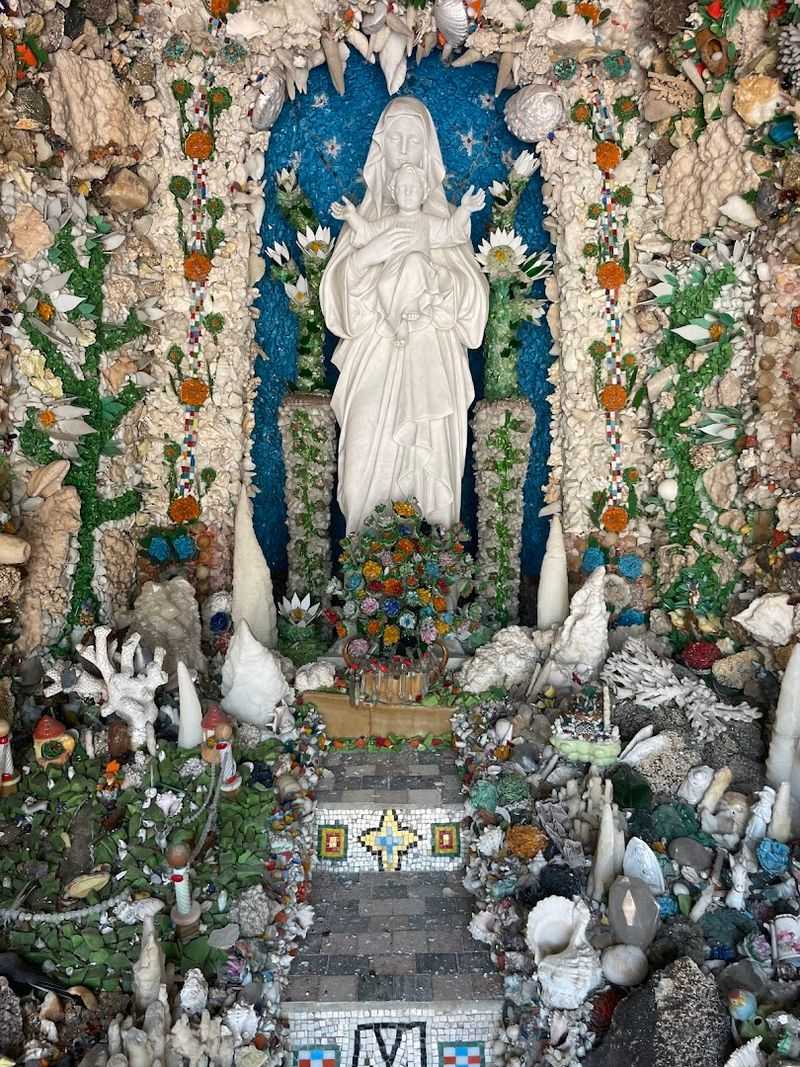
The grotto rewards careful observation. Rushing through means missing the project’s true achievement.
Small shells form intricate borders around larger stones. Fragments of patterned china create unexpected accents.
Glass pieces no bigger than fingernails catch light from precise angles.
Father Wernerus embedded meaning in scale as well as subject matter. The painstaking detail work demonstrates devotion through labor itself.
Hours invested in placement become a form of prayer made visible and permanent.
Photographers find endless subjects within a few square feet. Children discover hidden shapes and patterns adults overlook.
The density of decoration creates a scavenger hunt atmosphere where each viewing reveals something previously unnoticed. This layered complexity explains why people return multiple times, always finding fresh details at this remarkable Wisconsin landmark.