
This Stunning California State Park Feels Like Stepping Into A Fantasy Scene
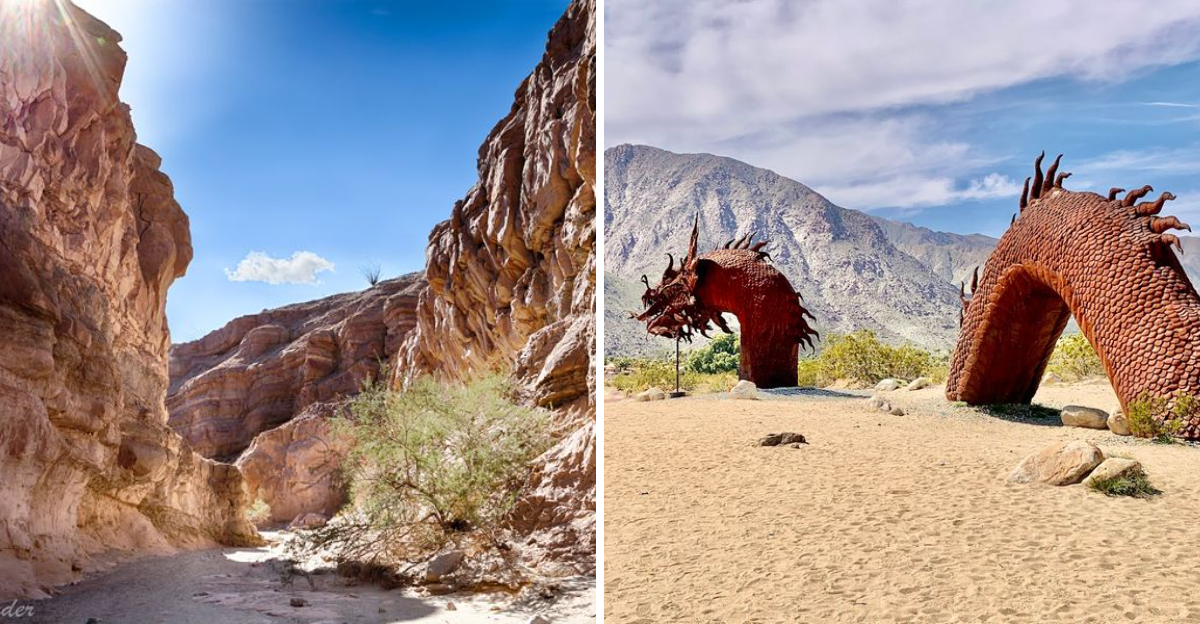
You might picture California as beaches and city skylines, but Anza-Borrego Desert State Park tells a completely different story. Spanning more than 600,000 acres in Southern California’s Colorado Desert, it unfolds into a landscape that feels far removed from expectations.
Painted badlands, narrow slot canyons, hidden palm oases, and wide-open night skies all come together in one place. What starts as a simple desert visit quickly turns into something far more surprising, with scenery that makes even experienced travellers pause and take it in.
California’s Largest State Park Feels Endless In Every Direction
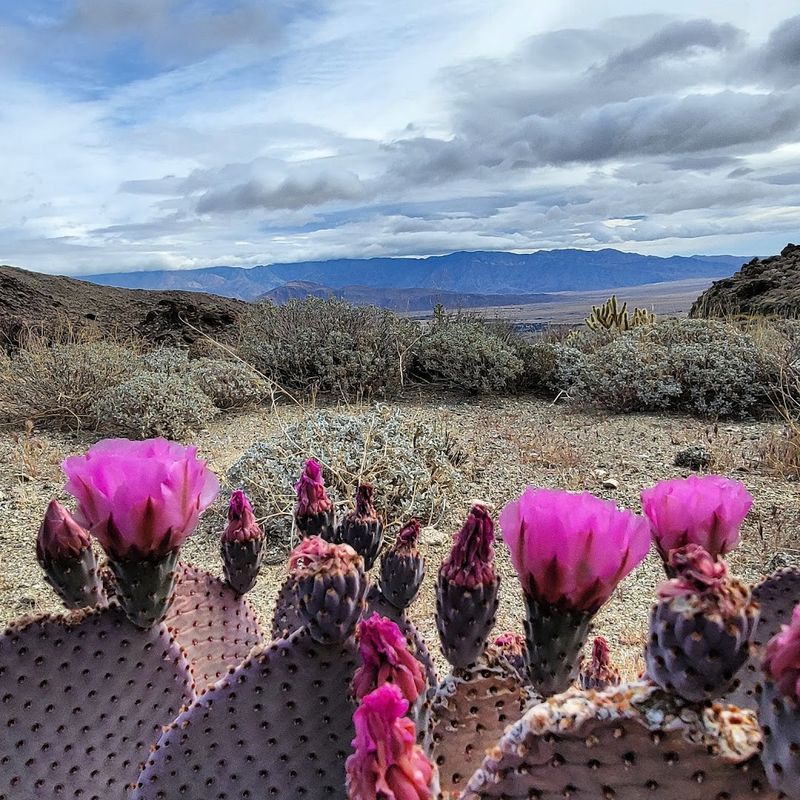
Covering over 600,000 acres, Anza-Borrego is the largest state park in California and the second largest in the contiguous United States. That figure is hard to grasp until you are standing in the middle of it, watching the terrain shift from sandy flats to jagged mountain ridges without a single building in sight.
The sense of scale here is genuinely humbling.
The park stretches across parts of San Diego, Imperial, and Riverside counties, offering an enormous range of ecosystems within a single protected area. Visitors can spend a full week exploring and still leave with trails unmarked on their personal map.
Roads branch off in dozens of directions, each leading somewhere distinctly different from the last.
The visitor center in Borrego Springs, located off Palm Canyon Drive, serves as a reliable starting point for orienting yourself. Rangers there provide current trail conditions, maps, and genuine enthusiasm about what the park holds.
Starting there saves time and shapes a smarter visit.
The Badlands Landscape Looks Like Something From Another Planet
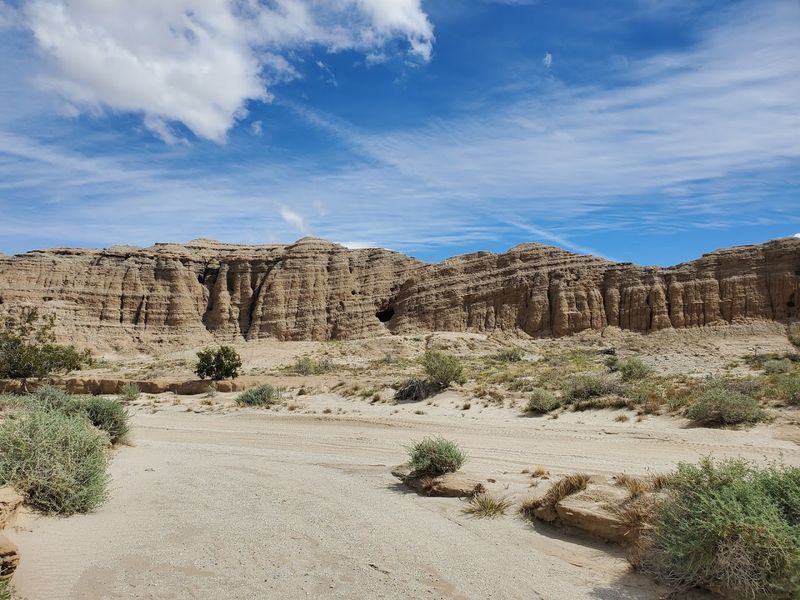
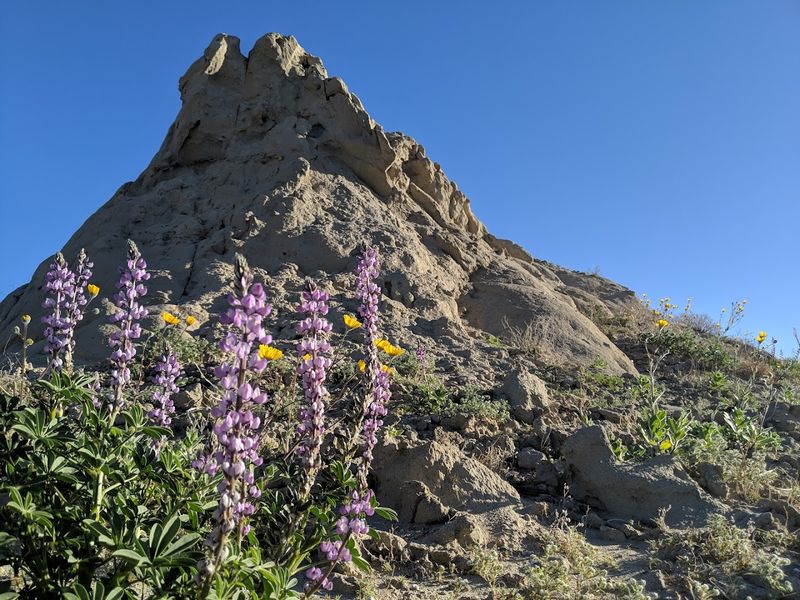
The Borrego Badlands stretch across the southeastern section of the park in a way that stops conversation cold. Layers of sediment in shades of tan, rust, and pale grey have been carved by centuries of wind and infrequent but powerful rain into ridges, gullies, and formations that look sculpted rather than natural.
Standing at Font’s Point and looking out over this terrain is one of those moments that earns the word breathtaking without exaggeration.
Geologists consider this area one of the most significant fossil-bearing badlands regions in North America. The same erosion that makes the landscape so visually striking also exposes ancient marine and terrestrial fossils embedded in the rock layers beneath your feet.
The earth here tells a story that goes back millions of years.
Reaching Font’s Point requires a short drive on a rough dirt road, typically accessible to most vehicles in dry conditions. The reward at the end of that bumpy stretch is an unobstructed panorama that few visitors ever forget.
Spring Wildflower Blooms Turn The Desert Into A Burst Of Colour
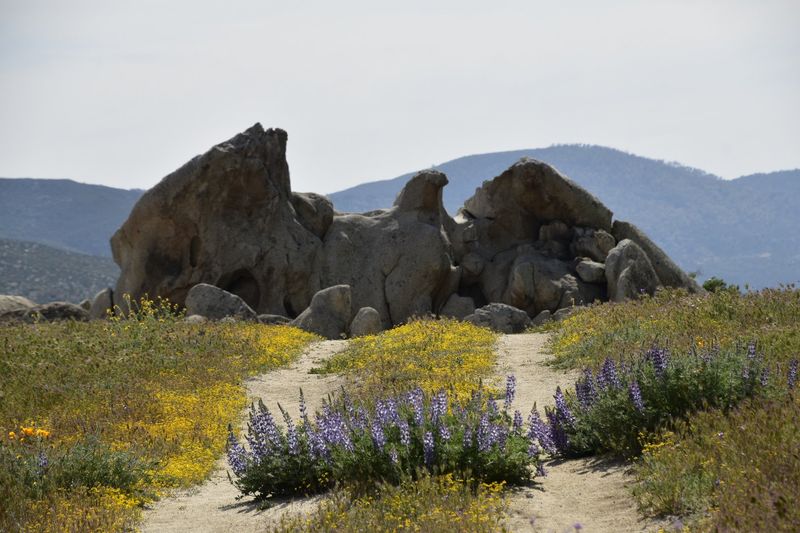
When conditions align in late February through April, Anza-Borrego transforms in a way that seems almost staged. Carpets of desert sunflowers, sand verbena, and owl’s clover spread across valley floors in colors that feel almost too saturated to be real.
Locals and botanists refer to an especially strong showing as a superbloom, and when one occurs, it draws visitors from across the country.
Not every year delivers a superbloom. The right combination of autumn rainfall, temperature, and soil conditions must come together at precisely the right time.
In leaner years, blooms still appear but concentrate along washes and sheltered areas rather than spreading across open ground. Checking the park’s official wildflower hotline before visiting in spring helps set realistic expectations.
Even a modest bloom in this desert carries its own quiet power. Seeing any flowers push through dry, cracked soil in such an arid environment is a reminder of how stubbornly life insists on continuing.
The park’s website at parks.ca.gov provides seasonal bloom updates.
Slot Canyons Create Narrow, Maze-Like Passages Through The Desert
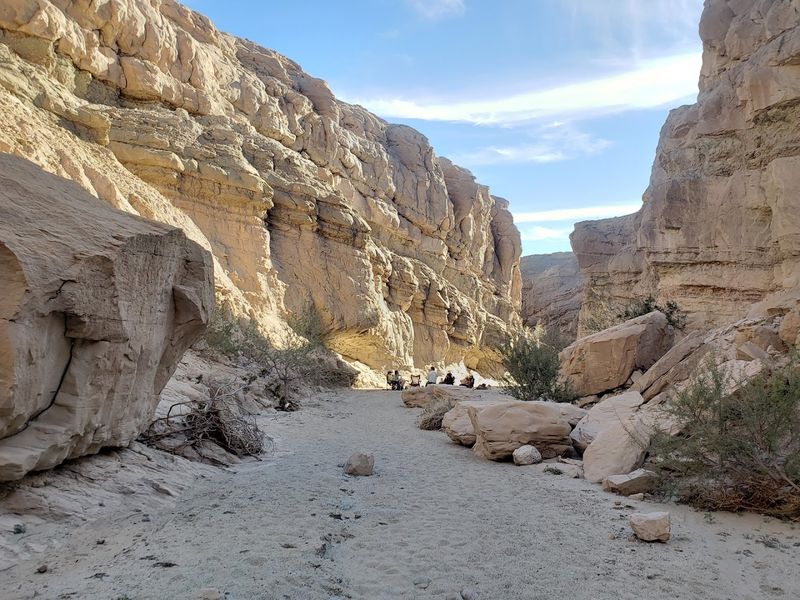
The slot canyons of Anza-Borrego are among the park’s quieter secrets, less photographed than the badlands but equally compelling. Formed by centuries of flash flooding through soft rock, these passages narrow to the width of a person’s shoulders in some sections, with walls that rise steeply on both sides and create an almost enclosed corridor of stone.
The experience of moving through one feels genuinely immersive.
Sheep Canyon, Painted Canyon, and the Calcite Mine area each offer their own version of this experience. Painted Canyon in particular draws hikers who enjoy scrambling over boulders and squeezing through tight passages with a headlamp and a sense of adventure.
The colors in the rock walls, streaked with mineral deposits, give the canyon its name and its character.
These canyons are best explored in the cooler months between October and April. Flash flooding is a real concern during summer monsoon season, and the narrow walls offer no escape route if water rushes through.
Always check weather conditions in the surrounding mountains before heading in.
Metal Sculptures Rise Unexpectedly From The Desert Floor
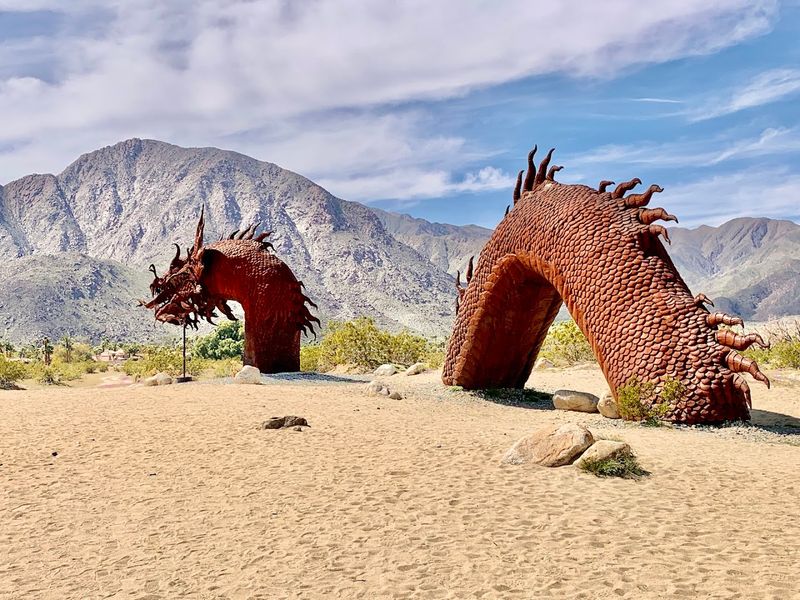
Scattered across the desert near Borrego Springs, more than 130 large metal sculptures emerge from the sand without warning or signage, and that element of surprise is very much the point. Created by artist Ricardo Breceda and originally commissioned by local landowner Dennis Avery, these steel figures depict prehistoric creatures, horses, serpents, and other forms on a scale that commands attention from a distance.
A full-sized mammoth, saber-toothed cats, and a 350-foot-long sea serpent are among the most photographed. The sculptures sit on private land adjacent to the park but are fully visible and accessible from public roads and adjacent desert.
Many visitors spend an entire morning driving the loop roads around Borrego Springs, stopping at each piece for photographs and closer inspection.
The sculptures age naturally in the desert air, developing a warm rust patina that blends them into the landscape over time. Seeing them at sunrise or late afternoon, when the low light catches the metal and casts long shadows across the sand, adds another layer to an already unusual experience.
Ancient Fossils Reveal A Prehistoric Past Beneath The Sand
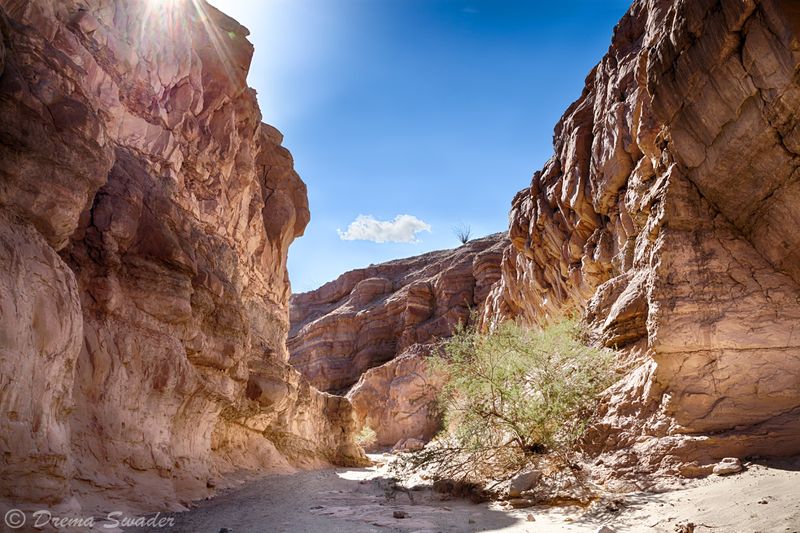
Millions of years ago, the land that is now Anza-Borrego sat at the edge of a shallow inland sea and later a subtropical savanna. The fossils left behind from those eras, including mastodons, giant ground sloths, camels, and early horses, have been gradually exposed by erosion across the badlands and surrounding formations.
This park holds one of the richest fossil records of the Pliocene and Pleistocene epochs in the American Southwest.
The Anza-Borrego Desert State Park museum and visitor center in Borrego Springs displays casts and recovered specimens that help put the landscape into geological context. Interpretive panels along certain trails also point out areas where fossil material has been found, giving hikers a reason to look more carefully at the ground beneath their boots.
It changes how you read the terrain.
Removing fossils from the park is illegal, and for good reason. The scientific value of material found in its original context far exceeds anything a souvenir could offer.
Observing and photographing is encouraged, and the park’s paleontology program welcomes curious visitors throughout the year.
The Night Sky Here Is Among The Darkest In Southern California
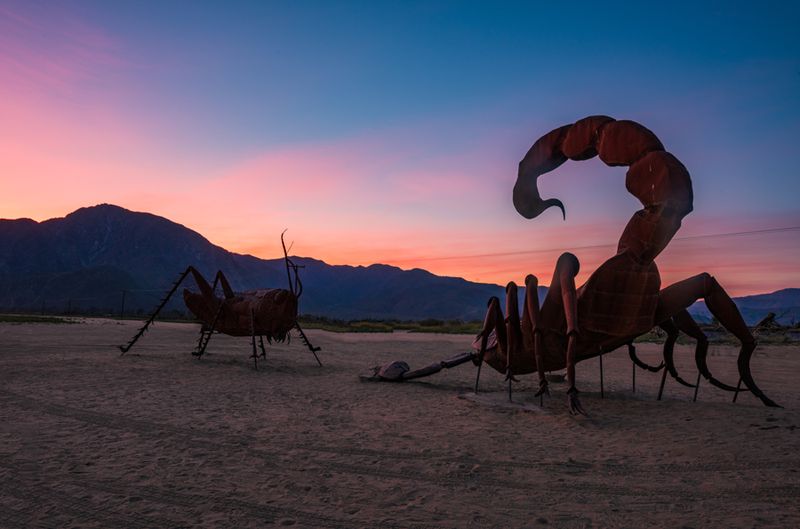
Borrego Springs holds the distinction of being one of the first International Dark Sky Communities designated in California. The town actively limits light pollution through shielded street lighting and community ordinances, which means the sky above Anza-Borrego on a clear, moonless night is a genuine spectacle.
The Milky Way appears as a dense, textured band rather than a faint suggestion.
Stargazers visit specifically for this darkness, setting up telescopes in the open desert or simply lying on a blanket to watch the sky rotate overhead. The park’s campgrounds offer ideal conditions, with minimal ambient light and wide-open sightlines in every direction.
Jupiter, Saturn, and star clusters that are invisible from urban areas become sharp and detailed here with even modest equipment.
The Borrego Springs Astronomy Club hosts occasional public star parties that welcome visitors of all experience levels. Arriving in autumn or winter increases the odds of stable atmospheric conditions and cooler temperatures that make long nights outside genuinely comfortable.
The sky alone is reason enough to stay past dark.
Palm Oases Feel Like Hidden Worlds Within The Desert
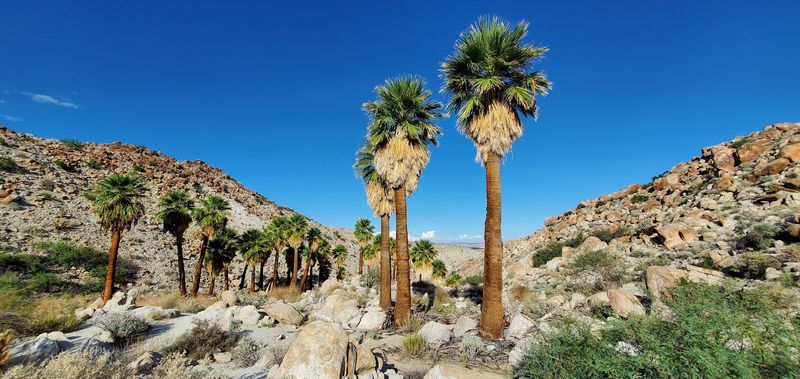
California fan palms are the only palm species native to the western United States, and Anza-Borrego contains more naturally occurring palm oases than any other location in the country. These groves form wherever underground water rises close enough to the surface to sustain root systems, often along fault lines that force moisture upward through otherwise dry terrain.
Arriving at one after a desert hike produces a specific kind of relief that is hard to describe without sounding dramatic.
Palm Canyon, accessible from the visitor center trailhead, is the most visited of these oases and offers a three-mile round trip walk through boulder-strewn terrain before opening into a shaded grove of several hundred palms. Bighorn sheep frequently use this canyon, and patient hikers have a reasonable chance of spotting them on the rocky slopes above the trail.
Seventeen Palms Oasis, located in the more remote eastern section of the park, requires a dirt road approach and rewards visitors with solitude and a dramatically different atmosphere. Bringing enough water for the full outing is essential regardless of which oasis you choose.
Summer Heat Shapes The Landscape And Visitor Experience
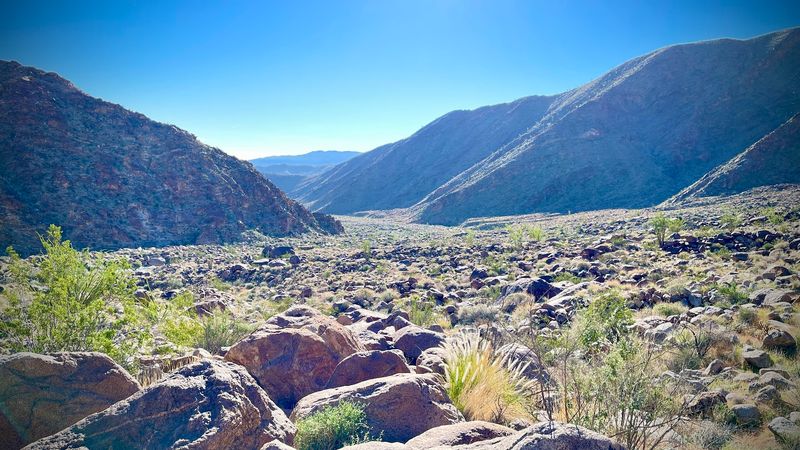
Summer at Anza-Borrego is not a season for the unprepared. Temperatures in Borrego Springs regularly exceed 110 degrees Fahrenheit between June and September, and the valley’s bowl-shaped geography concentrates heat in a way that makes those numbers feel even more significant.
The park does not close during summer, but the experience of visiting changes dramatically compared to cooler months.
Seasoned desert travelers who visit in summer do so early, arriving before sunrise to hike and retreating to shade or air conditioning by mid-morning. The landscape itself takes on a particular quality in the heat, with air shimmering above the ground and the colors of the rock appearing bleached and intense simultaneously.
Some find this version of the desert more honest than its spring incarnation.
Wildlife adapts by becoming nocturnal during the hottest months, which makes early morning and late evening the best times for animal sightings. Carrying at least one liter of water per hour of planned activity is the standard recommendation from park rangers.
Underestimating summer heat in this desert has led to genuine emergencies.
Scenic Drives Wind Through Some Of The Park’s Most Striking Views
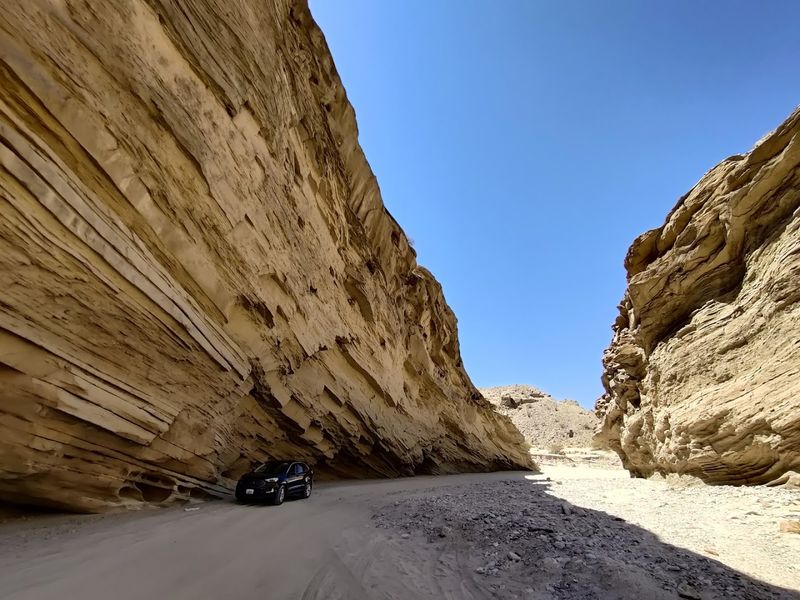
State Route 22, also known as the Great Overland Stage Route of 1849, cuts through the park’s southern section and delivers some of the most dramatic roadside scenery in California without requiring any hiking at all. The Erosion Road, a short interpretive loop off County Road S22, provides a close look at the badlands terrain from the comfort of a vehicle.
These drives are genuinely worth planning around.
Four-wheel drive opens up an entirely different category of exploration. Dirt roads lead to Font’s Point, Arroyo Salado, and the Fish Creek Wash, where canyon walls close in around the road and the geology becomes something you experience rather than simply observe.
Many of these roads are manageable in dry conditions with a standard high-clearance vehicle, though a 4WD option adds confidence on the rougher sections.
Picking up a detailed park map from the visitor center before setting out is strongly advised. Cell service is unreliable across most of the park, and some dirt roads change condition seasonally.
The drives here reward curiosity and a willingness to slow down.
Flash Floods Carve And Reshape The Desert In Real Time
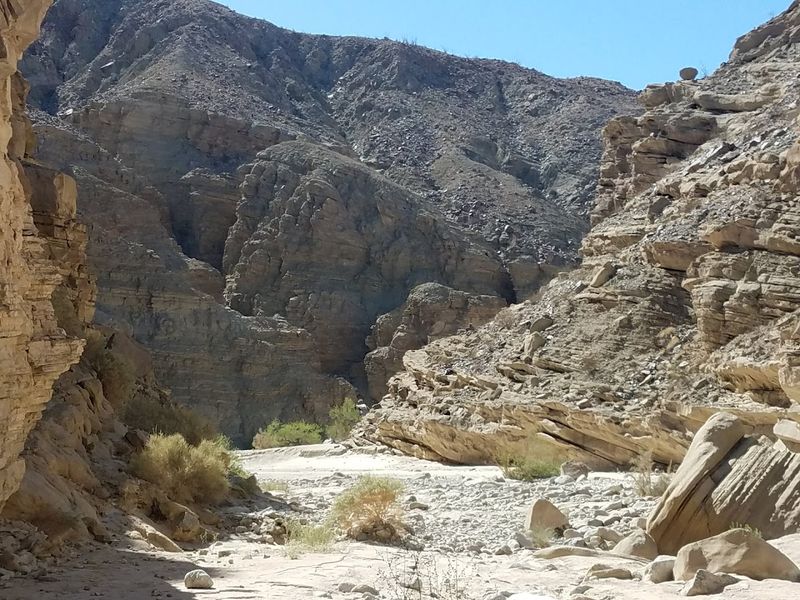
The desert at Anza-Borrego looks static from a distance, but the landscape is in constant, slow negotiation with water. Flash floods, often triggered by monsoon storms in the mountains to the east, send sudden walls of muddy water through washes and canyons with little warning.
These events last minutes to hours but leave permanent marks on the terrain, carving new channels and depositing material in unexpected places.
The same floods that create danger for visitors also do the work of geological transformation that makes the park so visually interesting. Slot canyons deepen, badlands erode further, and ancient fossil material gets exposed after a significant flood event.
Rangers sometimes report newly uncovered paleontological finds following major storms. The park essentially gets rearranged on a geological schedule that occasionally becomes visible within a human lifetime.
Visitors should monitor weather forecasts not just for Borrego Springs but for the surrounding mountains, where storms can dump rain miles away from where flooding eventually occurs. Canyon hiking during monsoon season requires specific caution and local knowledge that the visitor center staff can reliably provide.
Wildlife Thrives Here Despite The Harsh Conditions
The park takes its name from two sources: Juan Bautista de Anza, the Spanish explorer who crossed this desert in 1774, and borrego, the Spanish word for bighorn sheep. Those sheep remain one of the park’s most celebrated residents.
The Peninsular bighorn sheep, a federally threatened subspecies, lives in the rocky slopes and canyon walls throughout the park, and patient hikers along Palm Canyon trail have a legitimate chance of spotting them.
Beyond bighorn sheep, the park supports a surprisingly broad range of species. Roadrunners, coyotes, kit foxes, rattlesnakes, chuckwallas, and golden eagles all make their home here.
The desert tortoise, a protected species, lives in lower elevation areas and occasionally crosses hiking trails in spring and fall. Spotting one is considered a genuine stroke of luck among regular visitors.
Dawn and dusk are the most productive times for wildlife observation throughout the year. Many animals avoid the midday heat by retreating to shade, burrows, or higher elevations.
Bringing binoculars dramatically improves the experience, particularly for scanning canyon walls where bighorn sheep blend into the rock with remarkable effectiveness.