
This Wisconsin Cave Tour Takes You Deep Into A World Most People Never See
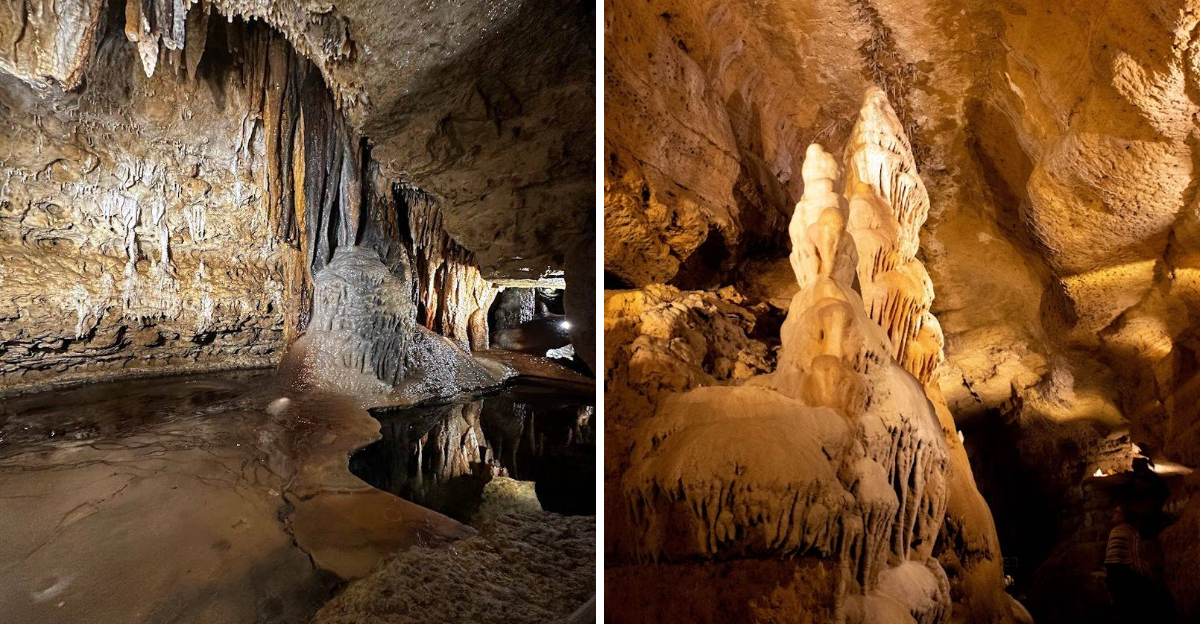
Beneath the rolling landscape of Wisconsin, there’s a place where time seems to slow to a quiet, steady pace. Far below the surface, winding passageways open into chambers shaped over thousands of years, revealing a hidden world most people never get to see.
Guided tours lead you through these cool, dimly lit spaces, where formations stretch from ceiling to floor and mineral-rich walls glow with subtle, shifting colours. It’s an experience that feels both informative and quietly surreal, offering a completely different perspective on the land above.
A National Natural Landmark With A Fascinating History
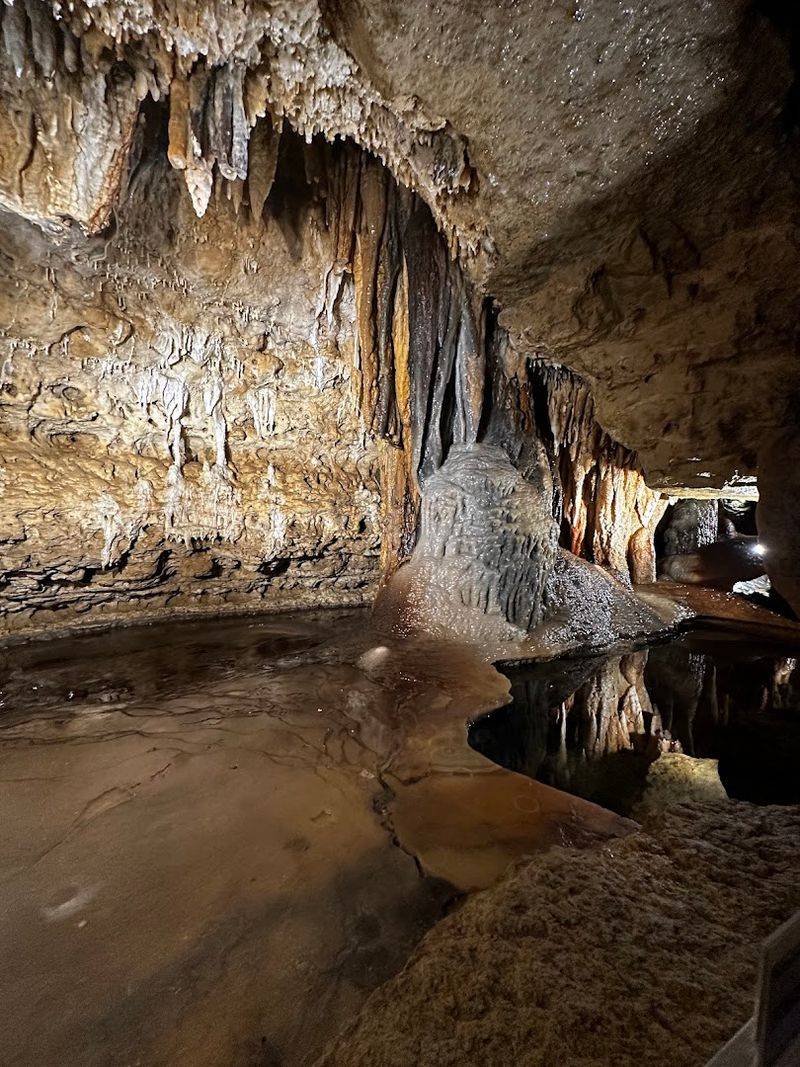
Cave of the Mounds earned its designation as a National Natural Landmark in 1987, recognized by the National Park Service for its exceptional geological significance. The recognition speaks to the cave’s importance as a window into the ancient processes that shaped the region.
Limestone bedrock dating back roughly 400 million years forms the foundation of this underground world.
The designation places Cave of the Mounds among a select group of sites across the United States deemed worthy of preservation and study. Geologists value the site for its well-preserved formations and the clarity with which it illustrates karst topography development.
The cave remains actively monitored to maintain its natural state while allowing public access.
Located at 2975 Cave of the Mounds Road in Blue Mounds, the site balances scientific importance with visitor accessibility. The landmark status ensures ongoing protection of the delicate formations while supporting educational programs that help visitors understand the forces that created this subterranean environment.
Discovered By Accident During Quarry Blasting In 1939
Workers detonating limestone at a quarry on August 4, 1939, had no idea their routine blast would crack open an entrance to a hidden cave system. The explosion revealed an opening that led to chambers no human had ever seen.
What followed was a careful exploration of the passages, which turned out to contain some of the finest cave formations in the upper Midwest.
The quarry operation had been removing stone for road construction when the blast broke through into the void. Initial explorers found rooms decorated with delicate mineral growths that had developed in complete darkness over thousands of years.
The discovery transformed the site from an industrial operation into a potential tourist attraction almost overnight.
The cave opened to visitors in 1940, just a year after its accidental discovery. This rapid transition from hidden geological feature to public attraction speaks to the immediate recognition of its value.
The story of its discovery remains part of the tour narrative, connecting visitors to that moment of unexpected revelation.
A Constant Underground Temperature Of Around 50 Degrees Year-Round
Step into Cave of the Mounds during any season and you will find the temperature holding steady at approximately 50 degrees Fahrenheit. This thermal stability exists because the earth itself acts as insulation, buffering the cave from the temperature swings happening above ground.
Summer visitors often find the coolness refreshing, while winter explorers appreciate the relative warmth compared to the frozen landscape outside.
The consistent temperature plays a crucial role in the ongoing formation of stalactites and stalagmites. Water seeping through the limestone above carries dissolved minerals that precipitate out in the stable cave environment.
This process continues at a pace measured in geological time, adding microscopic layers to the formations with each drip.
Dressing appropriately means bringing a light jacket regardless of the season. The cave’s humidity can make the 50-degree air feel cooler than expected, particularly during the hour-long tour.
Moisture in the air also means surfaces can be damp, adding to the authentic cave atmosphere.
Paved And Well-Lit Walkways Make The Tour Easy To Follow
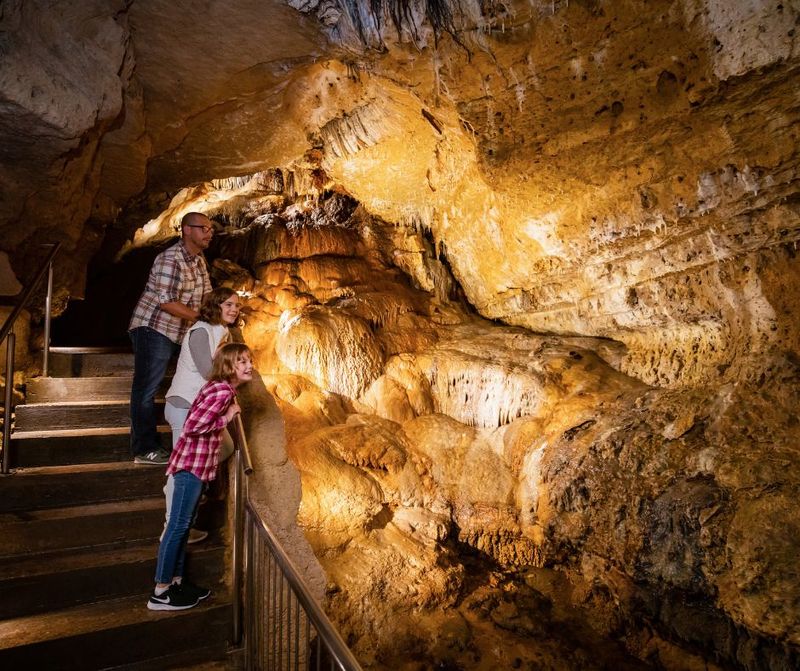
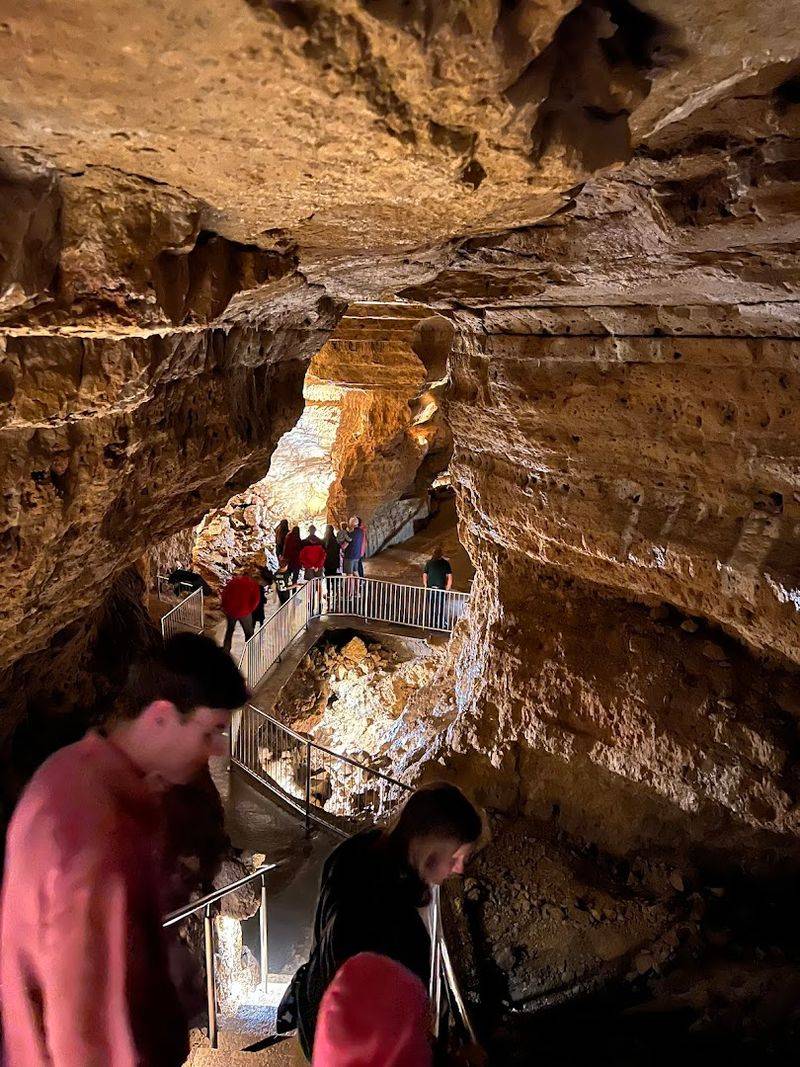
The pathways through Cave of the Mounds follow a carefully maintained route that allows visitors to move through the chambers without damaging the formations. Concrete walkways wind through the passages, eliminating the need to navigate uneven cave floors.
Lighting has been positioned to highlight key features while preserving the cave’s natural character as much as possible.
Handrails provide support along sections where the path slopes or turns, making the tour accessible to a wide range of visitors. The infrastructure remains unobtrusive, designed to facilitate movement rather than dominate the visual experience.
Stairs do appear in several locations, connecting different levels of the cave system.
One section requires ducking through a slightly lower passage, though alternatives exist for those who prefer to avoid the tighter space. The overall design prioritizes visitor comfort without stripping away the sense of being in a genuine underground environment.
The balance between accessibility and authenticity defines the tour experience, allowing people of various ages and abilities to explore formations that would otherwise remain out of reach.
A Guided Tour That Lasts About An Hour From Start To Finish
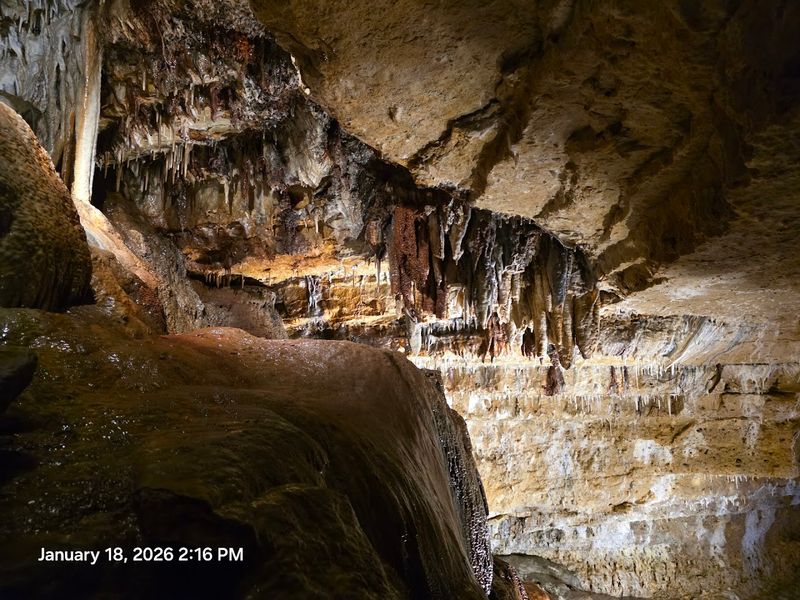
Tours begin at scheduled times throughout the day, with groups gathering before descending into the cave system. A knowledgeable guide leads each tour, pointing out significant formations and explaining the geological processes at work.
The hour-long duration provides enough time to move through the main chambers without rushing, though the pace keeps things moving steadily.
Guides share information about the cave’s history, formation, and ongoing preservation efforts. They field questions from visitors and adjust their commentary based on the group’s interests and composition.
The tour includes several stops where the group pauses to examine particular features or to allow time for photographs.
At one point during the tour, the lights are turned off completely to demonstrate the absolute darkness of the cave environment. This brief moment of total blackness helps visitors appreciate what the cave was like before artificial lighting was installed.
The hour passes quickly as the guide navigates the group through passages, around corners, and past formations that seem to defy simple description.
Stalactites And Stalagmites Formed Over Thousands Of Years
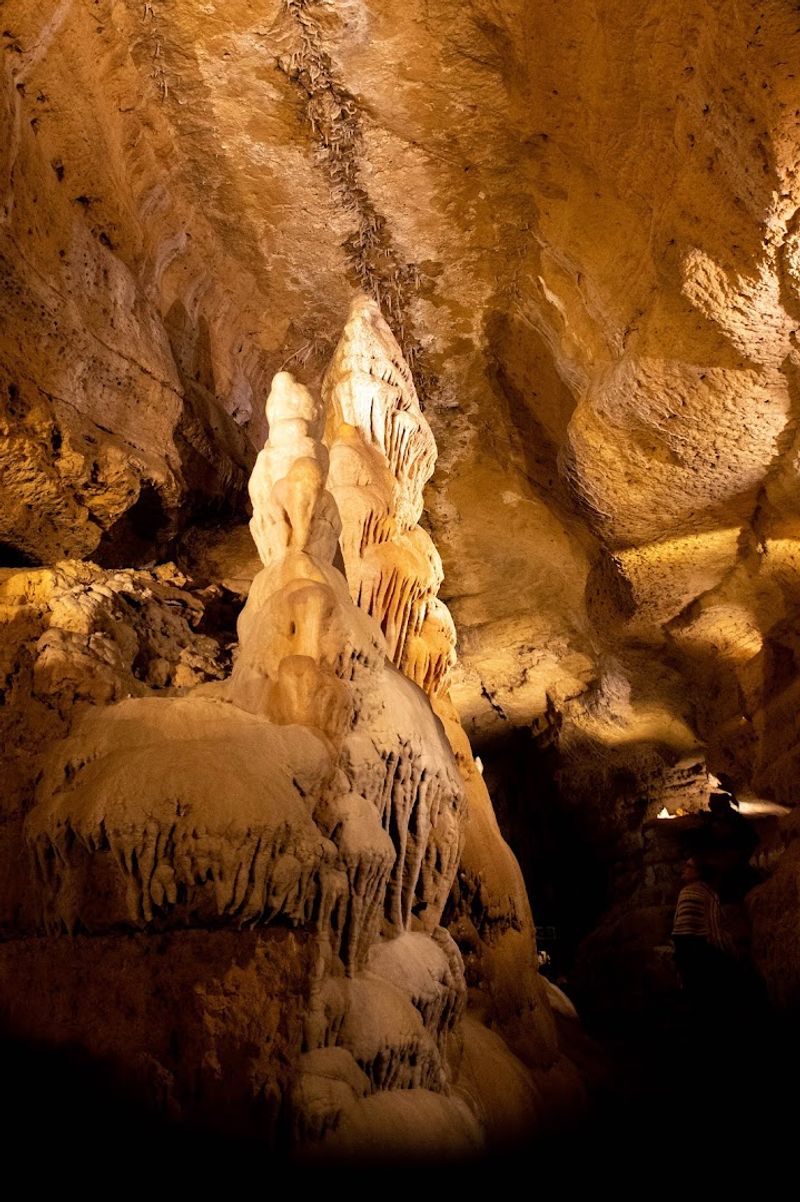
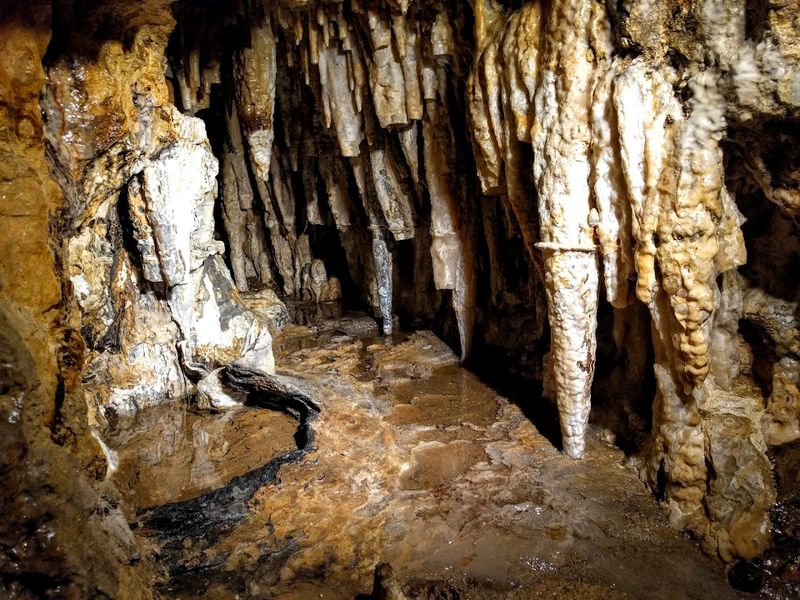
Water seeping through the limestone above carries dissolved calcium carbonate into the cave. As each drop hangs from the ceiling, a tiny amount of mineral is deposited before the drop falls.
Over centuries, these deposits accumulate into stalactites, the formations that hang downward like stone icicles. The process continues at an almost imperceptible rate, adding layers so thin that significant growth requires thousands of years.
Where the drops land on the cave floor, the same mineral deposition builds stalagmites upward. Some of these formations have grown tall enough to meet their corresponding stalactites, creating columns that span from floor to ceiling.
The variety of shapes and sizes throughout Cave of the Mounds reflects differences in water flow, mineral content, and the amount of time each formation has been developing.
Guides often point out formations that resemble familiar objects, though the real fascination lies in understanding the patient geological forces at work. Each formation represents a timeline measured in millennia, a physical record of water, stone, and time.
Colourful Mineral Deposits Create Unexpected Visual Details
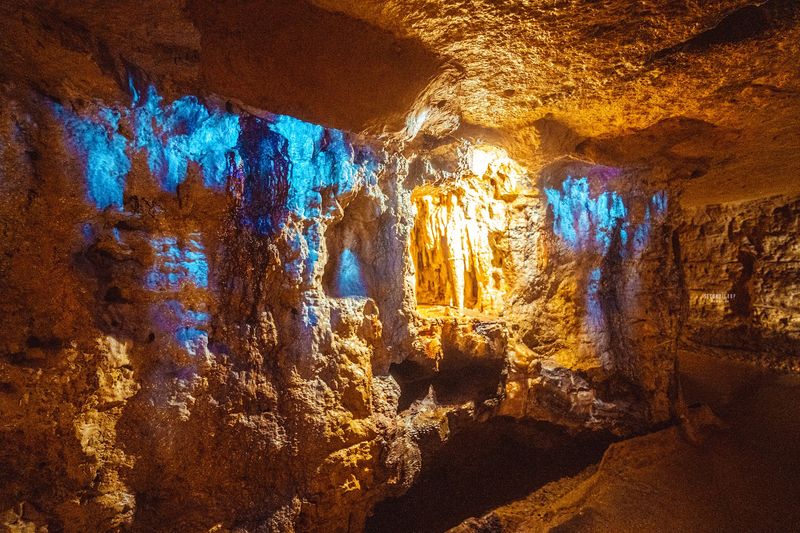
The limestone walls in Cave of the Mounds display more than just shades of gray. Mineral impurities in the water that seeps through the rock create streaks and patches of color that range from rust orange to deep brown.
Iron oxide produces the warmer tones, while other minerals contribute different hues. These natural pigments add visual interest to formations that might otherwise appear monochromatic.
Some areas show banding patterns where different minerals were deposited in layers over time. The colors serve as a geological record, indicating changes in the water chemistry or the rock layers above.
Lighting within the cave has been positioned to bring out these subtle variations without exaggerating them artificially.
The interplay of color and form creates compositions that photographers find particularly compelling. While the overall palette remains earth-toned, the variety within that range surprises visitors expecting a uniform gray cave interior.
These mineral deposits add another dimension to the visual experience, demonstrating that even in a world of rock and darkness, color finds a way to appear.
A Depth That Makes You Feel Completely Removed From The Surface
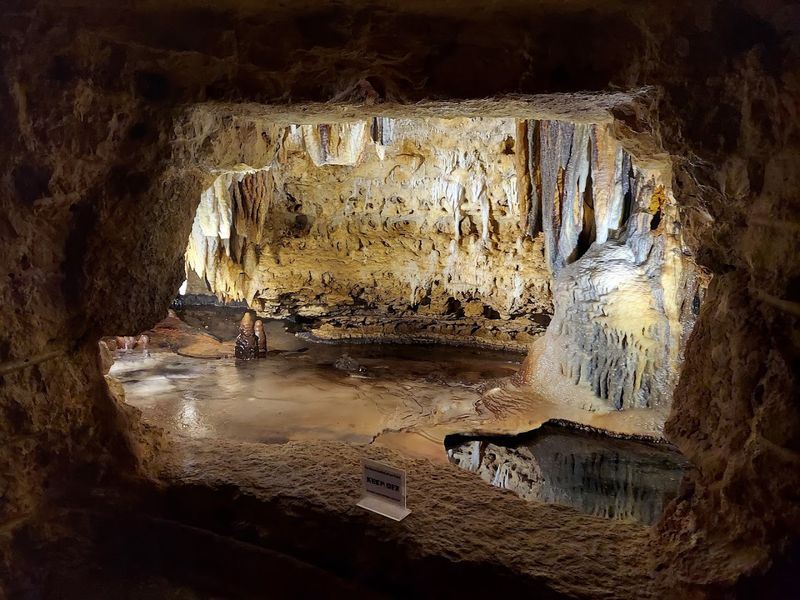
Descending into Cave of the Mounds creates a distinct psychological shift as the surface world disappears behind you. The temperature drop, the change in air quality, and the absence of natural light all contribute to a sense of separation from the world above.
You find yourself in an environment that operates by different rules, where time is measured in geological epochs rather than hours.
The cave extends deep enough that all sounds from the surface are completely blocked. The silence, broken only by the occasional drip of water and the voices of your tour group, emphasizes the isolation.
This removal from everyday stimuli allows visitors to focus entirely on the formations and the space itself.
When the guide turns off the lights during the tour, the darkness becomes absolute in a way rarely experienced in modern life. No hint of light penetrates from any direction.
This moment underscores just how far removed you are from the surface, standing in a space that existed in complete blackness for thousands of years before humans discovered it.
A Family-Friendly Experience Suitable For Most Visitors

Cave of the Mounds accommodates visitors across a wide age range, from young children to older adults. The paved pathways and moderate pace make it possible for families to explore together without leaving anyone behind.
Tour guides adjust their presentations to engage younger visitors while still providing information that adults find interesting. The hour-long duration works well for maintaining children’s attention without exhausting their patience.
Parents with infants have successfully brought them on tours, though backpacks are not permitted inside the cave. The stable temperature means no one needs to worry about extreme heat or cold affecting young children.
Strollers cannot navigate the pathways, so carriers or simply walking work better for families with very small children.
The gift shop connected to the tour entrance offers activities like geode cracking and gem mining that extend the experience for families who want to spend more time at the site. These additional options help create a fuller day trip while keeping the focus on geological education and hands-on discovery.
Seasonal And Specialty Tours Offer A Different Perspective Underground
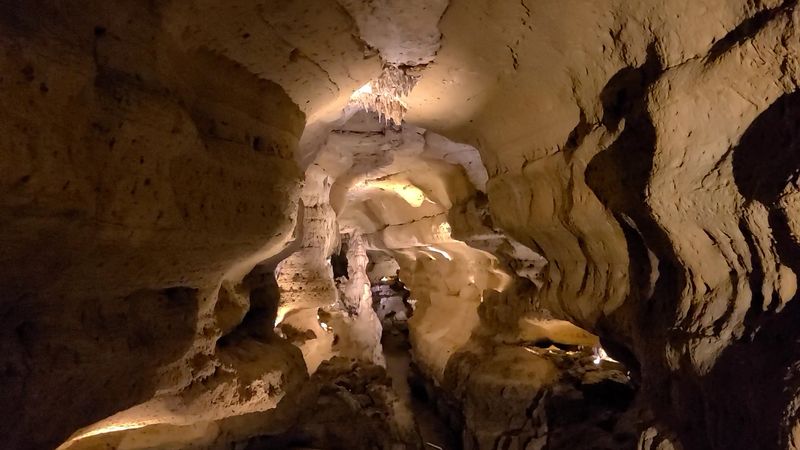
Beyond the standard guided tours, Cave of the Mounds offers specialty experiences that present the cave in different contexts. Blacklight tours provide visitors with ultraviolet flashlights that reveal fluorescent properties in certain minerals, creating an entirely different visual experience of the same formations.
These tours demonstrate aspects of the cave that remain invisible under normal lighting conditions.
During winter months, the cave is decorated with holiday lights that transform the chambers into an illuminated wonderland. The lights add a festive element while highlighting formations from new angles.
Some visitors specifically plan their trips around these seasonal displays, combining geological interest with holiday tradition.
Special tours sometimes focus on the scientific aspects of cave formation or the history of the site’s discovery and development. These variations allow repeat visitors to gain new perspectives and deepen their understanding of the cave.
The specialty tours operate on specific schedules, so checking availability in advance ensures you can participate in the experience that interests you most.