
This Wisconsin Floating Forest Is A Rare Ice Age Relic You Can Still Walk Through
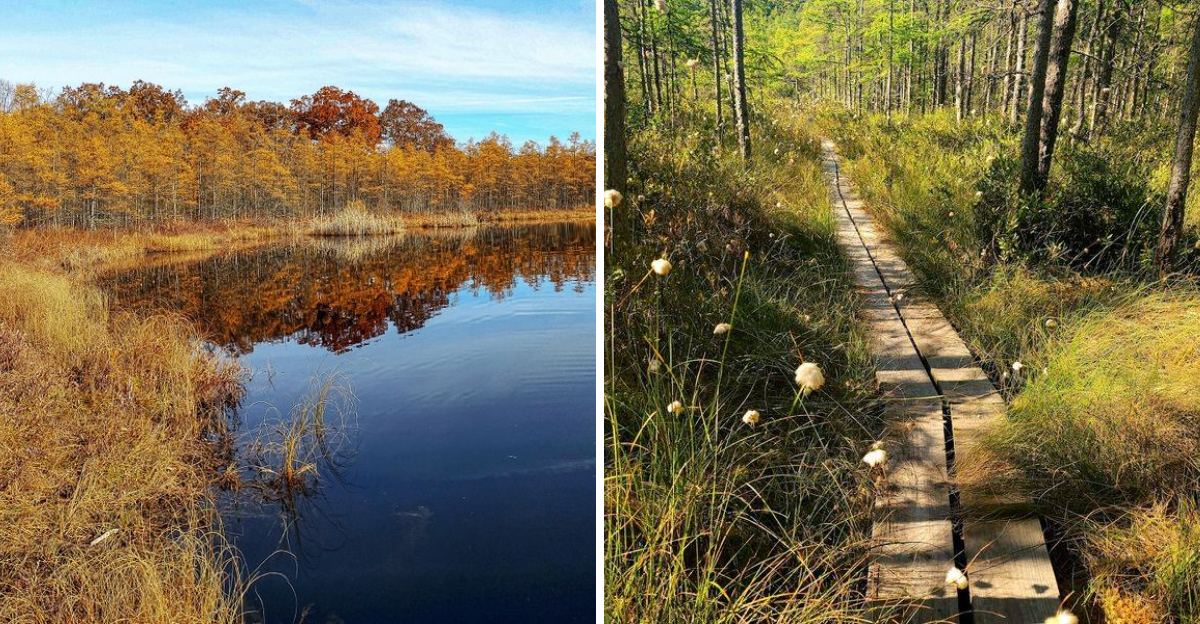
Long before weekend hikes and camera rolls, glaciers were busy reshaping Wisconsin into something strange and beautiful. One quiet boardwalk now crosses a landscape that feels more like a science lesson with better scenery.
The ground beneath your feet is not quite ground at all. It floats over an old glacial lake, cushioned by moss that has been doing its thing since the Ice Age.
Tamarack trees rise from the bog like nature forgot to update the setting, while tiny carnivorous plants wait patiently for dinner. Every few steps bring another surprise, and the whole place feels wonderfully prehistoric without trying too hard.
For anyone who likes trails with a little mystery, this ancient Wisconsin landscape makes an ordinary walk feel like time travel.
The Forest Floor Actually Floats Over A Glacial Lake
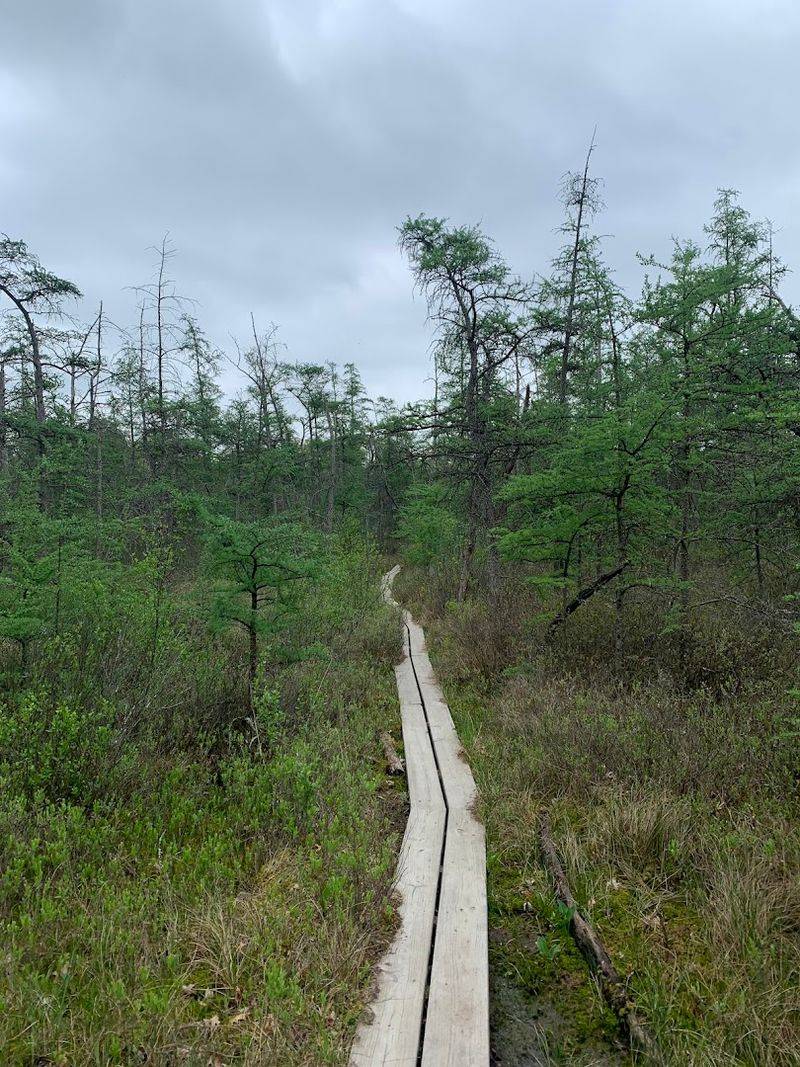
Step onto the boardwalk and you might notice a gentle bounce underfoot. That movement comes from the floating mat of vegetation beneath the wooden planks.
Centuries of plant growth have created a thick layer of sphagnum moss and roots that literally floats on the surface of a glacial lake.
The mat can be several feet thick in places, strong enough to support trees yet flexible enough to shift slightly with each step. Beneath this living carpet, cold water remains from when glaciers melted and left behind a deep depression.
The floating nature of the bog creates unique growing conditions that support plants unable to survive in typical soil.
This phenomenon occurs in only a few Wisconsin locations. The experience of walking through a forest that floats adds an element of wonder to an already unusual landscape.
Beulah Bog Preserves A Rare Ice Age Landscape
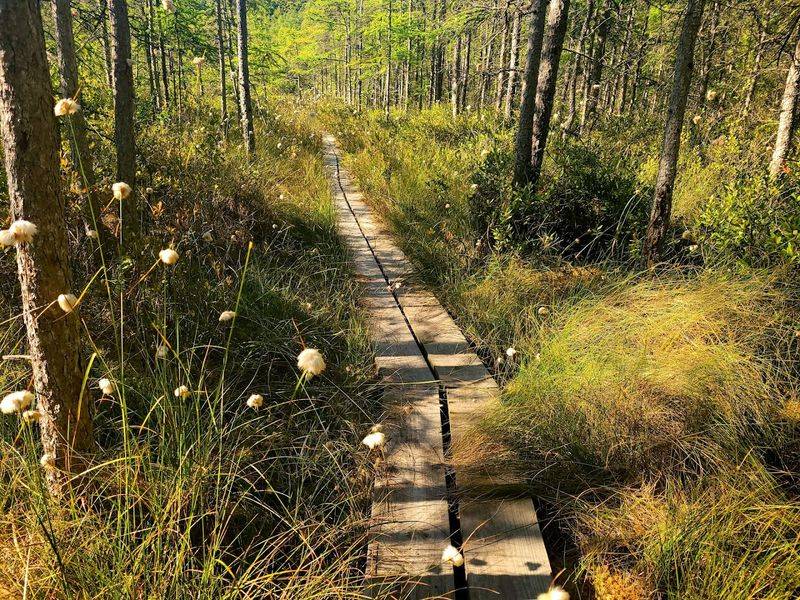
Glaciers carved this land more than 10,000 years ago, leaving behind a kettle lake that gradually filled with vegetation. The result is a bog ecosystem that has remained largely unchanged since the Ice Age ended.
Few places in Wisconsin preserve this kind of geological history in such an accessible form.
The natural area spans a modest acreage but contains botanical treasures typically found much farther north. Sphagnum moss blankets the bog floor, creating the acidic, nutrient-poor conditions that support specialized plant life.
This same moss acts as a living archive of climate data stretching back centuries.
Scientists value the site as a window into post-glacial ecology. The bog offers more than scenic beauty.
It functions as an outdoor classroom where visitors can observe how ancient landscapes continue to shape modern environments in quiet, persistent ways.
A Boardwalk Lets Visitors Walk Through The Bog Safely
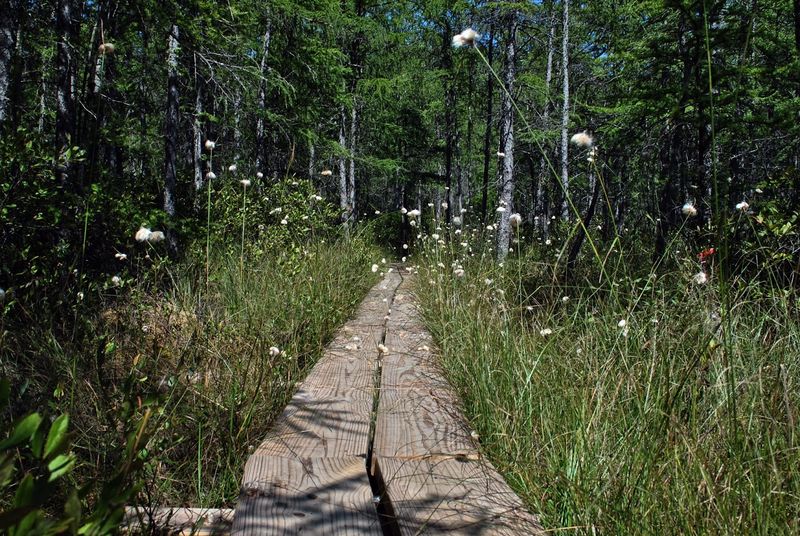
The boardwalk at Beulah Bog stretches through the heart of the floating forest, giving visitors a safe path through delicate habitat. Built to protect both people and plants, the wooden structure allows close observation without damaging the fragile moss mat.
The trail measures roughly a quarter mile once you reach the bog itself.
Getting there requires a short hike through upland forest first. The path descends through oak and maple trees before narrowing and dropping down a final slope to the boardwalk entrance.
Some sections include wooden steps built into the hillside to manage the elevation change.
The boardwalk sits low to the ground, placing visitors at eye level with carnivorous pitcher plants and other bog species. Railings are absent, so attention to footing matters, especially when the wood becomes slick after rain.
The simplicity of the structure keeps the focus on the landscape rather than the infrastructure.
Tamarack Trees Give The Bog Its Floating Forest Look
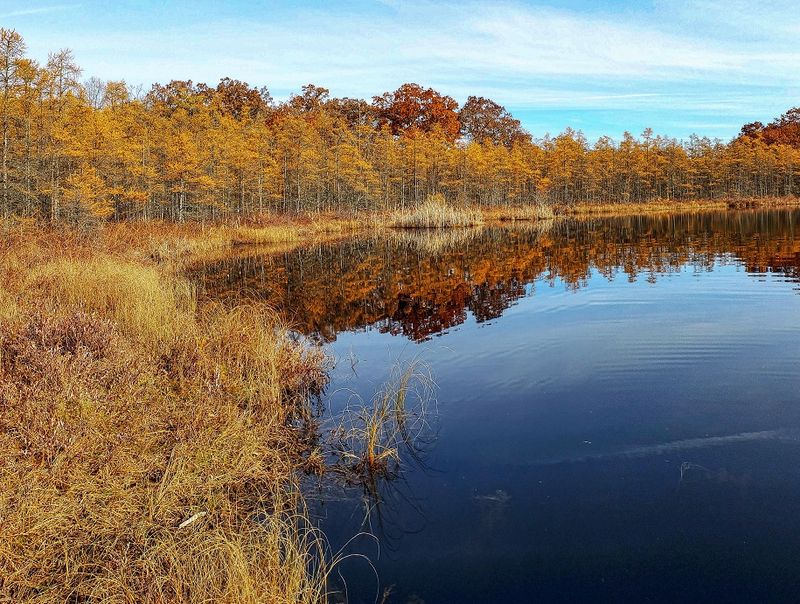
Tamaracks dominate the visual character of Beulah Bog, their slender trunks rising from the moss in scattered groves. These conifers belong to the larch family and possess an unusual trait among needle-bearing trees: they drop their needles each fall.
Before shedding, the needles turn brilliant gold, transforming the bog into a landscape that feels more like northern Canada than southern Wisconsin.
The trees thrive in the acidic, waterlogged conditions that would kill most other species. Their shallow root systems spread across the floating mat rather than digging deep into soil.
This adaptation allows them to anchor in an environment with no solid ground beneath.
Tamaracks give the bog its distinctive skyline. Their presence signals the unique chemistry and hydrology of the site.
Visitors often remark that standing among these trees creates the sensation of being transported to a mountain bog hundreds of miles north.
The Area Protects Plants Usually Found Farther North
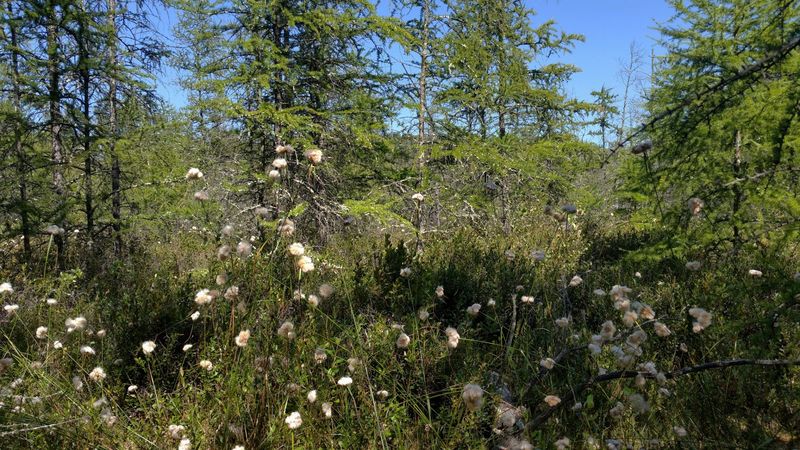
Beulah Bog functions as a refuge for boreal plant species that typically grow in Minnesota, Michigan’s Upper Peninsula, or Canada. The cool, acidic conditions of the floating mat create a microclimate that mimics habitats hundreds of miles north.
Cottongrass sends up fluffy white seedheads in late summer. Bog rosemary blooms with tiny pink flowers in spring.
These northern species arrived during the Ice Age when Wisconsin’s climate was much colder. As temperatures warmed, most of these plants retreated northward.
The bog’s unique conditions allowed them to persist in an isolated pocket. Scientists call such locations glacial relicts.
The botanical diversity extends beyond showy species. Sedges, specialized mosses, and tiny orchids add to the plant community.
Each species plays a role in maintaining the bog’s delicate ecological balance, located at 9192 Stringers Bridge Rd in East Troy.
Carnivorous Plants Add A Strange Surprise To The Trail
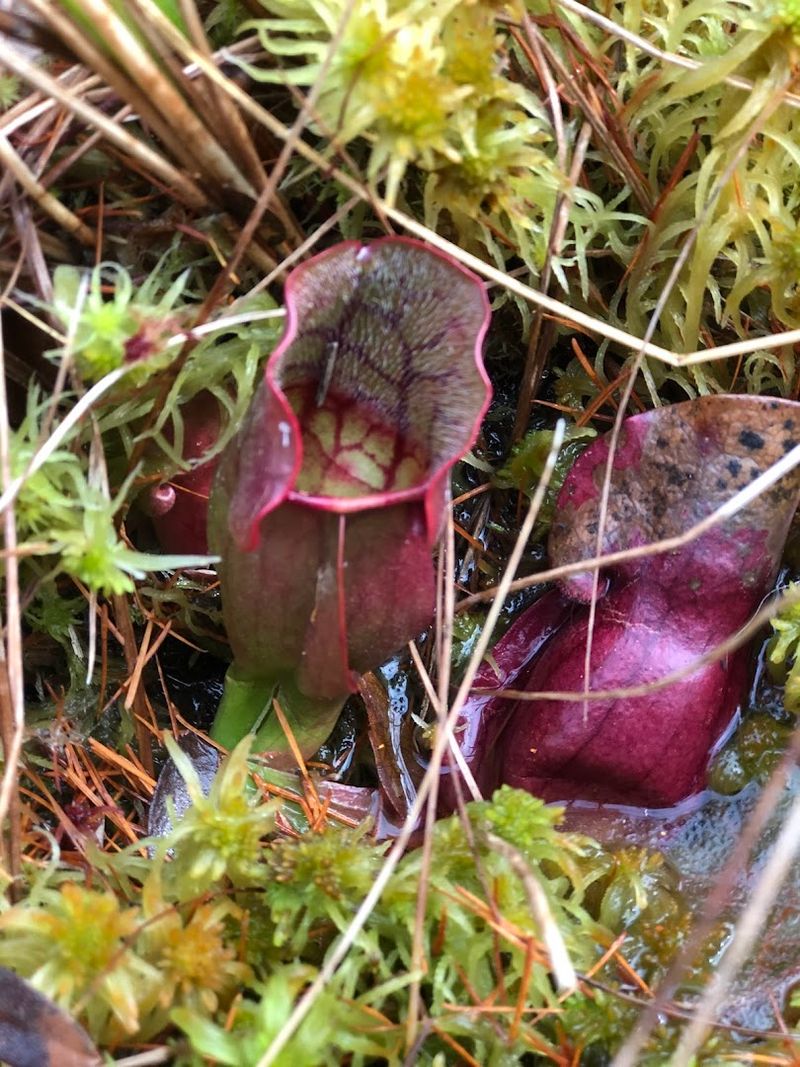
Purple pitcher plants line sections of the boardwalk in dense clusters, their burgundy-veined leaves forming tubular traps. Sarracenia purpurea represents the only pitcher plant species native to Wisconsin, and Beulah Bog hosts one of the state’s finest populations.
Each leaf fills with rainwater and digestive enzymes, creating a deadly pool for insects.
The nutrient-poor bog soil forces these plants to supplement their diet by catching and digesting small creatures. Ants, flies, and beetles tumble into the slippery tubes and drown.
The plants absorb nitrogen and other nutrients from their decomposing prey. Some pitcher plants also display nodding flowers on tall stalks in early summer.
Tiny sundews grow among the sphagnum moss as well, though their small size makes them easy to overlook. These miniature carnivores use sticky droplets on hair-like tentacles to snare gnats and other minute insects, adding another layer of predatory intrigue to the landscape.
The Bog Feels Quiet, Fragile, And Completely Different From A Regular Forest
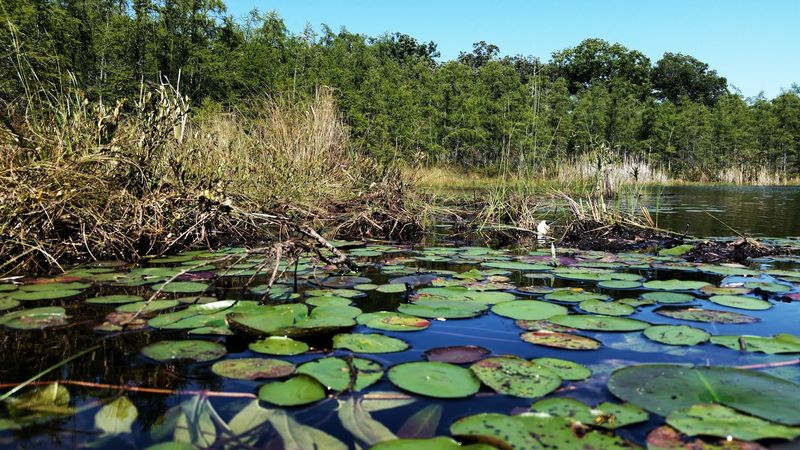
Sound behaves differently in the bog. The open canopy and soft moss underfoot absorb noise in ways that hardwood forests do not.
Bird calls carry clearly across the water, but human voices seem to fade quickly. The atmosphere encourages quiet observation rather than loud conversation.
The fragility of the ecosystem becomes apparent with each step. Sphagnum moss compresses under the boardwalk, and the entire mat shifts slightly when multiple people walk the trail.
Signs remind visitors to stay on the designated path, as even light foot traffic can damage plants that take decades to recover.
Regular forests feel solid and permanent. Beulah Bog feels temporary and alive in a different way.
The constant presence of water, the unusual plants, and the floating ground combine to create an environment that seems to exist outside normal time, untouched by the development that has transformed so much of southern Wisconsin.
Every Step Shows How Wisconsin’s Glacial Past Still Shapes The Land
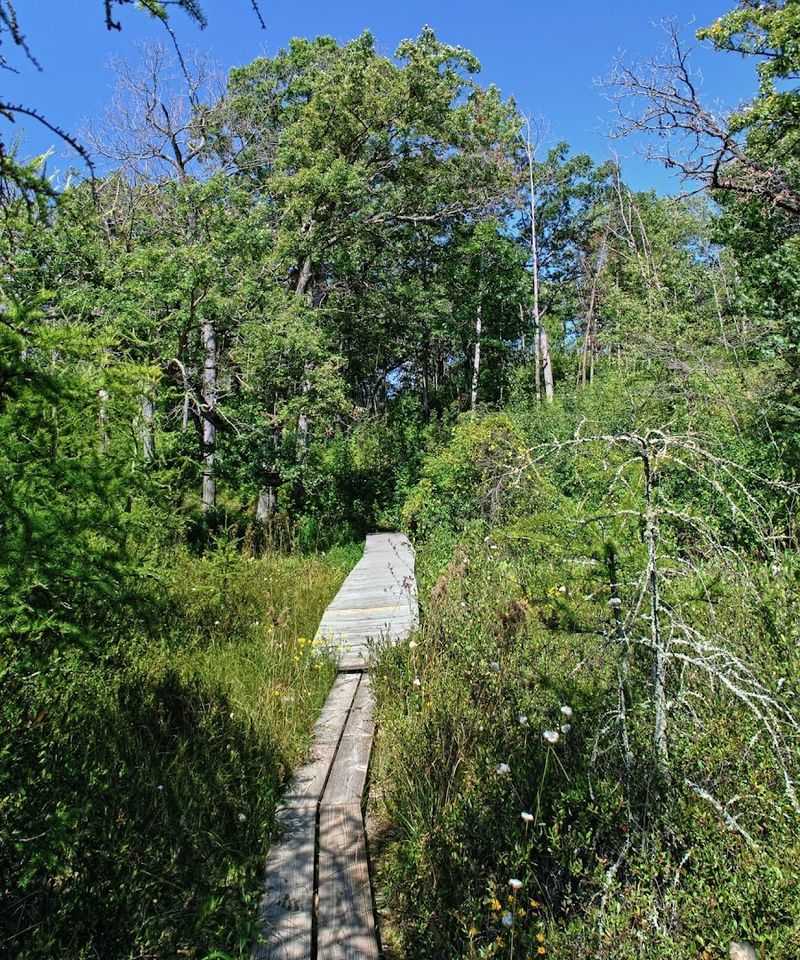
The entire bog exists because of events that occurred thousands of years ago. A massive block of ice broke off from the retreating glacier and became buried in sediment.
When the ice finally melted, it left a deep, steep-sided depression that filled with water. Over millennia, plants colonized the edges and slowly worked their way toward the center, creating the floating mat.
The process continues today at a pace too slow for human eyes to detect. Sphagnum moss grows upward while its lower layers compress into peat.
This accumulation of organic material gradually fills the lake, though complete filling could take thousands more years. Each layer of peat holds clues about past climate conditions, preserved in pollen grains and plant fragments.
Walking the boardwalk offers a tangible connection to geological time. The landscape demonstrates how ancient forces continue to influence modern ecosystems in subtle but profound ways.
The Short Walk Makes The Rare Habitat Easy To Experience
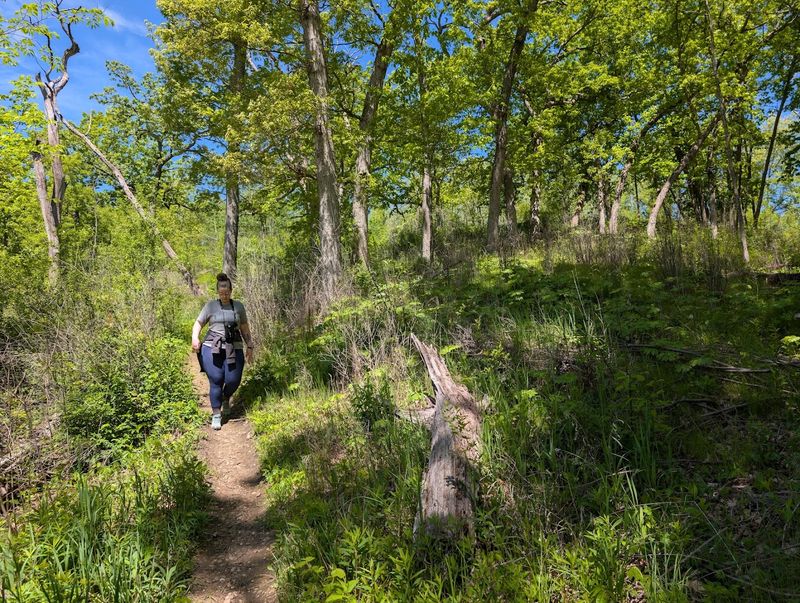
The hike from parking area to bog and back covers roughly one mile total. The upland portion includes some moderately steep hills with wooden steps, but the distance remains manageable for most visitors.
Once at the boardwalk, the terrain flattens out, making observation easy for anyone who can navigate the initial descent.
The modest length means the experience fits into a busy day. You can explore the bog thoroughly in about 30 to 45 minutes, though many visitors linger longer to photograph pitcher plants or simply absorb the unusual atmosphere.
The trail lacks the crowds found at more famous Wisconsin natural areas.
Small parking areas accommodate only a handful of vehicles, which helps maintain the quiet character of the site. The Wisconsin Department of Natural Resources manages the property, and the area remains open 24 hours daily.
Early morning visits often provide the best light and the most solitude for observing this remarkable glacial relic.
Spring And Fall Bring The Most Dramatic Colors To The Bog
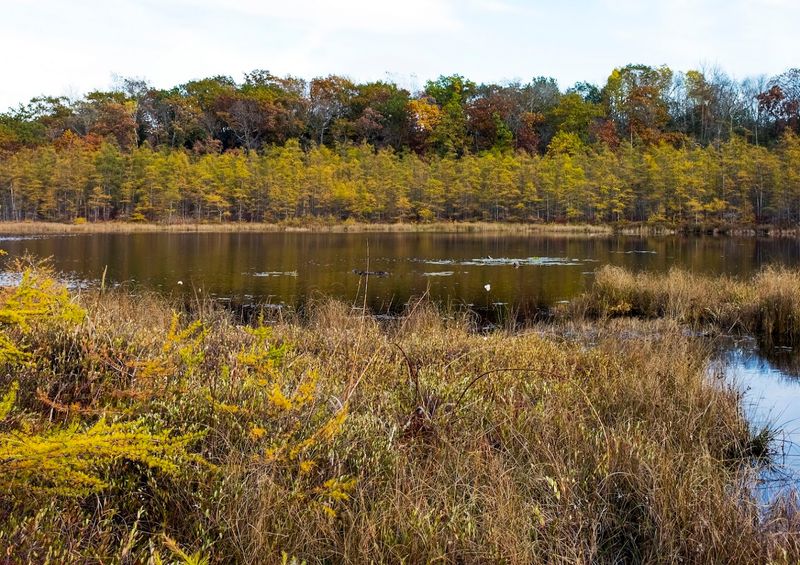
Late September through mid-October transforms Beulah Bog into a golden spectacle when tamarack needles turn yellow before dropping. The color saturates the landscape, especially on overcast days when the light becomes soft and even.
Pitcher plants add burgundy accents, and the sphagnum moss glows in shades of red and orange where exposed to sunlight.
Spring offers a different but equally compelling display. Pitcher plant flowers emerge on tall stalks in May and early June, their nodding blooms adding unusual shapes to the landscape.
Cottongrass produces fluffy white seedheads that catch the breeze. Fresh green growth appears on the tamaracks, and migrating birds stop to feed in the bog.
Summer brings lush growth but also mosquitoes, making spring and fall the preferred seasons for most visitors. Winter visits are possible, though snow can obscure the trail and ice makes the boardwalk treacherous.
The seasonal changes at Beulah Bog remind observers that even ancient landscapes continue to cycle through time.