
This Wisconsin Hike Delivers Steep Climbs, Big Thrills, And Stunning Views
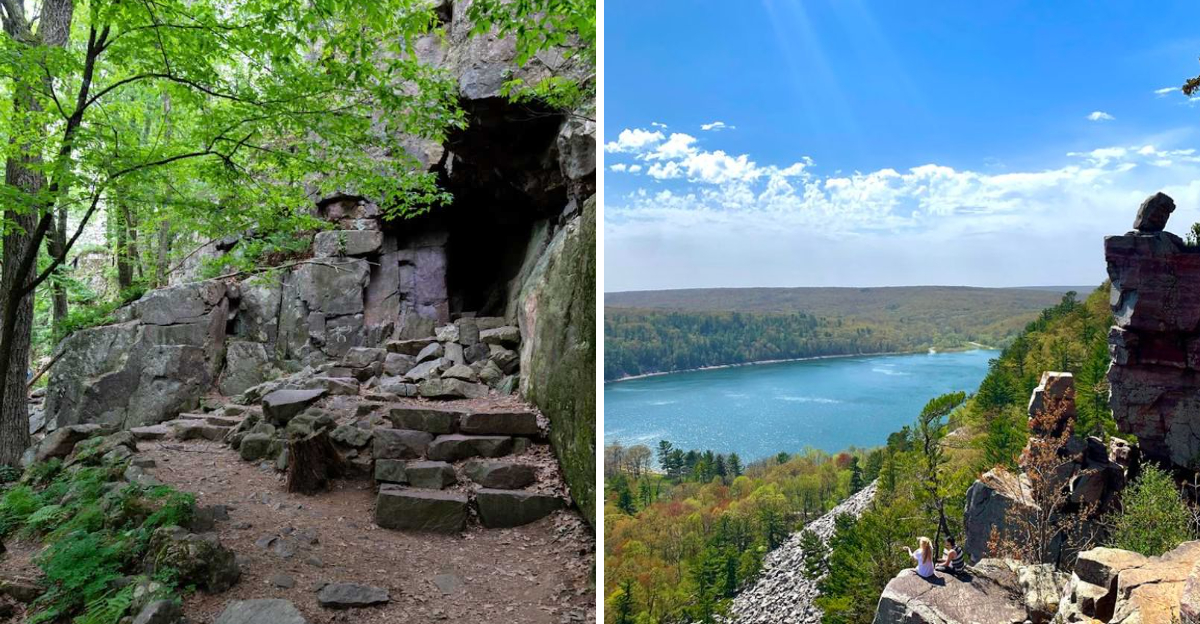
Some hikes make you work before they show off, and this Wisconsin trail is absolutely one of them. Steep stone stairways, rocky stretches, and bluffside climbs turn the route into a leg-burning adventure with a serious payoff.
The higher you go, the better the views get, with the lake, surrounding bluffs, and rugged quartzite formations opening up in dramatic fashion. It is the kind of trail that makes you pause for breath, then immediately reach for your camera.
Famous rock landmarks add even more character along the way, giving hikers plenty to talk about long after the climb is over. Challenging, scenic, and full of wow moments, this route earns every bit of effort.
The Trail Is Short, But It Is Rated Most Difficult
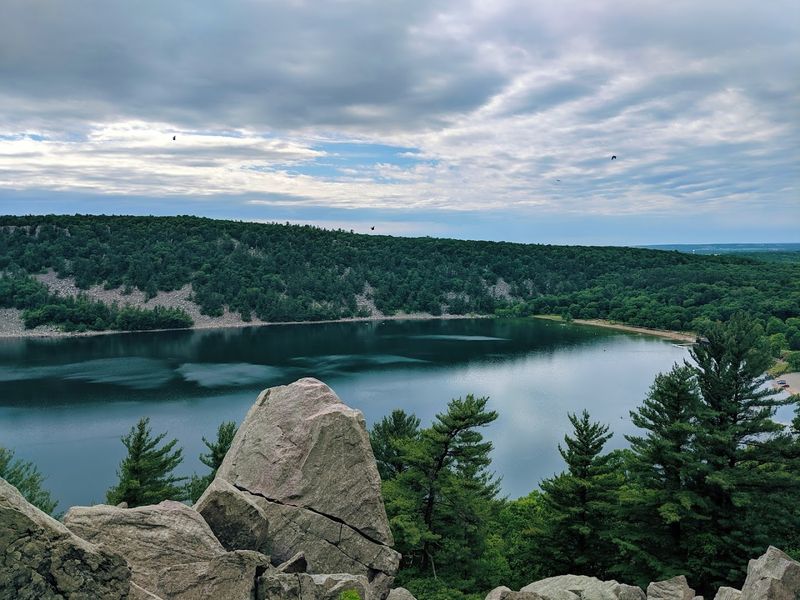
Distance does not tell the whole story on East Bluff Trail. The route measures just over a mile in length, yet park officials classify it as the most difficult trail in Devil’s Lake State Park.
Elevation gain happens quickly and relentlessly from the moment you start.
Your legs will feel every foot of the 500-foot climb to the top of the bluff. The combination of steep grades, uneven footing, and technical sections demands both physical fitness and mental focus.
Many hikers underestimate the trail based on its short distance alone.
Preparation makes all the difference on a hike like this one. Proper footwear with good traction becomes essential on the rocky surfaces.
Bringing water and taking breaks helps manage the sustained effort required to reach the summit viewpoints.
The difficulty rating exists for good reason, and first-time visitors should approach this trail with respect for its demands.
Stone Steps Make The Climb Feel Serious Fast
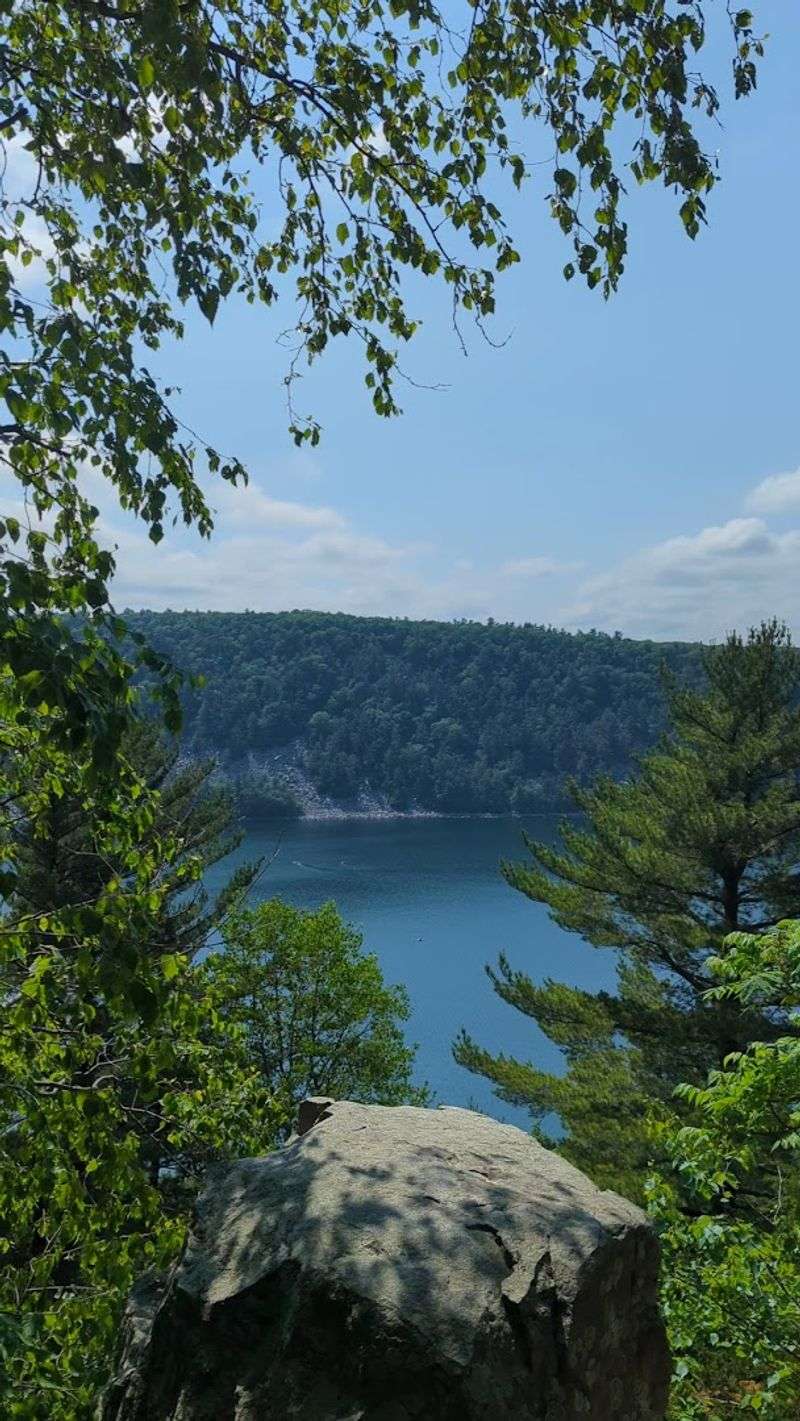
Natural stone steps line much of the ascent up East Bluff Trail. These aren’t manicured staircases with handrails and uniform risers.
Instead, you climb over quartzite blocks that have been positioned to create a navigable path up the otherwise vertical rock face.
Each step varies in height and depth, requiring constant attention to foot placement. Some sections feature gaps between stones where a misstep could twist an ankle.
The irregular nature of the climb keeps you engaged and alert from bottom to top.
Your heart rate climbs as quickly as your elevation on these stone sections. The stairways appear around nearly every bend, reminding you that the summit remains far above.
Rest stops become necessary and welcome as you pause to catch your breath.
These stone steps represent the engineering that makes the trail accessible at all, transforming what would be a technical rock climb into a challenging but achievable hike for determined visitors.
The East Bluff Views Are The Big Reward
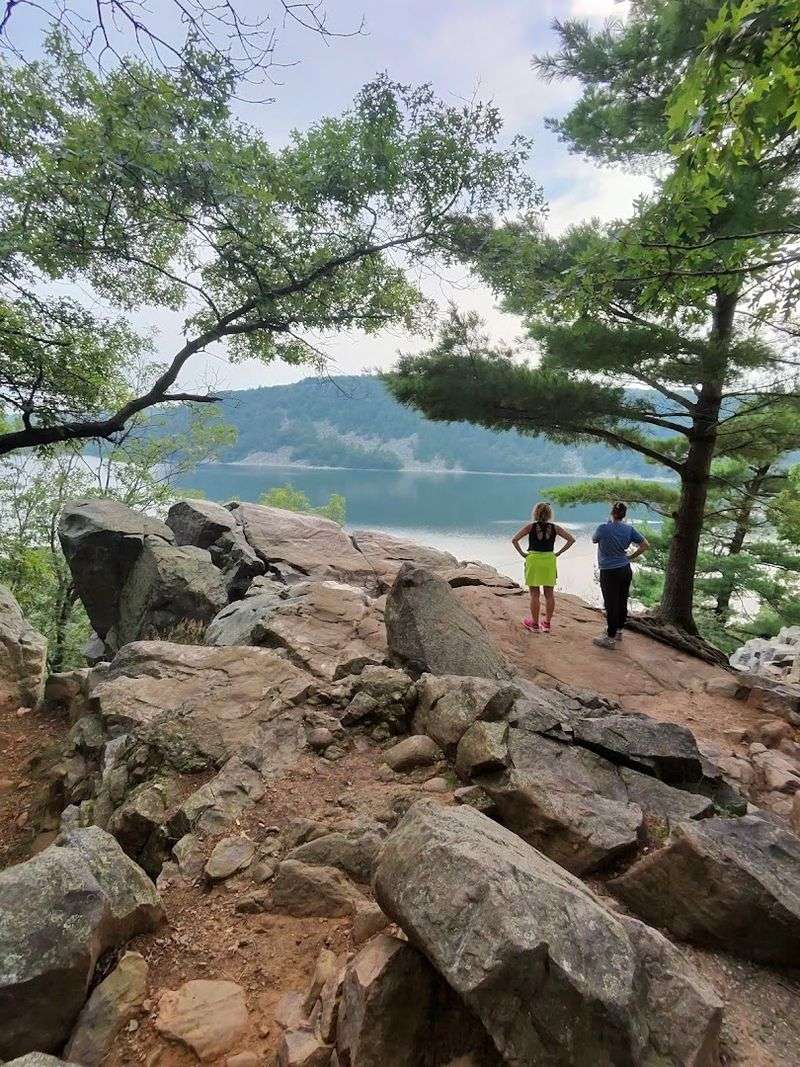
Standing atop the East Bluff delivers a vista that justifies every aching muscle. The view stretches across Devil’s Lake in the foreground and extends for miles across the Baraboo Range and central Wisconsin beyond.
On clear days, the horizon seems endless.
The lake itself appears far below, its waters reflecting sky and surrounding cliffs. Swimmers and kayakers look like toys from this elevation.
The western bluff rises directly across the water, creating a dramatic frame for the scene.
Multiple overlook points along the bluff edge offer slightly different perspectives. Some provide better views of the lake itself, while others showcase the rolling forested landscape that extends away from the park.
Each vantage point deserves its own moment of appreciation.
Photography enthusiasts find these overlooks particularly compelling during golden hour when the light washes across the landscape. The views alone make East Bluff Trail one of the most memorable hikes in the state.
Devil’s Lake Looks Dramatic From Above
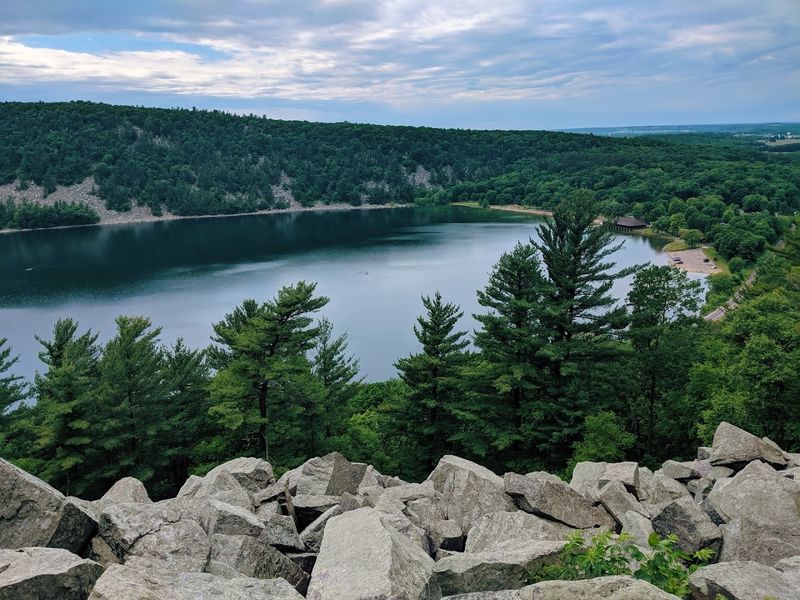
Devil’s Lake transforms into something almost unreal when viewed from the East Bluff heights. The 360-acre body of water sits cradled between towering bluffs that rise 500 feet on either side.
This geological formation creates one of Wisconsin’s most striking natural amphitheaters.
The lake’s color shifts throughout the day depending on light and weather conditions. Morning sun can turn the surface into a mirror, while afternoon light brings out deeper blue and green tones.
Shadows from the bluffs add contrast and dimension to the scene below.
Glacial activity created this landscape roughly 15,000 years ago when ice sheets advanced and retreated across the region. The lake has no natural inlet or outlet, fed instead by groundwater and precipitation.
This gives the water remarkable clarity.
From your elevated position, the entire recreation area spreads out below. Beach areas, parking lots, and picnic grounds appear as small organized patches along the shoreline.
The Trail Passes Elephant Rock Along The Way
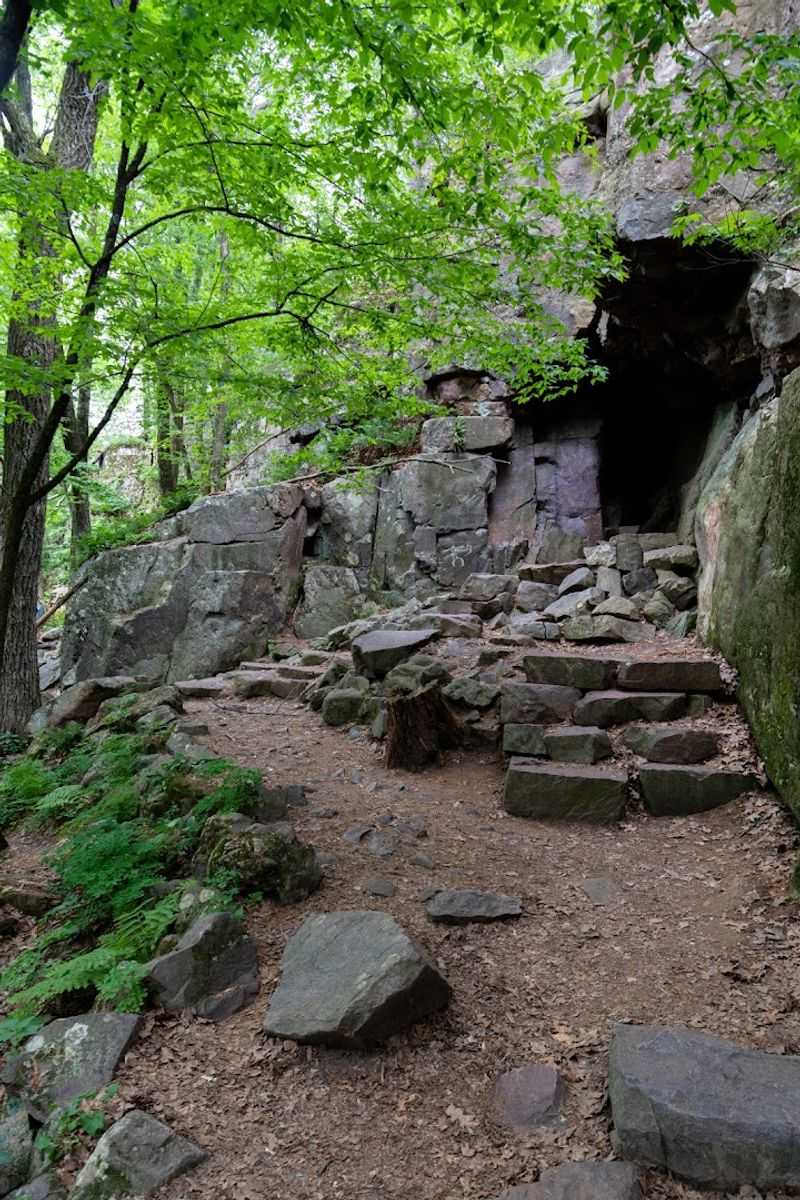
Elephant Rock stands as one of the trail’s most recognizable geological features. This massive quartzite formation earned its name from a profile that resembles an elephant’s head and trunk when viewed from certain angles.
Generations of hikers have stopped here to study the resemblance and snap photos.
The formation sits right along the trail path, making it impossible to miss. Its size impresses up close, with the rock towering well above the average person.
The weathered surface shows patterns and textures created by centuries of exposure to Wisconsin’s harsh climate cycles.
Children particularly enjoy this landmark because the elephant shape sparks imagination. Families often use Elephant Rock as a waypoint to measure progress along the trail.
Reaching this formation means you have covered significant ground on your climb.
The rock also provides a natural spot to pause and rest before continuing upward. Many hikers take the opportunity to remove their packs and have a snack while admiring this quirky natural sculpture.
Elephant Cave Adds A Fun Landmark To The Route
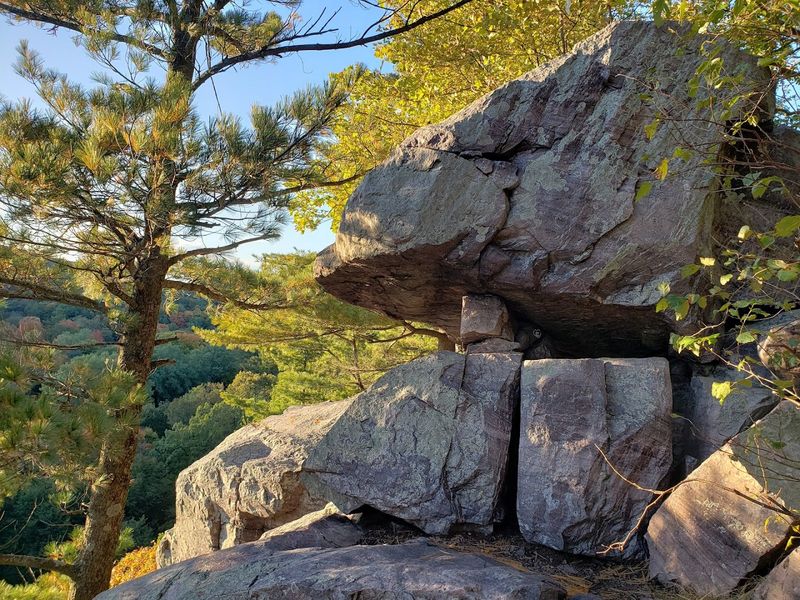
Just below Elephant Rock sits a small cave formation that adds an element of exploration to the hike. The opening appears as a gap between massive quartzite blocks, creating a sheltered space where hikers can duck inside.
The cave stays cool even on hot summer days.
Calling it a cave might be generous since the space extends only a few feet into the rock. Still, the enclosed feeling and shade make it a popular stop, particularly for families with curious kids.
The rock walls feel smooth from countless hands touching them over the years.
This feature demonstrates how the quartzite bluffs fracture and separate along natural planes. Weathering and erosion gradually widen these gaps, creating spaces large enough for people to enter.
The process continues slowly even today.
The cave opening frames views back toward the trail and surrounding forest. Some hikers use this spot as a brief escape from sun or wind before resuming their climb toward the summit overlooks above.
The Path Has Plenty Of Ups And Downs
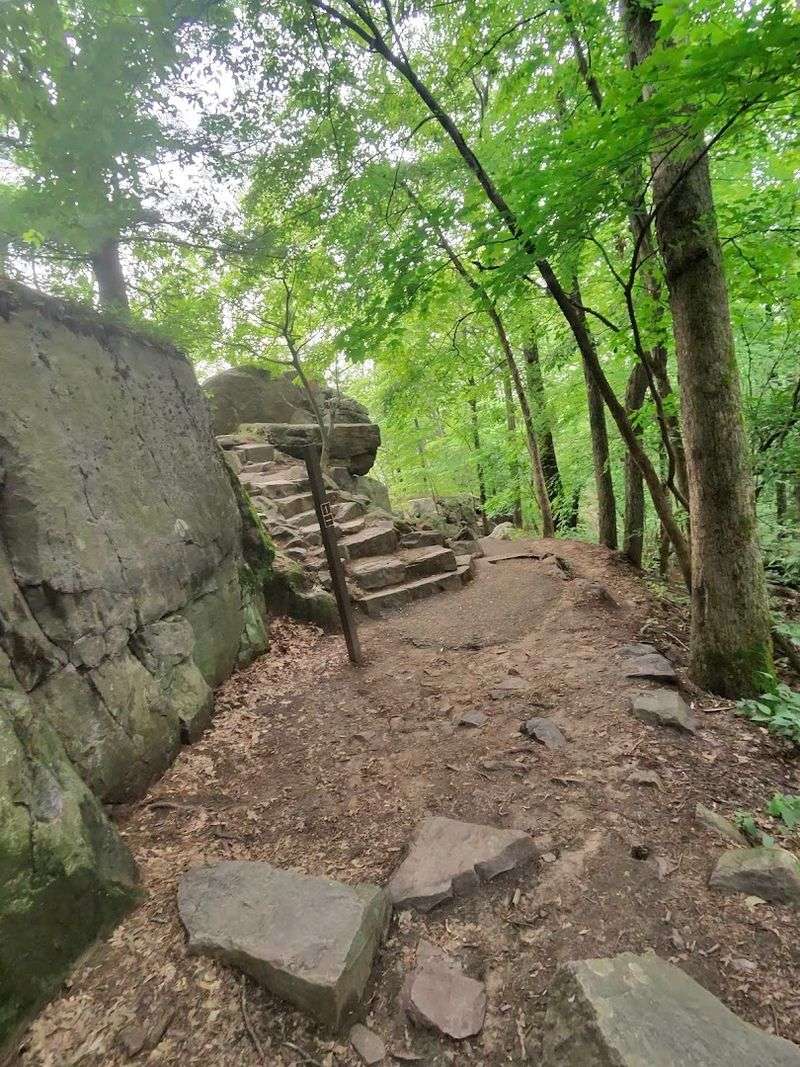
East Bluff Trail refuses to follow a simple upward trajectory. The path rises and falls repeatedly as it navigates around rock formations and along the bluff edge.
Just when you think you have reached the top, another climb appears ahead.
These constant elevation changes add to the trail’s overall difficulty rating. Your muscles never settle into a steady rhythm because the terrain keeps shifting.
Downhill sections provide brief relief but require careful footing on loose rocks and exposed roots.
The varied topography also means you experience different perspectives throughout the hike. Low sections wind through forested areas with limited views, while high points open up to dramatic vistas.
This variety keeps the experience interesting from start to finish.
Pacing becomes important on a trail with this much vertical variation. Rushing through the ups and downs will exhaust you quickly.
Smart hikers find a sustainable rhythm that allows them to complete the full route without burning out halfway through the journey.
Quartzite Rock Formations Give The Hike Its Rugged Feel
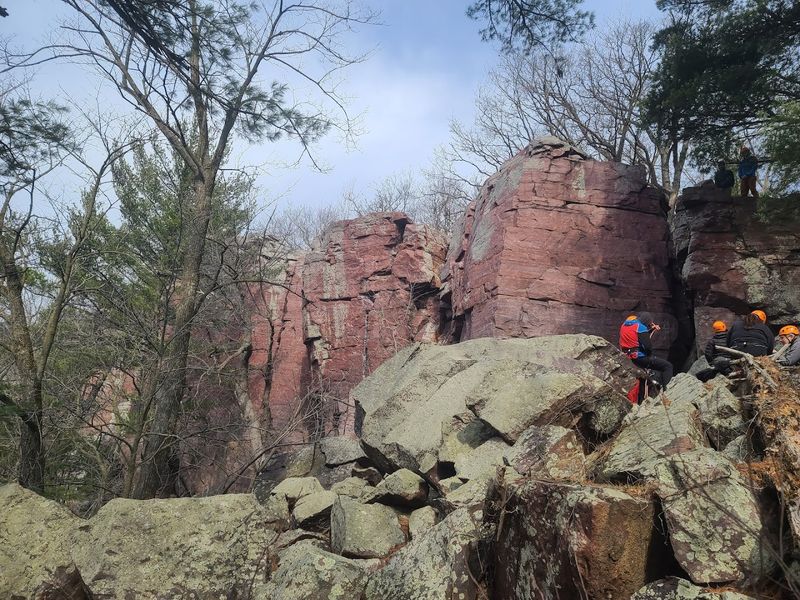
Quartzite dominates the landscape along East Bluff Trail in ways that make this hike feel distinctly different from typical Wisconsin woodland paths. These ancient rocks formed from sandstone compressed and heated over millions of years.
The result is an incredibly hard stone that resists erosion and creates dramatic vertical faces.
The quartzite appears in shades of pink, gray, and white depending on mineral content and weathering. Lichens add patches of orange and green to the rock surfaces.
Close examination reveals layers and fractures that tell the geological story of this landscape.
These formations create the technical challenge that defines the trail. You scramble over rock faces, squeeze between boulders, and navigate along narrow ledges.
The stone provides excellent friction for climbing, but its unyielding hardness demands respect.
Devil’s Lake State Park sits at the southern end of the Baraboo Range, where some of Wisconsin’s oldest exposed bedrock reaches the surface. The quartzite here dates back roughly 1.6 billion years.
The Trail Connects To Devil’s Doorway
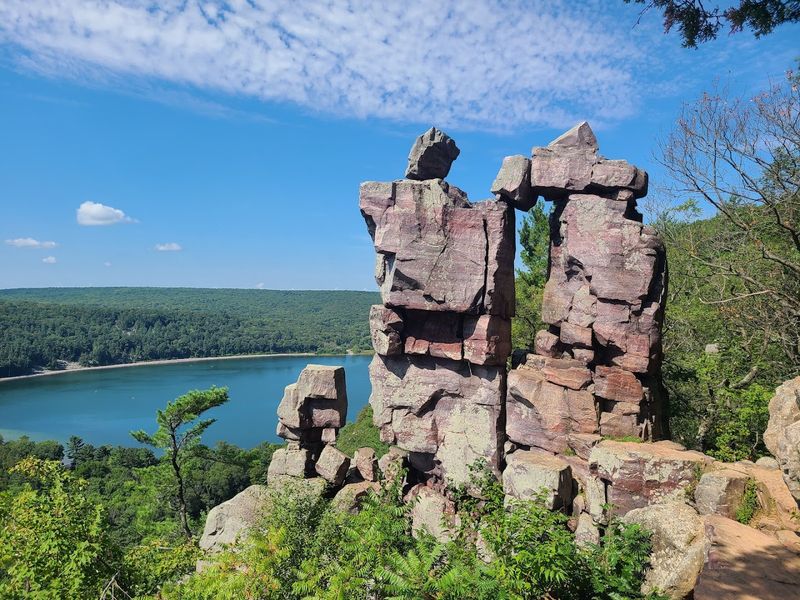
A short spur trail branches off the main East Bluff route and leads to one of the park’s most famous features. Devil’s Doorway consists of a narrow gap between two towering quartzite pillars that frame sky and distant views.
The formation earned its ominous name from early settlers who found the rock opening mysterious and imposing.
Reaching Devil’s Doorway requires only a brief detour from the main trail, making it an essential addition to any East Bluff hike. The path to the formation stays relatively level compared to the main route.
Most hikers consider the extra distance well worth the effort.
The doorway itself stands at the very edge of the bluff, creating dramatic photo opportunities. Brave souls can stand within the gap and look straight down the cliff face to the talus slopes far below.
The exposure feels significant and genuine.
This landmark appears in countless photographs and promotional materials for Devil’s Lake State Park. Visiting in person delivers an experience that pictures cannot fully capture.
Devil’s Doorway Adds One Of The Park’s Most Iconic Photo Stops
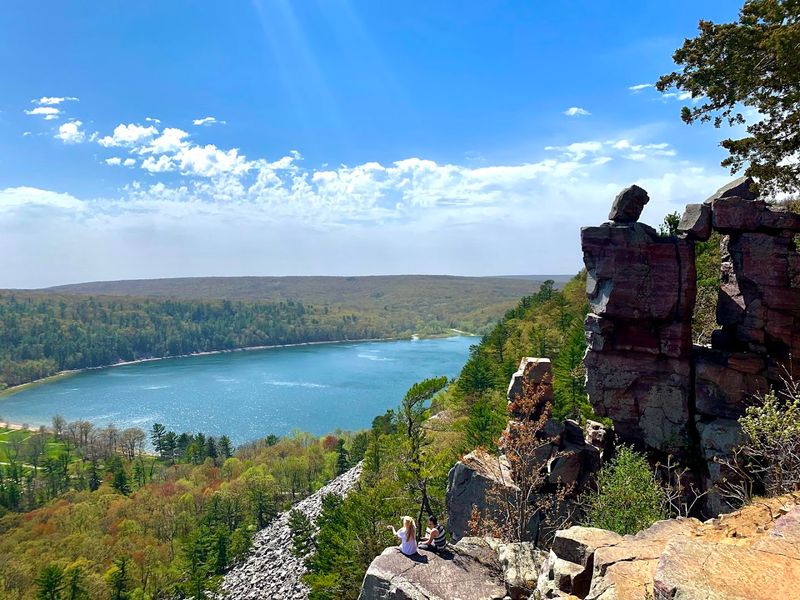
Photography enthusiasts flock to Devil’s Doorway throughout the year to capture its distinctive profile. The formation photographs well from multiple angles, each offering a different perspective on the rock pillars and surrounding landscape.
Morning and evening light create particularly striking conditions.
Social media has amplified the popularity of this spot in recent years. Countless Instagram posts feature hikers framed within the doorway or perched on nearby rocks.
The location has become something of a bucket list destination for Wisconsin outdoor photographers.
Composition possibilities abound at this location. You can shoot through the doorway toward distant views, focus on the texture and color of the quartzite itself, or include people for scale and interest.
Each season brings different conditions and opportunities.
The popularity of Devil’s Doorway as a photo spot means you might need to wait your turn during busy periods. Weekend afternoons in summer can see small crowds gathering at the formation.
Visiting early in the morning or on weekdays provides better chances for solitude.
Nearby Potholes Trail Adds An Even Steeper Challenge
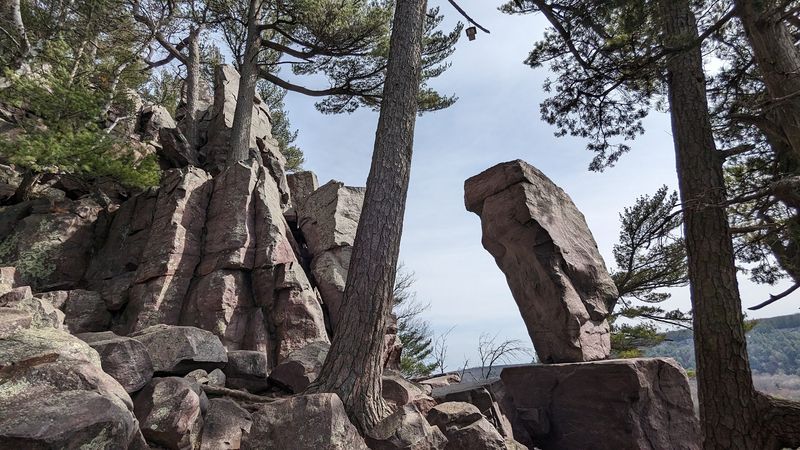
Hikers seeking additional challenge beyond East Bluff Trail can tackle the nearby Potholes Trail. This route earns a reputation as possibly the steepest maintained trail in the entire state park system.
The name comes from circular depressions carved into the rock by swirling glacial meltwater thousands of years ago.
The trail ascends the bluff face at grades that approach the limits of what qualifies as hiking rather than rock climbing. Handholds and careful foot placement become necessary on the steepest sections.
Many hikers describe the experience as more vertical than horizontal.
These two trails can be combined into a longer loop that showcases the best and most challenging terrain Devil’s Lake has to offer. The combination creates a serious workout that tests endurance, strength, and nerve.
Only experienced hikers in good physical condition should attempt this extended route.
The Potholes Trail trailhead sits near the East Bluff Trail access point at Baraboo, WI 53913, making it convenient to tackle both in a single visit to the park.