
This Wisconsin Kayak Tour Reveals A Hidden World Of Sea Caves You Can’t See By Land
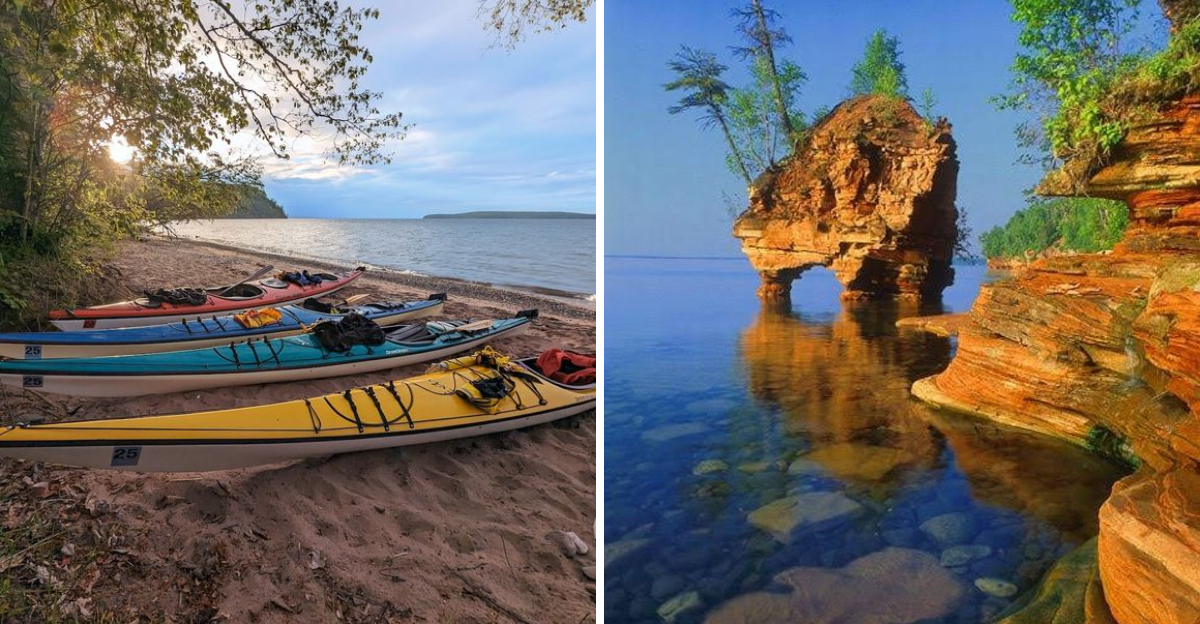
Lake Superior hides one of the most remarkable geological formations in the Midwest, and most people drive right past it without knowing what they are missing. The sea caves at Apostle Islands National Lakeshore can only be fully appreciated from the water, where kayakers glide through arched passages and beneath towering sandstone walls that have been carved by waves for millennia.
A paddle along this shoreline offers access to chambers and formations that remain completely invisible from hiking trails, making it one of the few places where the best view requires getting into a boat.
Sea Caves Shaped Over Thousands Of Years
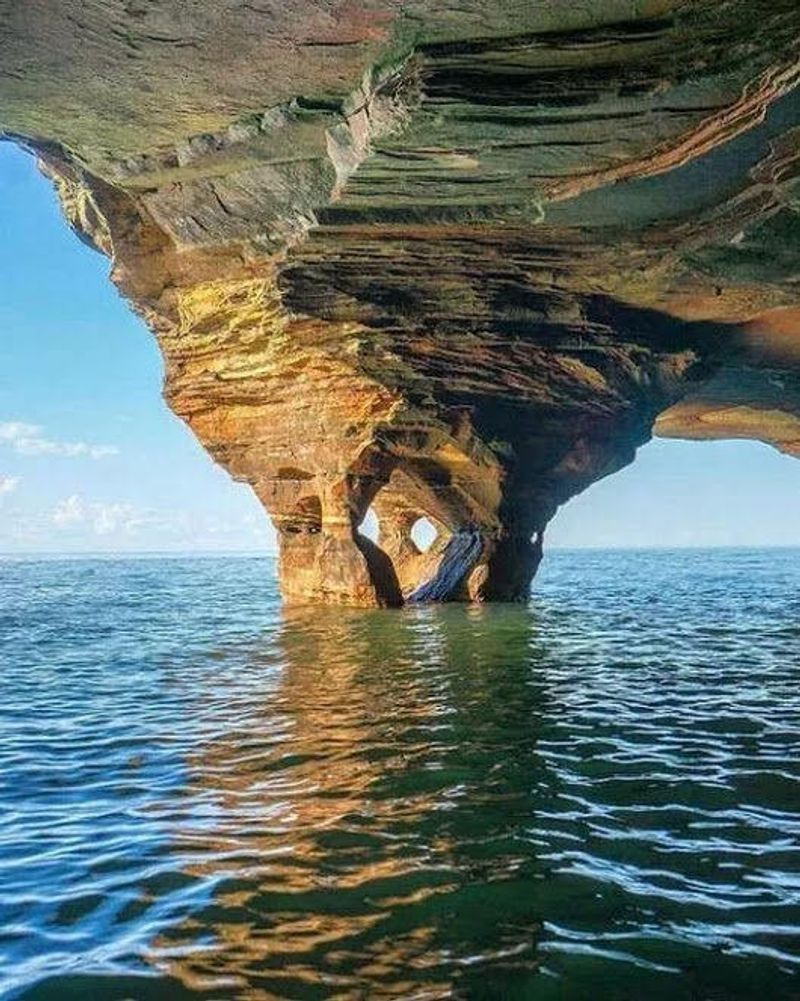
Geological forces have been at work here since the last ice age retreated, leaving behind sandstone cliffs that Lake Superior has been sculpting ever since. The caves you paddle through today represent thousands of years of wave action, freezing and thawing cycles, and gradual erosion that continues with every season.
What makes these formations particularly striking is the visible layering in the rock, each band representing a different period of sediment deposit millions of years ago. Some chambers stretch back thirty feet or more into the cliff face, while others form shallow alcoves that frame the lake beyond.
The process never stops. Winter ice expands in cracks, spring meltwater carves new channels, and summer storms reshape shorelines.
Kayakers become witnesses to an ongoing transformation that predates human presence in the region by millennia and will continue long after.
Kayak Perspective You Can’t Get From Land
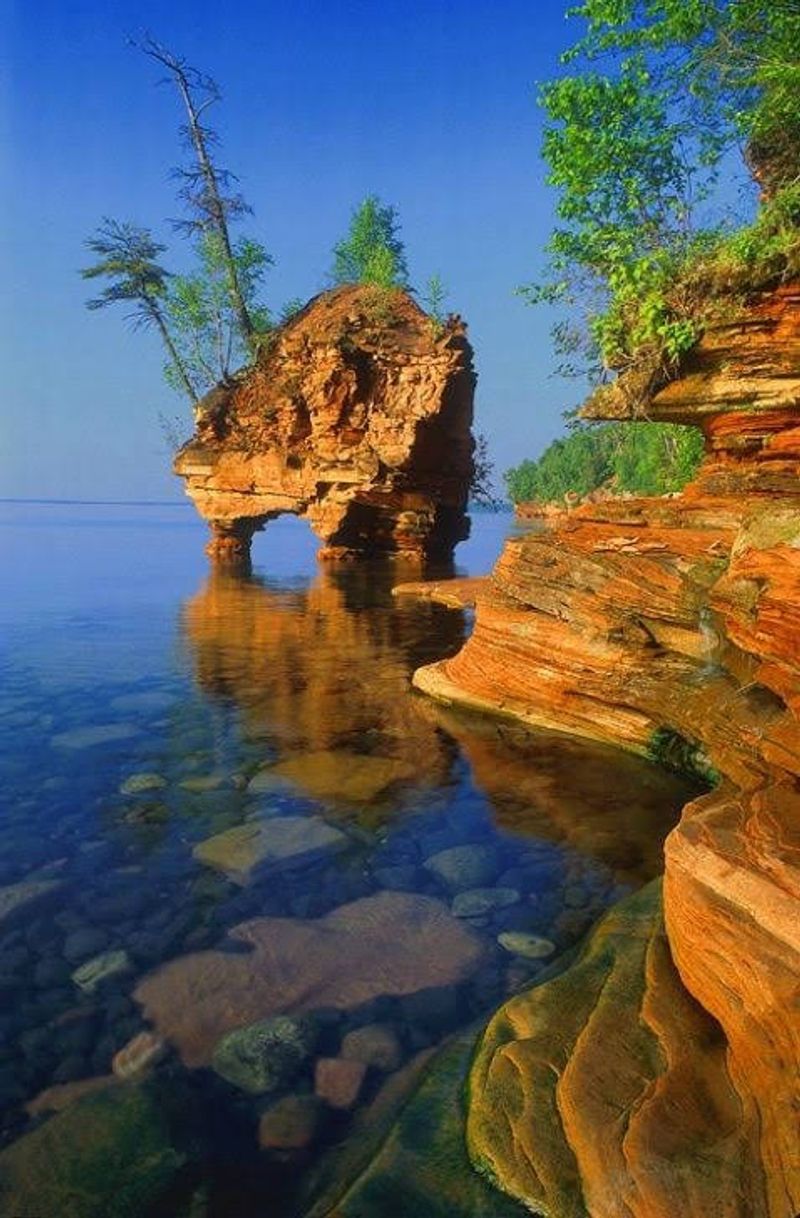
Standing on the shoreline trail offers a decent view of the cliffs, but it reveals almost nothing about what lies within them. The kayak brings you directly into spaces that remain hidden from every hiking path and overlook in the area.
From your seat on the water, you can look up at cathedral-like ceilings, peer into side chambers, and navigate passages that would be impossible to appreciate from above.
The low vantage point changes everything. Details emerge that are invisible from the trail: the way light reflects off the water onto cave walls, the texture of rock just inches from your paddle, the sound of waves echoing inside hollow chambers.
Land-based visitors often photograph the outside of formations. Kayakers get the inside story, literally paddling beneath rock that overhangs the water and into spaces where the cliff wraps around you on three sides.
Arched Openings And Chambers You Can Paddle Through
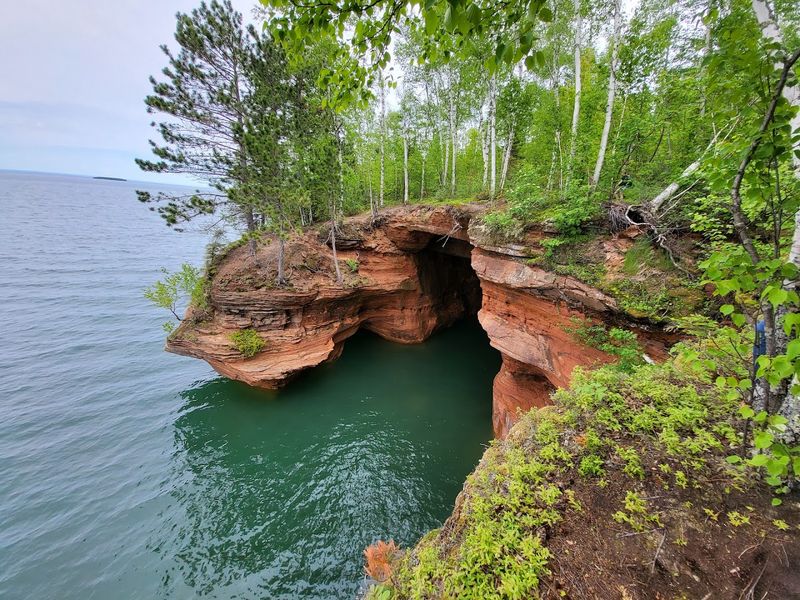
Some of the most memorable moments on this paddle happen when you approach an arched entrance and realize you can actually fit your kayak through it. The openings vary dramatically in size and shape.
Certain arches stand tall enough to accommodate multiple kayaks side by side, while others require you to duck slightly as you pass beneath the lip of stone.
Once inside, chambers open up in unexpected ways. A narrow entrance might lead to a room-sized cavity where the ceiling soars and the walls curve in smooth, water-worn patterns.
Other passages form tunnels that extend deeper into the cliff, creating a sense of exploration that feels genuinely adventurous.
The interplay between solid rock and open water creates a landscape that shifts constantly as you move. Each arch frames a different view, and each chamber offers a new perspective on how water shapes stone.
Water Levels That Change The Experience Each Day
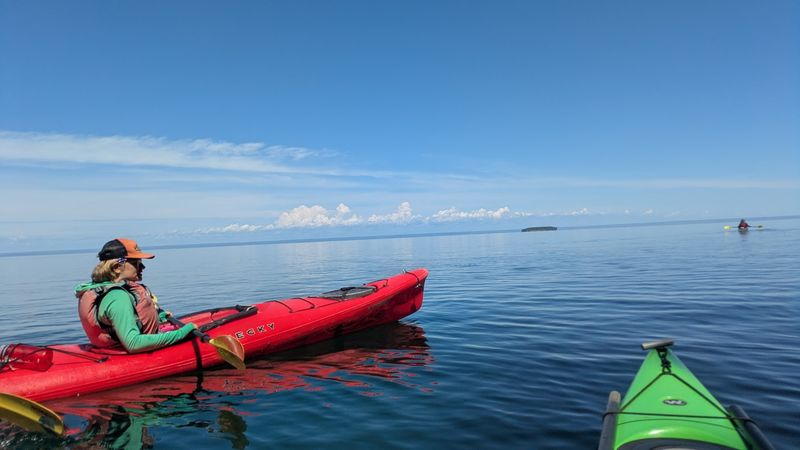
Lake Superior does not have tides in the oceanic sense, but water levels fluctuate throughout the season and even from day to day based on wind, atmospheric pressure, and seasonal patterns. A cave you paddled through last week might be inaccessible today, or a passage that was too shallow yesterday could open up after a storm pushes water levels higher.
These variations mean that no two trips are identical. High water allows access to chambers that sit above the waterline during drier periods.
Low water exposes rock formations and beach areas that remain submerged when the lake is full. Experienced paddlers check conditions before launching and adjust their routes accordingly.
The unpredictability adds an element of spontaneity to the experience. You cannot plan every detail in advance because the lake itself determines what will be accessible on any given day.
Colourful Sandstone Cliffs That Stand Out Against The Water
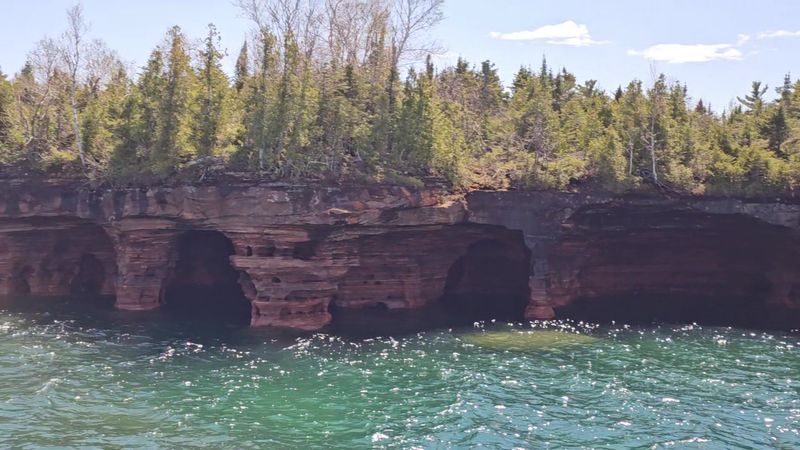
The sandstone here displays a palette that ranges from pale cream to deep rust, with bands of orange, pink, and brown running horizontally through the rock face. These colors become particularly vivid when wet, and the contrast against the blue-green water of Lake Superior creates visual drama that shifts with the light throughout the day.
Mineral content determines the hues. Iron oxide produces the warmer tones, while other minerals contribute grays and tans.
The layering creates natural striping that looks almost deliberate, though it simply reflects different periods of sediment deposit over geological time.
Morning light tends to soften the colors, while late afternoon sun can make the cliffs glow with intensity. Overcast days bring out subtler tones and reduce glare, making it easier to see texture and detail in the rock face as you paddle alongside.
Guided Tours That Make The Trip More Accessible
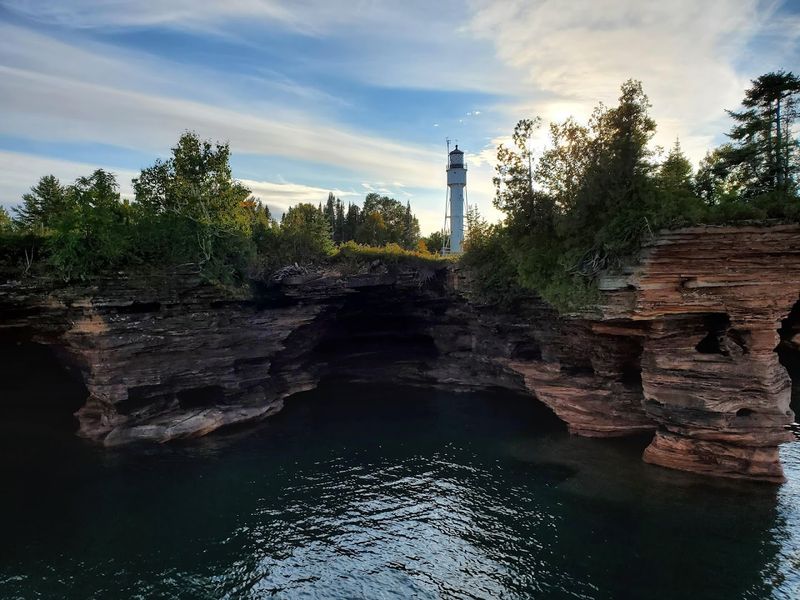
Plenty of outfitters operate along the Bayfield waterfront, offering guided trips that handle the logistics and provide local knowledge most visitors lack. A guide knows which caves are accessible at current water levels, where conditions might be tricky, and how to time the paddle to avoid afternoon winds that can make the return trip more challenging.
For those new to kayaking or unfamiliar with Lake Superior, a guided tour removes much of the uncertainty. The outfitter provides equipment, safety briefings, and route planning.
Guides also share information about geology, history, and ecology that enriches the experience beyond simply paddling from point to point.
Even experienced paddlers sometimes opt for guided trips to access areas that require permits or local expertise. The headquarters at 415 Washington Ave in Bayfield serves as a starting point for planning your visit and connecting with reputable outfitters.
Calm Days That Create Ideal Paddling Conditions
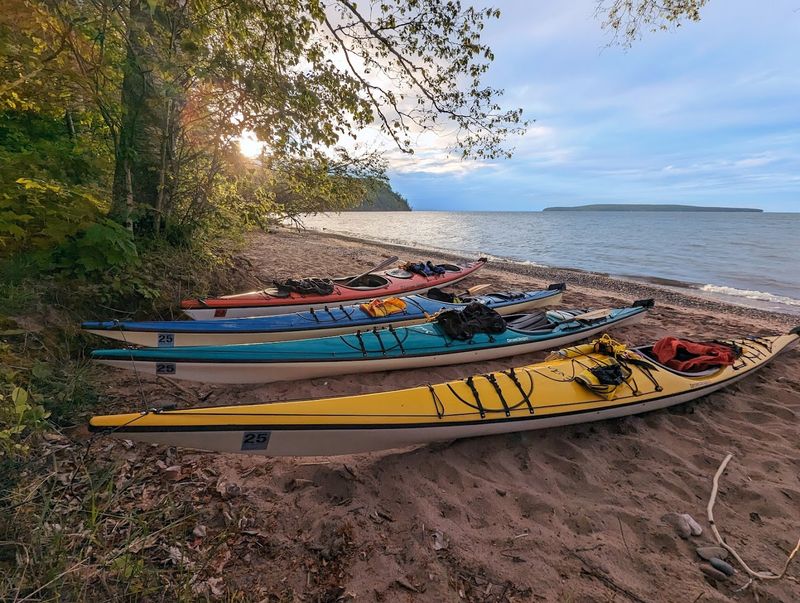
Lake Superior has a well-earned reputation for temperamental weather, but calm days do occur, and they transform the paddling experience entirely. When the water lies flat and the wind drops to nothing, reflections of the cliffs appear so clearly on the surface that it becomes difficult to tell where rock ends and water begins.
These conditions make navigation easier and allow paddlers to focus on the scenery rather than fighting waves or wind. Entering caves feels less intimidating when the water inside remains still, and photography becomes far more practical when your kayak is not bobbing unpredictably.
Timing matters. Early mornings often offer the calmest conditions before afternoon breezes pick up.
Checking marine forecasts before launching helps you choose days when the lake is most likely to cooperate, though Superior can change moods quickly and without much warning.
Lake Superior Setting That Feels Vast And Untouched
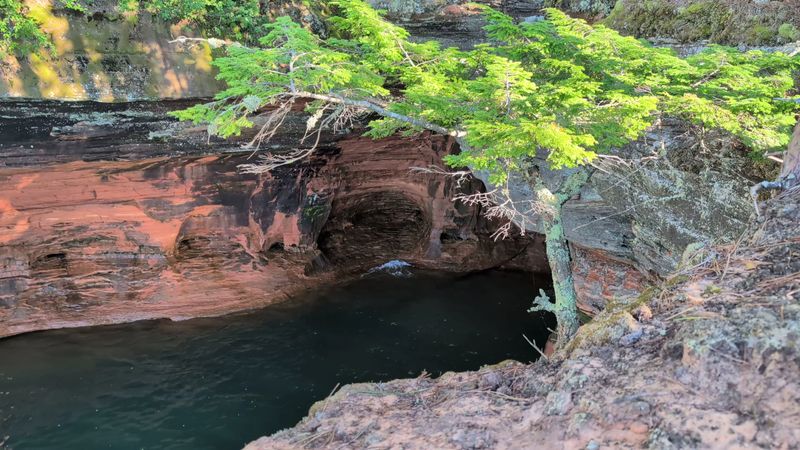
Paddling here means spending hours on the largest freshwater lake in the world, and that scale becomes apparent quickly. The horizon stretches unbroken in multiple directions, and the sense of remoteness grows as you move farther from the launch point.
Even on busy summer weekends, the sheer size of the area means that kayakers spread out, and it is entirely possible to find yourself alone with the cliffs and the water.
Development remains minimal throughout the national lakeshore. No hotels or restaurants interrupt the shoreline.
Forested islands appear much as they did generations ago, and the lack of motorized traffic in many areas preserves a quietness that feels increasingly rare.
This untouched quality adds weight to the experience. You are not paddling through a theme park or a curated attraction.
You are moving through a landscape that operates according to its own rhythms.
Wildlife Sightings That Add To The Experience
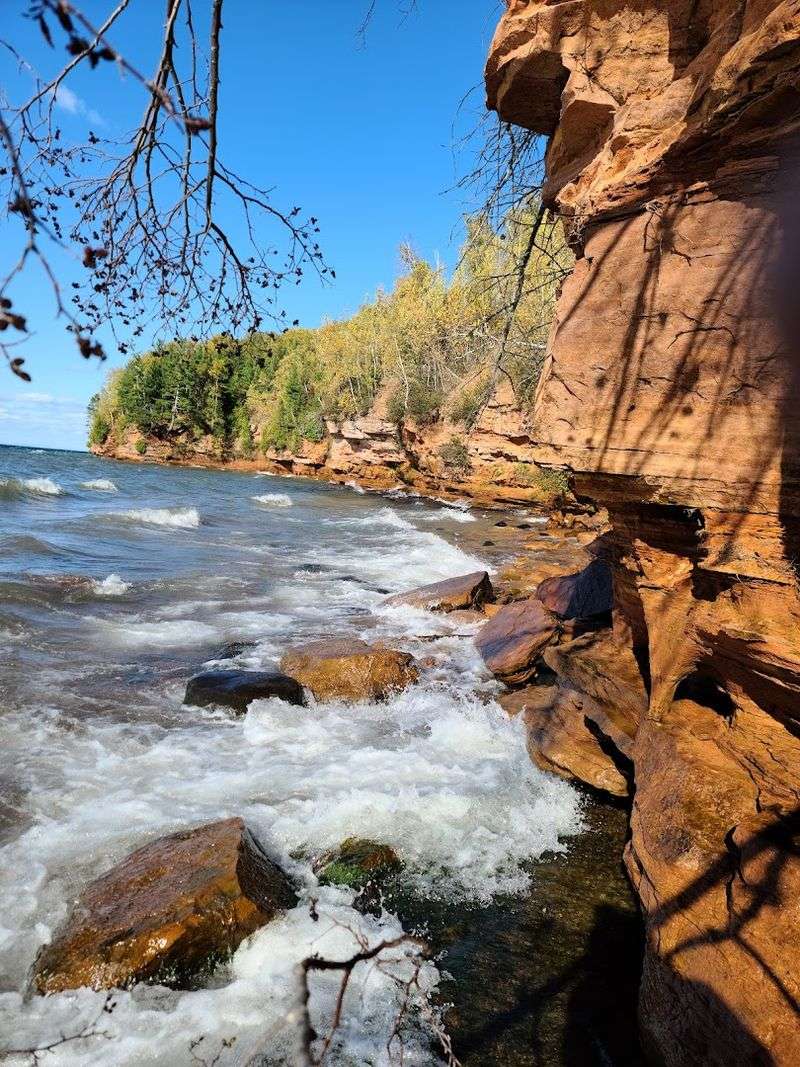
The national lakeshore supports populations of birds, fish, and mammals that you might encounter during a paddle. Bald eagles nest throughout the islands and can often be spotted soaring above the water or perched in shoreline trees.
Gulls and cormorants are common, and occasionally kayakers spot loons diving in the deeper water offshore.
Black bears inhabit several of the islands, though sightings from kayaks are uncommon since the animals tend to avoid open shorelines. More frequently, paddlers notice tracks on beaches or hear rustling in the forest when pulling ashore for a break.
The clarity of Lake Superior water sometimes allows views of fish swimming below your kayak, particularly in shallow areas near shore. While wildlife sightings cannot be guaranteed, the possibility adds an element of unpredictability to each trip and reminds you that this remains a functioning ecosystem rather than a static attraction.
Seasonal Changes That Transform The Caves
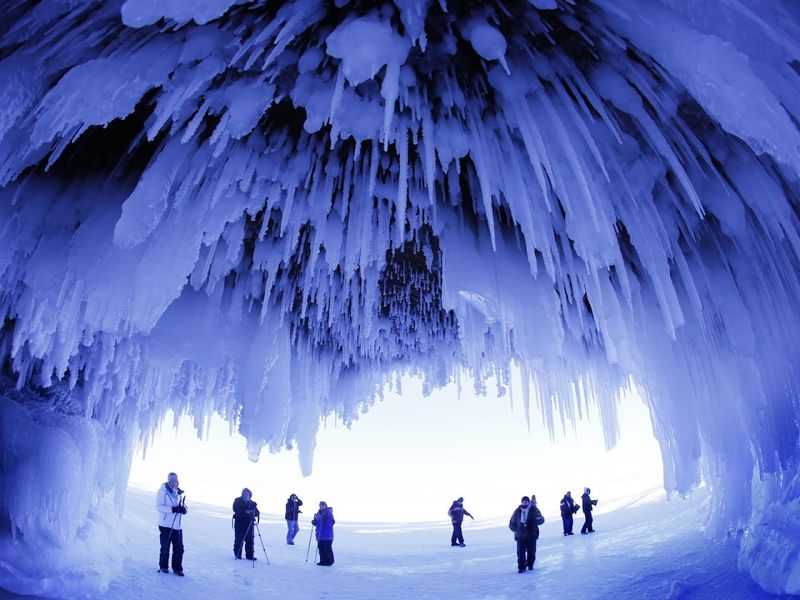
Winter brings a dramatic transformation when the caves fill with ice formations that create an entirely different landscape. Frozen waterfalls hang from cliff faces, icicles form massive columns, and the interiors become galleries of blue and white ice sculptures.
Access shifts from kayak to foot as visitors walk across the frozen surface of Lake Superior to reach formations that are inaccessible by boat.
Summer offers the classic kayaking experience, with open water and accessible passages. Spring can be unpredictable, with lingering ice and cold water temperatures that require careful planning.
Fall brings changing foliage on the islands and often delivers some of the calmest paddling conditions of the year, though water temperatures drop quickly.
Each season reveals different aspects of the same formations, and some visitors return multiple times throughout the year to experience the full range of conditions the caves can present.
Routes That Range From Short Paddles To Longer Adventures
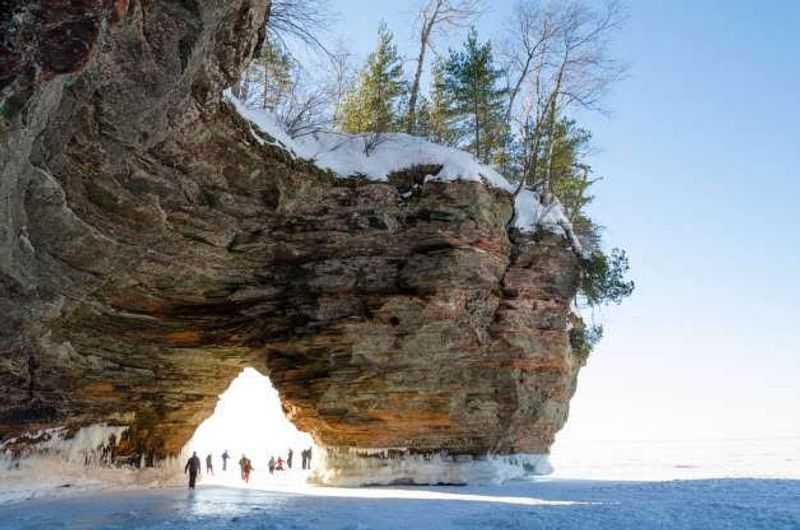
The mainland sea caves near Meyers Beach offer a relatively short paddle that can be completed in a few hours, making it accessible for beginners or those with limited time. This route provides plenty of cave access without requiring an overnight trip or advanced paddling skills, though even this shorter distance demands respect for Lake Superior conditions.
More ambitious paddlers can extend their trips to include island explorations, camping on remote beaches, and multi-day routes that cover significant stretches of the national lakeshore. Several islands offer designated campsites, and permits allow for overnight stays that turn a day paddle into a genuine wilderness expedition.
The variety means that the experience can scale to match your skill level and available time. A family with young children might stick to a guided half-day tour, while experienced kayakers could plan a week-long island-hopping journey that covers dozens of miles.