
This Wisconsin Park Surprises Visitors With Four Gorgeous Man-Made Waterfalls
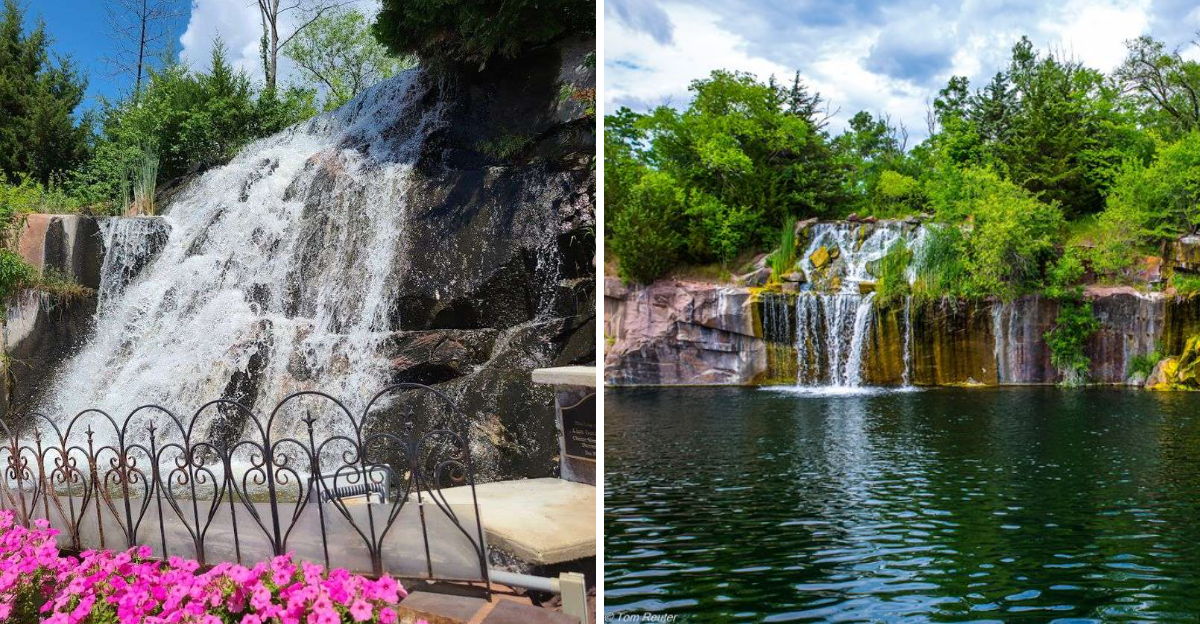
Not every remarkable waterfall in Wisconsin requires a long hike through dense forest or a detailed map to find. This Wisconsin gem, sits right along East Montello Street and greets passing travelers with the sound of water cascading over ancient pink granite.
What makes this park genuinely unusual is that its four waterfalls are entirely man-made, fed by water pumped from historic granite quarry pits that once defined the town’s economy. It is the kind of place that rewards curiosity and makes a short stop feel like a genuine discovery.
Home To Four Beautiful Man-Made Waterfalls
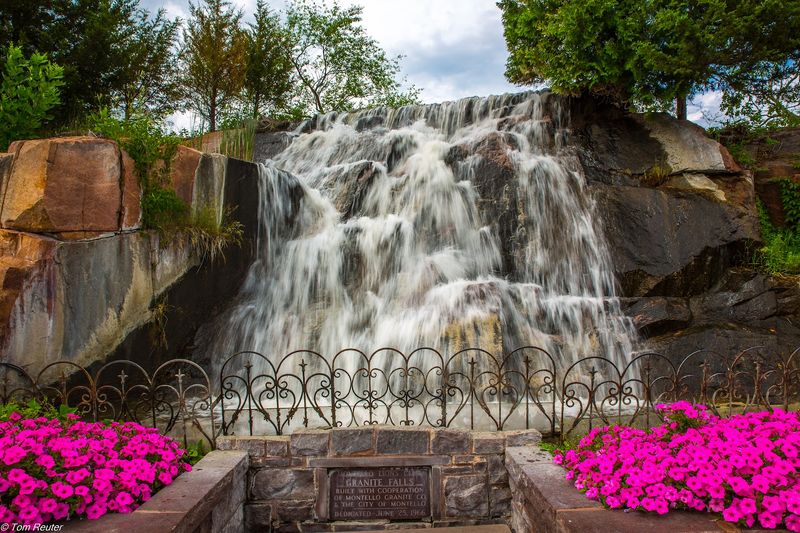
Most people assume that waterfalls are purely a gift from geography, carved by centuries of rainfall and erosion. At Daggett Memorial Park, that assumption gets a polite correction.
The four waterfalls here are entirely engineered, with water pumped deliberately through the landscape to create a continuous, satisfying flow over exposed granite.
What surprises many visitors is how convincing the effect truly is. The sound of falling water reaches you before you even leave your car, and the visual of water rushing across rough stone feels far more natural than the word “man-made” might suggest.
Each of the four falls has its own character, shaped by the contours of the old quarry terrain. Two of them are visible from the street, while the other two require a short walk around the left side of the park.
That small effort is well worth making, as the hidden falls tend to be the most impressive of the group.
Built Around Historic Granite Quarry Pits
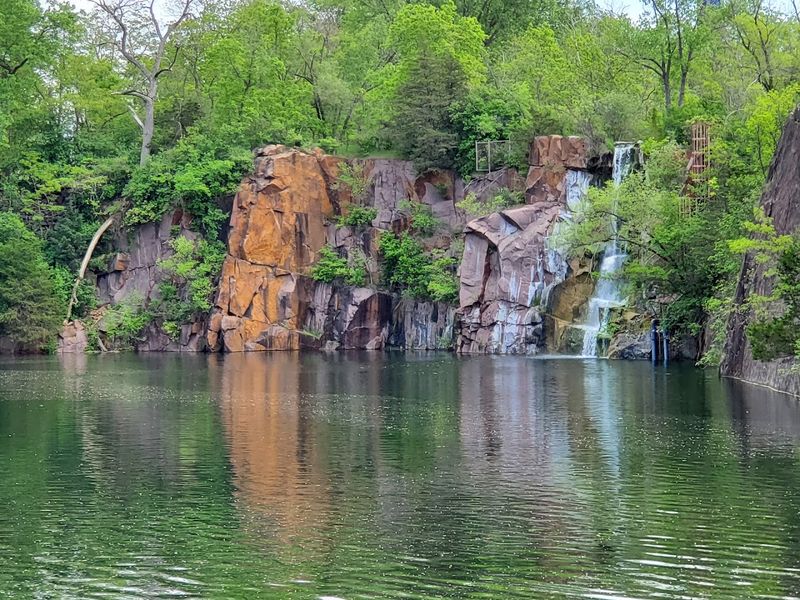
Before this land became a park, it served a far more industrial purpose. Montello was once a significant center for granite quarrying, and the pits left behind after operations ceased became the foundation for what visitors enjoy today.
The quarry history gives the park an unusual depth that goes well beyond its visual appeal. Standing near the falls, you are essentially looking into the hollowed earth that once supplied granite to construction projects across the region.
Historical placards located across the street from the main falls provide additional context for anyone who wants to understand what this land once produced.
That layered sense of purpose, first industrial, then commemorative, then recreational, is part of what makes Daggett Memorial Park feel more substantial than a typical roadside stop. The transformation from working quarry to public green space reflects a community decision to honor its past rather than simply pave over it.
Few small-town parks carry that kind of weight.
Waterfalls Cascading Over Red Montello Granite
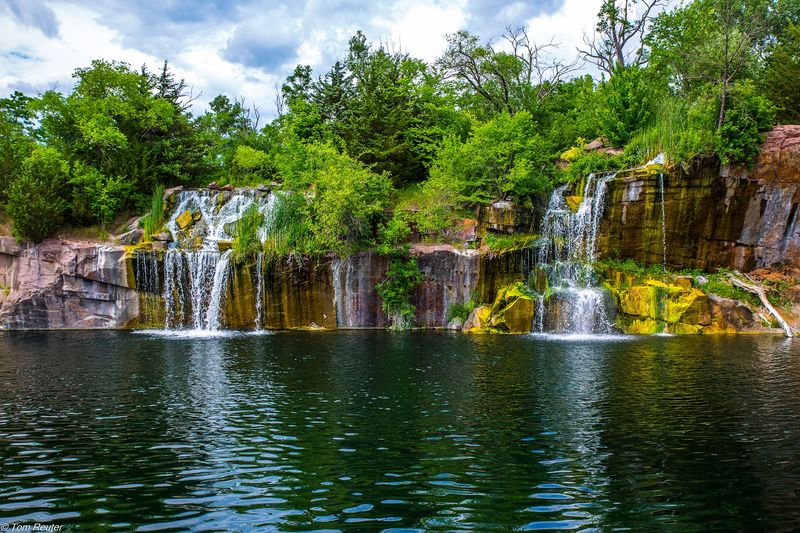
Montello granite has a reputation that extends well beyond this small city. Known for its distinctive reddish-pink coloring and exceptional durability, it was quarried extensively in the late 1800s and used in construction projects across the United States.
Seeing that same granite up close at Daggett Memorial Park offers a tactile connection to local history that no museum exhibit can fully replicate. The water moves across the stone in thin, glassy sheets before breaking apart into foam at the base, and the contrast between the dark wet granite and the white rushing water is genuinely striking.
Photographers tend to linger here longer than they initially planned. The color of the stone shifts noticeably depending on the light, appearing almost violet in the early morning and a warm copper tone in the late afternoon.
If you visit with a camera, give yourself more time than you think you will need. The granite alone earns its own dedicated set of shots.
A Scenic Park In The Heart Of Montello
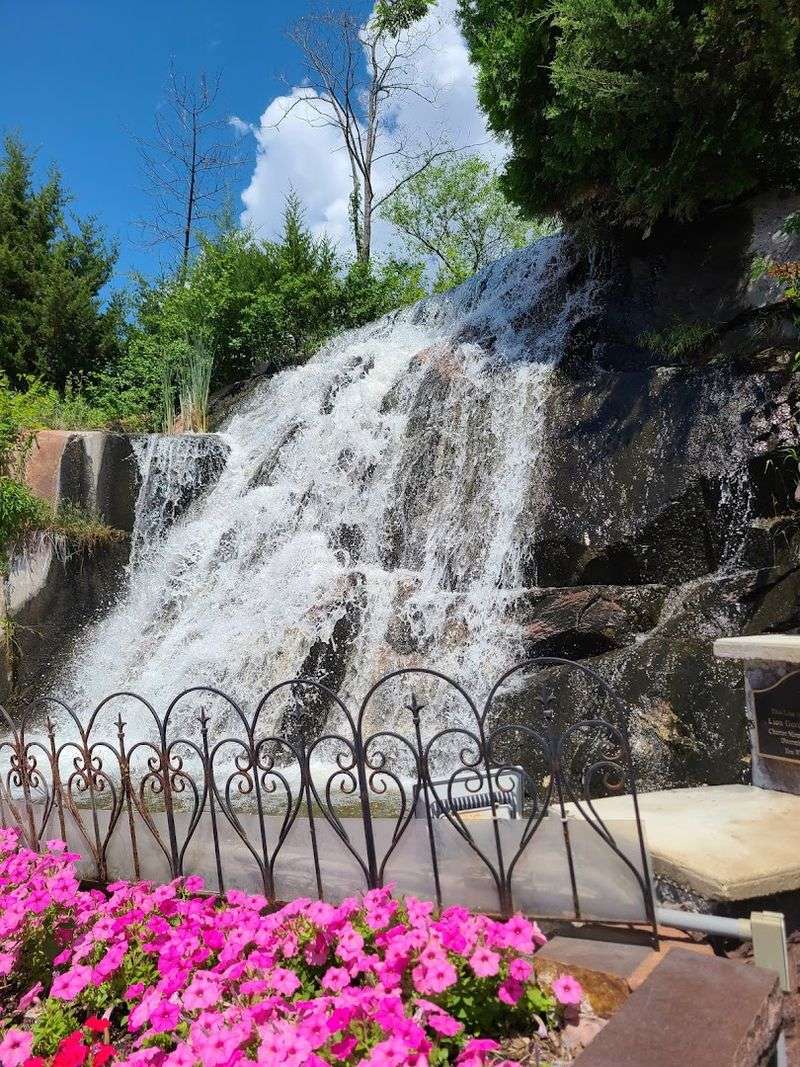
Daggett Memorial Park sits at 11-31 E Montello St, Montello, WI 53949, placing it squarely in the center of a downtown that still carries the architectural character of the late nineteenth century. The surrounding buildings are mostly original brick construction, and the overall atmosphere of the block feels unhurried in a way that larger cities rarely manage.
The park itself is compact but well maintained, with a clean lawn, scattered benches, and clear sightlines to the falls from multiple vantage points. It functions as both a local gathering space and a genuine attraction for travelers passing through on Highway 23.
Downtown Montello rewards a short walk after visiting the park. A candy shop nearby has earned its own modest reputation among road-trippers, and a handful of murals are painted between buildings along the main corridor.
The combination of the park, the falls, the historic streetscape, and those small commercial discoveries makes Montello more interesting than its population size might initially suggest.
Walking Paths That Lead To Each Waterfall
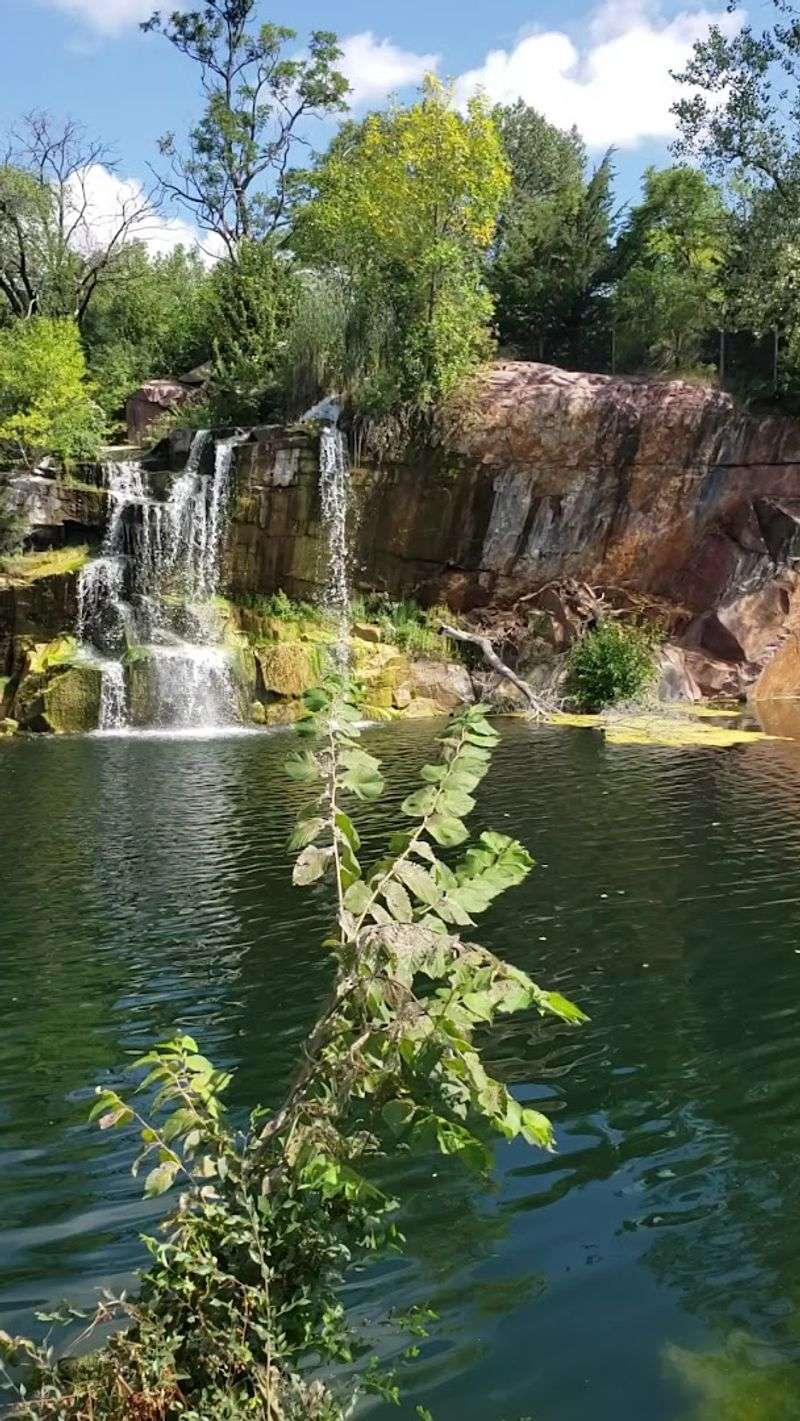
One of the quiet pleasures of Daggett Memorial Park is the ease with which you can move through it. The walking paths are straightforward and accessible, connecting the main viewing area near the street to the less-trafficked sections at the back of the quarry site.
The key navigational tip that many first-time visitors miss is simple: go left. Turning left while facing the main falls and following the path along the driveway leads to two additional waterfalls that most people never see.
The longest waterfall in the park is back there, and it tends to be quieter and more atmospheric than the front-facing falls.
The walk from one end of the park to the other takes perhaps ten to fifteen minutes at a leisurely pace. The terrain is relatively flat and manageable for most visitors, including older adults and families with young children.
For a park of this size, the sense of discovery it offers along those walking paths is genuinely disproportionate to the effort required.
A Popular Stop For Photos And Picnics
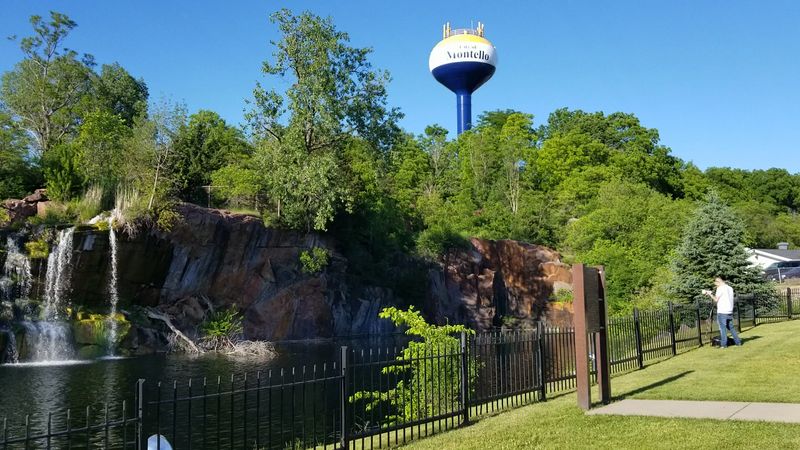
Daggett Memorial Park has developed an organic reputation as a reliable photo stop among Wisconsin road-trippers, and it is easy to see why. The combination of flowing water, pink granite, and compact green space creates a naturally photogenic setting that requires almost no compositional effort to capture well.
Families with children tend to gravitate toward the large rocks near the base of the falls, which have become informal landmarks in their own right. Some families return year after year to photograph their children on the same rock, creating a personal archive of growth set against the consistent backdrop of falling water.
The benches placed throughout the park make it equally suitable for a quiet lunch. With a Kwik Trip convenience store immediately adjacent to the property, gathering snacks and drinks before settling in for a relaxed break requires almost no planning.
The park is open and accessible throughout the day, making it a flexible stop that works equally well for a five-minute stretch or a thirty-minute rest.
Montello’s Famous Pink Granite On Display
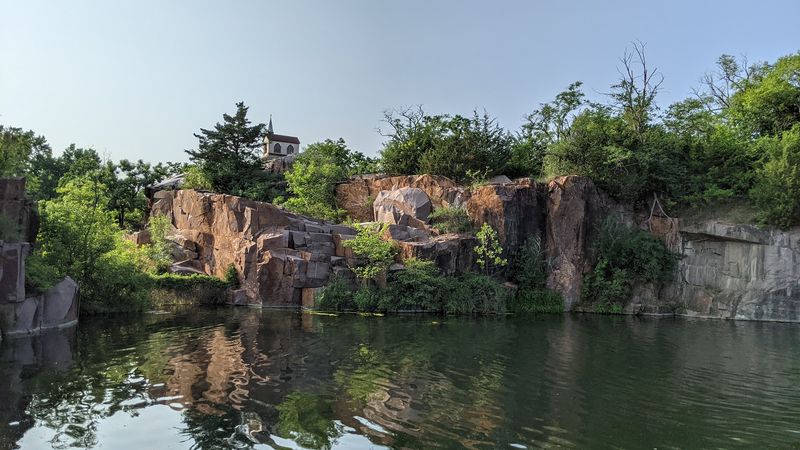
Montello granite occupies a specific place in American architectural history that most visitors are surprised to learn about. Quarried from this area during the height of the granite industry in the late 1800s, the stone was prized for its hardness, its workability, and that unmistakable rosy hue that made finished structures stand out from ordinary gray stonework.
The park essentially functions as an open-air exhibit of that material. The quarry walls, the waterfall channels, and the exposed rock faces throughout the grounds are all composed of the same stone that once shipped out of Montello to construction sites far beyond Wisconsin’s borders.
Historical placards situated across the street from the main falls offer a condensed but informative account of the quarry’s operational history and its significance to the local economy. Reading them before walking through the park changes the experience noticeably.
The granite stops being mere scenery and becomes something more like testimony, a record of labor and industry embedded permanently in the landscape.
A Peaceful Green Space With Surprising Views
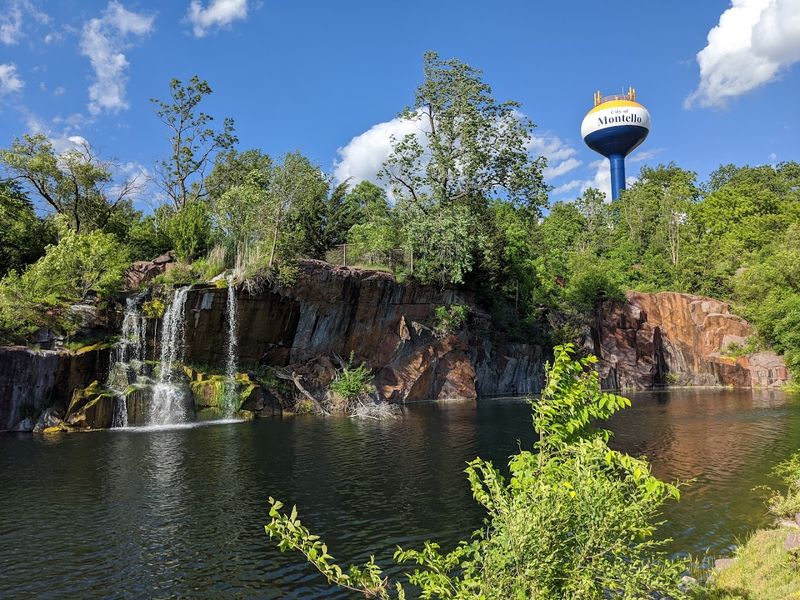
There is a particular quality of stillness at Daggett Memorial Park that seems inconsistent with its location on a main road through a small city. The sound of the waterfalls does a considerable amount of acoustic work, softening the ambient noise of passing traffic and creating an atmosphere that feels more secluded than the surroundings technically allow.
The views from the back section of the park are especially good. From that vantage point, the quarry walls rise on either side, framing the longest waterfall in a way that produces a genuine sense of enclosure and scale.
It is one of those spots where the camera on your phone will not fully capture what your eyes are taking in.
Pollinators are active near the falls during warmer months, drawn by whatever plant growth has established itself along the water’s edge. Watching bees and butterflies move through that space while water rushes over stone nearby gives the park a layered sensory quality that makes even a brief visit feel restorative rather than merely scenic.
An Easy Park To Explore In A Short Visit
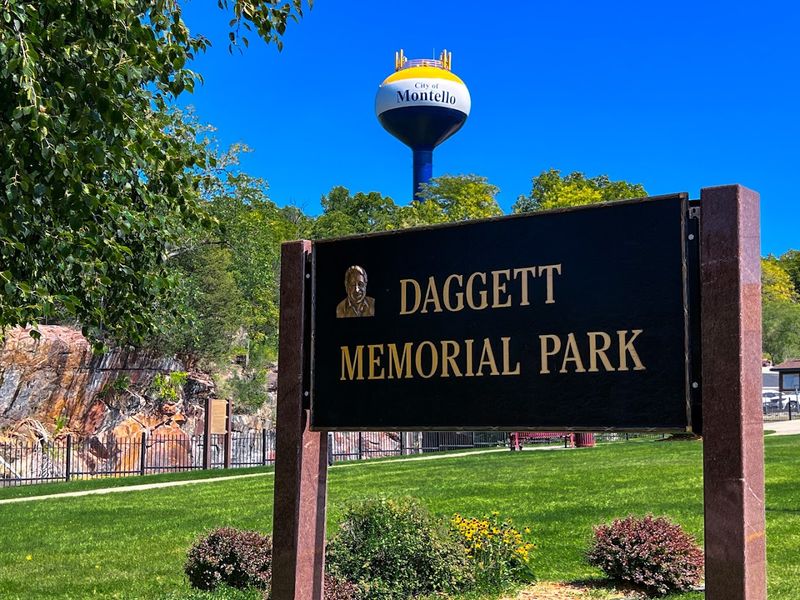
One of the more practical virtues of Daggett Memorial Park is that it asks very little of you in terms of time or preparation. Most visitors who stop with the intention of spending ten minutes end up staying closer to thirty, but the park is compact enough that a genuine, complete experience of the space is achievable in a single short visit.
Parking is available across the street from the main falls, with crosswalks in place to make the crossing easy. Street parking along the adjacent block provides additional options during busier periods.
The whole logistical experience of arriving, parking, walking, and departing is smooth enough that it rarely becomes a point of frustration.
For travelers on longer road trips through central Wisconsin, Daggett Memorial Park functions as an ideal decompression stop. The walk through the grounds, the sound of the water, and the visual interest of the granite environment combine to produce a reset that makes the next stretch of driving feel considerably more manageable.
Few stops of this size deliver that kind of return.
Where Local History Meets Natural Beauty
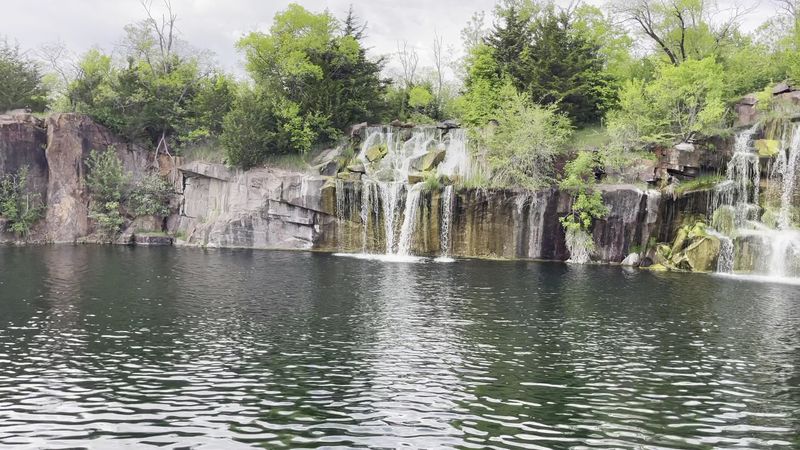
Daggett Memorial Park carries the name of a commemorative purpose, and that intention is woven into its physical layout in ways that become clearer the longer you spend there. The park honors the early history of Montello while simultaneously offering a functioning, visually engaging public space that serves the community on an ordinary daily basis.
The historical placards across the street from the falls are worth reading carefully. They document not only the quarry’s operational timeline but also the broader story of how Montello developed as a town, shaped significantly by the granite industry and the workers it attracted to the region during the late nineteenth century.
There was once a church built on top of the quarry cliff, a detail that adds an almost implausible layer to the site’s already layered past. The park today reflects none of that drama overtly, presenting instead a calm and well-ordered green space.
But the history is there for anyone willing to look past the waterfalls and read what the stone and the placards are actually saying.