
This Wisconsin Waterfall Lets You Walk Behind The Curtain Of Cascading Water
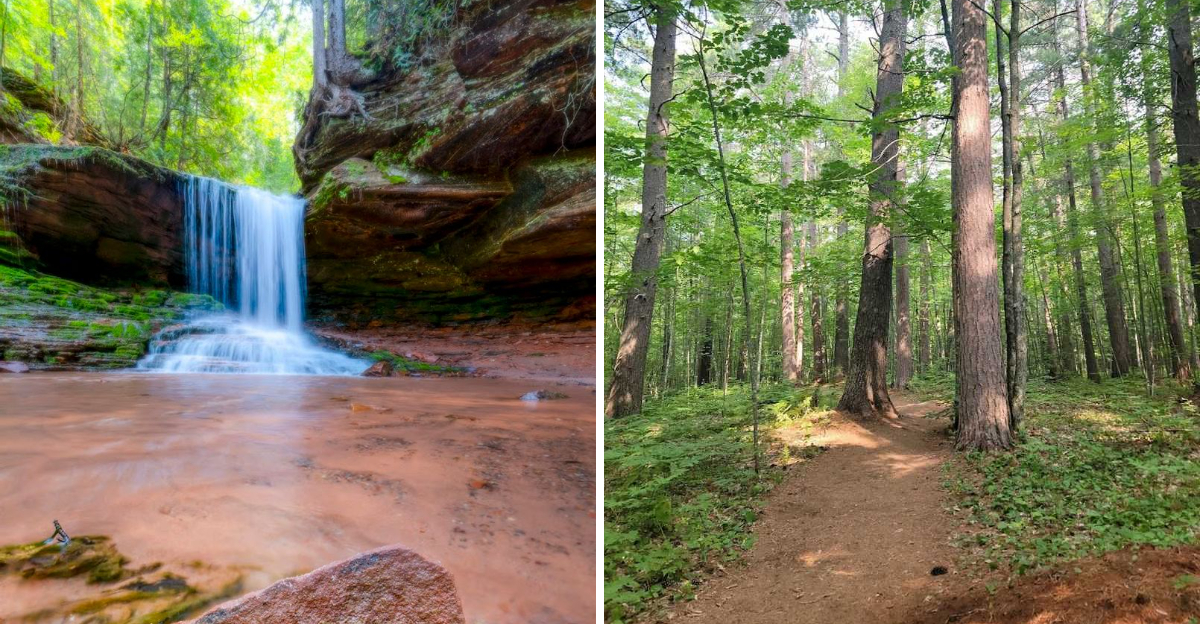
Some waterfalls are pretty to look at, but one northern Wisconsin cascade lets you get much closer than expected. After a quiet walk through the woods, visitors reach a small but memorable drop where water spills over red sandstone and creates a natural curtain.
The real surprise comes when the path allows you to step behind the flow and see the scene from the other side. It is not a towering waterfall, but that is part of its charm.
The short woodland approach, soft rush of water, mossy surroundings, and unusual behind-the-falls view make this spot feel like a tiny adventure hiding in plain sight near Lake Superior.
You Can Actually Walk Behind The Waterfall
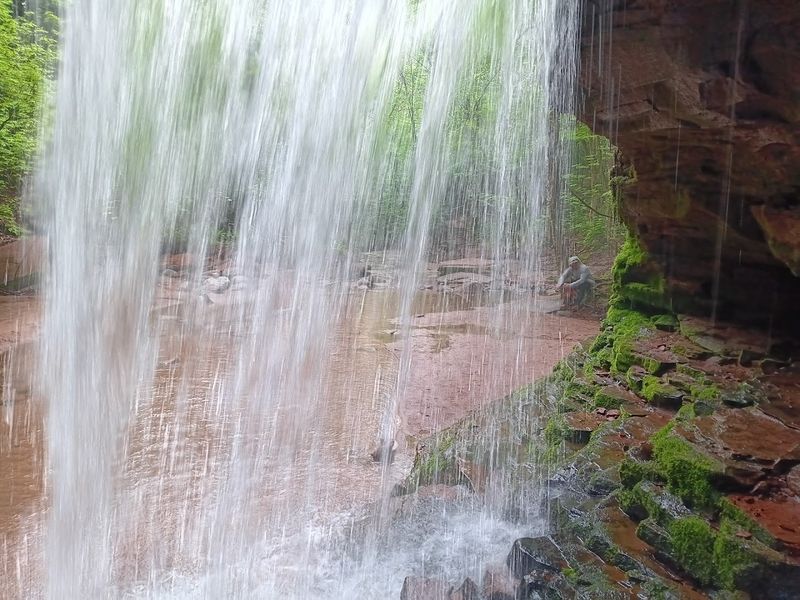
Walking behind a waterfall sounds like something from an adventure novel, but Lost Creek Falls makes it possible without ropes or special equipment. The water flows over an undercut sandstone cliff, creating a natural alcove where visitors can stand and watch the stream pour down just a few feet away.
The space behind the falls stays mostly dry during normal flow conditions. Red sandstone walls curve around the small grotto, and the acoustics amplify the sound of rushing water into something almost musical.
Families wade into the shallow pool at the base and explore the rock formations. Children particularly enjoy the unusual perspective of seeing daylight filtered through moving water.
The experience feels both intimate and slightly otherworldly, especially when afternoon sun hits the cascade at just the right angle and creates rainbows in the mist.
The Main Drop Creates An Eight-Foot Curtain Of Water
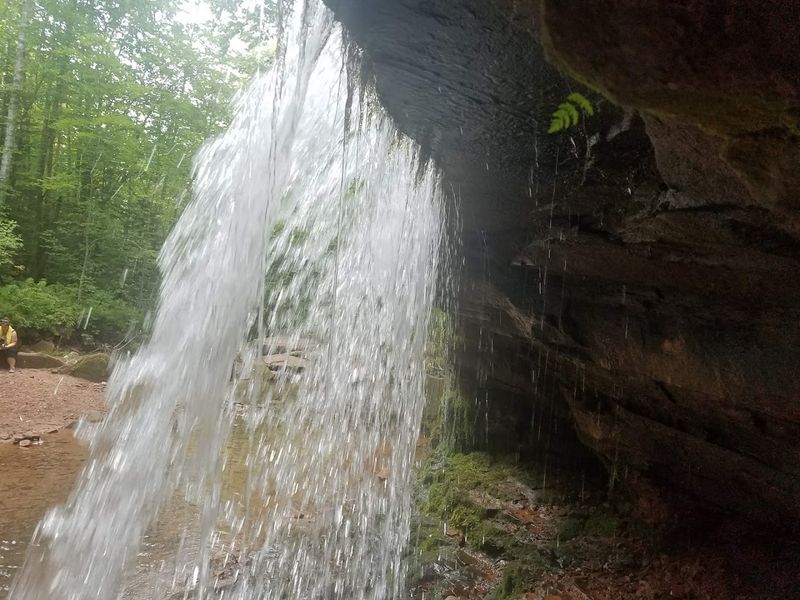
The main cascade at Lost Creek Falls drops roughly eight feet from the sandstone ledge above. Water volume varies with the season, but the vertical curtain effect remains consistent throughout most of the year.
Spring snowmelt and summer rains produce the most dramatic displays.
The falls shoot slightly outward from the cliff face rather than hugging the rock. This creates the gap that allows visitors to walk behind the flow.
Red sedimentary rock frames the entire scene, contrasting beautifully with the white water and green forest surroundings.
During drier periods in late summer, the curtain thins but rarely disappears completely. Even reduced flow maintains the waterfall’s character and the behind-the-falls experience.
Winter transforms the cascade into a frozen sculpture, though accessing it becomes considerably more challenging when ice coats the trail and rocks.
It Is One Of The More Unusual Waterfall Experiences Near Lake Superior
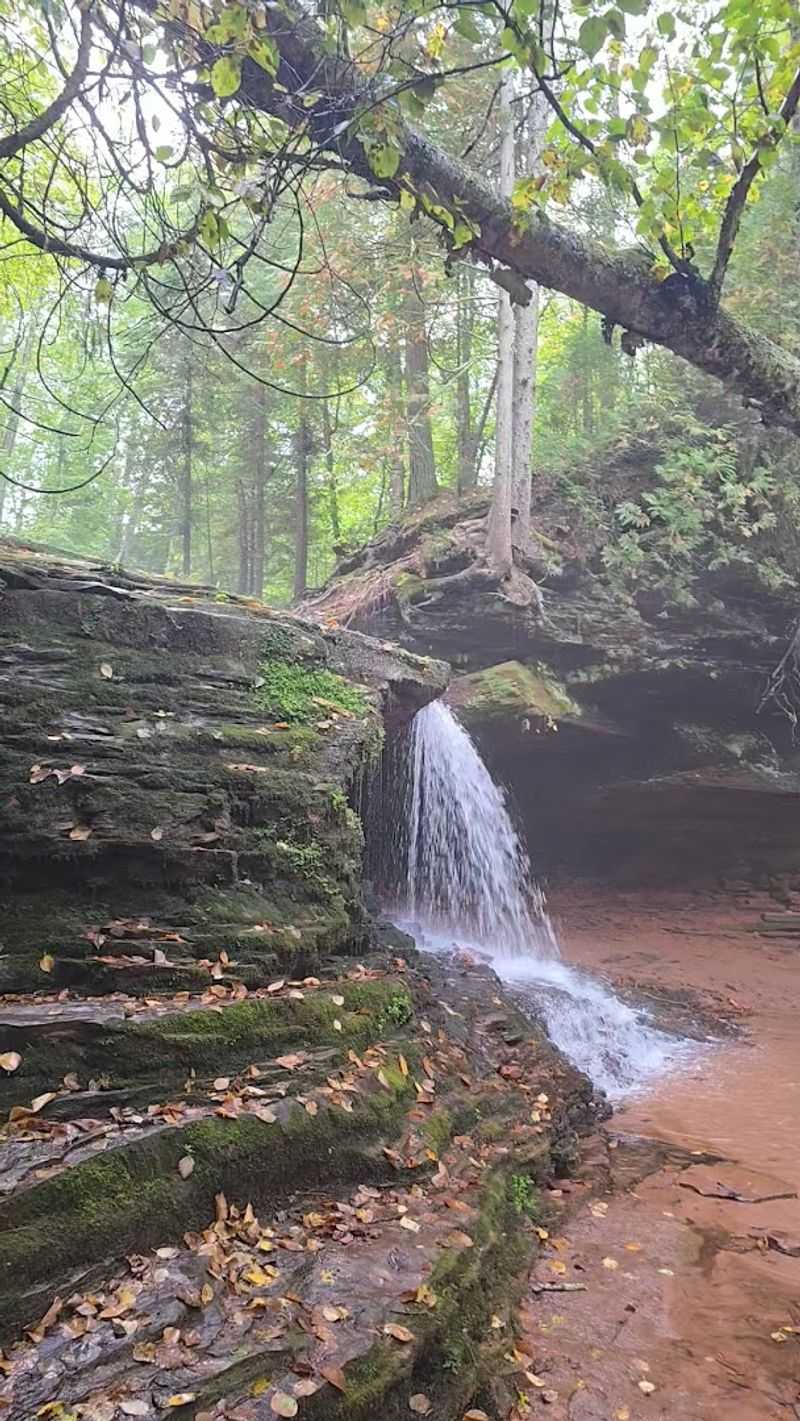
Wisconsin’s Lake Superior region contains numerous waterfalls, but few offer the interactive quality found at Lost Creek Falls. Most cascades in the area require viewing from designated platforms or shoreline vantage points.
This one invites exploration and participation.
The geological formation responsible for the behind-the-falls feature makes it relatively rare in this part of the Midwest. Soft sandstone eroded faster than the harder caprock above, creating the undercut that defines the experience.
Similar formations exist elsewhere but rarely with such easy access.
Compared to larger and more famous waterfalls along the Lake Superior shore, Lost Creek Falls operates on a more human scale. The setting feels personal rather than overwhelming.
Visitors can touch the rock, feel the spray, and engage with the landscape in ways that busier or more protected sites simply do not allow.
The Trail Leads Through Quiet Woods South Of Cornucopia
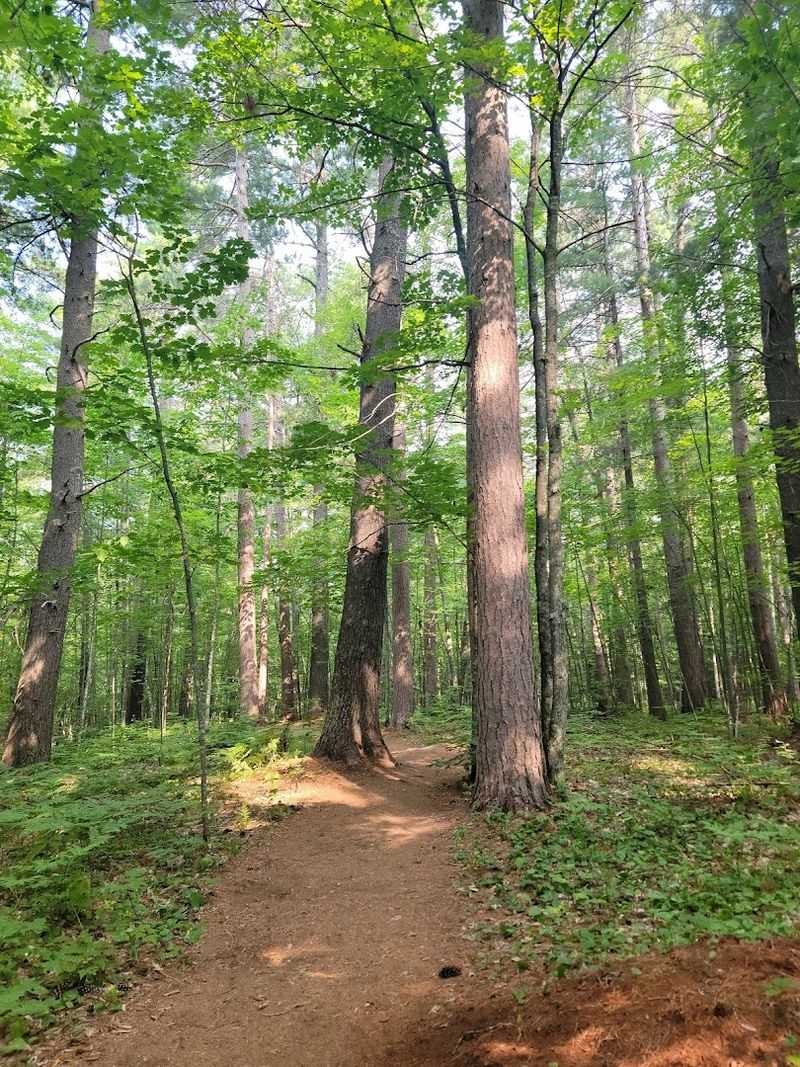
The trailhead sits along Trail Drive near the small community of Cornucopia, positioned where Lake Superior’s shoreline curves south. From there, the path heads inland through mixed hardwood and conifer forest that characterizes much of Wisconsin’s northwest corner.
Tree cover provides shade for most of the route, making summer hikes more comfortable. The forest floor hosts mushrooms, ferns, and seasonal wildflowers that add visual interest beyond just getting to the destination.
Bird calls echo through the canopy, and the occasional rustle in the underbrush might signal deer or smaller wildlife.
The woods feel genuinely quiet, especially on weekday visits. Traffic noise from Highway 13 fades quickly once hikers move deeper into the preserve.
That sense of removal from everyday bustle enhances the overall experience and makes the waterfall’s arrival feel like discovering something truly hidden.
Smaller Cascades Add More Movement Above And Below The Main Falls
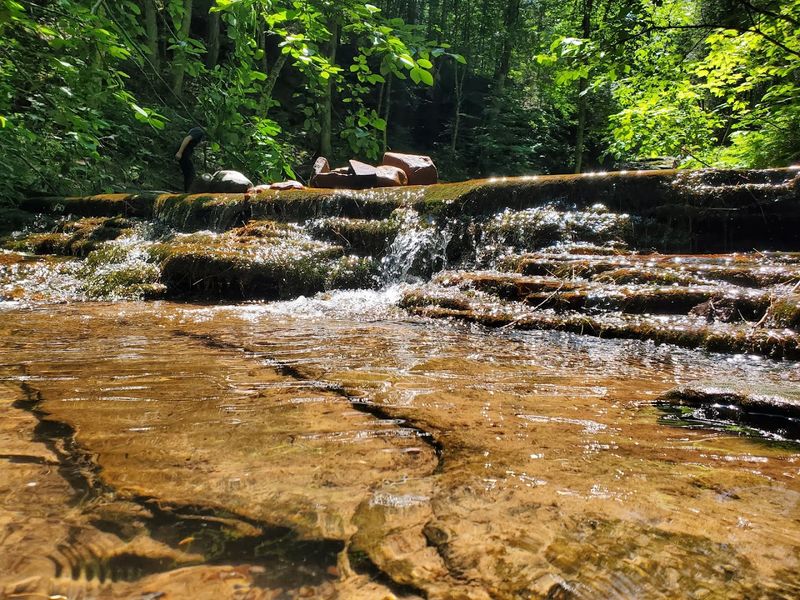
Lost Creek does not save all its energy for the main event. Smaller cascades tumble over rocks both upstream and downstream from the primary eight-foot drop.
These minor falls add movement and sound to the entire area around the main attraction.
Above the falls, the creek descends through a series of gentle steps and riffles. Water catches sunlight as it moves over stones worn smooth by decades of flow.
The approach along the creek bed provides previews of what awaits ahead.
Below the main cascade, another drop creates a secondary viewing opportunity. Though smaller and less dramatic than the main curtain, this downstream section offers a different perspective and gives visitors another spot to sit and watch moving water.
The combination of multiple falling water features within a short distance makes the site feel dynamic rather than static, holding attention longer than a single cascade might manage alone.
A Short Downstream Cascade Gives Visitors Another Pretty View
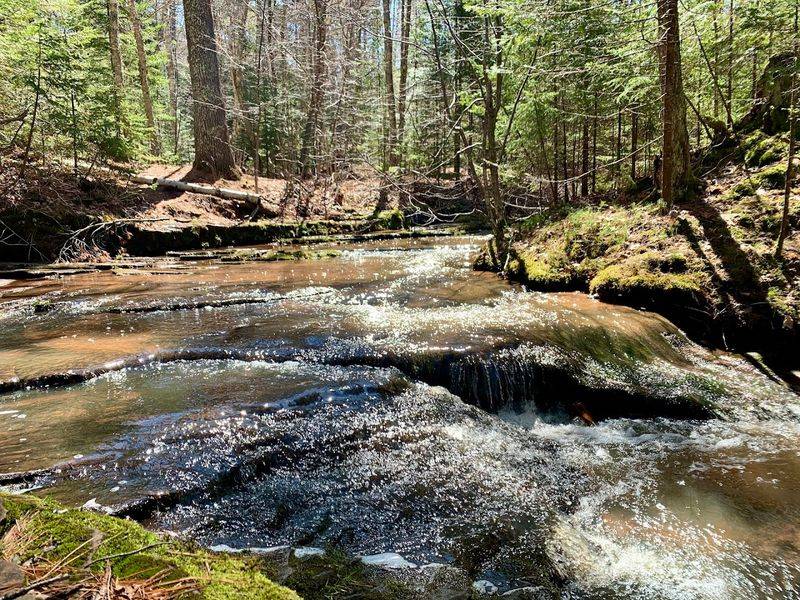
Just past the main falls and picnic area, the trail continues briefly to a second cascade where Lost Creek drops again over layered rock. This lower falls lacks the dramatic undercut of its upstream neighbor but compensates with its own charm and easier access.
The downstream section tends to be less crowded, even on busy weekends. Visitors focused on the main attraction sometimes overlook this bonus feature entirely.
Those who venture the extra hundred yards find a peaceful spot for sitting on sun-warmed rocks or dipping feet in cool water.
The geology remains similar, with red sandstone creating shelves and pools. Fallen logs and surrounding vegetation frame the view naturally.
Some hikers prefer this quieter spot for extended breaks or contemplation. The double waterfall setup essentially gives the site twice the appeal and provides options for groups wanting to spread out.
The Trailhead Starts Along Trail Drive Near Cornucopia
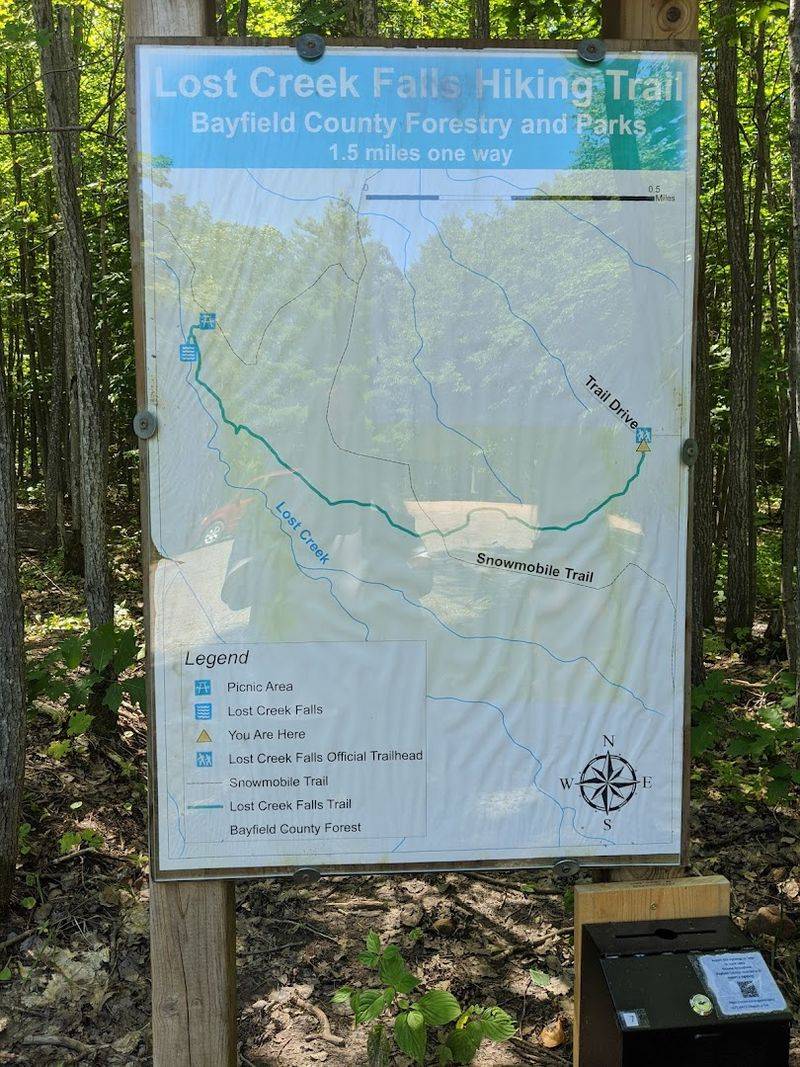
Finding the trailhead requires navigating to Trail Drive south of Cornucopia, a tiny Lake Superior community that serves as a base for exploring this section of Bayfield County. The parking area accommodates multiple vehicles and includes basic facilities like an outhouse.
Signage at the trailhead provides distance information and basic rules for the nature preserve. The location sits far enough from main highways to feel remote but remains accessible via maintained gravel roads.
An old cemetery across from the parking area adds a touch of local history to the setting.
GPS coordinates lead most visitors directly to the correct starting point, though older mapping services occasionally caused confusion with a now-closed alternate entrance. The current access point connects to the North Country Trail system, which extends for thousands of miles across several states.
Lost Creek Falls represents just one destination along this extensive recreational corridor.
The Hike Feels Manageable But Still Rewarding
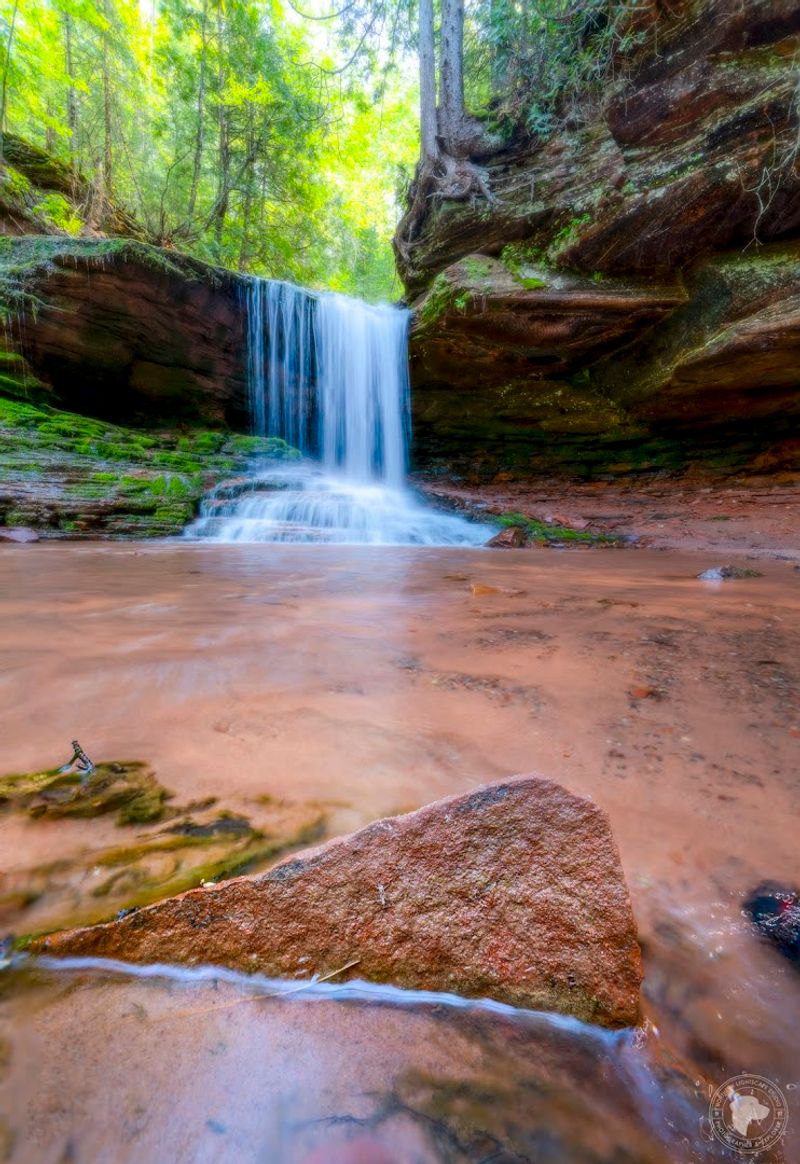
The round trip to Lost Creek Falls covers approximately three miles total, with the falls located about a mile and a half from the trailhead. That distance strikes a balance between accessibility and effort, filtering out the most casual visitors while remaining achievable for moderately active families.
Elevation changes exist but nothing approaching mountain hiking. The trail undulates gently through the forest with a few steeper sections near the creek.
Most hikers complete the journey in well under an hour each direction, leaving plenty of time for exploring around the falls.
The manageable nature of the hike makes it suitable for children, though very young ones might struggle with the distance. Dogs frequently accompany their owners and seem to enjoy the woods and water equally.
The effort-to-reward ratio skews favorably, delivering a memorable natural feature without requiring exceptional fitness or technical hiking skills.
Boardwalks And Gravel Sections Help Make The Route Easier To Follow

Trail maintenance at Lost Creek Falls includes strategically placed boardwalks that span potentially muddy or wet sections. These elevated wooden pathways protect both hikers and sensitive vegetation while keeping feet dry during spring runoff or after heavy rains.
Between boardwalk sections, the trail alternates between natural forest floor and improved gravel surfaces. Roots and rocks remain visible hazards in places, requiring attention to foot placement.
The path generally stays clear and obvious, though fallen leaves in autumn can obscure it temporarily until hikers spot the next blue trail marker.
Two blue dots painted on trees at regular intervals confirm the correct route. These markers prove especially helpful where the trail jogs or where multiple informal paths branch off toward the creek.
The combination of physical improvements and clear marking makes navigation straightforward for first-time visitors without removing all sense of wilderness character.
The Falls Sit In Wisconsin’s Scenic Northwest Region
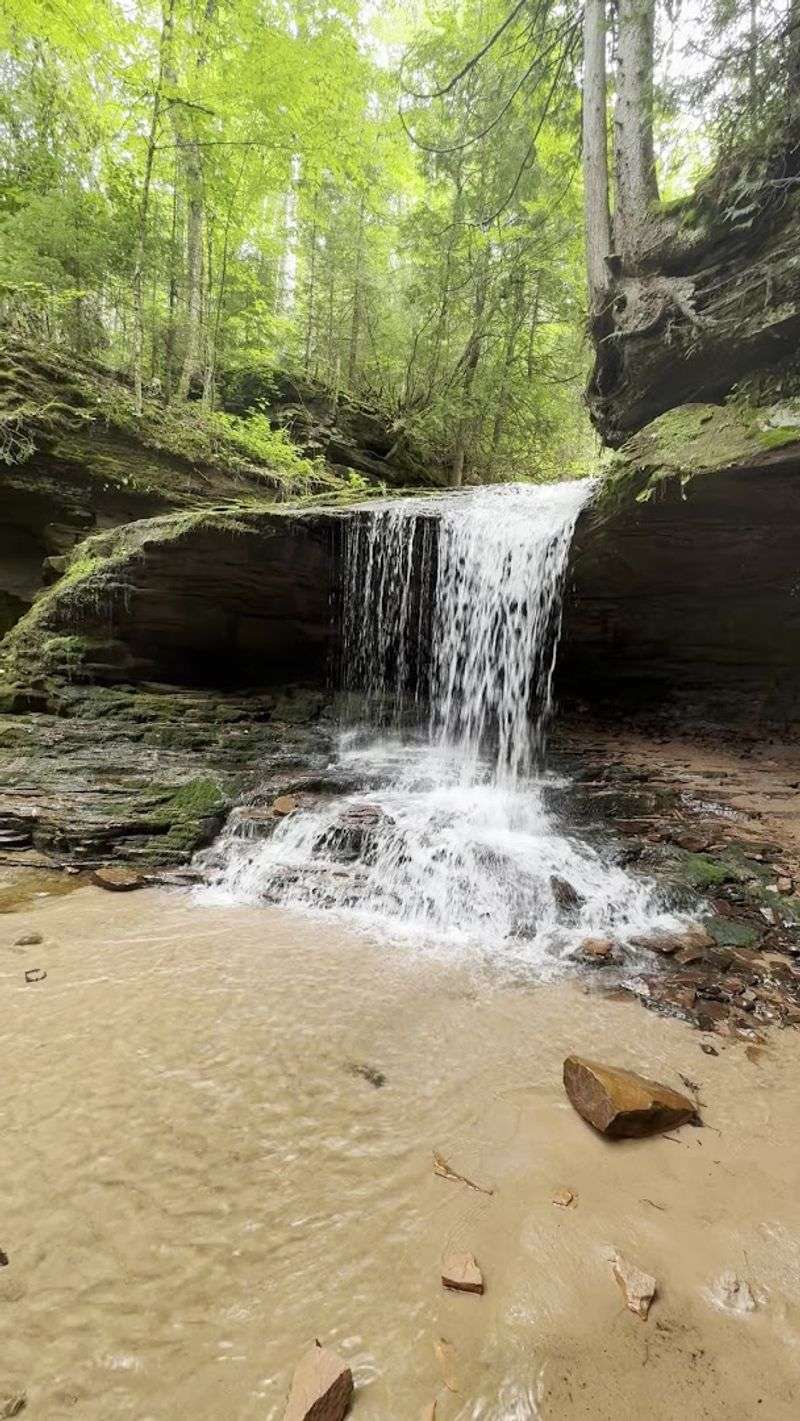
Lost Creek Falls occupies a corner of Wisconsin that often surprises visitors unfamiliar with the state’s geographic diversity. Bayfield County and the surrounding area contain more waterfalls, cliffs, and dramatic topography than the flat dairy farmland many associate with Wisconsin.
Lake Superior’s influence shapes the regional character, from weather patterns to vegetation types. The Bayfield Peninsula extends north into the lake, creating a landscape of forests, rocky shores, and clear streams.
Cornucopia sits near the peninsula’s tip, making it an ideal base for exploring both water and woodland attractions.
The region’s relative remoteness preserves a quality increasingly rare in more developed parts of the Midwest. Small towns, family-owned businesses, and protected natural areas dominate the landscape.
Lost Creek Falls fits perfectly into this setting, offering the kind of hands-on nature experience that defines outdoor recreation in Wisconsin’s northern reaches.