
This Wisconsin Waterfall Loop Takes You Past Three Stunning Falls In Just 1.2 Miles
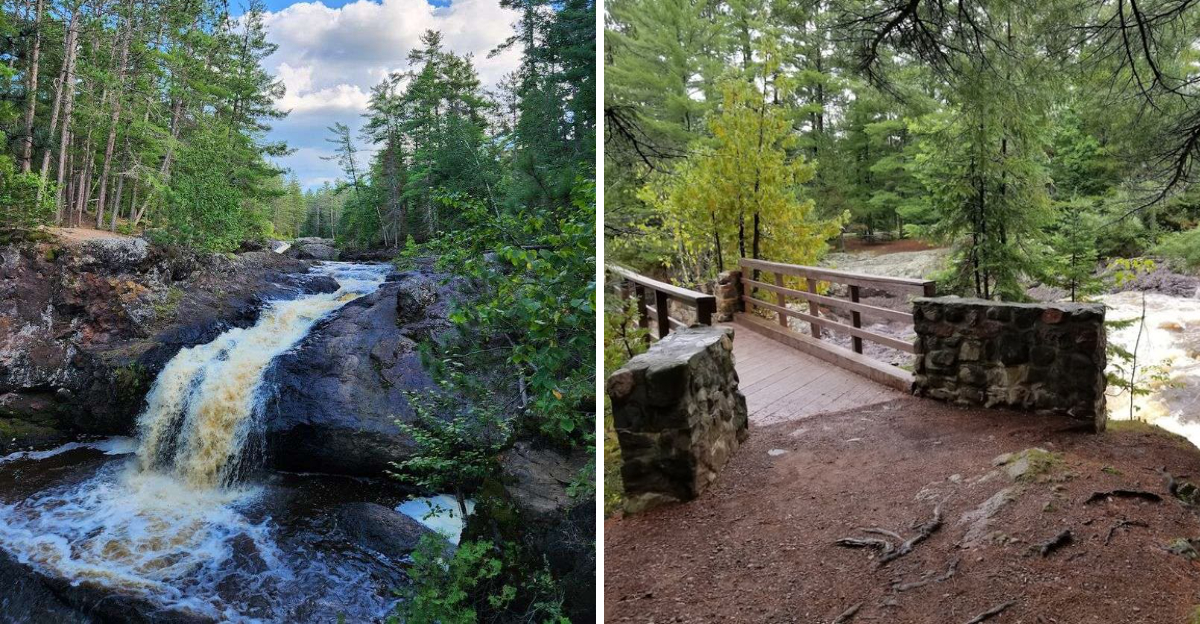
Waterfall hikes usually make you earn the payoff, right? Not here. This corner of Wisconsin keeps things wonderfully easy, with rushing water showing up again and again before your legs even have time to complain.
You can follow short forest paths, pause beside the river, cross a covered bridge, and still feel like you saw way more than the effort required. That is the best part. The cascades are close together, but they do not all feel the same.
One section tumbles with drama, another slips over the rocks more gently, and the whole walk has that fresh, woodsy sound you wish you could bottle. It is a simple outing, but it feels surprisingly full.
The Island Trail Gives You Three Main Falls In One Short Walk
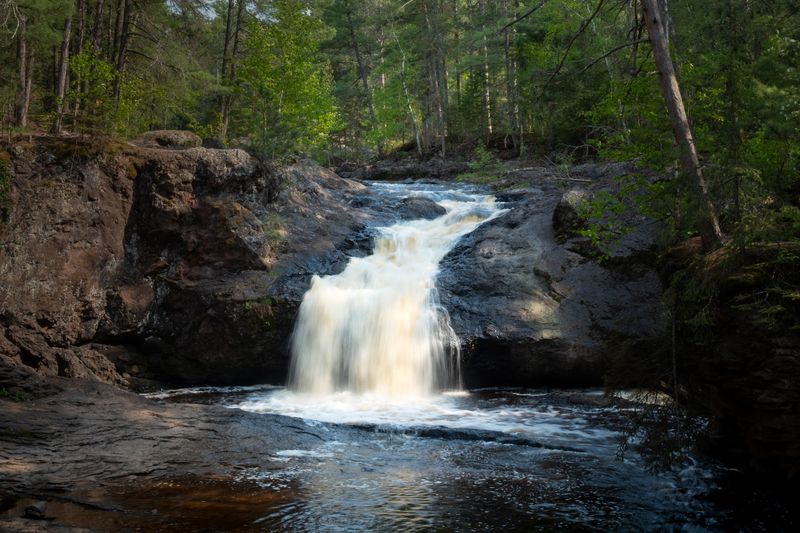
Walking the Island Trail feels like discovering three different water features without the usual effort required for waterfall hunting. The path circles a forested island created by the splitting river, bringing you face to face with each cascade in quick succession.
You can complete the entire loop in less than an hour, but the scenery encourages a slower pace.
The trail surface varies from packed dirt to boardwalks, with enough elevation change to keep things interesting without becoming strenuous. Families with younger children manage it easily, though roots and rocks require attention in spots.
Several viewpoints let you approach the falls from different angles, and the sound of rushing water follows you through much of the walk.
Benches positioned near key viewing areas provide rest stops where you can watch the water move over the rocks. The loop design means you never backtrack, always moving forward to discover what lies around the next bend.
Upper Falls Lower Falls And Snake Pit Falls Are The Big Highlights
Upper Falls announces itself with a forceful drop that sends spray into the air on humid days. The water crashes over layered rock in a way that changes character depending on recent rainfall.
During spring runoff, it roars with impressive volume, while late summer reveals more of the underlying geology.
Lower Falls spreads wider across the riverbed, creating a curtain of water that catches afternoon light beautifully. You can get remarkably close here, standing on rocks that put you almost level with the cascade.
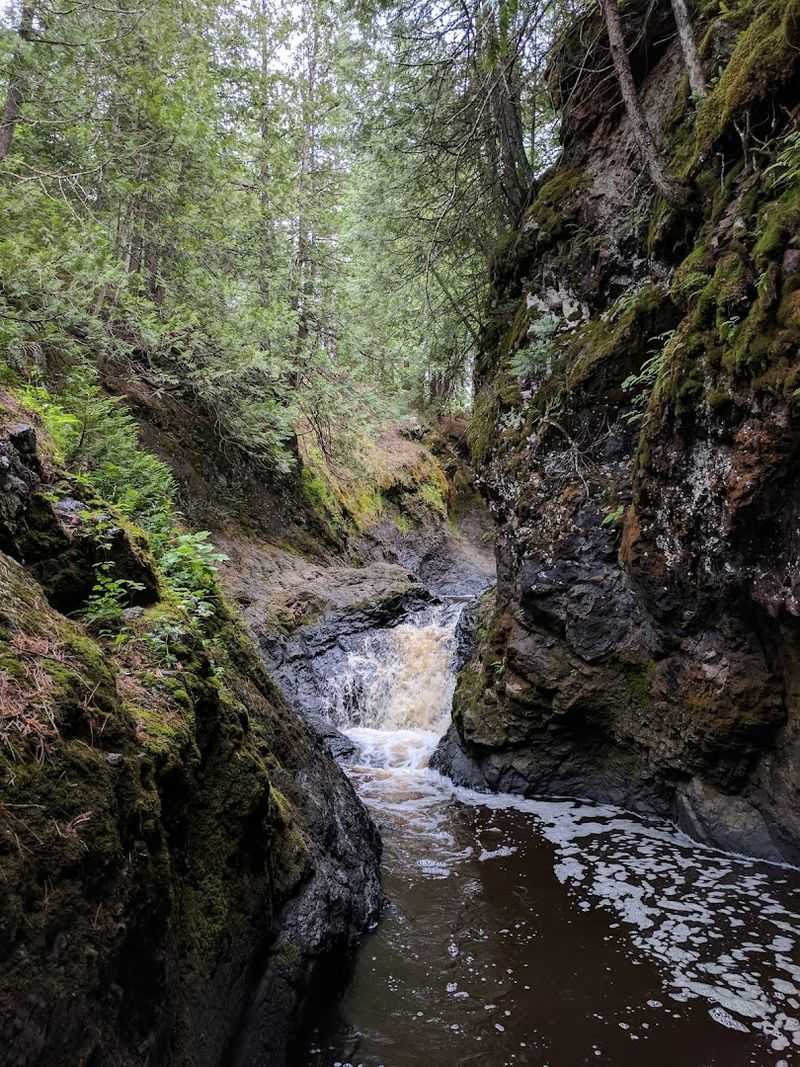
Snake Pit Falls hides on the far side of the island, tucked into a narrow gorge that amplifies the sound of falling water.
Many visitors consider Snake Pit the most photogenic of the three, with its confined space creating an intimate viewing experience. The rocks surrounding this fall show dramatic coloring, with rust-red tones contrasting against the white foam of moving water.
The Covered Footbridge Gives The Park Its Most Iconic View
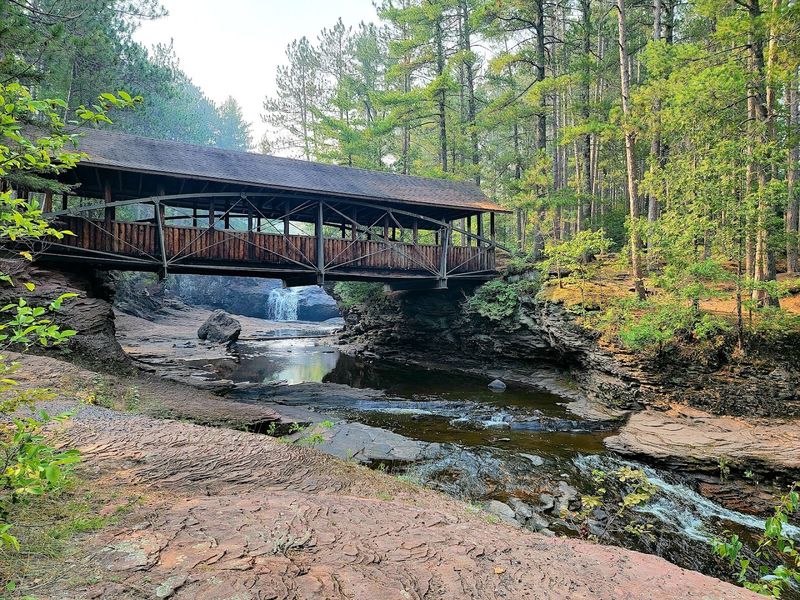
The covered bridge serves as both passage and viewing platform, offering a unique perspective on the falls below. Standing inside its wooden frame, you look down at water rushing between rock walls, the bridge’s roof creating a natural frame for photographs.
The structure feels solid underfoot despite its age, with timber beams showing the craftsmanship of an earlier era.
Morning light filters through the bridge’s open sides, creating patterns on the wooden floor that shift as the sun moves higher. Birds sometimes nest in the rafters, adding their calls to the constant background noise of the river.
The bridge connects the island to the mainland, making it a necessary crossing point that rewards you with excellent views.
Photographers favor this spot during all seasons, capturing the falls through the bridge’s rectangular opening. Winter transforms the scene entirely, with ice formations adding sculptural elements to the composition.
The Horton Covered Bridge Stretches 55 Feet Over The River
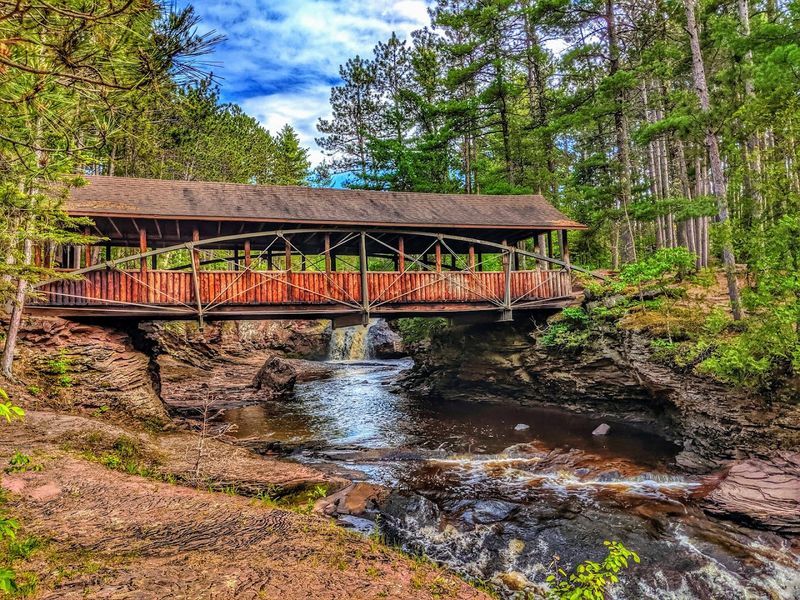
Built in the early 20th century, the Horton Covered Bridge represents practical engineering dressed up with aesthetic consideration. Its 55-foot span crosses the Amnicon River at a strategic point where the banks narrow slightly, providing stable anchoring points for the stone foundations.
The bridge’s covered design originally protected the wooden deck from weather damage, extending its useful life considerably.
The structure uses traditional timber framing techniques that were common in rural bridge construction of that period. Heavy beams support the roof and sides, while the deck planks show wear patterns from decades of foot traffic.
Park managers have maintained it carefully, replacing deteriorated elements while preserving the bridge’s historical character.
Walking through feels like stepping briefly into the past, with the enclosed space creating a tunnel effect that opens onto views of moving water. The bridge serves as a landmark that helps orient visitors exploring the trail system.
The Amnicon River Creates Rapids Pools And Smaller Cascades Too
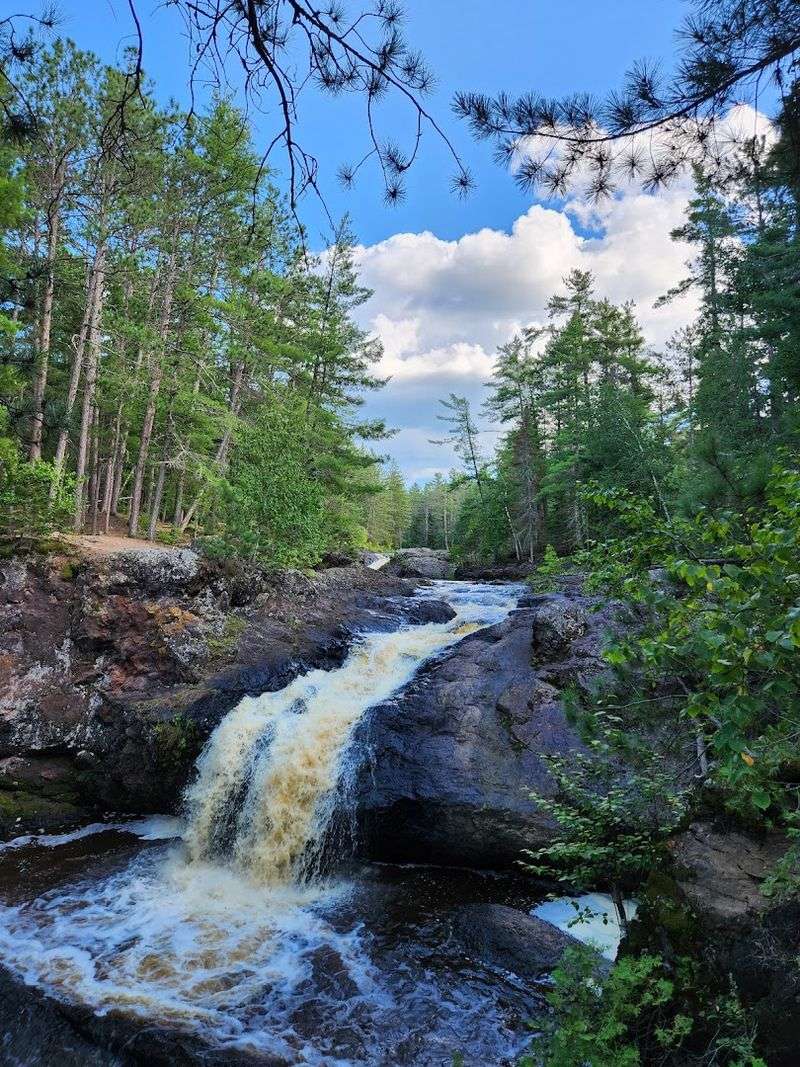
Beyond the named falls, the Amnicon River puts on a continuous show of moving water in various moods. Rapids form where the riverbed drops slightly or narrows between rocks, creating white water that churns and froths energetically.
Downstream from these turbulent sections, the river often settles into calm pools where you can see straight to the bottom on clear days.
Smaller unnamed cascades appear throughout the park, each with its own personality. Some create gentle slides over smooth rock faces, while others tumble through boulder fields in miniature versions of the major falls.
The river’s character changes with the seasons, running high and fast during spring melt, then settling into a more contemplative flow by late summer.
These quieter water features often receive less attention than the main attractions, but they reward patient observation. Fish hold in the pools, and water striders skate across the surface where the current slows enough to allow it.
The Trail Is Short Enough For A Quick Stop But Pretty Enough To Linger
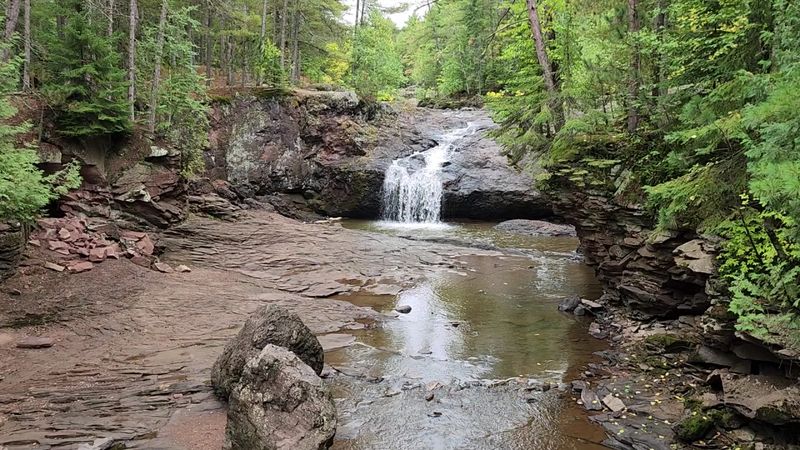
The park’s compact size makes it ideal for travelers who want waterfall views without dedicating an entire day to hiking. You can see all three major falls and complete the loop in 45 minutes if you maintain a steady pace.
Most visitors take longer, stopping frequently to photograph the scenery or simply watch the water move.
Picnic tables scattered throughout the park encourage extended stays, and many people pack lunch to enjoy near the river. The combination of accessibility and beauty makes it a popular stop for those driving between larger destinations.
You never feel rushed here, despite the trail’s brevity.
Families often spend two or three hours exploring, letting children play near the water in safe spots while adults relax on benches. The short distance means even young walkers can complete the circuit without complaint, and the frequent viewpoints provide natural stopping points that break up the journey into manageable segments.
The River Walks Are Relatively Flat And Easy
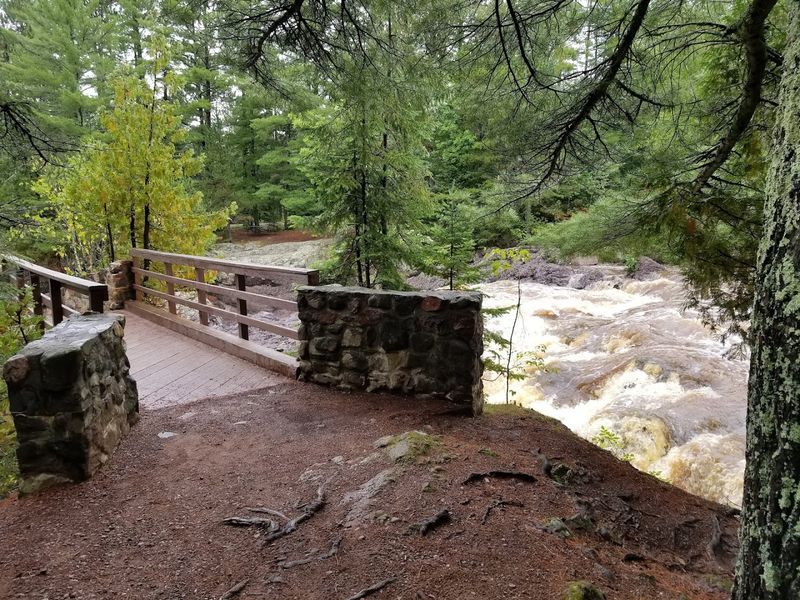
The trails along the Amnicon River maintain relatively level grades that accommodate visitors with varying fitness levels. While the island loop includes some gentle ups and downs, nothing qualifies as steep or particularly challenging.
The paths follow the natural contours of the riverbank, avoiding unnecessary elevation changes.
Wheelchair users can access several key viewpoints, including the covered bridge and areas near Lower Falls. The park’s designers clearly considered accessibility when laying out the trail system, though some rougher sections with roots and rocks remain unsuitable for wheels.
Older adults and those with mobility concerns generally manage the main paths without difficulty.
The flat terrain means you can focus on the scenery rather than watching your footing constantly. Families with strollers stick to the wider, more developed sections, while adventurous visitors scramble down to the water’s edge where informal paths allow closer approaches to the falls.
The combination of accessible main trails and optional side routes serves diverse visitor needs effectively.
The Douglas Fault Helped Shape The Waterfalls
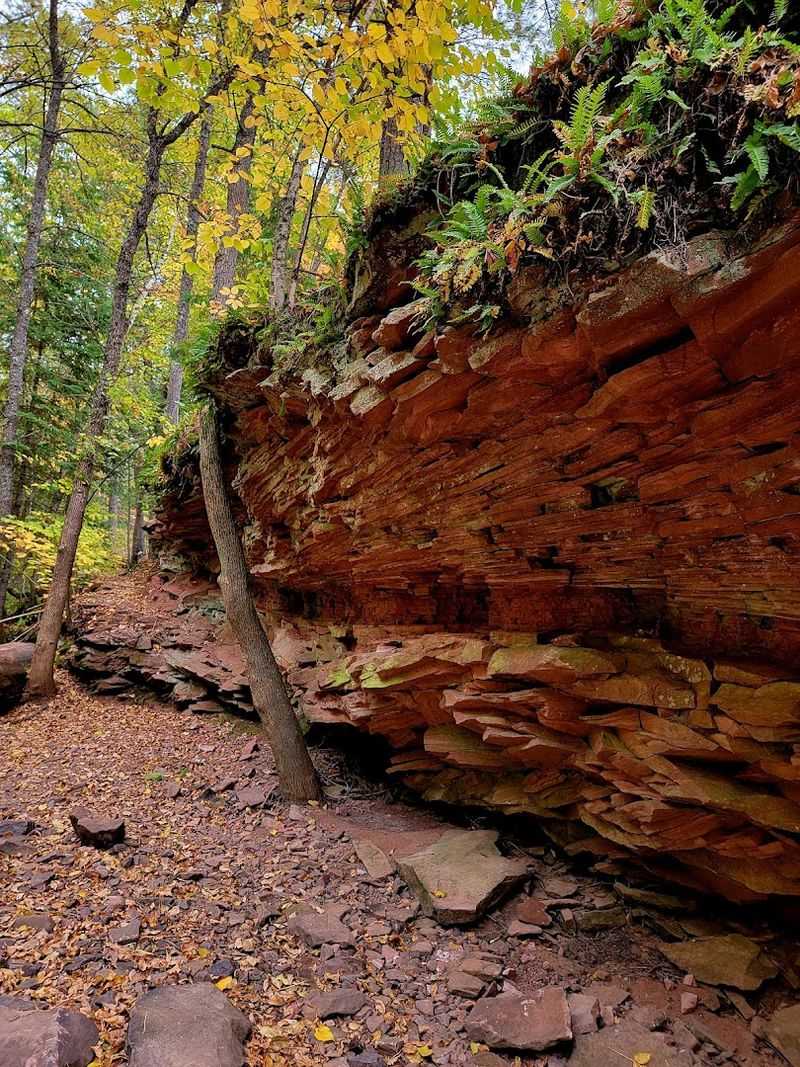
The waterfalls at Amnicon exist because of ancient geological drama that played out millions of years ago. The Douglas Fault represents a fracture in the earth’s crust where rock layers shifted vertically, creating the elevation changes that now force the river to drop suddenly.
You can actually see evidence of this fault in exposed rock faces throughout the park.
The layered appearance of the rocks tells a story of sediment deposited over vast time periods, then disrupted by tectonic forces. Different rock types erode at different rates, which explains why some falls have undercut areas while others flow over relatively smooth surfaces.
Geologists find this site particularly interesting because the fault line is so clearly visible.
Educational signs near key viewing points explain the geological processes that shaped the landscape. Understanding the underlying structure adds depth to the visual experience, transforming the falls from simply pretty features into windows onto deep time and powerful natural forces.
Red Rock And Rushing Water Make The Scenery Feel Dramatic
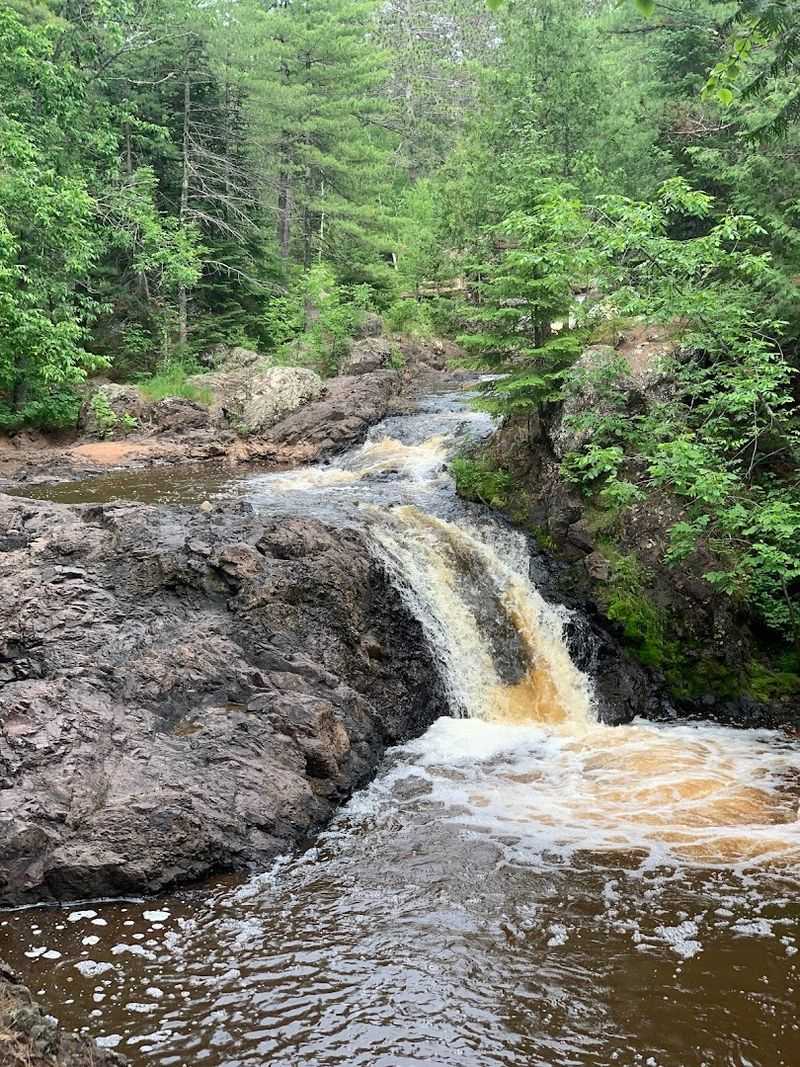
The rust-colored rocks at Amnicon Falls create striking visual contrasts against the white foam of moving water. This distinctive red-brown tone comes from iron-rich sediments that oxidized long ago, staining the stone in warm earth tones.
When water flows over these rocks, the color difference becomes particularly pronounced, especially in photographs.
The dramatic appearance intensifies during high water periods when the falls carry more volume and force. Spray catches sunlight, creating brief rainbows on humid days, while the red rocks provide a constant backdrop that makes the scene memorable.
The combination feels almost theatrical, like a stage set designed for maximum visual impact.
Different lighting conditions transform the scenery throughout the day. Morning sun brings out the warmth in the rock tones, while afternoon light creates deeper shadows in the gorges.
Cloudy days soften everything, reducing contrast but adding a moody quality that some visitors prefer. The red rock remains the constant element that gives Amnicon Falls its distinctive character.
The Park Has More Than Just One Waterfall Viewpoint
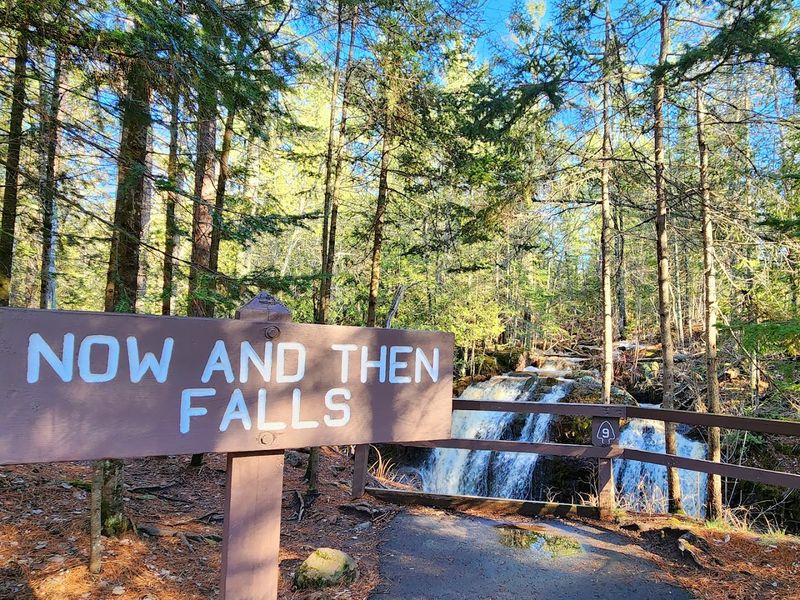
Amnicon Falls rewards exploration with numerous viewing angles that reveal different aspects of the waterfalls. Some overlooks position you above the falls, looking down at water pouring over rock ledges, while others bring you to eye level with the cascades.
A few spots even let you stand below the falls, looking up at water tumbling toward you.
Each viewpoint offers a distinct perspective that changes your understanding of the river’s movement. From above, you see the water’s path and how it navigates obstacles.
At eye level, you appreciate the force and volume more directly. From below, the falls gain height and drama that you miss from other angles.
The park’s trail system connects these viewpoints in a logical sequence that builds understanding gradually. You never feel like you’re seeing the same thing repeatedly because each stop genuinely adds new information.
This variety makes the short loop feel more substantial than its distance suggests, packing considerable visual interest into a small area.