
Tips to keep kids (and everyone else) safe this summer
By Eileen Ogintz
Tribune Content Agency
Taking the Kids
Have you packed your fact sheet on your family trips?
“I recommend having a ‘fact sheet’ for each family member that lists a current weight, allergies, medications and any significant medical history, including phone numbers for any medical specialists involved,” suggests Dr. Elizabeth Murray, a pediatric ER physician and professor at the University of Rochester Medicine.
People should also have a variety of Band-Aids, tweezers and then I also recommend a small towel that you can put down to create a clean surface if needed when outside,” she said. My youngest daughter came home from school with a first-aid kit she made that included a lollipop. Her response to why a lollipop was included – “It’s a great distraction for an upset child if you need to pull out a splinter or a tick!”
I thought that was a pretty great idea.
Dr. Murray, who also serves as a spokesman for the American Academy of Pediatrics, notes that it’s not that kids end up in the ER when parents have let down their guard on vacation but that they may be doing something “that is not their usual activity. For example, we see a lot of children who accidentally step in buried campfire ashes. People don’t realize that they can stay very hot even many hours later. Experienced campers know this, people new to camping often don’t.”
She, as well as other physicians, are also seeing an increase in e-bike and e-scooter injuries. Don’t forget to correctly fit bike helmets. (Consider helmets that include a multi-directional impact protection system recommended by pediatric safety experts and used by professional cycling teams. These helmets are designed to help reduce the risk of brain injury by helping reduce the rotational motion of an impact away from the head.

Travelers with disabilities and certain chronic conditions can face increased risks as a result of heat. After watching her husband navigate Parkinson’s disease, Maura Horton founded MagnaReady, the original magnetic apparel brand with adaptive cooling magnetic front shirts.
Worried about ticks? Each year, tens of thousands of Americans are diagnosed with Lyme disease. You can treat everyone’s clothes with products like Sawyer’s Permethrin ($18.49 for a 24-ounce spray). There is also a product for dogs. Use on clothing, gear and tents. It’s effective for six weeks or six washes. But also use a topical repellent on exposed skin and remember that when outdoors, especially in the woods, everyone should wear long pants, long sleeves and tuck pants into socks. Check everyone for ticks when you come inside.
But remember, Dr. Murray cautions, for infants and those under 2, products containing DEET are safe but should be used sparingly. The American Academy of Pediatrics and Centers for Disease Control and Prevention recommend using an insect repellent product that has been registered by the Environmental Protection Agency (EPA) Use this tool to search for EPA-registered insect repellents. Check out this guide from the American Academy of Pediatrics. Don’t use it directly on young children’s hands, as they may put them in their mouth and eyes. Don’t use it directly on their face either. Instead, spray a little on your hands and rub on a child’s face.
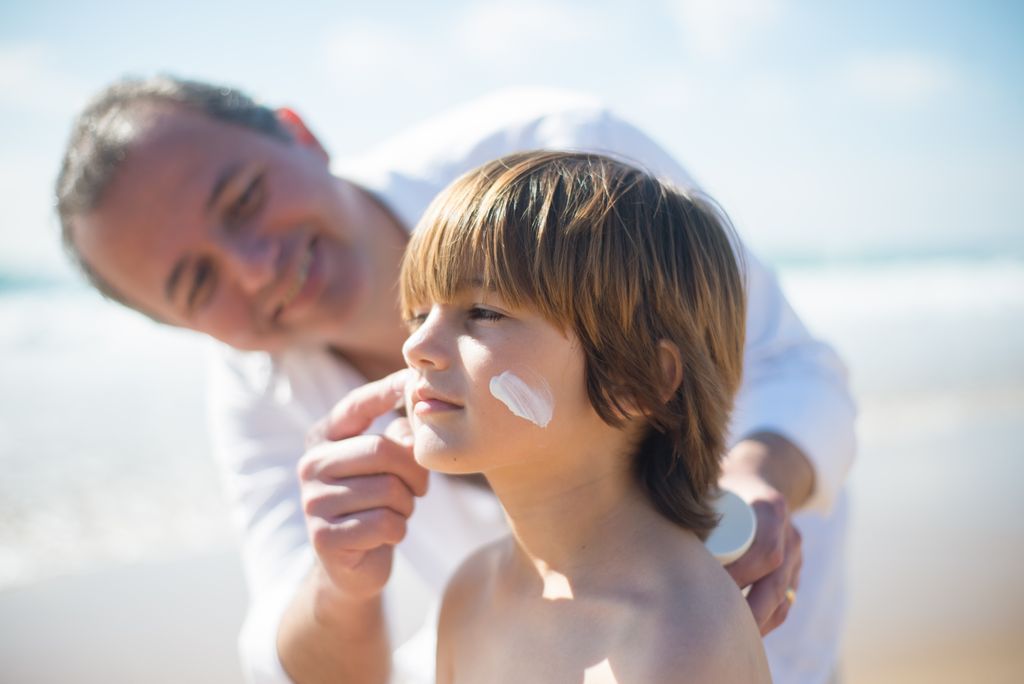
Don’t use combination sunscreen/repellent products. Sunscreen needs to be reapplied every two hours while in the sun, after swimming and the combination products may expose your child to too much repellent. According to the American Academy of Pediatrics, you always want to keep babies under six months out of direct sunlight, dress them in cool, comfortable clothing and select clothes made with a tight weave. (The less light that shines through the better. Also look for clothing that lists an Ultraviolet Protection Factor like from Coolibar with UPF 50+.
Is your car seat installed correctly? More than half of car seats are not used or installed correctly, according to Safe Kids Worldwide. Road injuries are one of the leading causes of preventable deaths and injuries to children in the United States. But correctly used safety seats can reduce the risk of death by as much as 71 percent. You can get more details about correctly installing your seat here, including where you can go to make sure your safety seat is installed properly. Remember, a properly installed seat shouldn’t move more than one inch front to back or side to side when pulled at the seat belt.

According to AAA, “70 million people are expected to travel for the Independence Day holiday. Despite higher costs for gas, hotels and airfares, travel volume is expected to increase by 0.5% from last year.”
“Those planning to take to the skies should download the airline’s app ahead of time so they can stay on top of any flight or gate changes,” says Shawn Steward, Kansas public affairs manager for AAA Club Alliance.
And while we are talking about safety seats, consider using one on your next flight, even if you have to buy a seat for your baby or toddler. According to the Federal Aviation Administration, children under 40 pounds are safest in an approved child restraint system, not on your lap. “Your arms aren’t capable of holding your in-lap child securely, especially during unexpected turbulence,” the FAA says.
Did you know drowning is the leading cause of childhood death? It only takes a moment for a child to drown, the American Red Cross says. Even if there are lifeguards, make sure you or another adult are the “water watcher,” designated to watch the kids without any distractions, including cellphones. Older kids shouldn’t swim alone and should ask permission to go in the water. Make sure to use U.S. Coast Guard-approved life jackets in the water and know what to do in an emergency. Do you know CPR? The American Red Cross has activities for kids and parents, including Whale Tales with Longfellow the whale videos.
One last thing for your first- aid kit — a lollipop.
Stay safe out there!
(For more Taking the Kids, visit www.takingthekids.com and also follow TakingTheKids on Twitter, Facebook and Instagram where Eileen Ogintz welcomes your questions and comments. The fourth edition of The Kid’s Guide to New York City and the third edition of The Kid’s Guide to Washington D.C. are the latest in a series of 14 books for kid travelers published by Eileen.)
©2026 Eileen Ogintz. Distributed by Tribune Content Agency, LLC.