
Utah’s Only Inland Saline Lake Is Vanishing And Scientists Say It May Never Fully Recover
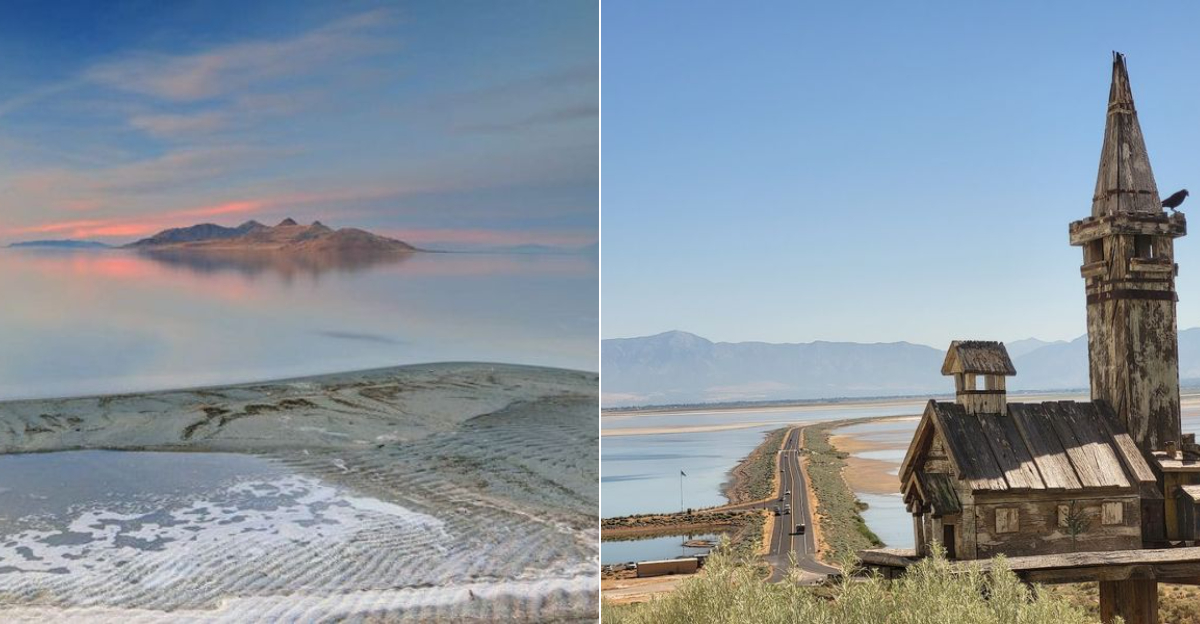
Who could ignore blue water, pink shallows, crunchy salt crystals, and island ridgelines where wildlife still moves through the distance? The colors alone make people stop and stare.
A shoreline can make a quiet afternoon feel suddenly important. In Utah, this vast saline lake gives visitors strange beauty, wide-open views, and a powerful reminder of how much nature can hold.
This is not just a scenic stop with pretty views. It is a place where birds, industry, snow, and outdoor adventure all connect in ways visitors can actually see.
Come curious and give yourself time to take it in slowly. Utah turns this lake visit into a moving, unforgettable experience that feels both beautiful and urgent.
A Lake Like No Other
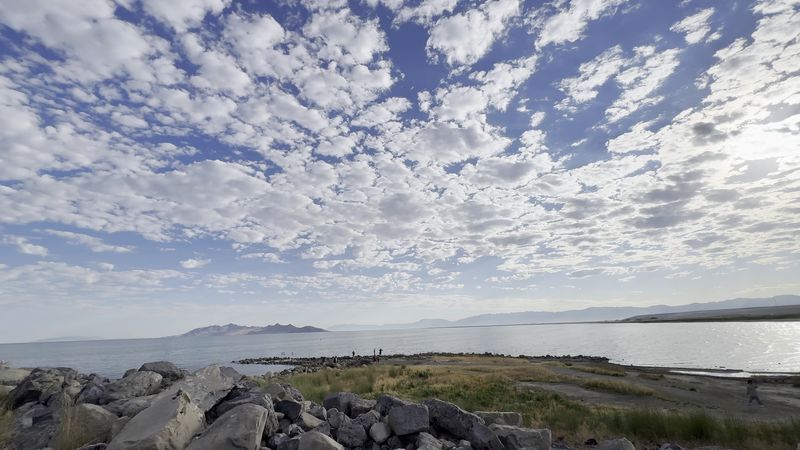
Floating in water so salty you literally cannot sink is not something most people get to experience. The Great Salt Lake in Utah, USA makes that a reality, and it is every bit as wild as it sounds.
The lake sits in the high desert of northern Utah, historically at elevations around 4,200 feet above sea level. Its salinity is several times higher than the ocean, which is why visitors bob at chest height without even trying.
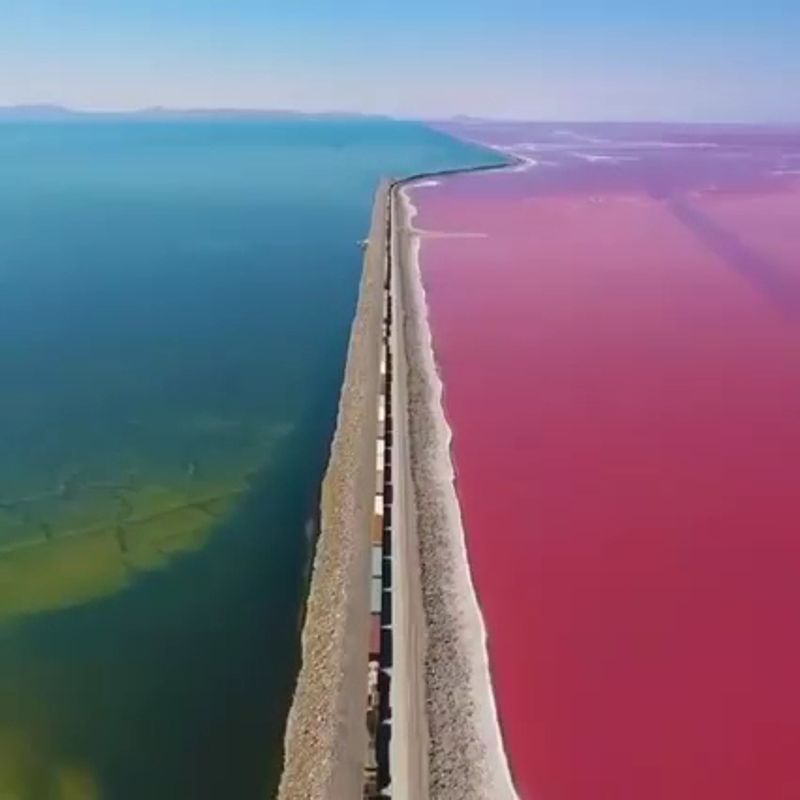
The water shifts colors depending on algae and light, swinging from deep blue to vivid pink and even red near the south arm. Salt crystals line the shore in intricate patterns, crunching underfoot like fresh snow.
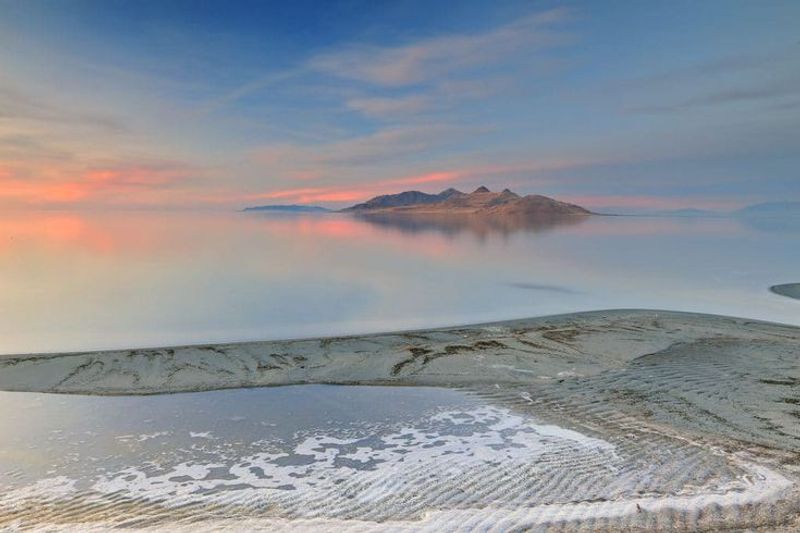
Antelope Island rises from the water like a mirage, home to bison, pronghorn, and over 250 species of birds. The silence out on the flats is something you carry home with you.
Sunsets here are legendary. The colors reflect across shallow pools in a way that makes every photo look unreal.
Have you ever stood somewhere and genuinely felt like you had left Earth behind?
The Great Salt Lake is that kind of place. It rewards every visitor who shows up curious and open-minded, ready to experience something genuinely unlike anything else in North America.
The Numbers Behind The Crisis
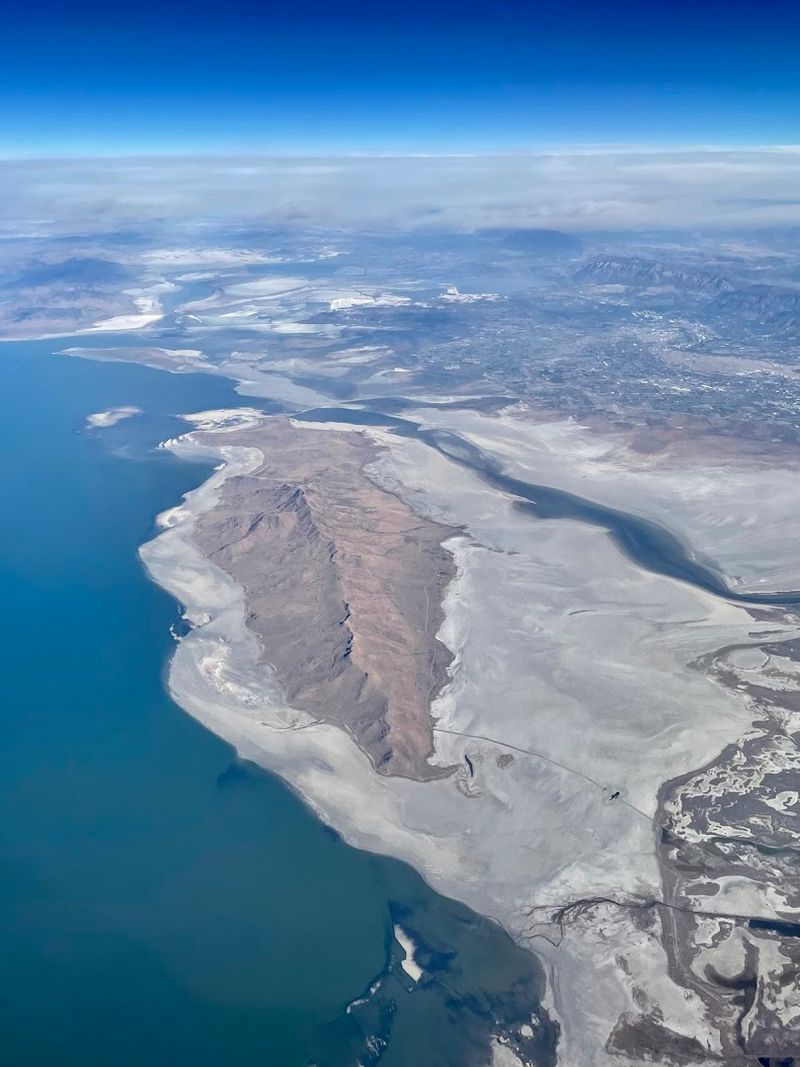
Since 1850, the Great Salt Lake has lost 73 percent of its water. That is not a typo.
Nearly three quarters of this ancient lake has simply vanished over the past century and a half.
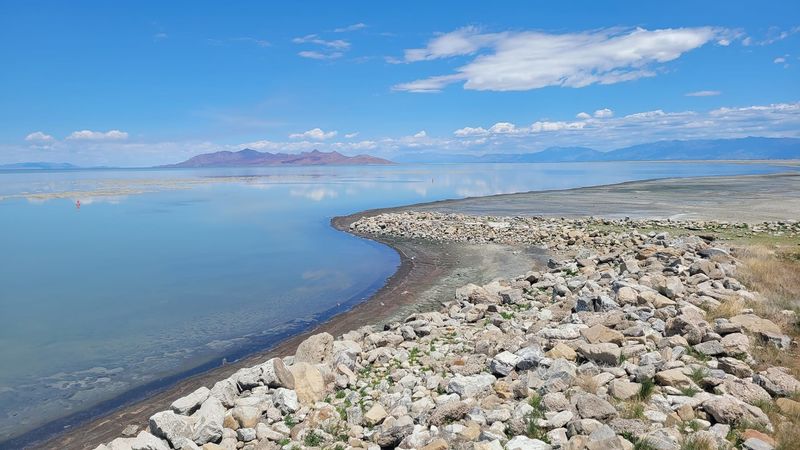
By June 2026, the lake’s water level sat at just 4,191 feet in elevation, only three feet above its record low set in November 2022. The south arm of the lake finished the 2025 water year at its third-lowest recorded elevation since 1903.
These are not abstract statistics. They represent a lake that is visibly, measurably shrinking every single year.
Scientists estimate that a sustained additional inflow of 800,000 acre-feet of water per year would be needed just to bring the lake back to a healthy elevation of 4,198 feet by 2055. That is an enormous ask in an already dry region.
Some projections suggest the lake could largely disappear within five years if the current trend holds. Think about that for a moment.
A place this unique, this irreplaceable, could be reduced to a dusty salt flat within a single decade. Do the numbers make you want to see it before it changes even further?
Visiting now is not just a trip. It is a chance to witness one of the most dramatic environmental stories unfolding in real time, right here in the American West.
Why The Water Keeps Leaving
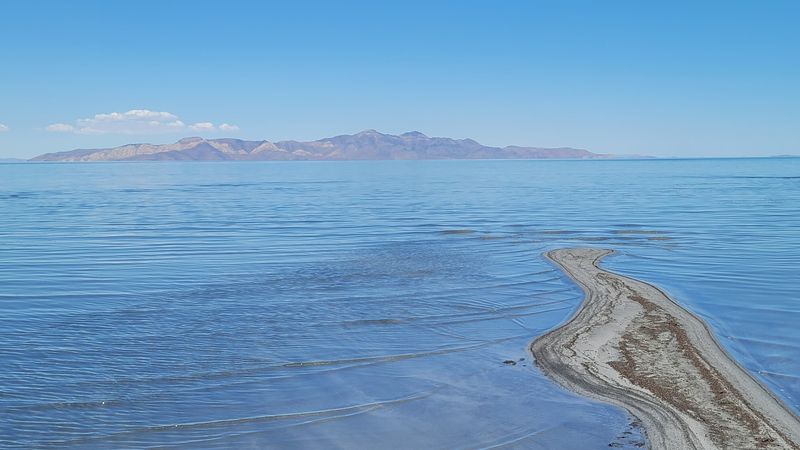
The lake does not lose water by accident. Three major rivers feed the Great Salt Lake: the Bear, the Jordan, and the Weber.
All three have been heavily diverted for decades.
Utah diverts at least 2.1 million acre-feet of water from the lake’s tributaries every single year. Between 70 and 82 percent of that diverted water goes to agriculture, leaving the lake with far less than it needs to stay healthy.
Lower streamflows account for roughly two thirds of the lake’s total decline. The rest comes from increased evaporation driven by warmer temperatures, a direct result of a changing climate.
As temperatures rise, the lake loses more water to the sky even when precipitation stays steady. That means the lake is fighting a battle on two fronts simultaneously, and it is losing both.
Drought conditions have made everything worse, cutting the amount of snowmelt that eventually reaches the lake each spring. The mountains surrounding the lake are its lifeline, and that lifeline is under serious strain.
Recovery efforts are underway, including water leasing programs and conservation initiatives that delivered nearly 400,000 acre-feet of water to the lake between 2021 and 2025. That is meaningful progress, but scientists say it is still far short of what the lake truly needs.
Want to understand a water crisis up close? This lake tells that story better than any textbook ever could.
Dust Storms And Hidden Dangers
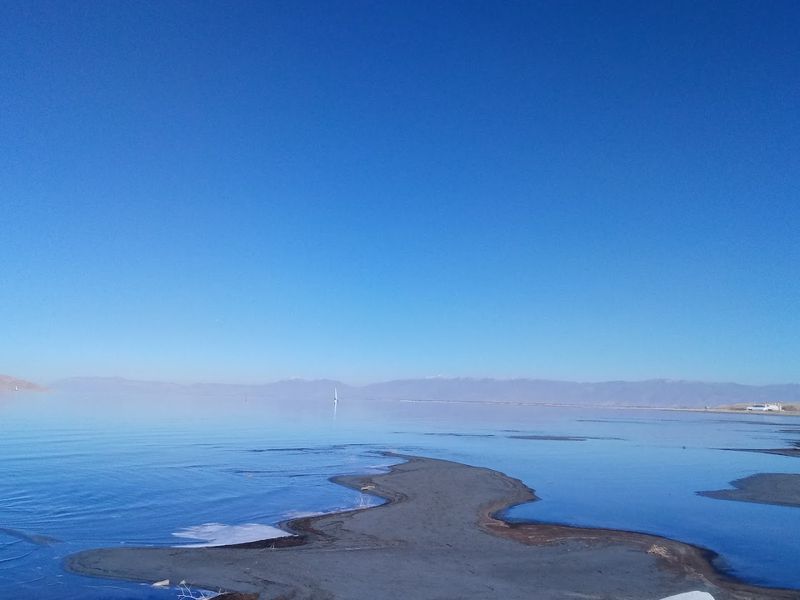
When a lake shrinks, it leaves something behind. At the Great Salt Lake, what gets left behind is a dry, exposed lakebed loaded with heavy metals including lead, cadmium, and arsenic.
Wind picks up that exposed sediment and carries it as dust storms across northern Utah. About 2.5 million Utahns live downwind of the lake, directly in the path of those toxic particles.
Respiratory problems, cardiovascular stress, and long-term health risks are all linked to breathing in contaminated dust over time. This is not a distant environmental concern.
It is a public health issue happening right now.
The dust storms can also accelerate snowpack melt in the nearby mountains, which sounds counterintuitive but is genuinely alarming. That snowpack is a critical freshwater source for the entire region.
When it melts too fast, water rushes away before communities can capture and store it, creating a cycle that makes the lake’s recovery even harder. One problem feeds directly into the next.
Understanding these risks adds a layer of urgency to every visit. Standing at the shoreline and looking out at the remaining water, you start to feel what is at stake in a very personal way.
Is this the kind of place that makes you want to speak up for the environment? Most visitors leave with a lot more on their minds than when they arrived.
Wildlife Hanging By A Thread
Over 12 million migratory birds rely on the Great Salt Lake each year. Pelicans, plovers, phalaropes, and avocets stop here on their long journeys across the continent, using the lake as a critical refueling station.
The brine shrimp that thrive in these salty waters are the foundation of that entire food chain. Without them, the birds have nothing to eat, and without the birds, the ecosystem loses something irreplaceable.
As salinity levels rise due to the shrinking water volume, even the brine shrimp struggle to survive. The lake’s unique ecological balance is remarkably fragile, and small changes can cascade quickly.
Antelope Island, located within the lake, provides habitat for bison, pronghorn antelope, coyotes, and an astonishing variety of shorebirds. Birdwatchers from across the world put this location on their must-visit lists, and for very good reason.
Watching thousands of birds lift off the water at once is one of those moments that rewires something inside you. Have you ever witnessed a natural spectacle so massive it actually stopped you in your tracks?
The lake also supports the brine shrimp harvesting industry, which supplies aquaculture operations globally. That industry, along with mineral extraction and recreation, contributes roughly 1.3 billion dollars to Utah’s economy every year.
The wildlife here is not just beautiful. It is economically essential, ecologically vital, and genuinely worth protecting for every future generation.
The Economic Stakes Are Enormous
Some environmental crises feel distant. This one hits directly in the wallet, and not just for Utah residents.
The Great Salt Lake generates approximately 1.3 billion dollars in annual contributions to Utah’s GDP. That figure comes from mining, aquaculture, recreation, and tourism, all of which depend on a functioning lake.
The ski industry in Utah, which benefits enormously from the lake’s effect on local snowfall patterns, supports around 31,800 jobs and generates 2.51 billion dollars annually. A vanishing lake means less lake-effect snow, which means a struggling ski economy.
Mineral extraction operations on the lake harvest magnesium, potassium, and other valuable compounds from the water. As the lake shrinks, those operations face serious long-term questions about viability.
The brine shrimp industry exports its product to fish farms around the world. A collapse of that ecosystem would send ripple effects far beyond Utah’s borders, affecting global aquaculture supply chains.
Recreation and tourism bring visitors from across the country and internationally to float in the buoyant water, photograph the pink hues, and explore Antelope Island. That economic activity supports local businesses, guides, and communities.
The message is clear: saving the Great Salt Lake is not just an environmental cause. It is an economic imperative.
Every dollar spent visiting this place right now is also a small vote for keeping it alive and thriving for the next generation.
What Recovery Actually Looks Like
Saving a lake the size of the Great Salt Lake is not a small project. Utah officials have been working on a range of strategies, and some of them are already showing results worth celebrating.
Between 2021 and 2025, conservation programs and water leasing efforts delivered nearly 400,000 acre-feet of water back to the lake. That is a meaningful number, even if scientists say the lake still needs far more.
Phragmites removal is one of the more hands-on recovery efforts. This invasive reed takes over wetland areas and consumes enormous amounts of water that would otherwise flow into the lake.
Clearing it out restores natural water movement.
Water leasing programs allow the state to pay farmers to temporarily reduce their water use, redirecting that water to the lake instead. It is a creative solution that balances agricultural needs with environmental urgency.
Long-term projections show that the lake needs a sustained increase of 800,000 acre-feet per year to reach a healthy elevation by 2055. Climate change complicates that goal, since warmer temperatures mean more evaporation even when precipitation increases.
Scientists are not giving up, and neither are the communities that depend on this lake. Recovery is possible, but it requires consistent effort, smart policy, and genuine public support.
Visiting the Great Salt Lake puts you in the middle of that story. Could your trip here be the moment you decide to care a little more about the world’s water?
Plan Your Visit Now
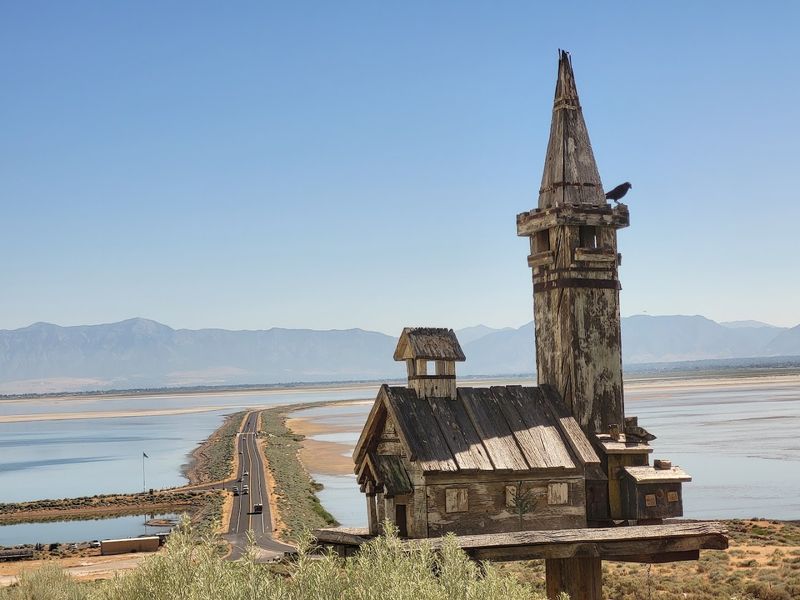
There has never been a better reason to put the Great Salt Lake at the top of a travel list. Floating in water so dense that sinking is physically impossible is the kind of experience people talk about for years afterward.
The lake is located in Utah, accessible from Salt Lake City within a short drive. Antelope Island State Park is one of the best entry points, offering beaches, wildlife viewing, hiking trails, and some of the most dramatic sunsets in the American West.
Summers are warm and sunny, making them popular for swimming and photography. Spring and fall bring cooler temperatures and spectacular bird migrations that draw nature lovers from across the globe.
Check park hours before heading out, as seasonal schedules vary. A small parking fee applies at some access points, and it is absolutely worth every cent for what awaits on the other side of the gate.
Wear shoes you do not mind getting salty. Bring a camera, because every angle here looks like a professional shot.
The salt crystals, the pink water, the mountain reflections, all of it is waiting.
Good footwear matters on the trails, since some paths can be uneven and rough underfoot. Pack water, sunscreen, and a sense of wonder, because this place has a way of surprising even the most seasoned travelers.
When did you last treat yourself to something truly unforgettable? The Great Salt Lake is ready whenever you are.