
Wisconsin Has A World-Famous Aviation Museum That Belongs On Every Bucket List
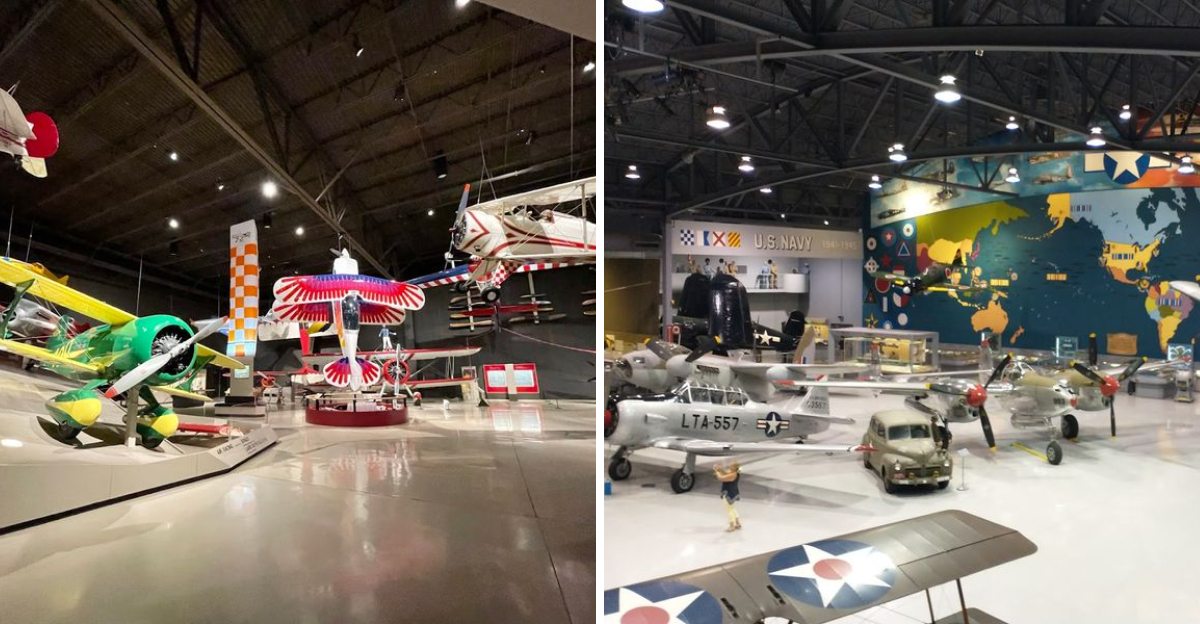
Flight feels a lot more exciting when you are standing nose to nose with the machines that changed the sky. Here in Wisconsin, one museum gives visitors that rare chance to walk through aviation history without making it feel like a textbook.
You can see early planes that look almost too delicate to fly, powerful warbirds with real grit, and experimental aircraft built by people who refused to accept the usual limits. Kids point. Adults slow down. Even casual visitors end up finding something that pulls them closer.
Every gallery has a different kind of wow, whether it is the engineering, the stories, or the sheer courage it took to get these aircraft off the ground.
One Of Wisconsin’s Most Impressive Aviation Stops
Located at 3000 Poberezny Road in Oshkosh, the EAA Aviation Museum commands attention from the moment you approach. The building itself speaks to the ambition of its mission, with clean lines and expansive glass that hints at the treasures waiting inside.
Open daily from 10 AM to 5 PM, the museum welcomes guests into a world where aviation dreams take physical form.
Families find the admission price reasonable, particularly given the scope of what awaits. The facility provides enough space and variety to keep visitors engaged for three to four hours at minimum.
Some guests report spending an entire afternoon and still feeling they have barely scratched the surface of the collection.
Staff members and volunteers contribute warmth and knowledge to every visit. Their passion for aviation history becomes evident through their willingness to answer questions and share stories about the aircraft on display.
This combination of impressive facilities and genuine hospitality creates an atmosphere that feels both educational and welcoming from the first moment.
The Museum Holds More Than 200 Historic Airplanes
Walking into the main galleries feels like stepping into aviation’s entire timeline at once. More than 200 aircraft fill the museum’s spaces, each one representing a chapter in the story of human flight.
The collection spans from the earliest days of powered aviation through the jet age and beyond, offering a visual education that textbooks cannot match.
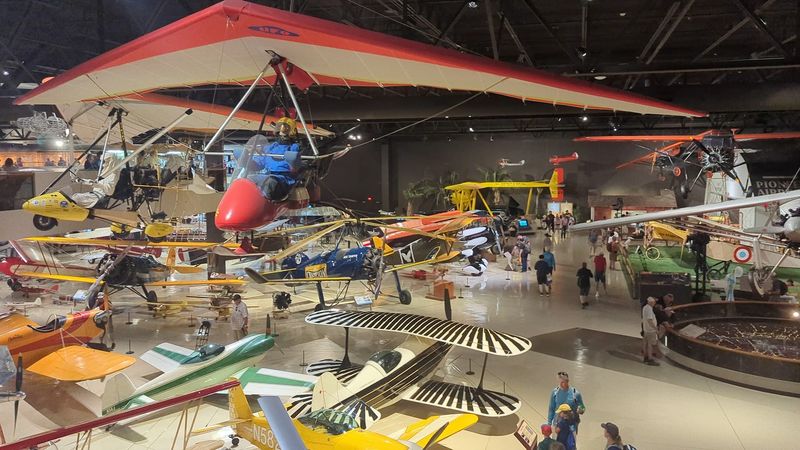
Aircraft sit positioned at varying heights and angles throughout the galleries. Some hang suspended from the ceiling while others rest at ground level, allowing visitors to examine details from propellers to tail sections.
The arrangement creates a dynamic viewing experience that changes as you move through different areas of the museum.
Cleanliness and maintenance standards remain exceptionally high throughout the facility. Visitors consistently note the pristine condition of both the aircraft and the galleries themselves, which enhances the professional atmosphere.
This attention to detail extends to the informational placards accompanying each aircraft, providing context about design, history, and significance without overwhelming readers with technical jargon.
Oshkosh’s Aviation Fame Goes Far Beyond One Summer Event
Most aviation enthusiasts know Oshkosh for the annual AirVenture show that transforms the city each July. Thousands of aircraft converge on the region during that week, creating what many consider the world’s greatest aviation gathering.
Yet the museum provides year-round access to aviation excellence that does not depend on summer weather or crowded schedules.
The museum’s existence predates the modern airshow by decades. Its permanent collection offers depth and context that temporary events cannot provide, with carefully curated exhibits exploring themes from military aviation to homebuilt innovations.
Visitors discover that Oshkosh earned its place on the aviation map through sustained dedication rather than a single annual spectacle.
Coming during the off-season brings advantages beyond smaller crowds. The museum decorates beautifully for holidays, and special events throughout the year add variety to the standard offerings.
On certain weekends, the Young Eagles program provides free airplane rides for children aged eight to seventeen, giving them hands-on experience with flight that creates lasting memories.
The Eagle Hangar Honors World War II Aircraft And Heroes
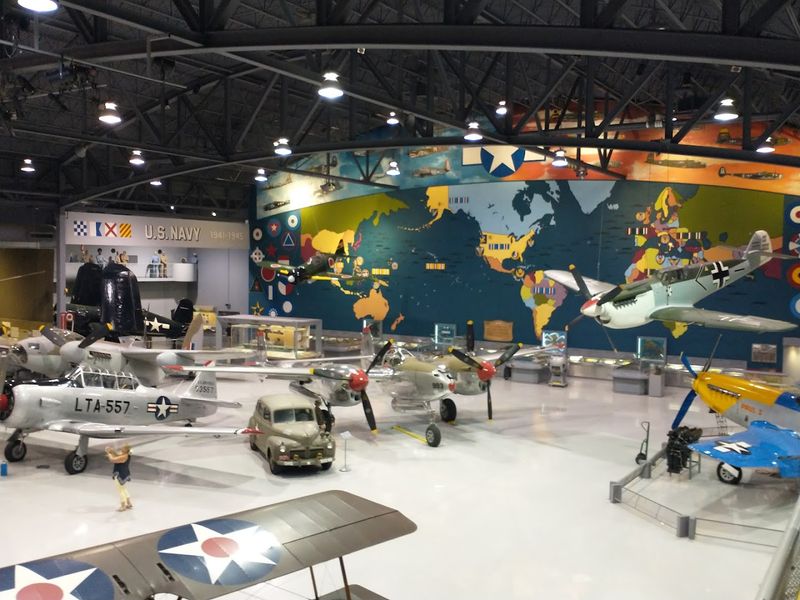
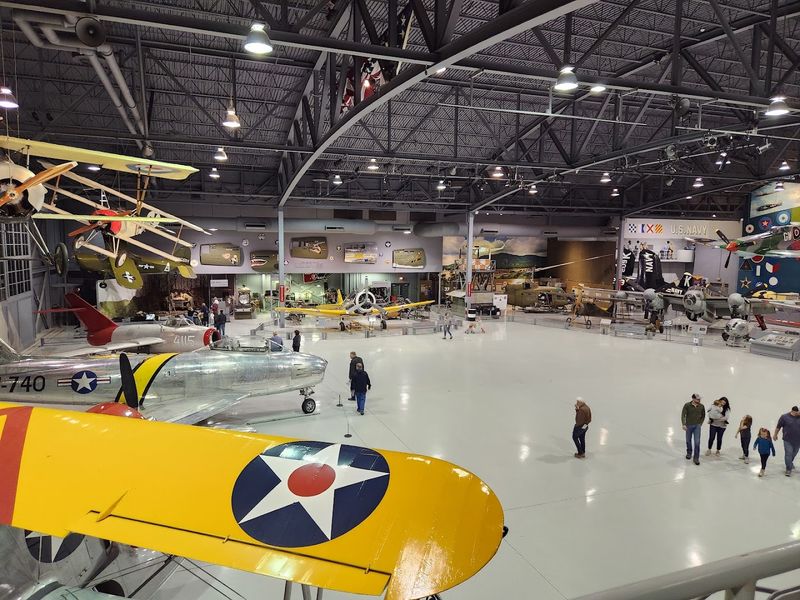
Military aviation from the Second World War receives dedicated space within the museum’s galleries. The Eagle Hangar showcases fighters, bombers, and support aircraft that played crucial roles during the conflict.
These warbirds represent American engineering and the courage of the men and women who flew them into dangerous skies.
Each aircraft carries stories that extend beyond technical specifications. The museum presents these machines as more than collections of metal and rivets, connecting them to the human experiences of combat, sacrifice, and triumph.
Informational displays provide historical context about specific missions, technological developments, and the pilots who depended on these aircraft for survival.
Visitors frequently cite the warbird section as a favorite part of their museum experience. The combination of impressive aircraft and thoughtful storytelling creates an emotional connection to history that resonates across generations.
Grandparents share memories with younger family members, while aviation enthusiasts appreciate the opportunity to study these legendary designs up close, examining details usually visible only in photographs or technical drawings.
Pioneer Airport Brings Aviation’s Golden Age Back To Life
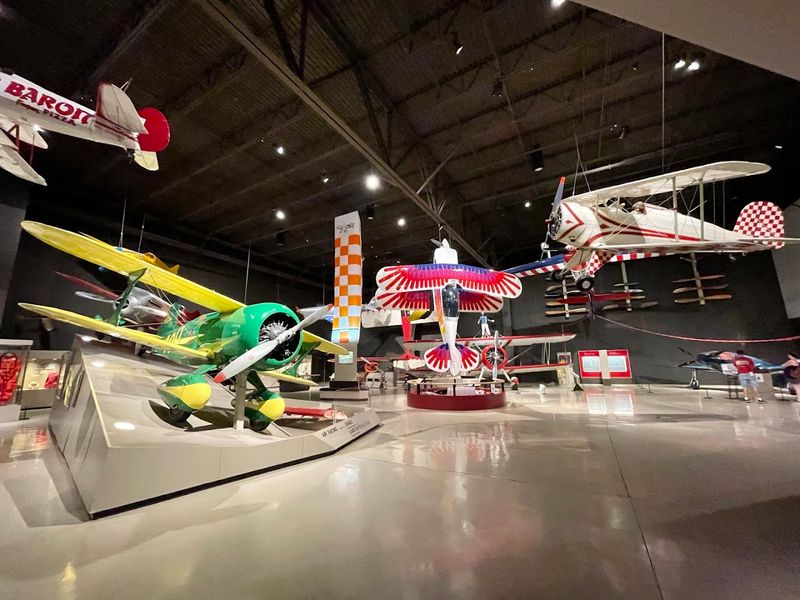
Step into Pioneer Airport and you enter a recreation of aviation’s formative decades. This special section of the museum transports visitors to the barnstorming era when flight was still new and every airplane represented adventure.
The atmosphere captures the spirit of early aviation through careful attention to period details and authentic aircraft from the golden age.
Aircraft from the 1920s and 1930s dominate this area, showcasing the rapid evolution of design during those crucial years. Biplanes with open cockpits sit alongside early enclosed aircraft, demonstrating how quickly aviation technology advanced.
The progression from fragile wood-and-fabric construction to more robust designs becomes clear through direct comparison.
The staging enhances the historical immersion beyond simply displaying old airplanes. Period-appropriate hangars, vintage signage, and contextual elements help visitors understand what early aviation looked like as a lived experience.
This approach transforms the Pioneer Airport section from a static display into something closer to time travel, offering glimpses of an era when pilots were celebrities and every flight pushed boundaries.
More Than 50 Vintage Planes Sit In Period-Style Hangars
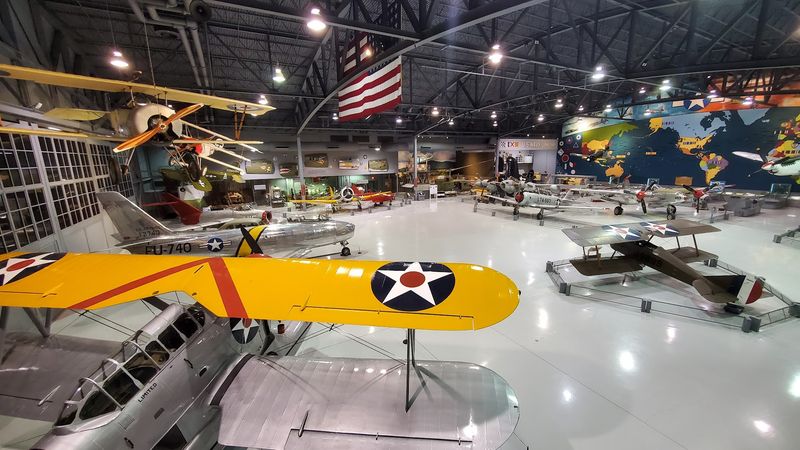
Authenticity drives the presentation throughout the museum’s vintage aircraft areas. More than 50 historic planes occupy hangars styled to match their respective eras, creating environments that feel transported from aviation’s past.
These spaces avoid the sterile feeling sometimes found in museums, instead offering settings that honor the original context of these remarkable machines.
The hangar arrangements allow visitors to imagine these aircraft in their working lives. Rather than isolating each plane in a separate display case, the museum groups them in ways that reflect actual aviation operations.
This approach provides better understanding of how airports functioned during different decades and how various aircraft types worked together.
Lighting and spatial design receive careful consideration throughout these areas. Natural light filters through large windows while supplemental lighting highlights specific aircraft details without creating harsh shadows.
The result allows photography enthusiasts to capture quality images while maintaining the atmospheric qualities that make these spaces special. Visitors find themselves lingering longer than planned, drawn into the stories these carefully arranged galleries tell about aviation’s remarkable journey.
KidVenture Gallery Makes The Museum Fun For Younger Visitors
Young visitors discover their own dedicated space within the museum at KidVenture Gallery. This interactive area transforms aviation concepts into hands-on experiences designed specifically for children.
Bright colors, engaging activities, and age-appropriate exhibits ensure that families with young children find the museum accessible and entertaining rather than overwhelming.
Flight simulators give kids chances to experience piloting from a safe environment. While some interactive exhibits occasionally need maintenance, the variety of activities ensures children stay engaged throughout their visit.
Hands-on displays teach basic principles of flight through play, making complex concepts understandable for developing minds.
Parents appreciate how KidVenture Gallery balances education with entertainment. Children absorb lessons about aviation history, physics, and engineering without feeling like they are sitting in a classroom.
The space allows families to explore together, with activities suitable for different age ranges ensuring that siblings can participate regardless of their developmental stages. Many families report that their children ask to return, having discovered genuine interest in aviation through these thoughtfully designed experiences.
The Tower Of Flight Gives Guests A Different View Of The Museum
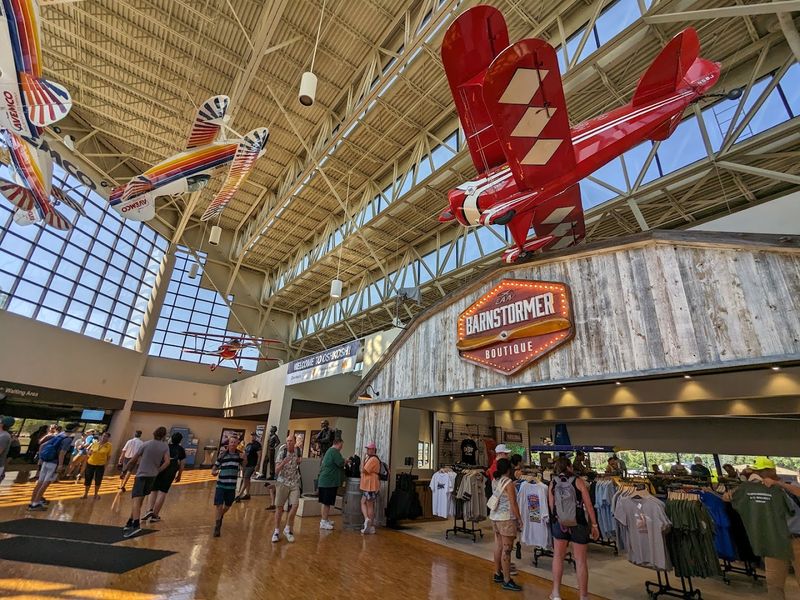
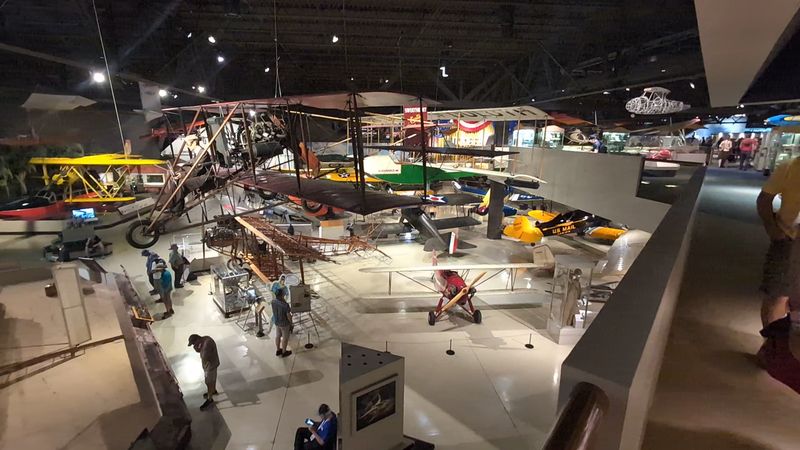
Architecture becomes part of the experience at the Tower of Flight, where vertical space creates unique viewing opportunities. This distinctive feature allows visitors to see aircraft from perspectives rarely available in traditional museums.
Looking down on suspended planes or viewing them at eye level from elevated walkways provides new appreciation for their design and construction.
The tower structure maximizes the museum’s available space while creating visual drama. Aircraft hang at various heights throughout this area, their positions carefully calculated to allow clear views without crowding.
Walking through different levels reveals new details about each plane, from top-surface markings to underbelly features typically hidden from ground-level observers.
Photography enthusiasts particularly value the Tower of Flight for its unusual angles and composition opportunities. The interplay of suspended aircraft, structural elements, and natural lighting creates scenes that capture aviation’s grace and power.
Visitors report spending considerable time in this section, discovering that their understanding of aircraft design deepens when viewing these machines from multiple elevations rather than a single fixed position on the ground.
Experimental Aircraft Are A Major Part Of The Museum’s Identity
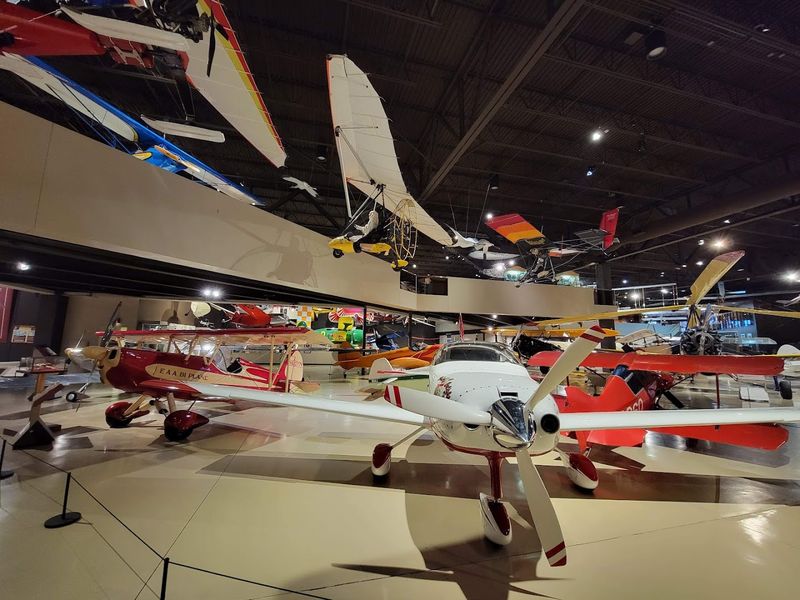
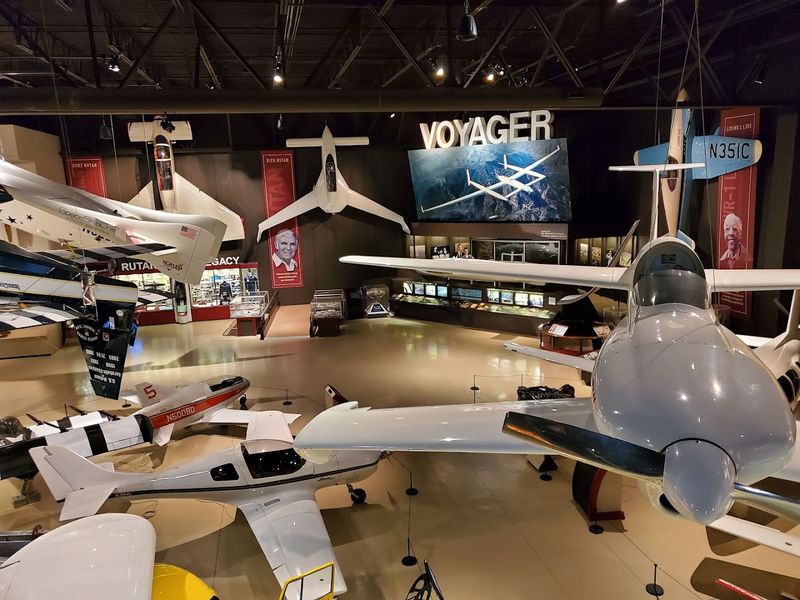
The Experimental Aircraft Association built its reputation on celebrating aviation innovation beyond mainstream manufacturers. This commitment shows throughout the museum’s collection, where experimental and homebuilt aircraft receive the same respect as famous production models.
These one-of-a-kind machines demonstrate what happens when creative minds apply engineering principles without corporate constraints or traditional design limitations.
Experimental aircraft often look radically different from conventional planes. Unusual wing configurations, innovative propulsion systems, and creative solutions to aerodynamic challenges fill the galleries.
Each represents someone’s vision of how flight could work differently, and many pioneered technologies that eventually influenced mainstream aviation.
The museum’s focus on experimental aviation sets it apart from other institutions. Rather than presenting flight history as a linear progression of commercial and military designs, this Wisconsin collection acknowledges the crucial role of independent builders and designers.
Visitors gain appreciation for the diversity of approaches to powered flight and the ongoing spirit of innovation that keeps aviation evolving beyond established formulas and accepted wisdom.
The Collection Covers Everything From Homebuilt Planes To Warbirds
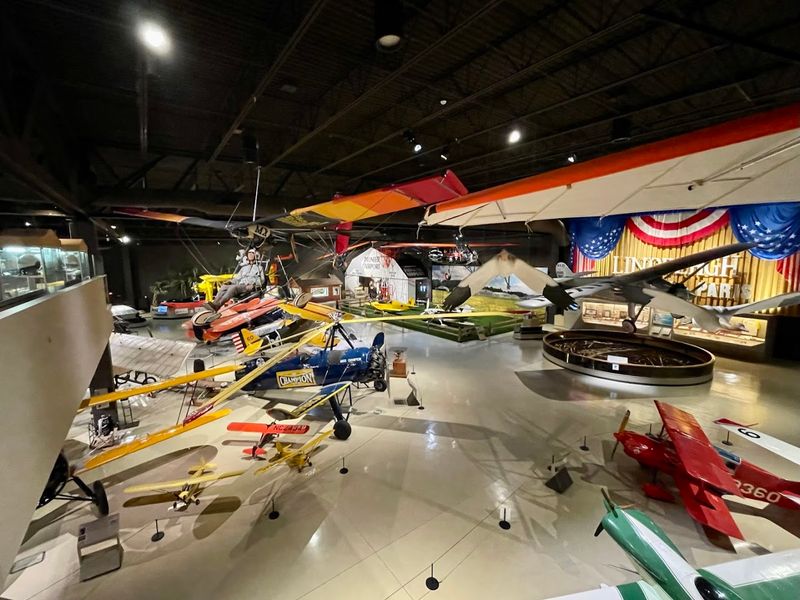
Comprehensiveness defines the museum’s approach to telling aviation’s story. From simple single-seat homebuilts constructed in garages to powerful military fighters that defended nations, the collection embraces every category of powered flight.
This inclusive philosophy ensures that visitors encounter the full spectrum of aviation achievement rather than a narrow slice focused on famous names or glamorous designs.
Homebuilt aircraft receive prominent placement alongside professionally manufactured planes. This democratic presentation acknowledges that important innovations often emerge from individual builders working outside established aviation companies.
The museum celebrates the tradition of amateur aviation that has contributed significantly to flight technology and safety improvements over decades.
Warbirds anchor the collection’s military aviation sections, representing conflicts from World War II forward. These combat aircraft stand as testament to the urgent innovation that warfare demands and the bravery of those who flew dangerous missions.
The breadth of coverage means that aviation enthusiasts with specific interests will find examples that speak to their passions, creating a museum experience that rewards both casual visitors and serious students of flight history.