
Visit This Tiny Town In Wisconsin To Uncover The Center Of The World
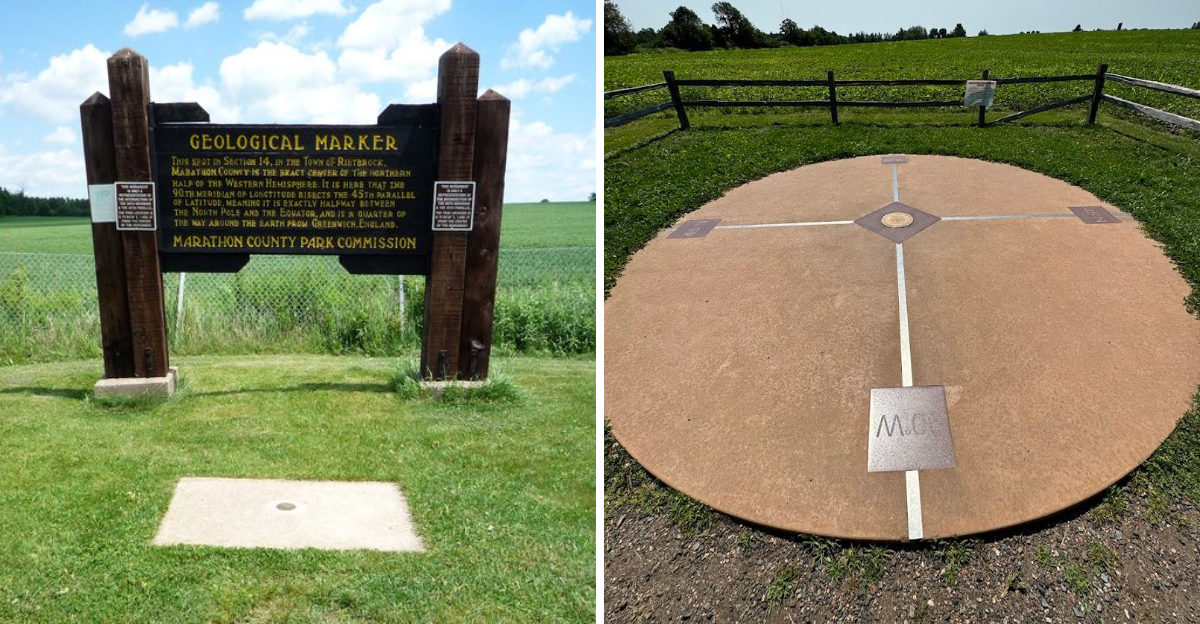
A quiet stretch of countryside in Wisconsin holds a claim that sounds almost impossible at first. Keep driving past open fields and you’ll arrive somewhere surprisingly precise, a spot where geography turns into something you can actually stand on.
It’s simple, a little unexpected, and far more interesting than it first appears. Not far from Poniatowski and within easy reach of Edgar, this tiny corner of the state draws in curious travellers looking for something different.
There’s no crowd, no big entrance, just a quiet marker with a story behind it. Stay for a moment and it starts to make sense why people go out of their way to find it.
The Exact Midpoint Of The Northern Half Of The Western Hemisphere
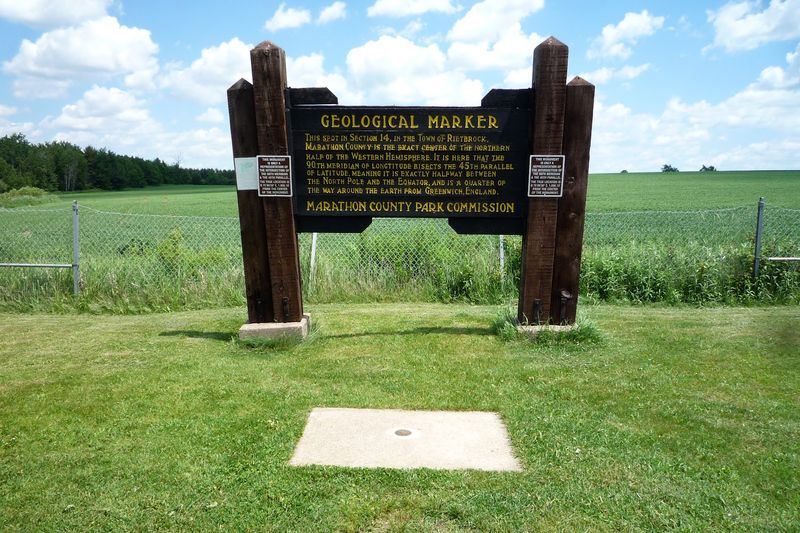
Geography has a way of creating landmarks where none would naturally exist. The spot at 45 degrees north latitude and 90 degrees west longitude holds significance purely because of its mathematical precision.
This intersection divides the globe into quadrants, and the northern half of the Western Hemisphere finds its center here.
Standing at this location means you are equidistant from the North Pole and the Equator, as well as halfway between the Prime Meridian and the International Date Line. The calculation is simple, yet the reality of it feels almost abstract.
Most people pass through life without ever considering such coordinates, but here, the numbers take physical form.
The marker itself sits along Meridian Road near the small community that straddles the boundary between Marathon and Clark counties. Visitors often arrive expecting something grand, only to find a modest monument in a rural setting.
Yet that simplicity is part of the appeal, offering a moment to appreciate how humans impose order on an otherwise indifferent landscape.
What The 45 × 90 Marker Actually Represents
Numbers alone do not tell the full story. The 45 × 90 designation refers to the latitude and longitude coordinates that define this specific point on the planet.
Latitude measures distance north or south of the Equator, while longitude tracks position east or west from the Prime Meridian.
At 45 degrees north, you stand halfway between the Equator and the North Pole. At 90 degrees west, you are a quarter of the way around the globe from the Prime Meridian.
Together, these coordinates create a rare type of intersection, with only a handful of similar points located on accessible land.
The marker commemorates this mathematical meeting point with a physical monument. Located near Poniatowski, not far from Edgar, it offers a tangible example of how abstract geographic concepts exist in the real world, giving visitors a chance to experience them firsthand.
One Of The Few Places On Earth You Can Stand At Such A Precise Coordinate
Precision in geography is rare outside of laboratories and observatories. The 45 × 90 point in Wisconsin is one of only four such locations worldwide where whole-number latitude and longitude lines intersect at these specific intervals.
The other three points lie in the ocean, in remote wilderness, or in inaccessible terrain, making this Wisconsin marker one of the most reachable.
Accessibility matters when it comes to geographical curiosities. Unlike the South Pole or the deepest ocean trenches, this coordinate sits along a rural road where anyone with a vehicle can stop and visit.
The lack of barriers or admission fees adds to its charm, transforming what could be an academic footnote into a tangible experience.
Visitors often arrive with a sense of pilgrimage, having tracked the coordinates on maps or GPS devices. The act of standing at such a precise location carries a quiet thrill, a recognition that you occupy a space defined by mathematical certainty rather than historical accident or natural beauty.
How Surveyors Identified And Marked This Unique Location
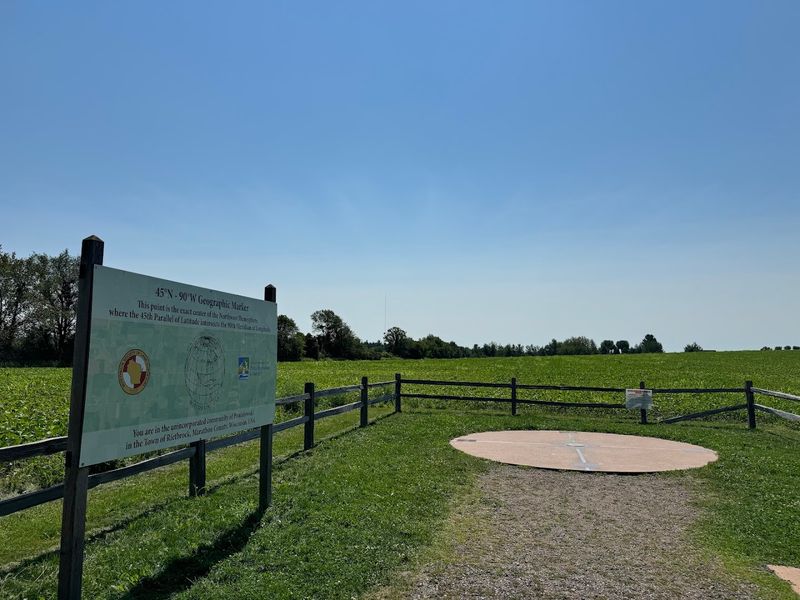
Surveying in the 19th and early 20th centuries required patience, precision, and considerable physical effort. Determining exact coordinates involved astronomical observations, careful measurements, and repeated calculations to account for the curvature of the Earth.
Surveyors working in Wisconsin would have used tools like theodolites and chains to establish reference points across the landscape.
The 45th parallel and 90th meridian were identified through these painstaking methods long before satellite technology made such work routine. Once the intersection was confirmed, the decision to mark it came later, driven by local interest and a recognition of its unique status.
The process involved not just mathematical accuracy but also a desire to commemorate something invisible yet significant.
Modern GPS technology has refined the exact location to within meters, but the original survey work laid the foundation. The marker stands as a tribute to both the precision of those early surveyors and the enduring human fascination with mapping and measurement.
It represents a blend of science, history, and geography made permanent in stone and metal.
The Monument That Marks The Spot Today
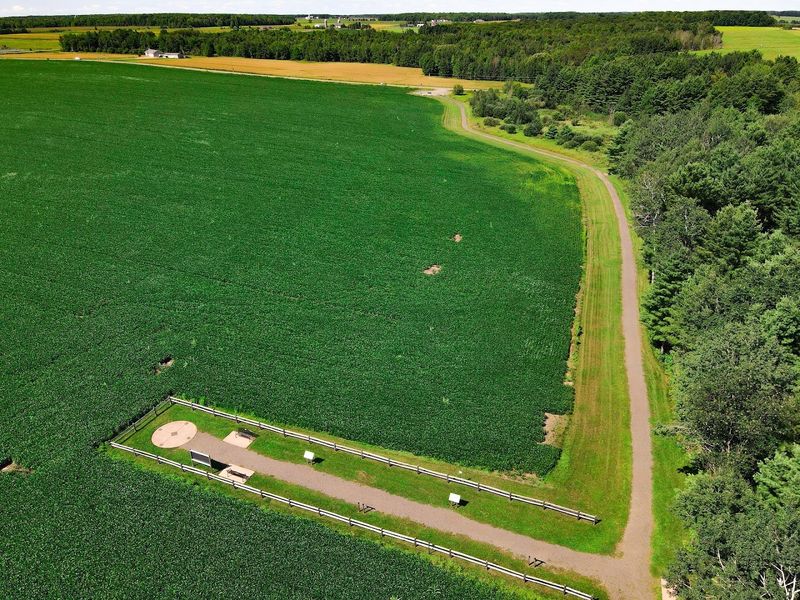
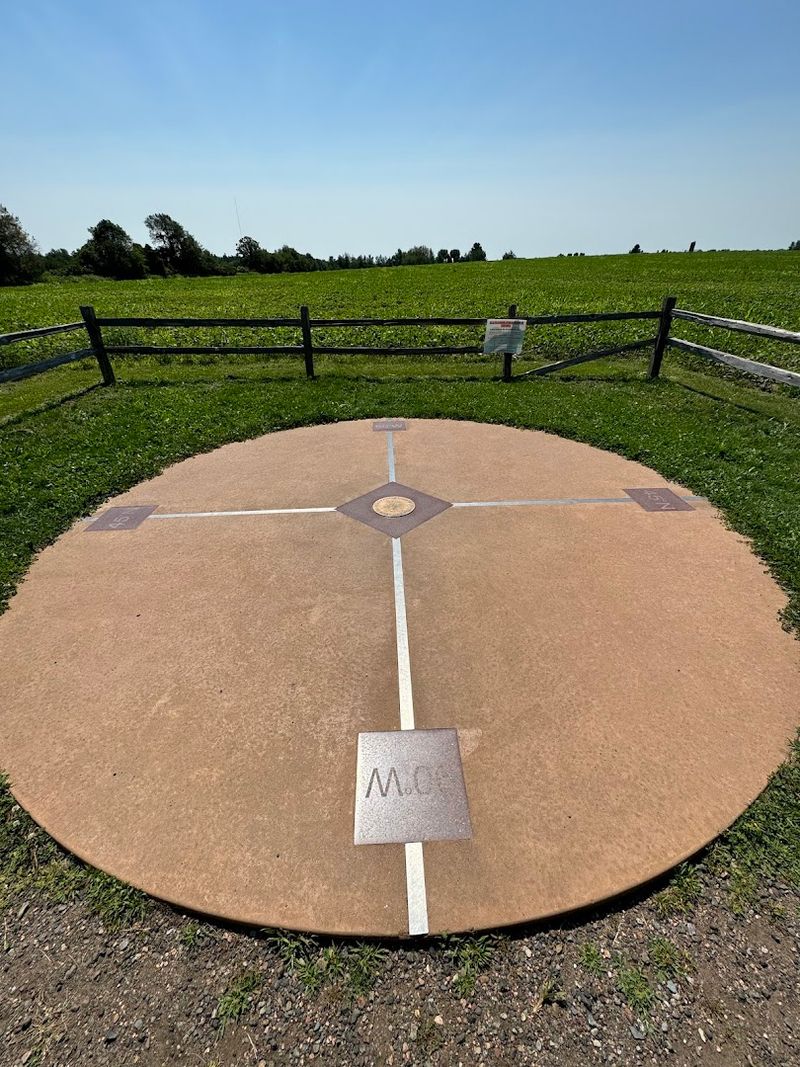
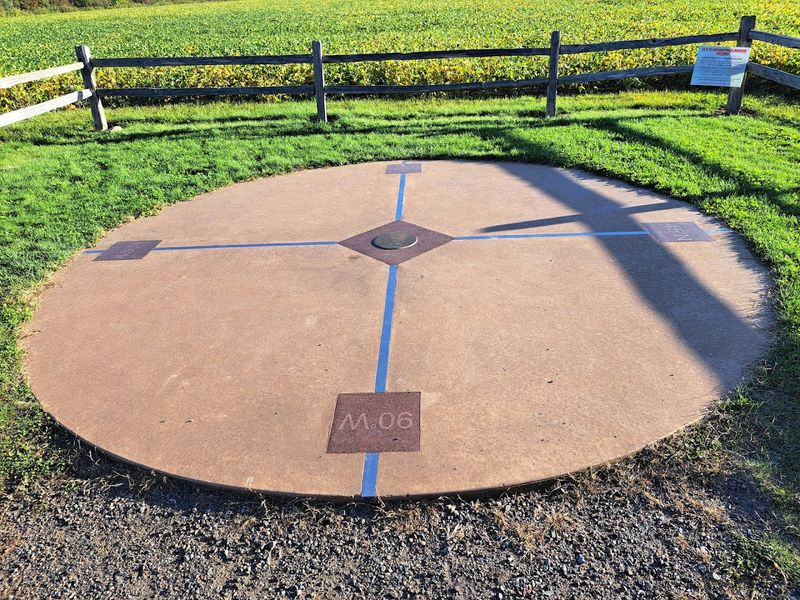
Monuments serve many purposes, from honoring heroes to marking boundaries, and this one celebrates a point of pure geography. The structure at the 45 × 90 intersection consists of a sturdy base topped with plaques and directional markers.
It is not ornate, but it is purposeful, designed to withstand weather and time while providing information to visitors.
The monument includes explanatory text that helps visitors understand what they are looking at. Many people arrive unsure of what the coordinates mean, and the plaques offer clarity.
Directional indicators point toward the Equator, the North Pole, and other global reference points, grounding the abstract concept in physical reality.
Surrounding the marker is open space, allowing for photographs and contemplation. The setting is intentionally uncluttered, reflecting the straightforward nature of the site itself.
Located near Edgar, Wisconsin, along Meridian Road, the monument is easy to find and simple to appreciate, requiring no special knowledge beyond a basic curiosity about how the world is measured and understood.
Why This Location Is Often Called The Center Of The World
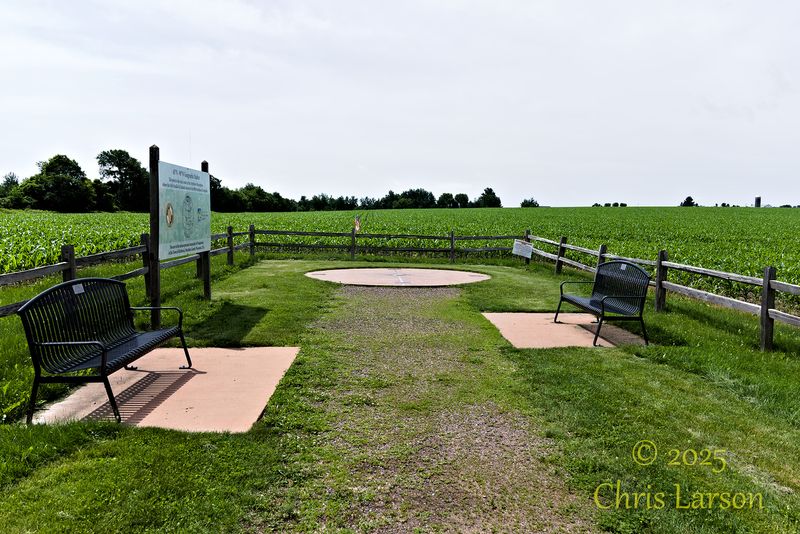
Calling any place the center of the world is inherently subjective, yet this Wisconsin location has a legitimate mathematical claim. The term arises from its position at the exact midpoint of the northern half of the Western Hemisphere.
It is not the center of the entire planet, but within its quadrant, it holds a unique status.
The nickname has been embraced by locals and visitors alike, adding a layer of whimsy to what is otherwise a dry geographical fact. Marketing materials and road signs sometimes use the phrase, drawing travelers who enjoy seeking out unusual landmarks.
The label works because it contains just enough truth to be defensible while remaining playful enough to spark interest.
Understanding the distinction between hyperbole and accuracy is part of the experience. This is not the gravitational center of Earth, nor is it equidistant from all points on the globe.
But as the midpoint of its hemisphere, it earns the title in a way that feels both clever and correct, inviting visitors to appreciate precision without taking the claim too seriously.
A Surprisingly Popular Stop For Road Trips And Curious Travellers
Road trips thrive on the unexpected, and this marker has become a favorite among those who seek out quirky destinations. The site attracts geography enthusiasts, families on vacation, and travelers looking for a break from the highway.
Its popularity stems not from grandeur but from novelty and accessibility.
Social media has amplified interest in recent years, with visitors posting photos and sharing their experiences online. The marker appears in travel blogs, roadside attraction guides, and lists of unusual places to visit in the Midwest.
What was once a local curiosity has become a minor pilgrimage site for those who appreciate the offbeat.
The flow of visitors remains modest, preserving the quiet character of the location. There are no crowds, no ticket booths, and no gift shops.
People arrive, take their photos, read the plaques, and move on. The simplicity of the experience is precisely what makes it appealing, offering a moment of reflection without the trappings of commercial tourism that often accompany more famous landmarks.
What You Can Expect When You Visit The Site
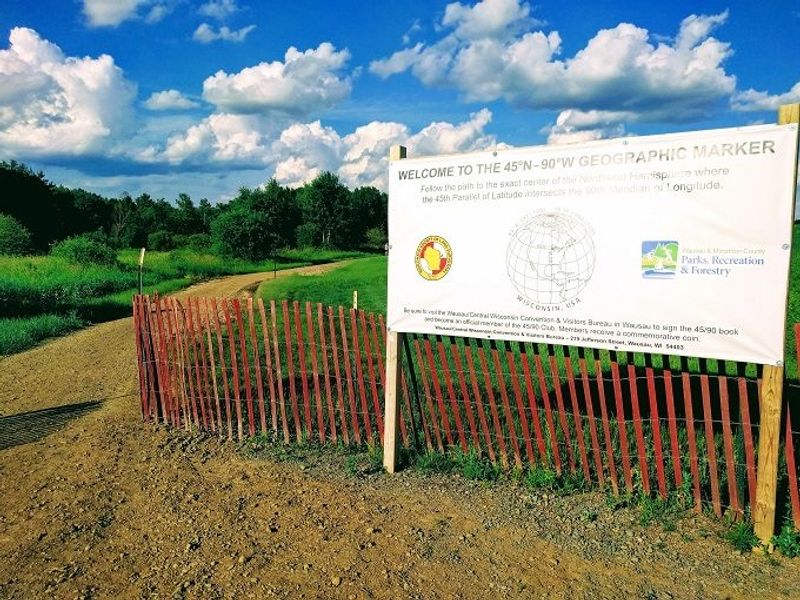
Expectations shape every travel experience, and managing them is key to enjoying this particular stop. The site is simple, consisting of the marker itself and a small area for parking.
There are no facilities, no staff, and no structured activities beyond reading the information provided and taking photographs.
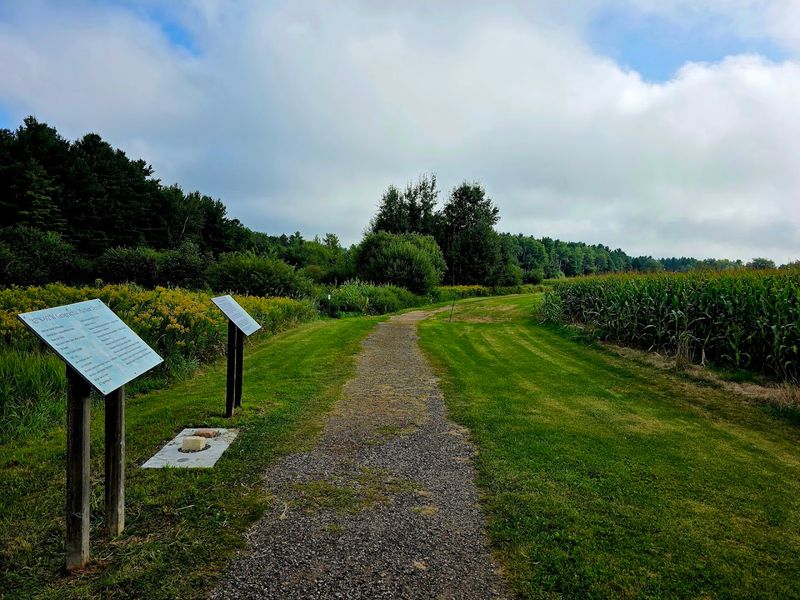
The surrounding landscape is rural and agricultural, with fields stretching in all directions. The setting is peaceful rather than dramatic, offering a sense of openness that some find meditative.
Weather can vary considerably depending on the season, so visitors should dress accordingly and be prepared for wind, sun, or cold.
Most people spend between ten and thirty minutes at the site, enough time to absorb the information and capture a few images. The experience is self-guided, allowing visitors to engage with the marker at their own pace.
Located at 234801 Meridian Road near Edgar, Wisconsin, the site is straightforward to reach and requires no special permissions or fees, making it an easy addition to any itinerary through the region.
A Quiet Wisconsin Town That’s Home To A Global Curiosity
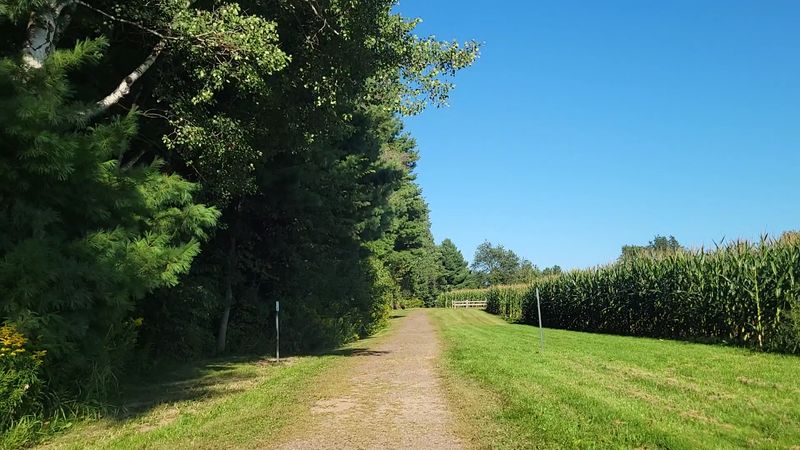
Small towns often hold unexpected points of interest, and the rural communities surrounding the 45 × 90 Geographical Marker are no exception. Located near the small community of Poniatowski and not far from the village of Edgar, the area is defined by farmland, open space, and a slower pace shaped by the seasons.
The marker brings occasional attention to the region, though it has not significantly changed local life. Visitors tend to arrive briefly to take photos and experience the novelty before continuing on their way.
For residents, it remains a quiet curiosity rather than a focal point of daily life.
Nearby towns offer basic services such as fuel and simple dining options, but the area remains largely agricultural and residential. The appeal lies in its simplicity, making the marker a worthwhile stop for those who enjoy peaceful surroundings and lesser-known places.
How To Find The Marker Without Getting Lost
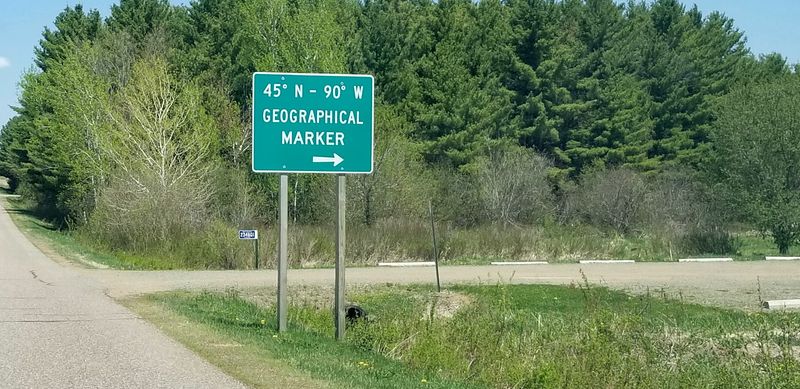
Navigation to remote sites can be challenging, but modern technology has made the process far more straightforward. The 45 × 90 Geographical Marker is best located by entering “45 × 90 Geographical Marker” or nearby N Latitude Lane in Poniatowski, Wisconsin into a GPS device or smartphone, which will provide reliable directions.
The coordinates themselves can also be used for precise navigation.
The marker sits in a rural part of Marathon County, and while road signage is limited, digital navigation typically guides visitors directly to the site without much difficulty. Access roads are paved and generally well-maintained, making the location reachable by standard vehicles throughout most of the year, though winter conditions may require extra care.
Once nearby, the marker is visible from the road and is usually accompanied by a small parking area. The surroundings are quiet and sparsely developed, so there are few landmarks beyond the monument itself.
It’s still a good idea to have a fully charged phone or GPS device to ensure a smooth trip to and from this unique location.