
Wisconsin Hikes You Shouldn’t Miss This Spring With Big Payoffs For The Shortest Miles
Spring in Wisconsin hits different when you’re standing on a bluff with wildflowers at your feet and a sweeping river view stretching out in front of you. The best part?
You don’t need to log ten miles to earn that kind of reward. Some of the most jaw-dropping scenery in the state is just a short walk away, making these trails perfect for families, beginners, and anyone who wants maximum beauty with minimum effort.
Lace up your boots, grab a water bottle, and get ready to fall in love with Wisconsin all over again.
1. Balanced Rock Trail (Devil’s Lake State Park)
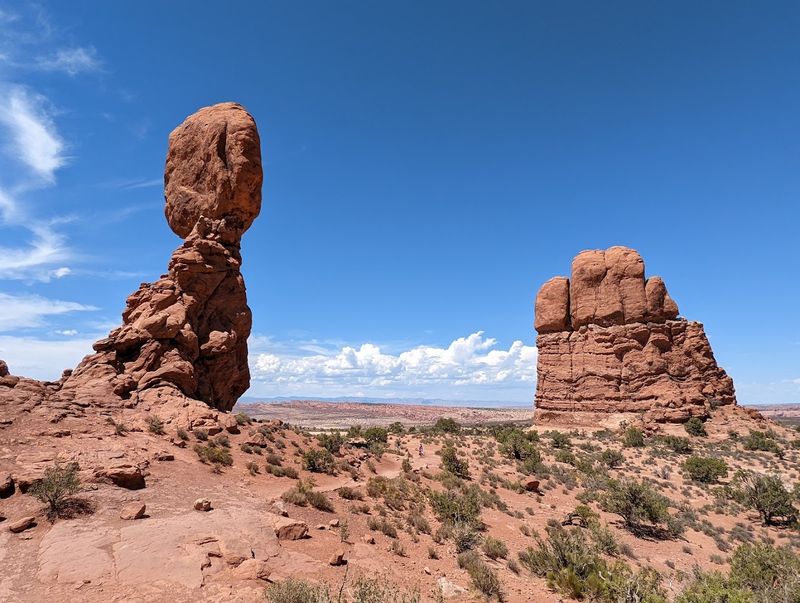
Perched like nature’s own sculpture, the Balanced Rock at Devil’s Lake is one of those sights that genuinely stops you in your tracks. The trail itself is only about 0.6 miles round trip, but every single step earns you something special.
You’ll be scrambling over quartzite boulders, breathing in that crisp spring air, and grinning the whole way up.
The rock formation at the top looks almost impossible, like a giant stone egg balanced on a narrow pedestal. Geologists say glacial activity shaped this landscape over thousands of years, and standing there, you can almost feel the weight of all that history.
Spring is truly the best season to visit because the wildflowers bloom along the rocky slopes and the crowds haven’t fully arrived yet.
Kids absolutely love this trail because it feels like a real adventure without being overwhelming. The trailhead is easy to find near the south shore parking area.
Pack a snack, bring your camera, and plan to linger at the top longer than you expect because the views of Devil’s Lake below are completely worth it.
2. East Bluff Trail To Devil’s Doorway (Devil’s Lake State Park)
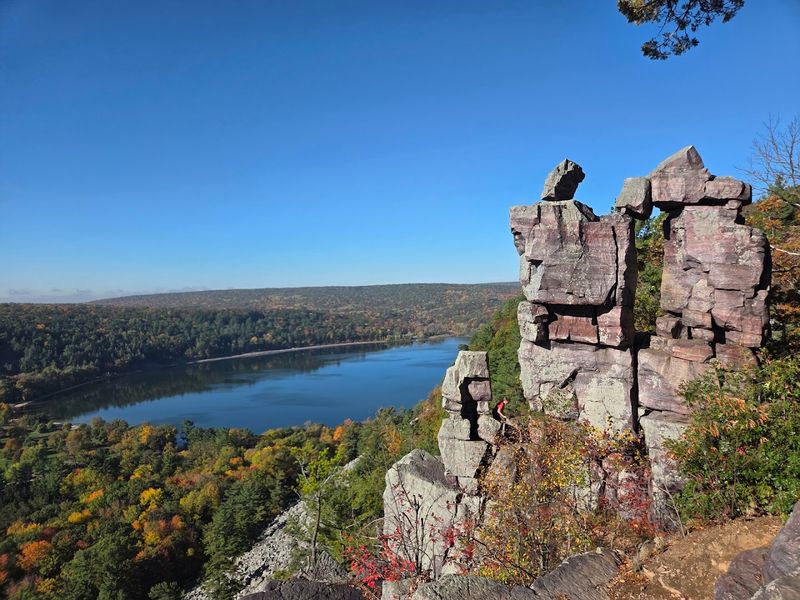
Standing inside Devil’s Doorway feels like peering through a natural window into one of Wisconsin’s most breathtaking landscapes. The East Bluff Trail to this iconic rock arch is roughly 2 miles round trip, and the elevation gain is real but totally manageable.
You earn every single view up here, and trust me, those views pay you back generously.
The trail winds along the top of the East Bluff, offering constant glimpses of Devil’s Lake shimmering far below. In spring, the surrounding forest bursts with fresh green leaves and trillium wildflowers dot the forest floor like tiny white stars.
The quartzite bluffs themselves glow with warm orange and pink hues when the morning light hits them just right.
Devil’s Doorway is the crown jewel of this route, a natural arch framing the valley below in a way that photographers dream about. Fun fact: these quartzite bluffs are among the oldest exposed rock formations in North America, dating back roughly 1.6 billion years.
Arrive early on weekends to snag parking and enjoy the trail before the crowds roll in. This one is absolutely worth setting your alarm for.
3. Brady’s Bluff Trail (Perrot State Park)
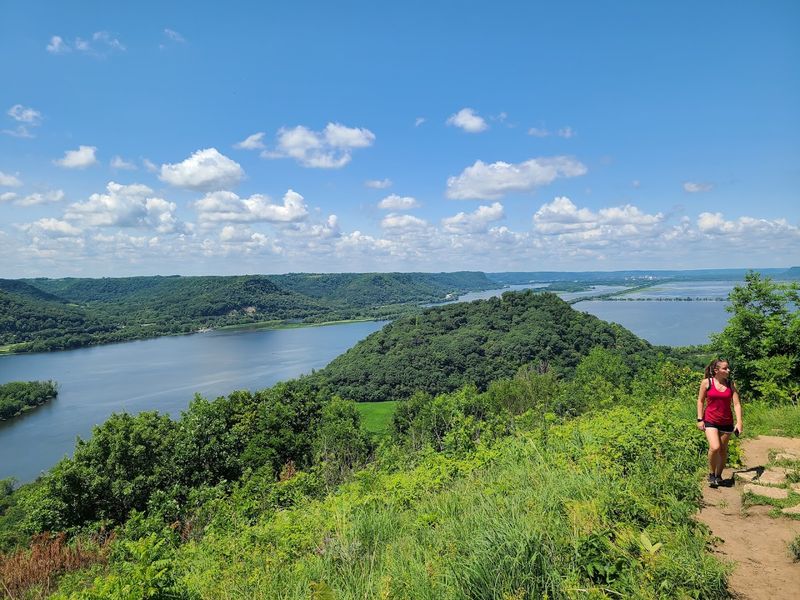
Brady’s Bluff stands 520 feet above the Mississippi River floodplain, and the view from the top is the kind that makes you forget whatever was stressing you out that morning. The trail to reach this summit is only about 2 miles round trip, making it one of the best bang-for-your-buck hikes in all of western Wisconsin.
The climb is steady and satisfying rather than brutal.
From the summit, you can see the confluence of the Mississippi and Trempealeau rivers spreading out below in a gorgeous mosaic of water, wetlands, and forest. Spring migration turns this spot into a birdwatcher’s paradise, with eagles, herons, and dozens of songbirds passing through.
Perrot State Park itself is named after French explorer Nicolas Perrot, who established a trading post near here in 1685, giving this bluff a rich human history layered on top of its natural beauty.
The trail starts near the park office and is well-marked throughout. Footing can be a bit rocky near the top, so wear shoes with good grip.
Bring binoculars for the bird watching and a wide-angle lens if you’re into photography, because the panoramic views from Brady’s Bluff genuinely rival anything you’d find in a national park.
4. Ice Age Trail Western Terminus (Interstate State Park)
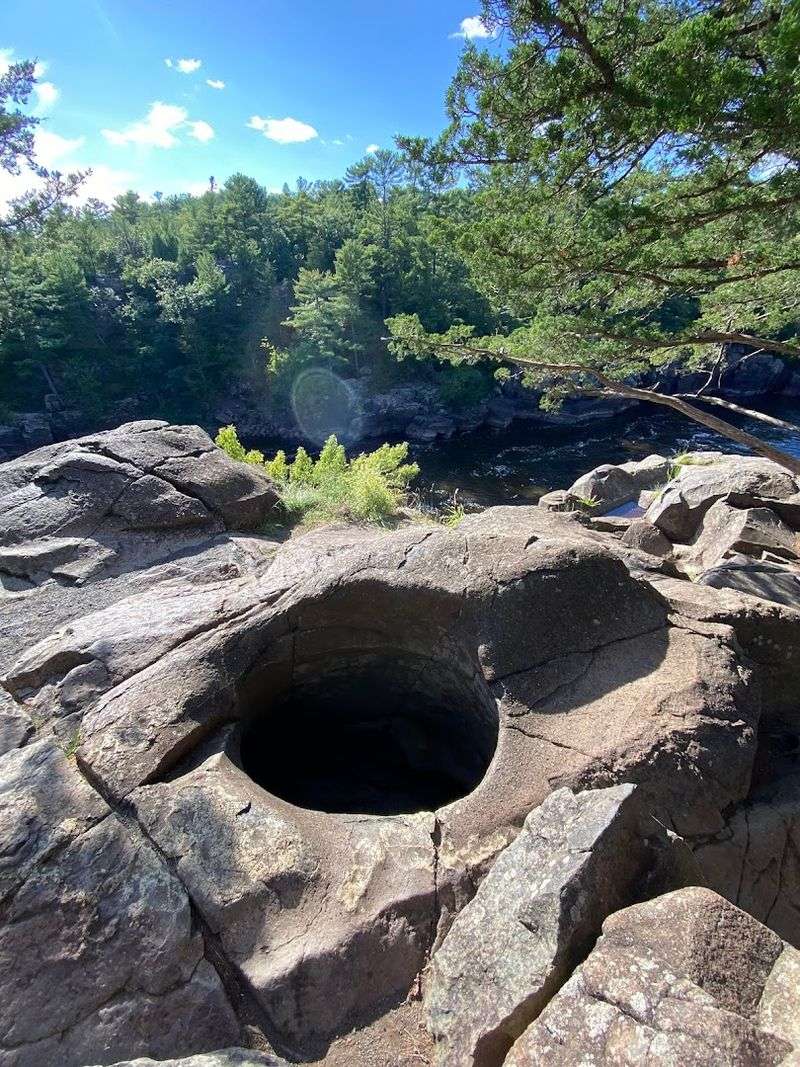
Starting a legendary 1,200-mile trail sounds intimidating, but visiting the western terminus of the Ice Age Trail at Interstate State Park is actually a short and fascinating walk that most people can handle easily. The highlight here isn’t the mileage but the geology, specifically the remarkable glacial potholes carved into the rocky riverbank by swirling meltwater thousands of years ago.
Some of these potholes are among the deepest in the world.
The Pothole Trail near the terminus winds through a dramatic landscape of ancient rock formations, river views, and spring wildflowers. The St. Croix River runs alongside this section of the park, and in spring the water runs high and fast, adding a wild energy to the whole experience.
The park straddles the Wisconsin-Minnesota border, so you’re literally hiking at the edge of two states.
The Ice Age Trail was designated a National Scenic Trail in 1980 and celebrates the glacial history that shaped Wisconsin’s landscape. Interpretive signs along the route explain what happened here during the last ice age in clear, interesting language that even kids find engaging.
The trailhead is easy to access from the main park entrance near St. Croix Falls, and the whole loop takes under two hours at a relaxed pace.
5. Doughboy Trail (Copper Falls State Park)
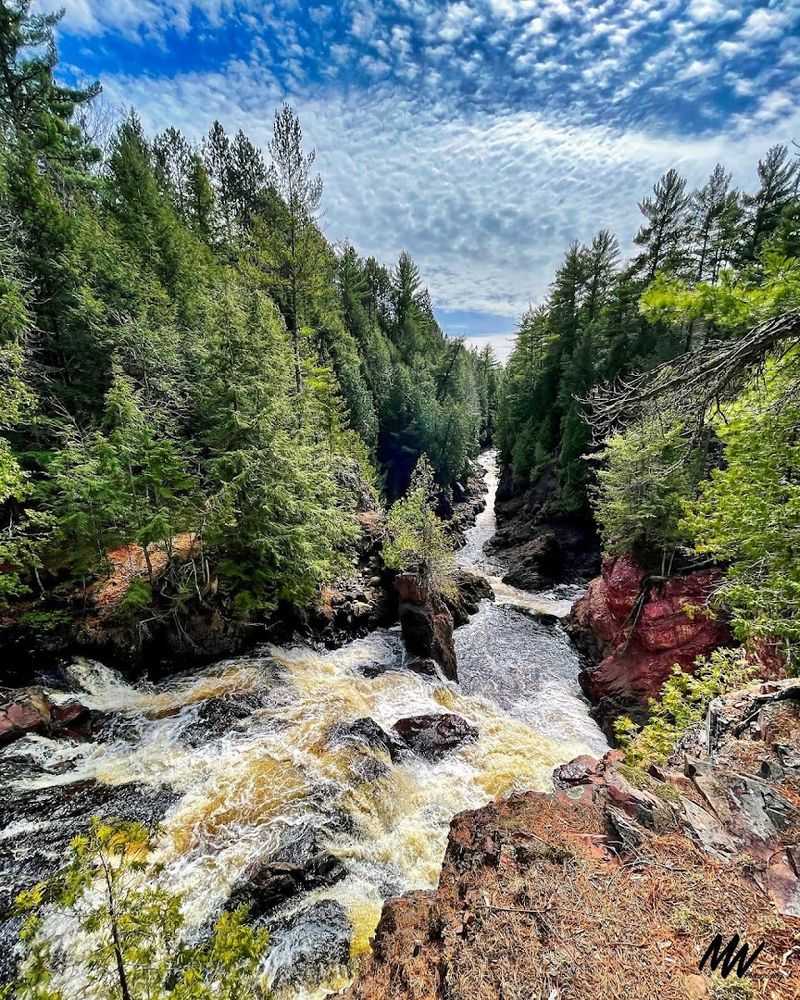
Copper Falls State Park holds some of the most dramatic waterfalls in Wisconsin, and the Doughboy Trail puts you right in the middle of all that roaring, splashing glory. The loop is only about 2.4 miles long, but it packs in multiple waterfalls, deep river gorges, and ancient lava rock formations that look like they belong in a fantasy novel.
Spring snowmelt sends the Bad River and Tyler Forks River thundering through the gorge at full power.
Copper Falls itself drops about 30 feet over dark basalt ledges that were formed by volcanic activity roughly 1.1 billion years ago. The combination of copper-stained water, black rock, and bright green spring foliage creates a color palette that honestly looks unreal in photographs.
Wooden bridges and overlook platforms give you safe, close-up views of the falls without any sketchy scrambling required.
The trail is well-maintained and clearly marked, making it approachable for families and casual hikers. Start at the main parking area near the park office and follow the signs toward the gorge overlooks.
Mornings are magical here when the mist from the falls catches the early light. Honestly, the Doughboy Trail might be the most visually rewarding short hike in the entire state of Wisconsin.
6. Eagle Trail (Peninsula State Park)
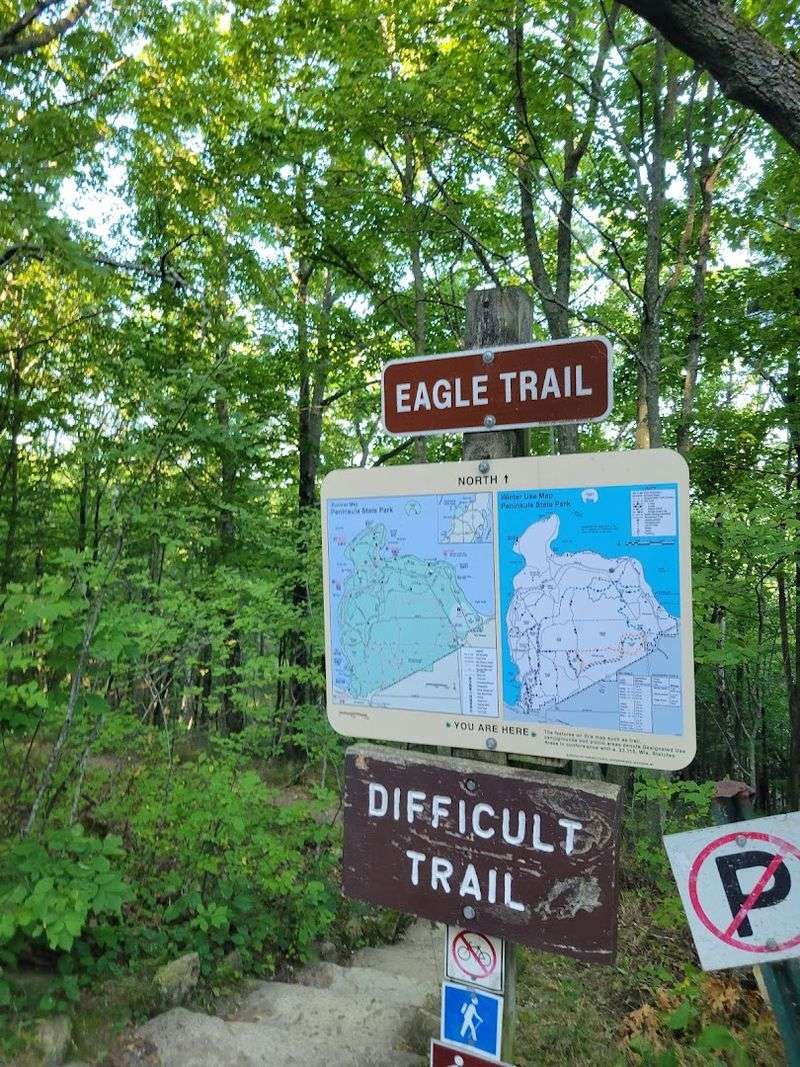
Door County gets all the buzz for its cherry blossoms and lighthouses, but Eagle Trail offers something most tourists completely overlook: a rugged, rocky bluff hike with sweeping views of Green Bay that feel genuinely wild and remote. The trail runs about 2 miles and involves some real scrambling over limestone outcroppings, which makes it feel like an actual adventure rather than a Sunday stroll.
Spring is the sweet spot before summer crowds take over the park.
The Eagle Bluff overlook sits about 150 feet above Green Bay and delivers a panoramic view of the water, the shoreline, and the green patchwork of forest below. On a clear spring day, you can see for miles across the bay, and the combination of blooming wildflowers and blue water is genuinely stunning.
Peninsula State Park is one of Wisconsin’s oldest and most visited state parks, established in 1909, but Eagle Trail still manages to feel like a hidden gem.
The trailhead is accessible from several points within the park, with the Eagle Bluff area being the most popular starting point. Wear sturdy footwear because the limestone can be slippery when wet.
Bring a light jacket since the bluff tops can be breezy even on warm spring days. You will not regret making this one a priority.
7. Willow Falls Trail (Willow River State Park)
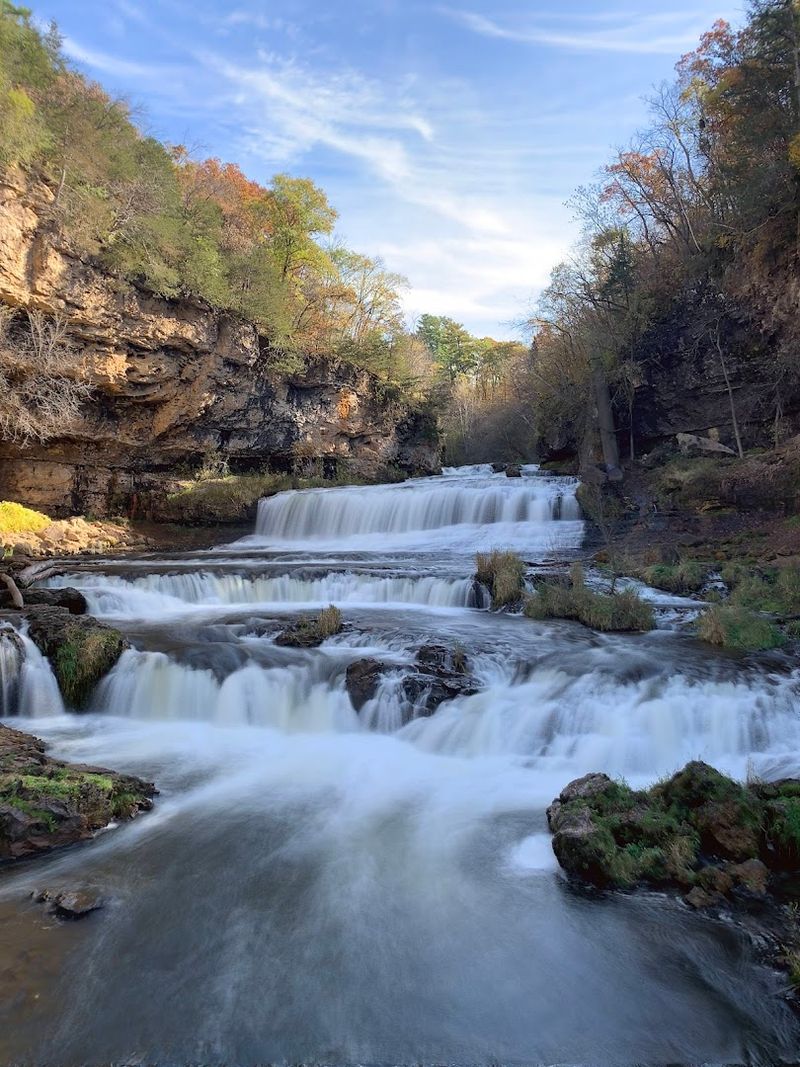
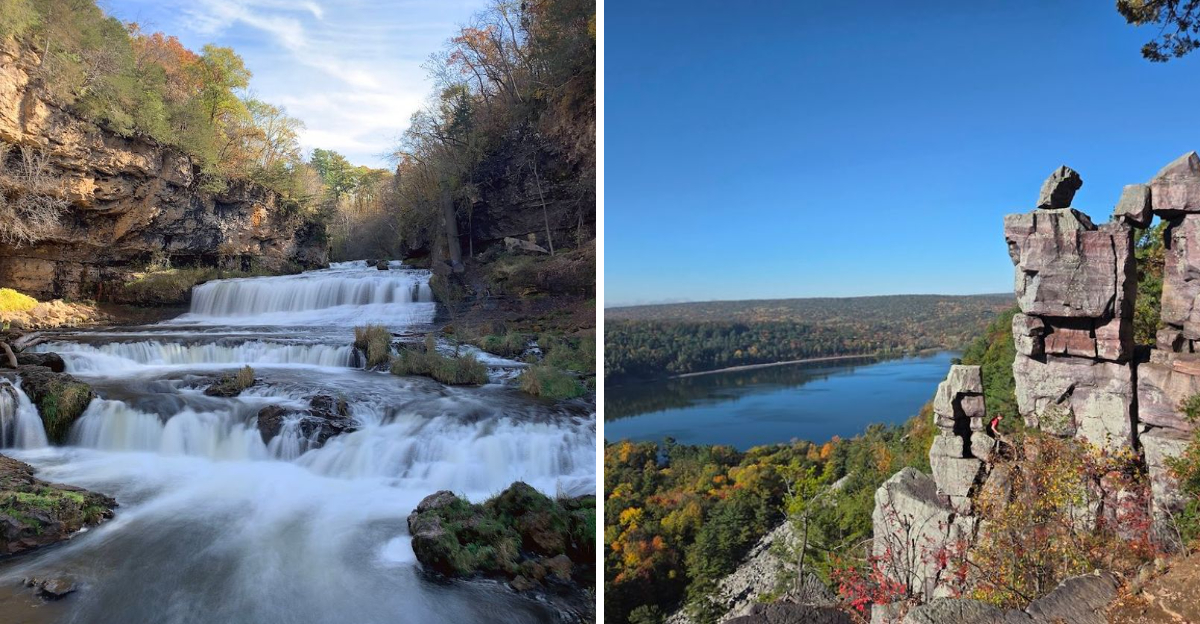
Standing about 40 feet tall and framed by a narrow rocky gorge, it’s one of the most photogenic spots in western Wisconsin. Willow Falls is the kind of waterfall that makes you stop mid-sentence and just stare. The trail to reach it is only about 1 mile round trip from the main parking area, which means even your least adventurous friends will agree to come along.
The Willow River cuts through a dramatic gorge here, and the spring water levels make the falls absolutely thunderous in April and May. The surrounding forest fills in quickly with fresh spring green, and the contrast between the white rushing water and the dark rocky walls of the gorge is genuinely breathtaking.
A well-built viewing platform gets you close enough to feel the mist on your face.
Willow River State Park sits just east of Hudson, Wisconsin, making it a perfect quick escape from the Twin Cities metro area. The park also features a series of small dams and ponds that attract waterfowl in spring, so bring binoculars if you enjoy bird watching.
Trail conditions are generally excellent and the path is wide enough for side-by-side walking. This is one of those hikes that surprises first-timers every single time.
8. Mount Pisgah Hemlock Trail (Wildcat Mountain State Park)
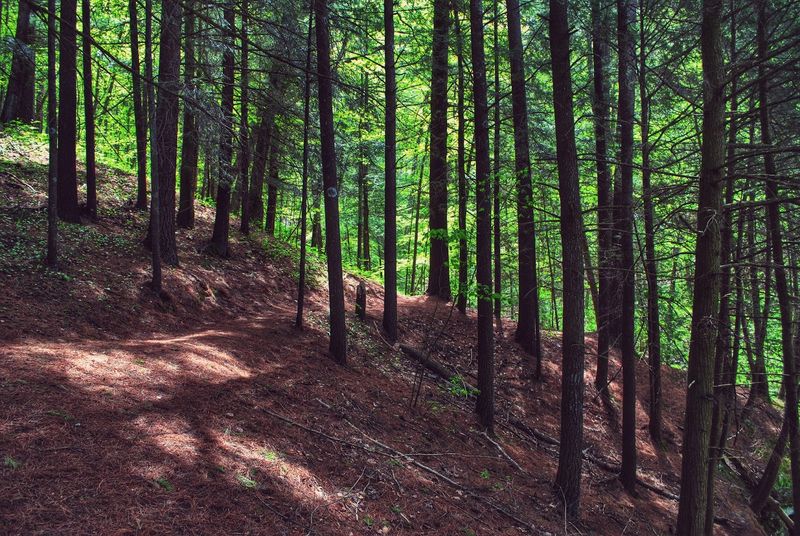
Ancient eastern hemlock trees tower overhead, their dark evergreen canopy filtering the spring light into something almost cathedral-like. The loop runs about 2 miles and climbs to a ridge overlooking the Kickapoo River valley, one of the most scenic river valleys in the entire Midwest.
The hemlocks here are genuinely old growth, and walking among them gives you a real sense of what Wisconsin’s forests looked like before widespread logging changed the landscape. Spring brings a carpet of wildflowers to the forest floor, including hepatica, bloodroot, and wild ginger that thrive in the cool shade beneath those massive trees.
The ridge overlook at the top rewards the climb with a wide view of the winding Kickapoo River below.
Wildcat Mountain State Park is a gem of the Driftless Area, a region of Wisconsin that was never flattened by glaciers and retained its dramatic ridges and valleys. The trailhead is located near the main park office outside Ontario, Wisconsin.
Fall gets the most attention here, but honestly, spring’s fresh green palette and wildflower show make it equally magical. Pack a picnic and plan to spend a full morning exploring this remarkable trail.
9. Sugar Maple Trail (Wyalusing State Park)
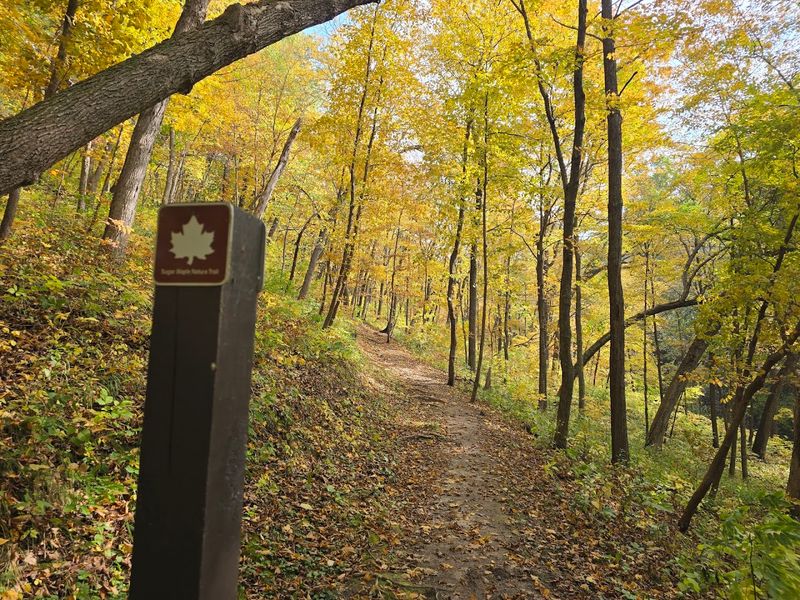
Wyalusing State Park sits at the confluence of the Wisconsin and Mississippi rivers, and the Sugar Maple Trail gives you front-row seats to one of the most historically and scenically significant spots in the entire state. The loop is roughly 2.5 miles and winds through mature sugar maple forest before delivering you to blufftop overlooks with views that stretch for miles in every direction.
Spring turns the hillsides a vivid, electric green that almost looks painted.
The park has incredible human history layered into its landscape. Native American effigy mounds dating back over 1,000 years are preserved along the blufftops, and interpretive signs help you understand their cultural significance.
French explorer Marquette and Joliet passed near this confluence in 1673 on their famous voyage of exploration, making this one of the most historically layered landscapes in Wisconsin.
Spring migration turns the park into a birdwatcher’s dream, with warblers, orioles, and raptors passing through in impressive numbers. The Sugar Maple Trail is well-marked and moderate in difficulty, with some elevation change near the bluff overlooks.
The main trailhead is near the park office outside Bagley, Wisconsin. Arrive early on spring weekends to find parking and enjoy the trail at its most peaceful, misty morning best.
10. Wehr Nature Center Loop (Whitnall Park)
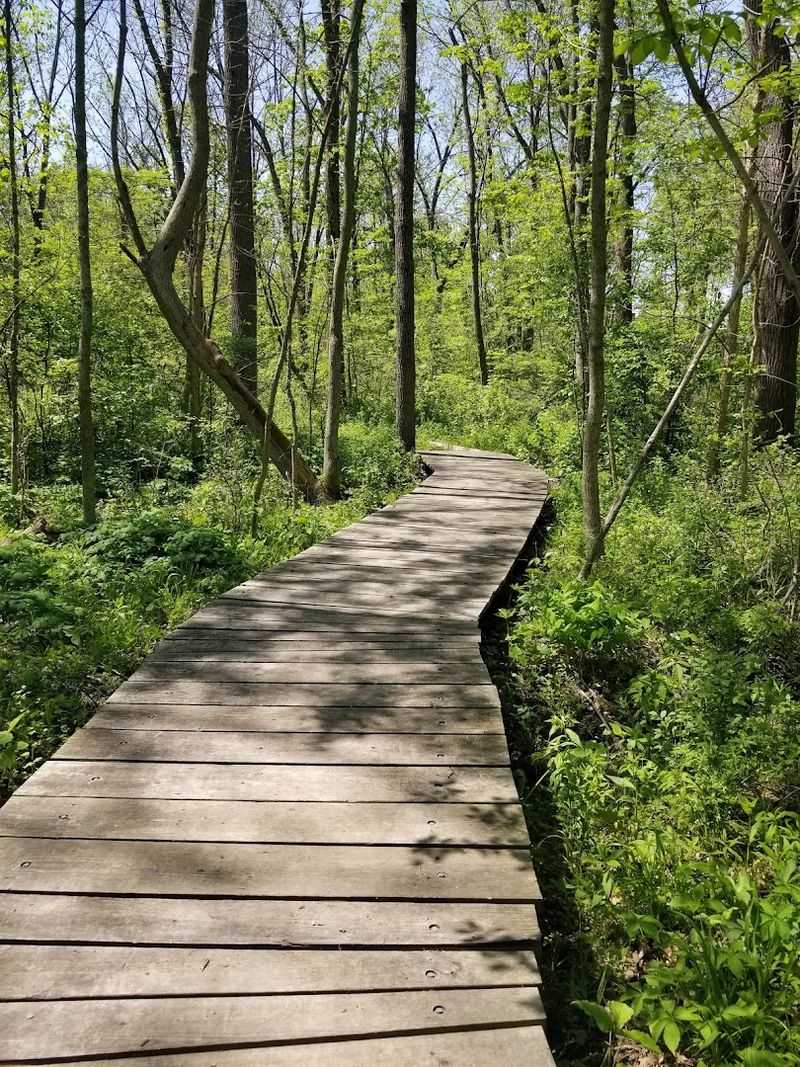
Not every great hike requires a two-hour drive, and the Wehr Nature Center Loop inside Whitnall Park proves that point beautifully. Located in the Milwaukee County park system, this easy 1.5-mile loop winds through restored prairie, woodland, and wetland habitats that explode with life every spring.
It’s the kind of trail that reminds city dwellers that nature is never actually that far away.
Spring at Wehr Nature Center is genuinely spectacular. Migrating songbirds pass through in waves during April and May, filling the woods with sound.
The restored prairie sections show off early blooming wildflowers, and the wetland boardwalk sections give you close-up views of frogs, turtles, and red-winged blackbirds going about their spring business with zero concern for your presence.
The Wehr Nature Center building itself is worth a visit before or after your hike, with free naturalist programs, wildlife exhibits, and helpful staff who can point you toward whatever is blooming or nesting that week. The loop is completely accessible and family-friendly, making it ideal for first-time hikers, young kids, or anyone easing back into outdoor activity after a long winter.
Whitnall Park is located in Hales Corners, just southwest of Milwaukee, and parking is free. This loop is a genuine urban nature treasure.