
You Have To See These Incredible Giant Sculptures Hidden In A Tennessee Park
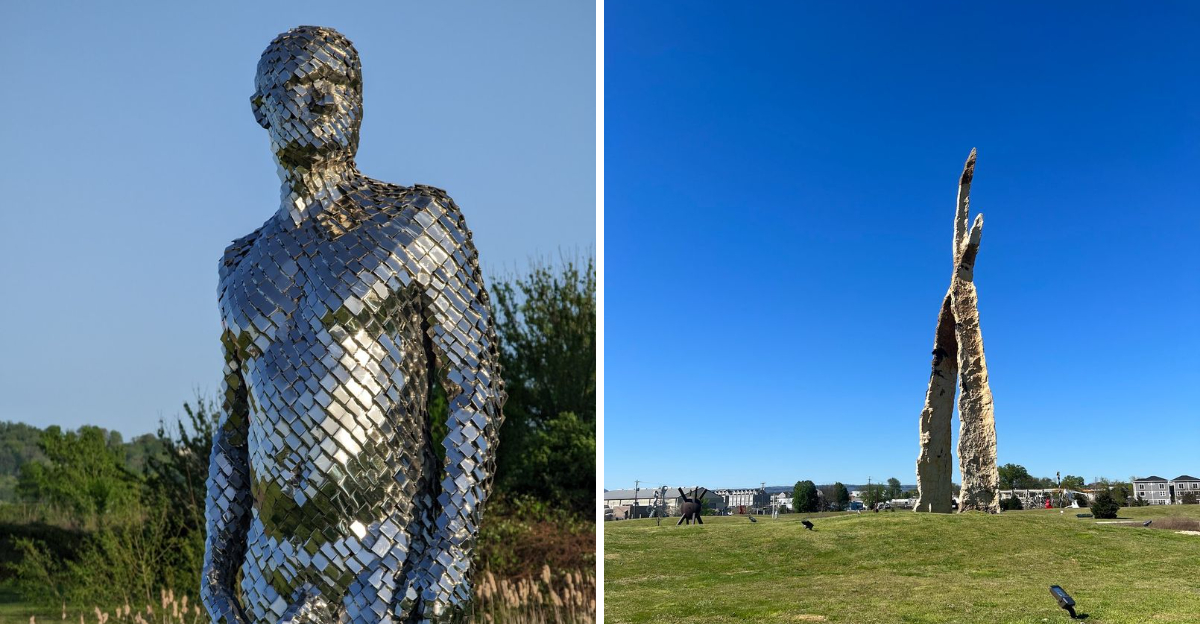
Steel giants rise straight out of open grass, several taller than a six-story building. Tennessee holds one park where scale swallows you whole.
Fifty large sculptures spread across rolling fields, shipped in by artists from across the globe. A bronze dragon grins at kids while a crimson ribbon curls mid-motion, frozen forever.
One structure climbs so high that drivers spot it from the highway and do a double take. Walk the gravel paths and watch that scale shift with every step you take.
Wildflowers brush your ankles while a mountain frames the skyline behind everything. Kite festivals and fire shows turn quiet Tennessee evenings electric.
Admission costs nothing, and families bring picnics for the whole afternoon. Plenty more waits between those acres, and one visit will not cover it all.
A Landfill That Learned To Love Art
Few parks can say they started as a construction dump. This land was donated to the public back in 1911 by Mary Thayer Montague, in honor of her late husband Theodore G.
Montague.
By 2003 it closed entirely. The site sat as a brownfield, a forgotten patch inside a growing city.
Then came 2006 and a very stubborn idea. A sculptor who worked in monumental steel imagined an international sculpture park right there, and started a grassroots push with his wife to make it real.
Non-profit status followed in 2012, along with a long-term lease with the City of Chattanooga covering 33 acres. Sculpture Fields at Montague Park reopened to the public in 2016 at 1800 Polk St, Chattanooga, TN 37408.
Today it ranks among the largest sculpture parks in the Southeast. That shift from discarded ground to cultural landmark is worth thinking about as you walk the paths.
The original donor wanted a public park for everyone. More than a century later, that wish finally looks the way she hoped.
Fifty Giants Standing In The Grass
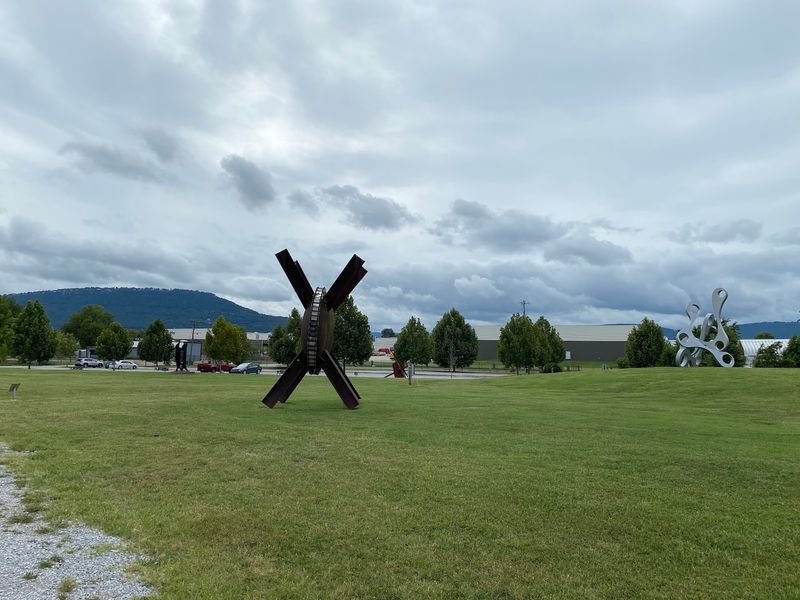
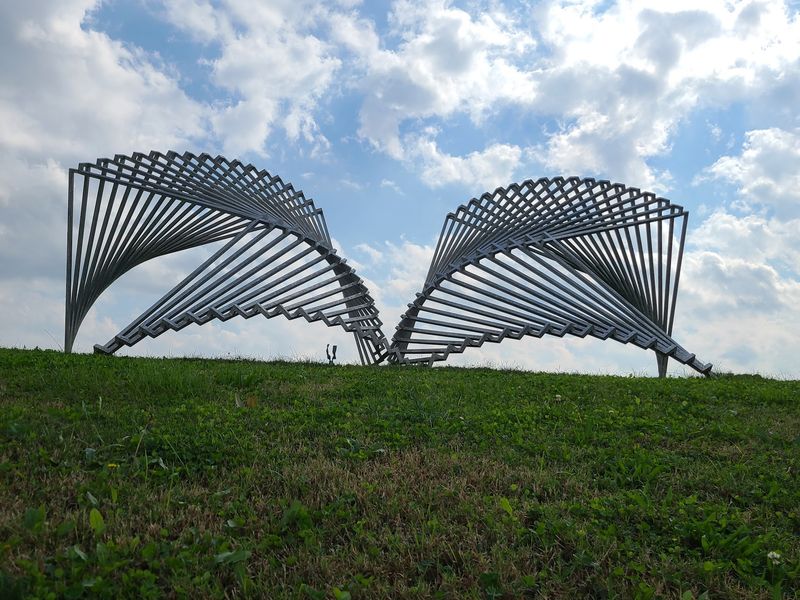
Over 50 large-scale sculptures live here, and none of them whisper. Works arrive from artists across the world, which gives this corner of Tennessee an unexpectedly international art conversation.
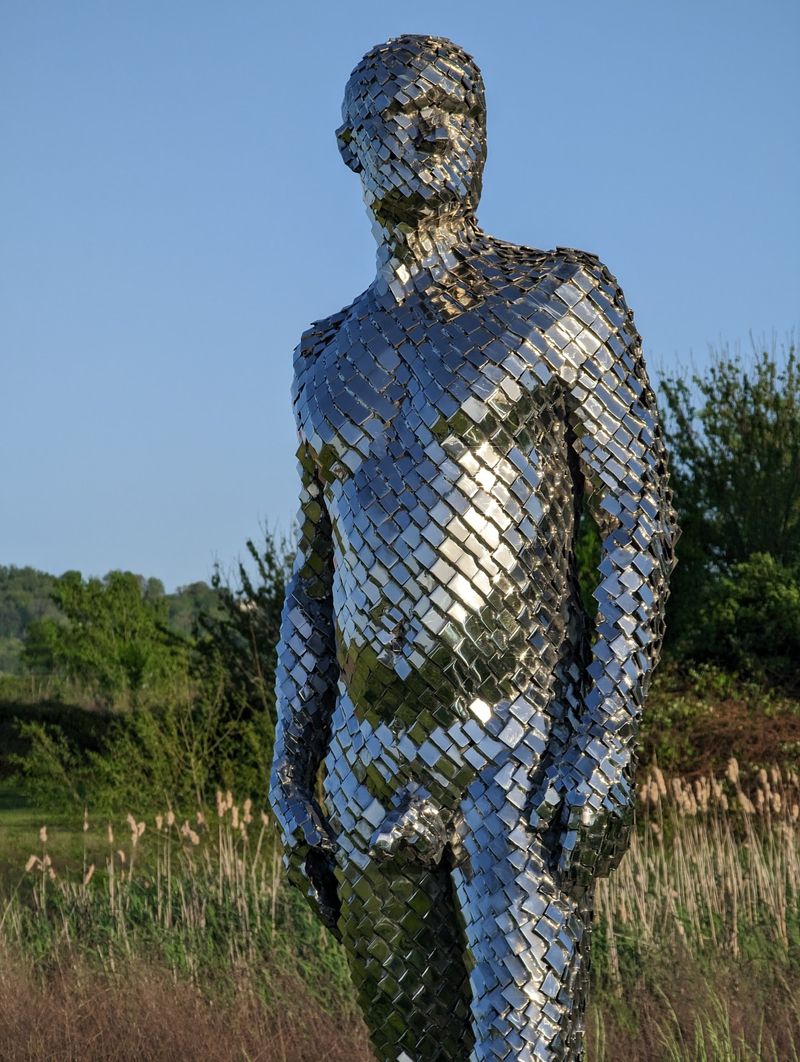
Materials run the gamut. Bronze, weathered steel, painted metal, and stone all share the same lawn.
Styles vary just as widely. Some pieces feel serious and symbolic, while others look flat-out mischievous, and that contrast keeps the walk interesting.
Scale is the real showstopper at Sculpture Fields at Montague Park. Standing beneath a work three or four times your height changes how you see it, and the open sky removes the usual gallery pressure to move along.
Part of the collection stays permanently. Other pieces rotate out after a set period, so return visits rarely look identical.
Placards sit beside many works with the title, artist, and year. Reading them first, then backing up for a full view, tends to work better than the reverse.
Bring a camera with room on the memory card. Every angle rearranges the sculptures into a new composition, and that alone can eat an hour.
The 75-Foot Sculpture You Can Spot From The Interstate
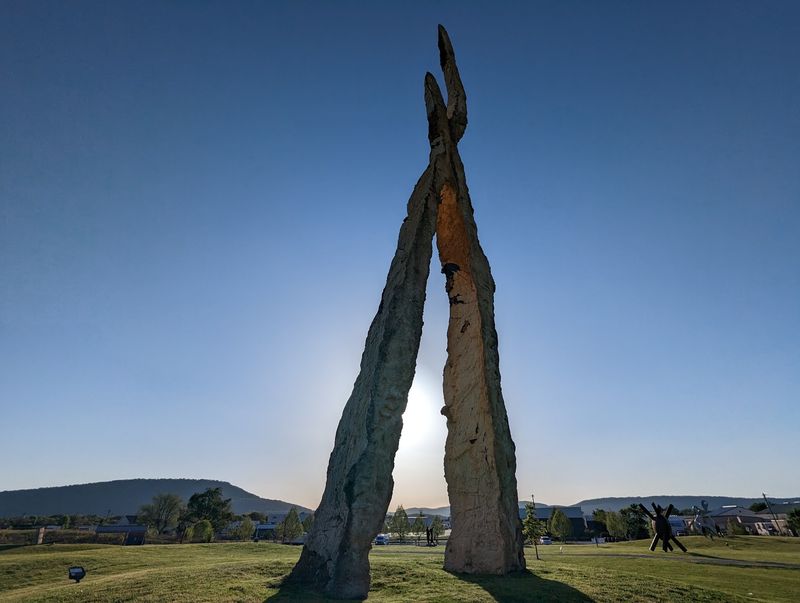
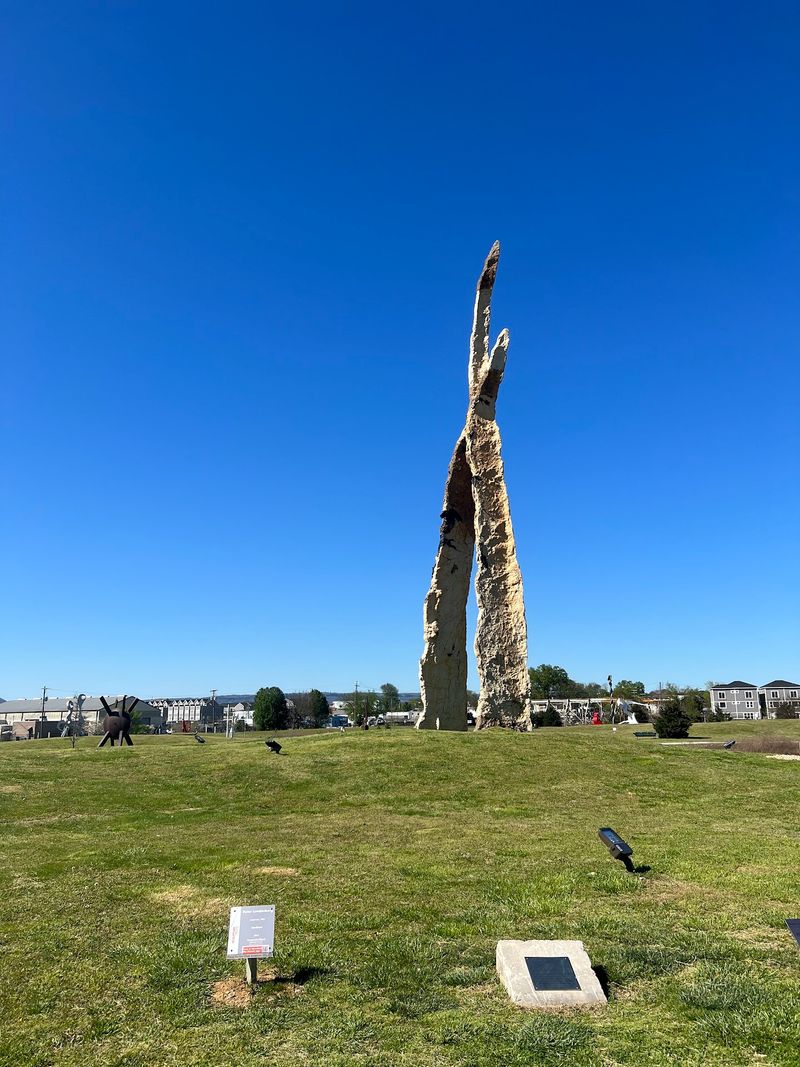
Drivers on the highway sometimes do a double take. The tallest work in the park, titled Anchors, climbs roughly 65 feet skyward.
Its bulk reads differently up close. From the base, the concrete and steel forms loom, and the scale swallows any sense of ordinary park scenery.
Meaning runs deeper than height here. The piece has become a powerful symbol of unity and resilience for the whole Chattanooga community.
Visitors often pause longer here than anywhere else in Sculpture Fields at Montague Park. Benches nearby make that easy.
Another heavyweight sits elsewhere on the grounds. Betty Davis Eyes stretches about 70 feet in length.
Together the two towers define the park’s skyline. Photographers chasing scale usually aim for these first.
Late afternoon light does them serious favors. Shadows stretch across the grass, edges glow, and the whole field briefly looks like a stage set nobody had to build.
Dragons, Cinderella, And Other Playful Surprises
Not everything here reaches for the clouds. Some of the most charming works sit closer to eye level, and they reward anyone willing to wander off the main loop.
Captain Merkel’s Ramming Dragon brings pure whimsy. Kids gravitate toward it without needing any explanation.
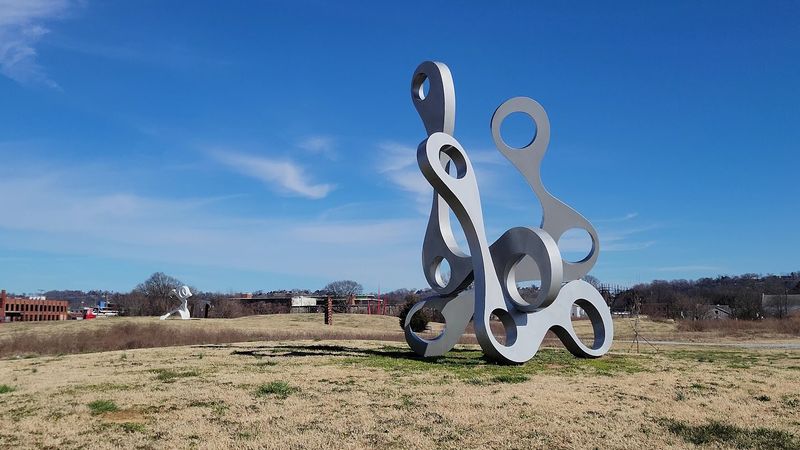
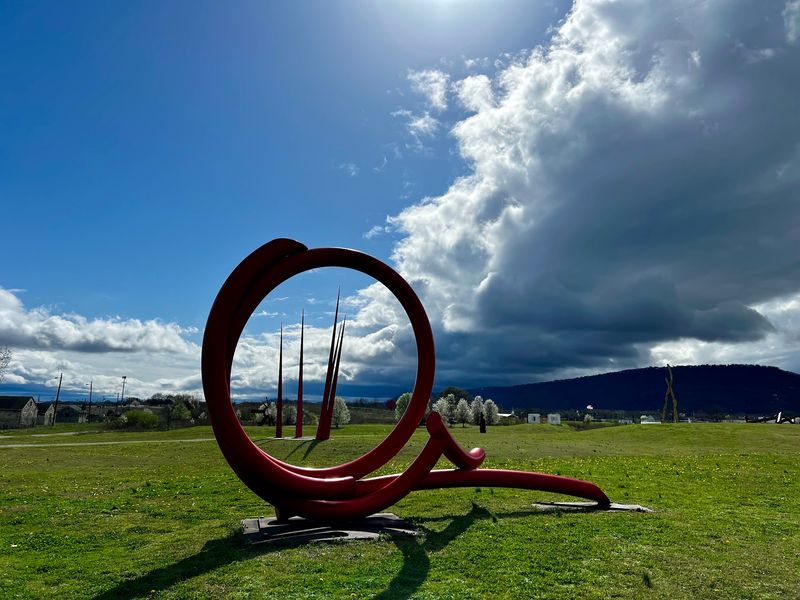
Cinderella, a bright red circular form by John Clement, curves like a ribbon caught mid-motion. The color pops hard against green grass and gray sky alike.
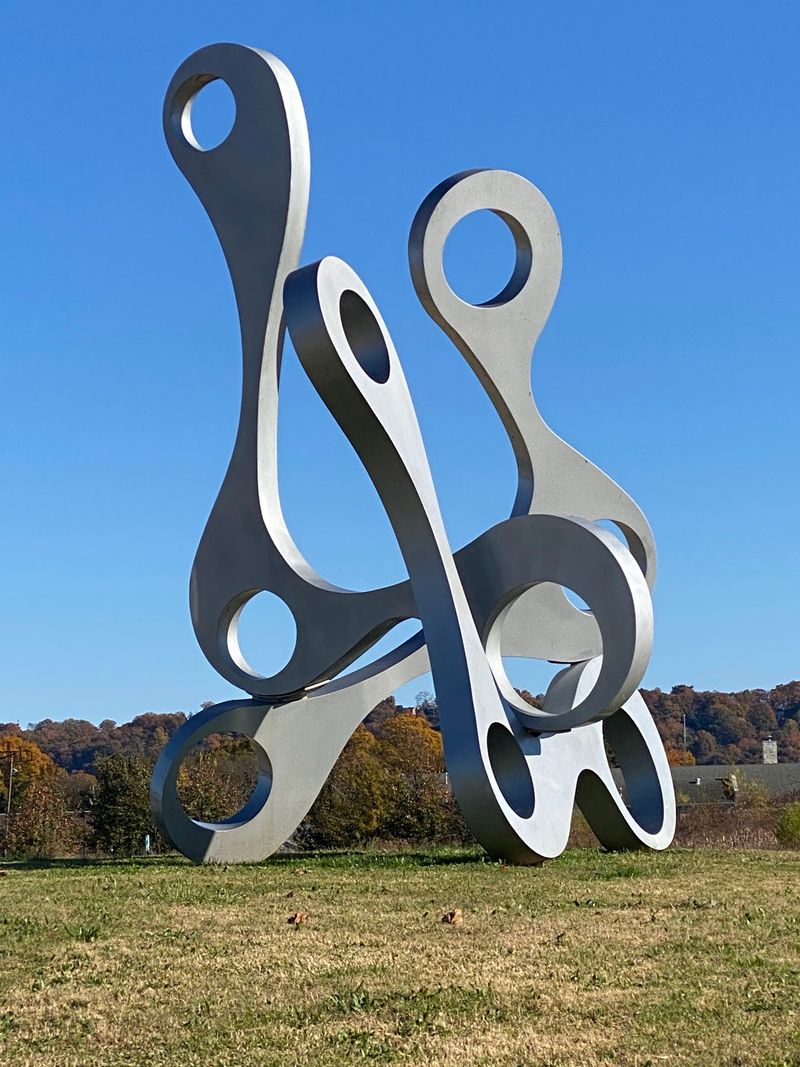
Think Big, an abstract work by Jane Manus, plays with angles and negative space. Step left, step right, and the shape reorganizes itself.
That variety is the quiet strength of Sculpture Fields at Montague Park. Serious conceptual pieces sit within sight of works that seem to be grinning.
Wear shoes you do not mind getting grassy. A few sculptures stand off the gravel path, and the lawn is not always freshly trimmed.
Give yourself permission to skip favorites for later. Trying to see everything in one pass usually means seeing nothing properly, and there is no rule against coming back tomorrow.
Free Entry And A Mile And A Half Of Trails
No tickets, no reservations, no gift shop maze. Entry costs nothing, and free parking sits near the main entrance, which makes a spur-of-the-moment stop easy.
More than 1.5 miles of trails thread across the 33-acre property. The surface is mostly gravel, flat and manageable for strollers and easy walkers.
Restrooms are available on site. Benches and a few picnic tables show up along the route, so resting mid-walk is simple.
Leashed dogs are genuinely welcome at Sculpture Fields at Montague Park, and plenty of locals treat it as their regular walking route rather than a special outing.
Shade, however, is scarce. Sun hits the open fields hard, so a hat, water, and maybe an umbrella make summer visits far more pleasant.
Morning tends to be the smartest window. Cooler air, softer light, and fewer people mean better photos and less squinting.
A free app adds another layer. It offers details about individual works, including recordings of artists discussing their own pieces, which turns a stroll into a self-guided tour without a single tour guide in sight.
Festivals That Turn The Fields Into A Stage
Quiet lawn by day, party grounds by season. The park hosts a rotating calendar of events that completely changes its personality.
The Sea Light Festival ranks among the best known. Enormous illuminated figures built from wire and silk cloth line the paths after dark, and a performance tent hosts acrobatic shows that regularly steal the evening.
Fire Up the Fields takes a bolder approach. The event ends with a large sculpture set ablaze, blending craft and spectacle in one memorable finale.
Sculptures in the Sky trades fire for wind. Colossal kites fill the air above the grass, and kite flying has become one of the park’s signature pastimes.
Other gatherings include the We Make Festival and various community art days. Food vendors often set up nearby, and cash comes in handy for tips and handmade goods.
Arriving after early evening works well for light-based events at Sculpture Fields at Montague Park. Colors read stronger once dusk settles in.
Check what is running before you drive over. Festival dates shift, and the difference between a quiet walk and a full show is significant.
Sculptors Competing For A Two-Year Spotlight
Rotating art keeps a park honest. The John Henry Invitational, held every other year, selects a handful of sculptors to install fresh work on the grounds.
Chosen pieces stay roughly two years. Then they head out, and new ones take their place.
That cycle explains why regulars keep returning. The permanent collection anchors the experience, while the invitational keeps injecting new shapes and ideas into familiar fields.
The program also honors the founder, whose vision built Sculpture Fields at Montague Park from an abandoned parcel. Supporting working sculptors was always part of the plan.
For visitors, the practical takeaway is simple. A visit two years apart will not look the same, and photos from an old trip may show works that no longer stand there.
Placards help sort out what is temporary. Staff on site are generally happy to point out recent arrivals too.
Watching a park evolve is a rare pleasure. Most attractions freeze in place, while this one keeps quietly rearranging itself, which gives repeat visits an actual reason to exist.
Peace And Quiet Beside An Industrial Neighborhood
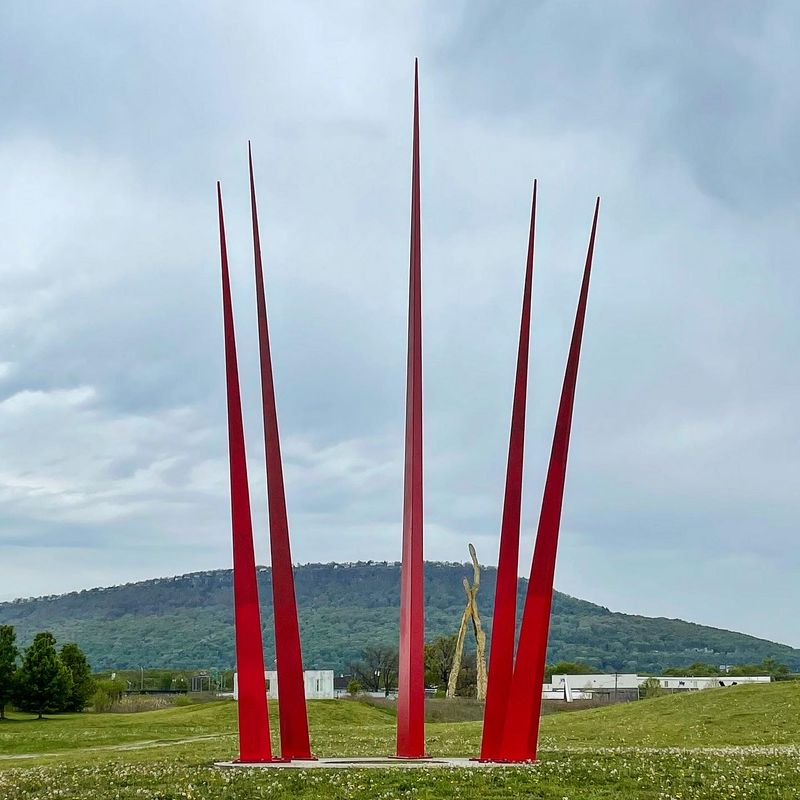
Warehouses on one side, wildflowers on the other. The park sits on Chattanooga’s Southside, and that mix of gritty surroundings and open meadow is part of its charm.
Sound drops off once you get out into the middle. Birds, breeze through tall grass, and gravel underfoot become the soundtrack.
Families spread blankets on the lawns. Others practice yoga near the sculptures or simply claim a bench and stay awhile.
Lookout Mountain rises in the distance, and that Tennessee landmark frames plenty of views inside Sculpture Fields at Montague Park. Sunset over the ridge, with a monumental form silhouetted in front, ranks high among the park’s rewards.
Wildflowers appear in warmer months and soften the whole property. They also attract insects, so repellent belongs in the bag.
Crowds stay light on ordinary weekdays. That makes solitude easy to find, even with downtown just minutes away.
Reflection happens here almost by accident. Big art plus big sky plus very little noise adds up to a surprisingly restorative hour, no admission fee required.
A Classroom Without Walls
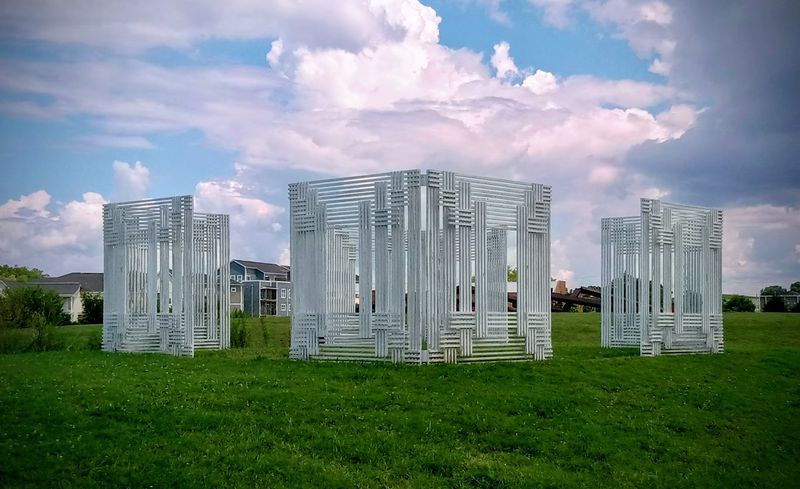
School buses show up here for good reason. The park doubles as a teaching space, hosting students from around the region who come to study art up close.
Lessons stretch beyond sculpture technique. The land’s journey from polluted brownfield to public art park offers a real example of environmental recovery.
Hands-on programs let younger visitors try things themselves. Watching an artist demonstrate a craft tends to stick longer than any textbook chapter.
The free app helps here as well. Hearing artists explain their own intentions gives kids and adults alike a way into work that might otherwise seem puzzling.
Education sits at the heart of the mission at Sculpture Fields at Montague Park, alongside its role as a public green space. Both goals reinforce each other nicely.
Parents can build their own mini lesson easily. Ask a child which sculpture they would take home, then ask why.
Answers tend to be brilliant. Big art gives young imaginations something enormous to push against, and this park hands that over completely free of charge.
Native Grasses, Meadows, And A Greener Future
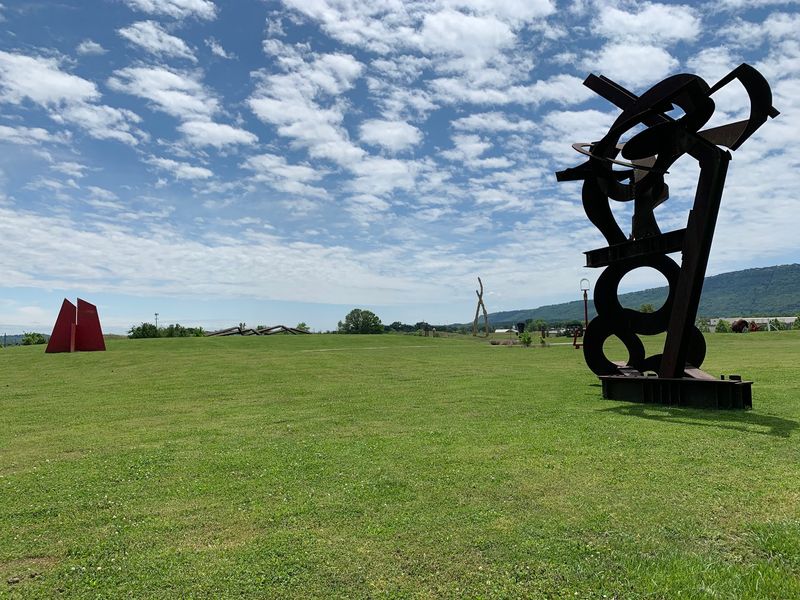
Recovery is the real story under the grass. Land once written off as contaminated now supports meadows, mowed lawns, and a growing collection of plantings.
Native grasses and plants appear in places across the property. Those choices help local wildlife while making the setting look less manicured and more alive.
Sculptures and vegetation share space deliberately. Rusted steel against seed heads and wildflowers reads better than steel against bare dirt.
Longer-range plans for the site call for hundreds of new canopy trees. Additional paths and several acres of meadow are also part of the vision, which would push the grounds toward an arboretum feel.
Shade would be a welcome addition. Anyone who has crossed the fields at midday understands why trees rank high on the wish list.
The concept of garden galleries guides much of this work at Sculpture Fields at Montague Park. Art and ecology grow together rather than competing.
Progress arrives gradually, as funding allows. Visitors today are essentially watching an ongoing project, which makes each return trip feel a little like checking on old friends.
Big Plans Sketched For The Years Ahead
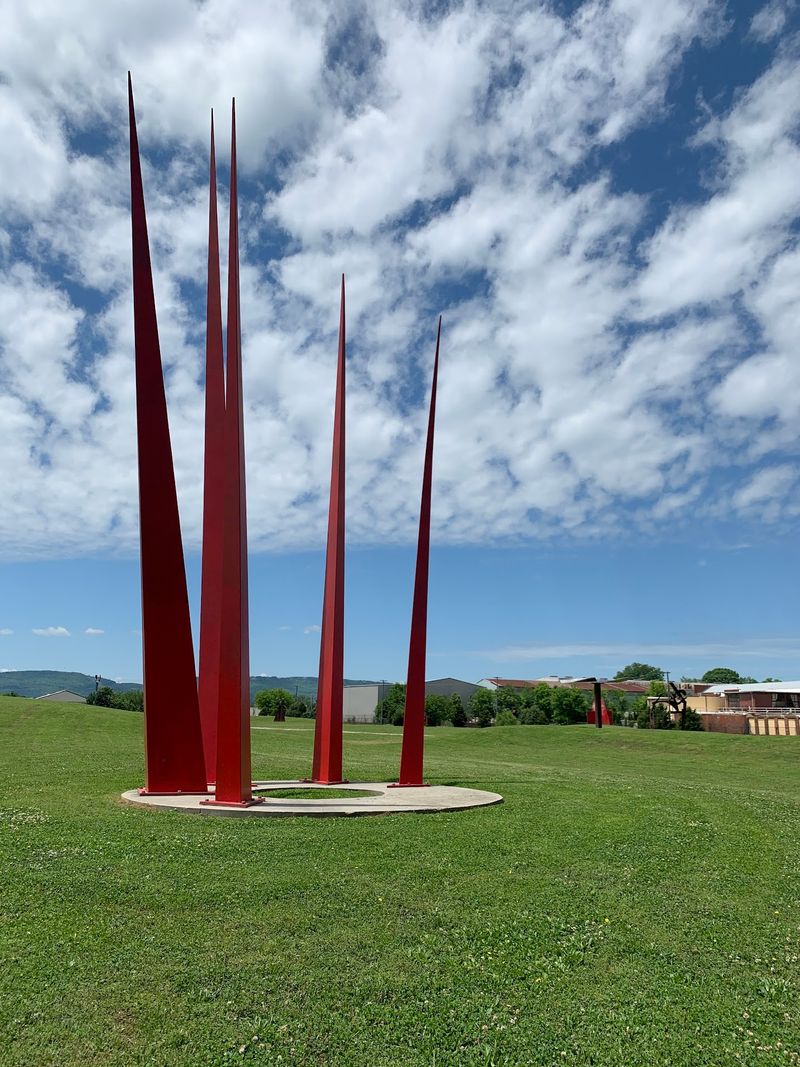
Blueprints suggest the park is far from finished. A vision plan developed with the city’s parks department outlines a larger, more connected Montague Park.
New paths and bridges appear in the concepts. So do ravines, an event lawn, and a sculptural stage built for flexible programming.
The plan aims to stitch the property together as one cohesive public space. Ecology, art, food, and surrounding neighborhoods all factor into the thinking.
Walkability sits high on the priority list. Better connections would let nearby residents reach Sculpture Fields at Montague Park on foot rather than by car.
Additional sites for future sculpture acquisitions are also mapped out. That means the collection has room to keep growing rather than crowding itself.
Timelines depend on funding and phasing, so specifics can shift. Treating the plan as direction rather than promise is the safer approach.
Still, the ambition is clear enough. What began as a grassroots dream on abandoned ground now has a long-range strategy behind it, which is a fairly remarkable turn for a former landfill in Tennessee.
How To Make The Most Of One Visit
A little planning goes a long way out here. Early morning or the hour before sunset delivers the best light and the least heat, since shade barely exists across these open fields.
Pack water, sunscreen, a hat, and bug spray. Wildflower season looks gorgeous and comes with insects attached.
Comfortable shoes matter more than fashionable ones. Gravel paths handle strollers fine, but reaching off-path sculptures sometimes means crossing uneven or tall grass.
A picnic upgrades everything. Tables and benches are scattered around, and eating beneath a towering steel form beats any food court.
Download the free app before arriving. Signal can be spotty, and having artist commentary ready makes the walk richer.
Leashed dogs are welcome, and Sculpture Fields at Montague Park sits close to downtown, which makes it an easy add-on to a Chattanooga day of hiking or sightseeing.
Set aside at least an hour, ideally two. Rushing 50 monumental sculptures does nobody any favors, and the whole point of this place is permission to slow down and look up.