
You Think You’ve Seen The Best Waterfall In This Tennessee State Park, Then Another Appears
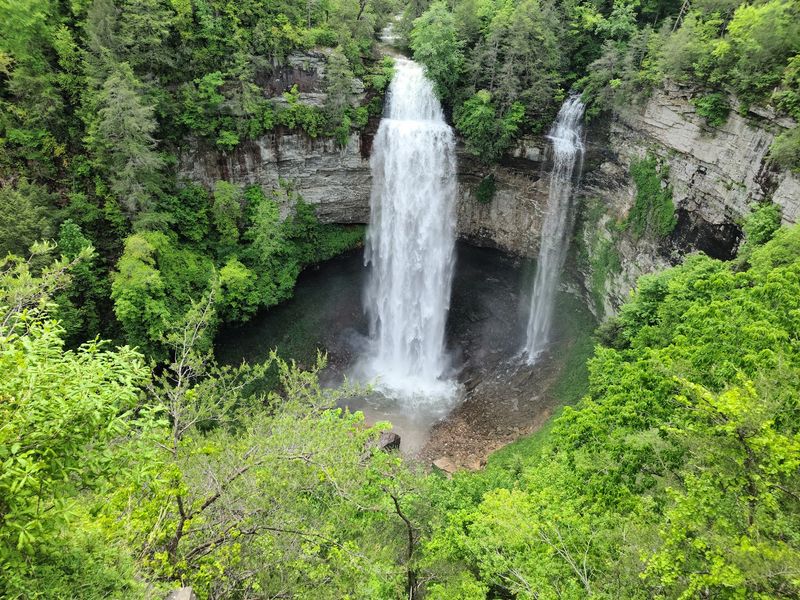
Somewhere on the Cumberland Plateau in Tennessee, a road winds past farm fields and pine stands and then drops you at a railing where the ground simply falls away. Below is a waterfall so tall it looks unreal, and you figure that’s the highlight of the day.
Then you drive ten more minutes and find another one, with a bouncy suspension bridge over it. That’s the trick of this park: every time you think you’re finished, it hands you something else.
A Plateau Park The Size Of A Small Town
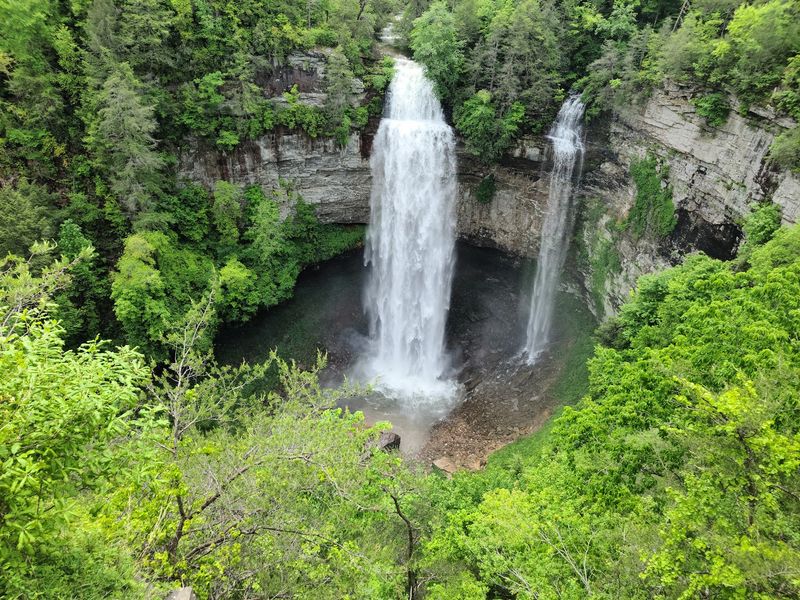
Fall Creek Falls State Park sits at 2009 Village Camp Rd in Spencer, Tennessee, spread across the top of the Cumberland Plateau where creeks cut deep gorges into sandstone. It is a full recreation area rather than a single overlook: lodge, restaurant, campgrounds, cabins, an 18-hole championship golf course, a swimming pool, gift shops and a general store all sit inside the boundary.
Visitors regularly compare the scale to a small national park, and that comparison holds up once you start driving between trailheads instead of walking between them.
What pulls the crowds, though, is water. Waterfalls come up in roughly 1,080 visitor mentions, far more than any other feature, followed by hiking and camping.
The park earns 4.8 stars across more than 9,000 reviews, which is unusually consistent for a place this large and this busy.
Posted gates run 7 AM to 5 PM daily, so plan an early start if you want more than one gorge in a day. The main phone line is 888-867-2757.
Hours and seasonal access can shift, so a quick check before you load the car saves disappointment.
The 256-Foot Drop That Starts It All
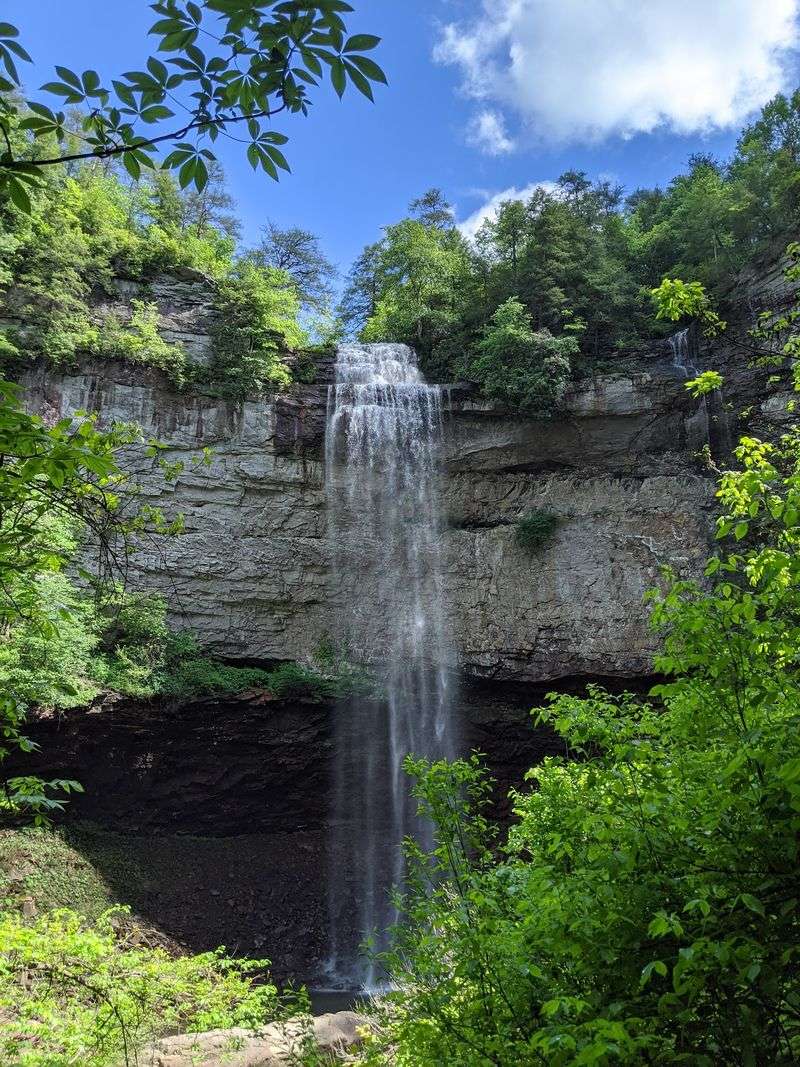
Two hundred feet. That is roughly how far you walk from the parking area to the main overlook of Fall Creek Falls, and one visitor described the path as straight, easy and startlingly short for the payoff.
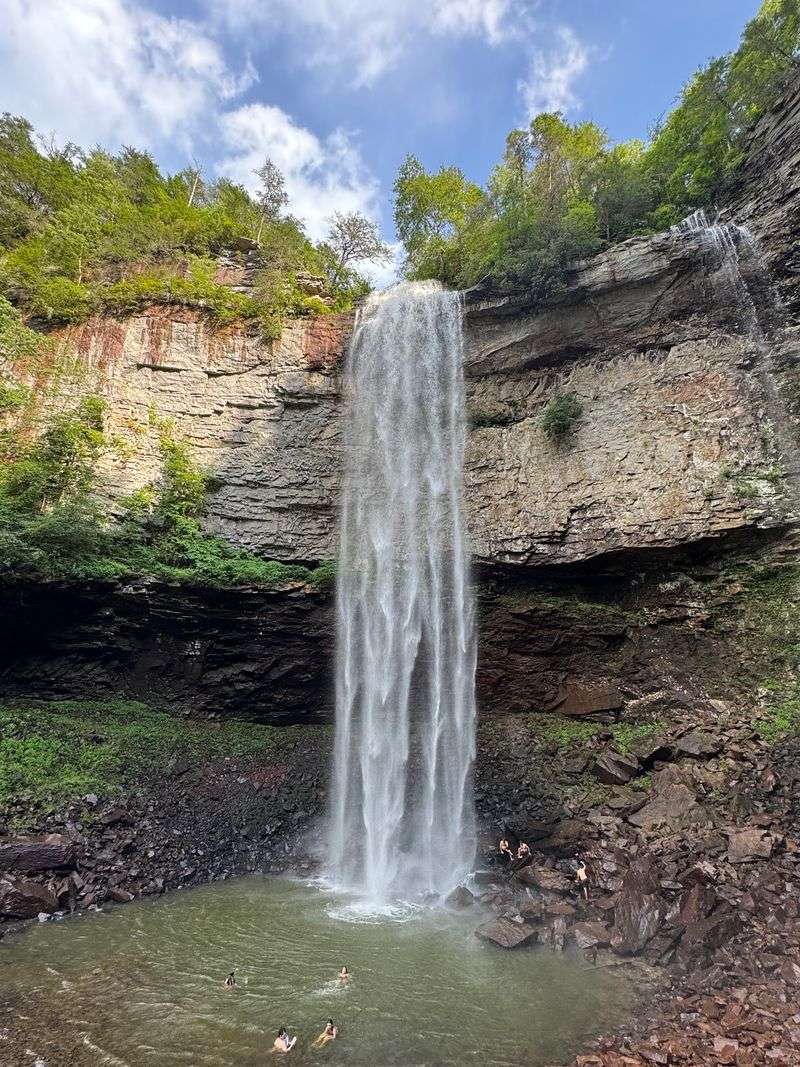
The falls are the tallest in Tennessee, dropping into a shaded rock bowl that swallows sound.
Guests call it the most stunning waterfall they have ever seen, and several note that all age groups can reach the upper viewpoint without difficulty. Some overlooks are ADA accessible, which matters for grandparents and strollers.
Water volume changes everything here. Regulars say the flow improves dramatically after rain, and winter visits following a wet stretch produce a roar people remember for years.
One family arrived during a spring snow and watched the falls framed in white.
The 0.4-mile descent to the base is a separate proposition, covered later, but you lose nothing by staying on top. Plenty of people photograph the falls from the rim, walk back to the car in ten minutes, and still count the drive worthwhile.
Piney Creek Falls And The Bridge That Bounces
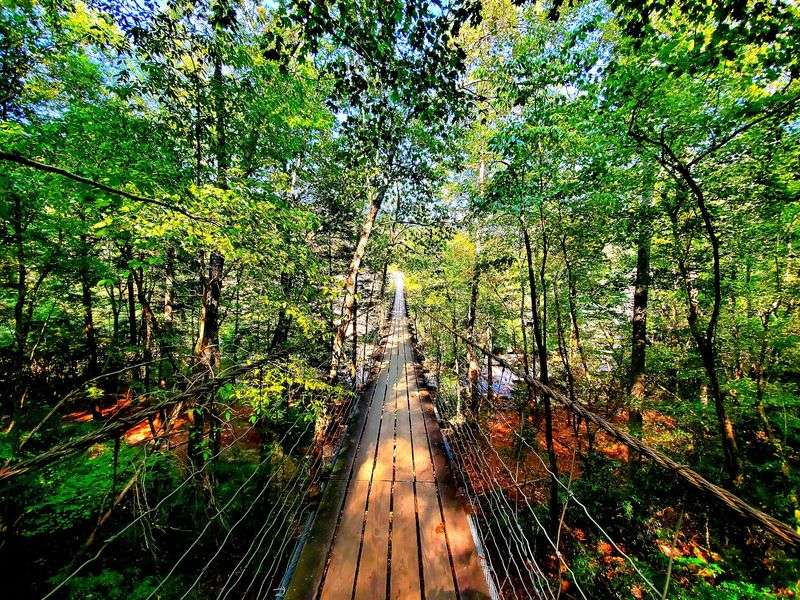
Drive ten scenic minutes from the main falls and the park reveals its second act. Piney Creek Falls comes with a suspension bridge that sways underfoot, and it has picked up about 125 separate visitor mentions on its own, plus a nickname: the singing bridge.
One hiker crossing in thin-soled shoes said the sensation left them with sea legs afterward. Another carries a small dog across every year because the pup refuses to walk it.
Kids, predictably, treat it as the best part of the entire park.
Before the bridge there is a spur where you can look down on a first waterfall, an easy bonus most people miss. The walk itself is short but rocky, with a steep climb on the return, so proper shoes still apply.
The bridge was rebuilt recently and visitors describe it as new and genuinely fun rather than nerve-wracking. Between here and the main gorge, the connecting drive is scenic enough that several people mention it as a highlight in its own right.
Two falls, one afternoon, no admission fee.
Cascade Falls, Cable Trail And The Ones Nobody Photographs
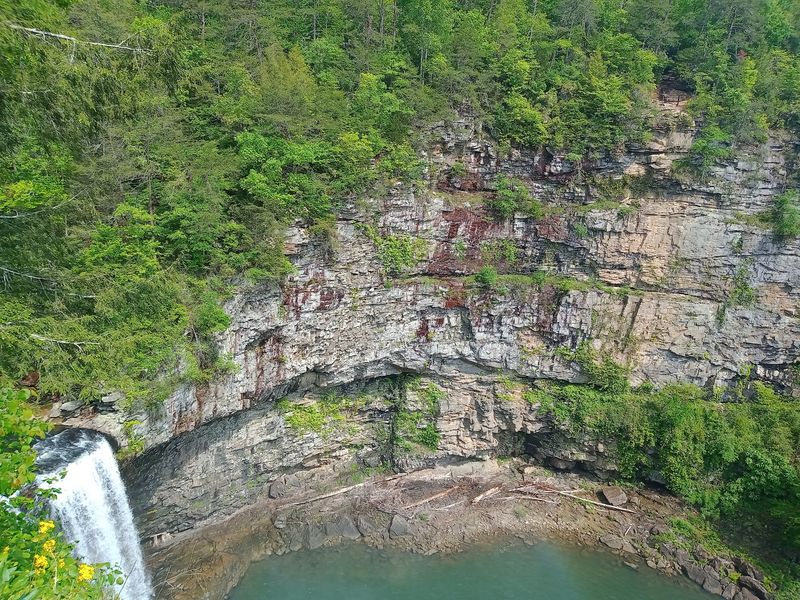
Here is where the park stops being a two-waterfall trip. Cascade Falls turns up in family accounts as a regular stop, the Cable Trail has its own following among the 15 or so people who mention it by name, and the gorge holds smaller drops that never make the postcards.
Roughly 835 visitors mention hiking, which tells you how many people come for the trail network rather than a single viewpoint. Paths connect well, signage is described as plentiful, and difficulty ranges from flat overlook strolls to genuinely strenuous scrambles.
Longer options exist too. Backcountry routes cross the park, and one visitor happened to arrive during the Mammoth March, a 20-mile organized hike with about 1,500 feet of elevation change that takes seven or eight hours.
Wildlife shows up more often than you would expect. Families report curious animals along the trails and small, harmless water snakes swimming in the pool at the base of the main falls.
Nothing dramatic, just enough movement to keep children scanning the woods instead of asking how much farther.
What The Hike To The Base Actually Demands
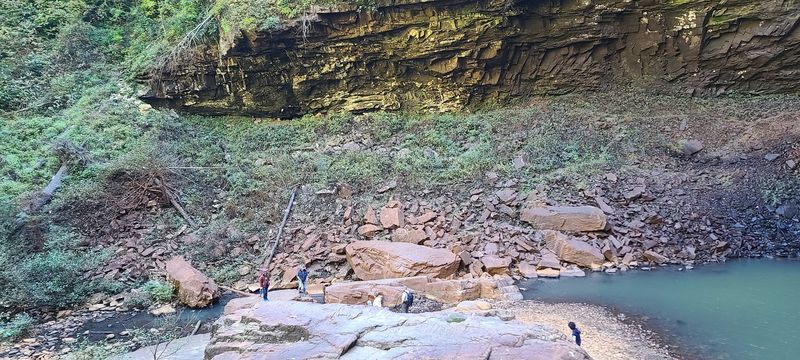
Four tenths of a mile sounds like nothing. Almost every visitor who has done the descent to the foot of Fall Creek Falls says the same thing in different words: short, steep, rocky, and much harder coming back up than going down.
Footwear is the recurring warning. Flip-flops and slides get named specifically as bad ideas, and hikers recommend boots or gym shoes with real grip, plus poles for the climb out.
Rain turns the route muddy and slick.
Standing at the bottom is the reason people do it anyway. Seeing the full scale of the drop from below is described as incredible, and families report making the trip with small children, babies in carriers and dogs in tow.
The reward includes a cold plunge. Swimming happens in the pool at the base, though the water is genuinely frigid, water shoes help on the rocks, and there is a steep drop-off toward the middle, so life jackets are sensible for kids.
An overlook near the trailhead has restrooms and a water bottle refill station. Fill up before you start down.
Cabins On The Lake, Campgrounds In The Trees
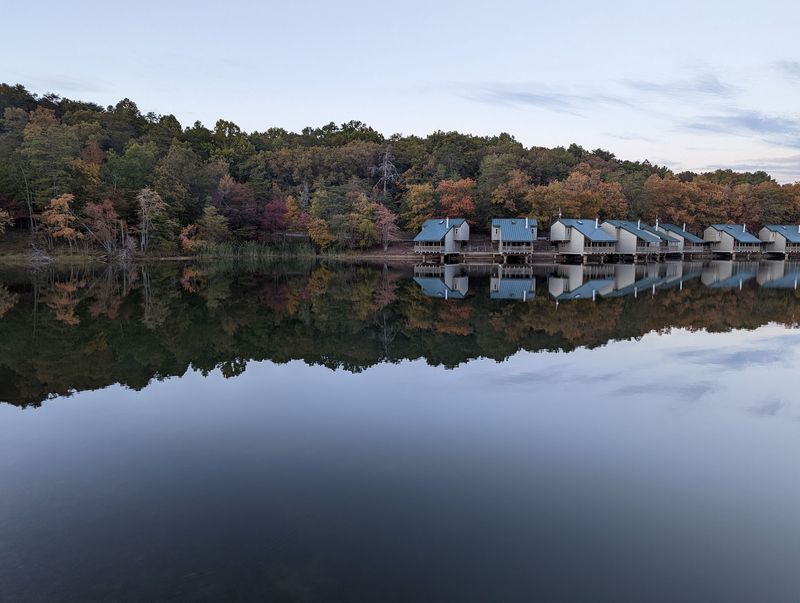
Cabins draw about 233 visitor mentions and camping roughly 606, which means a lot of people treat this park as a base rather than a stop. Lakeside cabins come with decks where guests fish straight off the back rail, big stone fireplaces between kitchen and living room, outdoor grills and fire pits.
Campgrounds have been renovated recently. Campground B gets singled out for shaded, secluded loops that suit small campers, while Campground C offers eight separate private showers, clean updated bathrooms and a large laundry facility.
Around the lake sits a paved walking and biking path that circles the whole perimeter, along with several playgrounds. The lodge restaurant serves American food with lake views, and a snack stand near the pool handles wings, hot dogs, pizza and ice cream when nobody feels like cooking.
One caution from a returning family: booking through the central reservation system caused headaches with headcounts and pet-friendly cabin assignments, and a per-day damage deposit was required at check-in. Confirm your details directly and ask about deposits and minimum-stay rules, which stretch longer in peak seasons.
Free Admission, Fall Color And The Best Time To Show Up
Admission costs nothing. One visitor spent about two hours on the Overlook Trail and the Fall Creek Falls Trail and pointed out that the whole thing was free, which is the number families care about most when weighing a Saturday.
The nature center adds to that with a gift shop, displays and a 20-minute video shown at no charge. The museum section covers local history and geology, and staff there are described as knowledgeable and eager to help.
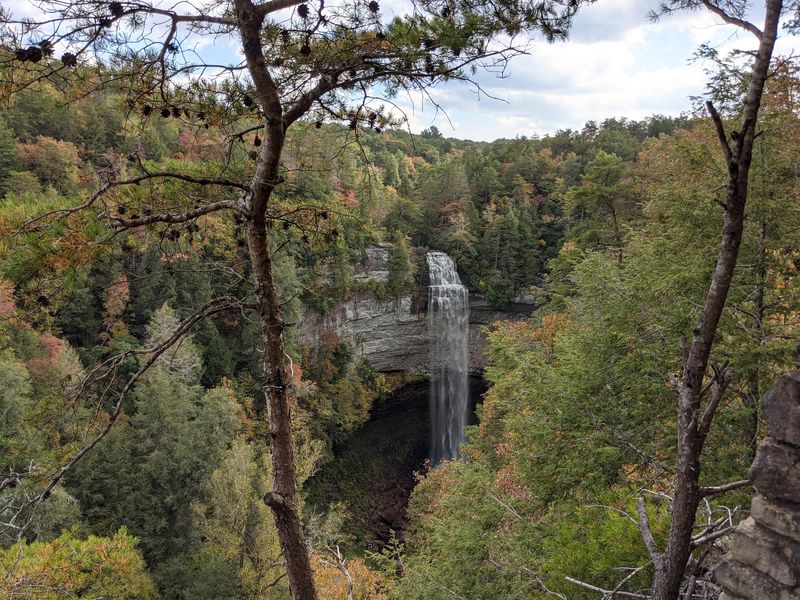
Autumn is the season people plan around. Leaf color on the plateau draws comparisons from visitors who have travelled from as far as Australia and found nothing like it at home.
Winter after sustained rain is the other favorite, when the falls run loudest.
Budget-wise, a tank of gas from Nashville, Chattanooga or Knoxville plus a packed cooler covers a full day for well under the cost of a nice dinner out. Add the lodge restaurant or the snack shack if you would rather not pack.
Gates close at 5 PM, so build the day backward from that.
Why One Trip Rarely Feels Like Enough
Repeat visits are the pattern here, not the exception. Families describe third and fourth trips, fall breaks followed by spring breaks, and one guest admitted that once you camp here it becomes hard to camp anywhere else in the state.
Part of that is variety. Between the two headline waterfalls, the smaller cascades, the golf course, the pool, the boat rentals, fishing, the trails and the village of shops, a single day never clears the list.
Who suits it best? Anyone who wants scenery without a commitment, since the top of the main falls is a two-hundred-foot walk from the car and several overlooks are accessible.
Also anyone who wants a leg-burner, because the gorge delivers that too.
Bring water, real shoes, water shoes if you plan to swim, and more time than you think you need. Check hours and seasonal conditions before leaving, since access and rates can change.
The honest verdict: come for the tallest waterfall in Tennessee, then stay because the park keeps producing another one just around the bend.