
45-Mile Mississippi Drive That Winds Past Rivers, Old Farms, And Quiet River Towns Along The Way
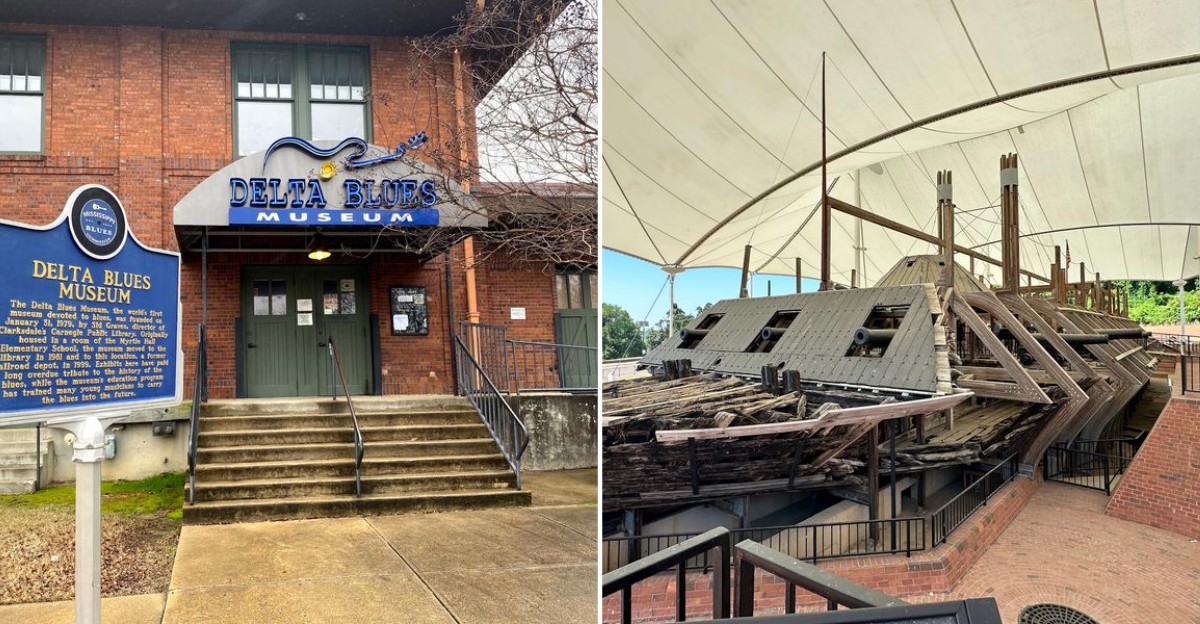
Mississippi offers a drive where you won’t just be staring at the road; you’ll actually learn something along the way while enjoying every mile. Scenery shifts constantly, passing rivers, old farms, and quiet river towns most visitors never expect to find.
Roads wind through areas most travelers wouldn’t otherwise think to explore. Regulars know exactly which stretches offer the best views depending on the season.
Nothing about this drive feels rushed, letting the scenery take center stage the entire way. Stops along the route offer small towns and local shops worth exploring beyond just the drive itself.
Photography opportunities exist around nearly every turn, especially where rivers come into view. This drive proved that sometimes the destination matters less than everything you see getting there.
1. Natchez Bluffs And Under-The-Hill
Picture a road that suddenly runs out of land and hands you a view instead. That is the Natchez Bluffs, perched high above the Mississippi with Louisiana sprawling flat on the far bank.
Sunsets here get a little ridiculous. The river turns copper, then pink, then the color of a bruise, and nobody talks much while it happens.
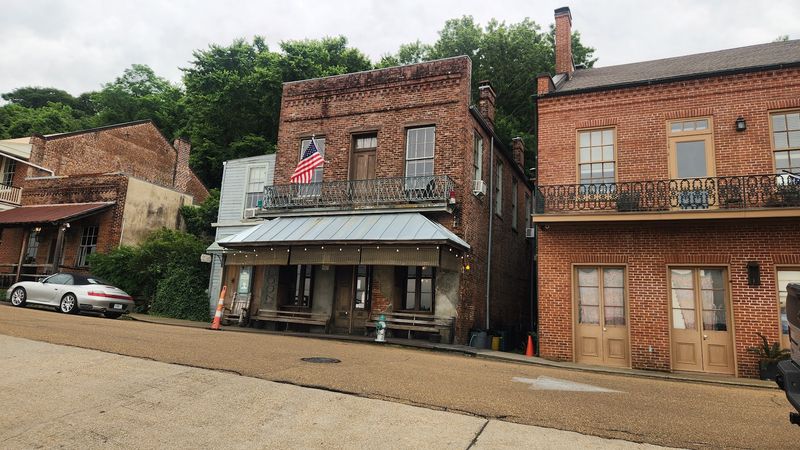
Below the bluff sits Under-the-Hill, reached by Silver Street, a steep cobblestone slope that Spanish settlers laid out around 1790. The idea was simple: connect the proper town on top with the rowdy port at the bottom.
And rowdy it was. In the 1800s, this was one of the busiest, most notorious landings on the entire river, packed with flatboat crews, gamblers, and cargo headed everywhere.
Floods and time swallowed most of the old buildings, which is why the district feels smaller than its reputation. What survived leans against itself in the best way, brick and wood and iron balconies looking straight at the water.
Walking the street takes maybe ten minutes. Sitting on a porch watching towboats push barges upriver can take considerably longer, and that seems to be the point.
Parking is easier at the top of the bluff, where a long green park runs along the edge. The walk down is fun; the walk back up is a reminder that these bluffs are genuinely tall.
Mornings bring fog that erases the far shore, which makes the river look infinite. Evenings bring music drifting out of open doors.
Either way, it is a fine place to start a slow drive south and figure out what kind of trip this is going to be. Find it at Silver Street, Natchez, MS 39120.
2. Melrose Estate At Natchez National Historical Park
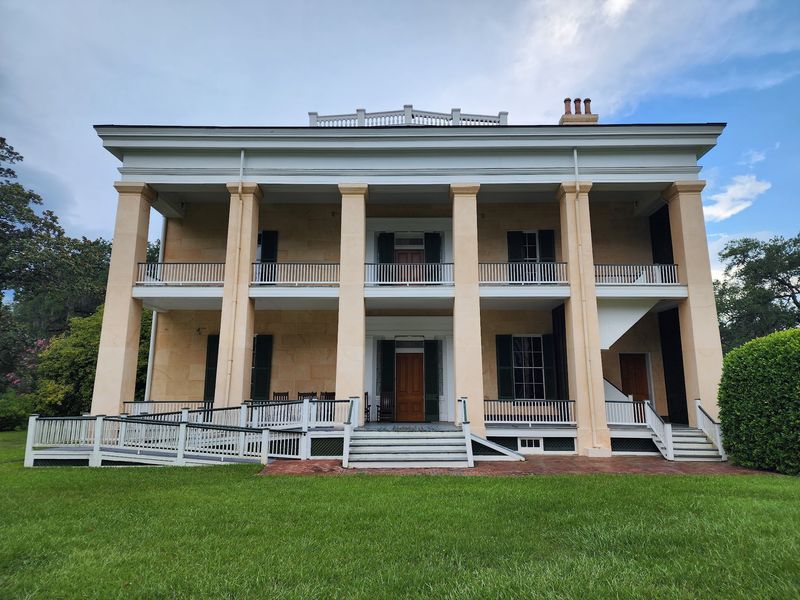
Eighty acres of lawns, oaks, and outbuildings surround a Greek Revival mansion that looks like it was built to be painted. Melrose belonged to a cotton planter with deep pockets and very specific taste.
What sets it apart from most historic homes is how little had to be replaced. Many original furnishings are still in the rooms, right down to pieces the family used daily.
That level of preservation is rare. It means the interiors are not a guess or a best-effort recreation; they are the actual thing.
Tours cover the parlors and bedrooms, sure. They also cover the people whose forced labor made the whole operation possible, and the estate does not tiptoe around that history.
Two brick slave quarters still stand on the property. Standing between those buildings and the mansion, the distance feels very short and very loud.
The grounds alone are worth the stop. Gravel paths loop past a carriage house, a dairy, a cistern, and gardens shaded by trees that were already big a long time ago.
Because it is part of Natchez National Historical Park, the site is managed by the National Park Service. Interpretation is careful and well researched, which makes a real difference here.
Wear shoes you can walk in. The lawn is uneven in places, and the full loop covers more ground than it looks like from the driveway.
Photographers tend to camp out on the east side in the morning light. Everyone else just wanders and reads the panels.
Plan on an hour minimum, two if you take a house tour and walk the whole property. It sets up the rest of this drive perfectly, because the story of cotton follows the river the entire way.
The address is 122 Melrose Ave, Natchez, MS 39120.
3. Forks Of The Road
Some stops on a scenic drive are not scenic at all. Forks of the Road is one of them, and skipping it would be the wrong call.
The ground here was once the second busiest slave market in the Deep South. Tens of thousands of men, women, and children were sold at this intersection and marched away from everything they knew.
The market ran for decades. It stopped in 1863, when Union troops reached Natchez and shut the operation down for good.
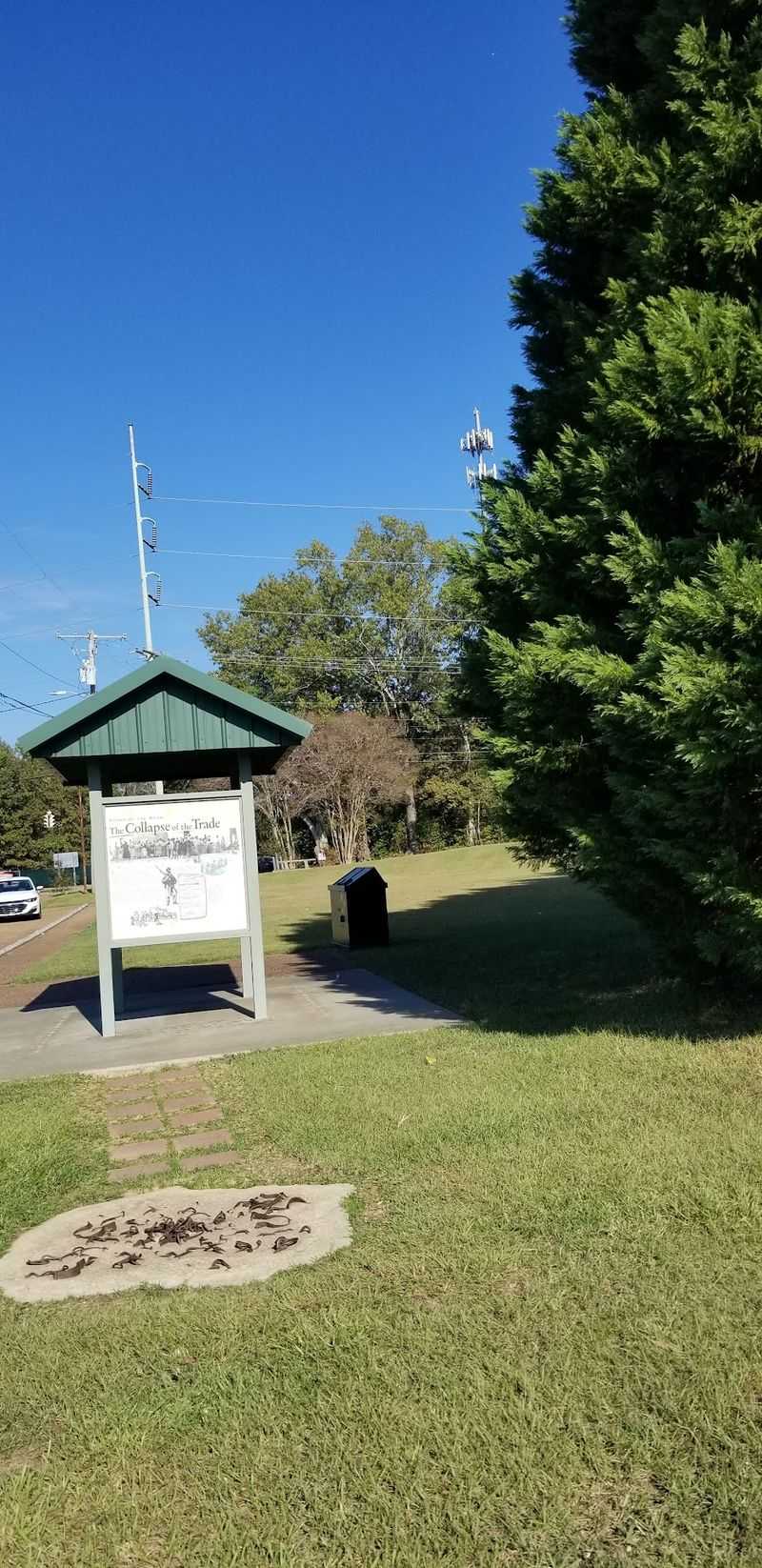
Today the site is mostly open grass and quiet air. Informational panels explain what happened, laid out plainly and without softening anything.
Iron slave chains are set into concrete on the ground, a memorial that you feel more than read. It is a small gesture that lands hard.
Traffic passes on Liberty Road while you stand there. That contrast, ordinary cars rolling by a place of enormous suffering, is part of what visits stay with you.
There is no building, no gift shop, no admission gate. Just the panels, the chains, and however much time you decide to give it.
Most people spend fifteen or twenty minutes. Reading every panel takes longer, and it is worth doing.
The site is now part of Natchez National Historical Park, which means its story will keep being told with care. Preservation efforts here have grown steadily over the years.
Bring a hat, since shade is limited. Bring patience too, because this is not a stop to rush through on the way to the next pretty view.
Understanding the mansions and the farmland on this route really requires understanding this corner first. Forks Of The Road is located at 105 Liberty Rd, Natchez, MS 39120, United States
4. Vicksburg National Military Park
Over 1,400 monuments sit inside this park, which sounds like an exaggeration until you start driving the tour road and they keep appearing. Marble, granite, bronze, obelisks, statues, state memorials the size of small temples.
The park covers roughly 1,800 acres of ridges and hollows. That terrain is exactly why the 1863 siege here was so brutal and so decisive.
Reconstructed trenches and earthworks cut across the hills. Standing in one, you get an immediate sense of how close the two armies actually were.
Both sides are honored throughout the grounds. Union and Confederate positions are marked, which makes the drive feel less like a victory lap and more like a ledger.
The Illinois Memorial is the showstopper for most visitors, a domed rotunda with steps that echo when you climb them. Sixty steps, one for each day of the siege.
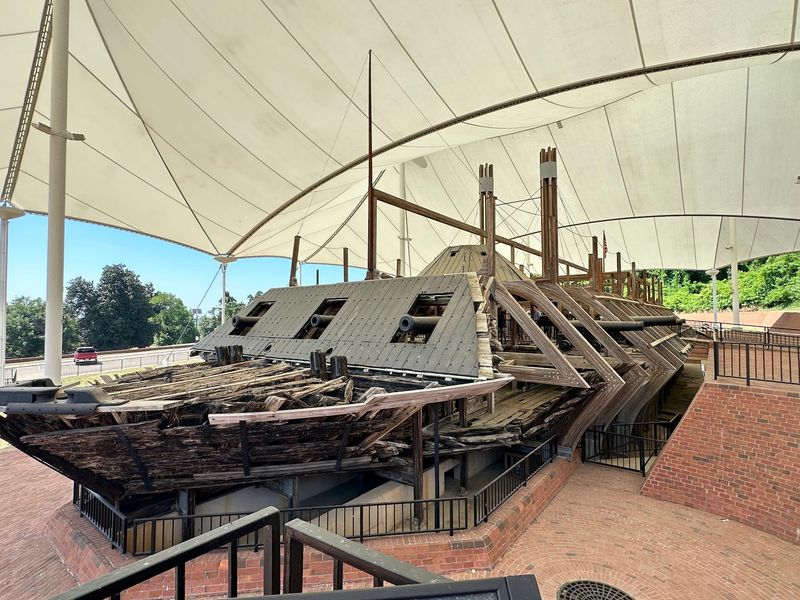
Then there is the USS Cairo. The ironclad gunboat sank in 1862, sat in river mud for a century, and was raised and partially restored.
Seeing its timbers and iron plating up close is strange and fantastic. The attached museum displays artifacts pulled from the wreck, everyday objects that belonged to actual sailors.
The auto tour route runs about sixteen miles. Driving it straight through is possible, but stopping at the overlooks is where the park really opens up.
Bicyclists love this road for the hills and the shade. Walkers stick closer to the visitor center end.
Give it two hours if you are moving briskly, half a day if you actually want to read markers and see the gunboat. Deer wander the grounds at dusk like they own the place.
Head to 3201 Clay Street, Vicksburg, MS 39183.
5. Ruins Of Windsor
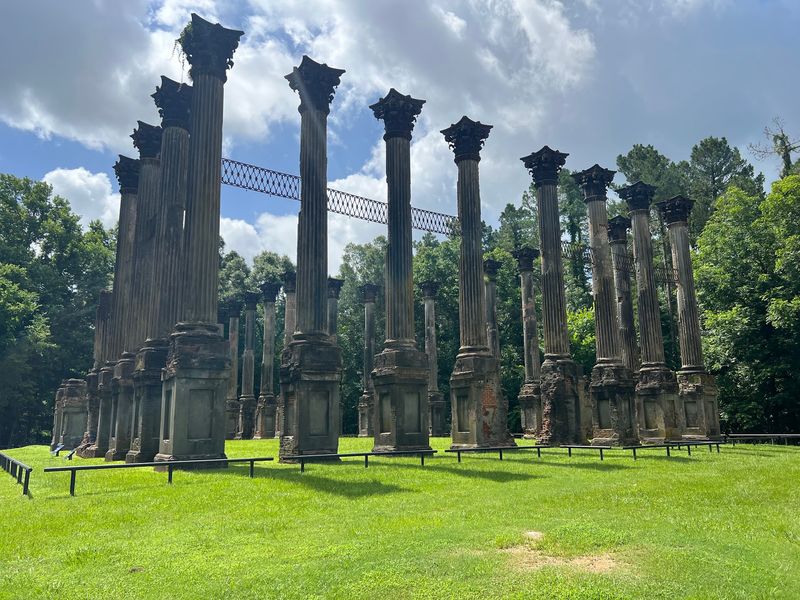
Twenty-three Corinthian columns stand in a clearing in the woods, holding up absolutely nothing. Five partial columns keep them company.
What burned in 1890 was the largest antebellum Greek Revival house in Mississippi. A dropped cigar during a party is the usual explanation, and the whole thing went up fast.
Everything wooden vanished. The brick and plaster columns survived, along with a few iron stair railings, and that is the entire mansion now.
The effect is genuinely eerie. Sunlight filters through the trees, hits the columns, and the space between them reads like rooms that are still there somehow.
During the Civil War, the mansion had a cupola that Union forces used as an observation and signal post. The building also served as a hospital for wounded troops.
Odd detail worth knowing: no photograph of the completed house was known for decades. A sketch made by a Union soldier eventually turned up and finally showed what Windsor looked like.
Getting there means a drive down Rodney Road, which is narrow and lined with trees. The last stretch feels like a shortcut you were not supposed to find.
A raised walkway and viewing area let you circle the ruins without trampling the site. The columns are fenced, so admiring from a short distance is the rule.
Filmmakers have shot here more than once, which surprises nobody who has seen the place at golden hour. Early morning is quieter, and the light is softer.
Bring bug spray in warm months, because the woods are generous with mosquitoes. Twenty minutes is plenty, though most people stay longer just staring.
Visit it at Rodney Road, Port Gibson, MS 39150.
6. Port Gibson
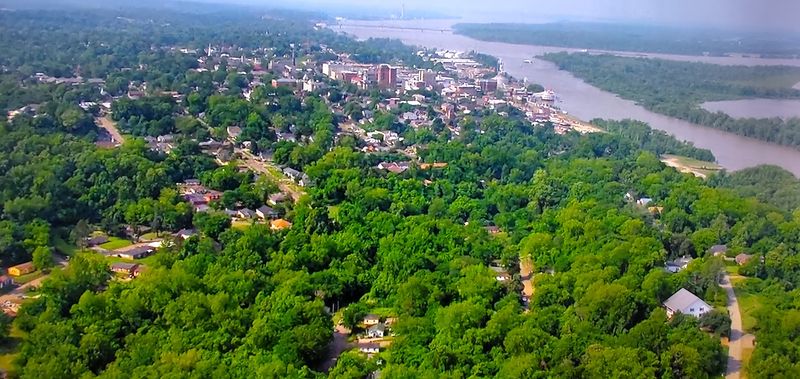
A town with a reputation for being spared is a rare thing. Legend holds that General Ulysses S. Grant called Port Gibson too beautiful to burn, and the buildings still standing make the story easy to believe.
Founded in 1729, it is Mississippi’s third oldest town. That head start shows up in the architecture, which piles up styles like a family photo album.
Greek Revival sits next to Federal. Italianate leans toward Victorian.
Church Street has the densest concentration, and old trees arch over the pavement to form a green tunnel.
Here is the fun wrinkle. Church Street is also Highway 61, the legendary blues route, so you are driving a music landmark and a historic district at the same time.
The First Presbyterian Church is the landmark people remember. Its steeple is topped with a large golden hand, index finger pointing straight up.
That hand replaced an earlier wooden version and has been pointing skyward for well over a century. Nobody forgets it once they have seen it.
The town is small enough to walk end to end. Historic markers fill in the gaps, and the pace is relaxed to the point of drowsiness.
Photographers should aim for late afternoon, when the light comes through the tree canopy in stripes. Mornings are good for quiet and birdsong.
Several antebellum homes and churches sit within a few blocks of each other. Some are private, so admiring from the sidewalk is the respectful move.
Anyone driving between Natchez and Vicksburg should build in an hour here. Rushing past would be a shame.
You can find First Presbyterian Church of Port Gibson at 605 Church St, Port Gibson, MS 39150.
7. Delta Blues Museum
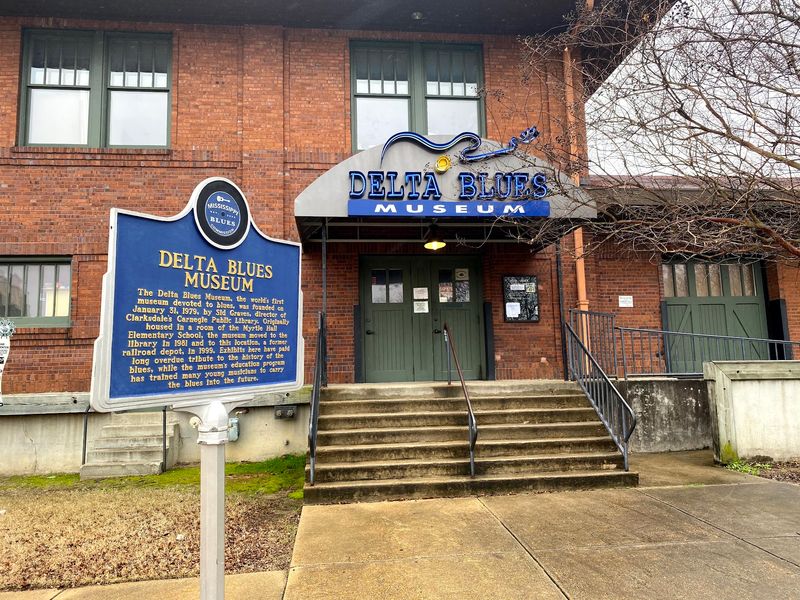
Clarksdale gets called the birthplace of the blues, and the town wears that title without apology. Right downtown sits the Delta Blues Museum, the oldest music museum in Mississippi.
It lives inside the old freight depot, a brick building from 1918 that has good bones and better acoustics. Trains once loaded cotton where guitars now hang on walls.
The collection traces the music from field hollers through juke joints to the amplified sound that reshaped everything. Instruments, photographs, stage clothes, handwritten lyrics.
One centerpiece is a reconstruction of the cabin where Muddy Waters lived on Stovall Plantation. A wooden guitar built from one of its timbers sits nearby.
That single object connects a sharecropper’s cabin to arenas full of people, which is the whole story of the blues in one display case. Hard to top that.
Exhibits rotate, so the museum does not feel frozen. Legends from across the Delta get their space, and the labels are written for people who are curious rather than expert.
There is also an education program that teaches local kids to play. Sometimes you can hear practice happening in the building, which is the best possible soundtrack.
The surrounding blocks are worth a stroll. Murals, record shops, and street corners with markers explaining who played where and when.
Give the museum about an hour, more if you read everything. Photography rules vary by exhibit, so check at the desk.
Anyone driving the northern end of this route should treat Clarksdale as a required stop. The farmland outside town produced the music inside it, and that link is impossible to miss once you see it.
The address is 1 Blues Alley, Clarksdale, MS 38614.
8. Delta Research And Extension Center

Flat land stretching to the horizon is the Delta’s signature move, and the soil under it ranks among the richest farmland anywhere on earth. Cotton, rice, soybeans, and corn all thrive in it.
Driving through, the fields blur together into one enormous green or brown sheet depending on the season. The Delta Research and Extension Center explains what is actually happening out there.
The place is a working farm covering about 4,600 acres. It grew out of an old cotton plantation, which is a fitting origin story for this part of the state.
Research plots test irrigation methods, pest management, soil conservation, and crop varieties. The findings get handed straight to farmers across the region.
Watching agriculture treated as science is surprisingly interesting. Rows are labeled, equipment is precise, and every field has a purpose beyond harvest.
Catfish aquaculture research happens here too, which makes sense once you realize how many ponds dot the Delta. The region supplies a large share of farm-raised catfish in the country.
Seasons change the whole look of the property. Spring is bare dirt and planting equipment, midsummer is dense and green, fall brings cotton bolls that make the fields look snowed on.
Cotton harvest is the showstopper. Round modules wrapped in bright plastic sit in the fields like giant marshmallows.
Access to specific areas can be limited since research is ongoing, so checking ahead about tours is smart. The roads around the center offer plenty to look at regardless.
Ending this drive among the crops feels right. The bluffs, the mansions, the towns, the music, all of it traces back to this dirt.
Visit it at 82 Stoneville Road, Stoneville, MS 38776.