
This Beautiful Wisconsin Public Garden Belongs On Your Spring Bucket List
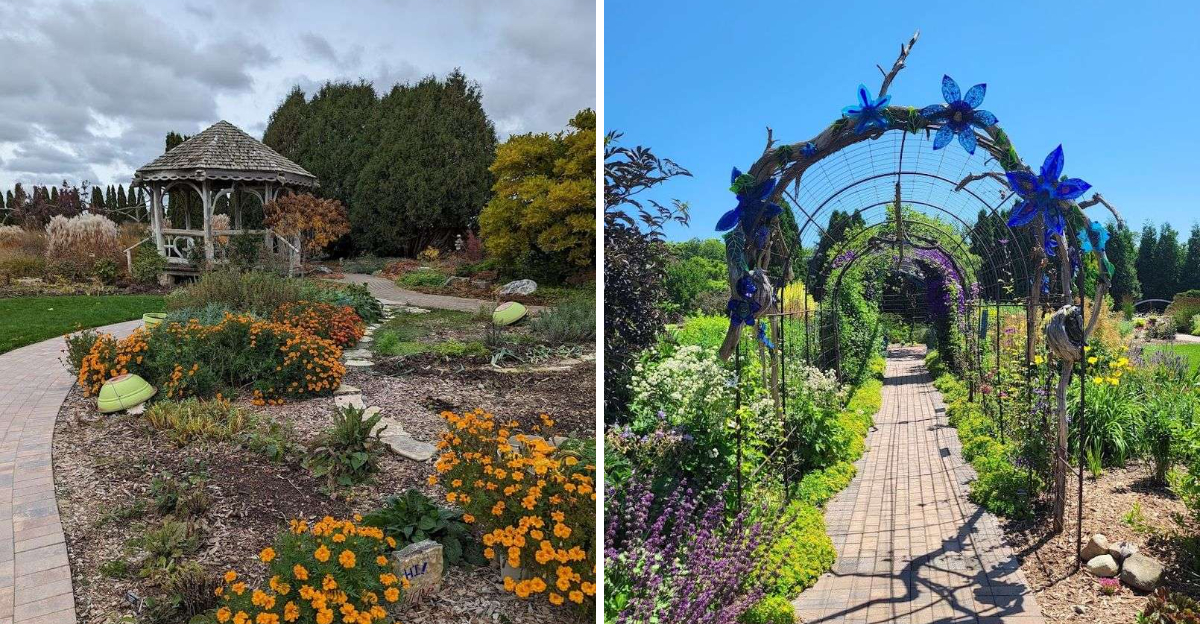
Spring has a way of making Wisconsin feel brand new again. Flowers start showing off, paths feel more inviting, and even a quiet garden can turn into the best part of the day.
In Sturgeon Bay, one public garden offers more than pretty blooms. It feels calm, creative, and carefully cared for, with displays that give visitors fresh ideas for their own yards.
Volunteers have shaped the space into something both relaxing and useful, part peaceful stroll and part outdoor classroom. Seasonal colour, thoughtful plantings, and little surprises make each turn feel different.
It is the kind of spring stop that asks you to slow down, look closer, and enjoy Wisconsin at its gentlest.
It Is The Only Free Public Garden In Door County
Access to beauty should not come with a price tag, and The Garden Door proves that point every day it opens. Admission is completely free, making it one of the most democratic green spaces in the region.
Families, solo travelers, and curious gardeners can all visit without worrying about entry fees or reservations.
The lack of cost does not mean a lack of quality. Every corner of this garden shows the care and attention given by those who maintain it.
Benches are placed thoughtfully, paths are kept clear, and plants are labeled for those who want to learn.
Many public gardens charge admission to cover operating costs, but The Garden Door operates on donations and volunteer effort. That model allows it to remain accessible to everyone, from retirees on fixed incomes to young parents looking for an afternoon activity.
The garden sits quietly along Highway 42, ready to welcome anyone who stops by.
The Garden Is Maintained By Door County Master Gardeners
Behind every thriving garden is a group of people who show up regularly, and at The Garden Door, those people are Door County Master Gardeners. These volunteers bring knowledge, patience, and a shared commitment to creating something meaningful.
They plant, prune, weed, and plan each season with precision.
Master Gardeners are trained through university extension programs, which means their work is informed by science as well as experience. They understand soil health, pest management, and plant selection in ways that casual gardeners might not.
That expertise shows in the variety and vigor of what grows here.
The garden also serves as a teaching site. Classes and workshops are held throughout the year, giving locals and visitors a chance to learn directly from those who manage the space.
It is a living example of what community effort can accomplish when skill and dedication come together.
It Sits At 4312 Highway 42 In Sturgeon Bay
Finding The Garden Door requires no special navigation skills. The address is 4312 Highway 42, a straightforward location that sits just north of Sturgeon Bay.
Drivers heading up the peninsula will pass it on their way to other Door County destinations, and many stop without planning to.
The garden sits behind a horticultural research center, which means it can be easy to miss at highway speeds. A small sign marks the entrance, and parking is available near the front.
Once you turn in, the space opens up quickly, revealing pathways and plantings that stretch beyond what you might expect from the road.
Sturgeon Bay itself is a working town with shipyards, shops, and a strong sense of local identity. The garden adds a softer element to that landscape, offering a pause point for travelers who want to stretch their legs and see something green before continuing north.
The Garden Features 20 Unique Display Areas
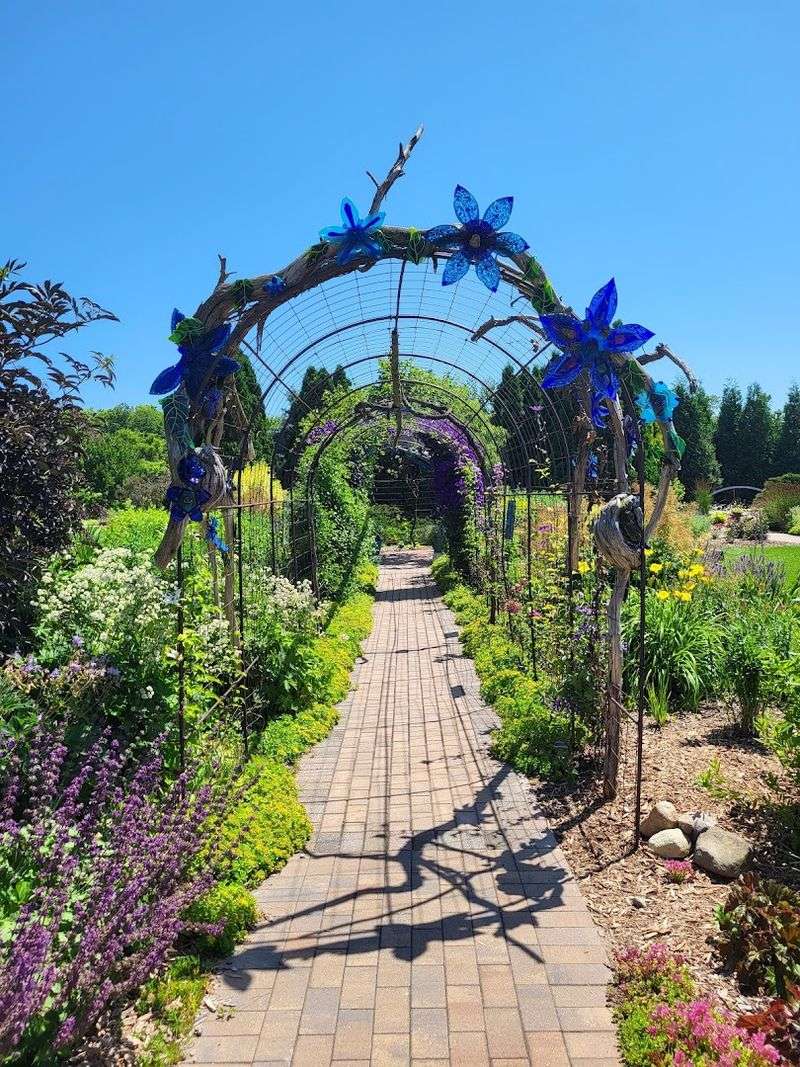
Variety keeps a garden interesting, and The Garden Door delivers that in the form of 20 distinct display areas. Each section has its own focus, from edible plants to ornamental grasses to perennials that thrive in Wisconsin’s climate.
Walking through the space feels like moving between chapters of a book.
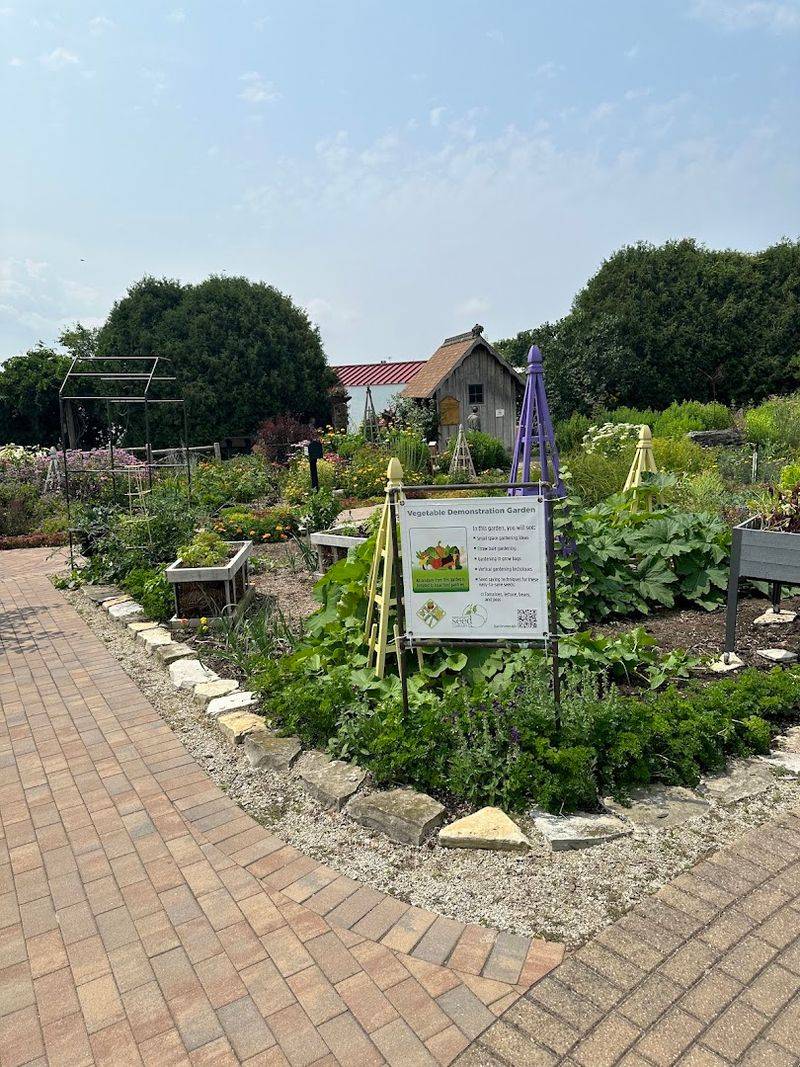
Some displays are practical, showing how vegetables can be grown in small spaces or how herbs can be arranged for both beauty and function. Others are purely aesthetic, designed to demonstrate color combinations or plant pairings that work well together.
Labels throughout the garden identify species and varieties, turning a casual walk into an educational experience.
The variety also means that different visitors will connect with different parts of the garden. Someone interested in native plants will find plenty to study, while a photographer might gravitate toward the more dramatic blooms.
Spring is an ideal time to visit, as many of the displays reach peak interest when temperatures warm and growth accelerates.
A Fairy Garden Adds A Playful Spring Touch
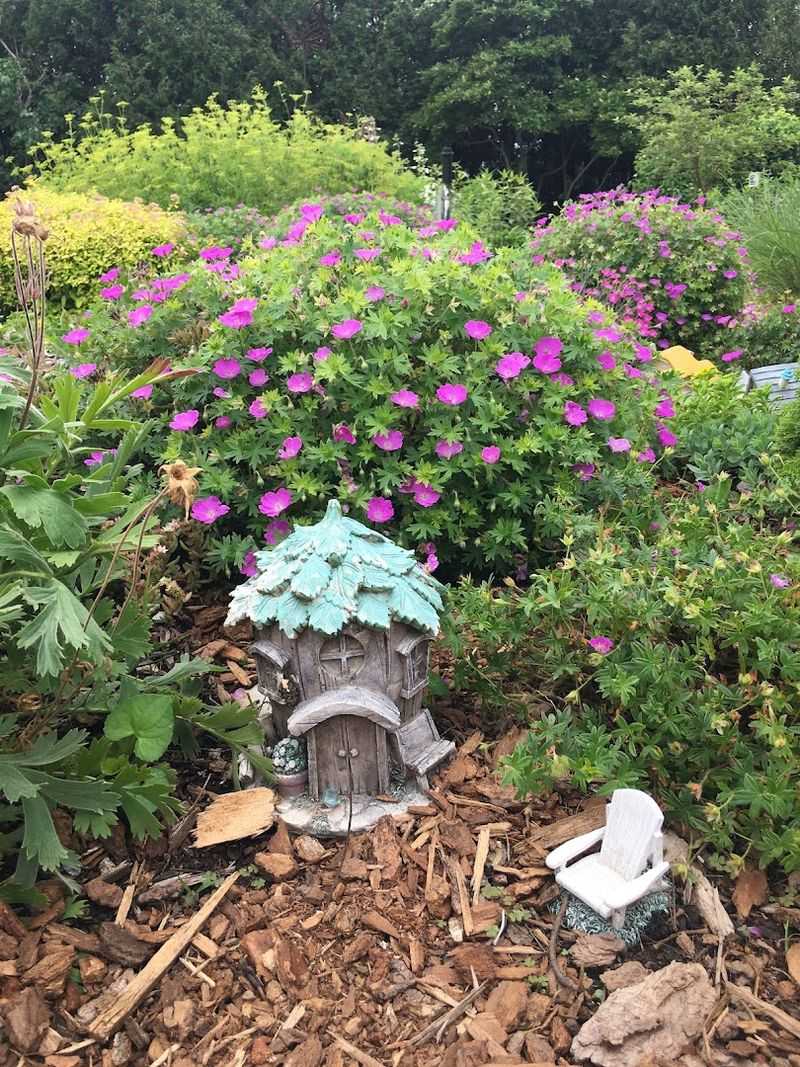
Not every garden feature needs to be serious, and the fairy garden at The Garden Door embraces that truth. This section is designed with children in mind, though adults often stop to admire it as well.
Miniature structures, tiny plants, and imaginative details create a space that invites closer inspection.
Fairy gardens have become popular in recent years, but they fit naturally into a public garden setting. They encourage creativity and storytelling, giving young visitors something to engage with beyond just looking at flowers.
Parents appreciate the distraction, and kids often remember the fairy garden long after other details have faded.
Spring is a particularly good time to see this area, as fresh growth brings new life to the miniature landscape. Moss brightens, small blooms appear, and the whole scene feels renewed.
It is a small part of the overall garden, but it adds a layer of charm that sets The Garden Door apart from more formal spaces.
The Pollinator Garden Brings Colour And Movement
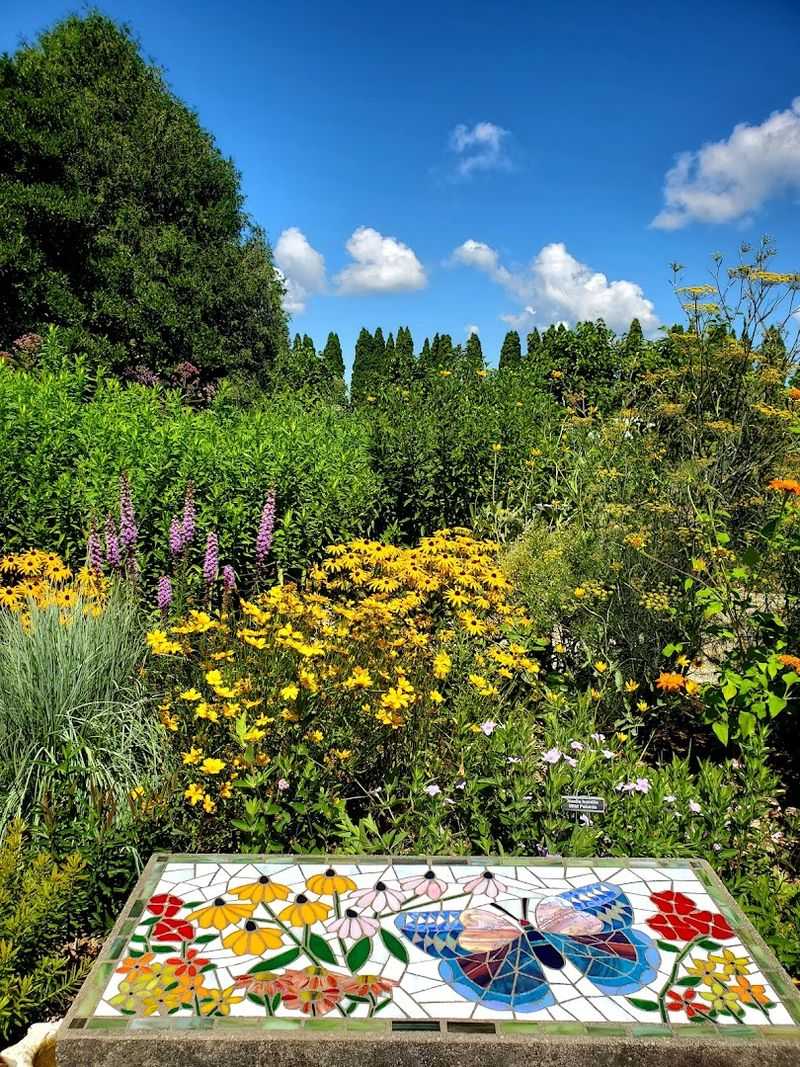
Pollinators are essential to any healthy garden, and The Garden Door dedicates an entire section to attracting them. This area is planted with species that provide nectar and pollen for bees, butterflies, and other beneficial insects.
In spring, the first blooms draw early pollinators, and the activity increases as the season progresses.
Watching a garden come alive with movement changes the experience from static to dynamic. Butterflies land on coneflowers, bees move methodically from bloom to bloom, and the air hums with purpose.
The pollinator garden is not just about visual appeal, though it certainly has that. It is also a demonstration of ecological function, showing how gardens can support wildlife.
Many of the plants here are native to Wisconsin, which means they are adapted to local conditions and require less maintenance. That makes them good choices for home gardeners as well.
The labels identify which plants attract which pollinators, offering practical information for anyone looking to create a similar space at home.
The Double Kaleidoscope Is One Of Its Most Fun Features
Some garden features are purely functional, and others are built for fun. The double kaleidoscope falls into the second category.
This installation allows visitors to look through two large tubes and see the garden reflected and refracted into symmetrical patterns. It turns ordinary plantings into abstract art.
Children are naturally drawn to the kaleidoscope, but adults often spend just as much time looking through it. The patterns change depending on what is blooming nearby, which means the view shifts throughout the season.
In spring, fresh greens and early flowers create a softer palette than the bold colors of summer.
Interactive elements like this encourage visitors to slow down and engage with the space in a different way. Instead of just walking past a flower bed, you are invited to see it transformed.
The kaleidoscope is a reminder that gardens can be playful as well as peaceful, and that discovery does not always require seriousness.
Paved Paths Make The Garden Easy To Explore
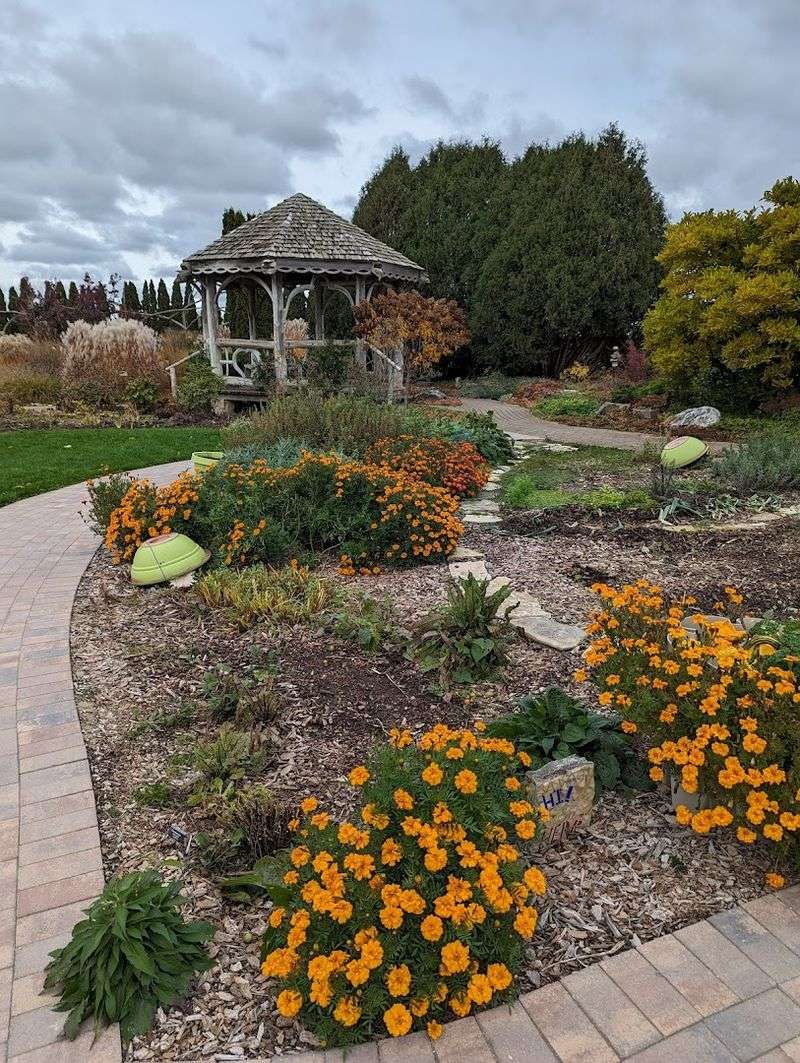
Accessibility matters, and The Garden Door takes it seriously. Paved paths wind through the entire space, making it easy for visitors with mobility challenges to explore without difficulty.
Wheelchairs, strollers, and walkers all move smoothly along the routes, and the gentle grade means no steep climbs.
The paths are wide enough for two people to walk side by side, which makes the garden a comfortable place for couples or friends to visit together. Benches are placed at intervals, offering spots to rest and take in the surroundings.
The design prioritizes ease of movement without sacrificing beauty.
Good pathways also help protect the plantings. When visitors have clear routes to follow, they are less likely to trample garden beds or compact soil around delicate plants.
The paved surfaces keep the garden tidy even after rain, preventing muddy tracks and erosion. It is a practical choice that benefits everyone who visits.
The Pond, Rose Garden, And Shade Garden Add Variety
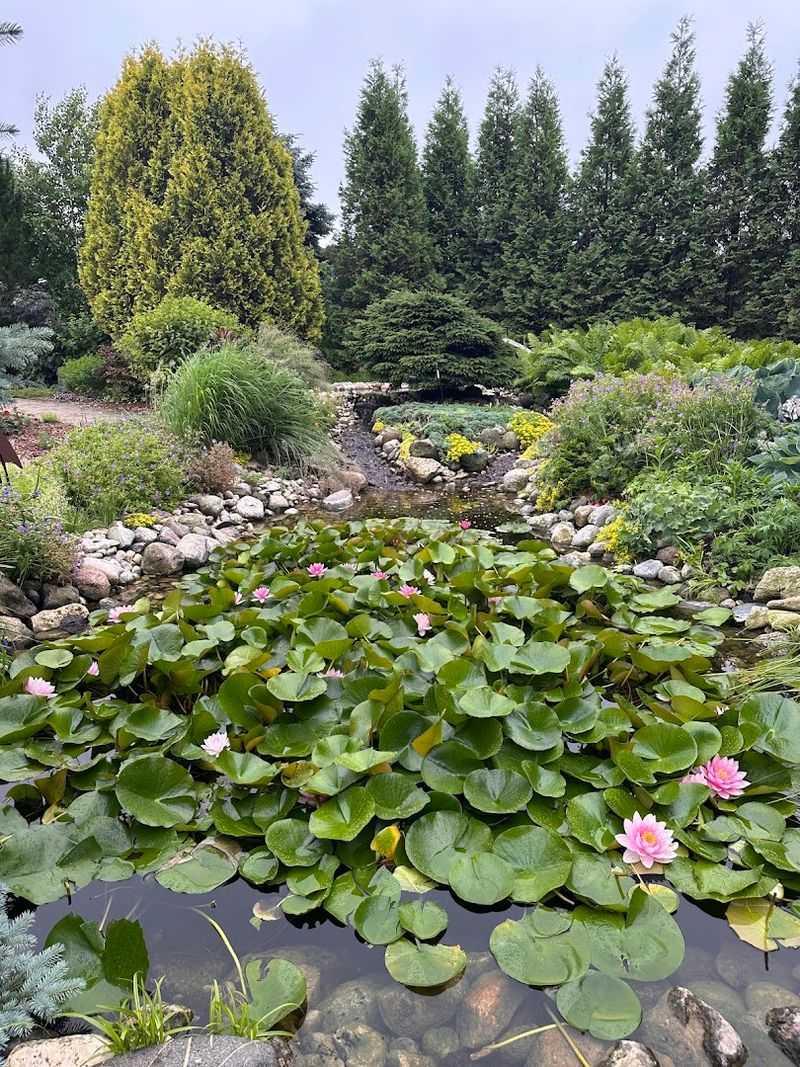
Three distinct areas within The Garden Door offer different moods and experiences. The pond provides a water feature that attracts birds and adds reflective beauty to the landscape.
Aquatic plants grow along the edges, and the still surface mirrors the sky and surrounding greenery.
The rose garden brings classic elegance, with varieties chosen for their performance in Wisconsin’s climate. Roses require careful management, and the volunteers here have selected types that bloom reliably without excessive fussing.
Spring brings the first flush of growth, with buds forming and early blooms beginning to open.
The shade garden demonstrates that not all beautiful plantings need full sun. Hostas, ferns, and other shade-tolerant species thrive in this section, showing how darker corners of a yard can be just as interesting as sunny spots.
Each of these three areas contributes something different, and together they make the garden feel complete rather than repetitive.
A Gazebo And Pergola Offer Peaceful Places To Pause
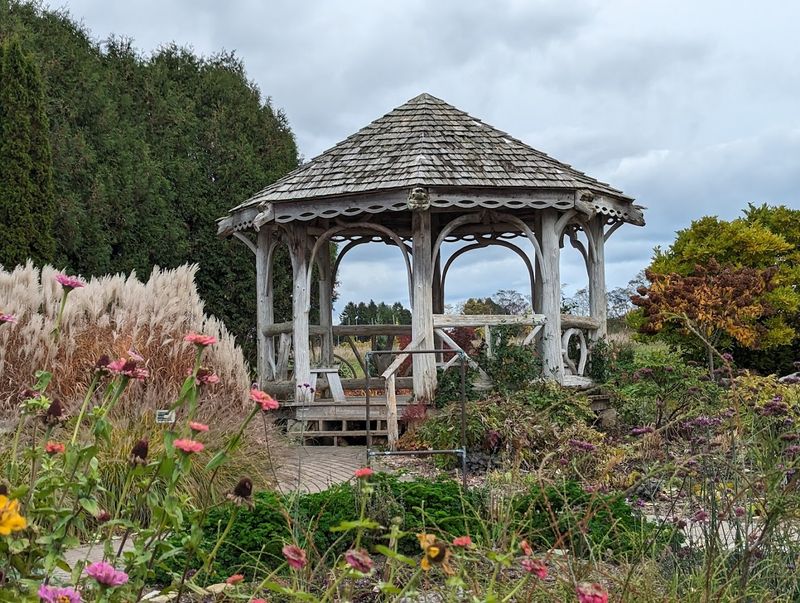
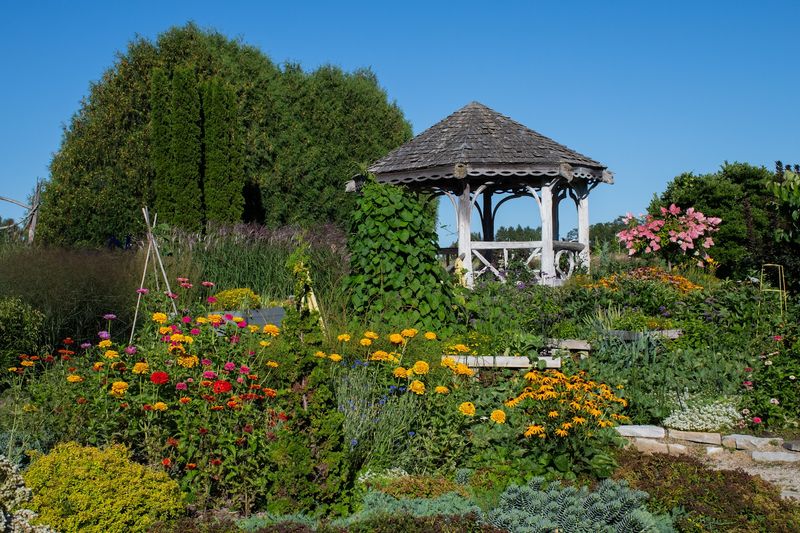
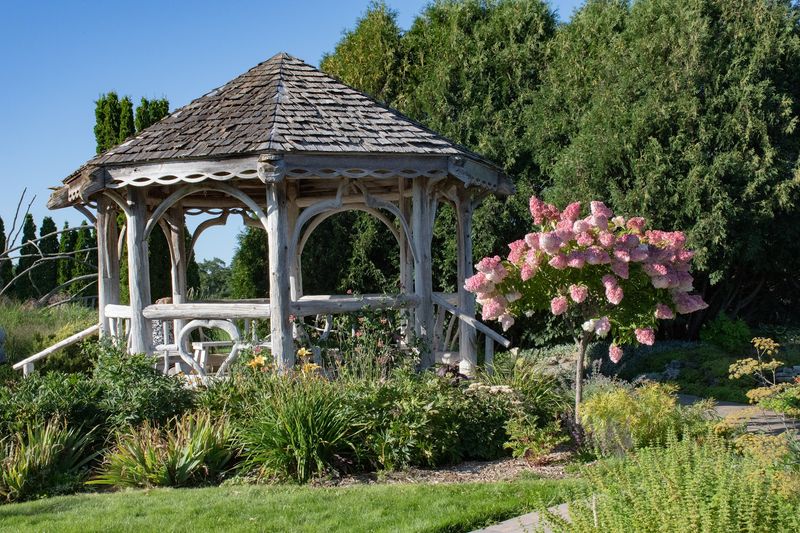
Gardens are meant to be experienced slowly, and The Garden Door provides structures that encourage exactly that. A gazebo offers a shaded spot to sit and observe the surrounding plantings, while a pergola creates a covered walkway draped with climbing plants.
Both serve as focal points and as functional resting places.
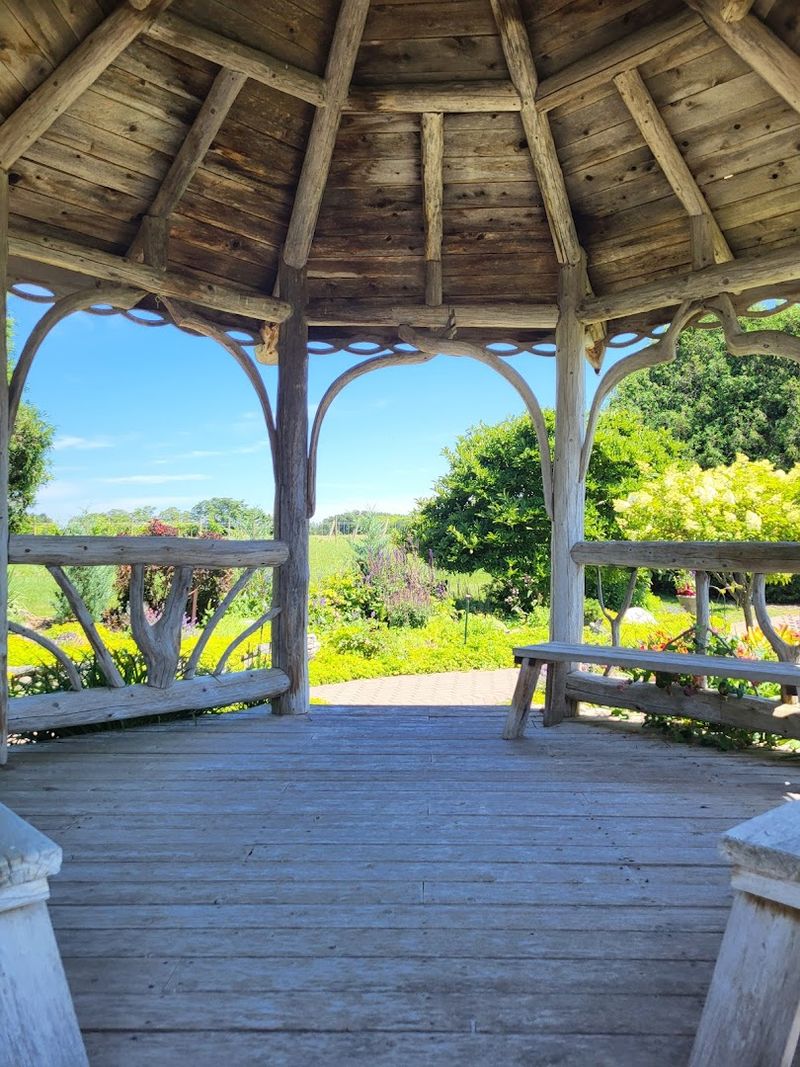
The gazebo is positioned to offer views of multiple garden areas, making it a good spot for photographers or anyone who wants to take in the scene without walking. Benches inside provide seating, and the open design allows breezes to pass through even on warm days.
The pergola adds vertical interest to the garden and supports vines that will fill in more completely as the season progresses. In spring, the structure is still relatively open, but the promise of future growth is visible in new shoots and tendrils.
These architectural elements give the garden a sense of permanence and intention, showing that it was designed with care.