
The Mississippi Lighthouse Still Guiding Boats After More Than 150 Years
Some landmarks pose for photos. This Mississippi lighthouse still has a job to do.
Along the Gulf Coast, a cast-iron tower has spent more than 150 years watching the water, guiding boats, and standing firm while hurricanes, wars, salty air, and time itself tried to wear it down.
That kind of survival gives the place a different feeling than your average historic stop. It is not just old. It is resilient, practical, and still connected to the lives moving around it every day.
Visitors come for the view and the history, but the real pull is realizing this tower has seen generations of sailors, storms, and shoreline changes without losing its purpose. In a state full of stories, this Mississippi lighthouse tells one of the strongest.
It proves some pieces of history do not retire. They keep shining.
A Tower That Refuses To Quit
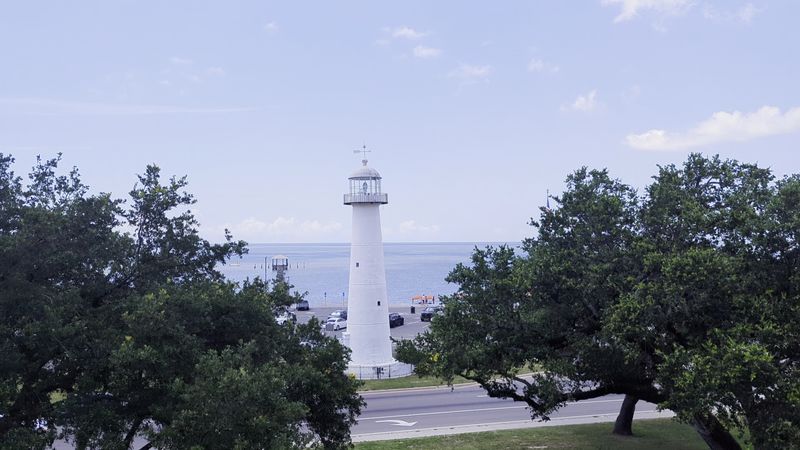
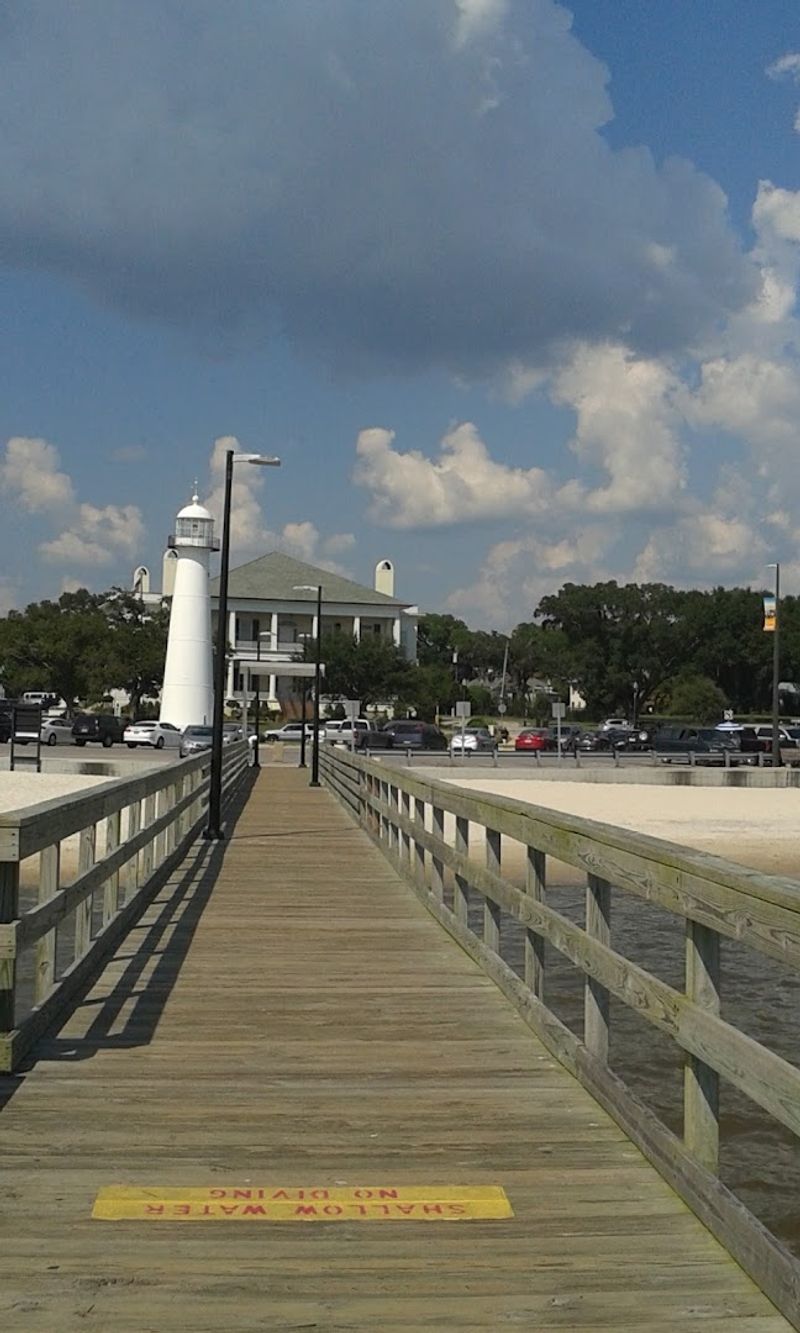
Not every building gets better with age, but the Biloxi Lighthouse seems to thrive on the challenge. Standing 64 feet tall on the median of US Highway 90, this white iron tower has been doing its job since 1848 without so much as a permanent retirement plan.
That kind of dedication deserves serious respect.
Congress authorized its construction on March 3, 1847, and the Baltimore foundry Murray and Hazlehurst completed the build in just about six weeks. The cast-iron exterior was paired with an inner lining of locally fired bricks, making it both tough and resourceful.
It was one of the first cast-iron lighthouses built in the entire Southern United States. Today it holds a 4.6-star rating. People drive miles out of their way just to stop and stare at it.
Some landmarks feel like obligations on a checklist. This one feels like a reward. The lighthouse is open daily for guided tours, and climbing the spiral staircase gives you a view that makes the effort completely worth it. Plan your visit and go see it for yourself.
Meet The Biloxi Lighthouse At 1000 Beach Blvd
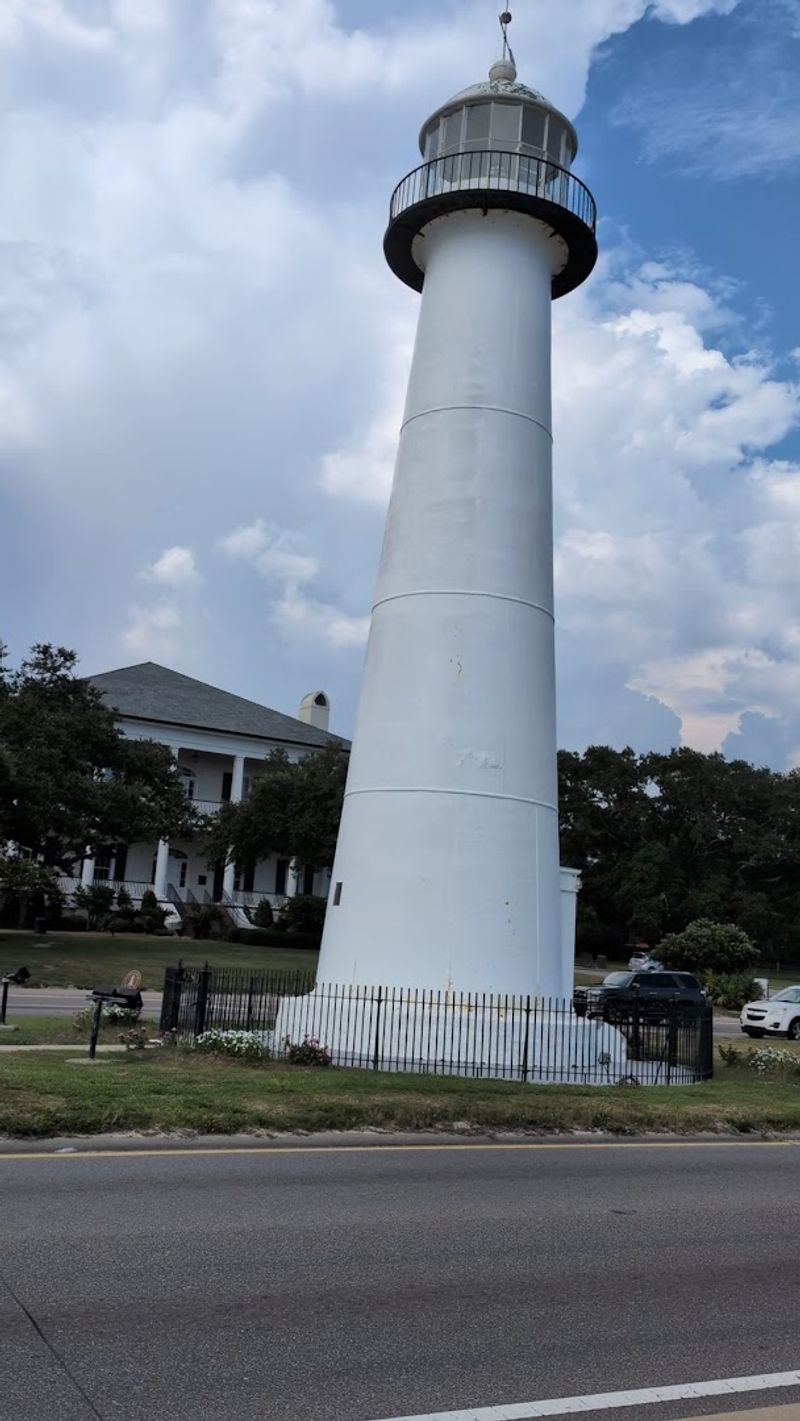
Right in the middle of a four-lane highway sits one of Mississippi’s most beloved landmarks. The Biloxi Lighthouse at 1000 Beach Blvd, Biloxi, MS 39530 is not hiding behind a fence or tucked away on a private island.
It is literally in the road, and somehow that makes it even more impressive.
Authorized by Congress in 1847 and completed in 1848, the lighthouse was built to guide ships navigating the Mississippi Sound toward the Port of New Orleans.
It also marked the narrow channel leading north into Biloxi’s local harbor, helping steamboats and mail packets find their way safely to shore.
The address is easy to find, the parking is manageable, and beach access is just steps away. Visitors can enjoy the surrounding area, snap photos with the Gulf as a backdrop, and even spot the statue of Apollo 13 astronaut Fred Haise, a Biloxi native, nearby.
The lighthouse is listed on the National Register of Historic Places and was designated a Mississippi Landmark in 1987. Reaching it feels less like a detour and more like the whole point of the trip.
Storms Hit Hard But The Light Stayed On
Hurricanes have a habit of reminding the Gulf Coast who is really in charge. The Biloxi Lighthouse has met that reminder head-on more times than most structures ever should.
It survived the storms of 1947, Hurricane Camille in 1969, and Hurricane Katrina in 2005, each time refusing to go quietly.
After an 1860 hurricane caused the structure to tilt significantly, workers straightened it in 1866 by carefully excavating sand from around the base.
Hurricane Katrina brought a storm surge of 21.5 feet inside the tower, destroying the electrical system and severely damaging the interior brick lining.
A 14-month restoration costing $400,000 was completed in 2010, returning the lighthouse to its original condition.
Inside the tower today, blue lines mark the historical water levels from various hurricane surges. Standing at the base and looking up at those marks gives you a very clear sense of what 21.5 feet of water actually means.
It is sobering and awe-inspiring in equal measure. The lighthouse did not just survive those storms.
It kept a record of them, written in blue paint on iron walls, so that no visitor would ever forget what the Mississippi Gulf Coast has endured and overcome.
The Fresnel Lens And Its Brilliant Legacy
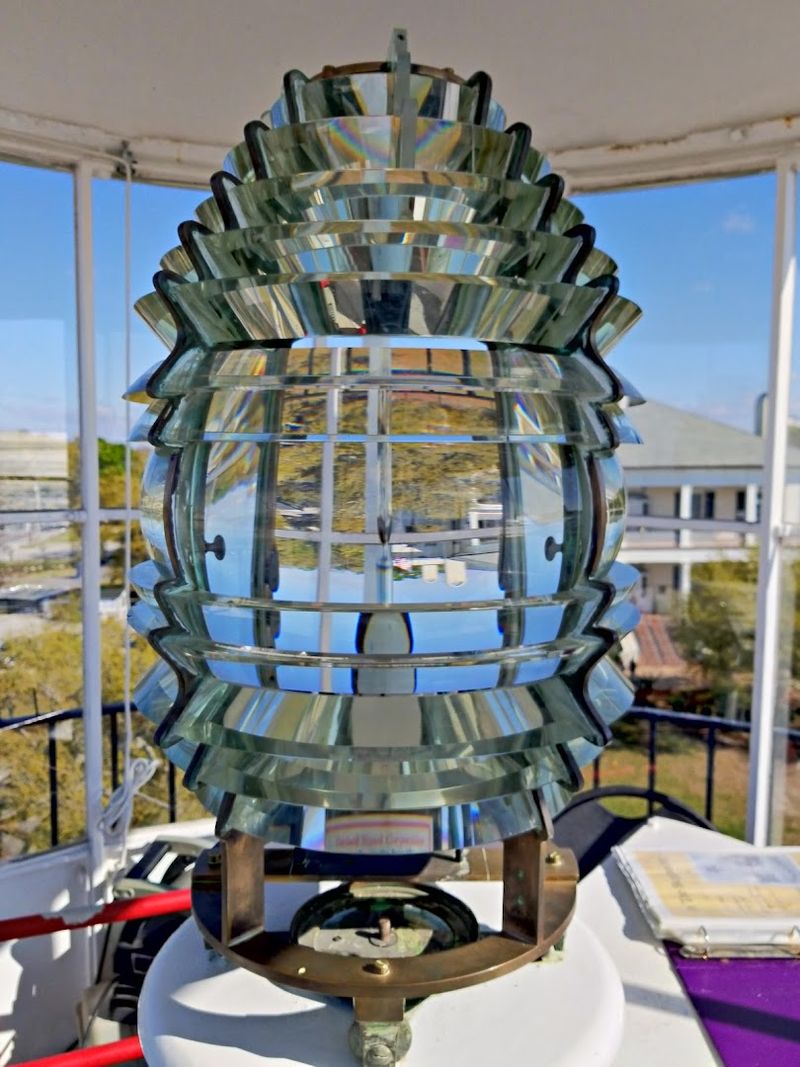
A lighthouse without a proper lens is just a tall building with ambitions. The Biloxi Lighthouse got serious about its optics in 1856 when a fourth-order Fresnel lens was installed in the lantern room.
French physicist Augustin-Jean Fresnel designed these lenses to maximize the reach of light using carefully arranged glass prisms, and the technology was a genuine revolution in maritime safety.
After the Civil War, the lens was swapped for a fifth-order Fresnel lens, a slightly smaller but still highly effective piece of equipment. The current glass in the lantern room dates back to 1926, meaning it has been doing its job for nearly a century without complaint.
That kind of quiet reliability is easy to overlook but impossible to overvalue.
For ships navigating the Mississippi Sound and heading toward the Port of New Orleans, the beam from that lantern room was the difference between finding safe harbor and running aground.
Every sailor who passed safely through those waters owed something to the quality of that glass.
Visitors who make it to the top of the spiral staircase get to see the lantern room up close, and the view from that height makes the climb feel like an entirely reasonable trade.
A Landmark Written Into National History
Getting onto the National Register of Historic Places is not a participation trophy. It requires a structure to meet strict criteria for historical, architectural, or cultural significance.
The Biloxi Lighthouse earned its listing in 1973, and in 1987 it was further recognized as a Mississippi Landmark, cementing its status as one of the state’s most important heritage sites.
The recognition makes sense when you consider what the lighthouse represents. It guided commerce into the Port of New Orleans.
It was maintained by women for a record number of years. It survived multiple major hurricanes.
It was built using innovative cast-iron construction techniques that were rare in the South at the time. Every one of those facts carries genuine historical weight.
For visitors who appreciate context when they travel, the Biloxi Lighthouse delivers it in full. The visitor center next to the lighthouse provides videos, exhibits, and historical information that fill in every gap.
Picking up a pamphlet there and then walking around the base of the lighthouse turns a casual stop into a genuinely educational experience. History does not always announce itself dramatically.
Sometimes it just stands quietly on a highway median and waits for you to pay attention.
The Spiral Staircase And The View From The Top
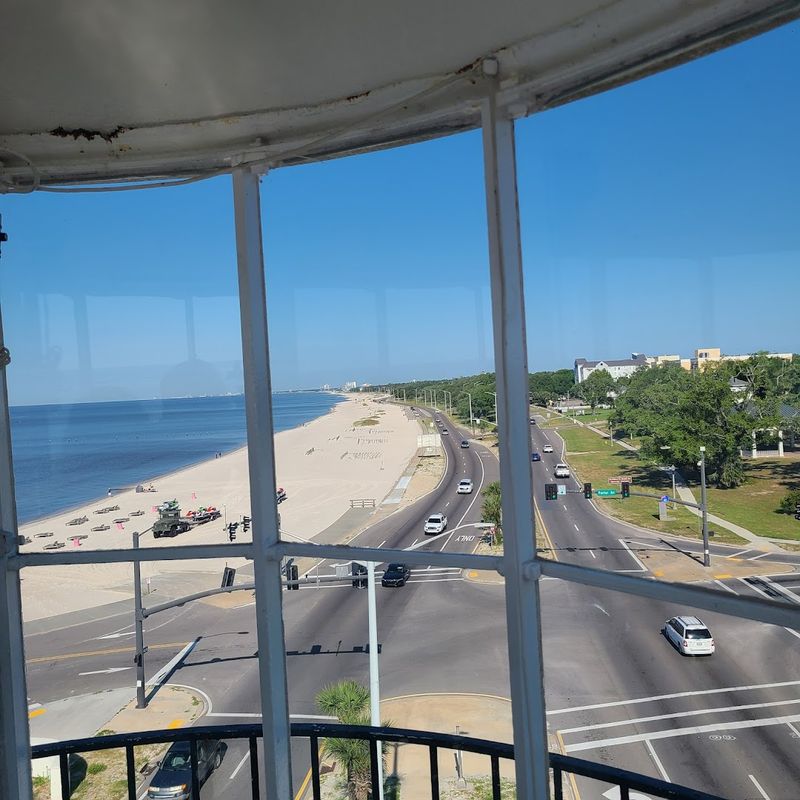
Climbing the Biloxi Lighthouse is not a passive experience. The spiral staircase winds upward through a narrow cast-iron tower, and at the very top there is a short ladder that leads to the lantern room landing.
It is the kind of climb that asks something of you, and then rewards you generously for showing up.
Tours are available in the morning hours, and the lighthouse is typically open for climbing daily during that window. Calling ahead to confirm times is always a smart move.
A guide accompanies visitors up the staircase and shares the history of the lighthouse along the way, which makes the ascent feel like a story unfolding step by step rather than just a physical workout.
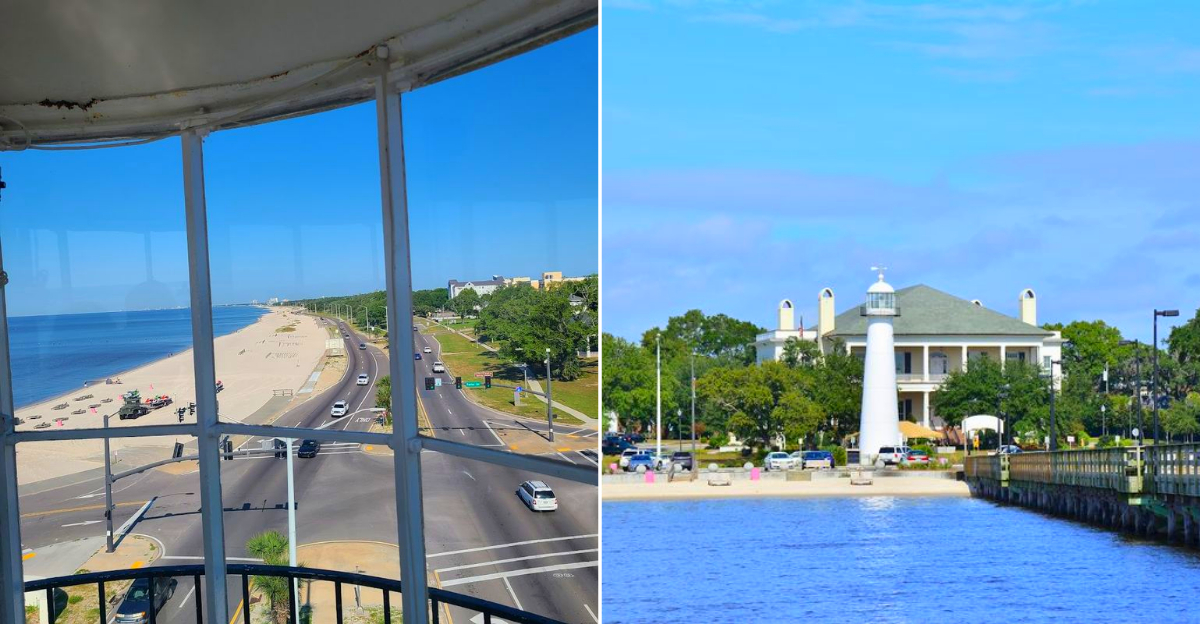
From the top you get a clear view of the Gulf of Mexico, the highway below, and the surrounding Biloxi coastline.
The lantern room itself is compact but fascinating, and the binder of historical photographs and information kept at the top is worth spending a few minutes with before heading back down.
Blue lines marking historic hurricane water levels are visible inside the tower on the way up. That detail alone makes the climb feel like something much more meaningful than a sightseeing stop.
Sunrises, Sunsets, And The Beach Next Door
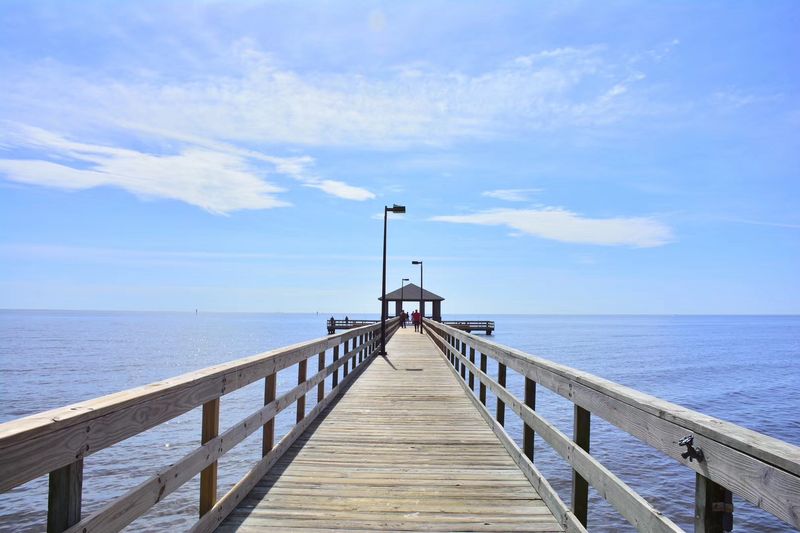
Waking up early has its rewards, and the Biloxi Lighthouse area delivers one of the finest morning views on the Mississippi Gulf Coast.
The sun rises over the Gulf of Mexico with the white lighthouse standing quietly against the changing sky, and the combination is the kind of scene that makes people stop mid-sentence to stare.
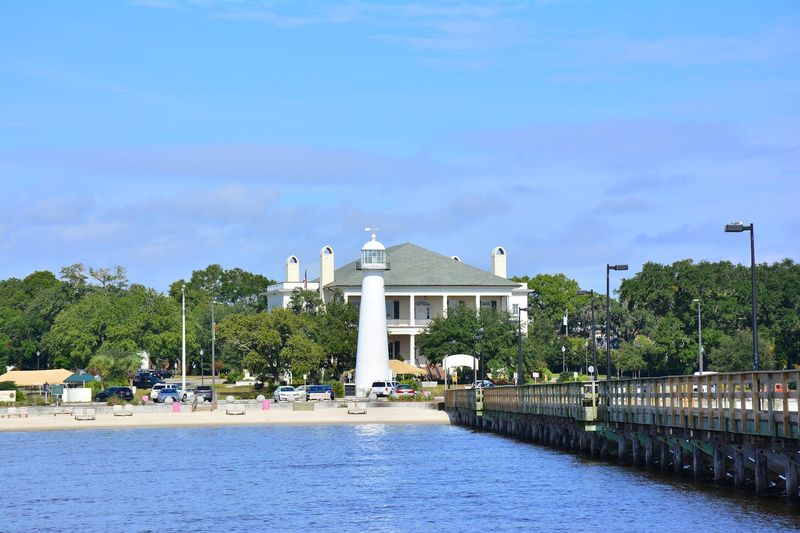
The beach directly across from the lighthouse is clean, accessible, and genuinely pleasant for a morning walk. The sand is notably white and fine, and the proximity to the lighthouse gives the whole stretch a historical atmosphere that most beaches simply cannot offer.
Parking is available nearby, and beach access is just a short walk from the lighthouse grounds.
Sunset visits are equally worthwhile. The lighthouse catches the last of the evening light in a way that photographers find irresistible, and the Gulf takes on colors that no filter can accurately reproduce.
Families, solo travelers, and couples all find something worth their time here. The combination of natural beauty, historical significance, and easy access makes the Biloxi Lighthouse area one of those rare spots where you always stay longer than you planned.
Bring a camera and leave yourself extra time.
Fred Haise, NASA, And A Hometown Connection
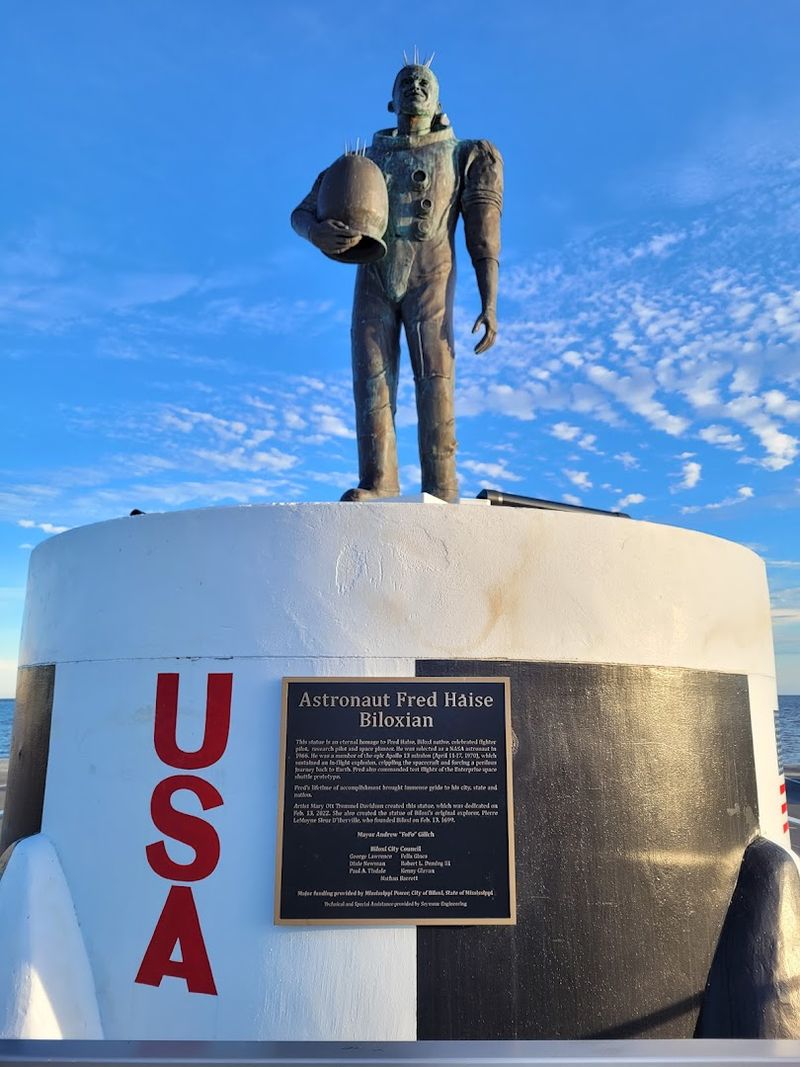
History at the Biloxi Lighthouse does not stop at maritime tales and hurricane records. A short walk from the lighthouse stands a statue of Fred Haise, the NASA astronaut who was born and raised right here in Biloxi.
Haise served as the Lunar Module Pilot on the Apollo 13 mission in 1970, one of NASA’s most dramatic and well-documented space missions.
The statue adds an unexpected layer to the lighthouse visit. You come for a 19th-century iron tower and leave with a reminder that Biloxi has produced greatness in more than one century and more than one field.
The visitor center also features information about Biloxi’s NASA connections, which surprises many first-time visitors who did not expect a space history exhibit alongside their lighthouse tour.
Finding both a historic lighthouse and an Apollo 13 connection in the same parking lot is the kind of travel bonus that makes a stop feel genuinely special rather than just convenient.
Biloxi has a way of offering more than you expect, and the area around the lighthouse is a perfect example of that generous spirit.
Spend time with the statue, read the plaques, and let the full scope of this community’s legacy sink in before you leave.
Planning Your Visit To This Gulf Coast Icon
Getting to the Biloxi Lighthouse is straightforward, and the experience rewards a little advance planning. The lighthouse is open 24 hours for exterior viewing, meaning you can stop by at any time of day or night and see the structure lit up against the Gulf Coast sky.
Guided interior tours are available during morning hours, so calling ahead at (228) 374-3105 to confirm the schedule is a good habit before making the trip.
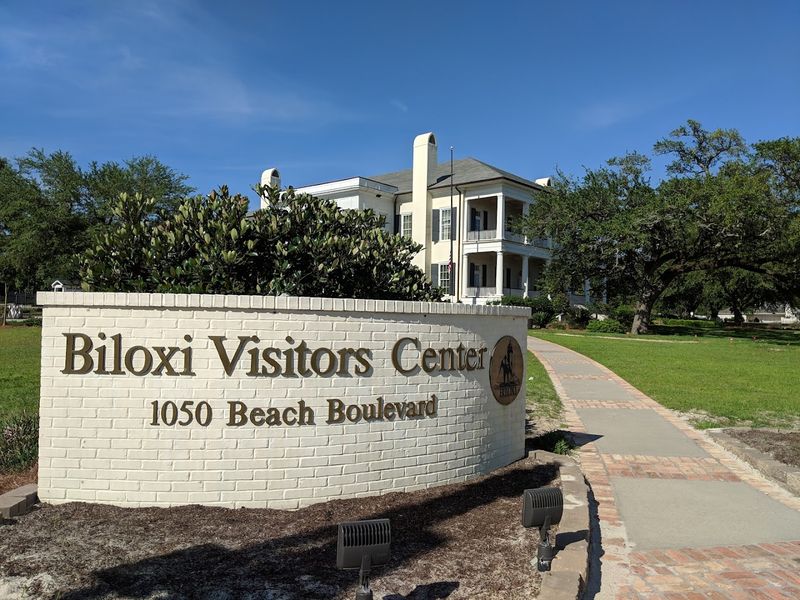
The visitor center next to the lighthouse is the real hidden bonus of the visit. It houses videos, historical exhibits, local art, Biloxi-themed merchandise, and informational pamphlets about other attractions in the area.
Spending an hour there before or after the lighthouse tour turns a quick stop into a full morning well spent.
Admission for tours is affordable, parking is available, and the beach is steps away for those who want to extend the outing. The lighthouse website at biloxi.ms.us carries updated information on tour availability and special events.
Whether you are passing through on I-10 or making a dedicated trip to the Mississippi Gulf Coast, the Biloxi Lighthouse earns its place at the top of your itinerary. It is one of those stops that people consistently say they are glad they made.