
This New Hampshire Road Trip Leads To Covered Bridges And A Perfect Village Green
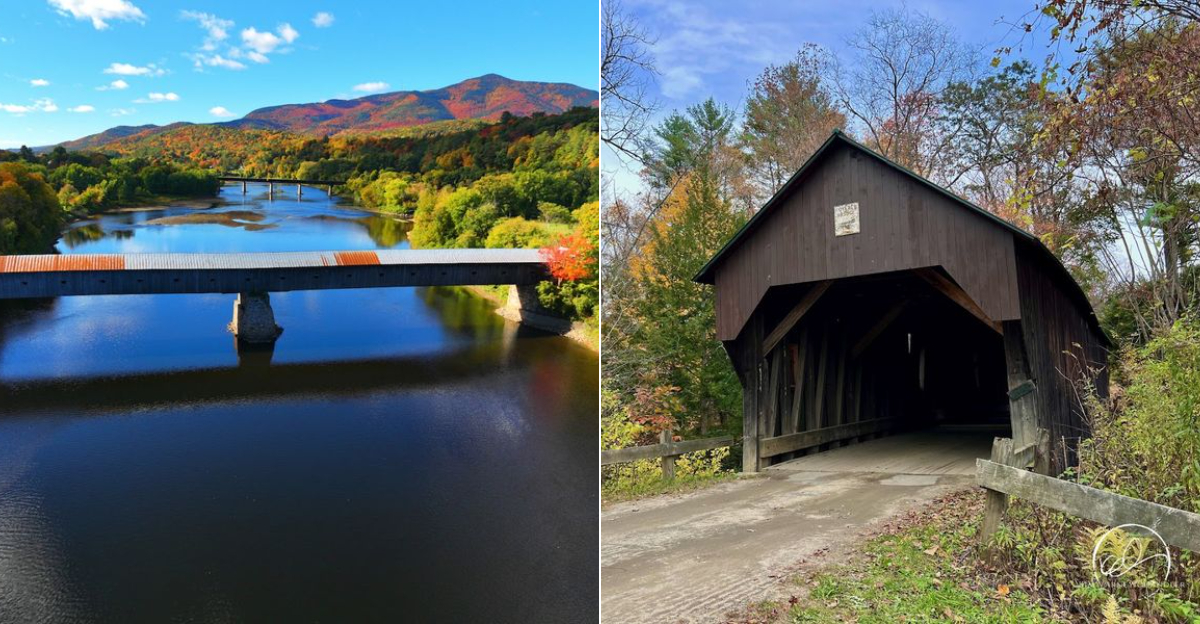
Covered bridges have a way of making a regular drive feel like a journey through another era. New Hampshire turns the road into a collection of wooden landmarks, river crossings, and stories built into every beam.
How often can one trip include a bridge that holds a world record, another that once carried trains, and a village green that feels untouched by time? That kind of variety makes every turn worth slowing down for.
Some crossings are still part of everyday travel, while others invite visitors to walk, explore, and imagine the generations that passed through before them. Check bridge access before visiting, especially where vehicle limits or pedestrian-only paths apply.
Take the scenic route, stop for the details, and do not rush between destinations. Treat yourself to a New Hampshire drive where history is not behind glass, it is waiting right beside the road.
Haverhill Common: Step Back In Time
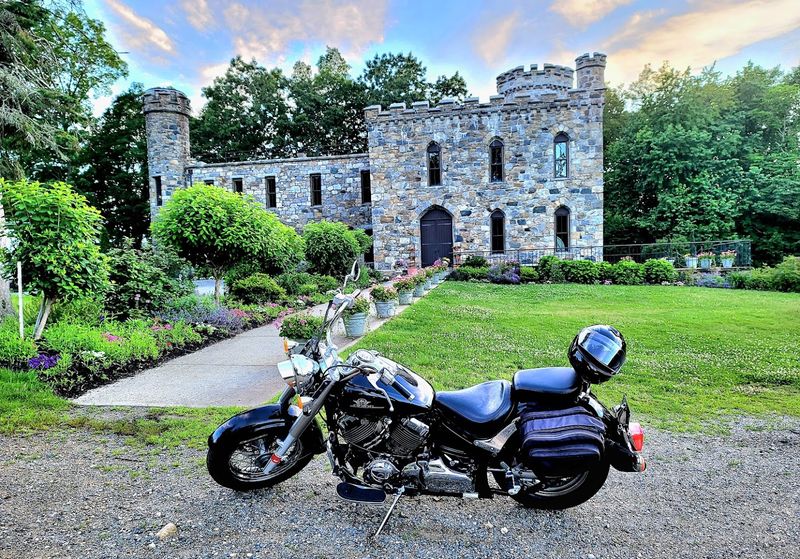
Some places look exactly like a painting. Haverhill Common in North Haverhill is one of them.
The wide, open green is framed by Federal-style buildings that date back to the late 1700s and early 1800s.
This district is listed on the National Register of Historic Places. That means what you see here has been protected and preserved for good reason.
Walking around it feels like flipping through a history book, except everything is real and right in front of you.
Pearson Hall, built in 1816, is one of the standout landmarks nearby. The courthouse, old academy buildings, and private homes all add to the picture.
Have you ever wondered what civic life looked like two centuries ago? This green gives you a real sense of it.
The open lawn invites you to slow down. Bring a blanket and sit for a while.
Watch the clouds roll over the hills. There are no crowds here, no ticket booths, no rush.
Haverhill Common is the kind of place that makes you appreciate quiet beauty. It is a perfect first stop to set the tone for the whole trip.
Start here, breathe in the fresh New Hampshire air, and let the adventure begin. You will not regret making this your opening chapter.
Corbin Bridge: Oxen And Old Wood
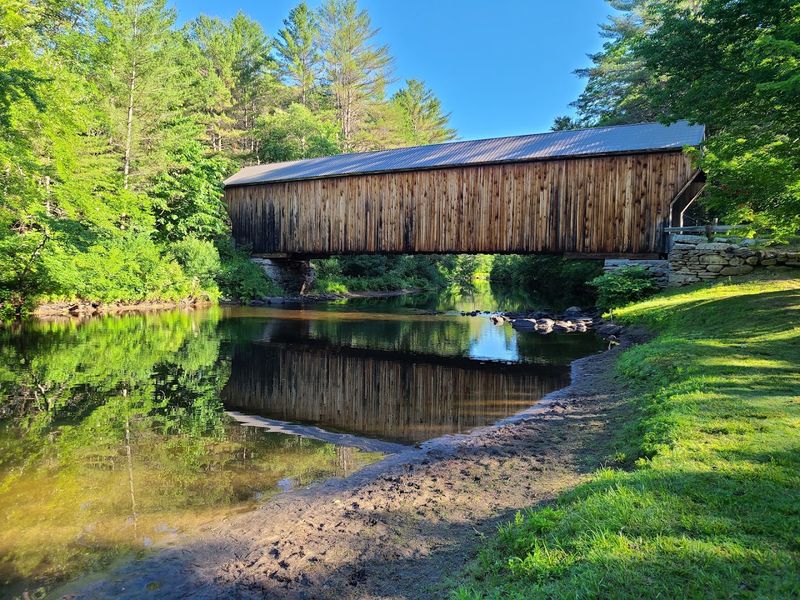
Here is a fun fact before you even arrive. When the current Corbin Covered Bridge was installed in 1994, a team of oxen helped pull it into place.
Yes, actual oxen. That story alone makes this stop worth it.
The original bridge dates back to around 1845. The current version is a faithful replica, rebuilt with the same classic Town lattice truss design.
It spans the Croydon Branch of the Sugar River in Newport, and it is open to light vehicle traffic.
Standing on this bridge, you hear the water rushing below. The wooden beams creak just a little underfoot.
It is the kind of sensory experience that no screen can replicate. Can you picture crossing a bridge like this every single day, the way people once did?
The surrounding area is calm and green. Trees lean over the riverbanks.
The light filters through the lattice sides of the bridge and creates a beautiful pattern on the floor. Photographers, this one is for you.
Corbin Bridge is not just a structure. It is a story about craftsmanship, community, and a little bit of old-fashioned ingenuity.
Stop here, step out of the car, and walk across it slowly. Let yourself enjoy something that was built with real care and real history behind every plank.
Pier Bridge: World Record Holder
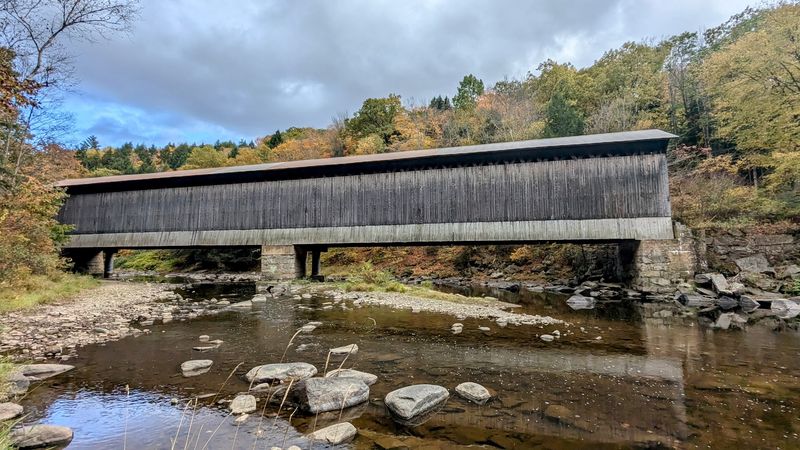
Not every covered bridge holds a world record, but this one does. The Pier Covered Bridge in Newport is the longest surviving covered railroad bridge on the planet.
Read that again. The entire planet.
Built in 1907, it once carried the Boston and Maine Railroad across the scenic Sugar River. Trains no longer roll through it.
Today, it is part of the multi-use Sugar River Trail, welcoming walkers and cyclists instead.
Walking through it gives you a completely different feeling than a standard road bridge. The tunnel-like interior is longer than you expect.
The old timbers around you carry more than a century of history. What do you think it sounded like when a steam locomotive thundered through here?
The trail itself is a great reason to linger. Pack a snack and walk a section before heading back to the car.
The river alongside the trail is calm and pretty. Birdwatchers will love it too.
This stop combines outdoor recreation with a genuine piece of transportation history. It is rare to find both in one spot.
Whether you are a history enthusiast or just love a good walk, Pier Bridge delivers something memorable. Add it to your must-see list without hesitation.
It is the kind of place that gives you a great story to tell back home.
Dingleton Hill: Open-Air Architecture
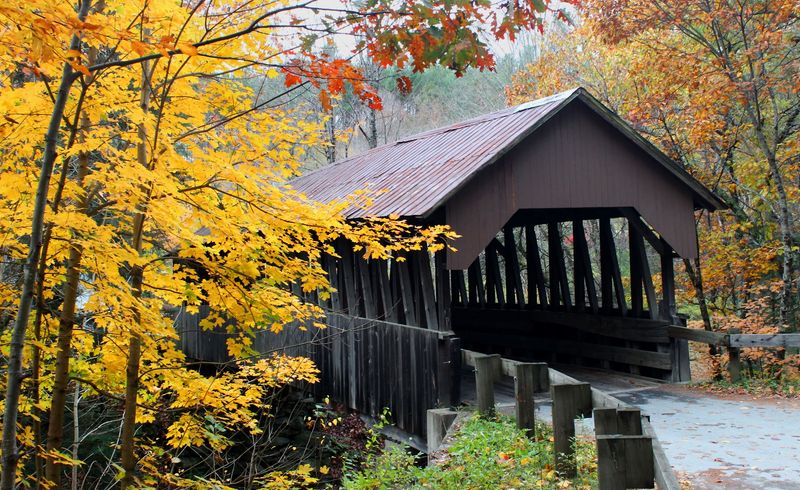
Most covered bridges wrap you in dark, cozy wood from floor to ceiling. Dingleton Hill Bridge plays by different rules.
Built in 1882, this Cornish bridge covers only the lower half of its trusses. The upper framework is completely open.
That design choice lets natural light pour in from above. Sunlight streams through the open top and lights up the interior in a way that feels almost theatrical.
It is a genuinely striking visual. Have you ever seen a covered bridge that lets the sky in?
The bridge spans Mill Brook and is sometimes called the Cornish Mills Bridge. It carries one lane of traffic, so check the posted weight limit before you drive across.
Walking across it is also a great option and gives you more time to appreciate the construction details.
Look closely at the Kingpost truss design. It is one of the simpler truss styles, but it has proven incredibly durable over more than 140 years.
The craftsmanship here is something a trained eye and a curious traveler can both appreciate equally.
Dingleton Hill Bridge is a quieter stop on this road trip. There are no big crowds.
Just you, the brook below, the breeze, and a beautiful piece of New Hampshire history holding itself together beautifully. Take your time here.
This one rewards the patient traveler with small, wonderful details.
Blow-Me-Down: Best Name Ever
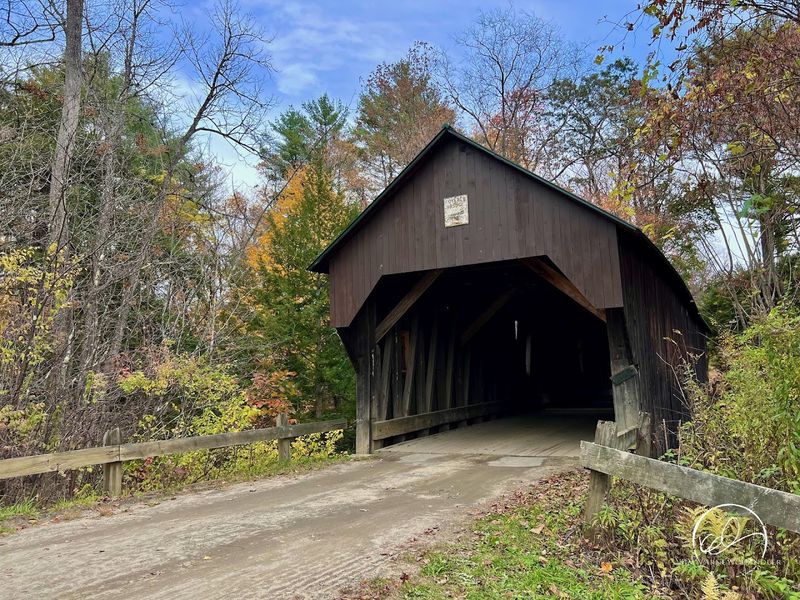
Say it out loud. Blow-Me-Down Covered Bridge.
That name is impossible not to love. It crosses the equally wonderfully named Blow-me-down Brook in Cornish, and it has been a local landmark since 1877.
Master bridge builder James Frederick Tasker constructed this one. He used a multiple kingpost truss design, and the result has stood for nearly 150 years.
That is some serious staying power for a wooden structure. How many things you own right now will last 150 years?
The bridge has been carefully restored over the decades. It still carries single-lane traffic, so you can actually drive through it.
That experience alone is worth stopping for. The wooden tunnel closes around your car and then opens up again on the other side like a little adventure.
The brook below is quiet and shallow. It winds through a pretty stretch of Cornish countryside.
Stepping out of the car and listening to the water is one of those simple pleasures that road trips are made for.
Blow-Me-Down Bridge is playful by name and beautiful by nature. It sits in a peaceful rural setting that feels far away from everyday stress.
This is exactly the kind of stop that makes a road trip memorable. Pull over, laugh at the name, take the photo, and enjoy every second of it.
You absolutely deserve this little detour.
McDermott Bridge: Walkers Only
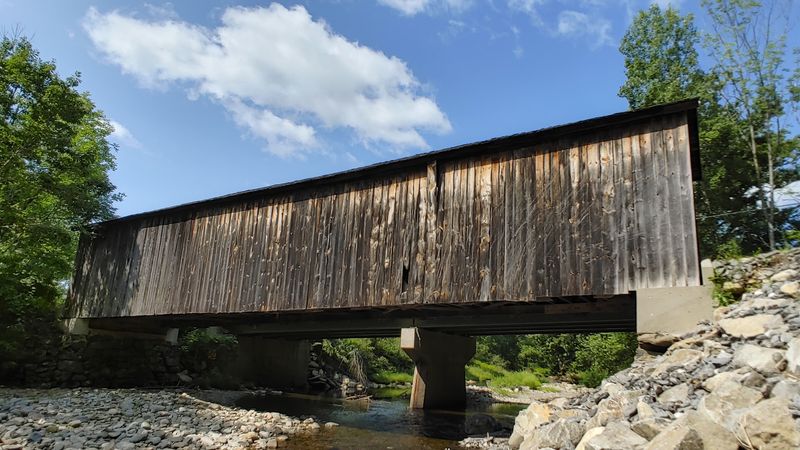
McDermott Covered Bridge has made a graceful transition. Built in 1869 by Albert S.
Granger, this Langdon beauty once carried vehicles across the Cold River. Now it is exclusively for people on foot, which honestly makes it even better.
The design features a modified Town lattice truss with a laminated arch. That combination gives the bridge extra strength and a slightly different look from the others on this trip.
Architectural details like that are easy to miss if you rush through. So do not rush.
A modern steel bridge now handles the vehicle traffic nearby. The old covered bridge stands beside it, a quiet contrast between two eras of engineering.
Standing between them and looking at both at once is a surprisingly thought-provoking moment. Which one do you think will still be standing in another 150 years?
The Cold River lives up to its name. The water runs clear and cool even in summer.
The surrounding forest is dense and green. Birds are active here.
It is a genuinely peaceful spot that rewards anyone who takes a few minutes to simply stand still and listen.
McDermott Bridge is the road trip’s quiet gem without being flashy about it. It rewards the curious traveler who takes the time to walk across and look around.
Simple, historic, and completely worth the stop. This one will stick with you long after the trip ends.
Cornish-Windsor: The Longest One
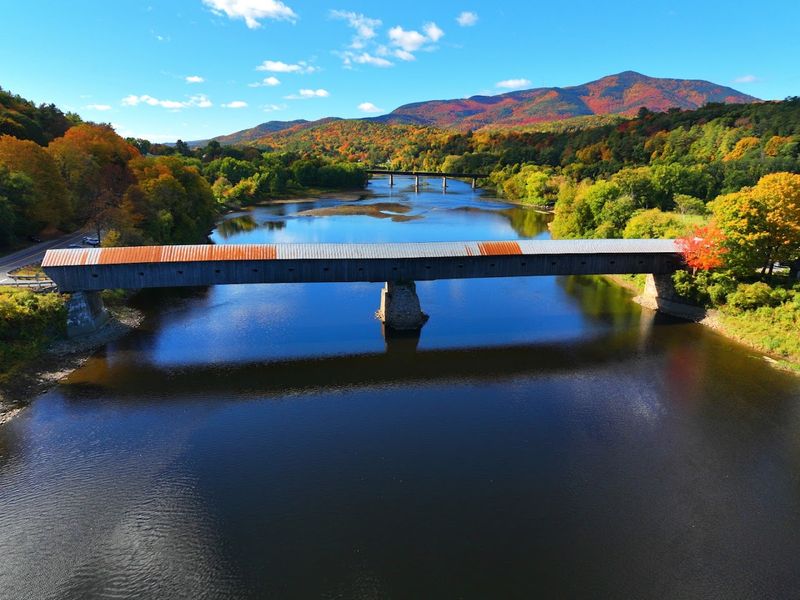
Get ready for something jaw-dropping. The Cornish-Windsor Covered Bridge is the longest covered bridge in the entire United States.
At over 449 feet long, it stretches across the Connecticut River and connects New Hampshire to Vermont in one magnificent wooden span.
It was built in 1866 using the Town lattice truss design. It is also the world’s longest two-span covered bridge.
Two world records in one structure. That is not something you walk past without stopping to stare.
When this bridge was built, people paid a toll to cross it. Today, it is free for everyone.
Cars, cyclists, and pedestrians all share this historic crossing. Standing at one end and looking through to the other side is one of those views that genuinely takes your breath away.
The Connecticut River below is wide and powerful. Looking down from inside the bridge gives you a real sense of just how impressive this engineering achievement was for its time.
Can you imagine building something like this with 19th-century tools?
This is the centerpiece of the whole road trip. Plan extra time here.
Walk across it both ways. Take photos from the riverbank.
Sit by the water and soak it all in. The Cornish-Windsor Bridge is not just a landmark.
It is a full-on experience that every traveler in New England should have at least once in their life.
Wentworth Village Green: Perfect Finale
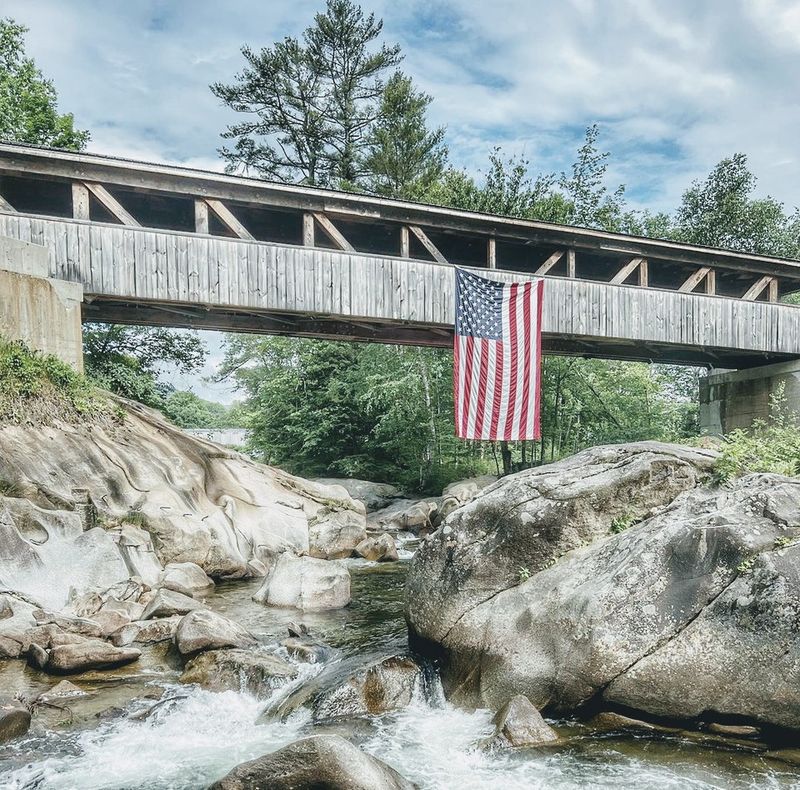
Save the best ending for last. Wentworth is a small New Hampshire village with a Main Street lined by old cottages and a village green that looks like it was designed to make people smile.
It is the perfect final stop on this road trip.
In 2016, a covered bridge arrived here with a beautiful backstory. Known as the Friendship Bridge, it was relocated to Wentworth to serve as a pedestrian crossing within the village.
It is a newer addition to an old setting, and somehow it fits perfectly. How often does a bridge arrive in a village and feel like it was always meant to be there?
The village green itself is open and inviting. Sit on the grass.
Watch the clouds. Listen to the quiet.
After a full day of driving and exploring, this kind of stillness feels like a reward. Wentworth moves at its own pace, and that pace is wonderfully slow.
The historic character of the village is visible everywhere. Old architecture lines the streets.
The surrounding hills frame the whole scene like a natural painting. It is the kind of place that makes you want to come back in every season.
Wentworth is the road trip’s warm, satisfying conclusion. It ties together everything that makes western New Hampshire so special.
History, scenery, quiet charm, and a covered bridge for good measure. End your adventure here and leave with a full heart and a camera full of memories.