
The Remote California Lake With Brilliant Blue Water And Surprisingly Quiet Beaches
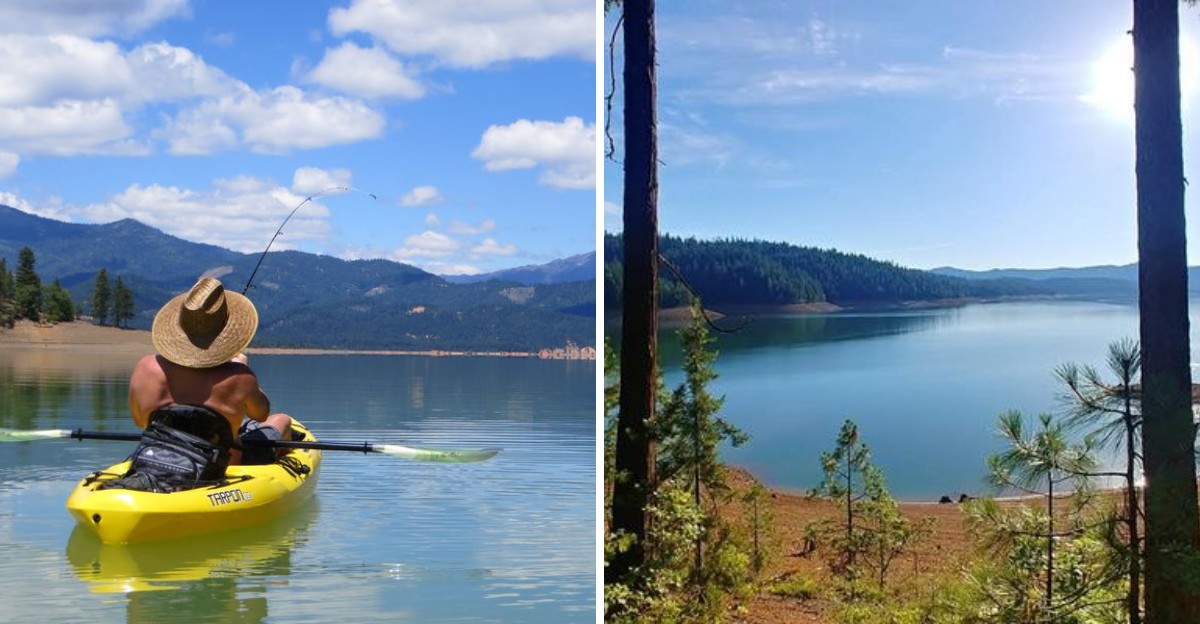
The best lake days are the ones that feel almost stolen. No packed shoreline, no constant noise, no rush to claim a patch of sand before everyone else gets there.
California has a remote lake where the water flashes an almost unreal shade of blue and the beaches can feel surprisingly calm. Reaching it takes a bit more effort, which is probably why the reward feels so good once you finally see the shoreline.
That sense of space changes everything. You can settle near the water, watch the color shift with the light, and actually hear the breeze instead of a crowd.
California’s state scenery gets plenty of attention, yet places like this prove the most memorable escapes are not always the busiest ones.
Where This Blue Water Actually Hides
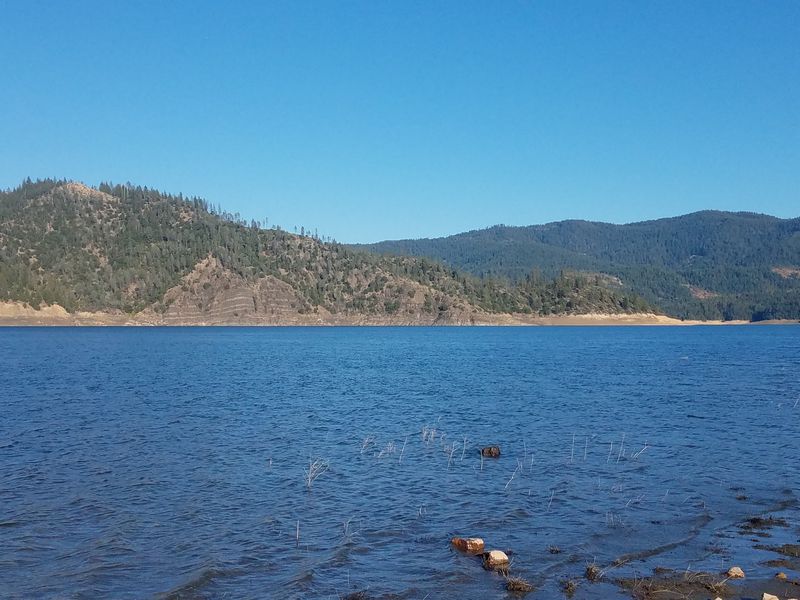
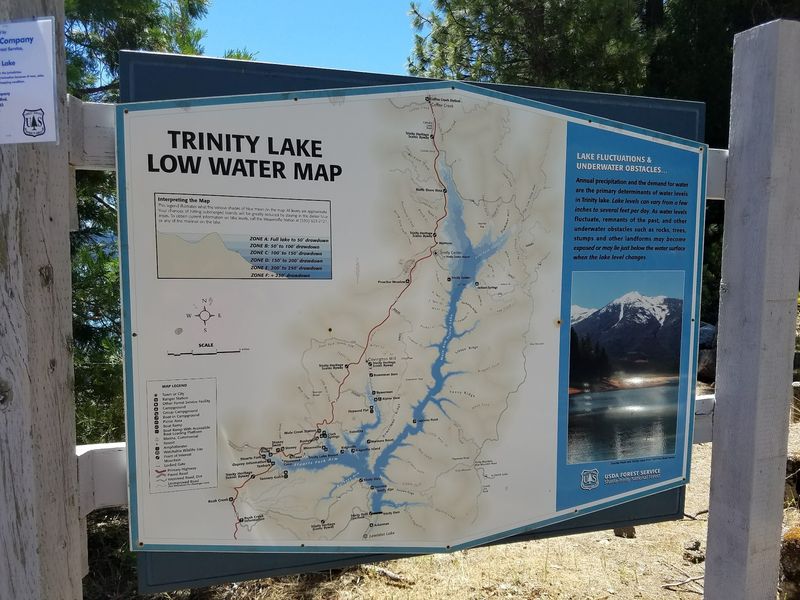
Big blue water usually means big crowds, but not here. Trinity Lake sits in the mountains of northwestern California, north of Weaverville and west of Redding.
The official address is simply California, since the reservoir stretches across a wide stretch of forest land. Its coordinates land near 40.9673, -122.6768, deep inside the Shasta-Trinity National Forest.
Getting there means driving Highway 3, a winding ribbon that climbs through timber country. The road curves plenty, so take your time and keep both hands on the wheel.
Most travelers pass right by on their way to more famous destinations. That oversight is exactly why the beaches stay calm here.
The lake is a reservoir, formed by Trinity Dam on the Trinity River. It holds a huge volume of water when levels run high.
Elevation sits around 2,370 feet at full pool, which keeps summer air a touch cooler. Nights can turn crisp even in August.
Bring a paper map as backup. Cell service thins out quickly once the pines close in.
Water So Clear It Changes Your Swimming Standards
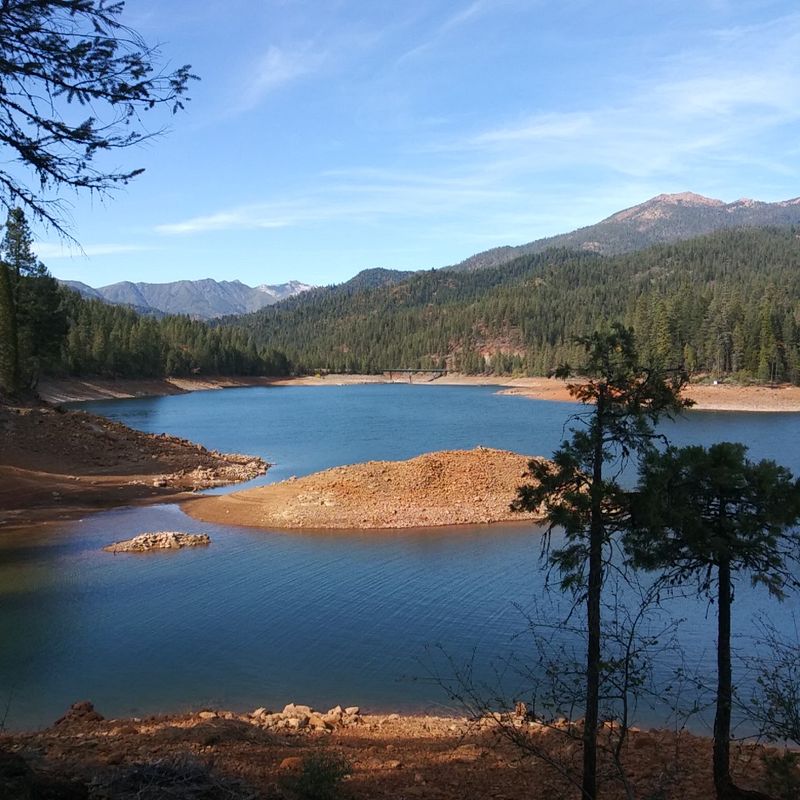
Some lakes look blue from a distance and murky up close. Trinity Lake keeps its color right down to your toes.
Snowmelt from the Trinity Alps feeds the reservoir each spring. Cold mountain runoff is a big reason the water reads so clean and bright.
On calm mornings, you can often see your feet in chest-deep water. That kind of clarity turns an ordinary swim into something memorable.
The blue shifts through the day, moving from steel gray at dawn to deep turquoise by noon. Photographers love the late-afternoon light best.
Water temperatures warm nicely by mid-summer near the shallow coves. Deeper channels stay chilly, so ease in slowly.
Levels rise and fall with the seasons and with rainfall totals. Early summer usually brings the fullest, most photogenic shoreline.
Check current conditions before loading the car. A quick look at reservoir data saves disappointment later.
Swim shoes help on rocky entries. The bottom mixes sand, gravel, and smooth stone.
Beaches That Somehow Stay Peaceful
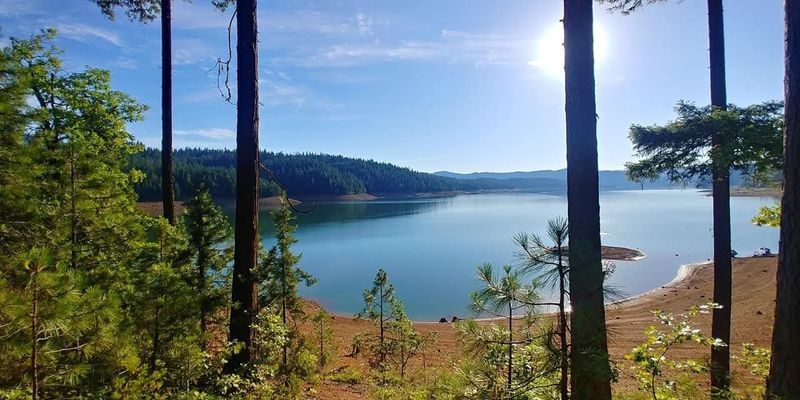
Elbow room at a California beach sounds like fiction. Yet the shoreline coves here often hold just a family or two.
The reservoir has many inlets and fingers, which spreads people out naturally. One boat can claim a cove without bothering anyone else.
Sandy stretches appear and shift as the water level changes through the season. Lower water actually reveals wider beaches in late summer.
Popular access points near campgrounds see the most activity on holiday weekends. Walk ten minutes along the shore and the noise fades.
Shade is limited on open beaches, so pack a pop-up canopy. The mountain sun feels stronger than the temperature suggests.
There are no lifeguards anywhere on the reservoir. Keep a close watch on young swimmers and weaker paddlers.
Pack out everything you carry in. The clean shoreline is a community effort, not an accident.
Weekdays in June deliver the best solitude. You may hear nothing but wind and osprey calls.
Three Marinas And A Boater’s Playground
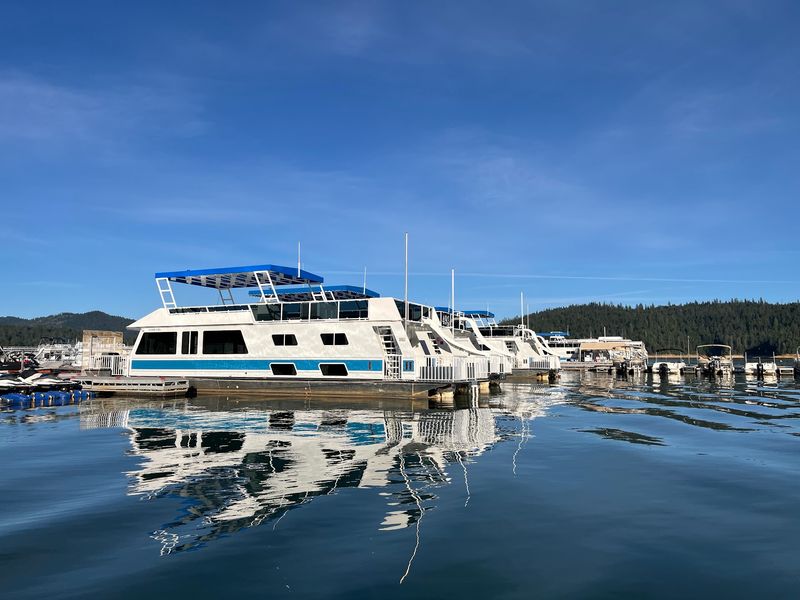
Boaters treat this reservoir like a well-kept secret, and honestly, they earned it. Three marinas serve the lake, offering ramps, slips, and rental options.
The shoreline stretches for miles with countless arms and hidden channels. You can cruise for hours without repeating a view.
Houseboats are a longtime tradition on the water. Families book them for a week and never touch a car key again.
Smaller craft work beautifully too. Kayaks, canoes, and paddleboards glide easily across the morning flat water.
Boat ramps near the main access areas are straightforward, with parking close by. Arrive early on summer weekends for the easiest launch.
Watch the wind, which tends to pick up in the afternoon. Open stretches can build a surprising chop.
Ramp usability depends on the water level, so confirm status before towing a trailer. Low-water seasons can shorten available ramps.
Life jackets are non-negotiable out here. Help sits far away in remote arms.
Smallmouth Bass Country With A Reputation
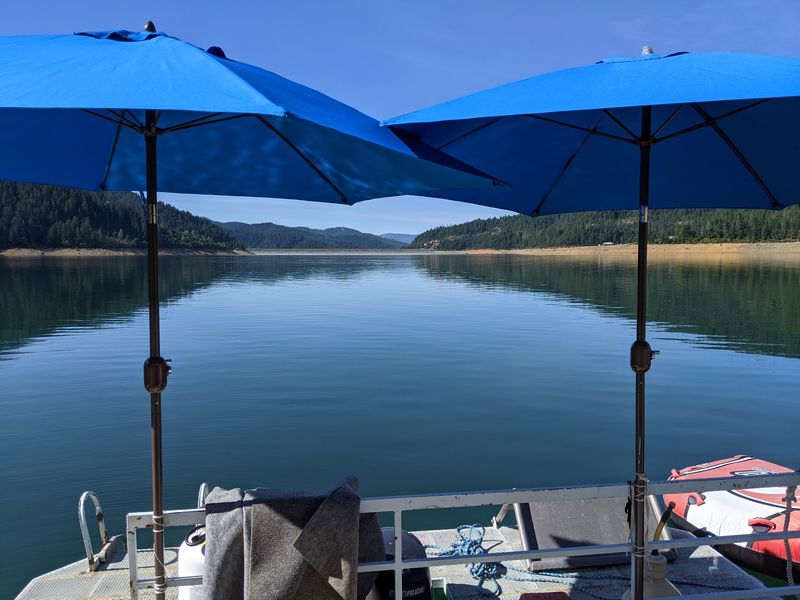
Anglers whisper about this lake the way chefs whisper about a favorite market. Trinity Lake is widely known for its smallmouth bass fishing.
Rocky points, submerged timber, and steep drop-offs create ideal bass habitat. Early morning and evening bring the best action.
Trout also swim these waters, along with catfish in warmer stretches. Variety keeps the tackle box interesting.
Fishing from shore works, but a boat opens far more water. Even a small canoe reaches productive points quickly.
A valid California fishing license is required for anyone sixteen and older. Check current regulations and limits before casting.
Bait choices matter more than most people expect. Plastics and crankbaits often outperform whatever seemed obvious at home.
Spring and fall bring cooler water and active fish. Mid-summer pushes bass deeper during bright hours.
Bring polarized sunglasses to read the structure below. Clear water makes sight fishing genuinely fun.
Patience pays. Quiet coves reward those who linger.
Campgrounds Beneath Tall Pines
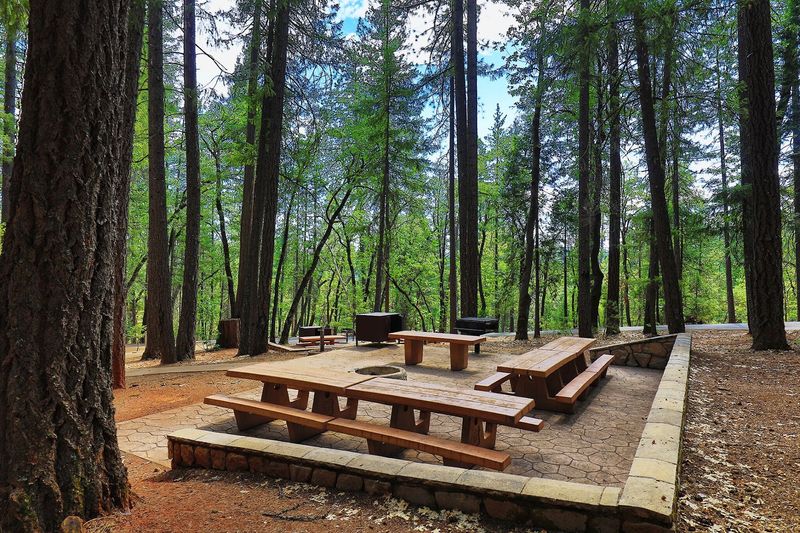
Waking to pine scent and lake glare beats any hotel breakfast. Campgrounds ring the reservoir, many run through the Shasta-Trinity National Forest.
Sites range from developed loops with tables and fire rings to simpler, quieter spots. Several sit close enough to hear water lapping.
Reservations fill fast for holiday weekends, especially those with shoreline access. Booking months ahead is smart planning.
Some campgrounds operate first-come, first-served during shoulder seasons. Mid-week arrivals usually find open ground.
Bear-safe food storage is standard practice in these mountains. Keep coolers locked away and the site tidy.
Firewood rules change with conditions, and fire restrictions can arrive suddenly. Confirm current rules with the forest office before striking a match.
Boat-in and dispersed camping exist too, offering the deepest quiet. Those spots demand full self-sufficiency.
Stars here are genuinely spectacular. Minimal light pollution lets the Milky Way show off.
Pack layers, since nights cool sharply. Even August evenings call for a jacket.
The Trinity Alps Standing Guard
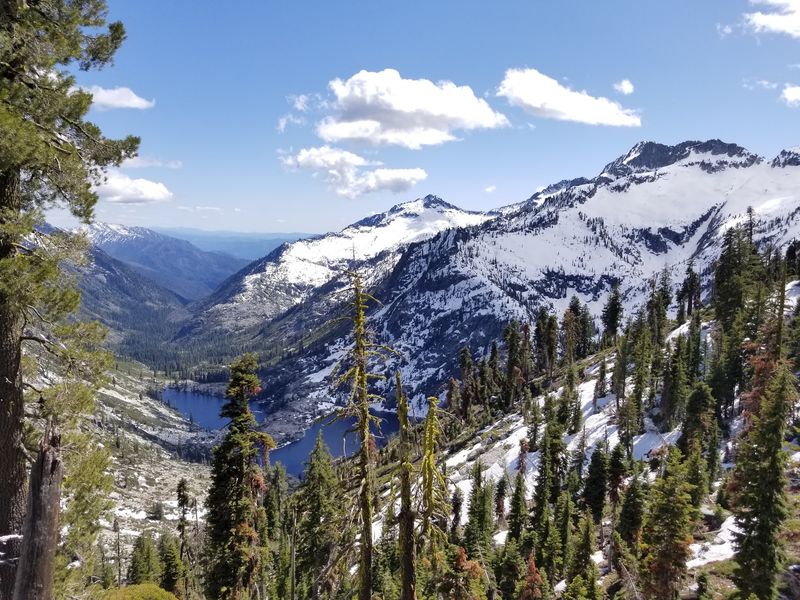
Look northwest from the water and jagged peaks fill the horizon. The Trinity Alps Wilderness rises just beyond the reservoir.
Covering more than half a million acres, it ranks among the largest wilderness areas in the state. Granite spires, alpine lakes, and deep canyons define it.
Trailheads within reach of the lake lead into serious backcountry. Some hikes climb steeply within the first mile.
Day hikers can sample shorter routes with big payoffs. Views of the reservoir open up from higher ridges.
Snow lingers on high passes well into early summer. Plan longer treks for July through September.
Wilderness permits may be required for overnight trips. Check regulations at a ranger station before heading out.
Wildlife includes black-tailed deer, bald eagles, and osprey working the shoreline. Binoculars earn their space in the pack.
Carry more water than feels necessary. Mountain air dries you out fast.
The contrast is the real draw. Blue water below, gray granite above.
Gold Rush History Along The Shore
Long before the dam, this valley echoed with pickaxes and hope. The Trinity River drew gold seekers starting around 1848.
Weaverville, the nearest town of size, still shows its mining-era bones. Brick buildings with iron shutters and spiral staircases line the main street.
The Weaverville Joss House is a state historic park honoring Chinese miners who worked the region. It remains one of the oldest Chinese temples in the state still in use.
Trinity Dam was completed in 1962, creating the reservoir now enjoyed today. The project reshaped the valley entirely.
Old townsite areas lie beneath the water at full pool. Lower levels sometimes reveal traces of that earlier landscape.
The town makes a good supply stop before heading to the lake. Groceries, fuel, and ice are easier to find there.
Local museums explain the mining story clearly. An hour indoors adds depth to the shoreline afternoons.
History here feels close, not distant.
Timing Your Trip Around Water Levels
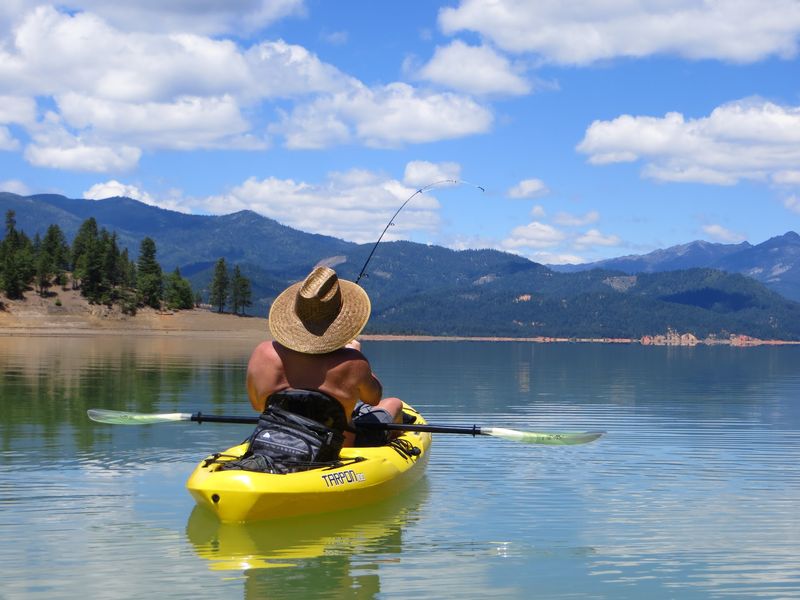
Reservoirs breathe with the seasons, and this one is no exception. Water levels rise with snowmelt and drop through the dry months.
Late spring and early summer usually deliver the fullest, bluest scenes. That is when the shoreline hugs the trees.
By September, the water line can retreat noticeably. Wider beaches appear, though ramps may sit farther from the water.
Drought years shrink the reservoir more dramatically. Checking current storage data before you commit is genuinely useful.
The Bureau of Reclamation publishes reservoir conditions online. A two-minute check saves a long drive gamble.
Lower water does not ruin the trip. Fishing often stays strong, and crowds thin further.
Boat ramp closures are the main practical concern during low seasons. Marinas post updates regularly.
Fall brings golden light and cool, still mornings. Many consider it the finest stretch of the year.
Winter turns the area quiet and cold. Snow can reach the surrounding roads.
Practical Notes For A Smooth Getaway
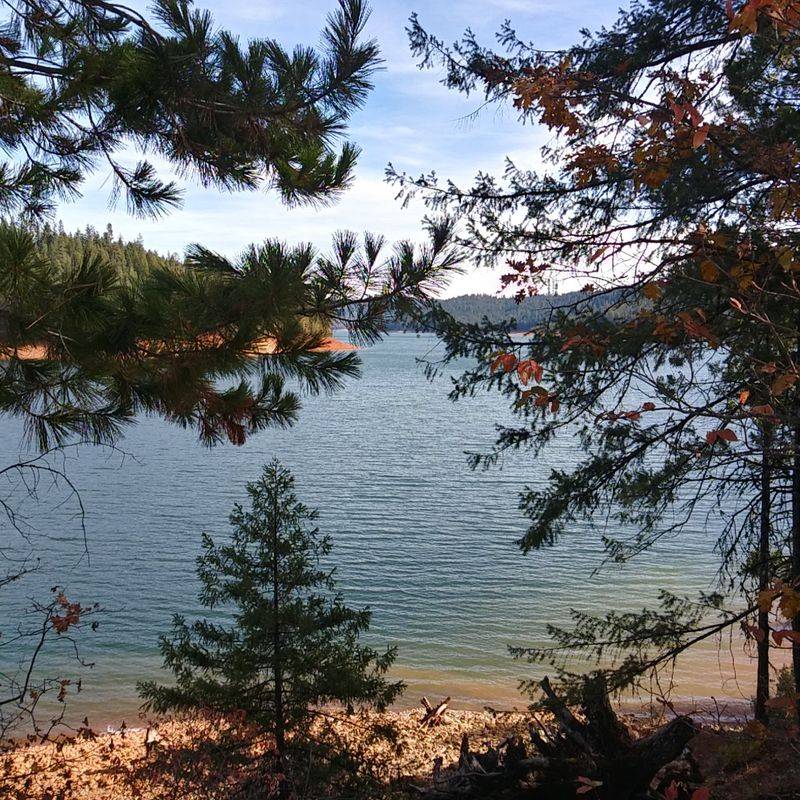
Remote beauty comes with a short list of homework. Trinity Lake sits far from big-box stores, so stock up in Redding or Weaverville.
Fuel stations are limited near the shoreline. Fill the tank before turning onto the mountain highways.
Highway 3 and Highway 299 both feature curves and narrow sections. Drive slowly, especially while towing a boat.
Cell coverage is patchy to nonexistent around much of the water. Download maps and share plans before you lose bars.
Summer fire restrictions are common across the forest. Respect posted rules and never leave a fire unattended.
Mosquitoes appear near marshy inlets at dusk. Repellent belongs in the day bag.
Bring cash for smaller campgrounds and day-use fees. Card readers are not guaranteed out here.
Trash service is limited, so plan to haul everything home. Clean shorelines keep the place worth returning to.
Go slow, stay flexible, and let the quiet do its work. That is the whole point.