
Fortune cookies, dumplings, and San Francisco history: when local cuisine adds to the experience
By Eileen Ogintz
Tribune Content Agency
Taking the Kids
Next time you are cracking open fortune cookies at a Chinese restaurant, announce that the ubiquitous cookies aren’t really Chinese at all.
Really. They are actually Japanese in origin, but you won’t find them at a sushi place. The modern version is said to h ave first been made around 1914 by Makoto Hagiwara, a Japanese immigrant working at the Golden Gate Park Japanese Tea Garden in San Francisco. He likely made the cookie with a message inside to thank those who lobbied to save his job after he was unfairly dismissed. The cookies were said to be inspired by traditional rice crackers which often contained fortunes inside. They gained a lot of attention at the 1915 Panama-Pacific International Exposition.
Los Angeles, however, credits David Jung, a Chinese immigrant, with first making similar cookies with Bible verses and distributing them to the needy. Just don’t tell that to San Franciscans!

As San Francisco’s Chinatown, established in 1848 and the oldest in the U.S., gained popularity in the early 1900s as a tourist destination, the cookies, supplied by Japanese-American bakers became a popular dessert.
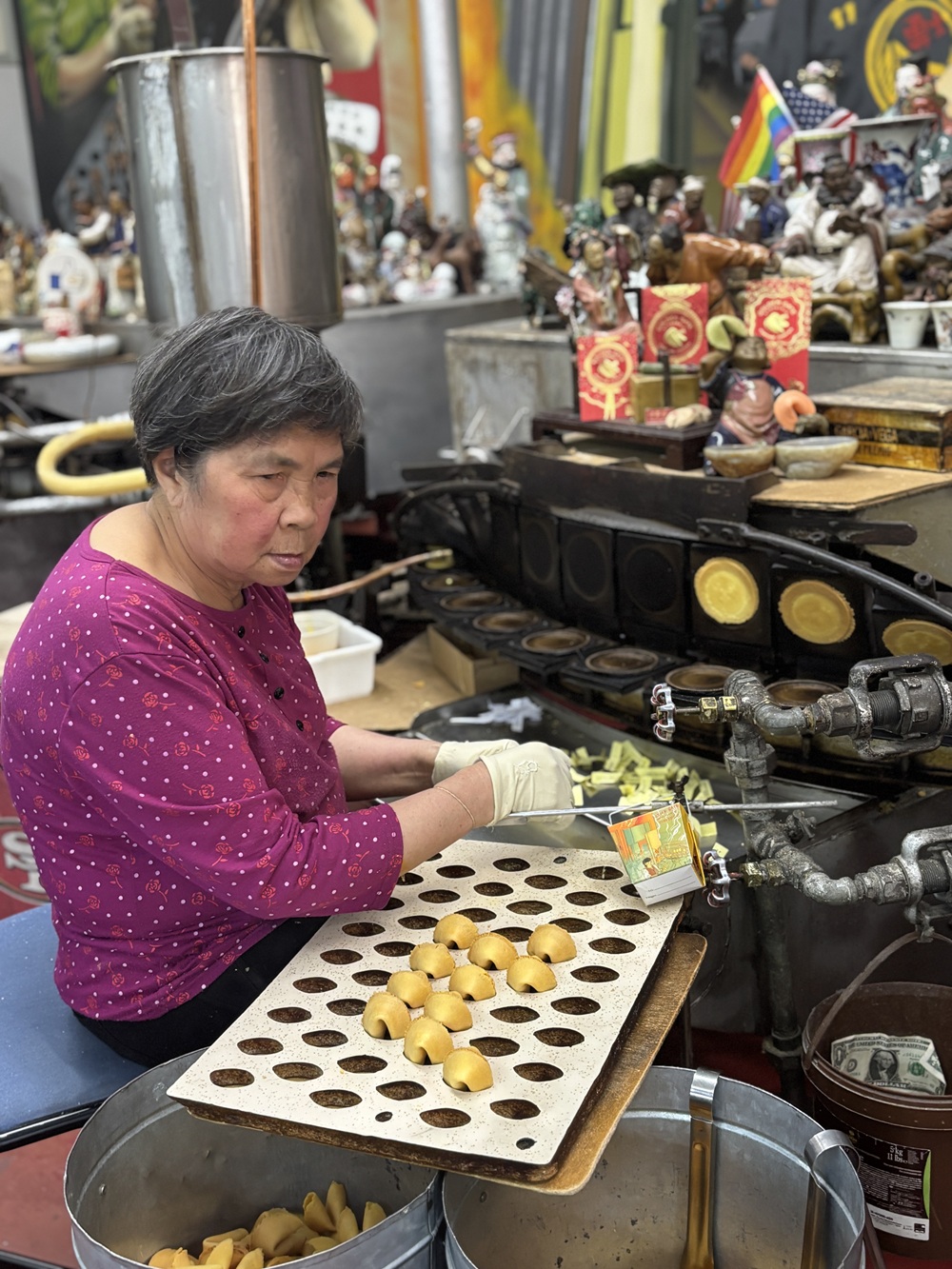
Who knew? We were standing outside the Golden Gate Fortune Cookie Factory in San Francisco’s Chinatown with Marcy Clark, a guide for Stretchy-Pants Food Tours, sampling just-made fortune cookies before they were folded with a message inside.
Stretchy Pants offers history-with-food tours of San Francisco’s Chinatown. The company also offers a Ghost Food Tour in North Beach, the city’s famous Italian area, and one of Fisherman’s Wharf and Pier 39 with tales of San Francisco’s maritime past, including how sourdough bread sustained displaced residents after the 1906 earthquake with salvaged starters from the rubble.
The Dim Sum and Tea tour is the company’s most popular, Clark tells us, noting that families could opt for a private combo tour of Chinatown and North Beach (think pizza and gelato).
We sampled dumplings, egg rolls, pork buns, and other delicious bites at our first stop. Dim Sum, we learn, means “touch the heart” and it is designed to be shared among family and friends. As we nibble, Clark explains that San Francisco’s Chinatown dates to the 1848 Gold Rush when Chinese immigrants, like others from around the world, arrived to seek their fortune, and Chinese merchants set up shop in this area. There was gambling, prostitution and opium dens. As gold and jobs became scarce, Chinese immigrants faced violence and discriminatory laws, including the Chinese Exclusion Act of 1882. They protected themselves with close-knit family associations and societies.
The 1906 earthquake destroyed much of Chinatown – you can still see burned chunks of bricks sticking out of buildings here – but it was rebuilt, despite efforts to relocate the Chinese community. Today, it is not only one of the city’s most popular tourist areas but also a 30-block residential hub boasting more than 40 alleys where residents converse in Chinese, shop for herbs and vegetables and tourists vie for the best places to eat, grab a Boba tea with tapioca pearls, shop for souvenirs and sample different kinds of tea, as we did at the Vital TeaLeaf.
Whether you are on a cruise or touring a new city, companies, including Tours by Locals and Context Travel, offer all varieties of food-oriented tours whether you want to hunt for truffles in Tuscany, take a cooking class in a home in Rome or sample all varieties of tapas in Barcelona.
For many people, food is central to their travel experience. For others, it is a terrific way to take a deeper dive into local culture and history whether with a food tour, cooking class or even a visit to a local farmer’s market like the Ferry Plaza Farmers Market at the Ferry Building, featuring more than 100 vendors on Saturdays, or the century-old Pike Place Market in Seattle, which spans nine acres in the center of downtown and is famous for fishmongers tossing their fish high in the air.
You can also find unique experiences with a local company, as we did in France when we spent a day touring vineyards in the Beaujolais region near Lyon, complete with an amazing picnic lunch at a centuries-old vineyard arranged for us by a wonderful Lyon-based company called My Travel Angel.
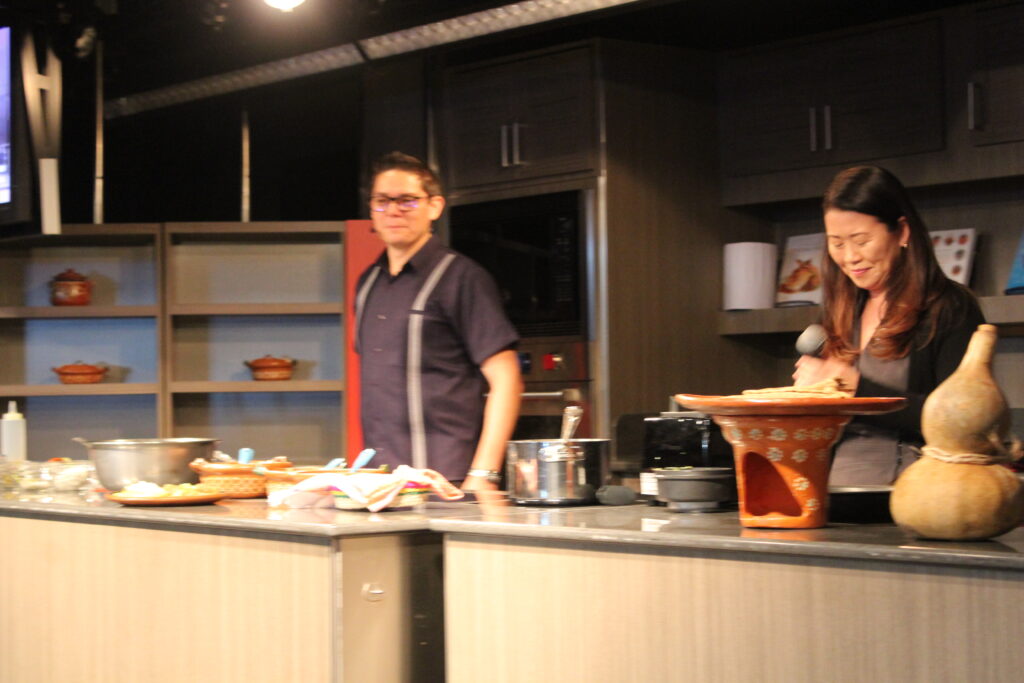
There are plenty of food-oriented experiences and cooking classes on cruises, too. Regent Seven Seas Cruises: Offers the Culinary Arts Kitchen while Carnival Cruise Line offers Carnival Kitchen on select ships and Windstar Cruises provides Market Tours where a ship chef may take guests ashore to local markets to source ingredients for an evening meal. Holland America features complimentary cooking demonstrations that highlight regional specialties and interactive Culinary Shore Excursions in various ports. River cruises offer special culinary and wine-oriented sailings as we experienced on an AmaWaterways cruise on the Rhine River.
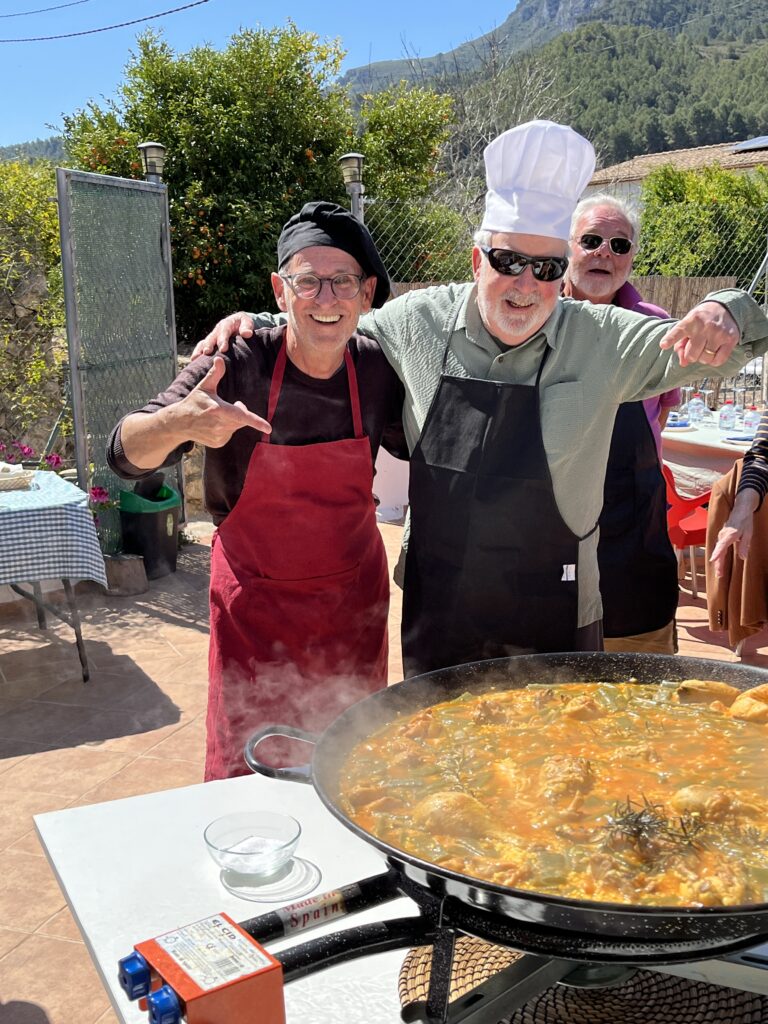
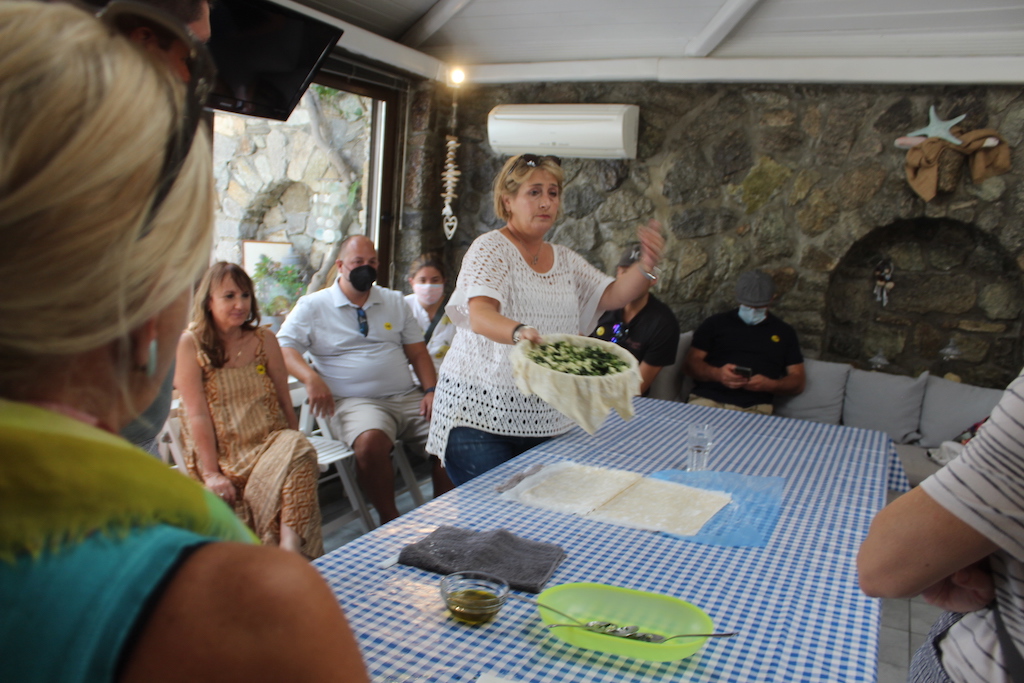
When we were cruising on a Regent ship, we visited a farm in Spain where we learned the proper way to prepare and eat Paella (no forks and no seafood). On the island of Mykonos in Greece on a Celebrity cruise, we were treated to a cooking class at the home of Teta Fragedaki, who freely admitted her husband thought she was nuts when she wanted to start a cooking school for tourists. The business is highly successful.
These days, thanks to platforms like Eat With and MealSharing you can arrange to share a meal with locals in their homes. Sometimes, these can be hosted by local chefs experimenting with new dishes.
Perhaps you want to learn a little history at a special restaurant where you are visiting, as we did in San Francisco at San Francisco Fairmont’s Tonga Room & Hurricane Bar, an icon of tiki bars and culture with kitschy cocktails and mocktails, Asian dishes and in the middle, a pool deck where a band serenades diners with classics from their boat as it “sails” up and down the water complete with thunderstorms and flashing lights. The restaurant is as popular with locals celebrating a special occasion as with visitors who revel in the experience of dining under thatched roofs.
Bon appetit!
(For more Taking the Kids, visit www.takingthekids.com and also follow TakingTheKids on Twitter, Facebook and Instagram where Eileen Ogintz welcomes your questions and comments. The fourth edition of The Kid’s Guide to New York City and the third edition of The Kid’s Guide to Washington D.C. are the latest in a series of 14 books for kid travelers published by Eileen.)
©2026 Eileen Ogintz. Distributed by Tribune Content Agency, LLC.