
This Wild Wisconsin Museum Is So Unusual You Won’t Know Where To Look First
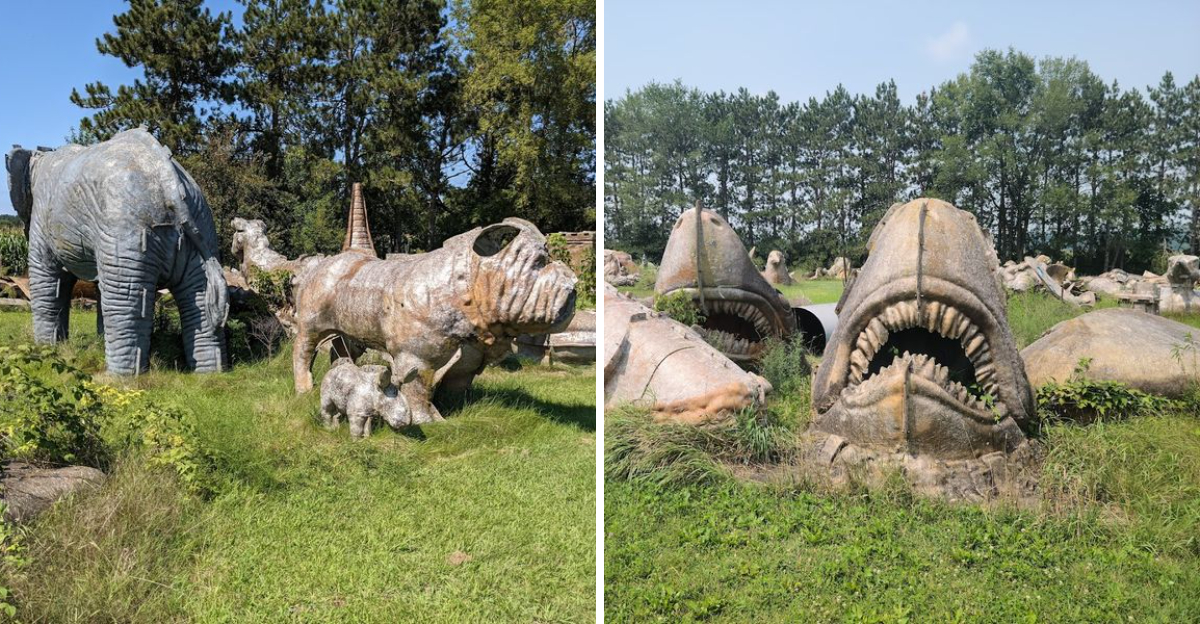
Imagine walking through rows of giant fiberglass sculptures lying in open fields like forgotten relics from another era. At this spot in Sparta, Wisconsin, you can explore acres of molds once used to create roadside attractions, water park decorations, and advertising icons across the country.
This free outdoor attraction offers a strange and fascinating glimpse into the world of commercial fiberglass manufacturing. Visitors wander mowed pathways surrounded by towering animal shapes, cartoon characters, and mysterious forms that spark curiosity and nostalgia at every turn.
A Graveyard Filled With Giant Fiberglass Figures
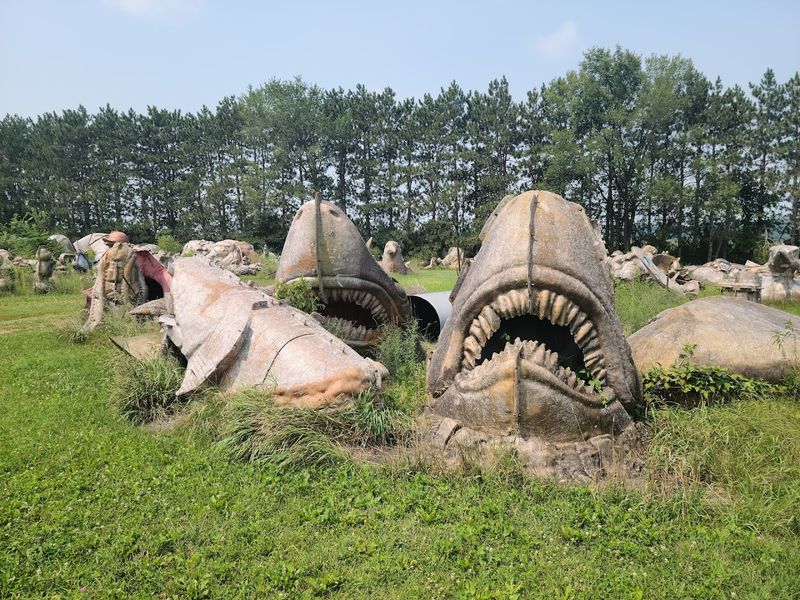
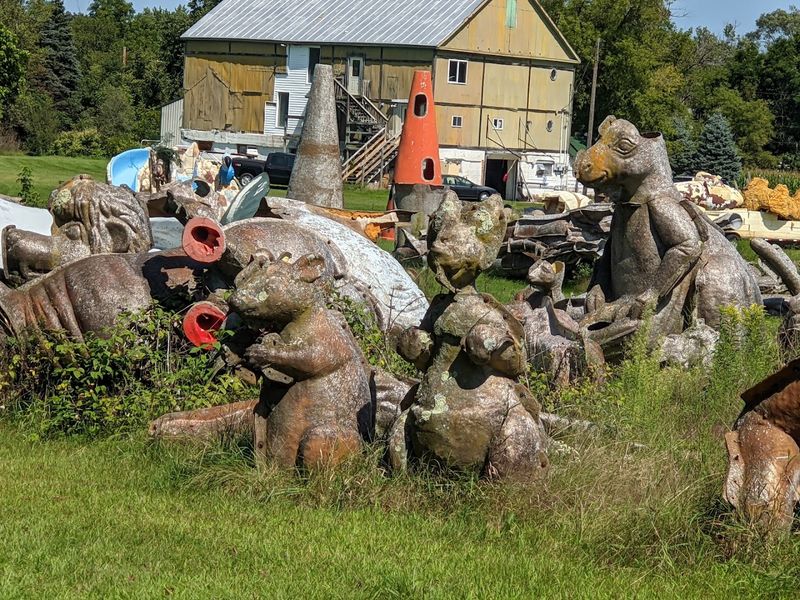
Walking onto the property at 14177 County Highway Q feels like stepping into a surreal landscape where advertising and art collide. Hundreds of fiberglass molds stretch across the grounds in organized rows.
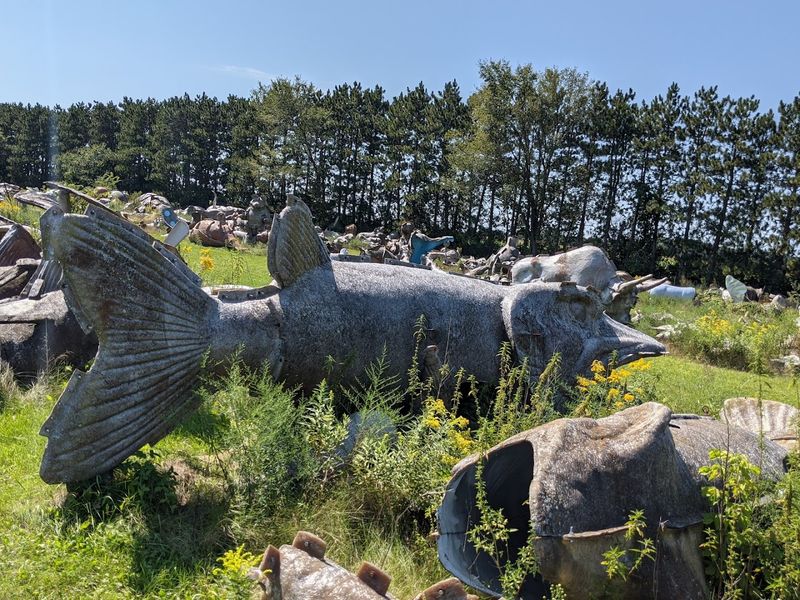
Some stand upright while others rest on their sides in tall grass.
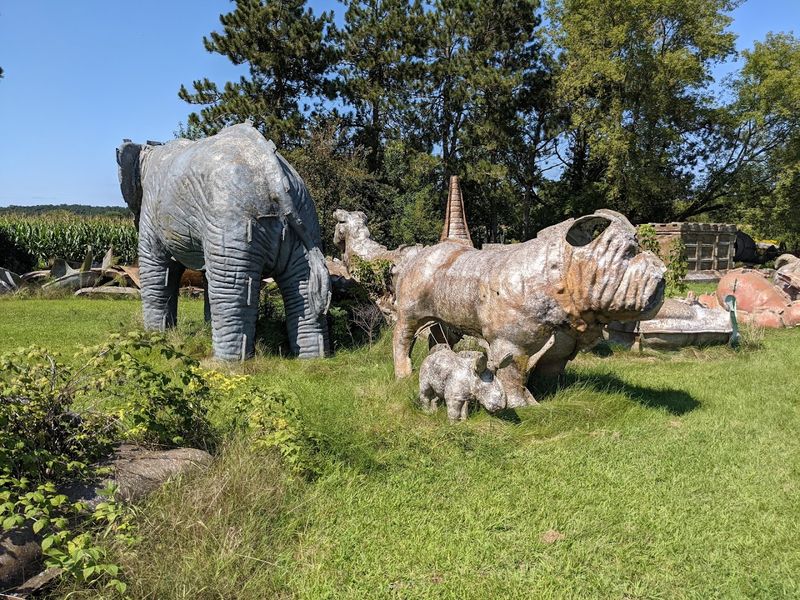
The sheer scale surprises most first-time visitors. Elephants tower overhead while sharks seem frozen mid-swim in the weeds.
Characters from amusement parks and restaurants stare blankly across the field.
This collection represents decades of commercial fiberglass production by FAST Corporation. Each mold served as the foundation for creating countless copies shipped nationwide.
Now they rest here in quiet retirement, forming one of the most unusual free attractions in the Midwest.
The site operates as a working graveyard for retired manufacturing equipment. New molds arrive periodically while others disappear for restoration projects.
This constant rotation keeps the landscape unpredictable and worth revisiting.
Where Old Advertising Icons End Up
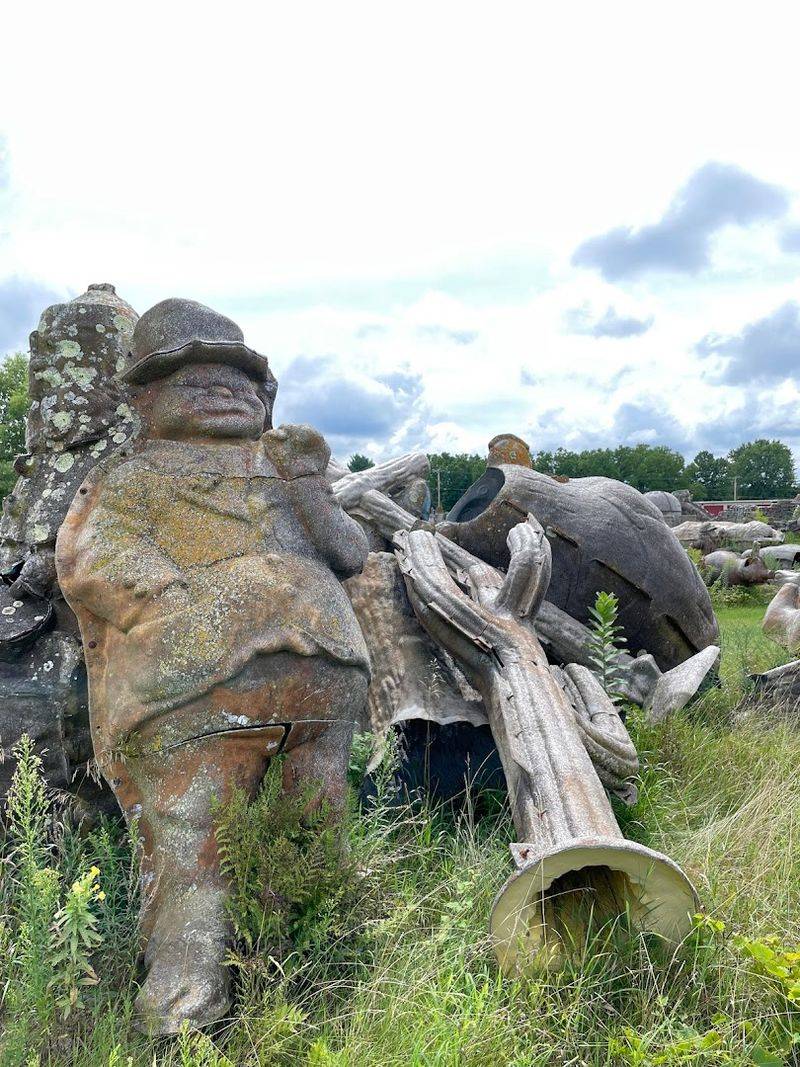
Recognizable faces from American roadside culture populate the graveyard in ghostly white forms. Big Boy stands among the collection, his familiar pose unmistakable even without paint.
Cartoon characters that once greeted customers at theme parks now lean against each other in silent groups.
These molds produced the cheerful giants that defined mid-century commercial landscapes. Many visitors experience sudden flashes of childhood memory upon spotting a particular shape.
The unpainted surfaces create an eerie uniformity that makes famous characters seem anonymous until you study their features closely.
FAST Corporation manufactured fiberglass pieces for businesses across multiple industries during their operational peak. Restaurants, miniature golf courses, water parks, and cheese shops all commissioned custom sculptures.
The molds here represent the templates behind thousands of installations.
Spotting these icons stripped of color and context provides an oddly moving experience. They become artifacts of consumer culture rather than active marketing tools.
A Behind The Scenes Look At How Giant Statues Are Made
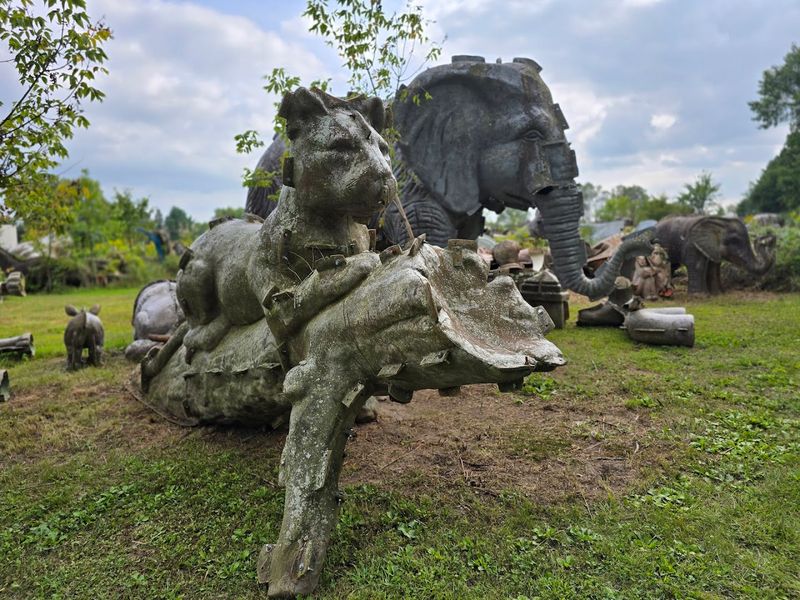
The molds reveal construction secrets invisible in finished products. Hollow interiors show how fiberglass layers built up around original forms.
Seam lines mark where multiple pieces joined together during production.
Each mold functioned as a negative space into which liquid fiberglass resin was poured or sprayed. After hardening, workers removed the finished sculpture, leaving the mold ready for another cycle.
Some molds show wear from hundreds of uses while others appear barely touched.
Understanding this process transforms how you view the graveyard. These objects represent the industrial side of whimsy creation.
What looks magical to consumers required precise engineering and material science.
Half-finished experiments and prototype pieces scatter throughout the property. Failed designs and abandoned projects offer insight into the creative trial process.
Seeing the mechanics behind commercial art demystifies roadside attractions while increasing appreciation for the craftsmanship involved in their production.
Rows Of Half Finished And Weathered Creations
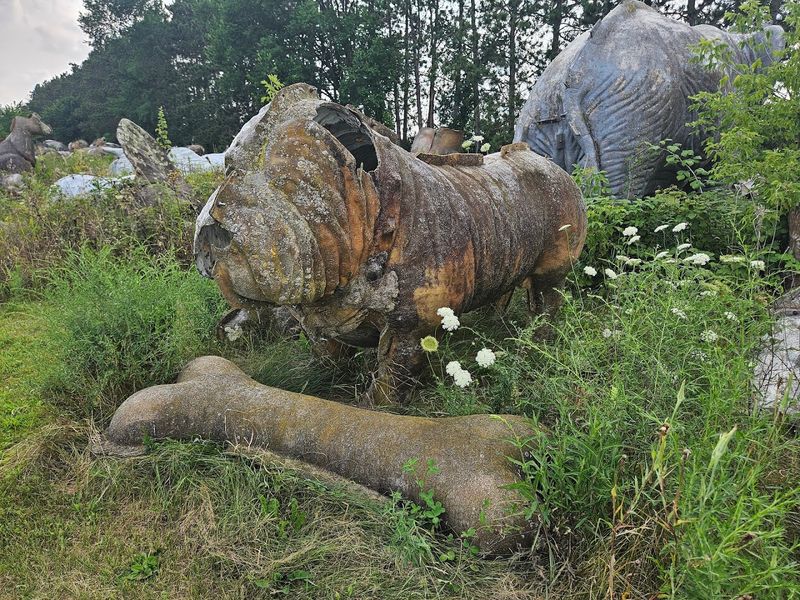
Time and weather have transformed the graveyard into an accidental art installation. Rain streaks pattern white surfaces while moss creeps across forgotten corners.
Some molds crack and separate, revealing internal structures never meant for viewing.
Pieces in various completion stages line the walkways. Smooth finished molds contrast with rough prototypes still showing tool marks.
The deterioration adds unexpected beauty to functional industrial objects.
Tall grass reclaims spaces between rows during growing season. Wildflowers push through cracks in larger pieces.
This gradual return to nature creates a melancholic atmosphere that photographers find irresistible.
The site operates without climate control or protective coverings. Elements attack the collection constantly, creating an ever-changing tableau.
What appears pristine one visit may show significant wear upon return. This decay becomes part of the experience rather than a detriment to it.
Familiar Shapes That Feel Slightly Unsettling
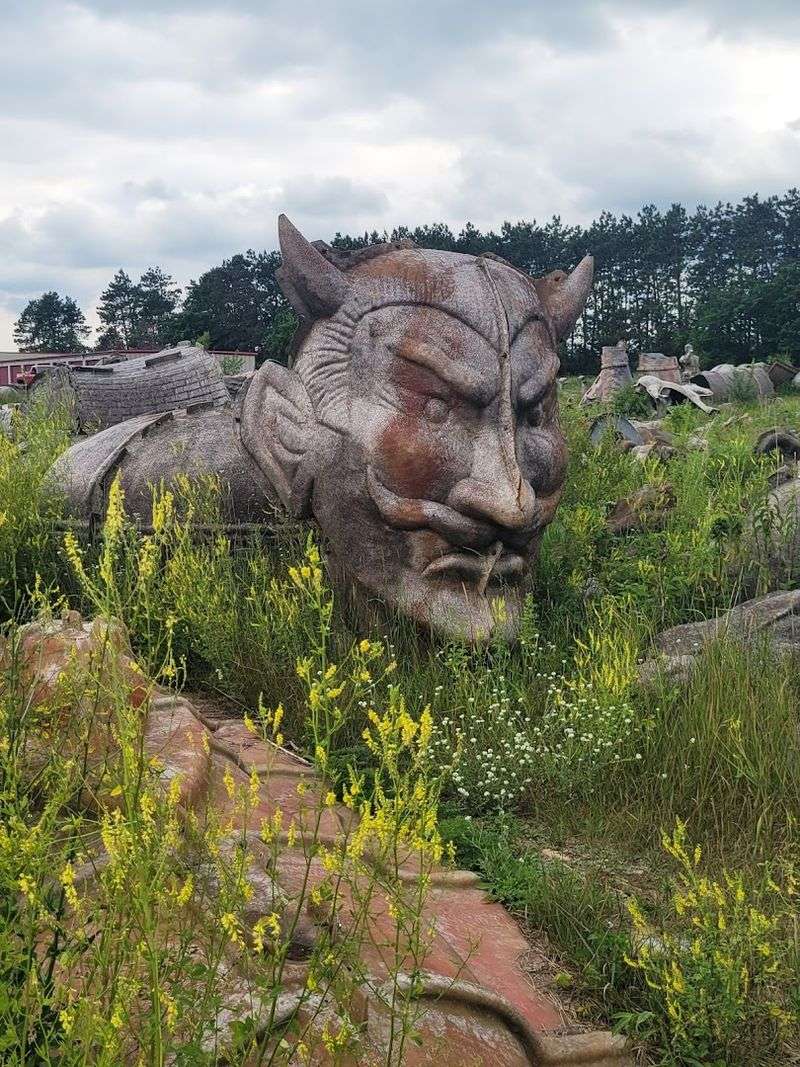
Something about unpainted familiar forms triggers an uncanny response in many visitors. Characters designed to radiate friendliness become vaguely disturbing without their cheerful colors.
Blank white eyes stare from faces meant to smile welcomingly.
The molds capture expressions in reverse. Concave surfaces where noses should protrude create optical confusion.
Dimensional relationships feel wrong until your brain adjusts to viewing negative space as positive form.
Children sometimes find the graveyard unsettling rather than entertaining. Parents should consider sensitivity levels before visiting with younger kids.
The site lacks the playful context that makes these characters approachable in their intended settings.
This discomfort adds depth to the experience for adults. The graveyard strips away commercial polish to reveal the strange foundations beneath manufactured joy.
Confronting these hollow shells prompts reflection about consumerism, nostalgia, and the mechanisms of mass-produced happiness in American culture.
An Outdoor Space That Feels More Like An Art Installation
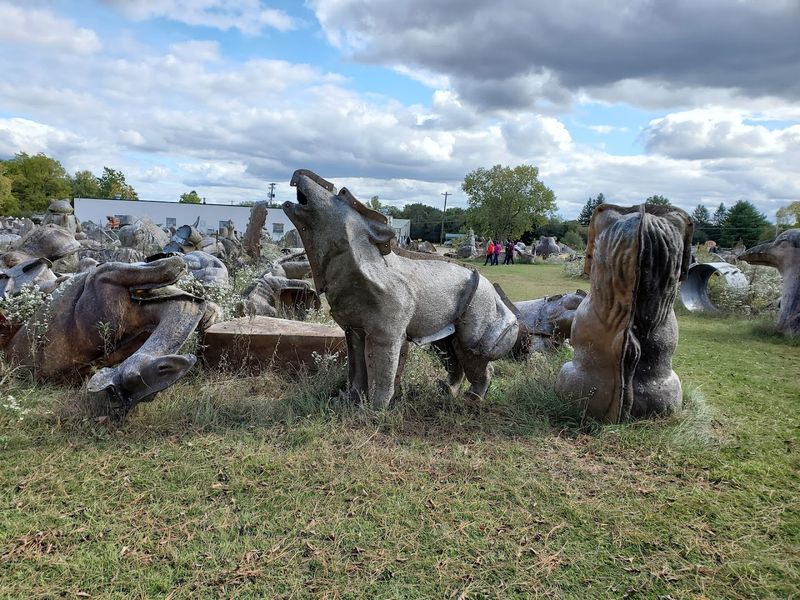
Despite its industrial origins, the graveyard possesses undeniable artistic qualities. The random arrangement creates unexpected visual compositions.
Groupings form accidental narratives as disparate characters face each other across pathways.
Light changes throughout the day transform the experience dramatically. Morning mist softens harsh edges while afternoon sun casts dramatic shadows.
Overcast conditions create moody atmospheres that enhance the surreal qualities.
Photographers treat the location as a found-art exhibition. The white surfaces photograph beautifully against green grass and blue sky.
Abstract details within larger forms provide endless compositional possibilities.
FAST Corporation likely never intended their storage yard to function as public art. The aesthetic appeal emerged organically from practical considerations.
This unintentional quality makes the site more compelling than deliberately designed sculpture parks. Authenticity resonates through every corner of the property, creating an experience that feels discovered rather than curated.
A Spot That Draws Curious Visitors And Photographers
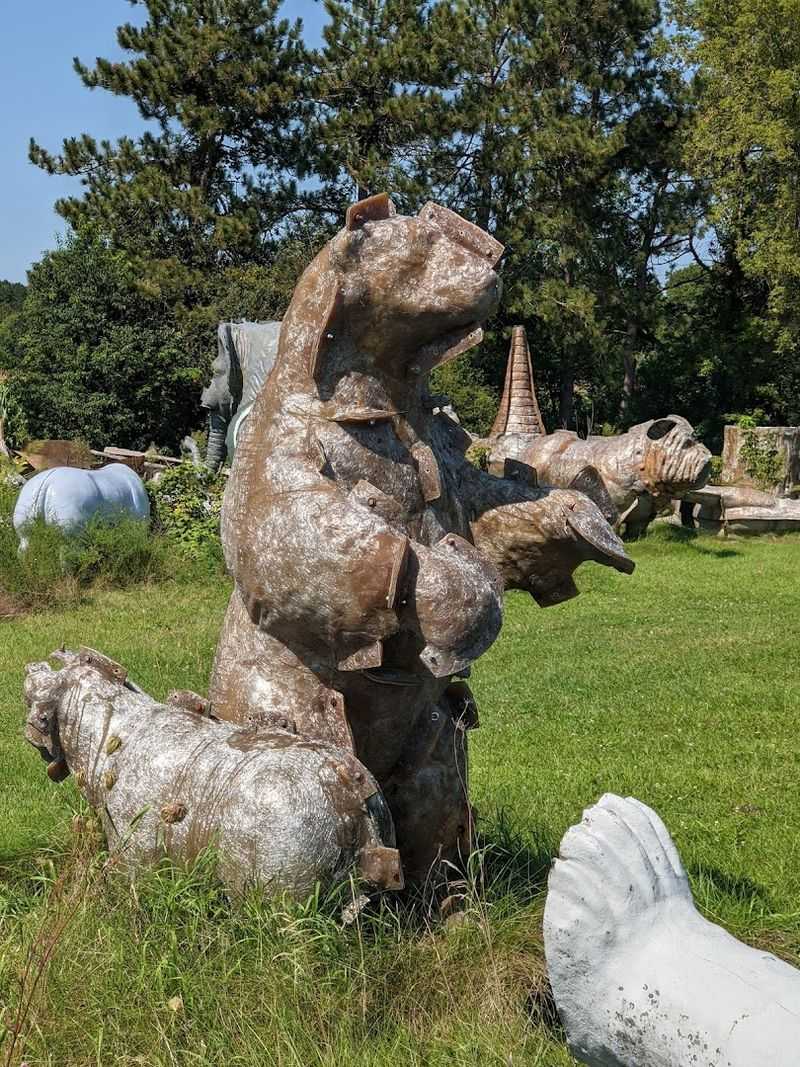
Word spreads through social media and roadside attraction guidebooks, drawing steady streams of curious explorers. Photography enthusiasts arrive with professional equipment seeking unique portfolio additions.
Families stop during road trips for memorable photo opportunities.
The free admission removes barriers that might discourage casual visits. No tickets or reservations mean spontaneous stops fit easily into travel plans.
Parking accommodates multiple vehicles without crowding.
Peak visiting times occur during pleasant weather months when mowed paths remain accessible. Early morning visits offer solitude and dramatic lighting.
Weekday exploration typically means fewer crowds than weekend afternoons.
The graveyard appears in numerous travel blogs and quirky destination lists. Its combination of accessibility, uniqueness, and photogenic qualities make it social media friendly.
Visitors often spend twenty to forty minutes wandering the grounds, though photography sessions can extend much longer for dedicated shooters seeking perfect compositions.
A Place That Changes As Pieces Move Or Age
Return visitors notice significant changes between trips. FAST Corporation continues operating as a business, meaning the graveyard remains an active storage facility.
Molds move as projects require specific pieces for restoration or reproduction.
New additions appear periodically when recent projects conclude. Entire sections reorganize as space needs shift.
This fluidity prevents the site from becoming static or predictable.
Seasonal changes dramatically alter the landscape appearance. Summer growth obscures smaller pieces while winter snow creates stark contrasts against white surfaces.
Spring mud makes some areas inaccessible while fall colors provide stunning backdrops.
Weather damage accelerates on exposed molds. Pieces that appeared intact during previous visits may show new cracks or separations.
This ongoing transformation means no two experiences match exactly. The graveyard functions as a living collection rather than a preserved museum, maintaining relevance through constant evolution.
A Rare Glimpse Into A Niche Industry
Commercial fiberglass production operates largely invisible to general consumers. Most people encounter finished products without considering their origins.
The graveyard pulls back the curtain on this specialized manufacturing sector.
FAST Corporation represents one of the few companies maintaining this traditional craft. Computer-aided design has modernized some processes, but fundamental techniques remain remarkably similar to methods from decades past.
Skilled artisans still hand-finish many pieces.
The industry serves diverse clients from theme parks to corporate advertising. Custom work requires understanding client vision while solving practical engineering challenges.
Durability, weather resistance, and transportability all factor into design decisions.
Visiting the graveyard provides context for understanding how roadside America acquired its distinctive character. These molds birthed the giant animals, oversized foods, and cartoon characters that define American commercial landscapes.
Appreciating this hidden industry enriches travel experiences by revealing the craftsmanship behind seemingly simple attractions.
One Of Wisconsin’s Most Unexpected Roadside Stops
Wisconsin boasts numerous roadside attractions, but few match the graveyard’s combination of strangeness and accessibility. The site requires no advance planning beyond noting the address.
Visitors simply arrive during business hours and explore at their own pace.
Location near Sparta places the graveyard within easy reach of other regional attractions. The area offers dining and fuel options for travelers.
Combining the visit with other stops creates satisfying day trips.
Signs warn visitors about uneven ground and potential bee nests in hollow molds. Closed-toe shoes provide better protection than sandals.
The property lacks restrooms or refreshment facilities, so plan accordingly.
This attraction epitomizes the quirky spirit that makes Wisconsin road trips memorable. It costs nothing, demands little time, yet delivers experiences impossible to find elsewhere.
The graveyard proves that the most interesting discoveries often appear in unexpected places, rewarding travelers who venture beyond major tourist corridors.