
This Historic Wisconsin Covered Bridge Feels Like A Step Back In Time
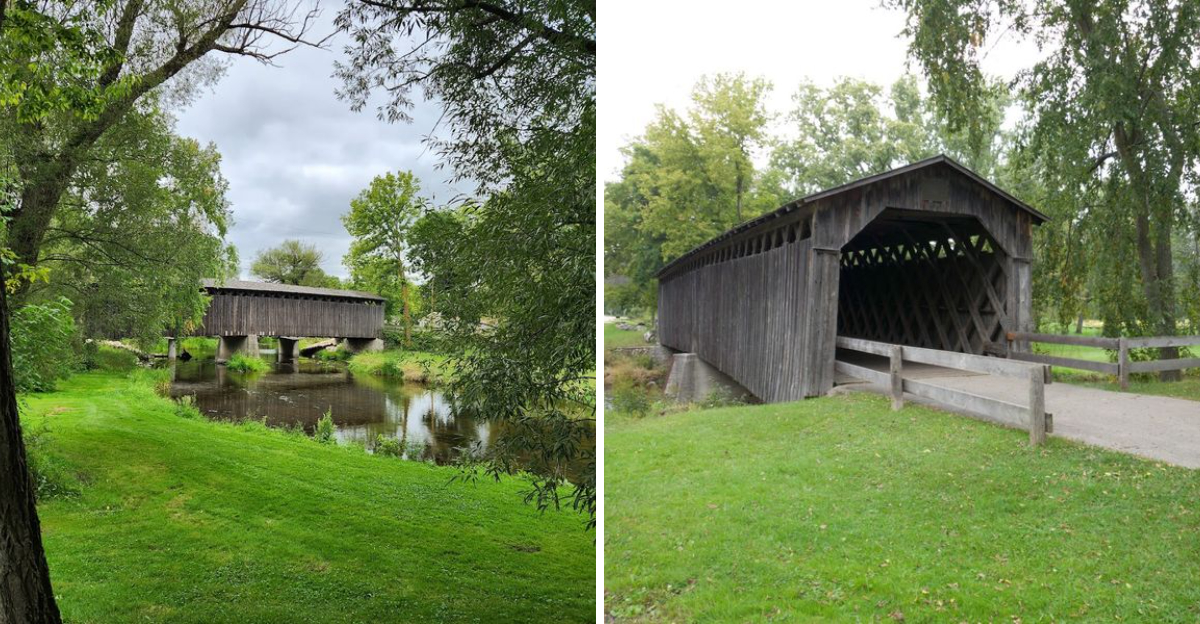
Standing at the edge of Covered Bridge Road in Cedarburg, you can almost hear the creak of wagon wheels and the clatter of horse hooves echoing from another century. The Historic Cedarburg Covered Bridge has watched over Cedar Creek since 1876, serving as a rare reminder of how people once moved through the Wisconsin landscape.
Today it stands as the last authentic covered bridge of its kind in the state, inviting visitors to walk through its wooden frame and imagine life before highways and high speeds.
Built In 1876 And Still Standing Strong Today
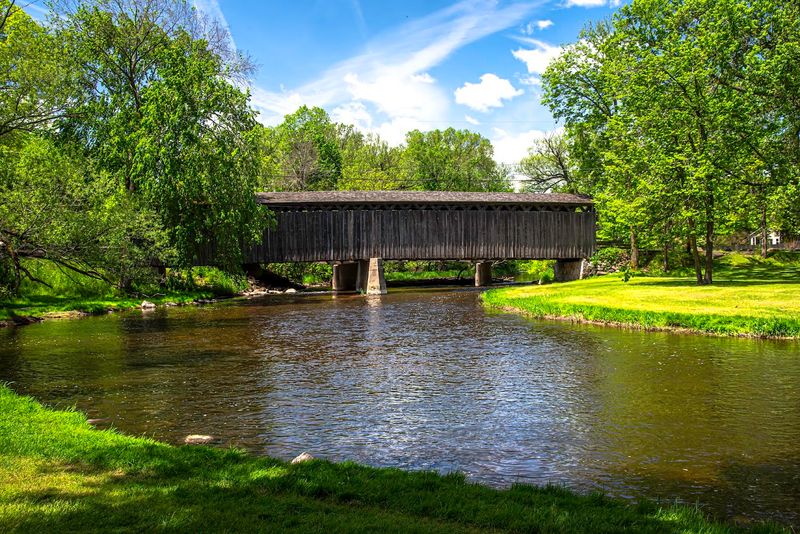
Construction crews finished this bridge during the nation’s centennial year, making it a true piece of American history. The structure has survived nearly 150 Wisconsin winters, each one testing the strength of its timbers and the skill of its builders.
Carpenters used techniques common in that era, joining heavy beams without the modern fasteners we rely on today.
Cedar Creek flows beneath the span just as it did when Ulysses S. Grant occupied the White House.
The bridge has outlasted countless storms, floods, and freezing temperatures that would have destroyed lesser structures. Its longevity speaks to both quality craftsmanship and the community’s commitment to preservation.
Standing inside, you can run your hand along wood that has been part of this landscape for generations. The bridge has become more than a crossing point.
It represents continuity in a world that changes faster every year, offering proof that some things are built to last.
The Last Remaining Historic Covered Bridge In Wisconsin
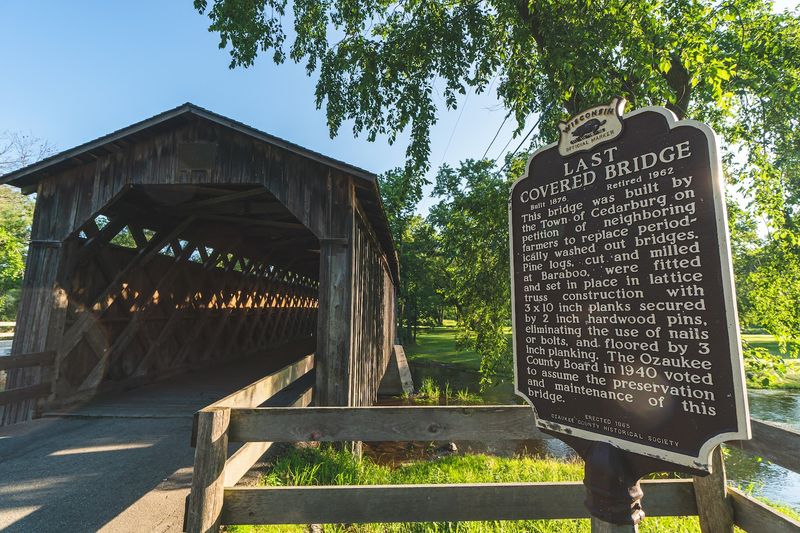
Wisconsin once claimed more than forty covered bridges scattered across its rural counties. Time, weather, and progress erased nearly all of them, leaving this single example standing at 1728 Covered Bridge Road.
The bridge represents an entire category of architecture that has vanished from the state’s roads and rivers.
Preservation efforts have kept this structure intact while others fell to decay or demolition. Its survival required deliberate choices by local officials and residents who recognized its value beyond mere transportation.
The bridge now carries the weight of representing all its lost counterparts.
Visitors from across Wisconsin make the trip to Cedarburg specifically to see this rarity. Photography enthusiasts arrive in every season to capture its distinctive profile.
History teachers bring students to illustrate how infrastructure looked in the nineteenth century, making abstract lessons concrete through direct experience with authentic materials and design.
Classic Wooden Lattice Design That Defined An Era
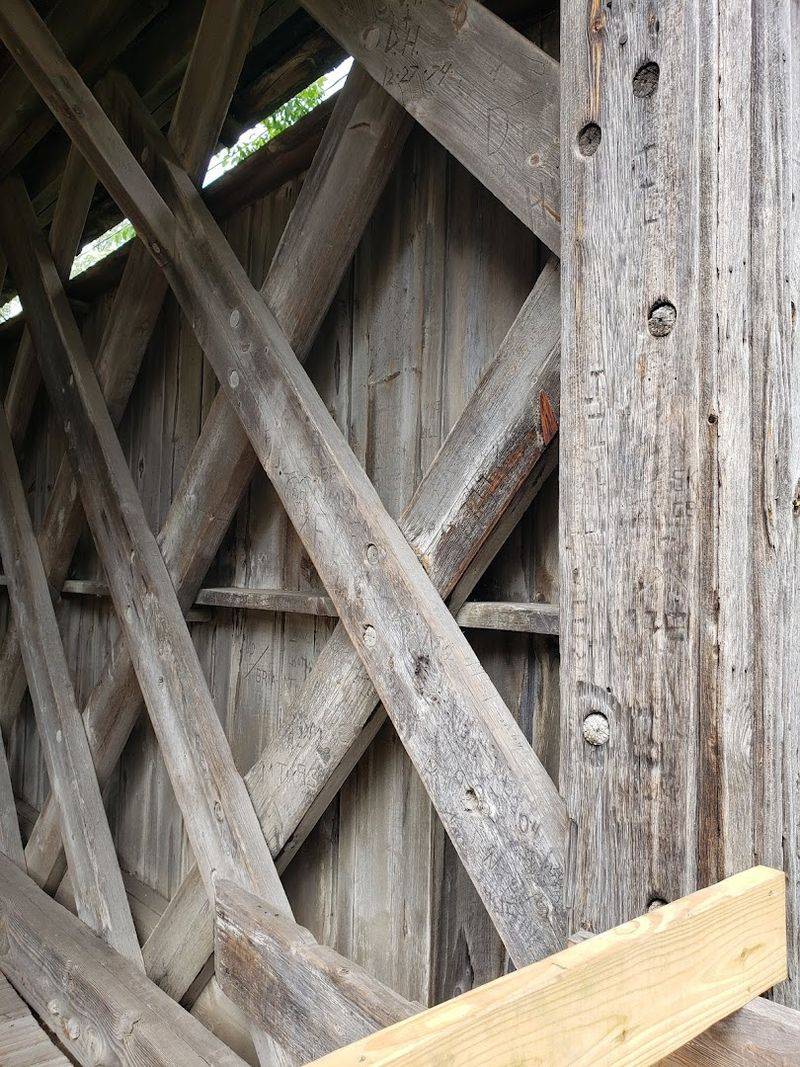
Engineers in the 1870s relied on lattice truss systems to distribute weight across long spans. The Cedarburg bridge showcases this approach perfectly, with diagonal wooden members forming a repeating diamond pattern along both sides.
This design allowed builders to create strong bridges using available timber rather than expensive iron or steel.
The lattice method came from an earlier generation of bridge builders who understood how triangular shapes transfer loads efficiently. Each crossing beam plays a specific role in keeping the structure stable.
The pattern looks decorative to modern eyes, but every piece serves a structural purpose.
Walking through the covered passage, you can study how the lattice framework fits together. The geometry becomes clear when you stop to examine individual joints and connections.
This hands-on view helps explain why covered bridges used this particular arrangement and how nineteenth-century builders solved complex engineering problems with simple tools.
Once Open To Traffic, Now Preserved For Pedestrians
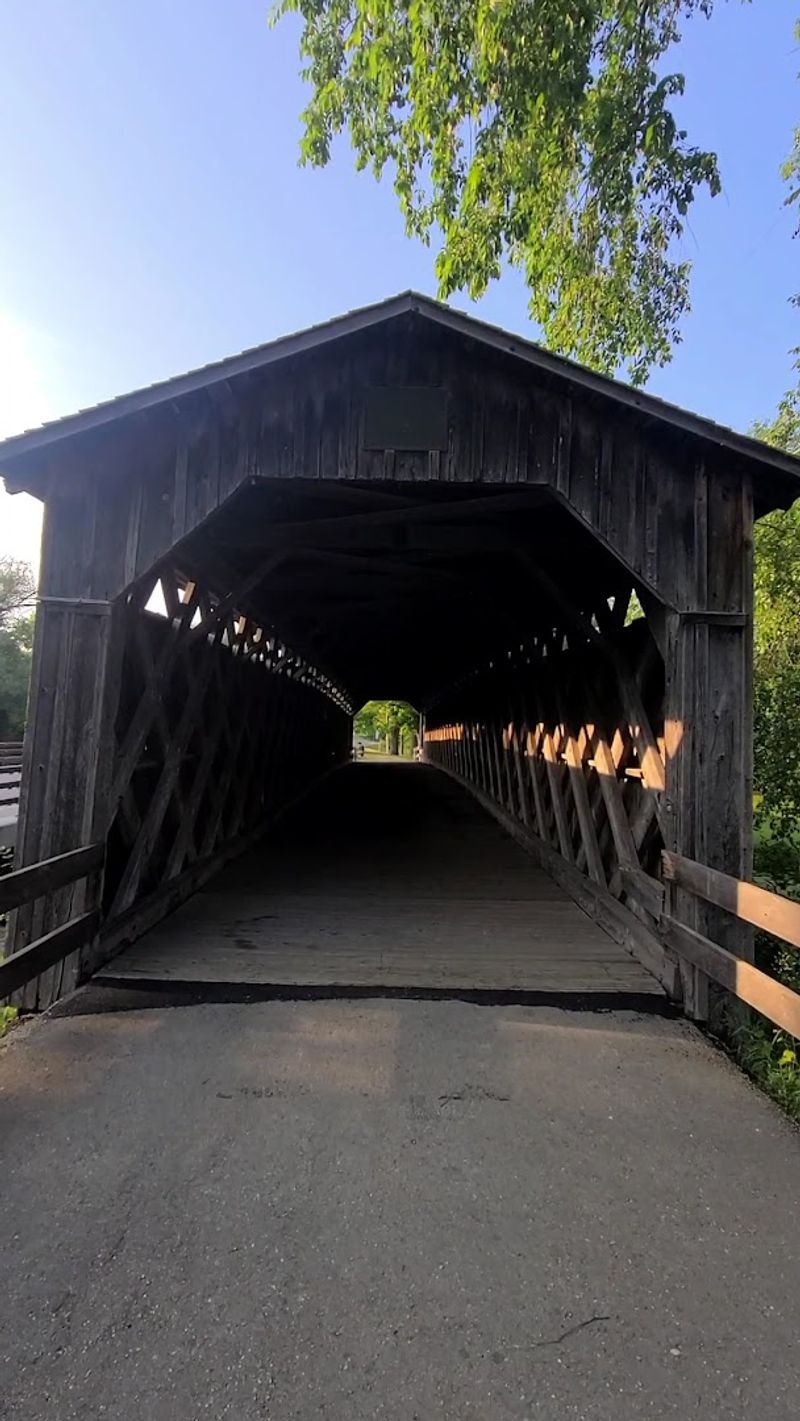
Cars and trucks once rumbled across the bridge’s wooden planks, continuing a tradition that began with horse-drawn wagons. The structure handled regular traffic for decades, proving its durability under real working conditions.
Eventually, modern transportation needs outgrew what the old bridge could safely accommodate.
Officials closed the bridge to vehicles to protect both the structure and the public. The decision transformed it from functional infrastructure into a preserved historical site.
Pedestrians now have exclusive access, allowing them to experience the bridge at a slower pace than any driver ever could.
This change has extended the bridge’s life considerably. Without the stress of vehicle weight and vibration, the wooden components face less wear.
Visitors can pause inside to read historical markers, examine the construction details, and take photographs without worrying about traffic. The shift from roadway to walkway has given the bridge a second purpose perfectly suited to its age.
Located Inside A Quiet Park That Adds To The Atmosphere
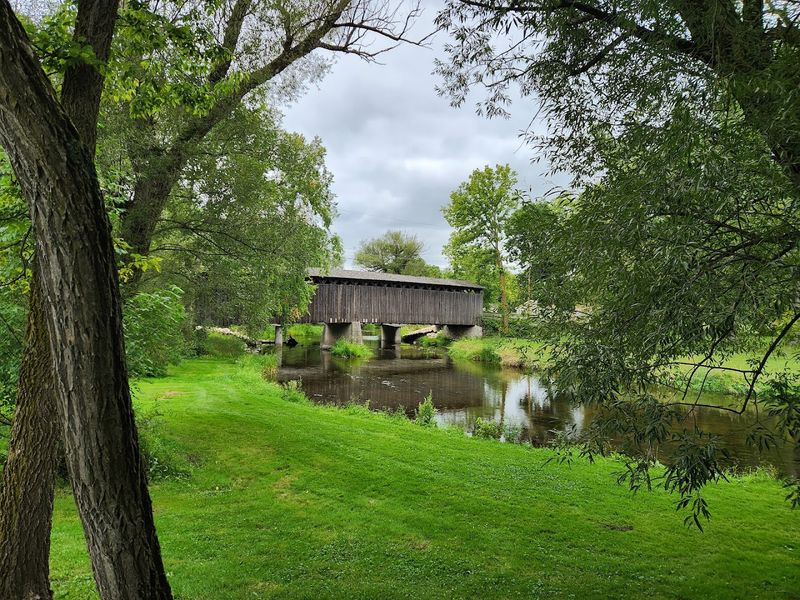
The bridge sits within a well-maintained park that enhances its historical character. Cedar Creek winds through the grounds, providing moving water sounds that complement the rustic setting.
Picnic tables scatter across the grass, and walking paths connect different areas of the property.
Park amenities support extended visits beyond just viewing the bridge. Families spread out blankets for afternoon meals while children explore the creek banks.
The surrounding landscape has been preserved to maintain a feeling of countryside calm, even though Cedarburg’s downtown sits just minutes away.
This park context makes the bridge more accessible and enjoyable than if it stood alone beside a busy road. Visitors can arrive, explore the structure, then settle into the park for relaxation.
The combination of historical landmark and recreational space creates a destination rather than just a quick roadside stop, encouraging people to spend time absorbing the atmosphere.
Structure Originally Built To Withstand Wisconsin Winters
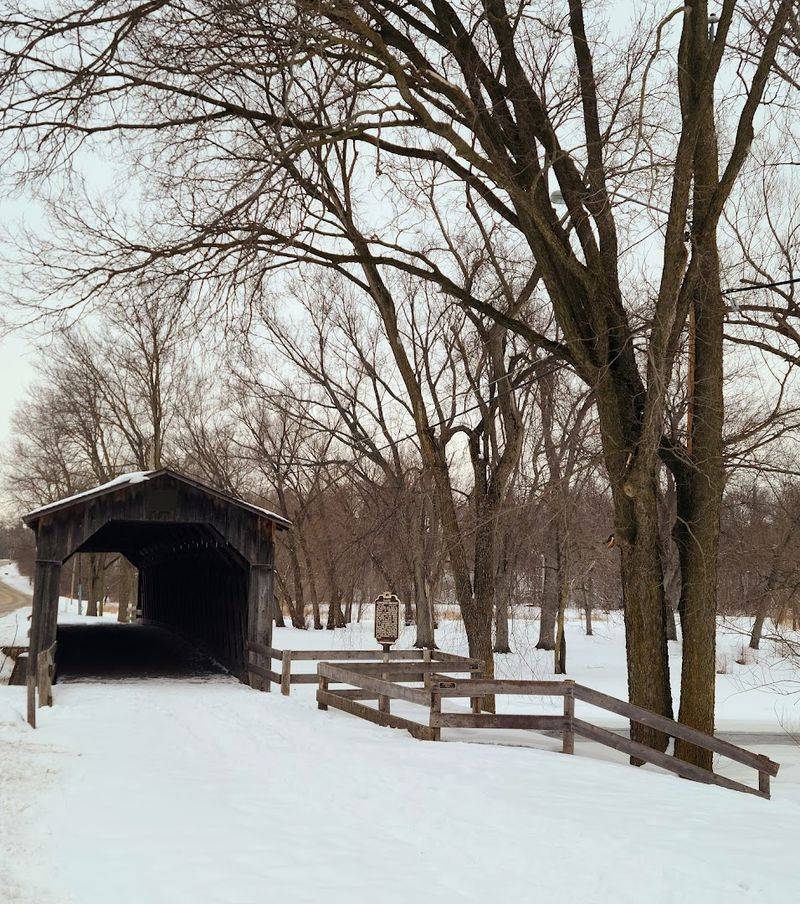
Wisconsin winters test every outdoor structure with freezing temperatures, heavy snow, and cycles of thawing and refreezing. The bridge’s builders understood these challenges and designed accordingly.
The roof and walls protect the internal framework from direct exposure to ice and moisture, significantly extending the wood’s lifespan.
Covering the bridge served practical purposes beyond aesthetics. Snow and ice accumulation on exposed beams would have caused faster deterioration and structural weakness.
The enclosed design also provided some shelter for travelers crossing during storms, though comfort was never the primary goal.
Nearly 150 winters have proven the design’s effectiveness. The bridge has required maintenance and restoration over the years, but its basic structure remains sound.
Modern visitors benefit from the foresight of nineteenth-century engineers who built with local climate conditions firmly in mind, creating something durable enough to serve multiple generations.
Restored And Protected To Preserve Its Original Character
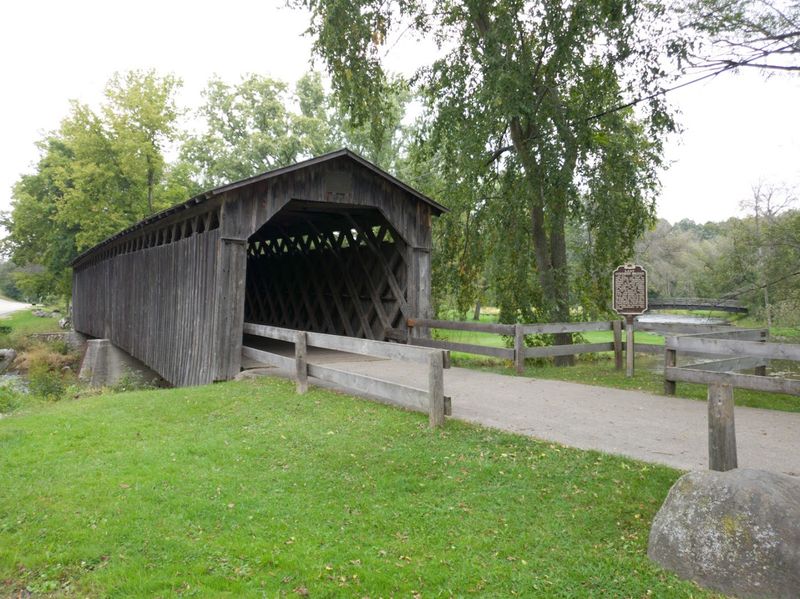
Preservation specialists have worked to maintain the bridge’s authenticity while ensuring its stability. Restoration projects focus on repairing damage using period-appropriate techniques and materials.
The goal has been to keep the structure looking and functioning as it did in the nineteenth century.
Some original timbers have been replaced when decay made them unsafe, but workers have matched the wood species and construction methods. The bridge retains its historical character because restoration teams prioritized authenticity over convenience.
This approach costs more time and money but produces results that honor the original builders’ work.
Protection extends beyond physical repairs to include regulatory measures that prevent inappropriate alterations. The bridge holds recognition on the National Register of Historic Places, providing official acknowledgment of its significance.
These combined efforts ensure that future visitors will encounter a structure that genuinely represents 1876 craftsmanship rather than a modern approximation.
Popular Spot For Photos In Every Season
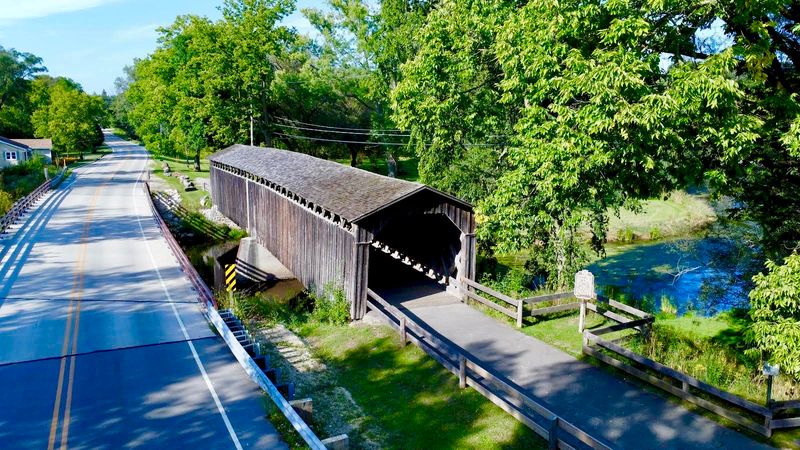
Photographers discover new perspectives on the bridge throughout the year as changing seasons alter its appearance. Spring brings fresh green leaves that frame the red wooden structure.
Summer offers full foliage and flowing creek water. Autumn transforms the surrounding trees into brilliant colors that contrast beautifully with the bridge’s weathered boards.
Winter creates perhaps the most dramatic scenes, with snow accumulating on the roof and ice forming along Cedar Creek. The bridge stands out starkly against white landscapes, its dark timbers and covered design evoking classic New England imagery.
Each season provides distinct lighting conditions and natural backdrops.
Social media has increased the bridge’s popularity as a photography location. Visitors arrive specifically to capture images for their collections, often timing visits to coincide with peak foliage or fresh snowfall.
The bridge’s photogenic qualities and historical authenticity make it a reliable subject that rewards both amateur snapshots and serious artistic efforts.
Short Walk That Feels Like Stepping Into The 1800s
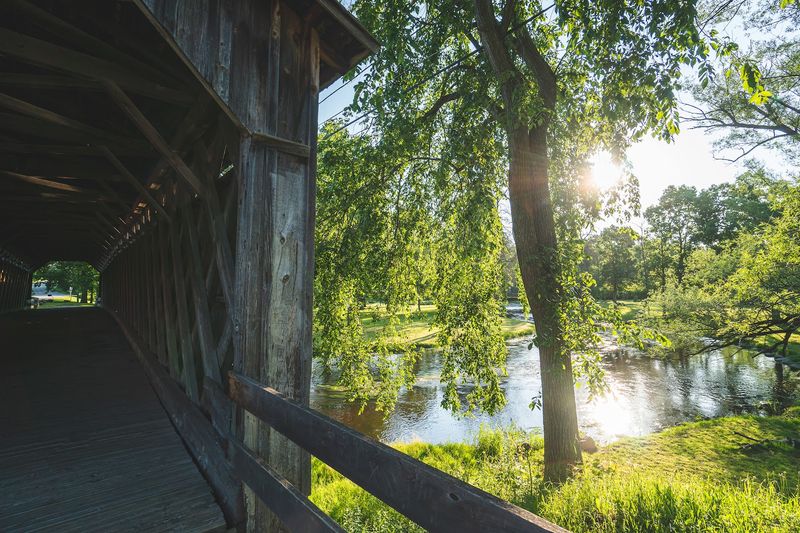
Entering the bridge creates an immediate sensory shift from the modern world. Sunlight dims as the roof blocks direct rays, and the temperature drops a few degrees in the shade.
Footsteps echo differently on wooden planks than on concrete or asphalt, producing hollow sounds that emphasize the structure’s age.
The interior smells of old wood and earth, scents absent from contemporary construction. Your eyes adjust to the reduced light, revealing details in the lattice work and the texture of hand-hewn beams.
The experience engages multiple senses simultaneously, creating a brief but genuine connection to the past.
The walk takes less than a minute at normal pace, but many visitors slow down to absorb the atmosphere. Some pause in the middle to look out at Cedar Creek through gaps in the siding.
This short passage offers a concentrated dose of history, compressing 150 years into a few dozen steps.
Surrounded By Trails, Picnic Areas, And Open Green Space
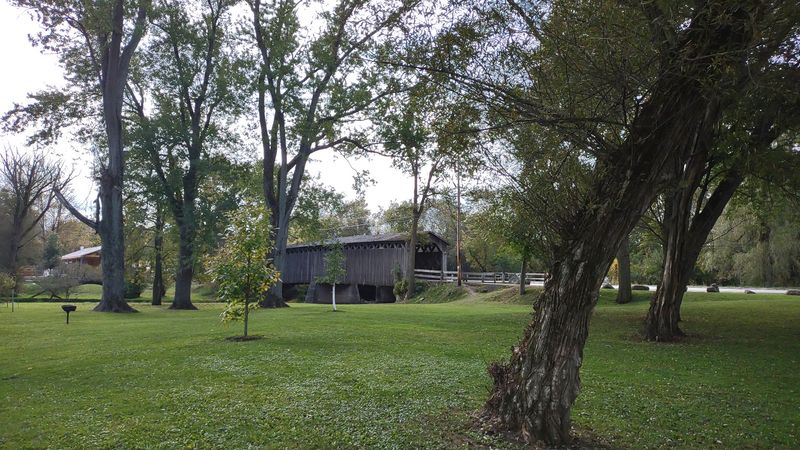
The park extends well beyond the bridge itself, offering multiple ways to spend time outdoors. Walking trails follow Cedar Creek and loop through wooded sections, providing easy routes for casual exercise.
The paths connect to the bridge, allowing visitors to approach it from different angles and perspectives.
Picnic facilities include tables and grills available on a first-come basis. Families can cook meals and eat outdoors while children play in open grass areas.
The park’s layout encourages lingering, turning a quick bridge visit into an afternoon outing.
Open green space provides room for activities beyond structured facilities. People throw frisbees, play catch, or simply spread blankets for relaxation.
The combination of historical landmark and recreational amenities creates a versatile destination that appeals to different interests and age groups, making the location accessible to a broad audience throughout the year.